
By Akani Nkuna
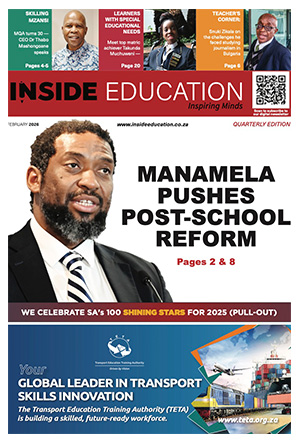
Higher Education and Training Minister Buti Manamela on Wednesday called for a skills revolution in construction, saying universities and colleges must produce graduates able to meet the sector’s real-world demands from day one.
“The skills revolution is about…ensuring that what we teach, what we research and also what we produce in our institutions is directly aligned with the needs of the economy and society,” he said.
ALSO READ: EFF calls for Princess Faku to resign
“It is about producing graduates who are not only qualified, but capable of working, building, innovating but also contributing from the first day that they step out of university, TVET college or out of community college.”
Manamela was speaking at iYunivesithi Walter Sisulu (iWS) in East London, where the institution, in collaboration with the Construction Industry Development Board (CIDB), launched the iWS-cidb Centre of Excellence in Sustainable Construction and Fourth Industrial Revolution in TVET Education.
The centre is expected to support research, practice and industry development aimed at addressing shortcomings in the sector. It also aims to advance the country’s developmental goals through the use of cutting-edge 4IR technology, while generating practical insights to help inform policy.
ALSO READ: SA’s first electric minibus taxi to start operating in Cape Town
The centre is expected to produce highly skilled graduates and help bridge the gap between education, industry and innovation.
Manamela said the centre should ensure that students are exposed to the construction industry during their studies, where they engage with actual construction projects, acquiring “confidence and competence to effectively operate in the industry”.
“It must drive applied research. We cannot afford a situation where research exists only in academic journals and disconnected from the challenges faced by practitioners on the ground,” said Manamela.
He said the academic heads and professors tasked with the responsibility of leading the iWS-cidb centre have a duty to produce graduates who can confront industry challenges, including project delays, productivity constraints, sustainability and cost efficiency.
ALSO READ: Things to do on the KZN South Coast this Easter weekend
Manamela emphasised the need for the centre to embrace transformation within the sector by supporting the development of emerging contractors, strengthening the participation of small and medium-sized enterprises, and creating pathways for inclusive economic participation.
“Infrastructure investment must translate into broader economic empowerment not just completed projects,” Manamela said.
Deputy Minister of Public Works and Infrastructure Sihle Zikalala welcomed the launch of the centre as one of the measures needed to address the spatial legacy of apartheid.
He said the development would require a comprehensive approach to implementation to ensure growth is inclusive and that development reaches all communities.
“We look to the students of this university to play their part in reversing the spatial legacy of apartheid, which left the rural hinterland — like the former Transkei and Ciskei — at the periphery of development,” Zikalala said.