
By Charmaine Ndlela
Higher Education and Training minister Buti Manamela has said that all 59 public TVET colleges in South Africa are now offering entrepreneurship programmes, as government ramps up efforts to equip young people with skills to create their own opportunities.
In his address at the National Education Summit 2026, hosted by Inside Education in Sandton on Monday, Manamela said more than 47,000 students participated in entrepreneurship programmes in 2024, with the National Skills Fund supporting youth enterprises, particularly in the digital and green economy
“There are not enough jobs to absorb young people. We must build a system that does not only prepare job seekers, but produces job creators,” Manamela said.
Manamela stressed that entrepreneurship is not just about business knowledge but about building “a capability, a mindset and the confidence to act”. Three key pillars were exposure, opportunity, and confidence, he said.
“Exposure means real experience — students running real businesses, making real decisions and facing real consequences. Opportunity means access to markets and funding. Confidence comes from mentorship, networks and believing success is possible,” he said.
He added that structural barriers in the economy must also be addressed. “Entrepreneurship will not thrive in an economy that is structurally closed.”
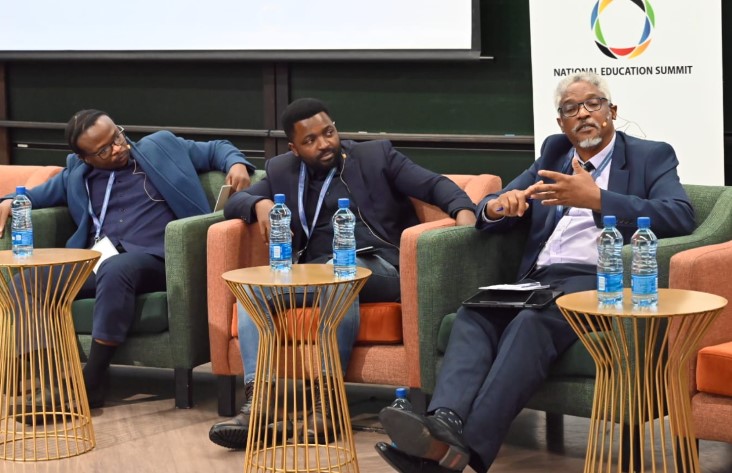
The discussion was further deepened by a panel of education experts, including Dr Sikhumbuzo Maisela, Professor Nixon Teis and Dr Mukovhe Masutha, who offered critical perspectives on the role of entrepreneurship in education.
Not just business creation
Masutha argued that entrepreneurship should be understood within a broader socio-economic context, not just as business creation.
“Entrepreneurship education is as much about running a successful enterprise as it is about the survival of society,” he said.
He emphasised the need to align education with South Africa’s economic strengths and challenges. “If we discuss skills development outside of an industrial strategy, we are missing the point. These things must speak to the country’s competitive advantage.”
Masutha also pushed back against negative narratives about young people’s abilities.
“Our children are not as incapable as they are often portrayed. In fact, they are extraordinary. The entrepreneur must be someone who believes in themselves before they can sell anything to anyone,” he said.
Highlighting the urgency of practical skills, he said; “Our young people must be able to produce, transport and sell, not just hold qualifications. Entrepreneurship, for many, is about survival.”
Teis stressed the importance of integrating entrepreneurship across the education system rather than isolating it within certain subjects.
“Entrepreneurship should not sit in one corner of the curriculum. It must be embedded across all disciplines, especially in technical and engineering education,” he said.
He added that a cross-cutting approach would better prepare students for real-world challenges. “We need to move from treating entrepreneurship as an add-on to making it a core part of how we teach and learn.”
Maisela focused on the gap between education and the labour market, warning that many students are not adequately prepared to turn ideas into viable opportunities.
“Students leave school and university without the ability to identify opportunities, exploit them and monetise them into sustainable livelihoods,” he said.
Early entrepreneurship education is key
He stressed that entrepreneurship education must begin early. “As soon as learners enter the classroom, we should be nurturing creativity and innovation. Waiting until university is too late.”
Maisela also highlighted the urgency of reform. “Entrepreneurship education is not something we can delay; it is an urgent intervention if we are serious about addressing unemployment.”
Held under the theme “Fixing the Education Pipeline from early childhood to transformative level,” the summit tackled persistent challenges in entrepreneurship education, including limited access to funding and markets for young entrepreneurs, a disconnect between classroom learning and real-world application, and the late introduction of entrepreneurial skills in the schooling system.
Discussions also highlighted structural barriers in the economy that make it difficult for small and emerging businesses to thrive, as well as the need for stronger industry alignment and mentorship to support students in turning ideas into sustainable enterprises.
INSIDE EDUCATION