
By Lebone Rodah Mosima
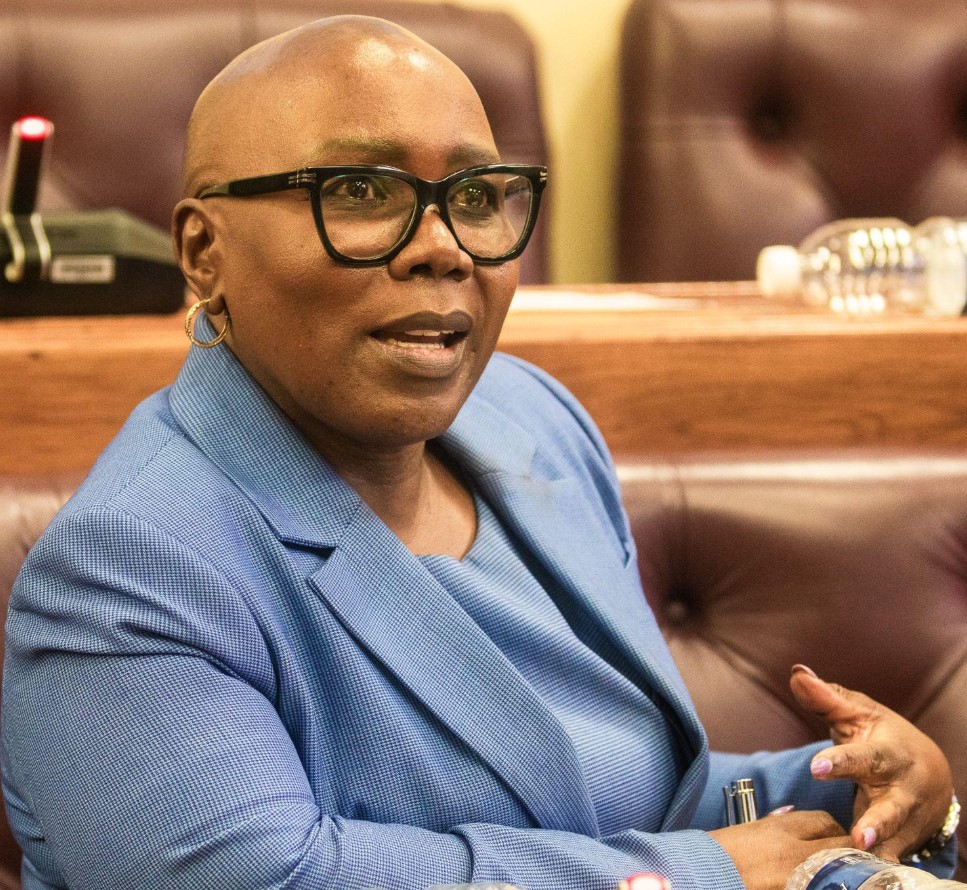
United States funding withdrawals have affected critical joint science projects, increasing pressure on a research system already operating in a tight fiscal environment, Deputy Minister of Science, Technology and Innovation Nomalungelo Gina said.
She was presenting the department’s annual performance plan for 2026/27 to the portfolio committee on science, technology and innovation this week, when she made the comments.
The funding cuts have severely affected HIV prevention programmes in South Africa, among others, just as government starts rolling out lenacapavir, a new long-acting prevention drug.
The US had previously funded about 17% of South Africa’s HIV budget.
“We are presenting [the performance plan] against the backdrop of a number of strategic challenges, some of which include a highly uncertain geopolitical and economic environment, a constrained national fiscal environment, a decline in our expenditure on research and development as a percentage of GDP, and not so long ago, the withdrawal of funding by the US government of critical joint science projects,” she said.
Gina told the committee that the performance plan was more than an administrative exercise, saying it should help the state respond “innovatively and in a sustainable way” to pressures arising from domestic and global conditions.
The department, she said, wanted to “raise the scale and impact” of programmes launched in the previous financial year rather than retreat in the face of tighter finances.
A central target remains lifting South Africa’s gross expenditure on research and development to 1.5% of GDP by 2030, she said.
The department said in October last year that South Africa’s R&D-to-GDP ratio remained flat at 0.62%.
Gina said the department would keep trying to strengthen policy coordination across the national system of innovation with support from the National Advisory Council on Innovation, including through the STI Presidential Plenary and an inter-ministerial committee.
She also reported on the transformation of the research workforce, telling the committee of the launch last week of 41 new research chairs aligned with the department’s decadal plan.
That programme is intended to build research capacity at historically disadvantaged institutions, universities of technology and emerging universities, she said.
It would help produce more young, black, and female researchers and scientists.
Energy and health security were also high on the department’s list of priorities, she said.
Gina said the department would continue to back the Hydrogen South Africa research, development and innovation strategy and the Hydrogen Society Road Map in support of the just energy transition.
She also said COVID-19 had reinforced the need to strengthen “pandemic preparedness capacity” and expand vaccine manufacturing capabilities.
She said that the department would deepen innovation compacts with science-intensive departments, agencies and state-owned enterprises.
The South African National Space Agency would be used to support disaster prevention and disaster management through satellite mapping, damage assessment and geospatial flooding tools.
She also said the government would continue to maintain and upgrade strategic science infrastructure, including the Square Kilometre Array and the Nuclear Medicine Research Infrastructure (NuMeRI).
To fund the agenda, Gina said the department would continue trying to mobilise additional resources for programmes in artificial intelligence, energy security, space, vaccine innovation manufacturing and indigenous knowledge systems.
INSIDE EDUCATION