


By Levy Masiteng
Basic Education Minister Siviwe Gwarube has called on all South Africans to take urgent action to build a stronger reading culture by reading at home, supporting book clubs, visiting libraries and sharing books with children.
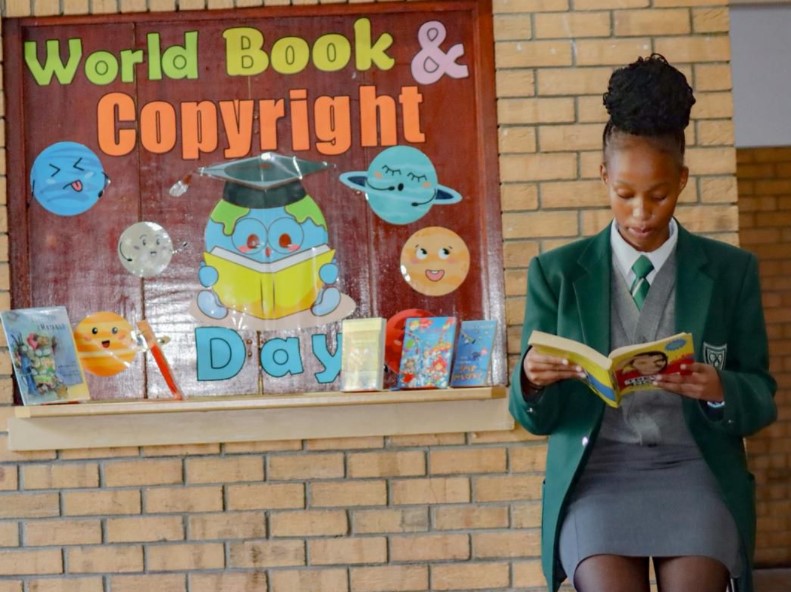
Gwarube made the call during the national World Book and Copyright Day commemoration held at Cape Town High School and the Centre for the Book in Cape Town.
The DBE said the country’s literacy crisis demands collective action beyond symbolic celebrations.
“Reading must not be reserved for one day on the calendar. It must become part of daily life in every home, every classroom and every community.”
The department together with partners including the National Library of South Africa, Room to Read, the City of Cape Town, Iziko Museums and Book Dash, marked the international observance.
The appeal comes as South Africa continues to battle a literacy crisis among young learners.
According to the 2021 Progress in International Reading Literacy Study (PIRLS), 81% of Grade 4 learners in South Africa cannot read for meaning in any language, which is a statistic that has long raised alarm across the education sector.
This means many children are entering higher grades without the reading skills needed to succeed academically, making early reading interventions increasingly urgent.
“Simple actions can make a meaningful difference — reading at home, starting reading clubs, visiting libraries, donating books and encouraging children to write and tell their own stories,” the department said.
At the Cape Town event, learners took part in author engagements, storytelling sessions, guided reading activities, book exhibitions and cultural performances, while discussions on copyright awareness highlighted the need to protect the work of authors and creators.
Significant focus was also placed on indigenous languages, with officials stressing that mother-tongue reading improves comprehension, strengthens cultural identity and promotes inclusion.
“Every child must be able to see themselves in the stories they read and hear their own language reflected in books,” the DBE said.
The event also saw support from other stakeholders beyond the DBE.
In the Western Cape, provincial education authorities challenged learners to read at least one book for pleasure this year.
“Read one book, cover to cover, this year. Not for school, but for the joy of it. And when you have finished that book, read another,” said Western Cape Education MEC David Maynier.
The National Library of South Africa donated books worth R20, 000 to help strengthen school library resources in the province.
“Once you create a culture of valuing reading and books, you are actually crafting an individual who will be responsible enough to respect other people’s rights,” said Aphiwe Sigadi, a Cape Town High School teacher.
Globally, the day proclaimed by UNESCO in 1995 celebrates books, authors, and the protection of intellectual property.
This year’s international observance also saw Rabat, Morocco, named UNESCO’s World Book Capital for 2026, with global programmes aimed at widening access to books and promoting reading ecosystems.
The DBE said World Book and Copyright Day should serve not only as a celebration, but as a practical intervention to address literacy poverty and build a generation of readers.
“Through collective effort, South Africa can become a society where reading is part of everyday life,” it said.
INSIDE EDUCATION