
By Akani Nkuna
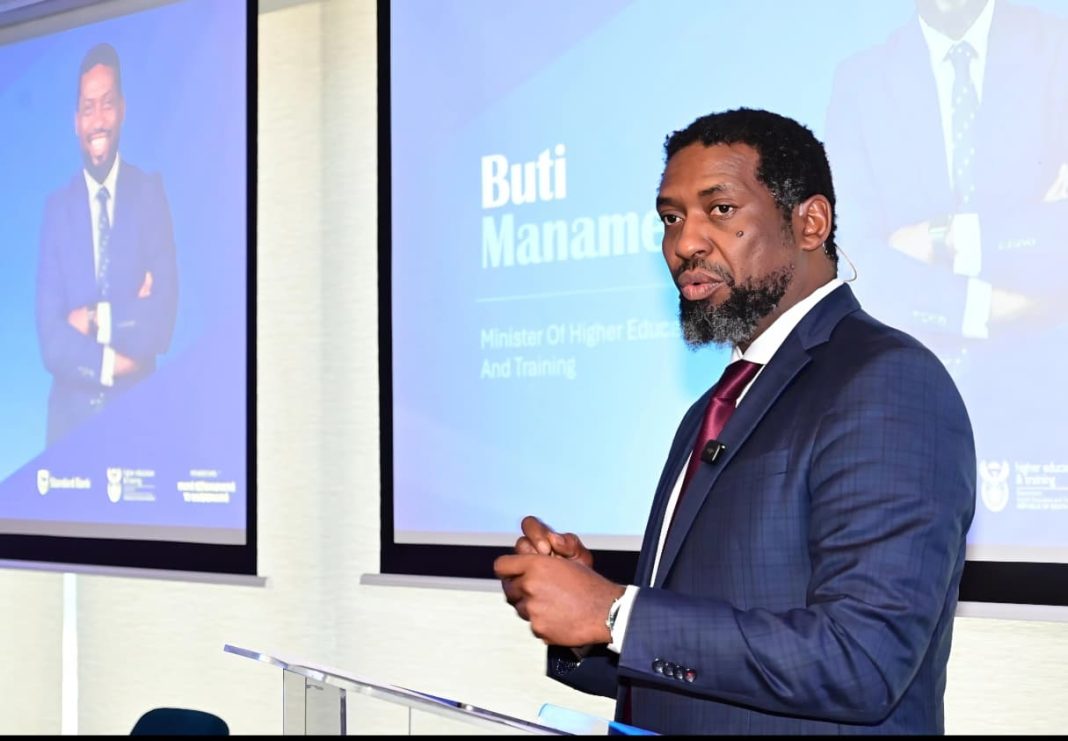
Higher Education and Training Minister Buti Manamela has secured commitments from private-sector leaders to partner with government in expanding workplace-linked training.
The commitments – which were not specifically named — were made at the Skills Revolution Business Breakfast in Johannesburg on Monday, convened by Manamela as part of the precursor to the Higher Education and Training Budget Vote on Tuesday.

The engagement brought together executives and leaders from agriculture, mining, engineering, ICT, financial services and other strategic sectors, as well as government, skills development institutions, intermediaries and start-ups.
According to the department, the meeting will now evolve into an ongoing partnership platform, supported by an implementation plan between engagements to track progress and accountability.
Manamela said South Africa’s skills development system continued to favour universities over technical and community colleges, despite the urgent need for practical skills that can help young people enter the labour market.
He said universities remained important to the country’s post-school education system, particularly in producing strategic skills needed by the economy, but warned that Technical and Vocational Education and Training colleges and Community Education and Training colleges were not receiving the same level of attention.
“This is indicative of the fact that the structure of our skills favours more universities. I think we should be emphasising that, and it is much to the detriment of TVET and our Community Colleges,” he said.
Manamela said the imbalance was a concern in a country facing high unemployment, with more than three million young people not in employment, education or training, while businesses continued to raise concerns about a shortage of workers with the right skills.
The department said the breakfast sought to confront this disconnect by creating a practical platform through which government and business could work together to ensure that skills development responds to labour market demands and economic growth.

The discussions focused on reimagining public-private partnerships in the Post-School Education and Training sector, bridging the skills-industry gap, scaling apprenticeships, learnerships and work-integrated learning, identifying what business requires from government, and establishing a shared accountability framework.
Manamela called on business to play a more active role in funding and shaping skills development, particularly through workplace training, work-integrated learning, science and digital laboratories, and programmes linked directly to industry needs.
The minister said closer collaboration between government and the private sector was needed not only to fund training, but also to shape the curriculum and determine how training is delivered.
He said this would help ensure that students leave colleges with skills that match the needs of employers and allow them to contribute soon after completing their studies.
“What we expect today is a pledge that says we will consolidate all our efforts, working together with government to show the extent within which business is committed in providing Work Integrated Learning and sharing resources with regards to curriculum development,” said Manamela.

Business leaders at the engagement expressed support for the revitalisation and repositioning of TVET colleges, saying they should be rebranded as institutions that prepare young people for practical and future-focused occupations, including in an economy increasingly shaped by artificial intelligence and automation.
Participants also stressed the need for better coordination within government and stronger alignment between government and business to ensure that skills development programmes are integrated, responsive and effective.
The meeting also highlighted entrepreneurship development as a key part of the skills agenda, with business leaders saying young people should be equipped not only to become job seekers, but also job creators capable of building enterprises and contributing to economic growth.
Manamela pointed to countries such as Germany and Switzerland, where closer links between education institutions and industry have helped strengthen pathways from training into employment.
“If we work together to determine the quality of training, the nature of training that is needed, it almost immediately means that those young people will be guaranteed employment because you (the private sector) have a say,” Manamela said.
Standard Bank’s Dr Kirston Greenhop reinforced the importance of vocational education and practical skills development as a pillar of inclusive economic participation, while Primestars CEO Nkosinathi Moshoana emphasised the importance of moving young people from learning into earning.
Manamela said the commitments made at the breakfast had to lead to practical implementation and measurable impact.
“The report that emerges from this process must speak directly to how we action partnerships and collaboration in a meaningful and measurable way. There is already important work happening across sectors and institutions.
“Our responsibility now is to identify what is working, understand how to scale it, and take all of these commitments forward into concrete programmes that benefit young people and the economy,” he said.
“Ultimately, we cannot allow our education and training system to become a waiting room for unemployment for our youth. It must become a platform for empowerment, productivity, innovation and national development,” he said.
INSIDE EDUCATION