


By Lebone Rodah Mosima
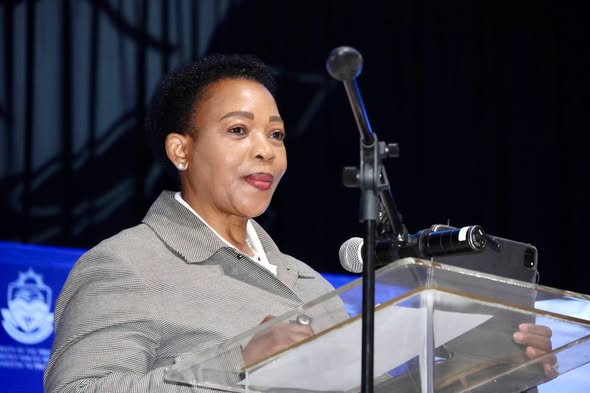
The higher education department must do more than widen access to universities and colleges, Deputy Minister of Higher Education and Training Dr Nomusa Dube-Ncube said, warning that a qualification without a clear pathway to work was “only half a solution”.
Dube-Ncube told the Global Student Well-being Summit 2026 at the Madiba Arena, South Campus, that student wellbeing could not be separated from accommodation, mental health, access to learning and the ability of graduates to find employment.
The remarks come against the backdrop of South Africa’s stubborn jobs crisis. The official unemployment rate rose to 32.7% in the first quarter of 2026, while President Cyril Ramaphosa said last month that youth unemployment stood at 46%.
Dube-Ncube said the summit’s theme, “Leaving No Student Behind: Towards Inclusive Pathways to Student Wellbeing,” should be treated as a test for “every policy, every budget line, and every programme this Department runs”.
ALSO READ: Limpopo robotics teams put SA coding curriculum on global stage
“And if we are honest with one another, applying that test still finds us wanting in places,” she said.
She said the post-school education and training system continued to grapple with access that was “not yet universal”, insufficient accommodation, gaps in psychosocial support, gambling among financially strained students, bullying and the continued loss of young lives.
“Government continues to invest in expanding student accommodation infrastructure, because we understand that a bed in a safe, dignified residence is not a luxury, it is the foundation on which academic performance, mental health and personal safety all rest,” she said.
She said the department, through Higher Health, was sharpening its focus on early assessment and early detection, including screening and referral systems aimed at identifying mental health concerns, compulsive gambling behaviour and trauma linked to bullying before they escalate.
“A department that cares is a department that pays attention before the emergency, not only after it,” she said.
On access, Dube-Ncube said government was considering expanding blended learning models so that geography and cost did not determine whether young South Africans could study. She said work was also continuing on new universities and colleges of specialisation designed to respond to regional and economic skills needs.
ALSO READ: UNISA Ethiopia Regional Learning Centre celebrates 98 postgraduate graduates
The department was also expanding multilateral agreements, international scholarships and twinning programmes, including opportunities for unemployed graduates to access qualifications through institutions in developed countries, she said.
Dube-Ncube said recent international partnerships workshops had moved new agreements closer to signature, while engagements with industry and Industrial Development Zones were aimed at ensuring that qualifications translated into employment.
“We understand that a qualification without a pathway to employment is only half a solution,” she said.
She said the department’s Skills on Wheels initiative was taking student support services and skills exposure directly to students, instead of waiting for students to seek assistance on their own.
She said the department was not presenting these measures as a finished solution, adding that accommodation, access and wrap-around support remained incomplete.
“A Department that cares does not hide behind good news alone — it names its shortcomings honestly, and then works, meticulously, with every partner willing to walk with it, including industry, to close the gap,” she said.
Despite the challenges, Dube-Ncube pointed to students achieving in sport, technical skills, research, aviation and design.
She cited students who completed the Comrades Marathon, young artisans preparing to represent South Africa at WorldSkills International in Shanghai, researchers whose academic work had gained international recognition, young women training as pilots and aviation technicians, and design students showcasing their work at events including the Durban July.