


By Johnathan Paoli
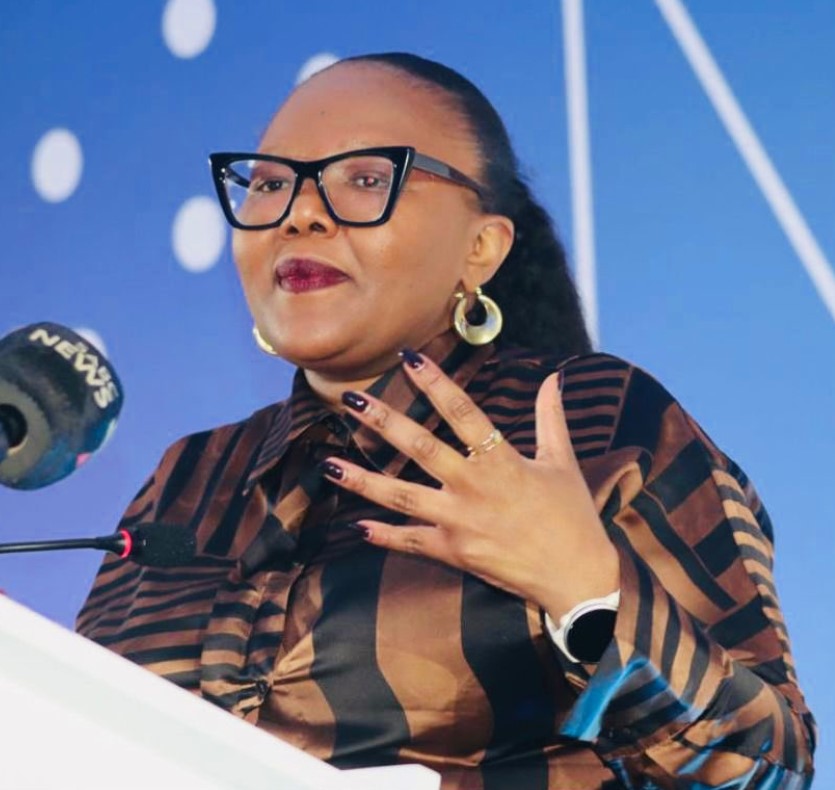
Basic Education Minister Siviwe Gwarube has told South Africans to look beyond the political disputes and crises of the day and focus on reforms that can protect the country’s future by improving what education makes possible for every child.
Addressing the Cape Town Press Club on Monday, Gwarube said meaningful reform required the government to confront institutional weaknesses, protect public money and strengthen education from early childhood rather than relying on the matric pass rate as the main measure of success.
“Our children do not get a second childhood while we put our institutions in order. I came into this office to help change what education makes possible for a child — not simply to manage disputes about it,” Gwarube said.
She said this was the purpose of her “Strong Foundations, Strong Futures” strategy, which seeks to improve learning from the earliest years of a child’s education.
Gwarube said South Africa had made progress, including an 88% national matric pass rate in 2025, but added that this could not obscure deep weaknesses in foundational learning.
“Extra lessons and support for matric learners remain important. But support must begin much earlier. A child who struggles to read will struggle to learn from a textbook. A child who lacks confidence with numbers will find later Mathematics and Science increasingly difficult,” she said.
“I do not believe that a child in a poor community has less potential than a child in a wealthy one. I believe we have a responsibility to stop allowing unequal opportunities to decide how much of that potential is realised.”
She said the reform agenda was built around early childhood development, the Foundation Phase, language and literacy, teacher development, safer schools, infrastructure and stronger governance.
She said the government had registered more than 13,300 early learning centres in 2025, exceeding its target of 10,000, while the subsidy rate had increased from R17 to R24 per funded child per day.
The department was also targeting 10,000 Foundation Phase teachers for focused training in reading, writing and early Mathematics during 2026.
Gwarube said reform also meant confronting the way public money was spent, citing her decision to maintain the suspension of the new Foundation Phase National Catalogue after two final reports by independent investigating firm Rakoma identified serious weaknesses in the process.
The catalogue has been at the centre of controversy over Lighthouse Publishers, a relatively new company that secured a significant share of approved titles. Gwarube acknowledged that the investigation had not substantiated some of the allegations surrounding the process and that the reports recognised strengths in the assessment of learning materials, but said the wider review had also identified serious shortcomings.
The investigation found problems including undisclosed rules around price comparisons and how these would affect the allocation of orders, non-compliance with a compulsory supplier-document requirement and an extension and withdrawal of a submission deadline without the required approval.
The reports also raised potential financial misconduct implications, although Gwarube stressed that this did not amount to a finding of guilt against anyone.
“I chose to act on the findings and recommendations of the investigation reports I have received. I chose to protect public money. I chose to keep preparations for 2027 moving. I will not choose between getting books to children and protecting the integrity of the process. My responsibility is to do both,” she said.
She said preparations for the 2027 school year would continue, with provinces and schools purchasing the materials they needed using the existing catalogue as a reference while the legal implications of the investigation findings were considered.
Gwarube also rejected suggestions that insisting on proper procurement processes amounted to an attack on transformation.
She said she supported a publishing sector where emerging businesses, including black-owned and women-owned companies, had a fair opportunity to compete, but argued that transformation had to extend beyond contracts and reach classrooms.
“Transformation cannot stop at the contract. It must reach the classroom. For me, transformation means that a child in a rural village can receive the same quality of early education as a child in an affluent suburb,” she said.
She said the Government of National Unity also had a role to play in creating the stability needed for long-term reform, arguing that cooperation did not mean avoiding difficult questions.
“Stability is not the absence of difficult questions. It is the confidence that an institution will face them honestly and keep delivering. Addressing a weakness is not an attack on an institution; it is an investment in its future.”
She said the government also needed to measure education outcomes more honestly, with greater attention paid to reading, Mathematics, learner retention and subject performance rather than simply the final matric pass rate.
She highlighted the operationalisation of the National Education and Training Council as part of efforts to build reform that could survive political cycles.
The council has produced four substantial reports containing 33 recommendations covering foundational learning, school resourcing, assessment and progression, and reducing teachers’ administrative burden.
Gwarube said lasting reform would require political leaders to confront vested interests, acknowledge what was not working and remain guided by evidence.
“I did not become Minister to make powerful people comfortable. I became Minister to serve the children of South Africa,” the minister said.
She said the ultimate test of her office should not be how many policies or announcements it produced, but whether those interventions changed what children experienced in classrooms.
“The problems are real. They do not have to be permanent,” Gwarube said.
“Strong foundations. Strong futures. That is the work before us.”
INSIDE EDUCATION