
By Charmaine Ndlela
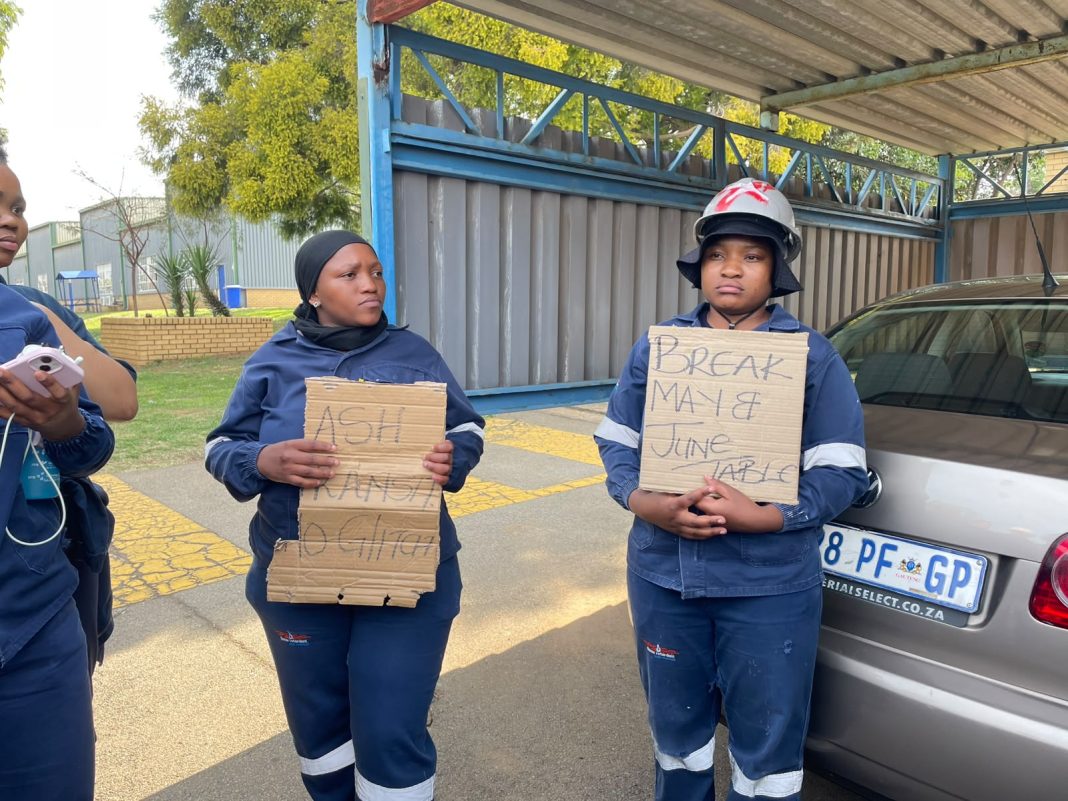
Dozens of Denel Technical Academy (DTA) apprentices staged a protest at the Denel facility in Kempton Park on Monday, demanding answers about months of delayed and incomplete stipend payments.
The apprentices also demanded clarity over outstanding accommodation and transport payments, as well as their registration with the Transport Education Training Authority (TETA).
The National Skills Fund (NSF) acknowledged that payment problems remained and said it was looking for an “alternative mechanism” to pay learners whose attendance records were missing.
Over 700 learners are enrolled in an NSF-funded skills development programme through DTA, where they are being trained in aircraft and engineering-related trades, including Aircraft Avionics, Aircraft Mechanic, Fitter, Structural Worker, Electrician, Fitter and Turner and Welding.
The programme forms part of a sizeable publicly funded training initiative. The NSF previously said about R354 million had been approved for programmes administered by Phila Jordan Capital (PJC), including aviation and artisan training, with R156.5 million having been disbursed at the time the fund provided an update on the project.
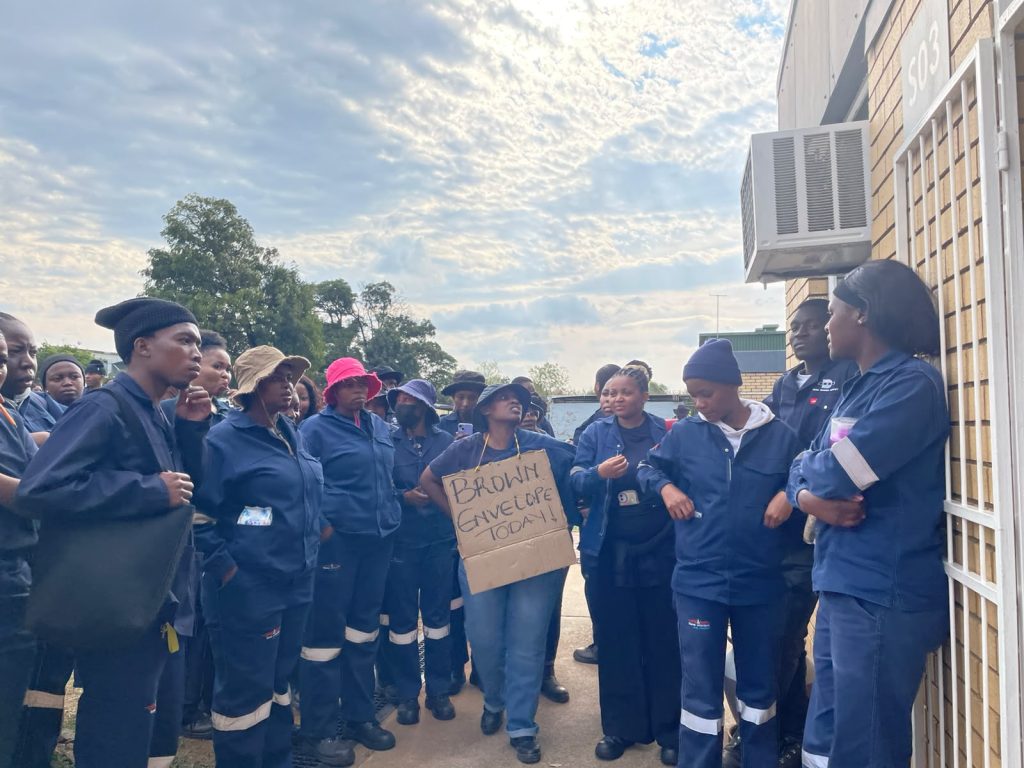
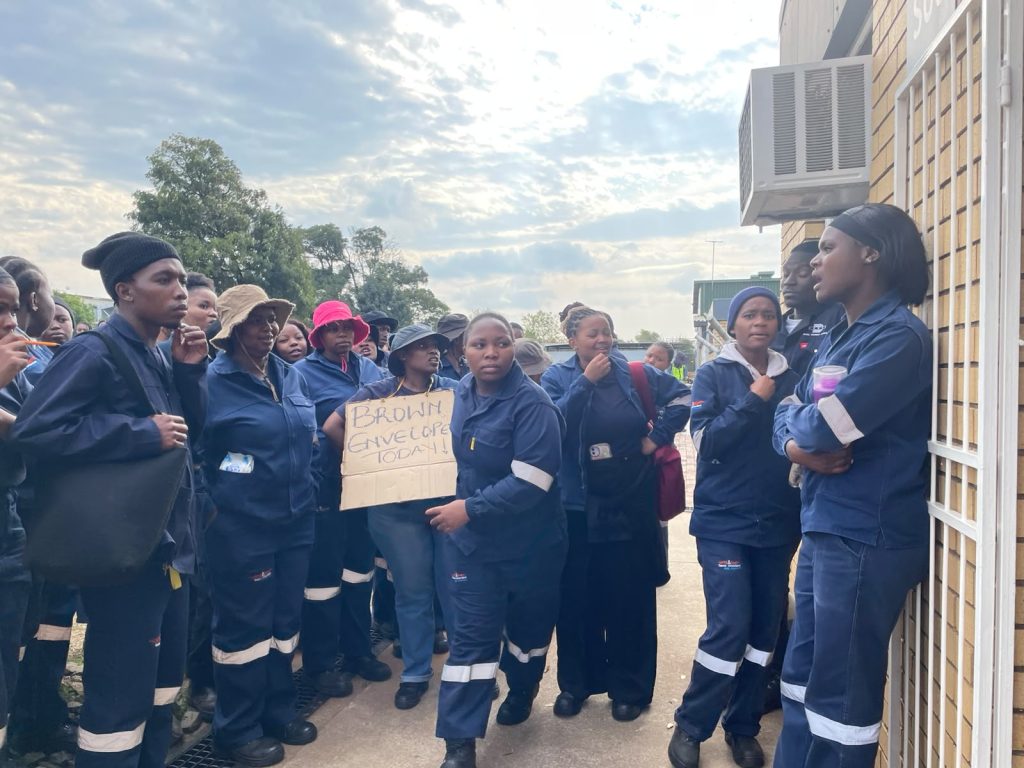
Learners told Inside Education that payment problems had persisted for months, with some receiving only a fraction of their stipends and others claiming they had not been paid for certain months.
They said the delays had left some struggling to afford food and toiletries, while others faced uncertainty over accommodation.
One trainee, who asked not to be named, said learners from various provinces were particularly affected.
The trainee said some learners had also faced threats of eviction because accommodation payments were allegedly outstanding.
“We are terrified and scared of possible eviction because the rent is due,” she said.
Addressing the apprentices, the NSF Deputy Director for Regional Skills Development Monitoring and project manager, Londiwe Twumasi, said that the NSF was aware of the “difficulties” learners were facing.
She said the Fund was, however, bound by its internal processes and could not simply process stipends without evidence of attendance.
“We are bound by these processes that we cannot process when there is no evidence of attendance,” Twumasi said.
She said that the lack of attendance registers had become a challenge because some learners could not attend training due to circumstances beyond their control, including transport disruptions.
“Really, we cannot penalise them, whereas it was never their fault,” she said.
Twumasi said NSF management had escalated the matter to the Director-General of the Department of Higher Education and Training, who is the accounting authority of the Fund, because an alternative payment mechanism was needed.
“We have to now bring in the Director-General of the department. There has to be a submission to him that, DG, as an accounting officer, we have this dilemma,” she said.
According to Twumasi, the submission asks how the department can pay learners who did not attend during a particular period and therefore do not have attendance registers, while taking into account the circumstances that prevented them from attending.
She said the DG had instructed the NSF to find an alternative solution.
“But unfortunately for me, standing here, I have not been given permission to talk about that alternative,” Twumasi said.
She assured learners that the proposed solution was intended to allow them to receive their outstanding payments without putting the department at risk of breaching its financial and audit requirements.
Twumasi said the NSF had already made the proposal to the DG, but the submission was still being considered.
“It has to be done, but it must be done in the right way,” she said.
Twumasi said the NSF could not simply bypass its procedures because it had previously experienced problems after paying learners without sufficient supporting documentation.
She said that in an earlier NSF project, learners were paid despite the absence of attendance records.
The matter later became an audit finding after the DG sampled learners and requested documentation to verify the payments.
“We found that there was no attendance, but we paid a stipend. Now it’s an audit finding,” Twumasi said.
The NSF was then required to recover the money from the service provider.
“So we cannot repeat a mistake. Now that we’ve learned from the first one, now we have to find a way of dealing with the issue,” she said.
She acknowledged that learners had already been waiting for answers for several months.
“We are very much aware of how much this issue is affecting you,” she said.
The apprentices said they had received different amounts despite being part of the same programme.
One trainee said some learners received as little as R300, while others received between R1,600 and R3,000.
“We got our stipends on Friday whereas they promised to pay us on 17 August. Students taking classes at Denel got their stipends before us, while we are all funded by NSF from one group,” she said.
Another learner said the outstanding May and June payments remained a major concern.
“We demand our May and June stipends because it’s been six months now without them saying anything about it,” the learner said.
According to the trainee, the programme provides for an overall amount of R8,500 per apprentice, with R3,000 allocated to the learner for food and the remainder intended to cover costs such as accommodation and transport.
The learners said the failure to receive the full amounts had placed significant financial pressure on them.
Some also said they had left jobs to join the apprenticeship programme because they believed it would provide them with a pathway into the aviation and engineering sectors.
“Some of us left real jobs only to come here and suffer,” one trainee said.
The payment problems follow the NSF’s termination of its Memorandum of Agreement with PJC in May.
The Fund said at the time that it had ended the agreement because of repeated contractual non-compliance, learner welfare concerns, governance failures and concerns about the management and use of public funds.
The NSF said it had previously engaged with PJC over concerns relating to the implementation of the programme.
Among the issues raised was the relocation of learners between Johannesburg and Pretoria without prior consultation or approval from the NSF.
The Fund also raised concerns about delayed or non-payment of transport and accommodation service providers, which it said had disrupted the programme and affected learners.
PJC disputed the NSF’s version of events. The company rejected allegations of financial mismanagement and maintained that the relocation of learners had been discussed with the NSF. The Fund disputed that claim.
Denel was subsequently brought into the intervention aimed at rescuing the programme and allowing the 761 learners to continue their training.
According to information provided to Inside Education, contracts signed with learners were backdated to April to cover a period during which outstanding stipend payments had accumulated.
The NSF said the arrangement was intended to provide contractual cover for learners who had already been participating in the programme.
Denel said the process of absorbing a large number of additional learners had created administrative challenges.
A Denel technical representative, speaking on behalf of general manager Zandile Dotwana, who was not present during the one-on-one engagement with Inside Education, said the organisation had to load hundreds of additional learners onto its system after becoming involved in the programme.
The representative said Denel already had about 250 learners on its system or database but later had to process information for more than 700 additional learners manually.
“So, on the system that we had not worked those numbers, we now need to load the additional students onto our system, on a manual basis, which is something that we haven’t been doing. So the turnaround time becomes a serious matter,” the representative said.
Denel also said it had experienced problems with the information supplied by the service provider.
“Because the service provider did not give us the comprehensive information that we were supposed to receive, that affects the payment in August,” the representative said.
Denel said it had planned to make payments the previous Friday, but technical problems with its payment system caused further delays.
“This system that we load payment on had glitches,” the representative said.
The organisation acknowledged that communication with learners had also not been adequate.
“Our communication needs to be improved,” the representative said.
“And that’s what we plan to do after this discussion — having better communication with the students so that they are aware of the actions that we take.”
Some apprentices have also raised concerns about their registration with TETA, which they fear could disrupt their apprenticeship records, eligibility for trade testing and eventual certification as artisans.
Under the artisan training system, the relevant Sector Education and Training Authority plays a role in apprenticeship registration and the trade-test process, while successful candidates ultimately receive trade certification through the Quality Council for Trades and Occupations.
Learners placed at South African Airways Technical (SAAT) Hamba Nathi and Alpha have raised concerns about their registration status.
One trainee said some apprentices placed at SAAT were worried that their TETA registration had not yet been finalised.
“We are not even registered under TETA because Denel is refusing to pay South African Airways,” she said.
Denel acknowledged that the affected learners had not yet been registered with TETA but said the registration process had started.
The company said the outstanding registration matters would be resolved before the apprentices complete their qualifications.
Denel said it was working to ensure that the learners’ registration with TETA would not prevent them from completing their training or obtaining the necessary qualifications.
Some trainees said learners would prefer the NSF to pay them directly rather than relying on third parties to administer their stipends.
“We demand Denel to do things according to the law and according to what is written in the contract. Also, pay us on time,” one said.