
By Charmaine Ndlela
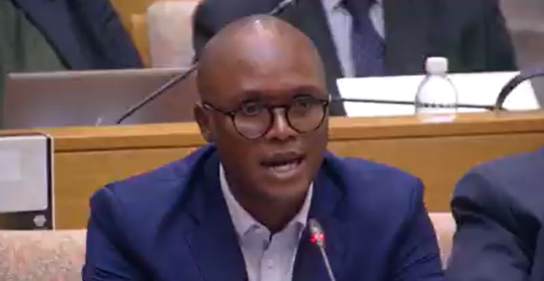
Communications and Digital Technologies Minister Solly Malatsi has said that South Africa is losing digital employment opportunities to overseas markets while millions of young people remain unemployed and local businesses struggle to recruit suitably skilled workers.
Speaking at the CollectiveXChange 2026 conference in Randburg, Johannesburg, on Thursday, Malatsi called for better cooperation between government, businesses and training institutions to ensure digital skills programmes produced graduates equipped for available jobs.
He said South Africa’s digital economy could become a major driver of economic growth, potentially contributing more than 15% to gross domestic product (GDP), compared with its estimated current contribution of between 7% and 8%.
ALSO READ: Gwarube dismisses ‘fake news’ matric exam leak claims
“The digital economy currently contributes between 7% and 8% of our GDP. With the right policy interventions, the right investment, the right partnerships, I have no doubt that our focus of contributing more than 15% to the GDP can happen,” he said.
He said the Digital Economy Masterplan envisaged creating at least one million employment and income-generating opportunities over the next decade, but warned that achieving this ambition would depend on developing a suitably skilled workforce.
He cited estimates indicating that more than 28,000 testing and application development jobs had been outsourced internationally, despite significant unemployment among South Africans with digital qualifications.
“This illustrates something profound, that the demand is there. The supply of eager and available talent is locally bound. What is needed is to equalise that equation,” he said.
The country had a youth unemployment rate of 47.4% in the second quarter of 2026, according to Statistics South Africa, with about five million people aged 15 to 34 unemployed.
Malatsi said government could not address the skills mismatch alone and urged employers and training providers to align programmes with actual workplace requirements.
Collective X chief executive Evan Jones said the organisation was working to expand digital training and employment opportunities through its Digital Skills Impact Fund, which he said had secured R700 million in funding commitments.
ALSO READ: R83.2m Siyakhanyisa Primary School officially opens in KZN
The organisation also reported a 95% absorption rate into learning and work opportunities, although the figure does not necessarily represent permanent employment.
Jones said Collective X aimed to double the country’s annual digital skills development output from approximately 20,000 to 40,000 by 2028 and help 500,000 young people enter employment by 2034.
“Whilst those numbers are numbers to be proud of, it’s simply not enough,” he said.
“We’re at a pivotal point in our plans where we now need to shift our attention from piloting proof points and implementation, which is what we’ve been doing, to meaningful scale for the country.”
Collective X executive for public sector partnerships Linda Peter said training programmes should be designed around identified employment opportunities rather than simply producing qualifications.
“One thing that we agree on is that we need a skill to be truly demand-led. That means we need to start with a job in mind,” she told Inside Education.
“Traditionally, we’ve been starting with qualifications and certificates in mind and hoping that there’s a job at the end.”
Peter called for funding models that measured success by employment outcomes instead of enrolment and completion rates.
“The way that the system has been working is that we are funding based on the number of people enrolled and number of people completed, which doesn’t exactly necessarily result in a job.”
For 32-year-old Bethusile Mafumana, a Collective X and Umuzi programme participant, digital training provided an opportunity to establish her own business rather than continue searching for employment.
Mafumana founded Betana, a digital solutions studio operating across Gqeberha and Johannesburg, which has grown to a team of four.
“I realised that no one was coming to save me, no one was coming to give me a job,” she told Inside Education.
But she said that skills training alone was insufficient without continued financial support to help emerging businesses expand and employ others.
“The freelancing programme was amazing, but I feel like it was just half the job done,” she said.
Mafumana said additional funding would allow Betana to recruit interns and provide practical experience to other young professionals, particularly those from underserved communities in the Eastern Cape.