
By Charmaine Ndlela
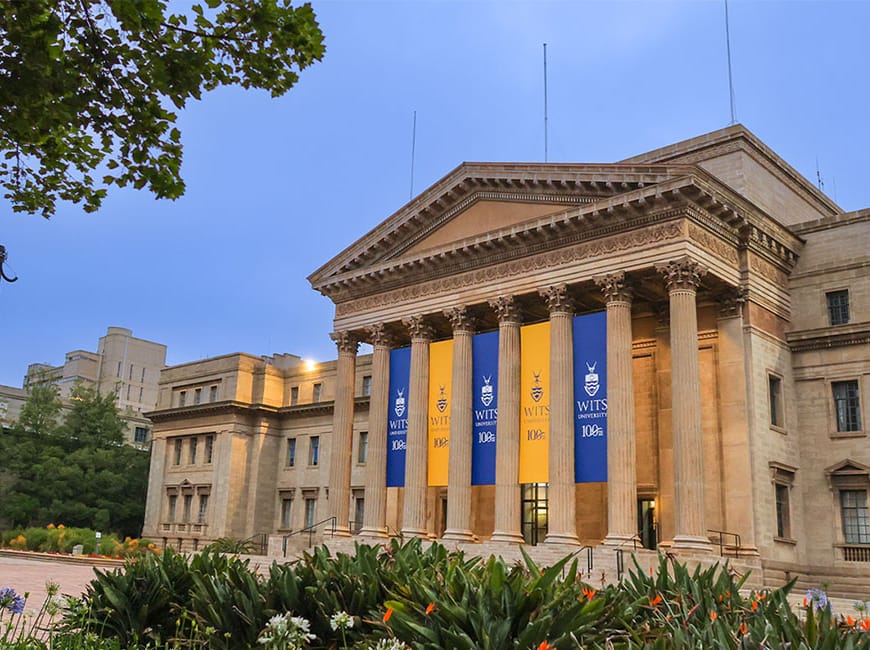
The University of the Witwatersrand (Wits) has launched a research centre to challenge traditional higher education models and give Global South institutions a greater role in shaping the future of universities.
On Monday, Wits said the Global Higher Education Futures (GHEF) Centre had been formally introduced during a webinar in September, attended by more than 170 educators, university leaders, policymakers and private higher education practitioners.
ALSO READ: WATCH: Three KZN schools win R100,000 in energy-saving competition
Speaking at the webinar, Professor Nicole De Wet-Billings, Wits’ Senior Director for Academic Planning, said universities needed approaches suited to developing countries rather than relying on established international models.
“Global shocks have exposed deep structural vulnerabilities across higher education systems, especially in low- and middle-income contexts,” she said.
“Today’s overlapping polycrisis cannot be addressed through incremental change or imported northern models.”
The centre will include academics, policymakers and industry representatives to examine how universities respond to technological disruption, inequality and other challenges.
It forms part of Wits’ 2033 Strategic Framework and seeks to strengthen the influence of Global South institutions in international higher education debates.
Professor Ruksana Osman, Wits’ Senior Deputy Vice-Chancellor for Academic and founder of the centre, questioned the assumption that universities should prepare students for a single, predictable future.
“For too long, global higher education discourse has operated from a perspective that history advances along a single straight path where universities exist to ‘deliver’ one predefined future for students,” Osman told the webinar.
She said universities needed to consider whose opportunities were being expanded or restricted by their educational decisions and whether higher education was reducing or reinforcing inequality.
Centre Director Dr Bernadette Johnson said Wits wanted to position itself as a Global South leader in developing more inclusive education systems.
“The Global Higher Education Futures Centre positions Wits as a Global South leader that is re-imagining higher education not as a tool to deliver one predetermined future, but as a collective practice of making many futures – more inclusive, sustainable and socially just — together,” Johnson said.
The centre will operate through nine interconnected research hubs covering areas including artificial intelligence in teaching, governance, entrepreneurship, inclusivity, public trust in science and international partnerships.
ALSO READ: Manamela says digital divide could deepen inequality in public colleges
Its activities will include seed funding, two postdoctoral appointments and public seminars examining AI, inequality, multilingual technologies and higher education in developing countries.
The September webinar also examined the role of private higher education institutions in national education planning.
Professor Linda Meyer, Managing Director and Principal of Rosebank International, formerly Rosebank College, said private institutions should be assessed on student outcomes rather than their commercial status.
“Private higher education belongs in national planning. It is a contribution judged through what students learn, complete and do afterwards,” Meyer said.
She said private institutions followed the same national accreditation requirements as public universities but operated without state subsidies and paid corporate tax.
Meyer also questioned whether traditional assessment methods remained suitable as AI changed teaching and learning.
“We cannot have systemic measurements that have been crafted for us in the 1920s and 30s and think that that is still fit for purpose. We live in a very different world,” she said.