
By Letlhokwa George Mpedi
A life of public service rarely comes full circle with such grace. Long before she occupied the Union Buildings or stood at the podium of the United Nations, Phumzile Mlambo-Ngcuka stood in front of a classroom.
That origin story of the teacher from Clermont who never stopped believing that knowledge and opportunity could dismantle injustice.
Dr Phumzile Mlambo-Ngcuka chose to spend her final chapter amongst her myriad other contributions as Chancellor of the University of Johannesburg. Where her journey began, she continued to believe in investing in young minds.
She passed away on Friday, aged 71, and is survived by her husband, Bulelani Ngcuka, and their five children. To them and her extended family, we offer our deepest love.
They shared her with a nation and a continent, and we are grateful for every hour they gave up so that she could serve. To the University of Johannesburg (UJ), she was our Chancellor. To the country, she was a stateswoman, and to countless young people she was proof that a life can be built around conscience. To me, she was a mentor and a friend I will deeply miss.
ALSO READ: Aucamp calls for investment in packhouses to boost exports
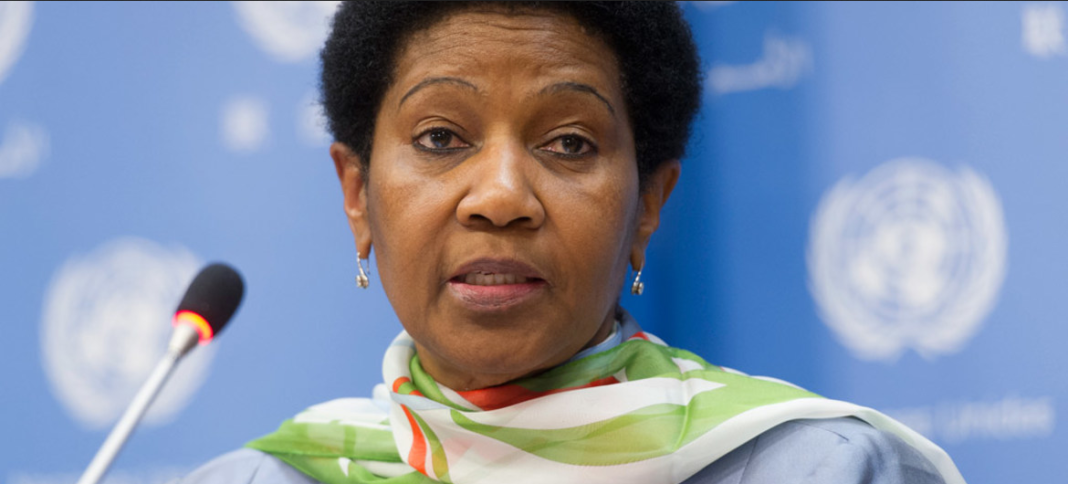
Her story is known and still astonishing. She was an anti-apartheid activist, a teacher, South Africa’s first woman Deputy President, and later the executive director of UN Women, where she spent eight years advancing gender equality. She could have rested on that record when she joined UJ in 2022. She chose to roll up her sleeves instead.
What defined her was her values, and she wore them as a discipline. She believed, more than anyone, that leadership is a moral undertaking before it is a managerial one. She asked of institutions what she asked of herself: that power be held in service of others. When UJ’s Council appointed her, they spoke of her exemplary moral and ethical standing. Those of us who worked beside her saw that standing every day, in small decisions as much as large ones.
She understood that equality is a right to be claimed, and she spent her life claiming it, for women and girls who would never know her name. At UJ she did not confine that work to speeches.
She took an interest in who was in our lecture halls and who was missing from our laboratories and boardrooms. She pressed us on whether our women students felt safe, and whether our young women academics could see a clear path forward. She asked uncomfortable questions and listened carefully to the answers.
She was equally clear that transformation is the slow, deliberate work of changing who belongs and who leads. At her inauguration, she called UJ’s story exemplary and rooted in our country’s transformation agenda, and she held us to that story. A university that is excellent only for the already advantaged, she reminded us, has missed its purpose.
Above all, she believed in education. She was a teacher before she was a minister or a diplomat, and I think she remained one in every room she entered. She saw the classroom as the most reliable instrument of change a society has.
That conviction ran through everything she did here, from her presence at graduations, where she greeted each student as though they were the only one in the room, to her encouragement of first-generation students, and to her insistence that our partnerships abroad should open doors for our young people. She received honorary doctorates in recognition of this work, and she carried them lightly, always turning attention back to the students.
ALSO READ: BREAKING: Emfuleni council sitting suspended after pepper spray released in chamber
This is what I mean when I say she was never a figurehead. She read what was put before her. She challenged me, in private and with great kindness, when she thought we could do better. She gave her time, her networks and her counsel without being asked. Because she was ours, UJ felt larger and more accountable.
In August we held an inaugural lecture in her honour. I am grateful that she was here to see that recognition, and I am glad that her name will remain part of our annual programme. But the truest memorial will be a University that functions as she asked us to. That is one that leads with values, insists on equality, counts transformation as unfinished work, and treats every student as proof of what education can do.
Maya Angelou wrote: “When great trees fall, rocks on distant hills shudder, lions hunker down in tall grasses, and even elephants lumber after safety.” I have thought of that poem all weekend, because a great tree has fallen and we are shaken. The teacher in her would ask what we plan to grow there. That is the question she leaves us. We will answer it with our work.
Mpedi is Vice-Chancellor and Principal at the University of Johannesburg.
INSIDE EDUCATION