Home Blog Page 103

CETA and EWSETA face scrutiny in Parliament

0

By Thapelo Molefe

MPs have expressed their concerns over the continued poor performances of Sector Education and Training Authorities (SETAs).

“How many SETAs actually received unqualified audits, and is this an isolated issue, or a systemic problem across the board?” a member the Standing Committee on Public Accounts asked on Wednesday.

The committee was briefed on the performance of the Construction Education and Training Authority (CETA) and the Energy and Water Sector Education and Training Authority (EWSETA) by the Higher Education and Training Department.

The briefing focused on oversight and audit outcomes for various SETAs, highlighting concerns regarding governance, financial management and performance.

According to the Auditor-General’s office, 14 SETAs had unqualified audits, including CETA, EWSETA, and INSETA who were repeat offenders, struggling to meet financial and governance requirements.

CETA has been grappling with governance and financial management challenges, as evidenced by three consecutive years of qualified audit outcomes (2022–2024). 

While its performance against Annual Performance Plans has improved since the existing administration, the authority has struggled to meet its Service Level Agreement targets with the department, recording below 50%.

“The CETA’s performance against its Annual Performance Plans has been improving, but the performance against the Service Level Agreement signed with the DHET remained below 50% for three consecutive years. This is a cause for concern,” the department stated.

Concerns were also raised over the CETA’s handling of supply chain management and discretionary grants. 

A committee member pressed: “Why has supply chain management remained a critical failure point? Have there been any suspensions or actions taken against responsible officials?” 

“Three SCM officials were suspended, one was dismissed, one reinstated and another case is still pending before the CCMA,” CETA CEO Malusi Shezi responded.

The SETA has, however, taken steps to address its shortcomings.

Research studies have been commissioned to assess the impact of its programmes, and a tracer study has been conducted to track the beneficiaries of CETA-funded learning programmes. 

“The SETA conducted a tracer study of all current and previous beneficiaries of CETA-funded learning programmes to measure the effectiveness of our interventions,” the department noted.

According to a presentation aimed at enhancing CETA’s financial and operational practices, it has decided benchmark itself against the Mining Qualifications Authority, which has a consistent track record of clean audit outcomes.

Despite being one of the smaller SETAs in terms of budget, EWSETA plays a crucial role in two key sub-sectors – energy and water – both of which are critical to economic growth and national stability. 

It maintained an unqualified audit outcome for four consecutive years, but suffered a setback in 2023-24 when it received a qualified audit outcome. 

Key concerns highlighted by the Auditor-General include improper accounting for discretionary grants and inaccurate financial disclosures.

“The public entity did not correctly account for all items in the commitment’s disclosure note, in accordance with GRAP 1 Presentation of Financial Statements,” stated the Auditor-General’s report.

Higher Education and Training Minister Nobuhle Nkabane is set to announce a new board for EWSETA, with a focus on ensuring that appointed members possess the necessary skills and ethical standards. 

Additionally, the National Skills Authority (NSA) is introducing a new governance indicator framework and enforcing stricter oversight measures, including mandatory registration of board members with the Institute of Directors of South Africa.

As part of its turnaround strategy, EWSETA will be paired with AgriSETA, which has consistently achieved clean audits, to improve its financial and operational practices. 

“For benchmarking of leading practices and improvements, EWSETA has elected to be paired with AgriSETA, which has for consecutive years attained clean audit outcomes,” the presentation highlighted.

Both CETA and EWSETA are under increased scrutiny as the government seeks to improve oversight, financial accountability and programme effectiveness within the SETA system.

The NSA has been tasked with strengthening regulatory frameworks, enforcing stricter governance standards and ensuring that SETAs conduct independent board evaluations.

The department emphasised that the NSA was preparing recommendations for the minister to enhance governance and performance across SETAs, including strengthening the regulatory framework to improve accountability and transparency.

INSIDE EDUCATION
Nkabane intervenes in CPUT accommodation crisis

0

By Thapelo Molefe

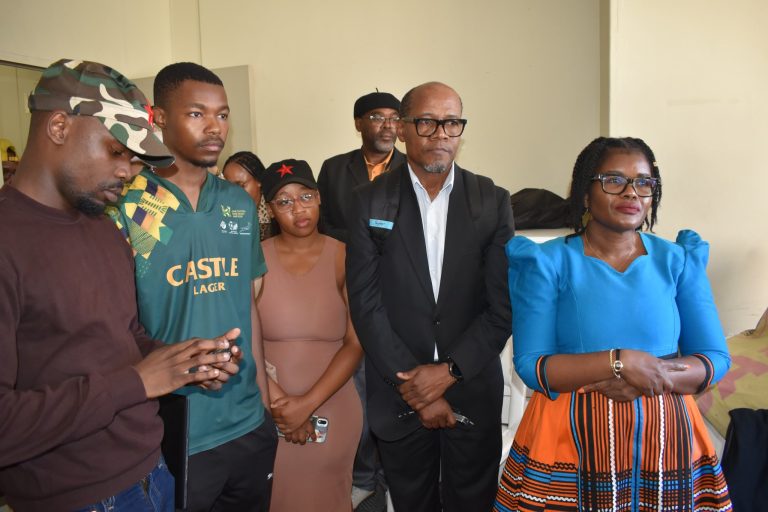
Higher Education and Training Minister Nobuhle Nkabane has taken decisive action following a distressing visit to the Cape Peninsula University of Technology’s (CPUT) District Six campus, where she found students living in dire conditions due to delays in student accommodation allocations.

The minister arrived at CPUT on Tuesday and immediately spoke to students only. She wanted a clear picture of what was happening on the ground. 

Students explained their struggles in detail, highlighting the dire circumstances they faced.

Accompanying the minister was a task team from the National Student Financial Aid Scheme (NSFAS), dispatched to address pressing concerns related to student funding and accommodation challenges. 

Recognising the urgency of the situation, the NSFAS team has been left at CPUT to work closely with university management and ensure that all outstanding issues are swiftly resolved.

During her walkabout, Nkabane engaged with university management, staff and students, assessing the challenges that have left many students without proper housing. 

Some have been forced to sleep in the student centre on bare floors, without access to showers or adequate meals.

“I was very disturbed to see the conditions in which our students are living. They are sleeping on the floor, they don’t have showers to prepare for the next day and they are struggling to access proper meals,” Nkabane said.

“This is unacceptable, and immediate action is required.”

Despite previous efforts by the department and Deputy Minister Mimmy Gondwe to resolve the crisis, progress has been slow. 

Nkabane has now ordered an immediate temporary accommodation plan to ensure all affected students have a proper place to stay while the university finalises its allocations.

“I have given CPUT a deadline to ensure that all students are housed appropriately. As a temporary measure, we are moving them into a more conducive living environment so they can focus on their studies,” she stated.

CPUT Vice-Chancellor Professor Chris Nhlapo acknowledged the ongoing difficulties, but offered assurances that the university was working towards resolving the issue. 

“We have made significant progress and have reduced the number of students without accommodation, but we still have around 80 students who need to be placed,” he said.

Beyond the immediate intervention, the minister stressed the need for sustainable solutions to address the recurring student housing crisis. 

She has established a task team, comprising representatives from the Department of Higher Education and Training, NSFAS, and student organisations, to devise a long-term strategy for improving on-campus student accommodation.

“We cannot continue with short-term fixes. We need a sustainable investment in student housing to ensure that future generations do not face the same struggles,” she emphasised.

Following her visit to CPUT, Nkabane proceeded to Northlink TVET College, where she was shown how all students work together on projects. She interacted with some students. 

The minister encouraged people to consider Technical and Vocational Education and Training (TVET) institutions as viable pathways to employment.

“TVET colleges produce graduates with the skills and competencies needed for our economy. We need to invest in artisan development programmes and ensure that TVET graduates contribute to South Africa’s inclusive economic growth,” she said.

With registration processes underway across institutions, Nkabane reaffirmed her commitment to ensuring that no student was excluded due to accommodation or financial constraints.

“… our doors are open for any Vice-Chancellor or council of the university as well as student bodies to share some of the frustrations with us so that we can come on board on time because we don’t want to leave anyone behind. We don’t want to see any student excluded in the academic year because we want to see them, in the current as well as the future.,” she said.

As the deadline for student accommodation allocations looms, all eyes are now on CPUT to fulfil its commitment to resolving the crisis. The department’s intervention offers a temporary reprieve, but the need for a long-term solution remains urgent.

INSIDE EDUCATION

KZN schools feels the strain of budget cuts

0

By Lungile Ntimba

Budget cuts to the KwaZulu-Natal education department have had severe ramifications, with Basic Education Portfolio Committee reporting overcrowding and incomplete infrastructure projects.

The committee is on a week-long oversight visit to schools in the Ugu District in the province. It is focusing on the impact of insufficient budget allocation and overcrowding.

The committee has visited the Harding Special School in Harding, the Nomnandi ECD Centre in Izingolweni and Nositha Primary School, which is a farm school, in Bomela.

Committee chair Joy Maimela said the committee heard that many projects were on hold and maintenance was delayed due to the department’s lack of funds. 

“This is a concern because we visited a special needs school where the building of new toilets was being delayed indefinitely,” Maimela said in a statement on Wednesday.

“We have also noted serious overcrowding. At one school we heard that the Grade R class has 48 learners and some other grades between 58 and 77 learners per class. It is totally unacceptable. We cannot allow this to continue. We need to find urgent solutions for this.”

While committee members commended the cleanliness and neatness of Harding Special School, they expressed serious concerns regarding the inadequate ablution facilities.

“We indicated to the MEC that budget constraints without any commitment as to when new toilets can be built, is not good enough,” Maimela said.

At Nositha Primary School, the committee applauded the principal’s commitment to enhancing the school’s standards. However, members were shocked to discover that there were 48 learners in a Grade R class and 77 in a Grade 7 class. 

“The education of the black child cannot be neglected like this. This is unacceptable,” Maimela said.

She said that committee was focusing on the provision of resources for rural and special needs schools, user-friendly infrastructure, and preparing learners for post-school education or entry to workplace-based learning programmes. 

It was also assessing social cohesion, including the gender-based violence framework, safety in schools, and getting learners ready participate in school sports.

Members would also check on scholar transport and the National School Nutrition Programme.

Maimela said the committee planned to engage with stakeholders, including the provincial education department, national Basic Education Department, unions, SA Principals’ Association, School Governing Bodies and traditional leaders to discuss its findings and determine a way forward.

INSIDE EDUCATION

Learning a new language? Your mindset matters more than ‘having a knack’

0

By Xijia Zhang and Kimberly A. Noels

If you stumble when you need to talk to someone in a language that isn’t your native language, do you think: “I just don’t have the knack for languages” or “Maybe I am not cut out to learn another language?”

Learning and using a language other than your mother tongue can be a daunting challenge. The good news is that everyone is smart enough to learn another language. An important part of that process is developing a mindset that will help you to succeed.

What is a language mindset?

We study people’s motivation to learn new languages from the perspective of language mindset theory. Language mindset theory shows that what people believe about aptitude has a role to play in language learning.

This theory concerns learners’ beliefs about whether they can change their aptitude for learning and using languages, and how different beliefs are associated with different outcomes, including language proficiency.

If learners think they can improve their ability when learning something hard about a new language, or when they didn’t do well in certain aspects of language learning, they won’t be scared off by thinking that their current level of ability is low.

Learners may even feel that these difficulties or failures are chances to learn something new and to improve their language ability. They remain hopeful and confident about what they can potentially achieve in language learning. They focus on what they can do to improve their language skills through the learning process, rather than merely surviving the interaction, getting a good grade or doing better than other people.

A growth or a fixed mindset

Language mindset theory — pertaining to learners’ beliefs about their aptitude for learning and using languages — can be differentiated into three types of views:

  1. General language intelligence about whether a person believes they can change their ability to use spoken and written language to express themselves and communicate with others;
  2. Beliefs about their aptitude for learning a new language;
  3. Beliefs regarding whether their ability to learn a new language is in any way related to age.

If a person thinks these three types of language aptitude are something they’re born with and cannot change, they could be classified as a learner with a fixed mindset.

If they feel they can improve one or more of these aspects of language aptitude, and especially second-language aptitude, they could be characterized as a growth-mindset learner. Ultimately, learners with a growth mindset are likely to become more proficient in the language they are learning than a person with a fixed mindset.

Our research shows that about 20 per cent of language learners have a growth mindset, another 20 per cent have a fixed mindset and the majority (60 per cent) have a mixed mindset.

How teachers can help

Although people are increasingly using digital apps like Duolingo, language courses remain a common way for people to learn languages — and language teachers can help learners develop a growth mindset.

Teachers can help by reminding learners that they can improve their language intelligence through their efforts. For low-stakes assignments and tests, teachers can encourage learners to take risks and attempt new challenges and use these moments as an opportunity to learn something new.

Teachers should also provide feedback that focuses on the learning process; for example, what types of learning strategies learners could use, whether they need to work harder and what resources could be helpful for their language learning.

In this way, teachers convey an important message that it’s OK to make mistakes, and what learners do in the learning process matters more than how proficient they currently are. Even when learners are faced with high-stakes exams, teachers can still help learners connect the content of the exams to using the language in real-life communication.

If teachers can create a classroom environment that fosters a growth language mindset, learners are more likely to continue learning the language.

Mindset can shift, aptitude can grow

If you are a language learner who finds yourself thinking that your language aptitude is fixed, it’s never too late to change your belief.

Every time you master a new word, or acquire a new aspect of grammar or even just manage to get your message across to another person in the language you are learning, you are improving.

If you are having a hard time learning a certain aspect of the language, try using a different learning strategy, finding resources that can help you or simply giving yourself more time to practice. Remember, everyone is smart enough to learn a new language.

Xijia Zhang is a graduate student, Department of Psychology, University of Alberta and Kimberly A. Noels is a Full Professor, Psychology Department, University of Alberta.

The Conversation

CT primary schools receive furniture to improve academic environment

0

By Johannah Malogadihlare

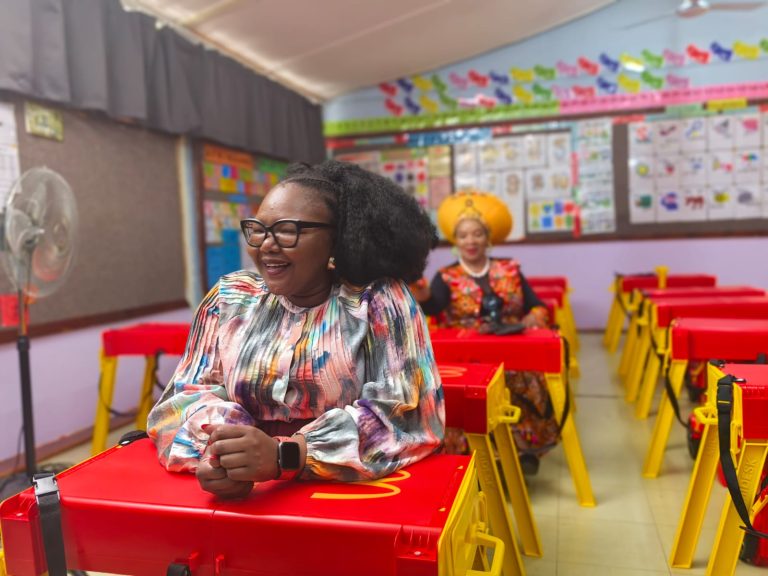
As part of the Basic Education Department drive to improve learning conditions through public-private partnerships, two primary schools in Cape Town have received much-needed furniture.

Basic Education Minister Siviwe Gwarube was in the metro on Monday with McDonald’s South Africa and MiDesk Global. They handed over desks and chairs to Nal’uxolo Primary School in Philippi and Saint Paul’s Primary School in the Bo Kaap.

MiDesk Global founder Farana Boodhram said the partners were committed to improving the learning conditions of young pupils and addressing the lack of proper school furniture.

“We firmly believe that every child deserves access to quality education and a nurturing learning environment. Our collaboration with McDonald’s goes beyond providing furniture to children in need; it represents our shared commitment to fostering hope, creativity and a passion for learning among students. These mobile desks will empower them to learn without limits,” Boodhram said in a statement.

Learners received functional desks that are fitted with USB charging ports to help them achieve their education goals.

MiDesk decided to step and help after hearing that children from the two schools were working on their laps.

The initiative was championed by the department’s Rural Education Directorate with an aim to encourage equal quality education in disadvantaged schools.

While handing over the desks, McDonald’s SA chief marketing officer Daniel Padiachy emphasised the company’s commitment to education and community support.

“Today’s initiative is not just about desks, it is about hope. It is about sending a clear message to these young minds that they are valued, that their education matters and that we believe in their potential to shape the future of our nation,” he said.

Padiachy said that their investment in children would shape the future of South Africa.

MiDesk said it was important to find solutions to help bridge the gap for pupils who lacked basic resources so that they could succeed in their studies, while McDonald’s said the donation was part of a broader commitment to identify and support schools across the country that were dire need of basic infrastructure.

“The support of private sector partners, such as McDonald’s, to the education system is crucial. Government efforts alone are not enough to meet the educational needs of our growing population” said Gwarube.

She also said that such initiatives aligned with McDonald’s South Africa’s “Together Mzansi” philosophy, emphasising its commitment to give back to the communities that have supported it over the years.

INSIDE EDUCATION

FASSET calls for urgent action on skills data submission

0

By Thapelo Molefe

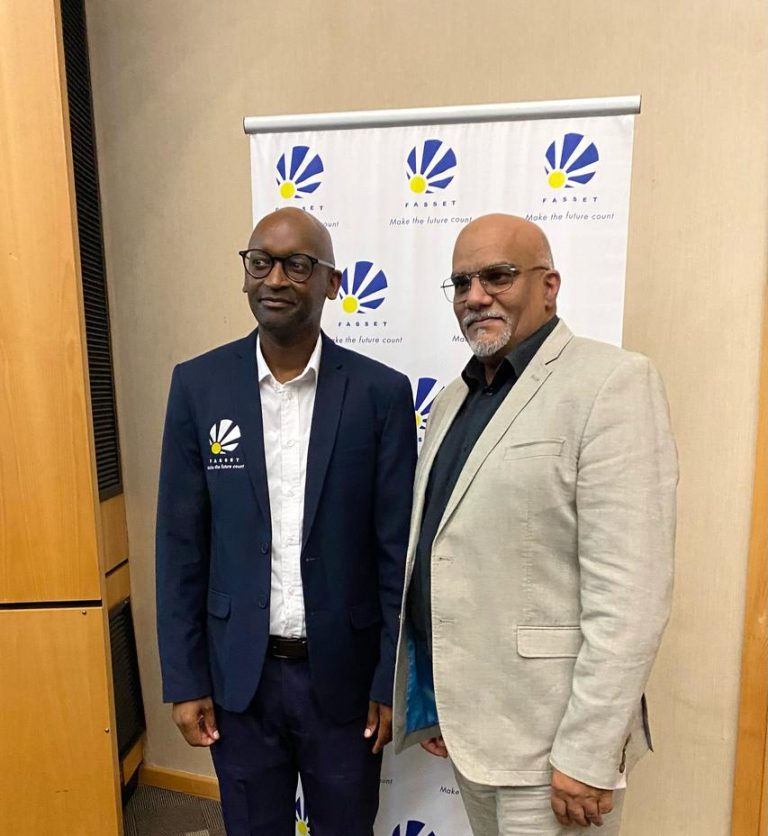
The Financial and Accounting Services Sector Education and Training Authority (FASSET) is ramping up efforts to address a critical challenge facing the sector, the incomplete and declining Workplace Skills Plan (WSP) and Annual Training Report (ATR) submissions. 

In a decisive move to rectify this trend, FASSET hosted its WSP Research Summit in Johannesburg on Monday and will continue the meeting in Durban on Tuesday and in Cape Town on Friday.

As the statutory body responsible for overseeing skills development in the financial and accounting services (FAS) sector, FASSET plays a crucial role in shaping a workforce that meets the evolving demands of the industry. 

By facilitating training and development programmes, it aims to enhance the competencies of professionals in accounting, auditing and financial services, ensuring that the sector remains competitive and sustainable.

The summit brought together key stakeholders in the FAS sector to explore ways of strengthening data collection and ensuring skills development initiatives were aligned with industry needs. 

The decline in WSP/ATR submissions has led to gaps in the sector’s understanding of workforce trends, impairing efforts to craft targeted training programs. The Seta’s leadership is determined to reverse this trajectory.

“The role of data in driving skills development cannot be overstated,” said FASSET acting CEO Makabongwe Siziba. 

“WSP/ATR submissions are not just an administrative task – they are a vital tool for shaping the training and skills development programs that benefit the entire sector.”

The submission of WSP/ATR reports is a fundamental part of its mandate to develop the Sector Skills Plan (SSP). These reports provide a critical understanding of current skills shortages, emerging industry trends and necessary training interventions.

However, dwindling employer participation has resulted in incomplete datasets, which in turn hinders the effectiveness of FASSET’s skills development programmes.

At the core of this issue is a growing need for more detailed, reliable and representative data. 

Its research team is using the meetings to present and validate key findings from the upcoming SSP 2025-2030, offering insights into critical industry changes, including digital transformation, the Fourth Industrial Revolution and the continuing rise of environmental, social and governance imperatives.

One of the most pressing challenges identified in the research was the urgent need for digital skills development. As financial services become more technologically driven, traditional roles are being reshaped.

Skills such as data analytics, automation and artificial intelligence integration are no longer optional but essential.

“Digital skills are increasingly becoming as fundamental as traditional literacy and numeracy,” Siziba told Inside Education.

“In our sector, where accounting, auditing and financial services are rapidly evolving with technology, having a digitally skilled workforce is no longer a luxury, it’s a necessity. Employers need employees who can navigate digital tools, analyse data and adapt to new technology. As these digital tools become more integrated into the workplace, we must ensure that our workforce is prepared for this shift to remain competitive and relevant.”

FASSET is calling on all levy-paying employers in the sector to attend the summits and participate in shaping the future of workforce development.

It aims to boost the number of WSP/ATR submissions, ensuring that interventions are data-driven and accurately reflect the industry’s needs.

“Our goal for the WSP Research Summit is to raise awareness among employers about the importance of these submissions and to foster greater participation,” Siziba emphasised. 

“By doing so, we can ensure that our Sector Skills Plan is based on real, actionable data that reflects the current and future needs of the FAS sector. This summit is also an opportunity to showcase the key findings from the SSP 2025-2030 and highlight the need for upskilling in emerging areas.

Ultimately, we aim to create a more accurate and comprehensive skills development strategy that aligns with the demands of the sector, ensuring we have the talent to drive future growth and innovation.”

With the SSP 2025-2030 findings highlighting high-demand roles such as external auditors, accountants in practice, accounting technicians, accounts clerks and tax professionals, the Seta is urging the industry to take decisive action to close existing and future skills gaps.

It has appealed to industry leaders, training providers and stakeholders to seize this opportunity to influence policy and ensure the sector remains competitive in the face of rapid technological and economic change.

INSIDE EDUCATION

Limpopo gets new schools to deal with overcrowding

0

By Lungile Ntimba

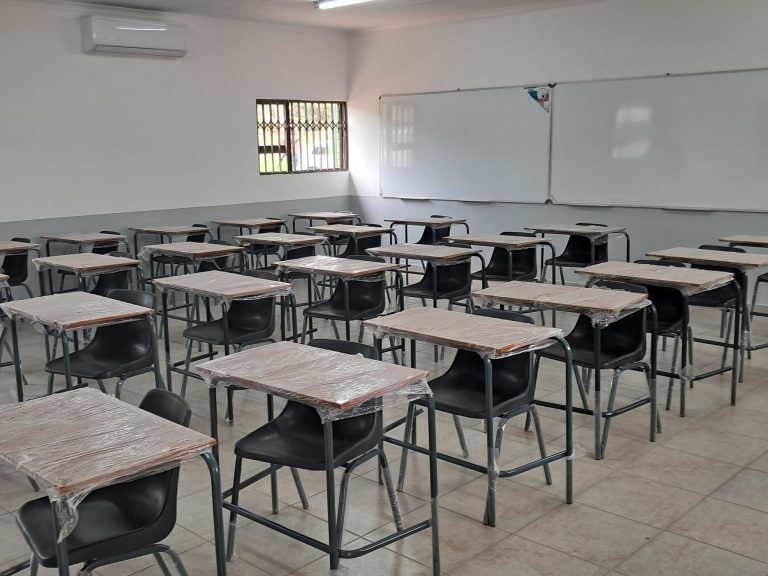
Limpopo premier Phophi Ramathuba will hand over two newly constructed primary schools in the Sekhukhune district on Tuesday, in line with the department’s undertaking to enhance infrastructure provisions within the province.

“This milestone reinforces the government’s commitment to improving education infrastructure, ensuring that learners have access to quality learning environments from the foundation phase,” provincial spokesperson Ndavhe Ramakuela said.

The premier will be joined by the education MEC Mavhungu Lerule-Ramakhanya during the handover of Dikgalaopeng Primary School and Mpelegeng Primary School.

“The handover of these schools is yet another demonstration of the government’s resolve to enhance learning conditions, support educators and create an enabling environment for learners to excel,” Ramathuba said in a statement on Monday.

On Monday, the MEC handed over Wayeni Primary School in the Vhembe West education district and MR Mamaila Primary School in the Mopani East education district.

Wayeni has 216 learners, 11 classrooms, an administration block, a mobile kitchen, four ablution blocks and eight unitary basins.

MR Mamaila has 432 learners, three newly constructed blocks with one renovated, administration block, seven classrooms and ablution facilities.

Earlier this month, Lerule-Ramakhanya handed over another two new schools. They were Matsuokwane Secondary School in Bochum in the Capricorn North Education District and Sekete Secondary School in Kanana Village 

Matsuokwane has 359 learners, 10 classrooms, an administration block, ablution facilities and a borehole, while Sekete boasts similar infrastructure and has 175 learners.

The construction of the schools is aimed at addressing the infrastructure backlog and alleviating overcrowding.

INSIDE EDUCATION

Addressing teen pregnancy: A year-round priority

0

By Akani Nkuna

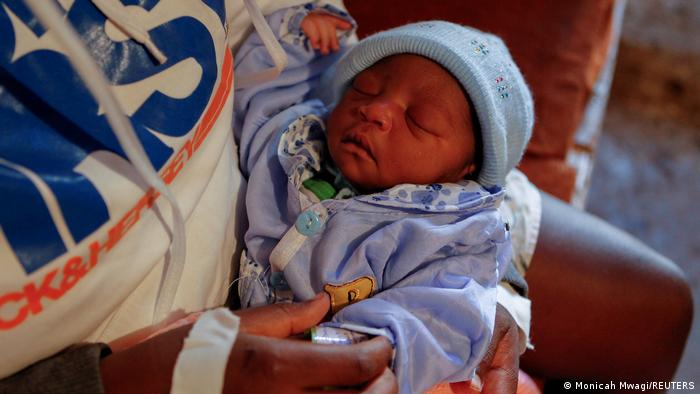
Learner pregnancy remains a major challenge, with over 30% of teenage girls falling pregnant in South Africa.

Of these, 65% are unplanned, which emphasises the urgent need for effective interventions to address the issue and support young learners in continuing their education while preventing unintended pregnancies.

According to the Basic Education Department, inequality, poverty, gender-based violence and power imbalances are key factors that drive high pregnancy rates. Data shows a rise in births among 10 to 14-year-olds between October and December 2024, coinciding with school closures for exams and holidays.

Parliament’s Portfolio Committee on Women, Youth and Persons with Disabilities was briefed by the department on the scourge, which especially gets media attention during the festive season when provincial education departments release figures on teenagers who have given birth.

Committee chairperson Liezl van der Merwe emphasized the need for ongoing solutions to address pregnancies, rather than limiting the focus to the December period.

“We want to focus on our learner pregnancy crisis. During the December period a lot of media focus was placed on this matter,” she said.

“However, it cannot be that we wait until Christmas babies arrive for us as portfolio committee to really interrogate this crisis. Because we do need to find an effective solution to this crisis,” she said during committee meeting this week.

Effective management of learner pregnancy depended on collaboration and complementary approach between all departments, partners and stakeholders including instituting strong referral mechanism, an official from the department told the committee.

The department emphasised that factors such as grade repetition, household poverty, unplanned pregnancies and limited communication about sexual reproductive health with caregivers or parents were placing girls at risk of dropping out of school.

“Those who drop out early during pregnancy with no formal childcare and no family care are at risk of not returning back to school,” Ndlovu added.

The department launched its policy on preventing and managing learner pregnancy in 2021. It is designed to foster a supportive environment, offer comprehensive sex education and provide care, counselling and support for pregnant learners.

However, committee members emphasised the importance of better coordination between government departments, stronger referral systems and peer education programmes to empower both girls and boys.

According to the department, there is a 49% likelihood of school enrolment for girls who have given birth and experience food insecurity, live in informal housing, have strained relationships with caregivers and face longer distances to school.

The enrolment figure increases drastically – to 72% – for girls who have who have access to the right food and the right amount, do not live in informal housing, have positive relationships with caregivers and also live close to school.

In late 2023, the Commission for Gender Equality (CGE) conducted a comprehensive study on school dropouts among adolescent girls during pregnancy and the postpartum period.

It showed that there were a multitude of factors contributing to adolescent pregnancy. They included limited knowledge about sexual biology and access to contraception services, fear of stigmatisation, lack of parental involvement, various socioeconomic factors, statutory rape, older sex partners, teacher–student sexual relations and substance abuse.

It also found, as the department has, that household and school-related factors are barriers to the retention of pregnant learners and adolescent mothers in school.

The report made a number of recommendations, emphasising that they should be implemented in a holistic and coordinated manner, with a strong focus on the rights, needs, and aspirations of pregnant and parenting youth.

The suggestions include prevention, supporting pregnant and parenting youth, policy and legal reforms, and collaboration and partnerships.

On regulations, it says that laws and policies related to teenage pregnancies need to be reviewed and updated, law enforcement against child marriage and sexual exploitation must strengthened, and access to legal services for pregnant and parenting youth must be ensured.

While the department and committee agree that there is a need for inclusive education and strategies for preventing and managing learner pregnancy, clearly a lot more needs to be done.

This includes a recommendation by the CGE that the departments of Basic Education, Health, Social Development and SA Police Services spearhead school-based and community programmes.

INSIDE EDUCATION

No blue light brigade for Minister Nkabane, who looks set to crack the whip

By Edwin Naidu

Higher Education and Training Minister Dr Nobuhle Nkabane did not have a blue light brigade when she visited Nelson Mandela University as part of her national roadshow to assess the readiness of institutions for higher learning.

When the shuttle she was travelling in had a puncture, the minister hopped onto a university shuttle and was seated next to a student leader.

Unlike the previous BWW-loving incumbent, who was cold and paid lip service to the poor and students, the minister left with a growing reputation for showing empathy and listening to students’ challenges. There is no time for airs and graces when there is a crisis — and a job to be done.

Some complaints were about accommodation hurdles, not knowing when they would have money for food and delayed payments from the National Student Financial Aid Scheme for computers inhibiting their studies. Students pleaded with Nkabane to help them. She pledged to try and address their issues with NSFAS.

The visit provided a platform for students in queues for various financial aid support to highlight their challenges with the minister. At the same time, university management also provided updates on ongoing efforts to enhance student access and success.

The minister had a similar meeting at the University of KwaZulu-Natal, where she ordered the institution, which was already full, to keep registrations open by a week. While this does not make sense and highlights the administrative nightmare facing universities in the country, at least it shows she makes decisions swiftly.

Her predecessor moved at a snail’s pace. While at UKZN, she also questioned why universities were not revamping their programmes to become relevant.

Universities nationwide face challenges, such as increasing applications versus available capacity, accommodation shortages and student financial aid concerns.

Mindful of the money-making by varsities over the fee for varsity applications, while at Nelson Mandela University, Nkabane criticised universities that charged prospective students an application fee to study at their institutions.

She said universities were becoming a joke. They know how many students they can admit, but they keep taking application fees from students, with some universities charging R200 per application.

She said this was done even they knew they could not accommodate the students at all. She referred to a media report on this practice in January, which alluded to “thugs in red gowns”.

Last month prospective students expressed anger on social media at the amount of money universities were making from application fees while students were being rejected due to a shortage of space.

“We need to sit down with USAf (Universities South Africa) and student formations to come up with a solution.”

She explained that the country had a central application system, but universities were not coming on board.

“We cannot be seen as thugs. We cannot take advantage of the vulnerable – we are messing (with) our children on the ground.”

Nelson Mandela University Vice-Chancellor Professor Sibongile Muthwa said the university did not charge application fees, which the minister and her delegation applauded.

Prof. Muthwa pointed out to students, the minister and colleagues from NSFAS and the department that none of the problems at the institution could be solved without collaboration.

“Fortunately, our university has a very strong culture of engagement with our students.”

The minister has also appointed a new NSFAS board. However, there is much work to be done. The new team must prioritise governance — not personal enrichment — and not pull the wool over the eyes with the number of students benefitting from funding that masks the problems.

An audit of NSFAS must show whether the country is getting value for money. There have been claims that the system retains permanent students, some of whom take as long as eight years to get a qualification – because they know that on finishing, they could join the ranks of unemployed. What is the success rate of university and TVET students getting funded by NSFAS?

With the new minister hitting the ground running, education should not be seen as a bottomless pit that produces nothing for the nation.

Edwin Naidu is editor of Inside Education.

INSIDE EDUCATION

Need for broader cooperation to tackle science challenges in Africa

0

By Edwin Naidu

Amid concern over funding cutbacks, experts in southern Africa have emphasised the need for partnerships to create resilient financing models for African science.

With African science becoming increasingly influential globally and helping to set the continent’s science agenda, funding is critical.

The importance of leveraging partnerships was a recurring theme during the recent meeting of the Science Granting Councils Initiative (SGCI) in the Sub-Saharan Africa Annual Forum and the Global Research Council (GRC) Sub-Saharan African regional meeting in Gaborone.

Funding and innovative resource use were important topics of discussions among scientists, funders, think-tank leaders and policymakers from Africa on various science, technology, and innovation (STI) themes.

It saw engagement among the global network of partners in academia, industry, civil society, government and intergovernmental organisations.

The gathering discussed strengthening African national innovation ecosystems through institutions, policies and programming.

According to Dr Fulufhelo Nelwamondo and Dr Thandi Mgwebi, who serve at the National Research Foundation as the CEO and group executive of business advancement, respectively, the gathering took place within the context of the African Union’s Agenda 2063 and the United Nation’s Sustainable Development Goals (SDGs).

It also laid out the framework for developing and enhancing strong strategic partnerships in support of STI on the continent.

Nelwamondo and Mgwebi said that the dominant discourse around the funding of science in Africa tended to focus on the limited contributions by African governments.

Many have not yet reached the AU’s target of allocating at least 1% of GDP to R&D. The Global North still dominates funding and there is limited private sector investment.

“What we hear much less about are the various homegrown funding organisations, such as public funders of science, and how, under conditions of precarity and uncertainty, they innovate around the development of resilient and sustainable models for funding science is more urgent than ever,” they said.

According to two, these organisations varied greatly in size and capacity in Africa – from a one-person operation within a ministry of science to fully fledged organisations. They played critical roles in their science systems regardless of their size and capacity.

For nine years, Nelwamondo and Mgwebi said the NRF and its sibling public research funders have made significant strides to build and sustain funding partnerships through the SGCI in the region.

Launched in 2015, the SGCI has strengthened the capacities of SGCs to support research and evidence-based policies that contribute to economic and social development. The multilateral alliance involves 17 countries.

“Together, we have funded national, bilateral, triangular and multilateral research programmes that seek to contribute to knowledge, human capital development and solutions to Africa’s pressing challenges.

“We have shared experiences, expanded our capacities and connected the dots that enhance our ability to disburse funds into the research ecosystem in an informed manner,” they said.

These initiatives have expanded capabilities to promote the status of women and equality in research.

“We have collectively produced scholarly work that documents how public funders of African research function are positioned. Together, we have built a shared understanding of what it takes to leverage scientific and political proximity to contribute to the financial resilience of Africa’s research ecosystem.“

They said that through the SGCI, as public funders of research, they were gaining greater visibility, including in the global science arena.

“We are positioning ourselves as partners of choice who interface with other science bodies, policymakers and communities across the continent and beyond,” added Nelwamondo and Mgwebi.

The NRF has taken the lead in harnessing its partnerships with its Global North funding partners and African science granting councils, inspired by the SGCI, to fund long-term strategic investments linked to the continent’s development agenda.

A prime example is the OR Tambo Africa Research Chairs Initiative, which is based on a distributed funding model in which all partners, including the host institutions, contribute to the programme’s funding.

“In doing so, African public funders of researchers are increasingly positioning themselves as partners of choice who are willing, able and available to partner with and provide an interface for science bodies, policymakers and communities on the continent and beyond.

“They are partners of choice because they can manage and disburse funds and offer insights and entries into the inner workings of their national science systems.”

These partnerships align with the broader desire for African public funders of research to increase the collective voice of African science on the global science stage, contribute to setting the African science agenda and influence the international science agenda.

These efforts will continue to be bolstered by the expansion of partnerships among governments, the private sector, academia, think-tanks, other funding partners and intergovernmental organisations to fund science for effective outcomes as mandated by the AU and in line with the SDGs.

“This cannot be overemphasised since global science is being called on increasingly to address the significant economic, environmental, geopolitical and technological crises of the 21st century,” said Nelwamondo and Mgwebi.

Abraham Mathodi, acting deputy director of the Ministry of Communications, Knowledge and Technology in Botswana, said it was essential to establish partnerships to address issues in Africa.

“As a member of the Science Granting Council Initiative, Botswana has benefited by participating. It has been able to get involved in other partnerships, for example, with the National Research Foundation under the OR Tambo Africa Research Chairs Initiative.”

He said as a member of the SGCI, Botswana was able to participate in the Africa-Japan collaborative research programme, the AJ Core.

“Participation in the SGCI has also given us a platform to be part of the Global Research Council, and it has opened windows for us to be able to solicit other partnerships, even within or without the SGCI and without the GRC; we are able now to dialogue,” he added.

Cephus Adjei Mensah, head of the Research Council of Ghana, represented by the Ministry of Environment, Science, Technology and Innovation, said one of the very core requirements was co-creating.

“So, for example, how do we look at research areas that present some commonalities to us in terms of how we can fund research, so we can see that even within the SGCI, there are some best practices for working together in terms of core elements.

“Programmes like, for example, funding initiatives that we have been able to do together, like the long-term Europe, Africa, water, energy, food programme and some of the bilateral partnerships.

“That is going to be how we pull funds together from respective institutions to make a better impact, is one of the good ways to go… looking at sustainability, because most of the issues are across, and there are commonalities within that.”

Professor Anicia Peters, CEO of the National Commission on Research Science and Technology in Namibia, said it was key to examine what was being funded. While national priorities may exist, they may be shifting.

“In Namibia, food security is a priority, which includes agriculture. But then you have your health issues, etc., and then you have very topical issues that come up, like the energy crisis that we were experiencing, the green hydrogen drive, and suddenly, the oil and gas discoveries came in.

“Namibia has declared an emergency regarding the drought, so there’s no water. So now we must shift our focus. We should have been consistently working on it, but it is just now where we need to build,” she said.

Peters believes that resilient systems were needed, however, they must be flexible, agile and adaptive systems.

INSIDE EDUCATION