Home Blog Page 104

Fourth Industrial Revolution in South Africa: inequality stands in the way of true progress

0

By Zama Mthombeni

In his 2019 State of the Nation address, South Africa’s President Cyril Ramaphosa announced that he was creating a commission on the fourth industrial revolution (4IR).

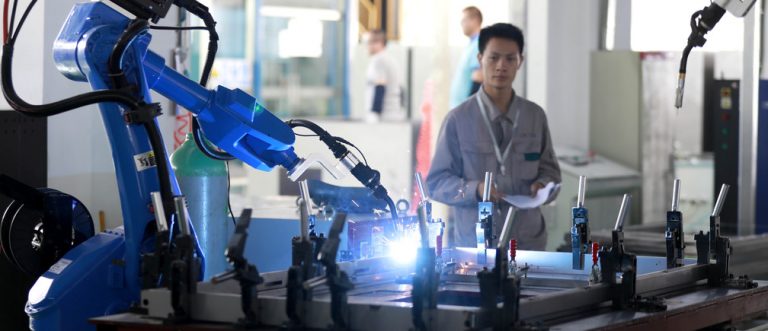
The term refers to the integration of advanced digital technologies like AI and robotics, as well as automation, into various economic and social domains. The first (1760s to early 1800s), second (1870s to early 1900s) and third (1950s to late 20th century) industrial revolutions were mechanical and electronic in nature. The 4IR is characterised by the fusion of physical, digital and biological systems. It is fundamentally reshaping industries, work and societies.

Ramaphosa acknowledged at the time that the 4IR “may lead to job losses”. However, he added, it would also “create many new opportunities”:

Through this transformation, we can build the South Africa we want, ensuring inclusive and shared growth for all.

Six years on, the commission’s work has yielded some results. It’s led to the establishment of the National Artificial Intelligence Institute and the creation of AI hubs in key sectors like healthcare and mining.

But how do ordinary South Africans view the 4IR? Globally, research has shown that there’s a stark divide in how people view the promises and perils of modern technological advancements. The wealthy, armed with access to education and resources, see opportunity. Marginalised groups, particularly those in lower-income brackets, are left fearing job losses and economic exclusion. Historical and cultural anxieties around technology also play a role in people’s perceptions.

I’m a researcher whose work explores, among other things, the intersection of technology, policy and governance. I am especially interested in the 4IR in a South African context and recently co-authored a study with development studies scholar Oliver Mtapuri to examine the role of social class on people’s views of technological change.

We found that wealthier South Africans, particularly those in urban areas, were more optimistic about automation, artificial intelligence and other emerging 4IR technologies than those in lower-income and rural communities. Racial disparities were evident, too. White South Africans were 2.5 times more likely to report feeling comfortable with technological change than Black South Africans.

These findings can help policymakers understand how best to push for a 4IR in South Africa that doesn’t deepen existing inequalities. This will require inclusive digital policies and expanded access to technology and training. Here South Africa could learn from countries like Germany and Finland.

Germany is working nationwide to equip workers with the skills needed for an increasingly digital economy. Finland, meanwhile, has focused on active labour market policies. It combines digital training programmes with progressive social welfare measures to support workers transitioning between industries. Both countries have also expanded social protections by extending unemployment benefits and offering financial support for retraining. They’ve also ensured that gig and platform workers have access to social security.

Marginalised groups left behind

Our data was drawn from the South African Social Attitudes Survey. It’s a nationally representative survey of 2,736 adults (16 and older). We conducted a secondary analysis of the data. The focus was on questions in the survey about technological change, fears of job displacement and access to digital tools. This, alongside an analysis of demographic data in the survey, allowed us to examine class, race and geographic disparities in perceptions of automation, AI and digital transformation.

Some of the key findings were:

  • 56% of South Africans believed that 4IR technologies would lead to job losses rather than job creation. Lower-income groups expressed the highest levels of concern.
  • Unemployment was a key determinant of 4IR scepticism: 63% of unemployed respondents felt threatened by automation, compared to 41% of those currently employed.
  • Only 29% of respondents from rural areas reported having regular access to the internet. The figure was 74% among urban respondents.

There are structural and historical barriers to lower-income South Africans’ economic mobility, access to quality education and participation in the digital economy.

Apartheid-era policies entrenched economic disparities. These still show in unequal access to education and infrastructure.

Today, rural areas lack reliable internet connections. (About 31.18% of South Africa’s population live in rural areas.) This makes it nearly impossible for people to benefit from or contribute to the digital economy.

Many industries at the forefront of automation, such as manufacturing and agriculture, are those with the highest number of low-skilled workers. Research by the International Labour Organisation emphasises that vulnerable workers all over the world often lack the skills needed in new job markets. This reinforces workers’ fears that technology will replace them.

Closing the gap: policy solutions

It will take bold, inclusive policies to address these inequalities.

The South African government must do more to increase access to technology. It already subsidises internet costs especially to schools. It has also expanded broadband networks into some under-served areas. And it offers free digital skills programmes. The problem is that these efforts are piecemeal. A more cohesive national strategy is needed.

Policies must also be developed with those who have been excluded from technological progress. This will allow them to participate fully in the digital economy – and, perhaps, come to understand and trust technology a bit more.

In practice, this could mean expanding initiatives like the National Digital and Future Skills strategy, which aims to equip citizens with the necessary skills to participate in the digital economy. This focuses on developing digital skills across various sectors and communities, ensuring inclusivity and broad participation.

Additionally, policies could support township-based digital innovation hubs such as the Tshimologong Digital Innovation Precinct. It provides training, incubation and resources to entrepreneurs from marginalised communities, enabling them to participate meaningfully in the digital economy.

Industries have a role to play, too. Singapore’s Skills Future initiative provides citizens with resources to adapt to changing job markets. This is a good example of government and industry working together. Closer to home, Rwanda’s Centre for the Fourth Industrial Revolution (C4IR) brings together “government, industry, civil society and academia to co-design, test and refine policy frameworks and governance protocols that maximise the benefits of new technologies”.

The 4IR has the potential to transform South Africa. But this will only happen if its benefits are shared equitably among all citizens. Innovation must be re-imagined not as a tool to consolidate wealth and privilege but as a means of creating a more inclusive society.

Zama Mthombeni is a senior lecturer at the University of Pretoria.

The Conversation

FISU and IBU unite a new era of university sports and biathlon excellence

0

By Levy Masiteng 

The International University Sports Federation (FISU) and the International Biathlon Union (IBU) have joined forces to promote university sports and biathlon excellence worldwide.

South Africa is a member of FISU and has representatives on a number of its committees.

FISU president Leonz Eder and IBU president Olle Dahlin put pen to paper, signing a Memorandum of Understanding this week, that paves the way for a brighter, more inclusive future in university sports.

FISU spokesperson Therese Courvoisier said the partnership aimed to promote sports for all university students, regardless of gender, and foster a culture of inclusivity, diversity and excellence.

“It outlines a common initiative to promote sports for all university students, regardless of their gender. This is a step towards creating a more inclusive and diverse sporting culture in universities worldwide,” she said.

During their visit to Lenzerheide, Switzerland,  Eder and FISU Games Winter Director Milan Augustin met with Dahlin and Secretary General Max Cobb to formalise the agreement. 

Courvoisier also said that a collaborative framework for FISU and IBU was being used to design and implement educational campaigns that promoted values such as sustainability, fair play, integrity and anti-doping. 

“These initiatives will seek to raise awareness among university athletes and officials alike,” she said in a statement.

Biathlon, is a sport with a rich history in the military, and has become a popular discipline among university students.

INSIDE EDUCATION

SA advocates for bilingual education

0

By Alicia Mmashakana

South Africa has marked International Mother Tongue Language Day under the theme “Make Languages Count for Sustainable Development”.

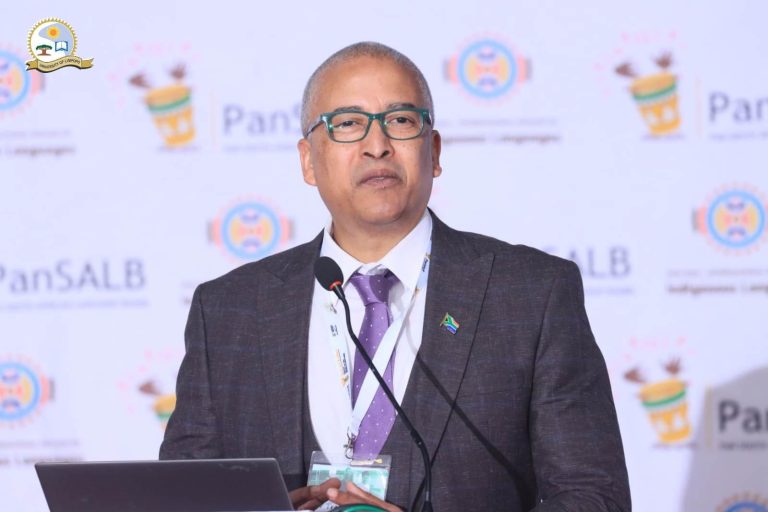
Discussions at Mbombela between the Pan South African Language Board (PanSALB), the Sports, Arts and Culture Department focused on the significance of mother tongue utilisation, particularly within educational frameworks, as a means to enhance learning outcomes.

Friday was the 25th anniversary of the day. Its aim is to promote awareness of linguistic and cultural diversity and to promote multilingualism.

The event underscores the critical connection between language preservation and promotion and the adoption of multilingual education policies and practices on a global scale.

PanSALB CEO Lance Schultz said that the introduction of mother tongue-based bilingual education in schools would not only enhance the quality of education, but also sustain linguistic and cultural diversity.

“It will provide learners with a sense of pride in their heritage and contribute to the development of a more inclusive and equitable society,” he said.

Schultz stated that the event served as a constant reminder and an essential part in the pursuit of equitable access to education and lifelong learning opportunities for all.

“The national implementation of MTBBE (mother tongue-based bilingual education) thus represents a pivotal step toward not only decolonising the educational landscape, but also unlocking the potential of learners as guaranteed in the Constitution’s preamble,” he said in a statement.

Basic Education Minister Siviwe Gwarube participated in a Unesco panel to share what South Africa was doing with MTBBE.

She said that evidence showed that to improve learning outcomes, reduce inequalities and give every child a fair chance at success, it was important to expand access to MTBBE.

“This is particularly relevant for us in South Africa, where most learners transition from mother-tongue instruction to English as the langue of learning and teaching after only three years of schooling, which is insufficient according to international research.  

“We are not aiming to replace any language but are adding a mother-tongue to strengthen comprehension and improve educational outcomes,” she said.

This approach will include teacher training, updated bilingual materials and potentially introducing bilingual national assessments.

INSIDE EDUCATION

SRC demands long-term solutions as UCT Council grants concessions

0

By Thapelo Molefe

The Students Representative Council at the University of Cape Town has welcomed the University Council’s decision to grant concessions to some students facing financial exclusion, but argued that the resolution falls short of addressing the full scope of the crisis.

“While the University Council has made some concessions, thousands of students remain at risk of exclusion due to outstanding fees. This is not enough — we need a long-term, sustainable solution to ensure that no student is left behind,” the SRC said in a statement.

The SRC stated this on Friday in response to the council’s resolution on financial exclusion, acknowledging progress but insisting that more action was needed to protect vulnerable students.

The issue of financial exclusion at UCT has been a long-standing challenge, with students facing fee blocks that prevent them from registering for the academic year. Many students, despite being academically eligible, have been unable to continue their studies due to outstanding debt.

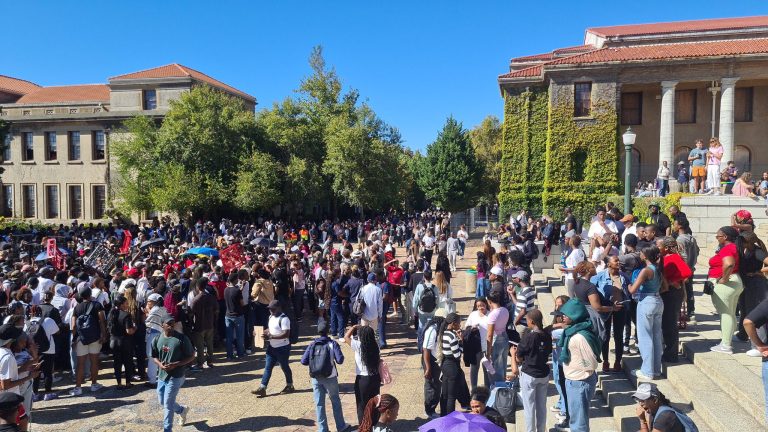
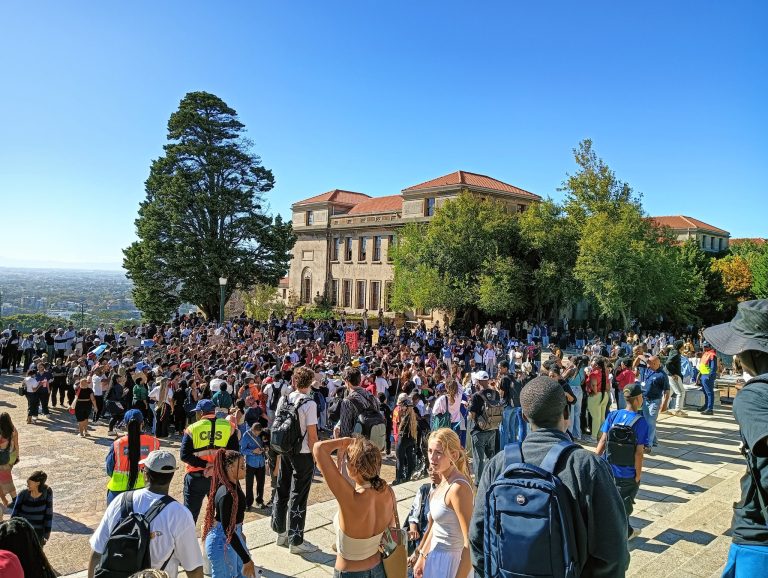
This week over 2000 UCT students marched to Parliament to submit a Memorandum of Demands to the South African government. 

The protest was in response to the broader systemic issues of student funding and accommodation shortages, which the SRC argues are not just UCT’s responsibility but failures of national economic policies.

As part of its resolution, the council has introduced financial relief measures aimed at assisting specific groups of students facing financial exclusion. 

Academically eligible but financially vulnerable students, including 235 individuals with outstanding 2024 debt totalling R26 million, will receive financial aid, with final-year students being prioritised. 

Additionally, 458 students who have made partial payments, with a collective debt of R18 million, will also benefit, particularly those who have paid at least 40% of their fees or owe less than R50,000. 

The resolution further provides relief to students with historic debt and bursaries, allowing 76 full bursary students (owing R6 million) and 38 partial bursary students (owing R2.8 million) to register under specific conditions. 

Moreover, students who have secured funding for 2025 through approved loans or verifiable bursaries will be assessed on a case-by-case basis to determine eligibility for further assistance.

Despite these concessions, the SRC remains firm that financial exclusion must be completely eradicated. It argues that many students still face uncertainty and the systemic issue of affordability in higher education needs permanent solutions rather than temporary relief measures.

Earlier on speaking to Inside Education, the SRC confirmed that protest action had paused but remained unresolved.

“The protest action has stopped for now. There are still students sleeping in our offices who have not yet received accommodation, so the fight is not really over. Around 100 students are sleeping at the SRC offices.”

The SRC also criticised management’s approach, stating that financially struggling students were being pressured to leave campus. 

“They were forcing students who have fee blocks to go home, but they really can’t do that. From our side as the SRC, we encouraged all academically eligible students to not go home.” 

UCT Vice-Chancellor Professor Mosa Moshabela acknowledged the student protests but emphasised that the university could not afford blanket fee concessions. 

“We have, on several occasions, cautioned the SRC against disruptive protests. While we understand student concerns, disruptions to university operations, including road blockages and lecture interruptions, cannot be tolerated,” he said.

Moshabela also pointed out that past blanket concessions have contributed to a culture of non-payment, with 239 graduates from the 2021 concessions still owing the university R30 million. UCT’s total student debt now stands at R864 million. 

“Management will continue to engage with the SRC to find common ground upon which a proposal can be finalised for presentation to council,” he said.

Meanwhile, the African National Congress Study Group on Higher Education and Training in Parliament has voiced its support for students, calling for immediate action to prevent financial exclusion. 

“It is unacceptable that any student should be denied access to education due to financial constraints. The university must prioritise student needs and implement solutions that address financial barriers without delay.”

Universities South Africa (USAf), however, urged students to direct their grievances toward the government rather than universities. 

“While the students’ grievances are legitimate, these issues are being presented to the wrong role players. Universities are not the primary source of student funding,” USAf stated.

As tensions remain high, the SRC reaffirmed its commitment to advocating for permanent solutions to financial exclusion, emphasising that their fight for free and accessible education is far from over.

“We will continue engaging with stakeholders, mobilising support and ensuring that no student is left behind. The doors of learning must be open to all,” the SRC concluded.

INSIDE EDUCATION

UJ and Gauteng work together to improve human settlements

0

By Levy Masiteng 

The Gauteng human settlements department and the University of Johannesburg (UJ) have joined forces to revolutionise human settlements in the province. 

The partnership has been formalised through the signing of a Memorandum of Understanding. It aims to create a more equitable and just society by addressing the systemic barriers that are worsening the inequality in human settlements.

“Today, we convene not merely to formalise an agreement, but to ignite a movement. We are here to forge a powerful alliance, a partnership dedicated to the monumental task of transforming human settlements in Gauteng,” said human settlements MEC Tasneem Motara.

She said that at the heart of the partnership was the “40-40-40 problem”, which was a stark reminder of the enduring legacy of apartheid’s spatial planning and racially motivated laws. 

In breaking down the problem, Motara explained that it manifested in three interconnected challenges, including 40 square metres of inadequate housing, 40km  daily commutes and 40% of income spent on transportation.

“The Group Areas Act, the migrant labour system and other discriminatory legislation created a fragmented and unequal urban landscape, where access to housing, employment and basic services was determined by race”. 

To address these challenges, the partnership will leverage the expertise of UJ to conduct cutting-edge research, develop innovative solutions and train the next generation of urban planners and human settlements professionals. 

In addition, the department’s Research Chair will be launched at UJ, which will drive innovation and technological advancements within the built environment.

The partnership will also focus on creating affordable housing options closer to employment centres, ensuring access to essential services and empowering communities to shape their own future. 

“This is not just about building houses; it is about building a just and equitable society. It is about creating spaces where people can thrive, where families can flourish and where the wounds of the past can begin to heal. It is about building a Gauteng where everyone has the opportunity to live a life of dignity and purpose,” she said. 

Motara extended her gratitude to UJ for its visionary leadership in establishing the Sustainable Human Settlement and Construction Research Centre.

“This is not just another academic undertaking; it is a beacon of hope, a catalyst for innovation that promises to revolutionise human settlements delivery in Gauteng and beyond.”

She said the centre must be at the forefront of combating the plague of inadequate housing and the state must harness its intellectual capacity to generate solutions that were not only practical and sustainable, but also deeply rooted in the lived experiences of South Africans.

INSIDE EDUCATION

Higher education committee chastises Wits for failing to adequately prioritise students

0

By Johanthan Paoli

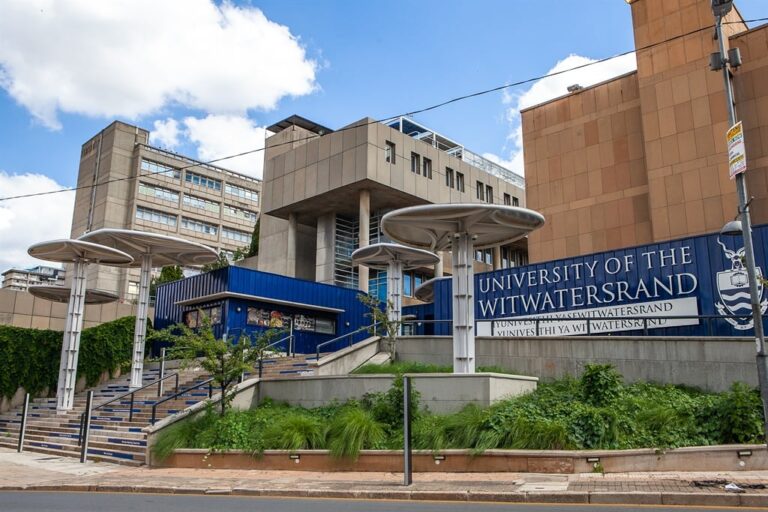
The Portfolio Committee on Higher Education has chastised the University of the Witwatersrand for what it describes as a concerning lack of student engagement in addressing challenges.

Following the appearance of management, and worker and student representatives before the committee on Wednesday, chairperson Tebogo Letsie stressed that students were the primary stakeholders of universities.

Therefore, management structures should be readily open to consultation, especially at the start of the academic year.

“Regular meetings with students are crucial in minimising problems. While policies might appear progressive on paper, they become obstacles to progress if not developed through proper consultation with all stakeholders,” Letsie said.

The committee criticised reports from the university’s Student Representative Council (SRC) which claimed that students had no choice but to sleep wherever they could find shelter due to accommodation unavailability at the institution.

It further called into question the university’s policy of forcing students to settle a portion of their debts before registration, in addition to the high cost of student accommodation accredited by the university.

In light of this, the committee called for a closer inspection of the Higher Education Act, noting that the department has allowed universities to operate outside of the provisions of the legislation, leading to non-compliance with the set terms for senior administrators.

The department welcomed the call for a review of the Act, stating that it remained problematic that universities could determine different statutes not in line with the legislation, including extending the term of office for vice chancellors.

Furthermore, the committee reprehended the National Student Financial Aid Scheme (NSFAS) for its marked absence during critical meetings where their responses to challenges were required.

“We have requested NSFAS to review their systems to ensure that no students have been defunded incorrectly and to implement corrective measures where necessary. No university can survive without the state’s intervention through NSFAS,” Letsie said.

The committee called on the university to get things back on track and make concessions to allow students to register despite outstanding debt.

Acknowledging the practical realities, they posited that upon obtaining their qualification, chances of the institution in recouping those funds would increase.

The committee welcomed the commitment made by Higher Education and Training Minister Minister Nobuhle Nkabane in visiting the institution, accompanied by the NSFAS team to engage with students regarding challenges and concerns.

Meanwhile, during the presentation to the committee, a demonstration took place on the main campus in Johannesburg, followed by the interruption of two classes.

About 60 individuals, who were largely calling for all students to be registered, blocked Yale road and were asked to leave.

Inside Education reached out to the university, with spokesperson Shirona Patel confirming that the meeting this week between the SRC and the University Vice-Chancellor Zeblon Vilakazi had proved productive.

“The meeting went well – they have now raised R9 million for the SRC Fund which will be disbursed to students together with funding from the Hardship Fund,” Patel said.

Acknowledging reports of an increase in nationwide protests, she said that things however appeared peaceful and undisruptive.

“We are hearing rumours of protests in solidarity with UCT and Stellenbosch, but all remains quiet for now,” the spokesperson said.

Following a five-day hunger strike, the university confirmed that it had removed the two postgraduate students from the SRC boardroom due to their status as being unregistered.

Patel described tone of them as an SRC member from approximately 10 years ago who was demanding postgraduate funding as well as another mature male student who was also demanding to study further.

INSIDE EDUCATION

G20 an opportunity for including youth in global politics

0

By Johnathan Paoli

The Gauteng government has emphasised the importance of collaboration with higher learning institutions, underscoring the need for inclusive discussions that involve young people and local communities.

The University of Johannesburg hosted the G20 provincial launch and dialogue, marking the first in a series of discussions leading up to the highly anticipated G20 Summit later this year.

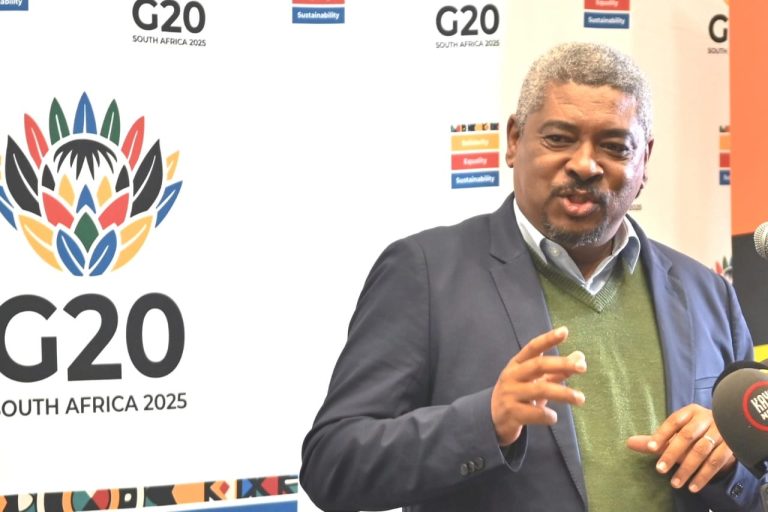
Gauteng spokesperson Vuyo Mhanga spoke at the event which brought together academics, policymakers and thought leaders to discuss pressing global and national issues, with a focus on technology, geopolitics and South Africa’s foreign policy.

“The province is of the view that let us use the institutions of higher learning because you have young people there. Let us go to communities and start engaging with them so that we can have this partner-based conversation,” he said.

A central theme of the dialogue was the role of technology in shaping modern economic and social structures.

International relations expert Oscar Van Heerden highlighted the rise of “techno-feudalism,” pointing out that tech billionaires like Elon Musk, Mark Zuckerberg and Jeff Bezos have gained unprecedented control over capital and influence.

The conversation then shifted to global power dynamics, with Van Heerden noting the increasing tensions between the United States and China.

Video: Kgalalelo Mogapi-Setlhare

Asharf Patel, a senior researcher at the Institute for Global Dialogue, noted that South Africa must present a unified voice at the G20.

As an example of this, Patel praised the Think 20 (T20) as a key component of the G20, providing research-based policy recommendations to global leaders.

“Over 800 abstracts have been received from people in different G20 countries who are part of the T20, representing academics and organizers,” he said.

The dialogue also shed light on the role of youth in South Africa’s foreign policy.

The South African Youth Association for Global Affairs (SAYAGA) expressed concern over the exclusion of young people in public diplomacy.

SAYAGA representative Alex Mosetshana maintained that the country’s youth was very much excluded in the strategy of public diplomacy.

“Each year, we have graduates who do not even understand the basics of South Africa’s foreign policy or national interests,” Mosetshana said.

He warned that this lack of awareness could lead to young people inadvertently supporting foreign interests over national priorities.

The launch event at UJ set the stage for ongoing conversations that will inform policies and strategies leading up to the summit.

With technology, economic shifts and youth engagement at the forefront, the discussions aim to ensure that South Africa’s participation in the G20 is both meaningful and impactful.

INSIDE POLITICS

New NSFAS board members announced

0

By Akani Nkuna

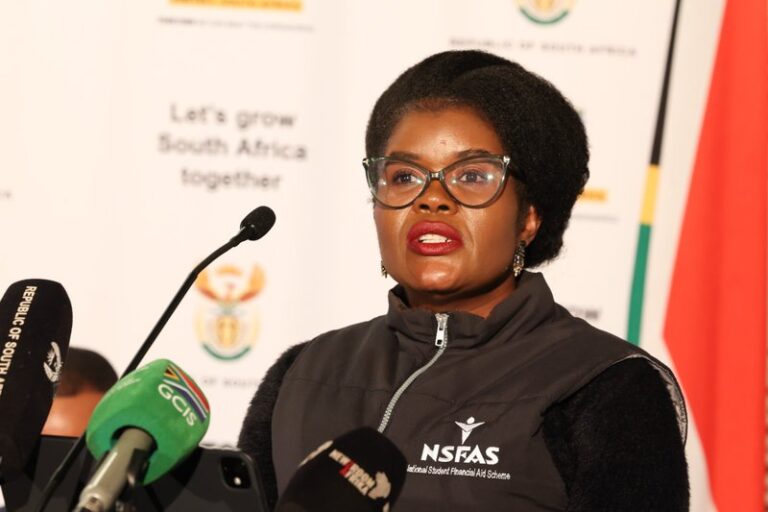
Higher Education and Training Minister Nobuhle Nkabane has revealed the members of the new board for the National Student Financial Aid Scheme.

The appointments ensure that the scheme will be guided by a team of highly qualified professionals, equipped with the expertise required to foster greater efficiency, accountability and transparency within NSFAS.

“… the board’s composition reflects the values of inclusivity, youth empowerment and gender representation,” the minister said in a statement on Tuesday.

“The newly appointed members meet the stringent qualification requirements and embody a diverse and representative leadership team dedicated to transforming higher education funding.”

She said the qualification requirements for board appointments have been notably elevated to ensure high standards. Board members must now hold at least a master’s degree and bring extensive professional experience in fields such as finance, law, engineering and governance.

“This strategic approach ensures that NSFAS is managed by individuals with the necessary expertise to navigate financial and administrative complexities while upholding transparency and efficiency,” the department added.

The newly appointed NSFAS board includes professionals from various fields, led by Dr. Karen Stander as the chairperson.

The board members are Ndileka Loyilane, Adv. Richardt Ramashia, Adv. Lavandran Gopaul, Philisiwe Sibiya, Clarinda Simpson, Prashika Mahesh, Dr Siyanda Mngandi, Karabo Mohale, Dr. Johanna Maphutha, Dr Mugwena Maluleke and Dr. Marcia Socikwa.

They will now be tasked with turning the scheme around, which has been under administration.

INSIDE EDUCATION

Bumpy start for 2025 tertiary academic year

0

By Johnathan Paoli, Lungile Ntimba and Amy Musgrave

The growing financial strain on South African universities has fuelled a wave of student protests nationwide, highlighting deep-rooted systemic challenges in higher education.

The past week has seen violent confrontations with law enforcement, and disruptions of classes and registration processes. The most recent protests were at the University of Cape Town on Monday, with students having to start their first day learning online due to demonstrations.

Thousands of students across various institutions have been unable to register due to financial constraints, with pressure mounting on universities and the government to find sustainable solutions.

Another issue is that universities across the country are reporting record-high applications, far exceeding their available capacity.

On Monday, Higher Education and Training Minister Nobuhle Nkabane, director-general Nkosinathi Sishi and National Student Financial Aid Scheme (NSFAS) administrator Sithembiso Nomvalo visited the Nelson Mandela University in Port Elizabeth to assess the institution’s readiness for the 2025 academic year.

The visit followed student protests last week that disrupted university operations over registration, financial aid clearance and accommodation challenges.

Nkabane said that a team has been assigned to resolve issues at the university.

She also told students that a new NSFAS board had been appointed and called on student movements to be frank with the department about their challenges to allow for a timeous resolution.

Sishi agreed that it was important to respond to students and provide feedback.

“It is clear that there is a strong social impact in the institution. It is also clear that management is really interested in solving the problems,” he said.

Sishi said these were real problems that were individualistic in nature, and encouraged consultations with the affected students to facilitate a speedy resolution.

“The fact that governance is now back at NSFAS is a huge breakthrough for us. We call on South Africans to work with the board,” he said.

Nomvalo said the NSFAS was committed to working with everyone.

“The specificity of the issues demands that we sit down with the students and deal with those issues one by one,” he said.

However, NMU Student Representative Council (SRC) president Lalitha Mbuzwana told Newzroom Afrika that the remaining challenges were unacceptable, especially at the start of the new academic year.

“The pilot project that has been introduced by NSFAS is a headache in itself and a headache to the institution. It can’t be that as a student is being verified, whilst they were accepted for NSFAS; it can’t be that as the academic year begins that a student’s application… is still in progress,” he said.

Meanwhile in the Western Cape, frustrated students at the University of Cape Town disrupted the first day of lectures over a lack of accommodation and a fee block.

The university confirmed that lectures had to go online.

The SRC criticised the university’s handling of student grievances in an open letter, condemning inadequate financial relief and a lack of engagement with affected students.

While UCT Vice-Chancellor Mosa Moshabela acknowledged the challenges, he warned against actions that disrupted campus activities and outlined financial relief measures, including bursaries and loan agreements.

“A reminder to all students that disruptive, violent and unlawful protest action, which would be in violation of the student code of conduct and the interdict granted in May 2023, will result in appropriate action by the university to safeguard the well-being of all staff and students,” he said in an online message.

There have also been demonstrations at the University of the Free State over registration and funding issues, which led to the arrests of 15 students.

And at the Cape Peninsula University of Technology, clashes resulted in injuries to police officers, damage to property and the arrest of a 20-year-old student.

At Sol Plaatje University in Kimberley, demonstrating students demanded the right to register without settling historical debt.

According to university officials, 934 undergraduate students collectively owed R65.2 million, while 435 postgraduate students owed R14.4 million.

In Johannesburg, while talks between the Wits University SRC and management are ongoing, two former students who have graduated from the institution and want to study again, have gone on a hunger strike, demanding that their studies be paid for.

University spokesperson Sirona Patel said there had been threats of other students joining them, but so far it was only the two.

“The meeting with the Vice-Chancellor (Zeblon Vilakazi), the Dean of Students and the SRC went well today (Monday) and they will touch base again tomorrow afternoon,” Patel told Inside Education.

Patel praised the 96% registration rate, which has brought the total to 37,295 students out of a capacity of 38,000.

She said in order to support students financially, Wits administered R1.8 billion in financial aid last year, benefiting 26,099 students.

This included NSFAS funding, R180 million for scholarships and R28 million for emergency aid.

Additionally, the university cleared R63 million in historic debt for 796 students through donor partnerships.

Further support included an R8 million donation for postgraduates with a 75%+ average, as well as R28 million in the Hardship Funding, which provided up to R50,000 per student for registration and accommodation.

The university had also matched the SRC’s R2.5 million fundraising efforts to support struggling students.

Patel said the SRC was expected to raise more funds this week, which Wits would also match.

She stressed that Wits was doing everything possible within its means to support students, but that the university could not erase all historic student debt nor fund every student’s education without risking bankruptcy or insolvency.

The issue of free education and student debt clearance required a national-level solution, involving government, the public sector and private donors, Patel said.

Student funding has been an ongoing crisis in the country for years, and because most universities are public institutions, the matter requires broader national discussions and solutions.

INSIDE EDUCATION

Hundreds of learners receive sports footwear in Cape Town

0

By Alicia Mmashakana

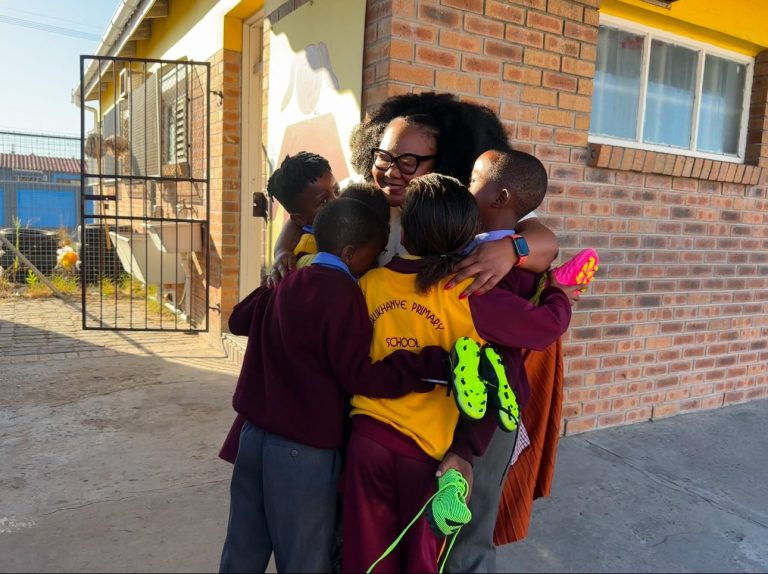
As part of efforts to ensure that learners are not hindered from participating in sport, the Basic Education Department has handed over 1500 pairs of sport shoes to three schools in Cape Town.

“This handover affirms our commitment to working with partners across the basic education sector to open up access and participation in sporting activities in our schools,” Basic Education Minister Siviwe Gwarube said on Monday.

The footwear was donated by the Our Shoes Charity Organisation, which annually collects 50,000 pairs of “pre-loved” shoes from Ireland and donates them to underprivileged children in South Africa.

Gwarube visited Vukukhanye Primary School in Gugulethu, Kwamfundo Senior Secondary School in Khayelitsha and Paramount High School in Mitchells Plain. Each school received 500 pairs of shoes.

The department said the initiative not only provided learners with essential footwear, but also strengthened the government’s dedication to promote comprehensive growth in pupils and eliminate obstacles in reviving sports at schools. It was also important to help ensure equal opportunities in sports.

Gwarube expressed her gratitude to the organisation for its support and providing the much-needed footgear.

INSIDE EDUCATION