Ohio State President Walter “Ted” Carter Jr. resigned on Monday after disclosing “an inappropriate relationship” with a woman seeking public resources for her private business.
Carter, 66, said in a statement that he had resigned voluntarily after informing the university’s board of trustees of his error. He did not elaborate on the nature of the relationship and said he was leaving with his wife, Lynda.
“For personal reasons, I have made the difficult decision to resign from my role as president of The Ohio State University,” he said. “I disclosed to the board of trustees that I made a mistake in allowing inappropriate access to Ohio State leadership.”
Ohio State is the nation’s sixth-largest university, with more than 60,000 students, over 600,000 living alumni and a highly ranked football team and medical center. Carter oversaw a fiscal year 2026 budget totaling $11.5 billion in revenues and $10.9 billion in expenditures.
The university brought Carter on board in 2023 from the University of Nebraska system. He is also a former superintendent of the U.S. Naval Academy and holds the national record for carrier-arrested landings with over 2,000 mishap-free touchdowns.
He filled a vacancy at Ohio State left by the mid-contract resignation of President Kristina Johnson, which went largely unexplained.
The engineer and former undersecretary of the U.S. Department of Energy had been chancellor of New York’s public university system before she joined the Buckeyes as president in 2020.
The 2026 Gauteng Development League season got underway with a flurry of goals across the Under-19 division this weekend, with defending champions Mamelodi Sundowns opening their title defence in emphatic fashion.
Sundowns thrashed Rockevfs 5-0 in the standout result of the opening round, with Tebogo Moreri scoring a first-half hat-trick after Liano Snyders had opened the scoring inside the first 10 minutes. Kgaogelo Monanyane was also on target as the champions made an early statement.
Moreri grabbed his first in the 23rd minute before adding two more before the break, while Sundowns’ strong start underlined why they will again be among the teams to beat this season.
Kathorus Hyper Academy also began the new campaign with a win, edging Africa School of Excellence 4-3 in one of the weekend’s highest-scoring encounters.
Gift Muyambo opened the scoring, Sizwe Sidu added another, and Esethu Witvoet converted from the penalty spot as Kathorus held off a spirited fightback.
Remember Elite Sport Academy, runners-up in last weekend’s Top 8 final, also opened with a victory, beating Panorama 3-2 in a closely contested match. Bandile Sithole scored twice, Nceba Jozela added the other goal, and Brian Molefe supplied all three assists in a decisive contribution.
Elsewhere, Siwelele FC beat Jomo Cosmos 2-0, Randburg AFC overcame newly promoted Prestige Football Development Academy 2-1, and Joburg City FC secured a 3-1 win over the University of Pretoria. Wits Junior also claimed an impressive 1-0 victory over Highlands Park.
One of the most anticipated fixtures of the opening weekend, between Kaizer Chiefs and Seven’s Academy, was called off because of waterlogged fields at Chiefs Village in Naturena.
The new league season followed Kaizer Chiefs’ 1-0 win over RESA in the Under-19 Top 8 final the previous weekend, and the opening round suggested another fiercely competitive campaign lies ahead.
The KwaZulu-Natal Department of Education said on Sunday it could not currently approve applications under the Incentivised Early Retirement Programme and Voluntary Exit Programme because it lacked the financial capacity to absorb related costs from its existing baseline budget.
The department said it acknowledged cabinet’s decision to introduce the Incentivised Early Retirement Programme without penalisation of pension benefits, as well as the Voluntary Exit Programme, for public service employees. The decision was approved at a special cabinet meeting on 10 April 2024.
The Department of Public Service and Administration issued a formal determination in October 2025 setting out the framework and procedures for implementing the programmes across government departments. The determination provided for financial incentives to qualifying employees, with certain costs, including the waiving of pension penalties and incentive payments, funded by National Treasury.
However, other associated costs, including pro-rata service bonus payments, capped leave, unused annual leave and resettlement expenses where applicable, had to be funded from the baseline budgets of individual departments.
“Given the current fiscal constraints faced by the department, the KwaZulu-Natal Department of Education regrettably does not have the financial capacity at this stage to absorb the additional costs that must be funded from its existing baseline budget,” the department said.
It said approval of applications under the programmes was not automatic and that departments were required to assess applications against specific criteria, “including ensuring that service delivery is not negatively affected, that critical skills are not lost, and that the financial implications remain sustainable within departmental budgets”.
It said that while employees retained the right to apply, it was “presently unable to approve applications under the current phase, particularly in circumstances where the departure of employees may create service delivery gaps that cannot immediately be addressed”.
The department said its position did not oppose or undermine cabinet’s decision or the DPSA determination, but reflected “a responsible and transparent approach” to communicating its financial and operational realities while remaining aligned with national policy directives.
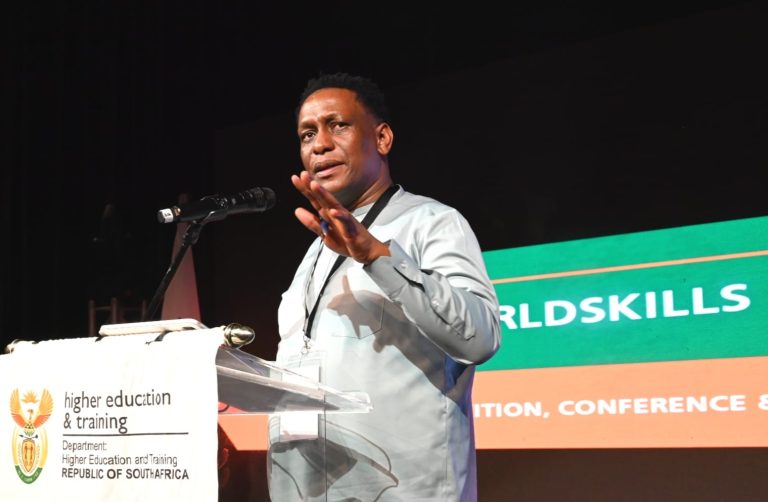
South Africa’s persistent skills shortage and high number of young people not in employment, education, or training remain a major obstacle to economic growth, Deputy Minister of Higher Education and Training Nomusa Dube-Ncube said on Monday.
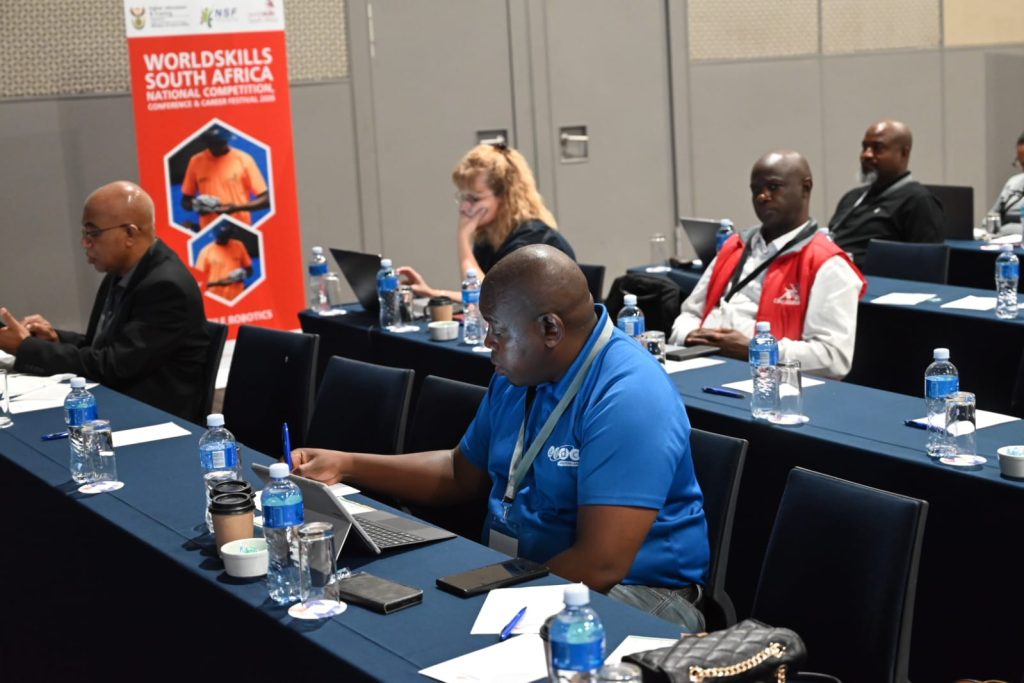
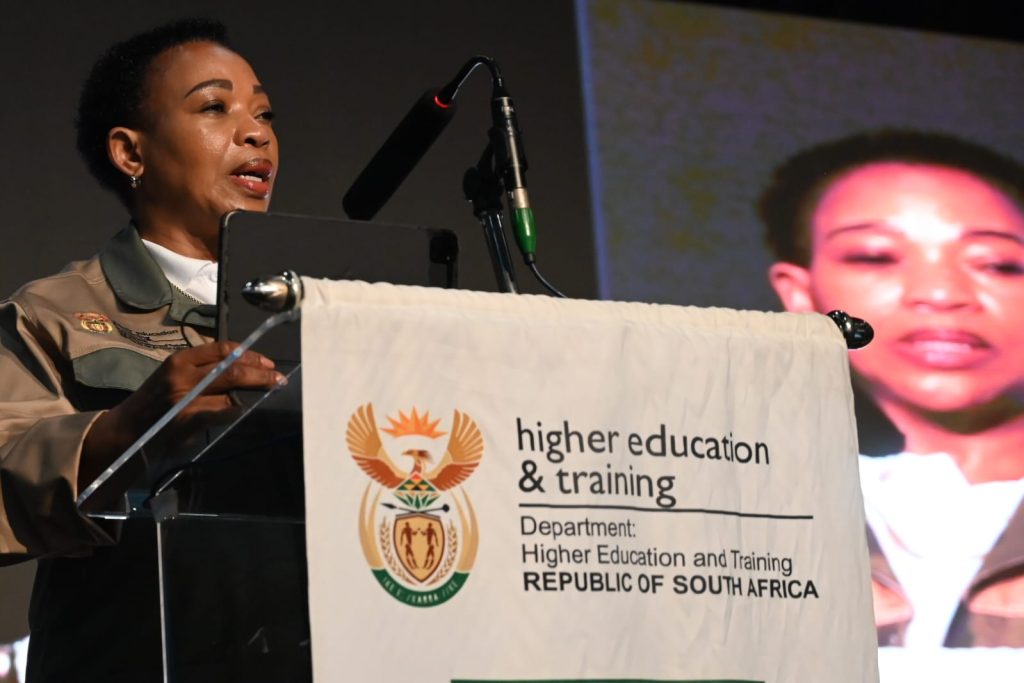
Delivering the keynote address at the WorldSkills South Africa Conference on the sidelines of the national skills competition at the Durban International Convention Centre, Dube-Ncube said expanding artisan development and apprenticeships is critical to addressing the country’s widening skills gap.
Keynote address by Deputy Minister of the Higher Education and Training Nomusa Dube Ncube at the WorldSkills South Africa National Competition, Conference, and Career Festival 2026, held on March 09, 2026, Inkosi Albert Luthuli ICC, Durban. Photo:Eddie Mtsweni
“It is disheartening that the number of young people not in education, employment or training is still high in our country,” she said.
The conference, held under the theme WorldSkills and Skills revolution: Raising the bar for South Africa, brings together policymakers, industry leaders, training institutions and international partners to discuss strengthening vocational education and artisan development.
Dube-Ncube said the country must urgently align skills development with economic priorities such as industrialisation, the green economy and the fourth industrial revolution (4IR).
“As the Department of Higher Education and Training, we continue to emphasise that artisan development is part of a wider ecosystem linked to industrial strategy, the green economy and the 4IR revolution,” she said.
She stressed that the skills gap is not limited to unemployed youth but also affects workers seeking to upgrade their qualifications or shift careers.
“Many adults are looking for new skills to advance in their current job or transition to a new career pathway,” she said.
Government has introduced several interventions through Sector Education and Training Authorities (SETAs), Technical and Vocational Education and Training (TVET) colleges and Community Education and Training (CET) colleges to expand access to training opportunities.
However, Dube-Ncube said stronger collaboration between government, training providers, labour organisations and employers is needed to ensure the system responds effectively to labour market demands.
“I believe it is vital that skills development providers, policy makers, labour organisations, community based groups and employers engage in open and honest discussions about what works and what needs to be improved in the apprenticeship and artisan development system,” she said.
She also highlighted the role of WorldSkills South Africa competitions in improving vocational training standards and promoting excellence among young artisans.
“I must recognise the contributions of WorldSkills South Africa, using competitions as a progressive platform for elevating standards, inspiring excellence and modernising the TVET sector in ways that are on par with international practices,” she said.
Dube-Ncube pointed to the establishment of the WorldSkills South Africa Academy as an example of how vocational training can be strengthened through innovation and partnerships.
“The academy stands as a model for what vocational skills development can look like when ambition meets execution,” she said.
She also called for greater employer participation in apprenticeship programmes, noting that industry involvement is essential for strengthening the country’s technical training system.
“South Africa needs more employers to participate in the apprenticeship development system,” she said.
Delegates at the conference include representatives from government departments, organised labour, business and international partners from countries.
Dube-Ncube said the discussions at the conference would help shape future policy and strengthen the country’s skills development ecosystem.
“The future of our workforce and indeed our country’s competitiveness depends on the strength of the partnerships we build and the ideas we generate here today,” she said.
The Vodacom Foundation, supported by the Gauteng Department of Education, has invested R2 million in the School of Excellence model at Usizolwethu Special Needs School in Daveyton, Ekurhuleni, to strengthen digital learning for pupils with intellectual disabilities.
Vodacom said the investment would equip the school with advanced information and communications technology infrastructure, including a fully installed local area network and special needs equipment.
The upgrades will also include renovated learning laboratories, a secure storage facility, reliable connectivity and a solar power solution to support uninterrupted learning.
Sitho Mdlalose, Vodacom SA CEO; Taki Netshitenzhe, Director of External Affairs for Vodacom SA; Nombulelo Skosana, Usizolwethu Principal; and Praveena Sukhraj-Ely from the Department of Women, Youth and Persons with Disabilities.
The school will also benefit from the development of a vegetable garden intended to promote nutrition and sustainability within the school community.
“We are very pleased to be launching another School of Excellence. This partnership demonstrates the power of collaboration in creating a better, more inclusive, and sustainable future,” said Director of External Affairs for Vodacom South Africa, Taki Netshitenzhe,.
“Public-private partnerships like this are effective in addressing societal challenges at scale and building pathways for young people to participate meaningfully in the digital economy.”
According to Vodacom, it has invested more than R40 million in 39 Schools of Excellence across South Africa to date, supporting major infrastructure upgrades such as connected learning centres, improved safety measures, sanitation upgrades, the removal of pit latrines and repairs to damaged school infrastructure.
The programme currently supports about 40,000 learners across the 39 schools nationwide. Vodacom said each School of Excellence is strategically located alongside an Early Childhood Development Centre, a Teacher Centre and a Vodacom ICT Academy to create a support ecosystem for learners, educators and surrounding communities.
Usizolwethu Special Needs School principal Nombulelo Skosana welcomed the partnership, saying it would significantly enhance learning opportunities for the school’s learners.
“We are profoundly grateful to Vodacom for the partnership and the immense opportunities this educational ecosystem will unlock for our learners, educators, and the wider Daveyton community,” Skosana said.
“The infrastructure, connectivity, and support systems implemented by Vodacom with the support of the Gauteng Education Department will greatly enrich our teaching and learning environment, preparing our students to thrive in an increasingly digital world.”
The investment comes as South Africa’s special needs education sector continues to face systemic pressures.
Last month, Inside Education spoke to Jackie Selley, an occupational therapist and principal at the Centre for Autism, Research and Education (CARE), a private and independent special needs school in Orange Grove, Johannesburg.
The centre supports children with autism from 18 months to 21-years-old.
Selley said many learners arrive at CARE after struggling in mainstream or remedial schools, or after spending years at home without adequate support following their diagnosis.
“Let’s say parents realise their child’s different at three, and by the time we get them into a school that can support them at seven, we’ve lost four years of supporting their development,” she said.
“The process isn’t streamlined enough to help these children and these families. We’re losing three years of a child’s life.”
According to Selley, the main solution lies in stronger investment in human resources, including more therapists, educational psychologists and specialised schools.
“If the government were able to allocate more money to human resources, there could be enough therapists, more special needs schools, and well-trained educational psychologists at schools,” she said.
“The solution lies not in sympathy, but in investment.”
She added that accessing diagnosis and school placement can be a long and expensive process for many families.
It was reported that diagnosis through Gauteng provincial hospitals can take between six months and a year, while educational psychologist assessments, often required for school placement, can cost between R3,000 and R12,000.
Even after those steps, placements in special needs schools can take an additional one to two years because of long waiting lists.
Selley said that autism-specific schools remain limited outside Gauteng, with provinces such as Limpopo and KwaZulu-Natal facing particularly long waiting lists.
Vodacom said its Daveyton initiative forms part of its long-term commitment to inclusive, quality education and support for the government’s Education Vision 2030.
Deputy Minister of Higher Education and Training Nomusa Dube-Ncube says South Africa must urgently strengthen its artisan and vocational skills pipeline to support infrastructure development and economic growth, as the country pushes to produce 30,000 artisans annually by 2030.
Speaking at the opening ceremony of the WorldSkills South Africa Competition, Conference and Career Festival at the Durban International Convention Centre on Sunday, Dube-Ncube said the country’s economic ambitions depend on building a stronger technical and vocational workforce.
“Every year we hear about our country investing trillions and billions of rands in infrastructure development,” she said.
“The question that we have been asking ourselves is, who is going to roll out this infrastructure development if we do not have the skills that will roll out that infrastructure development?”
The national competition brings together more than 230 finalists who will compete across 27 technical and vocational skills categories. They were selected from over 1,500 applicants who entered the competition process, which s that began in 2024.
About 33 competitors will be chosen from the event to represent South Africa at the WorldSkills International Competition 2026 scheduled to take place in Shanghai, China later this year.
Dube-Ncube said the competitors would carry the hopes of the country onto the global stage.
“Many of them will be carrying not just tools and technical expertise, but the aspirations of our nation and the belief in the transformation of our skills system,” she said.
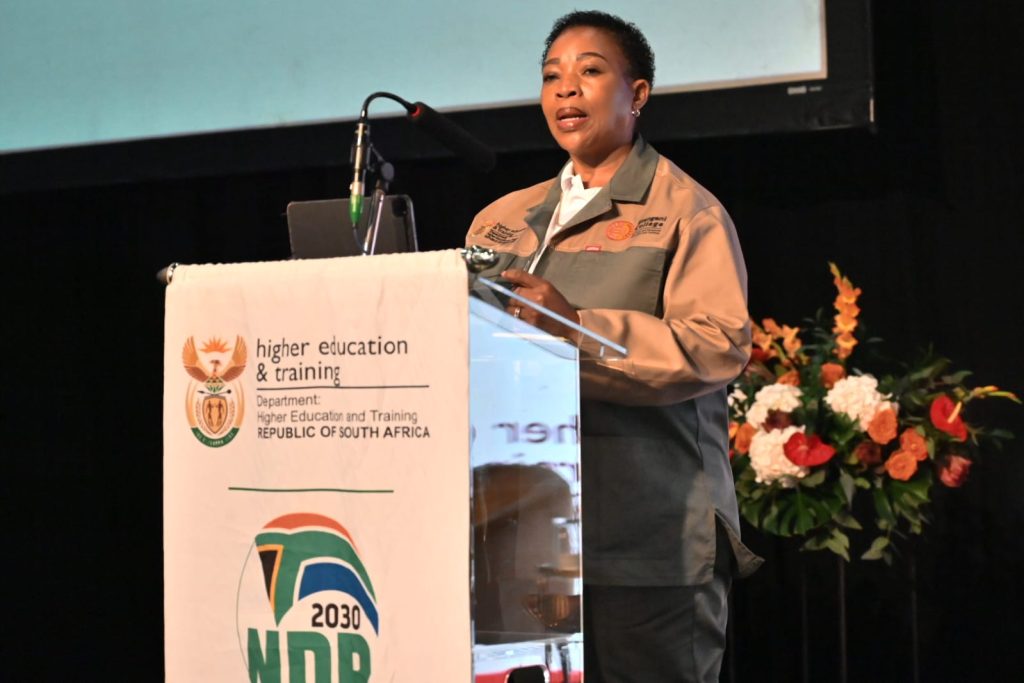
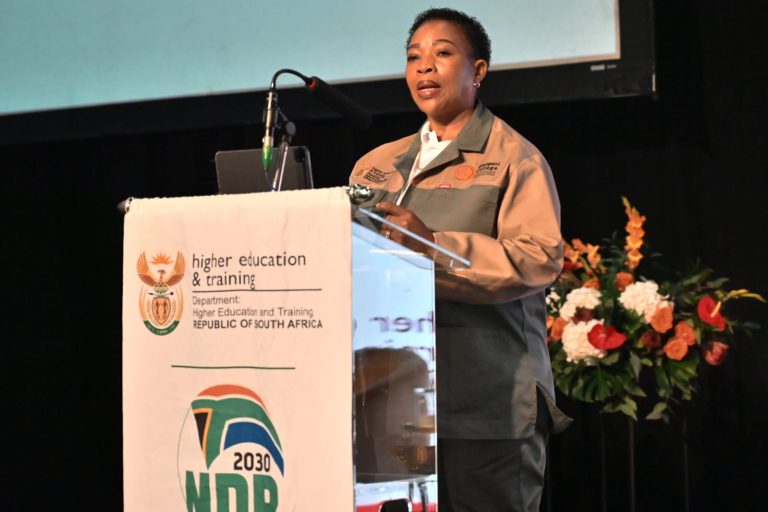
Keynote address by Deputy Minister of the higher Education and Training Nomusa Dube Ncube at the WorldSkills South Africa National Competition, Conference, and Career Festival 2026, held on March 09, 2026, Inkosi Albert Luthuli ICC, Durban. Photo:Eddie Mtsweni
To improve South Africa’s performance at the international competition, the department plans to prepare the national team through international partnerships and additional training platforms.
“We are planning to use our bilateral relations with Austria, Germany and China as training and competition grounds for these young people before the September competitions,” Dube-Ncube said.
She also announced additional psychosocial support for competitors during the national event through Higher Health.
“I have spoken to the CEO of Higher Health to make sure that we have a team present here during the competition so that we provide psychosocial support to the competitors,” she said.
The deputy minister said skills competitions play an important role in improving training standards and strengthening collaboration between industry and the post school education and training system.
“This journey reflects our outcomes as the Department of Higher Education and Training in building a high quality, responsive and effective skills development system that strengthens pathways into employment and economic growth,” she said.
She also urged stronger cooperation between government, training institutions and industry, stressing that skills training must be aligned with labour market needs.
“We cannot teach in a vacuum. Whatever we teach in the classroom has to be driven by industry,” she said.
“We must ask ourselves who we are teaching, what we are teaching for, and why we are teaching.”
Dube-Ncube said government would continue expanding artisan training opportunities and workplace learning programmes through partnerships with employers, training institutions and Sector Education and Training Authorities (SETAs).
The deputy minister also welcomed the participation of learners from technical high schools, noting that two competitors from a technical school in Umlazi were taking part in the competition for the first time.
Addressing the competitors, she urged them to represent the country with pride.
“You carry not just your own aspirations. You carry the aspirations of this country and of other young people who did not have the opportunity that you have today,” she said.
Dube-Ncube officially declared the 2026 national competition open, saying the event represents a broader national effort to modernise skills development and build a workforce capable of supporting South Africa’s future growth.
“Through WorldSkills South Africa we are advancing a national movement to modernise skills development and build the citizens who will construct South Africa’s future,” she said.
A 62-year-old Eastern Cape school principal has been summoned to court by the Hawks on allegations of fraud and perjury linked to a Road Accident Fund (RAF) claim worth about R2.9 million.
The Directorate for Priority Crime Investigation (DPCI) confirmed that the summons was served on Thursday by the Mthatha-based Serious Commercial Crime Investigation unit. The suspect is expected to appear before the Mthatha Specialised Commercial Crimes Court on 25 March.
In a statement released on Friday, the Hawks said the principal faces charges linked to allegedly contradictory claims submitted after a motor vehicle accident in 2017.
The government, scientists and researchers have allayed fears over endocrine-disrupting chemicals in sanitary pads, saying there was no evidence from research conducted over more than a century to suggest they caused any harm to humans.
At a high-level joint press conference on Sunday, spearheaded by Health Minister Dr Aaron Motsoaledi, who was joined by other agencies such as the World Health Organisation, the message from representatives was that production of the pads would continue and they would not be withdrawn from shelves.
The issue came into the spotlight after a University of the Free State (UFS) study found the presence of EDCs in several brands of pads and pantyliners that were sold in the country. That prompted an investigation by the National Consumer Commission.
Deputy Minister in the Presidency for Women, Youth and Persons with Disabilities Mmapaseka Steve Letsike used a tourism dialogue marking International Women’s Day to call for stronger policies, investment and structural support to expand women’s economic opportunities in South Africa’s tourism sector.
Speaking at the Women in Tourism Dialogue on Saturday, ahead of International Women’s Day on Sunday, Letsike said the conversation should not focus only on celebrating progress, but also on widening women’s participation and ownership in the economy.
The event was held under the banner of women in tourism.
Letsike said women make up more than half of the global tourism workforce, citing research by UN Tourism and UN Women. UN Tourism says women account for 54% of tourism employment worldwide, a higher share than in the broader economy, but are still concentrated in lower-skilled, lower-paid and often informal work.
The government, scientists and researchers have allayed fears over endocrine-disrupting chemicals in sanitary pads, saying there was no evidence from research conducted over more than a century to suggest they caused any harm to humans.
At a high-level joint press conference on Sunday, spearheaded by Health Minister Dr Aaron Motsoaledi, who was joined by other agencies such as the World Health Organisation, the message from representatives was that production of the pads would continue and they would not be withdrawn from shelves.
The issue came into the spotlight after a University of the Free State (UFS) study found the presence of EDCs in several brands of pads and pantyliners that were sold in the country. That prompted an investigation by the National Consumer Commission.
The UFS research flagged the presence of EDC groups, including parabens, phthalates and bisphenols, which have been linked to reproductive and hormonal effects and have raised concerns about long-term exposure.
Motsoaledi said the chemicals in the pads caused no harm and that, contrary to popular belief, men were more exposed to them than women, due to occupational exposure.
The minister said the chemicals had been known for over a century and that studies had been done to determine whether there was any harm to humans, but nothing had been found to suggest this was the case.
“Since the chemicals have been known globally for many years, the World Health Organisation has been looking for any evidence of harm over the years but to date, never found any harm from these products.
“The University of the Free State itself has mentioned that the study was not designed to establish a direct causal relationship between the detected chemicals and disease in women,” said Motsoaledi.
He added that the research, findings and their publication were not intended to constitute medical advice, a consumer directive or product usage recommendations, but rather to study peer-reviewed scientific data and identify areas that needed further research.
The minister said research had shown that investigations into the effect of the chemicals on the human body indicated very low risk and that they had been exempted by consumer agencies.
Motsoaledi said that in 2017, the South African Health Products Regulatory Authority took part in an international study, and one of its guiding principles was that any product had to be put to the test.
“Endocrine-Disrupting Chemicals are natural or humane-made products that had the potential to interfere with the action of hormones, especially reproductive and thyroid hormones if the quantities exceed the permissible concentration levels.
“Hormones, on the other hand, are the body’s chemical messengers, produced by the endocrine gland and released into the bloodstream to regulate vital physical processes. They control metabolism, growth, reproduction, mood, and sleep-wake cycles,” said Motsoaledi
He added that scientific research had revealed that EDCs were capable of disrupting important bodily processes, and that permissible concentration levels in a product were determined by the cosmetic ingredients expert panel, whose decisions were used by relevant regulatory bodies.
It’s getting tougher to assess how much university students have learnt. In his work as a Mathematical Statistics lecturer, Michael von Maltitz has tried a new way of getting students to learn, and of assessing what they’ve absorbed and retained. Students have to show and discuss how they arrived at their understanding of the subject. They can’t just rely on cramming, because he interviews them as if they were applying for a job.
What prompted you to try something new?
“We understand, but how will it be asked in the test?” This is the question that was posed to me time and again in 2019 when I started lecturing a module in mathematical statistics at second-year university level.
I knew I had to make a change. I already understood that students were stressed, prone to memorising content and cramming before tests and examinations, and using short cuts to attain a good grade, rather than to learn anything.
What did you then do differently?
The module was unfamiliar to me so I decided to allow the students to approach the course content in the same way as I was: gathering information from different sources and combining and collating it digitally, reflecting on how it helped to meet certain objectives or learning outcomes.
These portfolios of learning evidence would contain course and outcome information, content knowledge (including theorems and proofs), examples with solutions, showpiece assignments, links to and discussions on online tutorials or videos, and paragraphs of self-reflection. Readers might see these portfolios as “study notes on steroids”.
Assessing the portfolio would be an exercise in evaluating the learning process, rather than a memorised product.
The process was challenging but offered a reward for me and my students – that of discovery. Students seemed to be genuinely learning.
Besides checking their portfolios, I needed a way to assess progress that didn’t fall into the old habits of memorisation and “teaching to the test”. I needed to ensure that a student had created their own portfolio and could defend the content in it. And I needed an assessment method that would not take more time and effort than coming up with a unique written test or examination, formulating a typeset memorandum, and marking more than 100 answer scripts, giving feedback that the students might never look at.
I decided to test this form of deep learning using a workplace method – the interview. In a 30-minute online interview with each student, I asked questions about their understanding of the module content, as well as questions concerning their own portfolios. Each student had to defend the information collected and reflected upon.
The interview worked perfectly when paired with the portfolio. I assessed a set of portfolios in an evening, gave typed feedback, and then interviewed those portfolios’ creators the next day. Feedback was immediate, and the interview assessment became a learning experience, for me and the student.
They were able to defend their portfolios if I made any errors on the portfolio assessment, and I could give the correct answer immediately to any interview question they were stumped by.
Afterwards, the recording of the interview could be given to the student, and if they felt I was being unfair at all, they could compare their interview with another student’s. In doing so, the students themselves could moderate my assessment practice.
What results did you observe?
After a year or two of teaching and assessing like this, I noticed my students seemed to understand more of the content. They retained more into their final year, they were fluent in “statistics” communication and they had better time management and self-reflection skills.
Students told me that they were asked the same questions in their first job interviews as I had asked in my modules, and that they felt much more at ease in those first few job interviews.
How did you confirm these results?
To formally test the developments I had noticed in my students, I conducted research on the class in 2022, which was published in conference proceedings and an article.
This study showed that students experienced significant learning in every facet of an educational framework known as Fink’s taxonomy:
foundational knowledge
application and communication
integration of content into other areas
self-reflection
interest
learning how to learn.
Thus, the method of learning and assessment could formally be called a success within Statistics.
Can this approach be used in other courses?
Yes. One might argue that if this method can be employed for a mathematical module, it can be utilised anywhere. Mathematical modules contain theorems, proofs, definitions, theoretical and practical problem solving – items that might seem difficult to assess through verbal communication. But it is the understanding of the ideas behind the theorems, the stories of and the tricks used within the proofs, the application of the theoretical problems, that are so important in an age where your favourite AI can provide content knowledge.
Mathematical proofs and worked calculations, both of which take time in practice, can be assessed by looking at a portfolio containing these items with the student’s annotations and reflections. The understandings of these concepts are assessed in the interview.
Likewise, in other subjects, a portfolio could be used for assessing knowledge-based content, while the interview could be used to gauge a student’s understanding of what was put into the portfolio, why they chose that content, why the content is important, and how that content is used in practice.
Michael Johan von Maltitz is Associate Professor, Mathematical Statistics and Actuarial Science, University of the Free State. This article was first published by The Conversation.
Higher Education and Training Minister Buti Manamela on Saturday urged university alumni bodies to stop fuelling division and instead help strengthen governance, as the government prepares changes to the post-school education system.
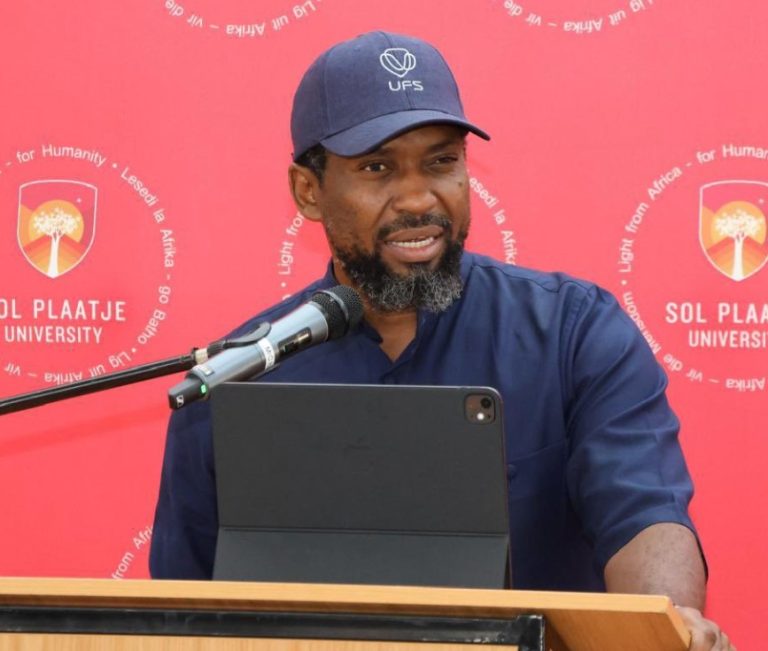
Speaking at Sol Plaatje University in the Northern Cape at the annual general meeting of the Association of University Convocations, Manamela said some convocations, which represent university graduates and alumni, had become associated with conflict and instability within institutions.
“This is not the role convocations were meant to play,” Manamela said.
“Universities require stable and ethical governance environments.”
He said universities should remain focused on knowledge production, research, innovation and learning, and that alumni structures should support rather than undermine that mission.
He told alumni attending the event that their responsibility to their institutions did not end at graduation, describing them as former student leaders who had helped shape campus life and the intellectual culture of their universities.
“Your role now is to carry forward that legacy. To ensure that your institutions remain strong for future generations,” he said.
“To help them adapt to new realities, to become the source of intellect and hope that demonstrates these institutions have produced individuals worthy of representing their legacy.”
Manamela said the debate was especially important as the government re-engineers the post-school education and training system.
He said the DHET was examining the size, shape and future direction of the sector, assessing its potential and putting in place plans to ensure institutions can meet the country’s needs.
“South Africa faces major challenges — unemployment, inequality, technological disruption, and rapid global economic change,” he said.
“Our universities must be capable of responding to these realities. They must produce graduates who can thrive in a changing world.”
He said universities should deepen research into developmental challenges while strengthening innovation and entrepreneurship.
Manamela said his department was working intensively to finalise legislative amendments aimed at keeping the system responsive to changing conditions, improving governance and accountability, and protecting institutional autonomy while maintaining public trust.
“But we must also confront the new realities of the digital age, technological transformation, and shifting global dynamics,” he said.
“Our higher education system must remain stable, responsive, and future-oriented. In this process, the voices of graduates and alumni are critical.”
Graduates and alumni should contribute ideas on governance, funding, innovation and graduate employability, while also participating in mentorship programmes, industry partnerships and community engagement.
Manamela added that graduates had a broader civic duty to help build a democratic society, uphold the values underpinning constitutional democracy, take part in public life and provide intellectual leadership.
“Many of the national debates taking place in our country today require deeper intellectual engagement and rigorous thought,” he said.
“Universities produce graduates capable of contributing to these debates, and convocations must become spaces of intellectual energy.”
He said convocations should also serve as platforms for mentorship, philanthropy, thought leadership and institutional support, and that the sector needed to examine its challenges honestly while remaining committed to improvement.
“That spirit should guide the role of graduates and convocants in our universities and in our society,” he stated.
He said that if convocations embraced that responsibility, they could become one of the higher education system’s greatest strengths by reinforcing universities, supporting students and shaping the intellectual life of South Africa’s democracy.