Home Blog Page 113

Transport department declares inroads in providing scholar transport

By Johnathan Paoli

The Eastern Cape Transport Department has assured the public of significant progress in providing scholar transport to qualifying learners, following a court order last month declaring the failure to meet this obligation unconstitutional.

Speaking to Inside Education, spokesperson Unathi Binqose said the department had already been working towards this goal before the court ruling, which has reinforced their commitment to ensuring equitable access to education.

“We have made inroads to provide scholar transport to all the learners who are qualifying for it. That has been our plan. And the court order came at a time when we were quietly working towards achieving that goal,” Binqose said.

However, the start of the school year has presented typical challenges, such as unsettled school registers and student transfers, which have temporarily disrupted services.

“The few inquiries we’ve received are due to minor operational issues, such as finding replacement operators after a vehicle has been damaged or an operator has passed away. These matters are being addressed,” he said.

On the issue of safety inspections for transport vehicles, Binqose clarified that there was no major crisis.

Some operators had temporarily moved their vehicles to other provinces for taxi rank operations during school holidays. but have since complied with inspection requirements.

While the department reported progress, Binqose acknowledged isolated challenges, such as a case at Rocklands Primary School where a pick-up route was not clearly defined. The department was working with the provincial education department to resolve such cases swiftly.

He emphasised that scholar transport was designed strictly for qualifying learners who have no accessible schools near their homes.

“It’s not for every learner who opts for a school further away for reasons such as perceived better quality of education,” he clarified.

The department remains optimistic about reaching all qualifying learners and is addressing outstanding issues as the school registers stabilise.

“A majority of those who require scholar transport already have it, and we aim to ensure no qualifying learner is left behind,” Binqose said.

This follows a ruling by the Makhanda High Court that found both the transport and education department’s failure unconstitutional and invalid to , ordering the departments to finalise all new transport applications by the end of January, providing transport within 10 days of approval, and addressing appeals swiftly. He judgment is believed to affect nearly 40,000 learners, many of whom live in rural areas and have to travel long distances to get to school.

Judge Nicola Molony granted a structural interdict requiring the departments to report back to court by 7 February, and then every 30 days thereafter for seven months.

The ruling also addressed the government’s claim of budgetary constraints, rejecting it as unsupported and ordered that affected learners receive additional academic support to catch up on missed work.

Petros Majola of Khula Development Project previously expressed frustration over the need to litigate annually to secure children’s rights, saying that it was expected for the government to implement the order and ensure learners did not face the same situation in the new year.

The Legal Resource Centre’s Cameron McConnachie acknowledged the challenges in addressing the problems, but said the judgment was a significant step on the road to ensuring that all learners could enjoy their constitutional right to basic education in the province.

INSIDE EDUCATION

Mashatile gives life advice to KZN matriculants

0

By Alicia Mmashakana

The government will make 50 bursaries available to deserving students in KwaMpumuza in KwaZulu-Natal who have been accepted into public institutions of higher learning, including TVET colleges, according to Deputy President Paul Mashatile.

He was speaking at the Annual Matric Excellence Awards ceremony for the area on Friday. It recognises the academic achievements of top matriculants in 2024 in 16 schools across the Mpumuza traditional authority.

Mashatile said the bursaries would be made available through the National Skills Fund in collaboration with National Student Financial Aid Scheme.

“This initiative is supported by the National Skills Fund through the department and aims to bridge the gap in access to education, particularly for the top students we are celebrating today,” he said.

He told the matriculants that they were now in charge of their lives.

“Do your best in university to secure a brighter and prosperous future. A university degree or qualification is a treasure that no one can take away from you, and it is key to opening many closed doors,” he said.

“I encourage you today to dream big dreams! Do not be discouraged by your background and the challenges that you have gone through. You deserve the best that life has to offer and as a government, we are determined to support you to make your dreams possible.”

He congratulated the Class of 2024 in KZN for being the second-highest performing province with an 89.5% pass rate and said the government was looking forward to this year’s Grade 12 learners maintaining and increasing the standard.

Mashatile encouraged them to focus on their studies and not give into peer pressure.

“As a country, we rely on you to build a better tomorrow. Stay disciplined and say no to bad influences,” he said.

He also spoke directly to parents whose children may not have passed this time.

“Please know that this is not the end of their journey. Every setback is a setup for a stronger comeback. Your love and encouragement can make all the difference in helping them find their way forward.”

Mashatile said it was important that the community ensured that every child found the strength to try again and achieve remarkable things.

“To all leaders present let us leave here today united in our commitment to the success of every child in Kwa-Mpumuza and beyond. Whether they pass or not, every learner is part of our shared future, and they all deserve our love, guidance and unwavering belief in their potential.”

INSIDE EDUCATION

Students worried over unpaid accommodation

0

By Johnathan Paoli

National Student Financial Aid Scheme (NSFAS) administrator Freeman Nomvalo has outlined plans to address the ongoing student accommodation crisis, revealing that the situation is “complicated”.

Many private accommodation providers are unpaid, and thousands of students are in a precarious situation.

Nomvalo reaffirmed NSFAS’s commitment to address the issues swiftly.

“It is less important that there may be details that are incorrect. What matters is that it is a fact that accommodation providers are feeling the pinch of not being paid, and that is the issue we have to address and respond to,” Nomvalo told the SABC.

Accommodation providers have been vocal about the financial strain caused by unpaid rental fees from the scheme, with some warning of potential evictions if payments are not made soon.

Nomvalo acknowledged their concerns, stating that NSFAS was actively working to resolve the issue.

“Within this week, we are going to reach out to the landlords. The time required to resolve their issues depends on the complexities involved, but we are committed to resolving this speedily,” he said.

The financial challenges facing accommodation providers stem from delays and inefficiencies in the flow of funds, with the administrator identifying three broad issues contributing to the crisis.

Historically, the scheme disbursed funds directly to students for accommodation, but not all students transferred the money to landlords. This led to significant arrears, particularly for payments made before NSFAS transitioned to a new pilot model.

It piloted a new payment system to streamline transactions directly to landlords, but the rollout has not yet included all providers.

Consequently, some landlords are still outside the system, and their payments depend on funds being routed through students, exacerbating delays.

The data NSFAS currently possesses for processing payments to some landlords needs to be verified before any disbursements can occur.

Nomvalo claimed that this verification process has further slowed the resolution of claims.

While the payment delays date back to March last year, the issue was only escalated to the appropriate structures in December.

According to Nomvalo, the scheme has since taken steps to resolve the problem, including interactions with stakeholders and implementing interim solutions.

However, these measures have not met the expectations of landlords.

“A solution was put in place, but it did not deliver as expected. We need to find a better mechanism, one that prevents students from being tempted to misuse funds meant for landlords and ensures payments are handled efficiently,” he explained.

Nomvalo emphasised the importance of verifying claims to ensure that only legitimate amounts were paid.

He said the scheme has established a task team to engage directly with landlords and student leaders to address the crisis.

To expedite a resolution, Nomvalo called on all parties, including students, landlords and other stakeholders, to provide additional information to address gaps in the system.

On the high number of Bachelor passes achieved by the Class of 2024, he said the scheme was ready to accommodate university students.

“The total amount of applications is around 200,000 applications, for which the scheme has sufficient funds, however, should the amount exceed projections, the scheme would approach the National Treasury for additional funds,” the administrator said.

While Nomvalo acknowledged these hurdles, he expressed optimism about finding sustainable solutions that prevent future crises.

It has been reported that 7000 students across the country face potential evictions from their private accommodations due to unpaid rental fees.

Private Student Housing Association CEO Kagisho Mamabolo expressed concern over the sustainability of private accommodation providers, saying in a statement that the scheme’s failure to pay its dues threatened the stability of the entire sector.

“These are students who are residing in our residents across the country, and I have no doubt that there could be more students affected, especially in the areas where the accommodation providers are not members of the PSHA. So, the number could be significantly higher,” Mamabolo said.

The association, which represents accommodation providers housing more than 80,000 students, previously issued an ultimatum to NSFAS to settle its outstanding debt of R44 million within 14 days or risk a significant disruption of the 2025 academic year.

INSIDE EDUCATION

Gwarube leads back-to-school visit in Mpumalanga to strengthen education outcomes

By Johnathan Paoli

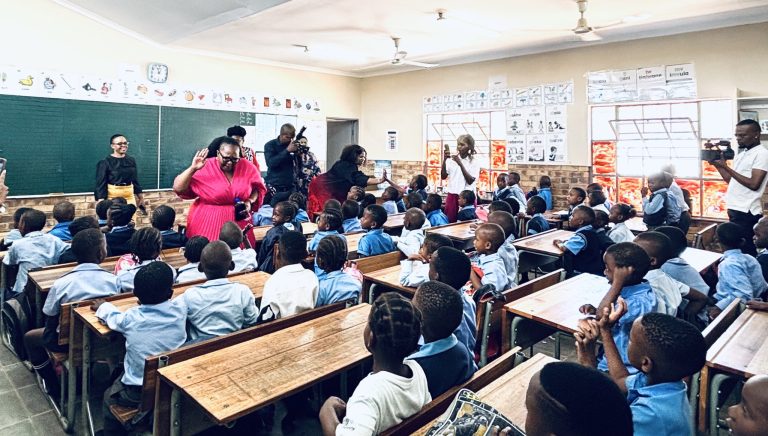
Basic Education Minister Siviwe Gwarube has reaffirmed the government’s commitment to improving education quality and readiness for the 2025 academic year, spearheading a back-to-school #visit to Mpumalanga.

Accompanied by Deputy Minister Reginah Mhaule, premier Mandla Ndlovu, education MEC Landulile Dlamini, and senior officials, Gwarube described the visit as marking an opportunity to assess education priorities and engage with stakeholders.

The province has demonstrated significant progress, with the National Senior Certificate (NSC) pass rate rising from 77% in 2023 to 84.99% in 2024, placing it as the sixth best-performing province nationwide.

The visit included a comprehensive overview of Mpumalanga’s education sector from department head Lucy Moyane.

Ndlovu expressed confidence in the province’s trajectory, aiming for a 100% pass rate in future academic years.

“As you assess our school’s readiness for the upcoming academic year, we reaffirm our commitment to supporting the education sector. We believe that education is a vital pathway to continuously improving the quality of education, and we look forward to working together to achieve this goal,” he said.

Gwarube visited three schools on Wednesday, starting at Kamagugu Inclusive School, which accommodates 347 differently abled learners.

The school has garnered national recognition for its achievements, including winning the 2022 World Milk Day Competition and excelling in Down Syndrome athletics and cultural events like the Eisteddfod Poetry Competition.

At Boschrand Primary School, which is dealing with massive overcrowding, MTN contributed 25 tablets to the school’s intermediate phase, highlighting the government’s collaborative approach to addressing education challenges.

The minister then went to Rob Ferreira High in White River, the leading school in the province for athletic achievements.

She praised the tour for allowing her to assess school readiness, celebrate achievements and identify areas for further improvement.

Ndlovu emphasised the importance of synergy between the department, provincial authorities, and local stakeholders to sustain progress.

INSIDE EDUCATION

N.Cape education blames budget cuts for lack of resources

By Johnathan Paoli

Despite the SA Democratic Teachers’ Union hitting out at the Northern Cape education department for failing to provide resources to schools, the department says its largely pleased with the start of the school year.

Education spokesperson Geoffrey van der Merwe said that while his department acknowledged a delay in the disbursement of norms and standard allocations, it was as a result of budget cuts.

“The situation we find ourselves in is not as a result of the mismanagement of funds and also not Northern Cape specific. At the beginning of the 2024/25 financial year, the department absorbed a budget reduction of R232 million and a further reduction of R60 million during the financial year,” Van der Merwe said on Wednesday.

He said the 4.7% cost-of-living wage adjustment for government employees, estimated at R295 million, was not funded, creating a financial gap of nearly R600 million, significantly straining the department’s resources.

Van der Merwe announced that the department was launching a 10-day snapshot survey to identify and address any shortcomings in schools, such as additional furniture, teaching staff, and Learning and Teaching Support Material (LTSM).

It aimed to resolve challenges that might hinder teaching and learning.

This follows Sadtu in the province voicing deep concern over the state of education, accusing the department of failing to uphold its commitments.

Provincial secretary Palesa Nqumashe said that despite assurances made during a meeting in December, schools were grappling with numerous issues, including inadequate funding, lack of learning materials and unpaid allowances.

Nqumashe said the partial funding was insufficient to cover critical needs such as LTSM, utilities and general school operations, leaving many learners without basic stationery and food.

She disputed claims that all provinces had achieved 100% LTSM delivery, reporting that the Northern Cape received primarily workbooks instead of comprehensive stationery, leaving almost 200 schools reliant on ad-hoc arrangements with service providers.

Additionally, Nqumashe maintained that the delayed appointment of temporary teachers and the partial payment of salary progressions for over 800 education workers have further strained the system.

She criticised the department’s failure to address these issues, calling the situation a violation of children’s constitutional rights.

She highlighted the need for urgent intervention from the authorities to resolve the funding crisis, appoint temporary teachers and ensure all learners have access to necessary resources.

The union warned that the current posture of the department was unacceptable and pledged to take action to restore order and protect public education quality.

INSIDE EDUCATION

Manamela highlights programme to deal with higher education placement challenges

By Thapelo Molefe

In a bid to address the ongoing challenges faced by students seeking placement in Post-School Education and Training (PSET) institutions, Deputy Minister Buti Manamela has officially launched the Central Application Clearing House (CACH) service for 2025. 

This announcement comes after South African universities reported record breaking application numbers for 2025, saying they were 30 times higher than they could accommodate.

This critical service aims to assist students who are unable to secure a place at higher education institutions, as well as those who missed the previous year’s application cycle or have qualified based on their recent Grade 12 results.

The CACH service, operational from 20 January, is set to play a pivotal role in ensuring that qualifying students find suitable placements in public and private institutions. 

Manamela said applicants who previously applied through the Central Application System (CAS) but did not receive offers, would have their information automatically uploaded to the CACH system.

Students who did not apply through CAS could manually register on the CACH website between until 31 March.

Starting 27 January 2025, universities and colleges will use the CACH database to match available spaces with qualifying students. Both public and private institutions will extend offers to prospective candidates, with private institutions expected to compete actively for students.

“CACH does not select students or guarantee placement,” Manamela clarified in a statement. 

“It is the responsibility of institutions to identify and make offers to qualifying students. We encourage all applicants to act promptly on the opportunities extended to them.”

Students will have a maximum of two days to accept or decline offers, with each applicant eligible to receive up to three offers. Failure to respond within the stipulated time will result in removal from the CACH system, and re-registration will not be permitted.

While TVET colleges will have completed their first trimester registration by this time, they will consider CACH applicants for subsequent academic terms, including Trimester 2, Trimester 3, and Semester 2 for the 2025 academic year.

South Africa’s higher education sector has long faced significant space constraints, with demand for tertiary education far outpacing availability.

SA universities are experiencing a dramatic increase in applications for the 2025, with media reporting that 337,158 matriculants secured university admission, but there were only 202,000 places.

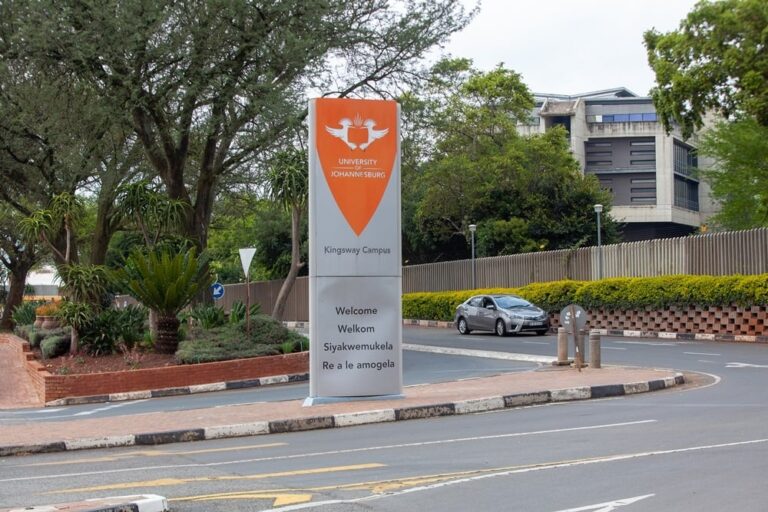
At the University of Johannesburg (UJ), 693,990 students applied for just 10,900 undergraduate spaces, creating a demand that was 33 times higher than the supply.

The Registrar at UJ, Professor Bettine van Vuuren, warned prospective students to remain vigilant against scammers claiming to provide help with placements or registration.

“In previous years, UJ has noted with concern the activities of certain individuals and agencies promising guaranteed admission and funding. The university does not collaborate with any third-party entities for the processing of applications,” Van Vuuren said.

The University of KwaZulu-Natal (UKZN) faced a similar challenge, receiving over 290,600 applications for only 8600 first-year spots. 

Stellenbosch University also reported an overwhelming response, with 90,027 applicants competing for 6005 spaces, 15 times more applications than they could accommodate.

This overwhelming demand underscores the critical role of the CACH service in assisting students who have not secured placements through the standard application process.

CACH aims to alleviate some of these pressures by providing an efficient matching system and increasing the accessibility of private institutions. However, structural challenges, including inadequate infrastructure and funding constraints, remain pressing issues for the sector.

For those seeking to improve their academic results, Community Education and Training colleges offer a Second Chance Programme.

The department will also conduct a satisfaction survey from 1 April to 30 April 2025 to gather insights from students on their CACH experience, aiming to enhance the service in future cycles.

INSIDE EDUCATION

Nkabane gets ready for opening of tertiary institutions

0

By Lungile Ntimba 

Higher Education and Training Minister Nobuhle Nkabane is set to convene a two-day stakeholder meeting this week to assess the readiness of the Post-School Education and Training (PSET) sector for the 2025 academic year. 

The minister will be engaging with stakeholders from student formations, institutional governance bodies and key entities within the PSET sector. This includes representatives from universities, Technical and Vocational Education and Training (TVET) colleges, and Community Education and Training colleges.

Ministerial liaison officer Camagwini Mavovana said the meeting would primarily focus on reviewing progress made in tackling delays in student funding disbursements, TVET infrastructure development and ICT improvements.

They would also explore strategies to ensure alignment between curriculum content and national skills priorities, as well as strengthening institutional governance, safety and security at PSET institutions.

Expanding access to PSET opportunities and enrolment increases in colleges and universities by 2030 would be discussed.

Last week, it was revealed that once again there was a lack of sufficient space for students. News24 reported that a total of 337,158 matriculants secured university admission, but there were only 202,000 places.

The University of Johannesburg received 693,990 first-year applications, yet it could only offer 10,550 places.

The North West University received 390,000 applications and only had 12,937 places.

The University of Pretoria received 355,829 applications and only has space for 9000 students.

Mavovana said the meeting would also prioritise challenges of student accommodation, ensuring that student housing met both living and learning needs, focusing on affordability, accessibility and student safety.

He said the minister would also address inefficiencies in student funding systems, focusing on improving the National Student Financial Aid Scheme.

INSIDE EDUCATION

Ramokgopa integrates food security across Gauteng schools

0

By Johannah Malogadihlare

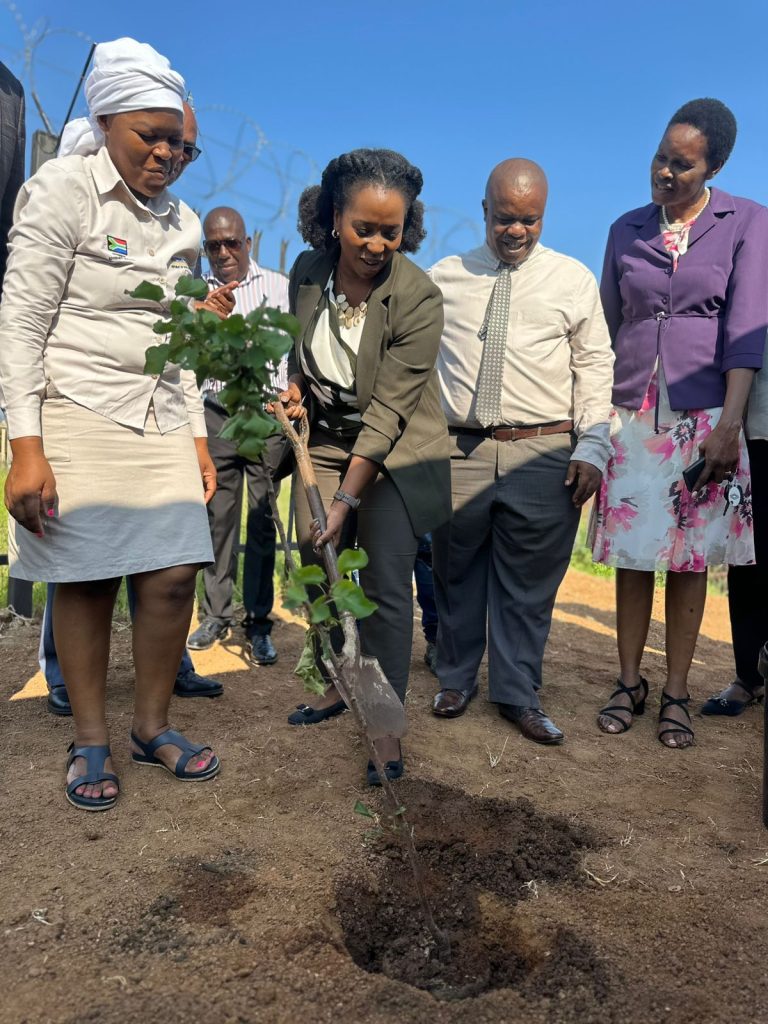
The back to school programme has afforded agriculture and rural development MEC Vuyiswa Ramokgopa to integrate food security in schools through the department’s “plant a tree campaign”.

Gauteng’s back to school campaign is an annual programme where provincial leaders assess schools’ state of readiness for the year with a focus on engaging school management and governing bodies about challenges that could have a negative impact on teaching and learning.


On Monday, the MEC donated six trees to Abel Motshoane High School in Winterveld and during her walkabout at the school, she identified areas requiring additional support to enhance the learning environment.

Ramokgopa has already donated over 40 fruit trees since the programme have started last week. The programme is being undertaken with the Consul-General consulate general of China.

The schools include Parktown Girls High School in Parktown, Thamsanga Secondary School in Orange Farm, and Matsiliso Secondary School and Progress Pre School, which are both in Meadowlands.


The department has also partnered with Shoprite and their mobile kitchen to provide soup and bread during the visits to some of the schools.

Department spokesperson Danisile Sathekge said the aim of programme was not only to integrate food security, but also help learners understand the value of education and motivate them to prioritise it as a “strategic vehicle”, which would open many doors for them including changing their lives for the better.

Ramokgopa congratulated the matric Class of 2024 and encouraged this year’s Grade 12 learners to surpass their performance.

INSIDE EDUCATION

Celebrating excellence – meet the top achievers of SA’s 2024 matric exams

By Johnathan Paoli

For 2024, two matriculants have been honoured with the National Top Learner Awards by the Basic Education Department. While it has not always been plain sailing for Owethu Shangase and Ryyan Ebrahim, the two attribute their success to the support systems around them and their ability to dream big.

Shangase, 17, is from the John Wesley Kosi Bay Private School in Umhlabuyalingana in northern KwaZulu-Natal, and Ebrahim, 19, is from Pinelands High School in Cape Town

Shangase achieved a total of eight distinctions in the 2024, while Ebrahim passed with nine distinctions.

Shangase is described by the department as a spectacularly driven young man who is the product of “when consistency meets inspiration”.

His academic career boasts an impressive first place from Grade 3 to Grade 12, and comprises a full house of distinctions achieved for the entire FET phase (grades 10-12). He skipped two grades due to his aptitude for academics, especially Mathematics.

Speaking to Inside Education, Shangase expressed his immense gratitude and disbelief at his achievement.

“Being the top performer in the country has left me overwhelmed and humbled. Never in my wildest dreams did I imagine this,” he said.

Shangase revealed that procrastination and inconsistency were among his biggest challenges for Grade 12.

“I planned a lot, but struggled to follow through. This affected my confidence, making me doubt my ability to succeed,” he admitted.

Despite these hurdles, his determination and support from his family, who ensured that he had the necessary resources, helped him persevere.

Among his proudest moments was becoming the valedictorian at his school, achieving first place in every subject with a remarkable 96% average.

And securing second place in a provincial Inter-District Olympiad reinforced his belief in the value of hard work.

Looking ahead, Shangase plans to study Actuarial Sciences at the University of Cape Town, aspiring to become a fellow member of the Actuarial Society of South Africa and possibly a chief risk officer in the future.

He envisions a South Africa where funding and educational resources reach the most disadvantaged communities.

His advice to future matriculants is to set goals and persevere.

“Have clear goals, work diligently and help others along the way. Collaborating and supporting peers only brightens the path for everyone,” Shangase said.

He also emphasises the importance of prayer and maintaining humility throughout the journey.

For Ebrahim, who was the head boy at Pinelands, the recognition is “unbelievable and overwhelming”.

“I’m so grateful to have been honoured in this way, and it’s all by the grace of God,” he told Inside Education.

Described by the department as an exceptional, resilient young man, in his Grade 10 exams he faced significant challenges when his home underwent renovations. Undeterred, he devised a plan to wake up early and study in quieter places like the school library.  

Ebrahim, who had an aggregate of 97.57%, acknowledges that his matric year was not without its challenges, saying just like other students, there were moments when he was overwhelmed.

“I decided to step back, remind myself that my best was good enough, and leaned on the support of my family and friends,” he shared.

His ability to manage stress and maintain focus helped him navigate the intense academic year.

Ebrahim plans to study Data Science, which he describes as a fusion of maths, computer science and business, also at UCT.

“It’s an area I’m passionate about and one that aligns with South Africa’s growing need for innovation,” he explained.

The stories of Shangase and Ebrahim serve as a beacon of hope for future matriculants, demonstrating that with vision, effort and resilience, greatness is achievable.

The department celebrated the achievements of these exceptional matriculants and 37 others at a ceremony in Johannesburg, recognising the transformative impact of their hard work.

As they embark on their academic and professional journeys, Shangase and Ebrahim stand as shining examples of South Africa’s potential and the power of education to shape the future.

INSIDE EDUCATION