Home Blog Page 116

Schools urged to ditch frills on first day of reopening, focus on learning

By Akani Nkuna

The Department of Basic Education is being urged to prioritise its core responsibilities, specifically school admissions and teaching, on the first day of the new school year.

Makhi Feni, the chairperson of the Select Committee on Education, Science and Creative Industries, said that this would ensure a smooth start to the academic year.

“On behalf of the committee, we trust Minister Siviwe Gwarube and her team will ensure the reopening of schools runs smoothly,” said Feni.

He highlighted ongoing concerns and campaigns surrounding scholar transport and other pressing issues, including the proposed reduction of teacher posts, arguing that they should not affect teaching, especially on the first day.

“These are side shows that need not impact the reopening of schools, and the necessary learner and teacher support should be provided to all schools so that they are geared for effective learning on the first day,” he said.

Feni emphasised that the first day of school should prioritise the basics, which were enrolment, registration and providing students with necessary curriculum-aligned materials.

Feni also addressed concerns that matric results were being sold online for a fee, sparking concerns about the integrity and accessibility of the results.

“The issue around paying a fee to view results is another form of extortion and should not be entertained,” he said.

Feni emphasised that the Basic Education Laws Amendment Act was focused on shaping the future of South African education, rather than catering to special interest groups nostalgic for the past.

He further expressed confidence that Gwarube would be transparent with Parliament and avoid politicising the implementation of the legislation.

“We trust that Minister Gwarube will not seek to use the regulations for political gain of BELA opponents. The president has ordered a complete implementation in the presidential ascension to the BELA Act. It is such a comprehensive piece of legislation that need not be viewed with narrow minds,” he said.

South African schools are set to reopen this week. The Class of 2024 will get their results on Tuesday.

INSIDE EDUCATION

SA praises the Covid generation’s top achievers at ministerial breakfast

By Johnathan Paoli

Expectant learners, joined by parents, teachers and education officials, have celebrated the country’s top achievers ahead of the release of the matric results.

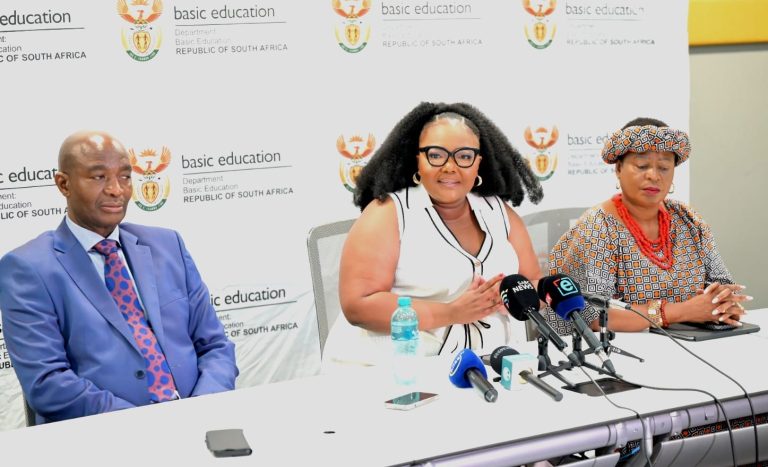
Gathered at the MTN Innovation Centre in Johannesburg on Monday, Education Minister Siviwe Gwarube and Deputy Minister Reginah Mhaule joined the matriculants at a ministerial breakfast.

The event, hosted by MTN, celebrated the matriculants, despite their results only being released on Tuesday.

Pupils, parents, officials and the media mingled with an air of excitement to celebrate the top 39 learners of the country.

MTN CEO Bradley Swanepoel welcomed the learners, and said the aim of the event was to recognise their achievements and hard work.

He said investment in education was the core focus of MTN’s foundation to ensure access to quality education and the training of tomorrow’s leaders.

Mhaule praised the learners as a class on its own, in light of being “the Covid generation”.

The deputy minister thanked the parents and communities who supported the learners during the challenges of embarking on high school during the height of the Covid-19 pandemic.

“Your children carry the whole basic education system on their shoulders. Their achievements will remain forever in the history books,” she said.

Gwarube similarly praised the matriculants as well as teachers for helping cultivate learning during difficult times.

“Teachers are truly the backbone of our education system, they are the bulwark, the last line of defence in our system,” Gwarube said.

She stressed that education was something that continued beyond the classroom, and that the top achievers signified the resilience of the human spirit in the face of adversity.

“Learners, we are here to celebrate your brilliance. The spotlight belongs to you. Many of you began your high school journey in 2020, at the start of the pandemic and navigated a world in which learning and teaching became exceedingly difficult,” Gwarube said.

She highlighted the importance of the Special Ministerial Award, which would be awarded to two learners for overcoming extreme challenges and achieving immense success.

Gwarube stressed that the inequality of the country would only be undone if the department could ensure that learners left with a better potential for their future than when they came in.

She reminded the matriculants about the value of hard work, perseverance and integrity, and called on them to be leaders who were innovative, hard working and ethical.

“As you take on the new chapter in your life, be an ethical leader, and let what you learned at home and at school be your guiding light,” Gwarube said.

INSIDE EDUCATION

In 2025 and beyond, schools need to teach more than just ‘the basics’

0

By Louis Volante, Don A. Klinger and Joe Barrett

In Roman mythology, Janus was the god of doors, gates and transitions. Able to see in two directions, Janus was associated with passages, beginnings and endings.

In January, the month named for him in the western calendar, it’s fitting to consider how, in many respects, compulsory education systems require new beginnings in terms of envisioning broader objectives for their student populations.

While students need to read, write and do arithmetic, the “back to basics” approach to promoting educational excellence, formulated hundreds of years ago by the Prussians, will no longer suffice.

Schools and societies have seen seismic technological, environmental, cultural and social changes. Kindergarten to Grade 12 systems must embrace a more multifaceted vision of educational excellence that includes the promotion of both cognitive and non-cognitive skills.

These “two faces” — cognitive and non-cognitive — helps prepare students for their futures, not our past.

Cognitive versus non-cognitive skills

Achievement in traditional subject areas like English and French, mathematics and science has long been recognized as important for students’ cognitive skills. Many parents, teachers and policymakers become concerned when provincial or national test results suggests deteriorating or stagnant performance in these curriculum areas.

Yet even the Organisation for Economic Co-operation and Development (OECD) is now quick to point out that cognitive achievement is necessary, but insufficient, for student success. The OECD, which runs the largest and most influential international test of reading, science, and mathematics — the Programme in International Student Assessment (PISA) — is also considering the value of other kinds of learning.

A recent working paper published by the OECD, Beyond Literacy: The Incremental Value of Non-Cognitive Skills, points out how a broad category of non-cognitive skills predict important life outcomes such as educational attainment, employment, earnings and self-reported health and life satisfaction.

Growth mindset

Non-cognitive skills, sometimes called “soft skills,” include attributes such as “growth mindset.” This refers to a general belief that success is based on hard work and dedication, and is less related to innate and fixed qualities.

A person with high-growth mindset would agree with the statement: “Math doesn’t come easy to me, but if I try hard, I will be successful.” Interestingly, countries that have relatively higher levels of growth mindset also tend to do better academically.

Emotional intelligence

Another frequently noted non-cognitive skill includes social-emotional learning or what is sometimes referred to as emotional intelligence. The latter allows students to self-regulate and ultimately become more resilient in the face of adversity and changing times.

Although there are various factors that shape a child’s emotional makeup, social-emotional learning can be developed in classrooms with the right supports.

Physical health and well-being

Finally, physical health and well-being is also a critical non-cognitive ability, one that is often overlooked in Canadian education systems.

As our research with colleagues suggests, provincial systems devoted relatively little policy attention to the development of physical health during the initial waves of the COVID-19 pandemic as well as during the recovery phase.

Admittedly, this disturbing trend existed well before the outbreak of COVID-19. In some respects, we are now facing an impeding epidemic of mental and physical health in our schools without the benefit of adequate interventions.

Ideals and practices

Each province in Canada is fully autonomous in developing and implementing education policies, as well as outlining the main purposes of education.

In Ontario, for example, the provincial Education Act says “the purpose of education is to provide students with the opportunity to realize their potential and develop into highly skilled, knowledgeable, caring citizens who contribute to their society.” Other provinces provide similar education guidance that underscores the importance of developing students’ knowledge, skills and attitudes.

What is clear from these various legislative mandates is that provinces have seemingly endorsed a holistic view of student development. Unfortunately, goal statements that align with holistic student development may look good on paper but are rarely realized in practice.

Teacher education programs, for example, vary significantly within and across Canadian provinces and American states, with limited attention devoted to mental health-related certification standards, including socioemotional learning.

Fragmented approaches

Provincial approaches to assessing non-cognitive skills are also fragmented, suggesting more innovative and integrated assessment systems are needed. It is hard to address a problem without the benefit of reliable and valid data sources.

Similarly, less than half of Canadian children meet daily physical activity requirements, despite mandatory policies in provinces such as Ontario, Alberta and British Columbia. Given the close association between child and adult obesity rates, lack of attention to physical activity will have lasting negative consequences.

Research also suggests no new mental health policy developments occurred in half of Canadian provinces in the aftermath of the pandemic. It appears provincial education systems have been lagging in targeted policy developments and implementation efforts related to non-cognitive skills.

Clearly, there is an urgent need to embrace, in concrete terms, the dualities of cognitive and non-cognitive skills within our schools. Sometimes being two-faced can be a good thing.

Volante is a Distinguished Professor, Faculty of Education, Brock University, Klinger is Deputy Vice-Chancellor, Education, Murdoch University; Professor of Measurement, Assessment and Evaluation, Murdoch University and Barrett is Associate Professor — School Health Policy & Health and Physical Education Pedagogy, Brock University.

The Conversation

Gwarube announces possible leak of NSC results

0

By Johnathan Paoli

Education Minister Siviwe Gwarube has confirmed reports of a possible leak of matric results.

Speaking during an urgent media briefing before a ministerial breakfast in Johannesburg on Monday, Gwarube said that the department had identified a breach in its system.

“If the leak is from our side, we will deal with it. If it is from processes outside the department, we will deal with it. But either way, we will take this breach seriously,” Gwarube said.

She said that certain platforms have attempted to sell what they call “authentic” results of the 2024 National Senior Certificate (NSC) exams.

Gwarube, however, stressed that while the department acknowledged the incident, it occurred at the “tail-end” of the process, and would consequently not affect the integrity of the results.

The minister outlined the way forward, saying that should investigations identify the leak within the department, it would proceed with internal investigation under the Director-General.

She said that if the leak should be found outside the department, they were obligated to share the information with the Hawks to investigate the matter.

The minister said that the reason the department has remained silent on the issue was to respect the integrity of the investigation.

She said authorities could confirm that the investigation was at an advanced stage, and the department would announce further details concerning the breach.

Gwarube said that while it remained concerning, it should not mar Monday’s event which sought to celebrate learners.

INSIDE EDUCATION

A phenomenal year for SA sports

0

By Sumayya Khan

Sport is a unifying force, transcending race, class and nationality boundaries. Athletes’ achievements on the global stage serve as a powerful reminder of our shared humanity.

From the crowd’s roar in a packed stadium to the collective pride felt when a national team and individual athletes triumph, sport uniquely brings people together.

It fosters a sense of belonging and community, promoting social cohesion in ways few other activities can. As we celebrate these moments of triumph, we also celebrate the power of sport to bridge divides and build a more inclusive society.

2024 has been a phenomenal year for SA sports, filled with remarkable achievements and memorable moments. Some of the highlights of the major codes of sport and Team South Africa’s performance at the Olympic and Paralympic Games bear testimony that we are indeed a winning nation.

Olympics and Paralympics: SA won six medals at the Paris 2024 Olympics and six at the Paralympics, showcasing the talent and dedication of our athletes. Tatjana Smith, SA’s most decorated swimmer, won gold in the 100-metre breaststroke and silver in the 200-metre breaststroke. Other outstanding performances came from athletes Akani Simbine and Bayanda Walaza, whose performance in the 4x100m relay earned the team a silver medal with a time of 37.57 seconds, setting a new African record.

Rugby: The Springboks won the Rugby Championship, while the women’s team made their Olympic debut and won the Rugby Africa Women’s Sevens title.

Football: Bafana Bafana came third at the Africa Cup of Nations (Afcon) and won a bronze medal. Ronwen Williams was named Goalkeeper of the Tournament and earned recognition as one of the world’s top goalkeepers.

Cricket: The men’s and women’s teams reached the finals of their respective ICC T20 World Cup matches. Kagiso Rabada became the fastest bowler to reach 300 Test wickets, achieving this milestone in just 11,817 balls.

Netball: The Spar Proteas recently faced off against the Malawi Queens in a thrilling netball series in Johannesburg. SA showcased their skill and teamwork with standout performances.

Athletics: Bayanda Walaza, 18, won a silver medal as part of SA’s 4×100-metre relay team at the 2024 Paris Olympics. He also clinched gold in both the 100 metres and 200 metres at the 2024 World Athletics U20 Championships in Lima, Peru.

Swimming: Chad le Clos became the most decorated swimmer at the Swimming World Cup, capping off an iconic haul of one gold, two silver and one bronze.

These outstanding athletes started their journey at schools offering physical education and sports. Grassroots programmes and community sports initiatives are vital in identifying and nurturing talent from a young age, ensuring a steady pipeline of athletes who can compete at higher levels.

Mass participation and development in sports are crucial for fostering a healthy and active society. We can promote physical fitness, mental well-being and social cohesion by encouraging people of all ages and backgrounds to engage in physical activities.

In September 2024, Sports Minister Gayton McKenzie and Basic Education Minister Siviwe Gwarube signed a Memorandum of Understanding to formalise the relationship, identify the partners and stakeholders, and articulate the roles and responsibilities in providing access to sports programmes in schools nationwide.

School sports is the bedrock of sports development in SA and the platform to transform it from a dominant minority representation to a majority inclusive reality.

The Eminent Persons Group report highlights several critical issues and areas for improvement in our school sports system. According to the report, less than 10% of the country’s 25,000 schools participate in sports, which is a significant concern.

The report emphasises the need for increased collaboration between the departments of sport and basic education to address these challenges. The lack of resources and opportunities in underprivileged areas makes it difficult for young talent to be nurtured properly.

The report calls for a more inclusive and equitable approach to ensure all learners can participate and excel.

Physical education and sports must be offered in every school to ensure learners develop skills early. Sports federations must identify the talent, take custody of young athletes and develop and prepare them for their rightful places in the national, continental and Olympic teams.

The commitment from Minister McKenzie to provide sports equipment and attire worth R67 million, the adoption of regular participation guidelines to promote school sports leagues at a local level, and the hosting of school sports activities are positive steps. However, they must be supported by an enabling environment of provision of infrastructure, access to opportunity, and commitment from all role-players.

Minister McKenzie has articulated his efforts to aggressively engage the private sector’s contribution to sports development and lobby for tax incentives for those contributing to sports.

In a speech at the National Sports Indaba in 2011, Gert Oosthuizen MP, then the Deputy Minister of Sport and Recreation, stated: “No country can expect to achieve and sustain success at an elite level without a strong participation base in the community, as that is the beginning for every champion.”

Sports administrator Sumayya Khan is a former Deputy Director General in the Department of Sports, Arts and Culture.

INSIDE EDUCATION

My favourite teacher made mathematics enjoyable

0

By Edwin Naidu

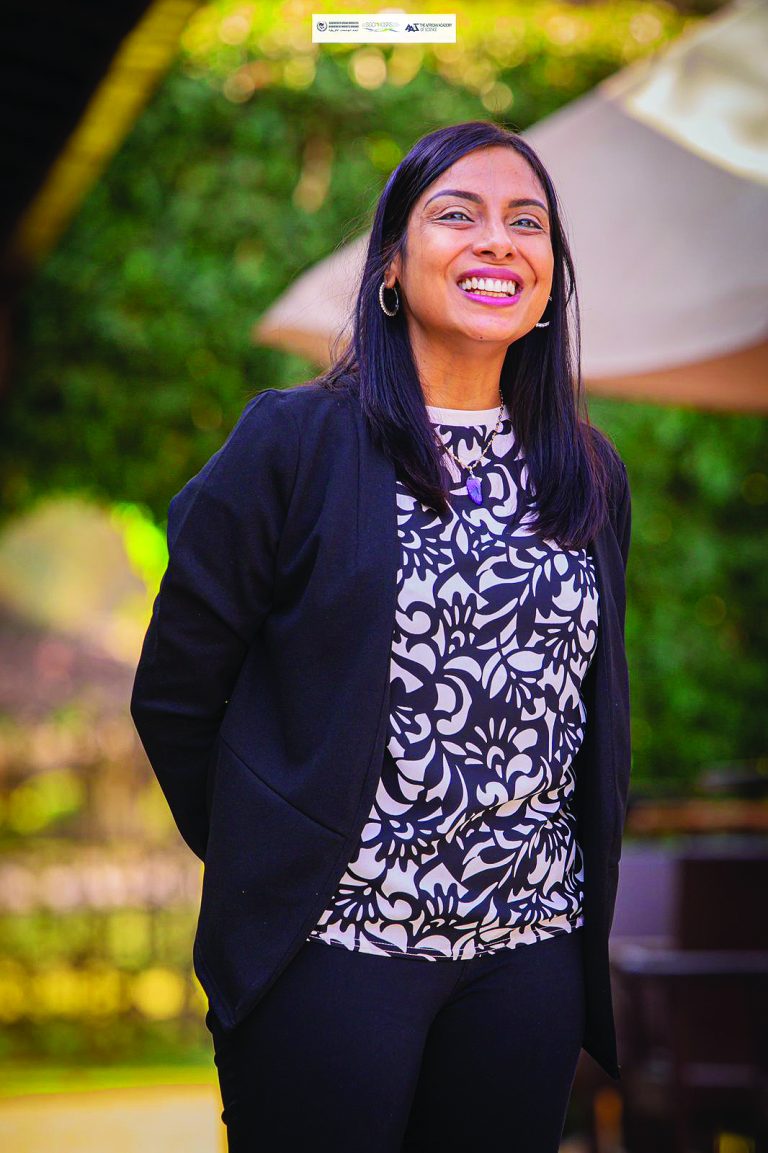
Dr Rakeshnie Ramoutar-Prieschl, a former top achiever at Burnwood Secondary School in Clare Estate, Durban, is a Deputy Director-General in the Department of Science and Innovation.

She attended Burnwood from 1990 to 1996, earning the Good Fellowship award in matric, and completed her formative years at Sydenham Primary.

Ramoutar-Prieschl is currently on secondment to the DSI from the University of Pretoria, where she is Head of Department: Research Capacity Development, responsible for the portfolio that includes grants management, early career training and mentorship, and driving strategic partnerships in support of staff doctoral candidates.

She is also a research associate in the Faculty of Humanities and holds several grants, including from the National Research Foundation, the Department of Higher Education and Training, and the US Embassy.

The mother of two has been the architect and driver of the University of Pretoria’s annual Women in Science event, which celebrates the achievements and advancements made by women in the field. She has consistently championed opportunities, participated in dialogues about empowering women in science, and participated in countless webinars that have put South African and African sciences on the map.

Before joining the university, she led the research infrastructure portfolio for over 11 years at the National Research Foundation. During her tenure, Ramoutar-Prieschl advocated several policies, strategies and frameworks that have since provided the foundation for establishing, nurturing and sustaining various research platforms in the country.

Ramoutar-Prieschl also led Phase II of the Science Granting Council’s Initiative, where she authored three manuals on research and innovation excellence, research ethics and digital grants management systems, which advocates for the safeguarding of intellectual property and know-how whilst complying with best practices in the said research areas. 

Over the course of her career, Ramoutar-Prieschl has lectured, tutored and mentored researchers and university staff at several African universities, spanning Botswana, Kenya, Ghana and Malawi. She has also supported capacity development needs at historically disadvantaged institutions in South Africa.

Ramoutar-Prieschl has also been part of the expert team identified by the African Academy of Sciences and the Association of Research Managers and Administration in the United Kingdom to lead research & innovation training in the International Research Management Development Programme across universities in Africa and the United Kingdom. In recognition of her work, she was awarded the 2022 SARIMA Excellence Award for making a distinguished contribution to the research management profession in Southern Africa.

Ramoutar-Prieschl has participated in the United Nations Science Technology and Innovation forum on a subject that is very close to her heart: Building Structural Equity and Inclusion in Open Science Practices and is a strong advocator for the equitable, fair and inclusive access to information wherein she coined the concept #UbuntuforOpenScience.

What was the name of your favourite teacher?

Mr Deena Pillay was my hero at Burnwood Secondary School, which I attended from 1990 to 1996.

How did Mr Pillay endear himself to you?

Certain individuals leave an indelible mark on the education journey, shaping our understanding and inspiring us to reach our potential. For me, that person was Mr Pillay. A man of remarkable dedication, he epitomised the perfect blend of strictness and kindness, transforming the landscape of mathematics for his students.

From the first day in his classroom, it was evident that Mr Pillay had high expectations. His rigorous approach demanded hard work and commitment but was never without purpose. He believed that every student had the potential to excel, urging us to push beyond our limits. His strictness was not a barrier; rather, it served as a pillar of support. With each challenge he presented, he taught us resilience and the value of perseverance.

What subjects did he teach you?

What truly set Mr Pillay apart was his passion for mathematics. He could uniquely break down complex concepts into manageable, engaging lessons. Through his innovative teaching methods, he made mathematics understandable and enjoyable. He would often relate mathematical concepts to real-life situations, allowing us to see the subject’s relevance and application beyond the classroom walls.

Has this influenced your choice of career?

Mr Pillay was more than just a teacher; he was a mentor who cared deeply for his students’ growth. He took the time to understand our struggles and celebrated our achievements, big and small. His encouragement instilled confidence in us, nurturing a love for learning that extended far beyond mathematics. His belief in us motivated many to pursue careers in science, technology, engineering, and mathematics.

Reflecting on my school years, I realise how fortunate I was to have Mr Pillay as a teacher. His influence shaped not only my understanding of mathematics but also my approach to challenges in life. He taught me that with dedication, hard work and a little guidance, I could solve even the most complex problems.

In honouring Mr Pillay, I recognise the profound impact one teacher can have on countless lives. His legacy inspires me to strive for excellence, practice kindness, and, like him, to believe in the potential of others. Mr Pillay is more than just my favorite teacher; he is my hero, a beacon of inspiration and a testament to the power of education.

Have you kept in touch with your favourite teacher?

I haven’t had any contact with Mr Pillay since leaving school, but I once saw him at Sparkport Pharmacy in Overport. I did not recognise him at first, as he had shaved off his beard. However, when we talked, I told him I had finished studying for my master’s and was in Cape Town at the time. He was so proud. He hugged me. I never met him again, but I would love to find him and have a chat or coffee with him.

INSIDE EDUCATION

WC govt to enhance scholar transport safety

By Johannah Malogadihlare

The Western Cape Scholar Transport Board’s focus this year will be to increase school transport safety and formalise safety regulations.

“In support of this initiative, we wish to call upon the Western Cape Scholar Transport Board and all its contracted learner transport operators to ensure that vehicles used to transport learners are in a roadworthy condition and are specified valid operating licences,” said board chairperson Denver van Aarde.

The board said it was impossible to currently implement safety regulations, as not every operator belonged to the governing body for scholar transport.

“However we would put in stricter measurements in conjunction with the traffic department, law enforcement and mobility department. We are trying to get people [to get] a certificate of compliance,” Van Aarde said.

The board said it would assist operators in ensuring that their vehicles were in a roadworthy condition.

It also called on provincial traffic officers to conduct voluntary inspections on vehicles used for learner transport services.

The board said operators could visit the testing station at the Gene Louw Traffic College in Brackenfell between Monday and Tuesday for a free inspection, or contact the department.

Additionally, Van Aarde said operators could request inspections at their own premises on a date and time that was convenient for both parties.

INSIDE EDUCATION

Mashatile praises revolutionary role of Bengu in transforming the country

0

By Johnathan Paoli

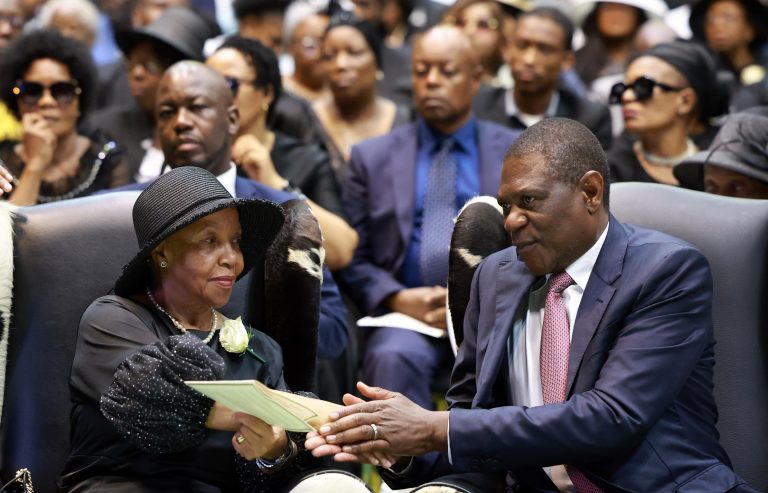
Deputy President Paul Mashatile has mourned the passing of one of the country’s most distinguished education officials and the first democratically appointed education minister, Sibusiso Bengu.

“His passion to promote equality and fairness has had a long-lasting influence on our society, and this should inspire us. To this day many South Africans are still benefiting from his immense contribution, and for this we are grateful,” Mashatile said on Friday.

He was delivering a eulogy during a state funeral at the University of Zululand, KwaZulu-Natal.

Mashatile described Bengu as a revolutionary thinker, diplomat and teacher, whose profound contributions to dismantling apartheid-era policies and shaping an inclusive education system have an enduring legacy.

He highlighted Bengu’s pivotal role in reshaping South Africa’s education landscape during the country’s transition to democracy, describing him as a remarkable individual committed to justice, equality and access to education for all.

He praised Bengu’s role in unifying 17 fragmented education departments into a cohesive system and introducing policies that continue to guide the sector.

Mashatile said his reforms in higher education, including the introduction of Curriculum 2005, aimed to address the inequalities entrenched by apartheid.

He credited Bengu with influencing the nation’s progress toward a fairer and more inclusive society.

In recognition of his contributions, the Historically Disadvantaged Institutions Development Grant was renamed the Sibusiso Bengu Development Programme, which aimed to address systemic inequalities in higher education, promote decolonisation, indigenous knowledge systems and readiness for the Fourth Industrial Revolution.

Mashatile also acknowledged ongoing efforts to build on Bengu’s legacy through initiatives like the Human Resource Development Council and the Basic Education Laws Amendment Act in order to enhance access to education, bridge the skill gaps, and strengthen the role of technical and vocational education in the economy.

Mashatile emphasised that Bengu’s work went beyond education policy, and that by expanding access to quality education, he empowered previously disadvantaged communities to participate meaningfully in the economy and other sectors.

Despite advancements, Mashatile urged continued vigilance in addressing persistent challenges in education, and called for unity among diverse sectors of society, including government, universities and unions.

In closing, Mashatile extended condolences to Bengu’s family and praised the late professor’s enduring contributions to democracy and socio-economic development.

INSIDE EDUCATION

Universities are producing fewer STEM graduates

By Johnathan Paoli

South African universities produced 5065 fewer graduates in key science, technology, engineering, and mathematics (STEM) fields during the 2023/24 financial year than targeted, sparking renewed scrutiny over the quality of maths and science education at school level.

The Higher Education and Training Department, in its latest 2023/2024 annual report, attributed the shortfall to under-prepared students entering tertiary institutions.

Higher dropout rates and extended graduation timelines among students in STEM fields were highlighted as primary concerns.

Planned targets for graduates in engineering, natural and physical sciences, human health sciences and animal health sciences stood at 37,206, but universities achieved only 32,141, marking a 13.6% shortfall.

Engineering suffered the most significant deficit, with 2541 fewer graduates than anticipated, followed by natural and physical sciences, which saw a gap of 1814 graduates.

Higher Education Minister Nobuhle Nkabane emphasised the systemic nature of the issue.

“While universities are tasked with nurturing academic success, the foundation built during basic education is equally crucial,” Nkabane said.

The Basic Education Department’s own review acknowledged the problem, citing that only 28,851 matriculants in 2023 achieved at least 60% in both mathematics and physical science.

Experts argue that these marks are often insufficient for university-level STEM programmes.

Despite remedial measures such as augmented curricula and extended degree programmes, many students struggle.

Education specialists point to several root causes, including ineffective teaching methods at both school and university levels.

Meanwhile, the Basic Education Department has acknowledged declining interest in STEM subjects, with the percentage of matriculants writing maths dropping from 53% in 2008 to 38.5% in 2023.

Nkabane highlighted her department’s efforts, including funding extended curriculum programmes to support under-prepared students.

She also stressed the importance of strengthening teacher development and enhancing curriculum content at school level.

Collaboration between the two departments is ongoing, facilitated by platforms like the Inter-Ministerial Task Team on Education.

As the country grapples with STEM graduate shortages, experts agree that addressing the issue requires systemic reform across the education pipeline.

Beyond improving school-level teaching, universities must refine their support structures to bridge the preparedness gap.

Nkabane said that these areas were vital to South Africa’s economic growth, innovation and development.

INSIDE EDUCATION

DA encourages parents to use walk-in centres during school placements

By Lungile Ntimba 

The Democratic Alliance in Gauteng has urged all parents whose children are still without school placement for the 2025 academic year, to utilise the walk-in centtes established by the Basic Education Department.

The department has extended online placement deadlines for Grades 1 and 8 learners to the end of January.

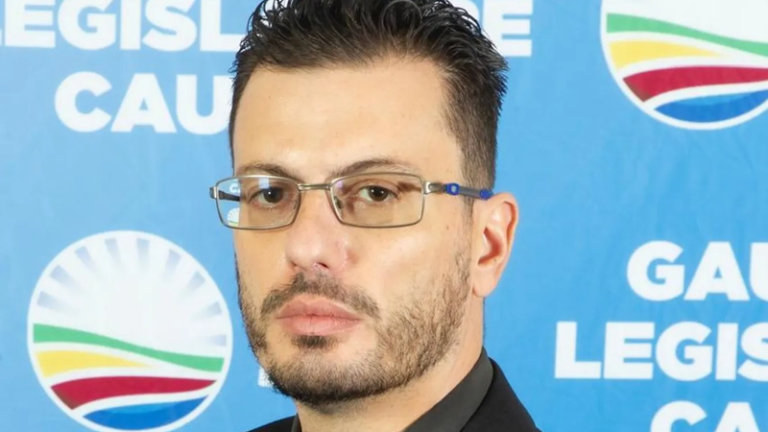
DA MPL Sergio Isa Dos Santos criticised the department’s decision, saying it underscored the chronic issues plaguing the province’s education system.

He highlighted the urgent need for more schools due to the high demand for school placements.

“The GDE’s reliance on mobile classrooms is a clear example of a failure to effectively plan for future growth and demand,” Dos Santos said in a statement on Thursday.

“The GDE and the Gauteng Department of Infrastructure must ensure that delayed school projects are completed urgently.”

In response to the challenges faced at the beginning of each academic year, the DA has urged the department to open the online application process earlier in the year. 

This would give enough time for processing applications, thereby avoiding the chaos and delays.

Furthermore, Dos Santos emphasised the importance of prioritising the enhancement of the department’s communication process and admissions system. 

“This can be achieved by ensuring that walk-in centres remain open and by deploying teams to visit local shopping malls, where parents can receive assistance with their application submissions,” he added.

He believes that this approach would help bridge the digital divide and ensure that all families have equal access to the admissions process.

The department announced in December that it would address the challenge of overcrowding in high-pressure areas by installing 625 mobile units to create satellite schools in regions such as Lawley, Tembisa and Eastvale.

Once placements are completed, outstanding learners will be placed in the satellite schools.

INSIDE EDUCATION