Home Blog Page 118

Curro Esports Indaba shapes the future of gaming and education

By Alicia Mmashakana

More than 170 teachers, esport coaches, school managers, tech leaders and esport professionals from South Africa and Namibia recently gathered to share knowledge and learn new skills on gaming and education.

The 2025 Curro Esports Indaba is a yearly event, which brings together top experts in gaming, education and technology industries at Future Africa, University of Pretoria.

“Esports is more than just gaming – it’s a gateway to equipping learners with future-ready skills that translate into real-world success,” Curro esports project manager Magdeleen de Kock said in a statement.

“At the Curro Esports Indaba, we’re equipping teachers and coaches with the tools to help learners thrive in a digital world while ensuring Curro remains at the forefront of esports education in South Africa.”

The Indaba kicked off with discussions about the intersection of technology and professional gaming.

Busisiwe Masango of Goliath Gaming and Glenn du Toit, who is the country manager of Acer Africa, discussed how examined how technological advancements were shaping the industry.

Du Toit gave a keynote address titled “Building an AI Framework: Developing a Relevant Generation”, emphasising the importance of artificial intelligence in preparing esports professionals for the future.

“When cognitive skills (powered by AI) become a commodity, our product changes to one where our ability to be relevant is our differentiator. This differentiator is not driven through technology, it’s about being more human,” said Du Toit.

Breakaway sessions were held throughout the indaba and covered a variety of topics such as LAN setup, coaching strategies, tournament hosting and content creation.

Julia Robson, brand ambassador for Acer Africa, led a session on streaming and esports identity, while Ruan Kruger facilitated an advanced Valorant coaching workshop.

The sessions focused on key themes such as shoutcasting, playing strategies, game design, building learners’ identity and team leadership.

Nick Holden, who is the co-owner of the African Cyber Gaming League (ACGL), and some of the best local South African shoutcasters, Ultrism and Kruger, wrapped up the first day with a pro-level session on what it takes to be a professional shoutcaster.

Stephen Reid and Heather Drolet from Endless Computers led a discussion on how game development skills and prepared students for real-world careers. They said how gaming promoted creativity, problem-solving and digital literacy.

“It was so powerful to see teachers being so eager to learn how to move their learners from consumer, to creator, to contributor, to career, thank you, Curro, for giving your teachers this opportunity,” said Reid.

Curro project coordinator Johan van Lill, who spoke about the “benefit of play”, emphasised how competitive gaming aided learner development.  He then led a discussion on mental health strategies for pro coaches and players.

Members of the SA School Esports Association also presented a road map for promoting competitive gaming into educational environments.

“By combining cutting-edge technology, education, and community development, the 2025 Curro Esports Indaba proved that Esports is more than just a game – it’s a vital educational tool for mainstream education, skill development, and future career opportunities,” said De Kock.

INSIDE EDUCATION
Empowering young innovators, a pathway to 5G advancement

By Johnathan Paoli

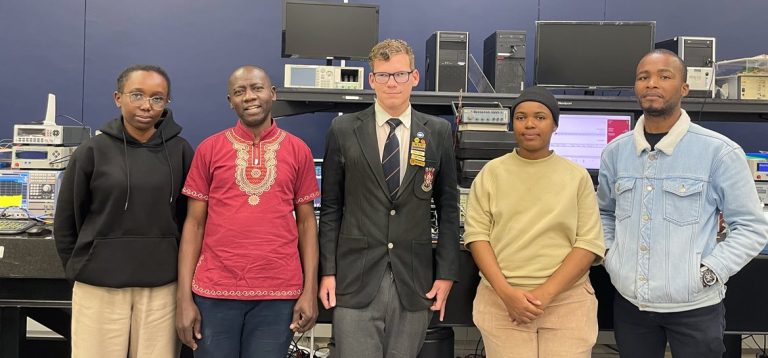
In a showcase of young talent and scientific ingenuity, Otto du Plessis High School learner Christopher May has demonstrated the potential of student driven innovation in advancing South Africa’s technological landscape.

With the guidance and resources provided by Mandela University’s Centre for Broadband Communications (CBC), May’s Fractal Geometry Antenna Project not only earned him a silver medal but also positioned him as a key contributor to the country’s future in 5G technology.

CBC senior researcher and director David Waswa described May’s project as exemplifying the role of youth-led research in shaping the next generation of telecommunications.

“Fractal antennas are known for their unique properties, allowing for efficient designs that can operate over multiple frequency bands, making them increasingly relevant in 5G networks,” he said.

The innovative fractal antenna design offers efficient frequency utilisation, a critical component in expanding 5G networks.

His success in the project, bolstered by the silver medial and a R40,000 bursary from Wits University, underscores the significance of investing in young minds for technological progress.

Under the leadership of Waswa, the CBC has been instrumental in supporting young innovators.

Master’s student Sandi Bangani and PhD student Lillian Mutia played key roles in testing May’s antenna, providing critical mentorship and access to advanced technology.

Over three days, May utilised state of the art equipment to measure bandwidth, signal quality and radiation patterns, validating his theoretical findings.

Waswa praised the importance of such practical exposure to May’s future.

“This hands-on experience not only enhanced his understanding of antenna design but also provided him with practical skills that will serve him in his future studies and career,” he said.

He further highlighted how projects like these illustrated the real-world applications of fractal geometry in improving the efficiency of 5G technology.

The CBC’s commitment to nurturing young talent extends beyond this project.

Through its STEM outreach programme, YeboTutor, the centre provides online tutoring in mathematics and science for Grade 11 and 12 learners, ensuring broader access to high-quality education.

Additionally, CBC hosts outreach tours for disadvantaged schools, striving to bridge the gap in STEM education and create more opportunities for young innovators.

May’s achievements bring attention to the critical role that young researchers can play in advancing South Africa’s technological infrastructure.

As the country continues to develop its 5G capabilities, Waswa said that supporting budding scientists and engineers was imperative to staying competitive in the global digital economy.

5G technology promises enhanced connectivity, faster data speeds and more reliable networks, all of which are essential for economic growth, smart cities and digital transformation.

By fostering innovation at an early stage, institutions like CBC are ensuring that South Africa has the necessary talent pool to drive these advancements.

Waswa said projects like May’s fractal antenna design could pave the way for more efficient and cost-effective communication technologies, making 5G more accessible across the nation.

Mutia praised May’s dedication, noting that his curiosity and commitment to applying fractal geometry to antenna design were truly inspiring.

Bangani echoed this sentiment, emphasising that May’s success served as a beacon of possibility for other young learners, and that with the right support and resources, young people could make significant contributions to the ever-evolving field of technology

“This antenna project stands as a testament to the exciting future of communications technology, where unconventional approaches such as fractal geometry could redefine design efficiency and signal clarity,” he said.

As the nation continues its journey into the digital future, one thing remains clear: empowering young innovators today will shape the technological breakthroughs of tomorrow.

INSIDE EDUCATION

Unions sceptical over budget allocation to address challenges in basic education

By Johnathan Paoli

Teacher unions are unhappy with the budget allocation to education and have warned that early retirement for educators will have a negative impact on learning.

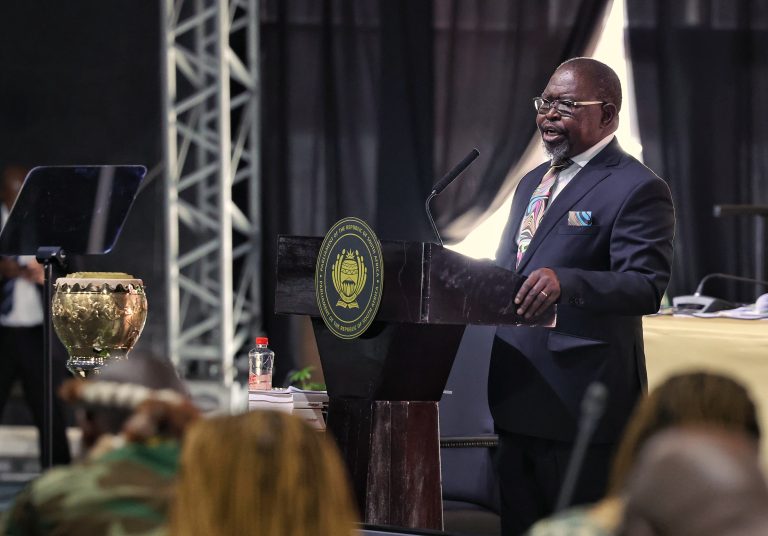
Finance Minister Enoch Godongwana announced during his Budget speech on Wednesday that that government had allocated R598.7 billion to learning and culture, with R332.3 billion earmarked for basic education.

Additionally, an extra R19.1 billion has been set aside over the medium term to retain approximately 11,000 teachers.

The SA Democratic Teachers’ Union (Sadtu) has raised serious concerns about its sufficiency in addressing the critical needs of the education sector, saying it is not enough.

“Sadtu remains committed to quality public education. We believe this will be achieved if the government adequately funds education. We urge our government to increase funding for education and not maintain the current status quo,” spokesperson Nomusa Cembi said.

She said the union believed the budget did not go far enough to resolve the pressing teacher shortages, particularly in addressing high learner-teacher ratios.

“The funding remains insufficient to hire the many unemployed teacher graduates and the Grade R educators who are now part of the system following the compulsory introduction of Grade R,” warned Cembi.

The union also pointed to serious risks of job losses, citing that over 11,000 teaching posts in KwaZulu-Natal were under threat, while the Western Cape has already cut 2407 positions.

Despite these concerns, Sadtu welcomed the R10 billion allocation to Early Childhood Development (ECD), which will raise the per-child subsidy from R17 to R29 per day and extend ECD access to 700,000 more children.

However, the union remained sceptical about the government’s early retirement initiative, stating that previous attempts to encourage early retirement had failed due to economic conditions.

Instead, Sadtu emphasised the need for a robust human resource plan to ensure adequate teacher supply and retention.

The Suid-Afrikaanse Onderwysersunie (SAOU) welcomed some measures while cautioning against potential pitfalls.

“The 2025-2026 budget has provided an opportunity of survival for the education sector, but this budget still has to be managed by the various provincial education departments and the SAOU pleads that the austerity measures which are envisaged by the Treasury will also find favour in provincial budgets and that wisdom in the funding of programmes will be implemented,” executive officer Paul Sauer said.

The union acknowledged the finance minister’s commitment to not implement a “payment holiday” on Government Employees Pension Fund contributions, which it considered a positive decision for teachers’ financial security.

However, SAOU expressed concern over the proposed early retirement programme, warning that it could lead to a loss of skilled educators at a time when experienced teachers are crucial.

“Quality employees can only be retained if they are accommodated in a conducive working environment where their basic needs are met,” Sauer said, emphasising that merely availing funding for retention was not enough.

Regarding the education budget, SAOU recognised the additional R19.1 billion allocated to education to prevent further job cuts, but cautioned that the actual implementation of funds by provincial education departments would determine the success of these measures.

The union also welcomed the funds allocated to the ECD sector, considering it a necessary step following the legislative inclusion of compulsory Grade R.

Basic education remains a significant expenditure item, with 76% of provincial education budgets dedicated to salaries.

This leaves R24 out of every R100 for essential needs such as school infrastructure, textbooks and learner meals.

While the government acknowledges that more teachers are needed in classrooms, financial limitations continue to hinder large-scale hiring.

Both unions emphasised the need for prudent fund management and stronger anti-corruption efforts.

Video by: Katlego Tshekoesele

INSIDE EDUCATION

Young scientists to compete at global science fair in Tunisia

By Thapelo Molefe

Two promising young South African learners are set to represent the country at the prestigious International Festival of Engineering, Science, and Technology in Tunisia (I-FEST²) later this month.

The event, taking place from 21 to 27 March, brings together some of the brightest young scientific minds from across the world.

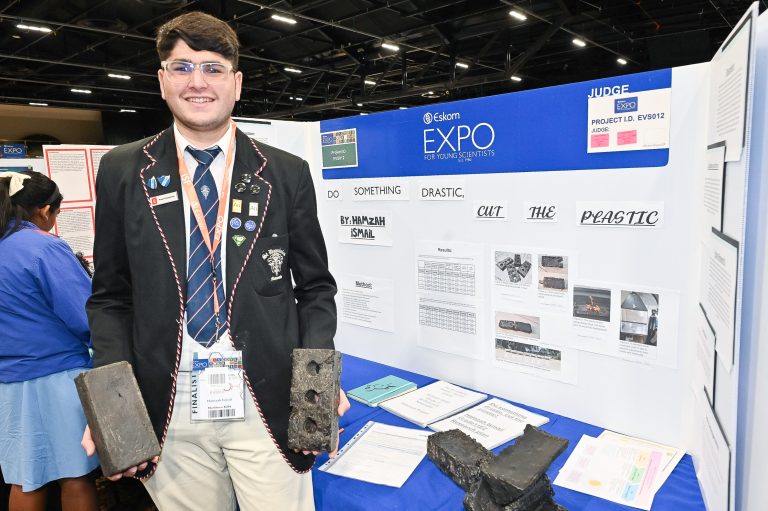
The learners, Hamzah Ismail and Vibhav Ramdas, both Grade 12 learners from St Dominics Newcastle School in KwaZulu-Natal, will compete in the Environmental Science and Computer Science categories, respectively.

Their participation follows their outstanding performances at the Eskom Expo International Science Fair 2024, where they secured gold medals. Their selection for I-FEST² was made by a panel of academics and industry professionals, recognising their projects for their innovative and practical contributions to global challenges. 

The duo will be accompanied to Tunisia by Eskom Expo’s Kenneth Kaunda and the Regional Science Fair director Sethato Maputle.

Ismail will present his research project on “developing eco-friendly, fire-retardant plastic bricks as an alternative in modern construction”, in the Environmental Science category. His work addresses the pressing issue of plastic waste by repurposing it into durable and sustainable construction materials. 

These innovative bricks not only contribute to reducing environmental pollution but also offer a cost-effective and fire-resistant solution for the construction industry. With further development, Hamzah’s work has the potential to revolutionise building practices on a global scale.

Ramdas will compete in the Computer Science category with his project, “using object detection to improve road maintenance”. His research leverages artificial intelligence to identify road defects, enhancing maintenance processes and improving traffic safety. 

The project demonstrates the potential of machine learning in addressing real-world infrastructure challenges, making it a strong contender on the international stage. The technology has far-reaching applications in both local and global contexts, where road conditions remain a critical concern for transportation and safety.

Eskom Development Foundation acting CEO Mologadi Motshele expressed pride in the learners’ achievements.

“Through the Eskom Expo, learners are encouraged to tackle real-world problems using scientific inquiry. The work of Hamzah and Vibhav reflects the power of youth-driven innovation in addressing critical challenges such as environmental sustainability and road safety.

“Eskom remains committed to supporting young scientists and providing them with opportunities to transform their ideas into impactful solutions,” she said.

Eskom Expo executive director Parthy Chetty echoed these sentiments.

“These exceptional young scientists are showcasing South Africa’s emerging talent on a global platform. Their journey is a testament to the impact of STEM education and mentorship in shaping future innovators. We congratulate them and wish them success as they represent our country at I-FEST²,” Chetty said.

The Eskom Expo for Young Scientists continues to provide a platform for young minds to explore and develop groundbreaking solutions. 

Registration for Eskom Expo 2025 is now open for learners in Grades 4–12 and Technical and Vocational Education and Training (TVET) students (NCV Level 2–4). Interested participants can register at www.exposcience.co.za.

INSIDE EDUCATION

DA appeals for fair budget to support feeding scheme programme

By Johannah Malogadihlare

The Democratic Alliance in the Western Cape has called on Finance Minister Enoch Godongwana to table a Budget that will allocate the province its fair share to support feeding schemes.

The Western Cape education department said on Wednesday that 1055 schools in the province participated in the National School Nutrition Programme (NSNP).

“A nourished learner is a focused learner, and the WCED understands this well. Over the past five years, the department has invested R1.79 billion in school feeding programmes, with R415.6 million allocated in the most recent financial year alone,” said Leon Van Wyk, DA education spokesperson in the province.

The nutrition programmes were supported by 13 organisations that provided breakfast and trained learners to cultivate school food gardens.

About 537,181 learners benefited from the programme, receiving daily meals to ensure they have the energy to learn and succeed.

According to the party, the department played a critical role in managing the programme, ensuring oversight, financial investment and effective implementation. 

“Education is not just about classrooms and textbooks; it is about creating an environment where children can thrive. That means ensuring learners arrive at school safe, nourished, and ready to learn,” Van Wyk said.

He also said the department has progressively increased its budget for school transport over the past five years to ensure safe and reliable travel for learners.

A total of 68,633 learners benefitted from the R515.5 million that the department allocated to school transport.

Van Wyk said 500 schools utilised the programme, with the Cape Winelands District supporting the highest number of beneficiaries of 22,557 learners.

INSIDE EDUCATION

SA still has a long way to go on school infrastructure: Gwarube

By Johnathan Paoli

Basic Education Minister Siviwe Gwarube has welcomed the progress made in addressing challenges in South African schools, including persistent issues such as water and sanitation, overcrowding and the maintenance of school buildings.

However, she says more needs to be done.

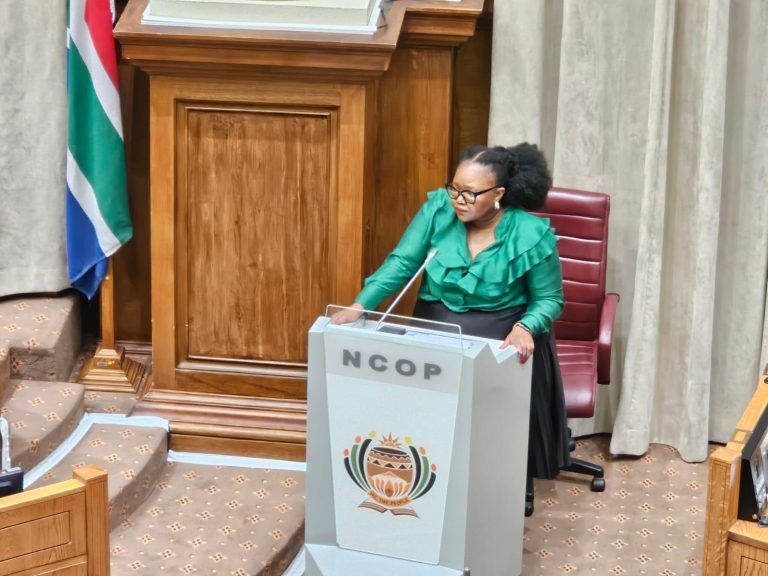
Addressing the National Council of Provinces (NCOP) in a hybrid plenary session on infrastructure at schools, Gwarube reiterated that collaborative efforts between national and provincial education departments, the private sector and development partners would ensure quality education outcomes.

She acknowledged that while significant progress had been made, challenges remained, particularly in underprivileged areas, calling for good governance principles in the face of budgetary constraints.

“There has been systemic underfunding of the education sector for the last 10 years, but at the same time we have to be better at managing our money in the best way we can to deliver the kind of outcomes we can,” the minister said.

During the question session, African National Congress MP Mpho Modise raised concerns about hostel facilities, child-headed homes in the Eastern Cape and the lack of infrastructure for teacher accommodation.

He stressed the need for continued investment and robust monitoring mechanisms to address these disparities.

Gwarube responded by stating that boarding schools in rural areas needed an innovative solution due to declining student numbers in smaller schools. However, she acknowledged that maintenance of these hostels was a critical factor that must be accounted for in provincial budgets.

Umkhonto weSizwe Party’s Edward Nzimande questioned the accuracy of departmental reports, particularly regarding claims that no schools lacked electricity.

He also pressed for clarity on the actual achievements versus the projected targets of the department.

Gwarube admitted that while great strides have been made, variables such as weather conditions, contractor accountability and security threats posed by criminal syndicates have slowed progress.

Democratic Alliance MP Nicola du Plessis highlighted concerns about overcrowding, particularly in Gauteng, where many schools have doubled their classroom sizes due to high enrollment.

The minister acknowledged the issue, noting that while the international standard learner-teacher ratio was 30:1, many South African classrooms exceeded this number.

The department aimed to reallocate resources and prioritise school expansions to mitigate this challenge.

The ANC’s Malesela Mokwele raised the importance of public-private partnerships in education infrastructure development.

While Gwarube welcomed such collaborations, she insisted that they must comply with national policies to protect learners’ dignity and prevent schools from becoming “corporate playgrounds”.

She confirmed that the department was drafting regulations to ensure that public-private partnerships remained accountable and beneficial to students.

The minister also emphasised the need for a proactive maintenance strategy to prevent existing infrastructure from deteriorating.

She pointed out that while replacing mud and asbestos schools remained a priority, provincial governments must allocate a portion of their budgets to routine upkeep.

The ANC’s Desery Fienies and EFF’s Khanya Ceza raised concerns about disparities in school infrastructure, particularly regarding access to sports facilities, libraries and laboratories.

Gwarube assured members that the department has prioritised historically disadvantaged schools in infrastructure upgrades, though budget constraints continued to pose a challenge.

ANC MP Mtikeni Sibande asked about interventions to prevent theft and vandalism in schools.

Gwarube revealed that she and Police Minister Senzo Mchunu would soon announce a collaborative strategy to tackle school-related crime.

Regarding special needs education, Fienies sought clarity on infrastructure provisions for disabled learners.

Gwarube stated that targeted budget allocations have been made to support special needs schools and ensure compliance with accessibility standards.

On Early Childhood Development (ECD), ANC’s Cecilia Nxumalo raised concerns about unregulated creches.

The minister acknowledged these challenges and noted that a massive ECD registration drive was underway.

She emphasised the importance of providing proper facilities and trained educators to strengthen early learning foundations.

Concerns about budget spending and oversight were a key theme throughout the session.

MPs such as DA’s Jeanne Adriaanse questioned how the department ensured provincial MECs are held accountable for infrastructure targets.

Gwarube responded that while the national department provided policy direction, implementation was the responsibility of provincial governments.

The EFF’s Virgill Gericke criticised the slow pace of infrastructure development in previously disadvantaged schools.

Gwarube responded that budget prioritisation was a balancing act but reaffirmed the department’s commitment to equitable infrastructure development.

NCOP deputy chairperson Poobalan Govender expressed support for increased budget allocations to education, stating that many aspects of society touched education, and interdepartmental collaboration would be crucial in overcoming the challenges.

With commitments to better oversight, strengthened maintenance strategies and enhanced infrastructure development, he said the briefing underscored the government’s determination to create safe, modern and conducive learning environments for all learners across South Africa.

INSIDE EDUCATION

Govt on track to eliminate pit latrines by end of March

By Alicia Mmashakana

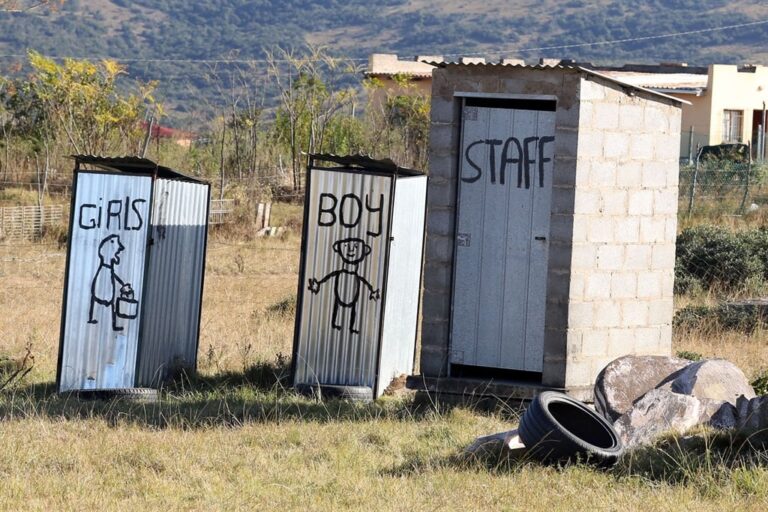
Over 93% of pit toilets have been eradicated through the Sanitation Appropriate for Education (SAFE) initiative, according to Basic Education Minister Siviwe Gwarube.

She told the National Council of Provinces on Tuesday that this significant milestone marked a step towards ensuring that all learners have access to safe and dignified sanitation facilities.

While substantial strides have been made, the minister said that the department would intensify efforts to ensure full compliance. She would conduct site visits to the Eastern Cape and Limpopo, the two provinces that are mostly affected by the legacy of unsafe sanitation infrastructure.

Gwarube’s visits will allow for firsthand monitoring of the final phase of implementation, as well as direct engagement with communities, school leaders and implementing agents, to ensure that all remaining projects were completed as planned.

The department acknowledged the ongoing challenges posed by budget constraints, infrastructure backlogs and rising construction costs.

Despite this, it remained steadfast in its commitment to meet President Cyril Ramaphosa’s deadline of eliminating unsafe sanitation in schools by the end of the month.

It said that the progress was the result of collaboration between national and provincial education departments, the private sector and development partners, all of whom have played critical roles in accelerating the delivery of safer toilets.

INSIDE EDUCATION

KZN calls for calm as communities stop schooling

By Johnathan Paoli

Following days of community protests, crime and vandalism in parts of KwaZulu-Natal, education MEC Sipho Hlomuka has urged residents to express their grievances without harming the academic progress of their children.

Communities, mainly upset about service delivery, have disrupted schooling in the uMgungundlovu, uThukela, King Cetshwayo and Pinetown districts, with key access roads to schools such as Cebolesizwe Combined School and Eyethu Primary School in Greytown and Emgangeni Secondary School in Kwagwala completely blocked.

Hlomuka and other senior officials were on the ground on Monday to speak to communities.

“The continued disruption of education due to protests poses a significant challenge to our pupils’ future. We appeal to community members to seek peaceful resolutions that do not compromise teaching and learning. Our children’s education must be protected at all costs,” Hlomuka said.

The MEC commended the residents of KwaMashu Section D, Ward 40 for their efforts in combating school vandalism.

They apprehended an individual caught stealing copper pipes from a local school and turned him over to authorities.

“The protection of our schools is a shared responsibility. We commend this community for refusing to harbour criminals and for ensuring that stolen goods have no place in their neighbourhoods,” said Hlomuka.

This decisive action had prevented further damage to schools, ensuring that critical resources such as electricity and computers remained available for learners.

Hlomuka said the department was continuing to work closely with communities and law enforcement agencies to keep schools safe and conducive to learning.

He said the challenges facing KZN’s education sector, ranging from community protests to budgetary constraints, highlighted the urgent need for collaborative solutions.

While the department worked on restoring stability in affected districts, Hlomuka said education must be prioritised and communities must seek lawful ways to address grievances.

He called on stakeholders to unite to protect the future of KZN learners as schools strive for improvement.

According to department regulations, all secondary schools should achieve a minimum of 70% overall performance, with the 2025 target raised to 95%.

The MEC and his team held a meeting with various schools at James Nxumalo Agricultural School to address those that obtained pass rate below 50%.

Department HOD Nkosinathi Ngcobo emphasised the department’s commitment to supporting affected schools.

The meeting aimed to develop intervention strategies to improve academic performance and mitigate the effects of disruptions.

Principals presented their schools’ status reports and outlined challenges requiring intervention. Ngcobo committed to ensuring continued department support, with tailored strategies to enhance learning outcomes.

INSIDE EDUCATION

SA must deal with access to ECD, otherwise inequality will persist: Gwarube

By Amy Musgrave and Johnathan Paoli

South Africa is grappling with the fact that the education system is failing too many of the country’s learners at the foundational stage, according to Basic Education Minister Siviwe Gwarube.

The situation was aggravated by the reality that access to quality early childhood development (ECD) remained deeply unequal, said Gwarube, who participated in a panel discussion at Unicef’s Global High-Level Roundtable on ECD on Monday.

“Children from the wealthiest quintile are 20 percentage points more likely to be developmentally on track by age five compared to those from the poorest quintile.

“This disparity, if left unaddressed, will continue to entrench inequality that has made South Africa the most unequal society on the face of this planet. We cannot continue with such levels of inequality; they are simply unsustainable,” the minister said.

The discussions follow two papers that were published by The Lancet last year.  Following the first 1000 days of life that span from conception to two years of age, the next 1000 days of a child’s life from 2–5 years offer a window of opportunity to promote nurturing and caring environments, establish healthy behaviours, and build on early gains to sustain or improve trajectories of healthy development. 

Gwarube said that for a long time, the global focus has been on the first 1000 days of a child’s life, which was no doubt a crucial period. But what was clear from the study was that the next 1000 days were just as decisive in determining a child’s cognitive, emotional and physical development.

Recognising the importance of foundational education, Gwarube said South Africa had made ECD reform a national priority.

She said the 2022 transfer of ECD oversight to the Basic Education Department marked a pivotal shift in the country’s approach to early learning.

Gwarube outlined South Africa’s 2030 Strategy for ECD, structured around three key principles – universal access, quality improvement and a “whole-of-society” approach.

Universal access was aimed at ensuring that every child could attend a registered, regulated and government-supported ECD programme, while improving quality would be attained by enhancing training and professional development for ECD practitioners.

Just as important was strengthening partnerships between government, NGOs, businesses and communities to support early learning.

To support these goals, the minister said the government has launched several major initiatives, including a national ECD registration drive, increased public investment, private sector mobilisation and professionalising ECD practitioners.

An additional R539 million has been allocated to the ECD subsidy in the next financial year to expand access, while the department continues to engage the National Treasury on securing long-term, sustainable funding for the sector.

South Africa has launched an ECD Outcomes Fund, which is a R600 million investment over three years that is designed to drive quality improvements and increase access to early learning programmes.

The government has also established an Inter-Ministerial Committee for ECD, bringing together key departments—including Health, Social Development and Treasury—to align efforts and ensure a holistic approach to support young children.

“These interventions are not just about compliance—they are about delivering meaningful change in how we prepare our youngest children for a lifetime of learning and opportunity.”

Gwarube stressed the need for international cooperation, calling on global leaders to prioritise investment in ECD as a key driver of social and economic development.

“The question is not whether we should invest in early childhood development, but how urgently we can scale up our efforts,” the minister said.

As part of this commitment, the minister announced that that she would co-convene the Bana Pele ECD Leadership Summit with Business Leadership South Africa in Johannesburg next week Monday.

The meeting would serve as a platform for stakeholders to outline concrete steps towards achieving universal access to quality ECD programmes by 2030 and get buy-in from partners.

Gwarube told the Unicef roundtable that discussions on ECD were not just about policy. They were about the future of millions of children who deserved the best possible start in life.

INSIDE EDUCATION

Sarah Baartman district shines at E.Cape athletics competition

0

By Lungile Ntimba

The Sarah Baartman district has stood out with the most exceptional athletes and gold medals in the Eastern Cape Primary Schools Athletics Championships.

About 800 young athletes from the 12 districts showcased their skills and talents at the sports event hosted at Queen’s College Boys’ High School’s recreational grounds in Komani over the weekend.

Events highlighted various sports disciplines, including long jump, high jump, shot put, discus, javelin and running events.

The provincial education department said that all the districts delivered impressive performances, with several records broken. 

“The competition wrapped up with outstanding performances from all districts. However, the Sarah Baartman district stood out with the most exceptional athletes and gold medals,” it said.

The department said 75 gold medallists have earned the right to represent the province at the national championships later in March.

INSIDE EDUCATION