Home Blog Page 12

Letsike urges tourism sector to turn women’s inclusion into economic power

By Lebone Rodah Mosima

Deputy Minister in the Presidency for Women, Youth and Persons with Disabilities Mmapaseka Steve Letsike used a tourism dialogue marking International Women’s Day to call for stronger policies, investment and structural support to expand women’s economic opportunities in South Africa’s tourism sector.

Speaking at the Women in Tourism Dialogue on Saturday, ahead of International Women’s Day on Sunday, Letsike said the conversation should not focus only on celebrating progress, but also on widening women’s participation and ownership in the economy.

The event was held under the banner of women in tourism.

Letsike said women make up more than half of the global tourism workforce, citing research by UN Tourism and UN Women. UN Tourism says women account for 54% of tourism employment worldwide, a higher share than in the broader economy, but are still concentrated in lower-skilled, lower-paid and often informal work.

However, Letsike said women’s participation in tourism often remains at the lower levels of the value chain, including service roles, informal work and small-scale enterprises that struggle to grow.

“This tells us something profound,” Letsike said.

“The tourism sector already contains the seeds of gender-inclusive economic transformation, but these seeds require deliberate policies, investments, and structural support to flourish.”

Letsike highlighted persistent barriers facing women entrepreneurs in tourism, including limited access to finance, difficulties navigating regulatory environments, and unequal opportunities in supply chains and procurement.

The Tourism Transformation Fund, she said, was established to support black-owned enterprises, including many women-led businesses, with capital and market access. The Tourism Incentive Programme, meanwhile, offers support in areas including market access, energy efficiency and product development.

“The National Tourism Sector Strategy emphasises transformation and inclusive participation, recognising that the long-term sustainability of tourism depends on ensuring that historically marginalised communities become owners and leaders within the sector,” Letsike explained.

“But we must also acknowledge that transformation cannot be achieved by government alone, as the tourism economy is an ecosystem involving society as a whole.”

She said that ecosystem included private sector partners shaping supply chains and investment flows, financial institutions determining access to capital, municipalities managing local infrastructure and spatial planning, and communities providing the cultural and social foundation on which tourism depends.

Letsike added that women entrepreneurs often reinvest a larger share of their income into households and communities, with research from various countries showing increased control over income as well as stronger investment in education, health and community wellbeing.

“In other words, empowering women in tourism has a multiplier effect across society,” she said.

“It strengthens families. It improves community wellbeing. It stimulates local economies.”

While stressing the importance of inclusivity in tourism transformation, Letsike said some groups remained the most excluded, particularly young women, persons with disabilities and people living in rural areas.

She reaffirmed that her department viewed economic inclusion as a constitutional imperative, not charity, but a strategy. Official government records identify her office as the Department of Women, Youth and Persons with Disabilities.

“If we are to unlock the full economic potential of tourism, we must recognise women not just as participants but as leaders, innovators, and owners of the tourism economy,” she added.

“When women stand at the centre of that economy—as entrepreneurs, leaders, and innovators—tourism becomes not only a source of national pride but also a driver of inclusive growth.”

INSIDE EDUCATION
DHET revives long-delayed Ekurhuleni university project

By Lebone Rodah Mosima

The Department of Higher Education and Training (DHET) says it is fast-tracking long-delayed plans for a new university in Ekurhuleni, reviving a project first announced by President Cyril Ramaphosa in 2020 and aimed at giving the country’s only metro without a university its own institution.

In a joint statement issued after a meeting in Pretoria this week, DHET Minister Buti Manamela and Ekurhuleni Executive Mayor Alderman Nkosindiphile Xhakaza said they had discussed progress toward establishing a university in the city.

The project was originally announced by Ramaphosa in his 2020 State of the Nation Address, when he said government had decided to establish a University of Science and Innovation in Ekurhuleni to expand access to higher education.

Manamela said the project would strengthen the post-school education and training system and help equip young people with the skills needed to participate meaningfully in the economy, according to the department’s statement.

“The meeting was constructive and focused on the commitments made by President Cyril Ramaphosa during the 2020 State of the Nation Address, in which the government announced plans to expand access to higher education through the creation of new universities in underserved areas, including Ekurhuleni Metro,” the DHET said.

“These commitments were subsequently reinforced through budget announcements the same year, signaling the government’s intent to broaden the post-school education and training system and bring higher education opportunities closer to communities.”

The department said Xhakaza had appealed for the resumption of the university project, with an emphasis on science, technology and innovation, saying that Ekurhuleni’s position as a major industrial and economic hub made it a suitable host for such an institution.

“Minister Manamela welcomed the Mayor’s intervention and reaffirmed the Department’s commitment to fast-track and advance the project,” the department said.

“The Minister committed that the Department will revive the project and appoint a project steering committee led by an executive-level project leader to guide the next phase of work and ensure that the necessary institutional processes are put in place.”

The department said earlier phases of the project had already been completed and that the new steering committee would assess work done so far and determine how best to proceed.

It added that the committee would explore infrastructure options, including the possible use of existing facilities and the development of a multi-purpose campus model across the metro.

The department said such an approach could allow the institution to serve different parts of Ekurhuleni while aligning academic programmes with the city’s industrial and economic profile.

Xhakaza said he welcomed the outcome of the meeting and viewed it as a significant step forward for the city.

“This reflects the great strides we have made toward establishing a University of Ekurhuleni that will serve our people and shape the future of our city,” Xhakaza said.

Manamela thanked the mayor for his intervention and linked the effort to government’s current higher education expansion agenda.

“This project aligns with the President’s directive that, together with the Minister of Finance, we must build more universities and TVET colleges, with a strong focus on developing the skills required to drive economic growth,” Manamela said.

INSIDE EDUCATION

School principal summoned over alleged R2.9 million RAF fraud

By Thapelo Molefe

A 62-year-old Eastern Cape school principal has been summoned to court by the Hawks on allegations of fraud and perjury linked to a Road Accident Fund (RAF) claim worth about R2.9 million.

The Directorate for Priority Crime Investigation (DPCI) confirmed that the summons was served on Thursday by the Mthatha based Serious Commercial Crime Investigation unit. The suspect is expected to appear before the Mthatha Specialised Commercial Crimes Court on 25 March.

In a statement released on Friday, the Hawks said the principal faces charges linked to allegedly contradictory claims submitted after a motor vehicle accident in 2017.

“A 62 year-old school principal has been served with summons by the Mthatha based Serious Commercial Crime Investigation of the Hawks… facing allegations of fraud and perjury,” the unit said.

The case stems from a complaint lodged by the RAF after officials detected irregularities in compensation claims related to a crash that reportedly occurred on 2 July 2017 on the N2 near the Colosa Administrative Area in Dutywa.

According to investigators, the accident involved a Volkswagen Polo allegedly driven by the principal and a Toyota Verso driven by another motorist.

Police officers who attended the scene compiled an official accident report indicating that the principal had been driving the Polo and had sustained injuries during the collision. Medical documentation reportedly supported this version.

Investigators said the principal initially instructed a law firm in December 2017 to submit a claim to the RAF stating she had been the driver in the accident.

“The claim sought compensation amounting to approximately R2.9 million,” the Hawks said.

However, authorities allege the principal later terminated the mandate with the first legal representatives and appointed another law firm to lodge a second claim with the RAF.

“In this second submission, the culprit allegedly advanced a contradictory narrative… indicating that she had been a passenger at the time of the accident,” the Hawks said. 

The second claim reportedly sought more than R1.4 million.

The investigation also found that the suspect submitted a separate claim to Old Mutual iWYZE vehicle insurance for damage to the Volkswagen Polo, declaring that she had been the driver.

“The mutually inconsistent declarations made across different institutional platforms and under oath raised serious concerns regarding the veracity of the representations made by the accused,” the Hawks said.

The RAF subsequently rejected the claim and referred the matter to the Hawks for investigation.

According to investigators, evidence gathered suggests the suspect may have deliberately misrepresented facts in an attempt to obtain financial benefit.

“The suspect deliberately misrepresented facts in an attempt to secure undue financial benefit from both the Road Accident Fund and the vehicle insurer,” the Hawks said.

Authorities estimate the RAF could have suffered potential losses of about R2.9 million had the claim succeeded.

INSIDE EDUCATION

OUTA releases two-year investigation into NSFAS student accommodation programme

0

By Charmaine Ndlela

The Organisation Undoing Tax Abuse (OUTA) has released findings from a two-year investigation into corruption risks and weaknesses within the National Student Financial Aid Scheme’s (NSFAS) student accommodation programme.


The report, first released on 5 December 2023 and expanded through a broader investigation, examined several aspects of the student accommodation funding system and its management.

ALSO READ: Committee demands list of foreign academics after SIU flags visa corruption

According to OUTA, the investigation revealed serious weaknesses in the NSFAS accommodation funding pipeline, raising concerns about oversight, accreditation processes and the involvement of multiple intermediaries.


The organisation said the findings highlight weaknesses in accreditation inspections, procurement processes and funding arrangements involving online portal service providers and accreditation agents.

The investigation found that structural changes to the NSFAS student accommodation model introduced multiple intermediaries into the funding pipeline, creating opportunities for maladministration and corruption.

Among the findings, accreditation agents approved properties that did not comply with DHET minimum norms and standards.

In one case, a property listed as accommodating approximately 200 beds appeared to be an an ordinary three- or four-bedroom house.

ALSO READ: Vaal scholar-transport crash case postponed to April

OUTA’s Executive Director of Accountability Stefanie Fick said accommodation providers were required to pay large amounts to participate in the portal system.

“Our investigation found that accommodation providers paid approximately R33 million to register their beds on the student accommodation portal,” said Fick.

“In addition, for eight months during 2025, roughly R230 million was withheld from accommodation providers to cover a so-called licence fee linked to the mandatory use of the portal.”

The report also found that some accreditation agents failed to properly inspect buildings, submitted incorrect data to NSFAS and, in some cases, awarded top grading to properties that did not meet the minimum standards prescribed by the DHET.

In several instances, accommodation providers registered a large number of beds on the NSFAS accommodation portal, after which accreditation agents certified the bed capacity and issued “A grading” ratings.

OUTA senior project manager Rudie Heyneke, who led the investigation, said the findings raise serious concerns about the credibility of the accreditation process.

“If agents are certifying properties without proper inspections or approving bed numbers that clearly do not reflect reality, then the reliability of the entire accommodation system must be questioned,” said Heyneke.

ALSO READ: Over 100,000 NSFAS appeals processed as funding disputes continue

OUTA has requested that NSFAS conduct a full audit and physical inspection of the identified properties.

The organisation also raised questions about the long-standing narrative that South Africa faces a severe shortage of student accommodation.

“If sufficient accredited beds exist but are not funded, students are being destabilised unnecessarily. Or is money being allocated to beds that only exist on paper?” the report states.

Fick emphasised that accommodation funding must provide certainty for students.

“A funded student should never start the academic year unsure where they will sleep,” said Fick.

“Student accommodation funding must deliver beds and stability. If the system creates confusion, weak verification and opportunities for abuse, it must be fixed.”

Information provided by NSFAS indicates that at several institutions the number of accredited beds exceeded the number of beds funded, raising further questions about how accommodation funding is allocated.

OUTA said it will share the report with the NSFAS board, the Auditor-General of South Africa and the Special Investigating Unit (SIU), which already has a proclamation to investigate aspects of NSFAS operations.

ALSO READ: Scholar transport driver on the run after KwaMashu crash leaves one child dead, 14 badly injured

The investigation also revisited earlier procurement concerns. In December 2020, four service providers were appointed to manage and facilitate the payment of student allowances.

OUTA said its earlier investigation into the tender identified irregularities in the evaluation and awarding of the contracts, findings later confirmed by an investigation conducted by Werksmans Attorneys.

OUTA noted that historically NSFAS did not manage or facilitate student accommodation, as these functions were handled by universities and TVET colleges while NSFAS was responsible only for funding.

The organisation argues that the new model opened the door to maladministration and corruption.

It also found that the management of the student accommodation portal by the four appointed service providers often resulted in late or non-payments to landlords, creating a knock-on effect.

As a result, some accommodation providers struggled to pay municipal bills and maintain essential student services such as Wi-Fi, electricity, security and cleaning services.

OUTA says reforms are necessary to ensure taxpayers’ money is used for its intended purpose  providing safe and decent accommodation for students.

ALSO READ: Medical groups urge calm after UFS study on menstrual products

OUTA said it will share the report with the NSFAS board, the Auditor-General of South Africa and the Special Investigating Unit (SIU), which already has a proclamation to investigate aspects of NSFAS operations.

The organisation is calling for stronger oversight, full transparency and urgent reforms to ensure student accommodation funding provides safe housing for students while protecting taxpayer money.

INSIDE EDUCATION

‘Beyond Evil’: Medics say Iran school massacre was double-tap strike

0

By Brett Wilkins

As the US and Israel continued to wage war on Iran Wednesday, paramedics and victims’ relatives said last weekend’s bombing of an elementary in southern Iran was a so-called “double-tap” airstrike—a common tactic used by US, Israeli, and Russian forces by which attackers bomb a target and then follow up with a second strike meant to kill survivors and first responders.

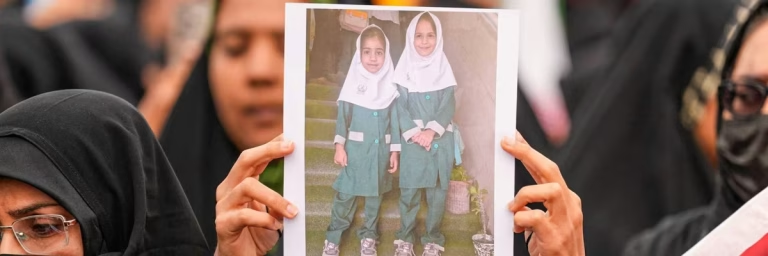
Iranian officials said that around 175 people—most of them young children—were killed when the Shajareh Tayyebeh girls’ elementary school in Minab was hit Saturday by what they said was a US-Israeli attack.

“When the first bomb hit the school, one of the teachers and the principal moved a group of students to the prayer hall to protect them,” said one of two Iranian Red Crescent Society (IRCS) paramedics who spoke to Middle East Eye on condition of anonymity.

“The principal called the parents and told them to come and pick up their children,” the paramedic added.

“But the second bomb hit that area as well. Only a small number of those who had taken shelter survived… Some parents recognized their children only because of the gold bracelets they were wearing.”

The father of a girl killed in the second strike on the facility told Middle East Eye that school officials “asked us to come as quickly as possible and take our daughter home.”

However, when he arrived at the school, “My little girl was completely burned.”

“There was nothing left of her,” he said. “We could only identify her from her school bag, which she was still holding.”

“When I saw her smile after coming home from work, all my pain disappeared,” the father added.

“Now I don’t know what to do with this pain. I don’t know how to live with this.”

The mother of a boy slain in the strike told NBC News that the school also called her and told her to quickly come pick up her child.

“By the time we arrived, the entire school had collapsed on top of the children,” she said. “People were pulling out children’s arms and legs. People were pulling out severed heads.”

On Wednesday, Middle East Eye published a partial list containing the names and ages of 51 children—26 boys and 25 girls—one infant, and eight women killed in the school strike.

Thousands of mourners thronged the streets of Minab on Tuesday as funerals were held for the strike’s victims.

It is not known whether the school, which is located near an Islamic Revolutionary Guard Corps compound, was deliberately targeted.

“All that I know is that we’re investigating that. Of course, we never target civilians,” said US Defense Secretary Pete Hegseth, who oversees a military whose 21st century wars have killed more than 400,000 noncombatants, according to the Costs of War Project at Brown University’s Watson Institute for International and Public Affairs.

US Secretary of State Marco Rubio said Monday that the Pentagon “would be investigating that, if that was our strike.”

“Clearly, the United States would not deliberately target a school,” Rubio added.

Since the late 20th century, the US has bombed—either deliberately or through inadequate target vetting and identification—schools in countries including Vietnam, Laos, Iraq, Afghanistan, and Pakistan.

If carried out by the US, Saturday’s strike in Minab is likely the deadliest American school bombing since 182 students, staff, and other civilians were massacred in an apparently deliberate secret strike on a school in Laos—the most heavily bombed country ever—during the Vietnam War.

Israel has bombed all levels of schools in Gaza as part of what critics have called a deliberate policy of scholasticide.

North Carolina-based independent journalist Lauren Steiner told Common Dreams Wednesday that the double-tap tactic is “beyond evil.”

Other such strikes have been reported during the US-Israeli war on Iran, including the Sunday evening bombing of Niloofar Square in Tehran, where people were celebrating the end of their daily Ramadan fast.

“Suddenly there was the noise and explosion,” one survivor, who was enjoying the evening at a café before the bombing, told Drop Site News. “We got up and a few people ran away. We turned around to get our belongings and we saw that blood was spraying everywhere. Someone’s hand had fallen on the floor, a head had fallen on the floor.”

“When the second one hit, suddenly everything exploded,” he added.

“The windows all shattered… One of my friends whom I don’t know that well, he was sitting here… He was severed in half. Half of him was thrown to the side. I put him back together and placed him where he was. A piece of his brain was thrown here on the floor.”

COMMON DREAMS

Committee demands list of foreign academics after SIU flags visa corruption

By Charmaine Ndlela

The Portfolio Committee on Higher Education and Training has given the Department of Higher Education and Training (DHET) until 18 March to submit a detailed list of foreign academics employed at universities and colleges.

The decision follows the release of an interim report by the Special Investigating Unit (SIU) into corruption in visa and permit processing at the Department of Home Affairs.

Following the report’s release, the SIU said it had “uncovered a disturbing reality”, stating that South Africa’s immigration system had been treated like a marketplace where permits and visas are sold to the highest bidder.

Committee chairperson Tebogo Letsie said foreign nationals were being prioritised over qualified South Africans in hiring and promotions at some institutions.

He said there needed to be strict compliance with the Employment Services Act and Home Affairs regulations, adding that foreign academics can only be hired if their skills appear on the critical skills list and no suitable South African candidate is available.

The DHET has acknowledged the important role foreign academics play in addressing shortages, particularly in science, technology, engineering and mathematics (STEM) disciplines.

However, Letsie rejected explanations from institutions that claim foreign academics are hired because they “bring important value to the institution,” saying such justifications are not legally compliant.

“We are a country of laws. If you break the law in South Africa, you should face the music,” Letsie said.

DHET presented audited data from the Higher Education Management Information System (HEMIS) for 2024 to the committee, showing foreign nationals constitute 7.74% of all staff at South Africa’s public universities.

According to the data, the University of Fort Hare has the highest proportion of foreign staff at 8.28%, followed by the University of the Western Cape at 8.13%, and the University of the Witwatersrand at 8.12%.

The committee has warned that employing foreign nationals without valid work authorisation can expose institutions and officials to serious consequences, including potential criminal liability under South Africa’s immigration law.

INSIDE EDUCATION

Vaal scholar-transport crash case postponed to April

By Charmaine Ndlela

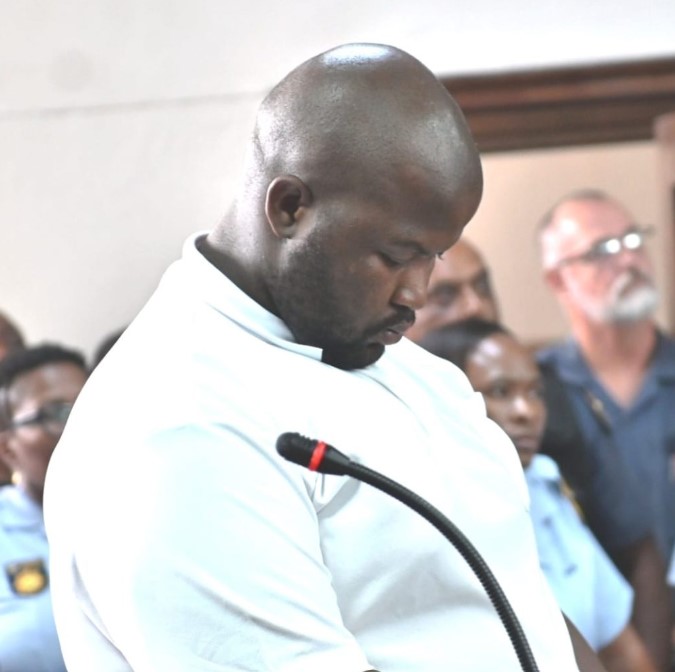
The case against scholar transport driver Ayanda Dludla, accused of killing 14 schoolchildren in a January crash in the Vaal, was postponed to April 22 when he appeared in the Vanderbijlpark Magistrate’s Court on Thursday.

Dludla has abandoned his bail application and will remain in custody while police investigations continue.

Dludla, 22, faces 14 counts of murder and three counts of attempted murder after the scholar transport minibus carrying 16 pupils crashed into a truck on 19 January on the R553 near Vanderbijlpark.

Twelve children were declared dead at the scene and two later died in hospital.

The state has also cited alleged transport-related offences, including driving without a valid professional driving permit (PDP) and operating an unlicensed vehicle.

INSIDE EDUCATION

Over 100,000 NSFAS appeals processed as funding disputes continue

By Thapelo Molefe

More than 100,000 students have lodged appeals against funding decisions by the National Student Financial Aid Scheme (NSFAS) for the 2026 academic year.

During a media briefing on Thursday, NSFAS acting chief executive officer Waseem Carrim said the scheme has processed 101,000 appeals so far, with outcomes varying widely among applicants.

Of these, 22,000 appeals have been approved, 18,000 rejected, while 44,000 were closed, deleted or withdrawn because students failed to submit required documents or complete the process within the prescribed timeframe.

About 9,000 appeals remain pending, largely because applicants still need to provide outstanding documentation.

Carrim said students have 30 days after receiving their funding decision to submit an appeal, which can be based on academic progression issues, financial eligibility concerns, or exceptional circumstances such as medical conditions or traumatic events.

“When NSFAS communicates a funding outcome, a student has 30 days from there to open an appeal and submit any outstanding documents,” Carrim said.

He urged students with incomplete appeals to act quickly to avoid losing the opportunity to have their cases reconsidered.

According to NSFAS, 692,000 first-time entering students have been approved, alongside 550,000 continuing students who met academic progression requirements to retain their funding.

The scheme has also begun distributing funds to institutions and students, with R3.6 billion paid to universities on 2 February and another R2.8 billion disbursed on Monday to support student allowances.

Technical and Vocational Education and Training (TVET) colleges have also received funding, including R680 million in upfront tuition payments and additional disbursements to students in February.

Carrim said the payments indicate improved financial management after the scheme previously faced serious challenges with delayed payments.

“We are quite pleased to say that this year we have not encountered any such challenges,” he said.

Despite the progress, Carrim warned that the student funding system remains under significant financial strain, following a R13 billion budget shortfall in 2025 that required government to reprioritise funding.

“The system does remain under severe financial pressure,” he said, noting that improved school results are leading to more students qualifying for financial aid.

Accommodation

The briefing also addressed accommodation issues affecting some students.

NSFAS said it has received 224,000 accommodation applications, with 148,000 leases already confirmed, allowing payments to landlords to begin on 13 March.

Carrim also confirmed that the scheme intervened to assist about 150 students who were struggling to secure accommodation at the Cape Peninsula University of Technology (CPUT) after reports that some had been sleeping outside.

While the university manages its own accommodation system, Carrim said NSFAS stepped in after being approached for assistance.

“When we became aware of students sleeping outside, there was also a minor protest at the NSFAS offices. We engaged with CPUT and asked them if they needed any support. Subsequently, the Office of the Vice Chancellor reached out to me and indicated that they did need support, placing about 150 students, which NSFAS has assisted them with,” he said.

“Yesterday, when I became aware that there are still issues with CPUT, I again reached out, and CPUT has indicated that from their perspective, they have done everything they can to help students.”

He added that the scheme had also cleared about R400 million in historical accommodation payment backlogs from 2024 and 2025.

Carrim encouraged institutions to submit registration data before the 31 March deadline to ensure that funding and allowances continue to be processed smoothly for the 2026 academic year.

INSIDE EDUCATION

Scholar transport driver on the run after KwaMashu crash leaves one child dead, 14 badly injured

Staff Reporter

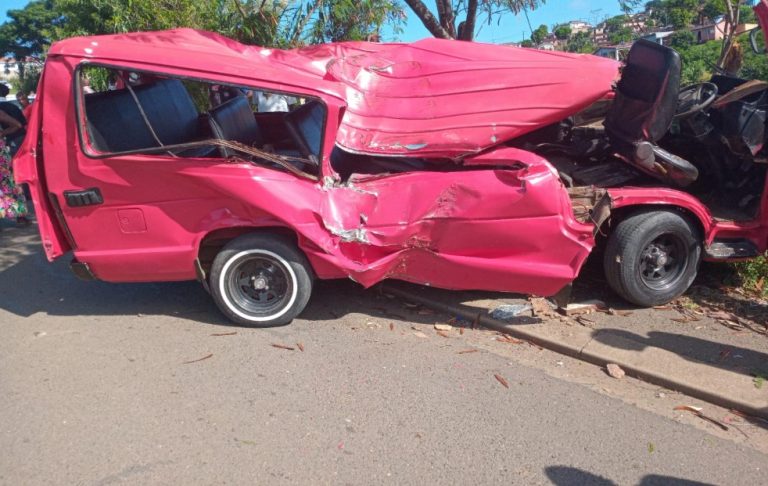
The driver of a minibus taxi that overturned while transporting daycare pupils in KwaMashu, north of Durban, is on the run.

One child died in the crash on Wednesday afternoon, while 14 others were “badly injured,” according to the KwaZulu-Natal Department of Transport and Human Settlements.

The injured children were taken to Mahatma Ghandi Hospital.

“We are calling upon the driver, who has since disappeared, to hand himself over to the police,” MEC Siboniso Duma said on Thursday.

Police had launched an investigation into the accident, departmental spokesperson Ndabezinhle Sibiya said, and also met with the owner of the minibus, who said the driver reported the crash was caused by brake failure.

“Our Road Traffic Inspectorate is working with SAPS as part of investigating the roadworthiness of the minibus taxi,” Sibiya said.

“The traumatic experience which the children have had to endure will take many years to heal,” he said.

The crash comes as provincial governments across the country have tightened oversight of learner transport following the fatal scholar transport collision in Gauteng in January, when a minibus carrying pupils to school hit a truck near Vanderbijlpark in the Vaal area, killing 14 children. The driver of that scholar transport vehicle has since been charged with murder.

Sibiya said that the province’s health MEC, Nomagugu Simelane, was “ensuring patient quality care to the injured children”. Education MEC Sipho Hlomuka would coordinate interventions “focusing on the welfare of children and teachers”, he said.

The MEC for social development, Mbali Shinga, would deploy social workers “to provide psychosocial support services and trauma counselling to the children and families”.

INSIDE EDUCATION

Medical groups urge calm after UFS study on menstrual products

0

By Charmaine Ndlela

Obstetric and reproductive organisations have urged calm after a University of the Free State (UFS) study detected endocrine-disrupting chemicals in some menstrual products, saying the research did not establish that the products cause infertility, hormonal dysfunction or cancer.

The South African Society of Obstetricians and Gynaecologists (SASOG), together with the South African Society of Reproductive Medicine and Gynaecological Endoscopy (SASREG) and the College of Obstetricians and Gynaecologists of the Colleges of Medicine of South Africa (CMSA), said the UFS study did not assess health risks and did not prove harm to consumers.

ALSO READ: Basic Education DG continues to monitor SAFE projects in the Eastern Cape

UFS said its research, which tested sanitary pads and liners sold in South Africa for chemicals including phthalates, bisphenols and parabens, was not designed to establish a direct causal link to disease, and called for further research.

In their joint statement, the medical organisations said any implication of harm to the general public had not been proven and urged the public not to panic.

The organisations said endocrine disruptors are common and found in low concentrations in a range of foodstuffs and household products, making their presence in menstrual products “not unexpected”.

“Previous published studies have indeed shown that small amounts of these endocrine disruptors are present in menstrual health products,” said Dr Jack Biko, president of SASREG.

ALSO READ: Gwarube enters race for DA deputy federal chairperson

According to the organisations, a study conducted in China reported that sanitary pads contributed only 6.8% of total exposure from feminine personal care products.

“It is clear that perspective is required in interpreting the data. The findings should not be isolated to sanitary products, which appear to be a small contributor to the overall total of endocrine-disrupting chemical (EDC) exposure,” Biko said.

The organisations noted that the UFS study did not recommend that any of the tested products be withdrawn from the market.

“Currently, we do not have evidence to recommend any change to usual practice, nor do we have evidence to advise patients to stop using menstrual health products,” he added.

However, they urged South African regulatory authorities to conduct further testing and additional studies to determine the safety of these products and clarify any potential long-term risks.

INSIDE EDUCATION