Home Blog Page 121

Budget cuts cripple KZN education

By Thapelo Molefe

KwaZulu-Natal’s education system is in crisis due to severe budget cuts, leaving the department struggling to maintain schools and pay for basic services. 

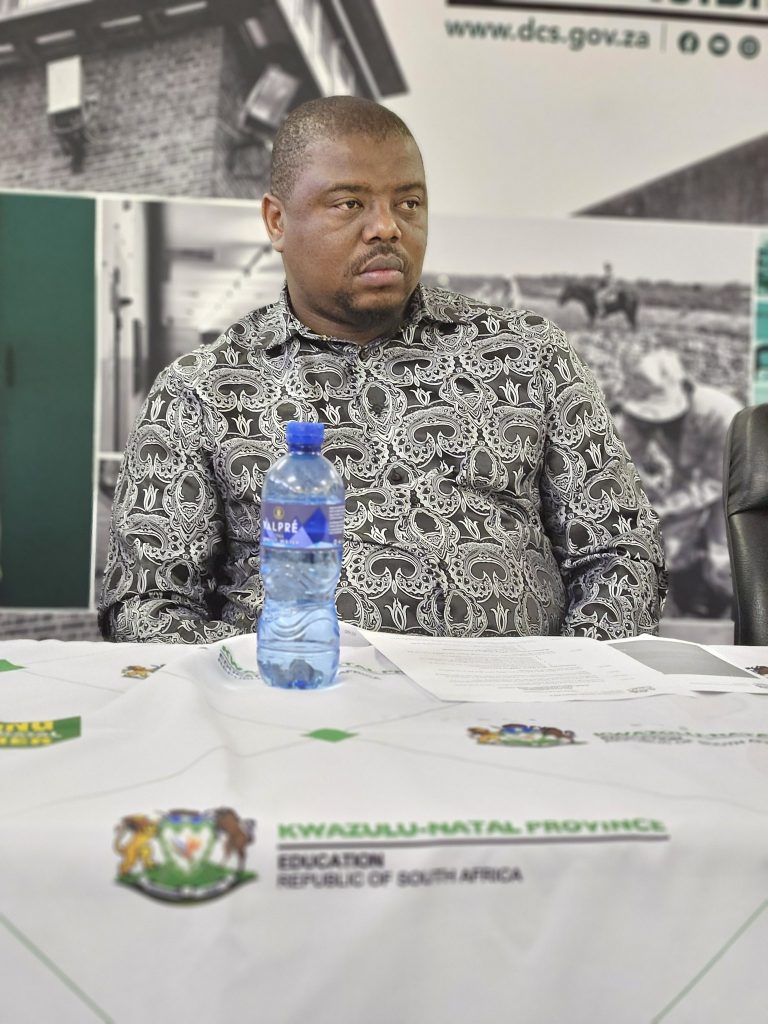
“Our problem is budget cuts,” said KZN head of education Nkosinathi Ngcobo. 

“We are left with 7% to do other things that need to be done. That’s the problem.”

In an interview with Inside Education following an oversight visit by Parliament’s Portfolio Committee of Basic Education last week, Ngcobo shed light on the dire financial situation plaguing the province’s education system. 

He said 93% of the department’s budget was allocated to employee compensation, leaving the department with little left to maintain schools, pay for utilities, or complete long-overdue infrastructure projects.

The department has been grappling with financial constraints since the 2020/2021 financial year, when budget cuts took effect. 

Ngcobo said the situation worsened when the National Treasury failed to provide additional funding for wage increases, forcing the department to absorb the cost.

“It is also caused by the fact that when wages increased by a certain percentage, the National Treasury did not give us that increment last year, and they said we must take it from our budget,” he explained.

“That’s how our budget was affected, and that makes it difficult to maintain schools, to pay for electricity and water.”

The committee observed that the lack of budget has affected various aspects, including maintenance at schools, delayed infrastructure projects, learner transport and even the frequency of meals provided through the National Schools Nutrition Programme.

Since the 2021/2022 financial year, the department has reduced its staff establishment by 4,231 posts, with 8,690 positions remaining vacant as of December 2024. 

Despite these reductions, the committee heard that the projected overspend for the provincial department for the 2025 year was R1.4 billion, as per January in-year monitoring against cost of employment (CoE), in the main.

The province’s Treasury told the committee that based on the provincial education’s budget submissions for 2025/26, it was estimated that there would be a shortfall of R2.7 billion on CoE.

Because CoE was protected, money would be moved from other line items to fund CoE.

Despite the financial strain, Ngcobo assured that employees’ salaries remain protected.

“We are not close to a point where employees won’t be getting paid. Salaries are protected,” he confirmed.

However, while employees can expect their salaries, service providers are not as fortunate. The department is struggling to meet payments to other service providers, further hampering its operations.

With financial pressures mounting, the department is looking to the National Treasury for relief.

“We will continue asking the Treasury to assist us,” Ngcobo said.

During the oversight visits to schools in the Ugu and Ilembe education districts, the committee came across several unfinished projects at schools where contractors had disappeared.

Acting committee chairperson Sedukanelo Tshepo Louw called on the national and provincial departments to follow up on these contractors.

“Consequence management is important. The department should do an investigation and should be able to tell us that they have opened a case against a contractor and we [are] going to recoup our money so that the schools can continue,” he said in a statement.

“The more we do not deal with those who take the public money and do not follow the right procedures, we will forever be in a disaster because we are giving money for free; it’s Christmas. There is no consequence management.”

He said that while the committee was aware of budget cuts, strategies could be implemented to respond to the current demands facing learners.

He also called on departments to review the quintile system for schools, as demographics have changed over the years, which in turn meant the quintile system should change.

INSIDE EDUCATION
Lekgotla lays groundwork to improve SA education system

By Thapelo Molefe

The Basic Education Department has called on stakeholders to work together to ensure that all South African learners have access to quality education.

Following the three-day 10th Basic Education Sector Lekgotla, which ended on Saturday, Deputy Minister Reginah Mhaule told government officials, educators, unions and industry leaders that the various discussions had helped lay the groundwork for long-lasting improvements in the education system.

“Together, we have embarked on a vital dialogue, interrogating the complex fabric of our basic education system. I believe that we have done the groundwork for transformative change that will undoubtedly transcend generations,” she stated.

The lekgotla provided a platform to address key challenges, review policy priorities and explore opportunities for collaboration.

Six commissions tackled crucial aspects of the education system.

They were foundational literacy and numeracy, early childhood development (ECD), care and support for teaching and learning, educational professional development for a changing world, education using ICT, and mother tongue-based bilingual education.

Participants engaged in detailed discussions to refine strategies and policies.

Recommendations emphasised workforce development, community engagement, inclusivity and the integration of digital solutions into teaching and learning.

A recurring theme throughout the lekgotla was the role of artificial intelligence in education, as well as equipping teachers with modern skills to navigate an evolving learning environment. 

The importance of ECD was also underscored, with a renewed commitment to multisectoral collaboration, evidence-based interventions and innovative teacher training approaches.

“The task ahead requires sustained effort, collaboration and innovation from all stakeholders involved. It is through our united efforts that we will ensure every learner in South Africa has access to quality education delivered by well-prepared, supported and motivated teachers,” the deputy minister emphasised.

Acknowledging the scale of the task ahead, she reaffirmed that education reform required patience, perseverance and collective efforts from all stakeholders.

“The task before us is huge, but together, there is no mountain we cannot climb or river we cannot cross. Let us carry forward the spirit of collaboration, innovation and unwavering commitment to our children’s future that has characterised this lekgotla,” Mhaule said in her closing address.

“The assignment of transforming the education system is not the sole mandate of DBE, but an-all stakeholder effort. Let us continue to work hand in hand to ensure that our education system is not just a mirror of our society but a beacon of hope, a catalyst for change and a bridge to a brighter, more inclusive future.”

As South Africa moves forward, the resolutions and commitments made at the 2025 Basic Education Sector Lekgotla will play a crucial role in shaping the future of learning, ensuring that education drives empowerment and national development.

INSIDE EDUCATION

AI in education: Will it bridge or widen South Africa’s learning divide?

By Thapelo Molefe

The rise of artificial intelligence (AI) in education is sparking both excitement and concern in South Africa, as experts debate whether it will improve learning or deepen inequalities. 

Speaking at the Basic Education Sector Lekgotla. Unesco’s Prof. Shafika Isaacs warned that while AI offered new opportunities, it must be implemented responsibly.

“AI is not a magic solution for education’s challenges. If we are not careful, it could reinforce inequalities rather than solve them,” Isaacs said.

The conference brought together policymakers, educators and researchers to explore AI’s role in teaching, student support and administration. 

While AI-driven tools are helping automate lesson planning, grading and even tutoring, Isaacs cautioned against an overreliance on technology.

“We must ensure that AI in education serves public interest, not just commercial priorities,” she added, highlighting concerns about AI bias, data privacy and ethical use.

One of the biggest challenges raised at the lekgotla was AI’s lack of support for African languages. 

Prof. Vusi Marivate from the University of Pretoria emphasised the urgent need to develop AI tools that recognised and processed local languages.

“If AI is only trained in English and dominant global languages, it will exclude millions of African learners,” Marivate warned.

He explained that most AI models were developed using Western data, leaving South African students at a disadvantage. Without investment in African language AI, he said the country risked creating an education system where only English-speaking students benefited from AI-driven learning.

Another major issue discussed was the growing gap between well-resourced and underprivileged schools. While some private institutions have begun experimenting with AI-powered classrooms, many public schools struggle with basic digital access.

“AI could either be a tool for empowerment or a driver of exclusion, depending on how we implement it,” said a panellist during one of the discussions.

Experts agreed that without government investment in digital infrastructure, AI adoption could widen educational inequalities instead of addressing them.

Despite AI’s ability to assist in the classroom, panellists were clear that it should not replace human educators. Some schools globally have experimented with AI-led teaching, raising concerns about the dehumanisation of education.

They said students needed mentorship, emotional support and ethical guidance, which AI could not provide.

As South Africa navigates AI’s role in education, experts called for stronger regulations, ethical oversight and AI literacy training for teachers and students.

“We must approach AI critically, ensuring it aligns with our values of inclusivity, fairness, and accessibility,” Isaacs said.

The lekgotla was clear that AI would play a role in the future of education, but how it was implemented would determine whether it helped or harmed South Africa’s learners.

INSIDE EDUCATION

Unfinished projects a major concern at KZN schools

0

By Staff Reporter

Solutions to the funding crisis in the KwaZulu-Natal education department need to be found urgently as it is affecting schooling in the province, according to the Portfolio Committee on Basic Education.

The committee spent a week in the province conducting oversight visits to schools in the Ugu and Ilembe education districts.

Committee acting chairperson Sedukanelo Tshepo Louw said on Friday that private partnerships should be considered as well as involving parents who were able to assist in stabilising he quality of education that children deserved.

“In order to deal with all issues confronting our schools and the department, it means we would have to be disciplined with our finances. It is for us to deal with consequence management. It is for us to equitably allocate resources for the needy schools,” said Louw.

The committee visited several schools as part of its oversight mandate over the Department of Basic Education and provincial education departments.

It heard that the projected overspend for the provincial department for the 2025 year was R1.4 billion, as per January in-year monitoring against cost of employment (CoE), in the main.

The province’s Treasury told the committee that based on the provincial education’s budget submissions for 2025/26, it was estimated that there would be a shortfall of R2.7 billion on CoE.

Because CoE was protected, money would be moved from other line items to fund CoE.

The committee came across several unfinished where contractors had disappeared.

Louw called on the national and provincial departments to follow up on these contractors.

 “Consequence management is important. The department should do an investigation and should be able to tell us that they have opened a case against a contractor and we [are] going to recoup our money so that the schools can continue,” he said in a statement.

“The more we do not deal with those who take the public money and do not follow the right procedures, we will forever be in a disaster because we are giving money for free; it’s Christmas. There is no consequence management.”

He said that while the committee was aware of budget cuts, strategies could be implemented to respond to the current demands facing learners.

He also called on departments to review the quintile system for schools, as demographics have changed over the years, which in turn meant the quintile system should change.

The main purpose of the visit was to assess the school readiness for the readiness for the 2025 academic year.

The committee will now draft a report with recommendations for both departments for the National Assembly to consider. The report will include recommendations for both the DBE and the provincial department.

“We will follow up on the commitments made during the visit as well as on whether our recommendations have been implemented,” said Louw.

INSIDE EDUCATION

Gwarube defends McDonald’s desks

0

By Johannah Malogadihlare

Basic Education Minister Siviwe Gwarube has hit out at criticism over branded desks donated by the private sector to two Cape Town schools.

The donation, which has been referred to as a branding stunt, was made by McDonald’s South Africa and MiDesk in partnership with the Basic Education Department to address challenges of school infrastructure.

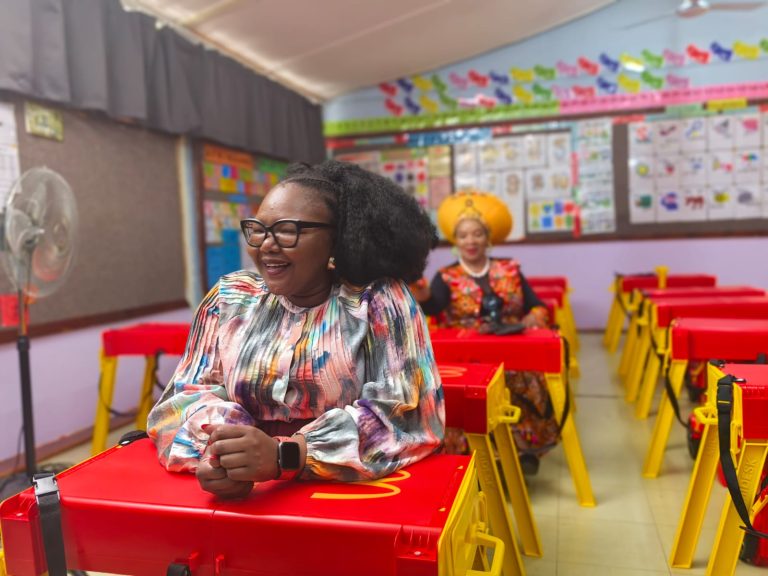
Gwarube said children would benefit from the wheelie school bag that unfolded into a desk and chair. The desks also have a USB port.

“Firstly, these desks have been approved by Unesco. They are 2kg heavy and Unesco has indicated that these are absolutely appropriate, but what is important for me is that there are children in this country who go places and homes where they don’t have even an area to do their homework,” said Gwarube.

The children had been writing on their laps before the donations.

Although 22 civil society organisations including Section27, Equal Education and the SA Council of Churches, criticised the minister for welcoming the donation, education activist Hendrick Makaneta said there was nothing wrong with private sectors providing assisting underprivileged schools.

“The fact that we still have learners who study without desks, and the fact that this was a donation… if a donation is going to address a need, it should be welcomed in my view,” Makaneta told Newzroom Afrika.

However, the organisations said McDonald’s donation was junk food marketing targeting vulnerable children while the country was facing malnutrition crisis.

They said the education department should have protected children’s health instead of exposing them to marketing fast foods.

They have also accused McDonald’s of using children as unpaid walking billboards for the junk food market and by slapping its logo on the MiDesk, it ensured that its brand was paraded through communities, at no cost, while profiting from the very eating habits that harmed children’s health.

“Minister Gwarube’s decisions cannot be a compromise between private interests and protecting our children from harmful advertising. Her responsibility is to serve the public and the Constitution, which means keeping private interests in check and ensuring big businesses don’t profit at the expense of our children,” Amandla.mobi’s Palesa Ramoleo,  

“The DBE should be intensifying its efforts to enhance the school nutrition programme, not helping to further socialise young children into the consumption of health-devastating foods. These foods jeopardise the physical, mental and emotional performance of children, and thereby their futures,” Healthy Living Alliance’s Zukiswa Zimela said.

The organisations said the branded desks were the result of austerity measures and budget cuts in the country.

They also said corporate actors were turning classrooms into advertising spaces and called on the minister to withdraw support for the branded MiDesk donation.

They urged the government to urgently finalise the draft regulations on the labelling and advertising of foodstuffs and to strengthen regulations around corporate social investments to ensure that they were ethical, transparent, and not transactional.

INSIDE EDUCATION

Industry must step up to build a future-fit education system: Manamela

0

By Thapelo Molefe

There needs to be a stronger collaboration between government and industry to ensure South Africa’s education system remains relevant in a rapidly changing world, according to Higher Education and Training Minister Buti Manamela

“We are not just talking about education reform; we are talking about economic transformation—how we prepare our young people for the jobs of today and the careers of tomorrow,” Manamela told the 2025 Basic Education Sector Lekgotla on Friday.

Using a metaphor from MIT Professor Neri Oxman, Manamela likened the ideal education system to a clockwork mechanism in which science, engineering, design and artwork worked in harmony, just as education and industry must be seamlessly integrated. 

However, he noted that South Africa still faced significant skill mismatches, with industry often lamenting a lack of skills while remaining too disconnected from curriculum development.

“The key question, then, is this how do we align education to function like this clockwork system, where knowledge flows seamlessly into industry and industry feeds back into education?” he asked.

To address this, Manamela outlined government priorities for industry-education collaboration. They are the expansion of work-based learning, investing in Science, Technology, Engineering and Mathematics (STEM) education, digital access and teacher development.

Referencing research by global experts present at the event, including Prof. Andreas Schleicher and Tanya Milberg, Manamela emphasised the need for industries to take an active role in skills development.

“Industry must invest in workplace training rather than waiting for ready-made graduates. We must shift from passive hiring to active industry-led skills development because skills aren’t created in the hiring process, but in the learning process,” he urged.

He pointed to the success of the Centres of Specialisation in TVET colleges, which have trained over 5000 artisans with a 92% pass rate in collaboration with industry partners. 

However, he stressed that more companies must engage with TVET institutions, not just as employers, but as co-creators of curricula and training programmes.

With AI and automation reshaping labour markets, Manamela highlighted the urgent need for early exposure to STEM subjects and digital education. He called on industry to invest in digital learning infrastructure, particularly in rural and township schools, and to support bursary and mentorship programmes in fields like data science and engineering.

“If industry wants a tech-savvy workforce, it must co-invest in building it from the ground up,” he asserted.

In response to concerns raised about the nation’s overemphasis on matric results, Manamela challenged industry and society at large to give greater recognition to TVET graduates and vocational pathways, which were crucial for building a skilled workforce.

The government was dealing with various challenges, including disparities in rural and urban education access, limited work-based learning opportunities and the rapid pace of technological change.

“The seventh administration within the Government of National Unity is committed to incentivising industry investment in education, especially in underprivileged communities,” Manamela assured, pointing to plans for expanded tax incentives for apprenticeships and teacher training.

Quoting Albert Einstein, he concluded with a vision for a dynamic education system that blended science, creativity and industry collaboration.

“This is the integration we need in education—where knowledge moves dynamically between disciplines, between industry and academia, between science and creativity. South Africa is ready to take this forward—but industry must step up.”

With this rallying call, Manamela reinforced the shared responsibility of government, industry and academia in ensuring that no young South African is left behind in the transition to a knowledge-driven economy.

INSIDE EDUCATION

Education must adapt with the time: Ramaphosa

0

By Thapelo Molefe

President Cyril Ramaphosa has issued a stark warning about the future of education, stating that artificial intelligence and automation are changing the job market at an unprecedented pace. 

Speaking at the 2025 Basic Education Lekgotla in Ekurhuleni on Thursday, the president urged education stakeholders to rethink how young people were being prepared for the workforce of the future.

“Artificial intelligence is cutting a swathe across many types of work,” Ramaphosa said. 

“We now have tools that can build a website in 10 seconds and compile a fully referenced research paper in about a minute. If we do not transform our education system, we will be preparing learners for jobs that will no longer exist.”

The annual lekgotla, now in its 10th year, is a critical platform for shaping education policy in South Africa. 

This year’s theme, “Strengthening Foundations for Learning for a Resilient, Future-Fit Education System”, reflects growing concerns about whether the country’s education system is keeping pace with global technological advancements and economic demands.

Basic Education Minister Siviwe Gwarube delivered a sobering assessment of the challenges facing South Africa’s education sector. 

She warned that budget constraints, teacher shortages and increasing class sizes were threatening the quality of learning.

“We are operating in a fiscally constrained environment,” Gwarube said. 

“Provinces have retained the same number of teaching posts for the past five to 10 years, while learner enrolment has steadily increased. This has pushed up class sizes and is impacting learning outcomes.”

Despite these financial hurdles, Gwarube reaffirmed her department’s commitment to strengthening early childhood development, literacy and numeracy.

The minister also highlighted the impact of the Government of National Unity on education, stating that collaboration across political parties was essential. 

“Bringing together 10 different political parties, each with its own priorities, has required unprecedented political maturity,” she noted.

“The private sector must play a more active role — not by taking over education, but by investing in partnerships that bring innovation and sustainability to the sector.”

Science, Technology and Innovation Minister Blade Nzimande echoed the president’s concerns about AI and automation, urging education leaders to integrate STEM (Science, Technology, Engineering and Mathematics) education more deeply into the curriculum.

“The world is changing rapidly, and science, technology and innovation are the drivers of this change,” Nzimande said. 

“We need to ensure that learners are not only consuming technology but are also equipped to create it.”

Nzimande highlighted several initiatives aimed at preparing learners for the future, including National Science Week that engaged over 4000 learners annually to spark interest in STEM careers.

He also emphasised the importance of STEM Olympiads, which fostered problem-solving, computational thinking and innovation.

To ensure that educators were equipped to teach digital skills, coding and computational literacy, programmes have been introduced to provide teachers with the necessary training. 

Additionally, the government was investing in computer laboratories at schools, particularly in rural areas, to enhance access to technology and digital learning resources.

“Our goal is to build a generation of learners who are ready to take advantage of the Fourth Industrial Revolution, not be left behind by it,” Nzimande said.

While Ramaphosa acknowledged the 81.7% matric pass rate achieved by the 2024 matriculants, he warned that these successes at the end of schooling contrasted sharply with the struggles at the foundation phase.

“More than 80% of Grade 4 learners in South Africa cannot read for meaning,” he said, referring to the 2021 Progress in International Reading Literacy Study. 

“We must fix this at the earliest stage, or our later achievements will mean little.”

Both Ramaphosa and Gwarube stressed the importance of mother-tongue-based bilingual education, saying that learners grasped numeracy and literacy concepts better when taught in their home language.

“We cannot afford to let another generation fall behind because they were not given the proper foundation,” Gwarube said. “Early childhood development is the great equaliser in our society.”

Following South Africa hosting its first G20 Education Working Group in 2025, Ramaphosa emphasised that the country had a unique opportunity to shape global discussions on inclusive education.

“The G20 is not just about high-level diplomacy; it’s about ensuring that the voices of learners, teachers and communities are heard on a global stage,” the president said.

The alignment of the Basic Education Lekgotla’s priorities with the G20 education agenda is expected to elevate South Africa’s role in global education reform and attract international best practices into the country’s schooling system.

With discussions set to continue this week, stakeholders from government, civil society, business and education institutions will work on concrete plans to improve foundational learning, enhance teacher training and integrate new technologies into classrooms.

“The education system of today must serve the world of tomorrow,” Ramaphosa concluded. 

“If we do not act now, we will be failing not just this generation, but all those to come.”

INSIDE EDUCATION

CETA and EWSETA face scrutiny in Parliament

0

By Thapelo Molefe

MPs have expressed their concerns over the continued poor performances of Sector Education and Training Authorities (SETAs).

“How many SETAs actually received unqualified audits, and is this an isolated issue, or a systemic problem across the board?” a member the Standing Committee on Public Accounts asked on Wednesday.

The committee was briefed on the performance of the Construction Education and Training Authority (CETA) and the Energy and Water Sector Education and Training Authority (EWSETA) by the Higher Education and Training Department.

The briefing focused on oversight and audit outcomes for various SETAs, highlighting concerns regarding governance, financial management and performance.

According to the Auditor-General’s office, 14 SETAs had unqualified audits, including CETA, EWSETA, and INSETA who were repeat offenders, struggling to meet financial and governance requirements.

CETA has been grappling with governance and financial management challenges, as evidenced by three consecutive years of qualified audit outcomes (2022–2024). 

While its performance against Annual Performance Plans has improved since the existing administration, the authority has struggled to meet its Service Level Agreement targets with the department, recording below 50%.

“The CETA’s performance against its Annual Performance Plans has been improving, but the performance against the Service Level Agreement signed with the DHET remained below 50% for three consecutive years. This is a cause for concern,” the department stated.

Concerns were also raised over the CETA’s handling of supply chain management and discretionary grants. 

A committee member pressed: “Why has supply chain management remained a critical failure point? Have there been any suspensions or actions taken against responsible officials?” 

“Three SCM officials were suspended, one was dismissed, one reinstated and another case is still pending before the CCMA,” CETA CEO Malusi Shezi responded.

The SETA has, however, taken steps to address its shortcomings.

Research studies have been commissioned to assess the impact of its programmes, and a tracer study has been conducted to track the beneficiaries of CETA-funded learning programmes. 

“The SETA conducted a tracer study of all current and previous beneficiaries of CETA-funded learning programmes to measure the effectiveness of our interventions,” the department noted.

According to a presentation aimed at enhancing CETA’s financial and operational practices, it has decided benchmark itself against the Mining Qualifications Authority, which has a consistent track record of clean audit outcomes.

Despite being one of the smaller SETAs in terms of budget, EWSETA plays a crucial role in two key sub-sectors – energy and water – both of which are critical to economic growth and national stability. 

It maintained an unqualified audit outcome for four consecutive years, but suffered a setback in 2023-24 when it received a qualified audit outcome. 

Key concerns highlighted by the Auditor-General include improper accounting for discretionary grants and inaccurate financial disclosures.

“The public entity did not correctly account for all items in the commitment’s disclosure note, in accordance with GRAP 1 Presentation of Financial Statements,” stated the Auditor-General’s report.

Higher Education and Training Minister Nobuhle Nkabane is set to announce a new board for EWSETA, with a focus on ensuring that appointed members possess the necessary skills and ethical standards. 

Additionally, the National Skills Authority (NSA) is introducing a new governance indicator framework and enforcing stricter oversight measures, including mandatory registration of board members with the Institute of Directors of South Africa.

As part of its turnaround strategy, EWSETA will be paired with AgriSETA, which has consistently achieved clean audits, to improve its financial and operational practices. 

“For benchmarking of leading practices and improvements, EWSETA has elected to be paired with AgriSETA, which has for consecutive years attained clean audit outcomes,” the presentation highlighted.

Both CETA and EWSETA are under increased scrutiny as the government seeks to improve oversight, financial accountability and programme effectiveness within the SETA system.

The NSA has been tasked with strengthening regulatory frameworks, enforcing stricter governance standards and ensuring that SETAs conduct independent board evaluations.

The department emphasised that the NSA was preparing recommendations for the minister to enhance governance and performance across SETAs, including strengthening the regulatory framework to improve accountability and transparency.

INSIDE EDUCATION

Nkabane intervenes in CPUT accommodation crisis

0

By Thapelo Molefe

Higher Education and Training Minister Nobuhle Nkabane has taken decisive action following a distressing visit to the Cape Peninsula University of Technology’s (CPUT) District Six campus, where she found students living in dire conditions due to delays in student accommodation allocations.

The minister arrived at CPUT on Tuesday and immediately spoke to students only. She wanted a clear picture of what was happening on the ground. 

Students explained their struggles in detail, highlighting the dire circumstances they faced.

Accompanying the minister was a task team from the National Student Financial Aid Scheme (NSFAS), dispatched to address pressing concerns related to student funding and accommodation challenges. 

Recognising the urgency of the situation, the NSFAS team has been left at CPUT to work closely with university management and ensure that all outstanding issues are swiftly resolved.

During her walkabout, Nkabane engaged with university management, staff and students, assessing the challenges that have left many students without proper housing. 

Some have been forced to sleep in the student centre on bare floors, without access to showers or adequate meals.

“I was very disturbed to see the conditions in which our students are living. They are sleeping on the floor, they don’t have showers to prepare for the next day and they are struggling to access proper meals,” Nkabane said.

“This is unacceptable, and immediate action is required.”

Despite previous efforts by the department and Deputy Minister Mimmy Gondwe to resolve the crisis, progress has been slow. 

Nkabane has now ordered an immediate temporary accommodation plan to ensure all affected students have a proper place to stay while the university finalises its allocations.

“I have given CPUT a deadline to ensure that all students are housed appropriately. As a temporary measure, we are moving them into a more conducive living environment so they can focus on their studies,” she stated.

CPUT Vice-Chancellor Professor Chris Nhlapo acknowledged the ongoing difficulties, but offered assurances that the university was working towards resolving the issue. 

“We have made significant progress and have reduced the number of students without accommodation, but we still have around 80 students who need to be placed,” he said.

Beyond the immediate intervention, the minister stressed the need for sustainable solutions to address the recurring student housing crisis. 

She has established a task team, comprising representatives from the Department of Higher Education and Training, NSFAS, and student organisations, to devise a long-term strategy for improving on-campus student accommodation.

“We cannot continue with short-term fixes. We need a sustainable investment in student housing to ensure that future generations do not face the same struggles,” she emphasised.

Following her visit to CPUT, Nkabane proceeded to Northlink TVET College, where she was shown how all students work together on projects. She interacted with some students. 

The minister encouraged people to consider Technical and Vocational Education and Training (TVET) institutions as viable pathways to employment.

“TVET colleges produce graduates with the skills and competencies needed for our economy. We need to invest in artisan development programmes and ensure that TVET graduates contribute to South Africa’s inclusive economic growth,” she said.

With registration processes underway across institutions, Nkabane reaffirmed her commitment to ensuring that no student was excluded due to accommodation or financial constraints.

“… our doors are open for any Vice-Chancellor or council of the university as well as student bodies to share some of the frustrations with us so that we can come on board on time because we don’t want to leave anyone behind. We don’t want to see any student excluded in the academic year because we want to see them, in the current as well as the future.,” she said.

As the deadline for student accommodation allocations looms, all eyes are now on CPUT to fulfil its commitment to resolving the crisis. The department’s intervention offers a temporary reprieve, but the need for a long-term solution remains urgent.

INSIDE EDUCATION

KZN schools feels the strain of budget cuts

0

By Lungile Ntimba

Budget cuts to the KwaZulu-Natal education department have had severe ramifications, with Basic Education Portfolio Committee reporting overcrowding and incomplete infrastructure projects.

The committee is on a week-long oversight visit to schools in the Ugu District in the province. It is focusing on the impact of insufficient budget allocation and overcrowding.

The committee has visited the Harding Special School in Harding, the Nomnandi ECD Centre in Izingolweni and Nositha Primary School, which is a farm school, in Bomela.

Committee chair Joy Maimela said the committee heard that many projects were on hold and maintenance was delayed due to the department’s lack of funds. 

“This is a concern because we visited a special needs school where the building of new toilets was being delayed indefinitely,” Maimela said in a statement on Wednesday.

“We have also noted serious overcrowding. At one school we heard that the Grade R class has 48 learners and some other grades between 58 and 77 learners per class. It is totally unacceptable. We cannot allow this to continue. We need to find urgent solutions for this.”

While committee members commended the cleanliness and neatness of Harding Special School, they expressed serious concerns regarding the inadequate ablution facilities.

“We indicated to the MEC that budget constraints without any commitment as to when new toilets can be built, is not good enough,” Maimela said.

At Nositha Primary School, the committee applauded the principal’s commitment to enhancing the school’s standards. However, members were shocked to discover that there were 48 learners in a Grade R class and 77 in a Grade 7 class. 

“The education of the black child cannot be neglected like this. This is unacceptable,” Maimela said.

She said that committee was focusing on the provision of resources for rural and special needs schools, user-friendly infrastructure, and preparing learners for post-school education or entry to workplace-based learning programmes. 

It was also assessing social cohesion, including the gender-based violence framework, safety in schools, and getting learners ready participate in school sports.

Members would also check on scholar transport and the National School Nutrition Programme.

Maimela said the committee planned to engage with stakeholders, including the provincial education department, national Basic Education Department, unions, SA Principals’ Association, School Governing Bodies and traditional leaders to discuss its findings and determine a way forward.

INSIDE EDUCATION