Home Blog Page 124

DBE fails to respond to IR on publishing matric results

By Johnathan Paoli

The Information Regulator (IR) is maintaining its position on its enforcement notice prohibiting the Basic Education Department from publishing the 2024 National Senior Certificate (NSC) examination results on media platforms.

Inside Education reached out to IR spokesperson Nomzamo Zondi, who criticised the Chief Director for National Assessment and Public Examinations, Rufus Poliah’s pronouncement concerning the results.

“While the department of Basic Education has stated in the media its intent to proceed with publishing, it has not formally responded to the notice, and as the Information Regulator, we still stand by our concerns over the sharing of personal information,” Zondi said on Monday.

The regulator has accused the department of non-compliance with the Protection of Personal Information Act, specifically Section 11, stating that the department had failed to attain consent from learners.

However, Poliah told reporters last week that the department was of the view that it was fully compliant and well within the ambit of the law to publish the results, contending that the results were in fact anonymous.

A department spokesperson told Inside Education on Monday that Basic Education Minister Siviwe Gwarube had still not decided whether she was going to take the matter to court.

“The minister would prefer that government institutions resolve differences through constructive dialogue and no trough expensive litigation.”

Meanwhile, AfriForum, via its legal team, Hurter Spies Attorneys, has issued a letter of demand to Gwarube seeking clarity on the matter.

AfriForum wants to know whether the minister’s office intends to file an appeal against the notice and whether it will officially declare its position in relation to the IR.

“Our client’s position is that the Regulator erred in issuing the enforcement notice and our instructions are to assist our clients with urgent review proceedings in order to have the enforcement notice reviewed and set aside,” the letter reads.

The results will be announced on 13 January.

INSIDE EDUCATION

More legal action threatened over education law

By Johnathan Paoli

The political battle over the contentious Basic Education Laws Amendment (Bela) Act is heating up as a key deadline looms, with the Economic Freedom Fighters announcing that it is considering going to court.

A conflict resolution committee set up to deal with major differences amongst parties in the Government of National Unity has less than two weeks to reach an agreement on the way forward. The EFF is not part of the GNU

The EFF said on Monday it was looking at legal options to ensure that the legislation was implemented in its original form.

The EFF believes the law, which is aimed at transforming access to mother-tongue education and addressing exclusionary practices in schools, is being undermined by white supremacist organisations and their allies.

Last week a deal was reached between Solidarity and Basic Education Minister Siviwe Gwarube following the trade union taking the matter to the National Economic Development and Labour Court. Solidarity had threatened protest action over sections in the Act that address language and admission policies in schools

“The recent agreement between the Minister of Basic Education and Solidarity, which delays the implementation of critical clauses in the Bela Act, exposes the sinister reality of who truly governs South Africa – white racist organisations like Solidarity, the Democratic Alliance, Freedom Front Plus and AfriForum, not the elected representatives of the people,” EFF spokesperson Leigh-Ann Mathys said on Monday.

She accused President Cyril Ramaphosa of facilitating the agreement through secretive negotiations that betrayed the Act’s transformative purpose.

Mathys maintained that while Ramaphosa had declared that the agreement has no legal or practical effect on the ongoing discussions at the GNU, it illustrated a transparent attempt to absolve himself of responsibility for a process “he facilitated”.

“The EFF rejects his feigned detachment, as it is clear that his administration has already caved to the demands of white supremacist organisations. His assurances are meaningless without concrete action to enforce the law in its original form, or return the Bill to the National Assembly if it is indeed not satisfactory,” she said.

On Sunday, the president affirmed his commitment to resolving disputes over these provisions through a three-month consultation process, which ends on 13 December, emphasising that the Act, passed by Parliament and signed into law, must be implemented as intended.

Ramaphosa said he was bound by the Constitution and the law, and remained steadfast in ensuring transformation in the education sector for the benefit of present and future generations of learners.

He pointed out that Solidarity was only one among many stakeholders in the matter, reiterating that inclusive discussions are underway.

However, the EFF dismissed these assurances, criticising the settlement as evidence that white racist interests hold more power than the democratic processes of the country.

Meanwhile, the Congress of SA Trade Unions has cautiously welcomed the President’s commitment to implementing the Bela Act, but expressed concerns over the exclusion of key stakeholders, including teachers, learners and parents, from the consultation process.

INSIDE EDUCATION

Time for a review of the schooling system

0

By Edwin Naidu

The Class of 2024 can now relax and wait for their results, which provide a gateway to a promising future. Of course, many will fail, and for them, there should also be hope that they will take a second chance and make it count next time.

Annually, we have seen over the years an estimated 300,000 matriculants join the ranks of the unemployed.

On average, at least 130,000 places are available for those who want to study at universities. The competition is tough.

However, for those who cannot get a place at university, the government has pumped billions into upgrading technical and vocational education training (TVET) colleges.

Deputy Minister of Higher Education Buti Manamela is a product of TVET college education and has occasionally extolled the benefits, referring to the successful example of the German system, which has a conveyor belt of artisans helping to grow their economy powerfully.

As South Africa prepares for the festive season and the announcement of the matric examination results on 13 January, planning is underway to ensure the new academic year runs smoothly.

According to Universities South Africa, all universities are set to complete 2024 successfully. A big plus is that the National Senior Certificate (NSC) results will be released a week earlier (mid-January 2025 compared to the third week in January 2024).

USAf notes that it still exerts much pressure on universities, especially when finalising the National Student Financial Aid Scheme funding list.

There are growing calls in Parliament for discussions between the ministers of Higher Education and Training and Basic Education to consider releasing the results as traditionally done in December. This would alleviate the pressure during the new year and allow institutions to plan better.

Already, 12 universities have indicated they will experience a shortage of accommodation, so solutions must be found to tackle this before the new academic year.

The NSFAS will face key challenges around appeals, accommodation pilot projects, late payments and historic debt. Collectively, universities are owed R21 billion in unpaid student debt.

What will happen to this? One wonders why the government does not use the same debt collectors they sanction for the SABC to recoup the miserly R264 annual licence fee?

If the investment in education is a bottomless pit of money that keeps giving 30 years after democracy, the fruits of these efforts should have been better.

We see poverty and unemployment, especially graduates who cannot find jobs.

While the Ministers discuss changing the date for the release of the matric exam results, perhaps they should consider whether the country is getting value for the billions thrown into education.

Fixing our system and creating the South Africa we want should begin with an honest reflection on our current state as a nation.

While we cannot escape the euphoria of finishing matric with distinction for many, let’s not forget the stigma of those who scrape through with a 30% pass in one or two subjects. Is it acceptable to say that you have passed matric with 30% in two subjects?

The bar has to be raised so that learners leave with pride, knowing they can take on the world with a proper pass. All should leave the system with the same bachelor’s pass that opens the door to a degree course at a tertiary institution for further study for a higher certificate, diploma or bachelor’s degree.

To get this, one must pass six out of seven subjects, with at least 50% in four subjects, a minimum of 40% in a home language, and at least 30% in the “Language of Learning and Teaching” and at least 30%.

However, the caveat is that even if students have achieved a bachelor’s pass, they do not automatically qualify for a university position.

Instead of the lower requirements for a matriculation exemption, should the schooling system only encourage excellence for some, with university entrance far more competitive than a system that continues to spew people for unemployment?

That is why it is key for the schooling system to produce quality learners who can take the next step when they enter the tertiary system. However, those matriculants who won’t get to university or college must look at self-employment programmes because few job opportunities are available, and the economy is not expanding.

Self-employment may be what we need to turn this economy around. This means that our education system needs radical changes. Currently, the curriculum favours post-secondary education. Most learners who complete matric do not take this path and, as such, become unemployed or depend on family and the state.

The matric system needs an overhaul to ensure that children are fit for the 21st century instead of being prepared for failure.

It is time for real conversations around education rather than celebrating mediocrity.

Edwin Naidu is the Editor of Inside Education.

INSIDE EDUCATION

UWC looks at improving vaccine safety in the region

0

By Johannah Malogadihlare

The University of the Western Cape has teamed up with the Institute of Tropical Medicine (ITM) in Antwerp, Belgium, to enhance medicine and vaccine safety in southern Africa.

The two institutions have introduced a new Centre of Excellence for Pharmacovigilance in Southern Africa (CEPSA), which marks a big step in making medicines safer and more accessible across the region. 

The centre is funded by the European Commission’s Director General of International Partnerships (INTPA) in collaboration with the Director General of Research (RDT).

UWC said in a statement that the centre would aim to improve the way medicines and vaccines were developed, tested and monitored for safety.

“By focusing on safety, innovation and collaboration, ITM and UWC are helping to ensure that the people of southern Africa have access to the medicines and vaccines they need, produced locally and trusted by communities,” said UWC School of Public Health’s Dr Hazel Bradley.

The centre will also develop the skills and support for a new generation of pharmacovigilance experts, support operational research, and share clear and timely information.

Prof. Raffaella Ravinetto from the ITM said that through collaboration between governments, academia and pharmaceutical industry, the public could be better served.

“… we aim to improve public trust and ensure access to high-quality, locally produced health products. At the same time, we are strengthening regional partnerships to boost Africa’s vaccine and medicine production. This aligns with the EU’s MAV+ initiative, which focuses on manufacturing and access to vaccines, medicines and health technologies in Africa,” he said.

The university said the project demonstrated how local expertise could improve medicine safety in southern Africa.

INSIDE EDUCATION

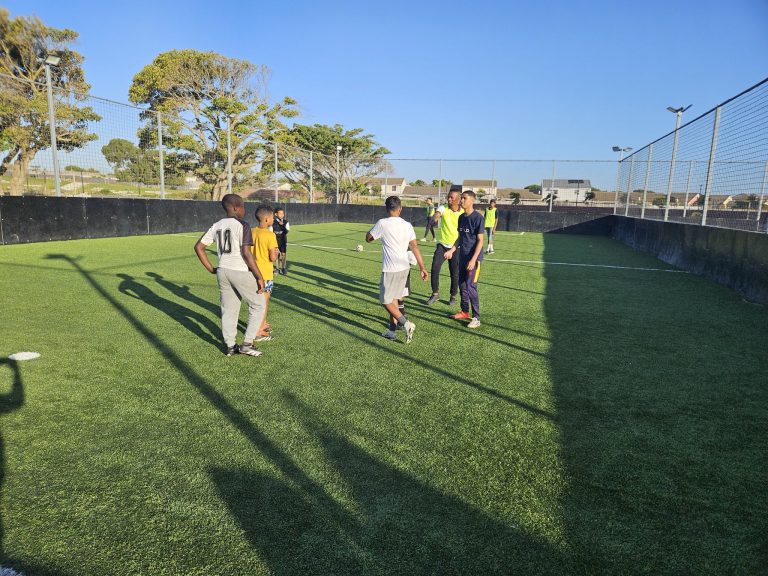
New sports precinct brings community and schools closer

By Johnathan Paoli

The Western Cape government has marked another milestone in its efforts to foster inclusive communities with the launch of a new sports precinct at the Conradie Park social housing development in Pinelands.

Premier Alan Winde and infrastructure MEC Tertuis Simmers led the unveiling ceremony, celebrating this significant addition to the transformative Better Living Model project.

The development, situated on previously underutilised land, is reshaping urban living with its mix of affordable housing, educational facilities healthcare services, retail spaces, and recreational areas.

The sports precinct is a key element of this integrated model, designed to enhance quality of life for residents and surrounding communities, with Winde expressing his enthusiasm for the project, emphasising its forward-thinking approach.

“With Conradie Park, we are building for the future. If we are to become a future-fit province that addresses the challenges of a fast-growing population, we must re-imagine our cities and towns. I applaud everyone involved in making this awe-inspiring development a reality. It showcases the incredible potential of thoughtful urban planning,” Winde said.

The Conradie Park project has prioritised skills development, with over 180 learnerships and graduate programmes completed to date.

It aims to address spatial inequality and foster economic growth and will ultimately deliver over 3,500 residential units.

During the launch, Simmers highlighted the broader vision of the development.

“Conradie Park is not just about buildings; it is about people. This sports precinct offers young people a space to dream big, brings communities together, and breaks down barriers. It symbolizes hope, opportunity, and progress for our communities,” he said.

The sports precinct is designed to be a unifying force within the community, offering recreational spaces where residents can connect and thrive.

Concor Development Executive Mark Schönrock, representing the construction company behind the project, echoed this sentiment.

“Sport has always been a powerful tool for unity, teaching teamwork and life skills while bridging divides. The sports precinct and school sites at Conradie Park aim to create a vibrant, safe environment for all,” Schönrock said.

Simmers underscored this collaborative success, stating that infrastructure is not just about bricks and mortar, but about building dignity, creating opportunity, and giving every person a fair chance to succeed, when the government, private partners, and communities work together.

INSIDE EDUCATION

Creating safer digital spaces for women

By Hengiwe Dube

Every year, from 25 November to 10 December, the world observes 16 Days of Activism against Gender-Based Violence, a global campaign that aims to raise awareness, promote action and advocate for the end of violence against women and girls.

This initiative begins on the International Day for the Elimination of Violence against Women (25 November) and concludes on International Human Rights Day (10 December). It serves as a reminder that gender-based violence (GBV) is a prevalent global issue, and calls for a unified effort to address and prevent all forms of abuse, including those facilitated by modern technology.

This annual campaign is an opportunity to reflect on the many ways in which violence manifests in women’s lives and the steps that need to be taken to eliminate it. Although the focus often centres on physical violence, the rise of digital technologies has introduced new forms of abuse, particularly through online spaces. In Africa, where internet and mobile phone penetration has surged in recent years, women are increasingly vulnerable to violence facilitated by technology; this must be addressed as part of the broader fight against GBV.

Understanding technology-facilitated violence

Technology-facilitated violence refers to the use of digital tools – such as the internet, social media and mobile apps – to perpetrate harm, control or exploit individuals, especially women. As more women in Africa and across the globe gain access to smartphones and digital platforms, the risks associated with these technologies have escalated. What was once a tool for empowerment can now be misused as a weapon of abuse. This phenomenon includes a range of behaviours, from harassment and surveillance to exploitation and manipulation.

One of the most common forms of technology-facilitated violence is cyberstalking, where abusers use social media, messaging platforms and emails to harass or threaten women. This can range from constant messaging and threats to online campaigns designed to shame or control the victim. Another disturbing form of digital abuse is the non-consensual sharing of intimate images (including videos), often with the intent to humiliate or exert power over the victim. This form of abuse is especially devastating, as the spread of such content can have long-lasting effects on a woman’s personal and professional life.

Women also face the growing problem of online sexual harassment, where they are bombarded with unsolicited sexual messages, comments or explicit content across various digital platforms. The anonymity of the internet allows perpetrators to act without fear of being identified, making it difficult for women to escape this harassment. Doxxing, the malicious act of publishing private information such as home addresses or phone numbers online, is another form of abuse that puts women at great risk. By revealing personal details, abusers may incite others to further harass or physically harm their victims.

In some cases, digital domestic abuse occurs when a partner uses technology to control or monitor their significant other. This can involve tracking their partner’s location through mobile apps, accessing their personal messages and emails, or controlling their social media accounts. Financial abuse via technology is another emerging form of control, where abusers use digital platforms to restrict access to financial resources or manipulate spending, further trapping women in cycles of abuse.

The impact of technology-facilitated violence on women

The effects of technology-facilitated violence are far-reaching and have a profound impact on women’s mental, emotional and physical well-being. Constant harassment, surveillance and threats often result in psychological trauma, including anxiety, depression and post-traumatic stress disorder. Victims may feel constantly unsafe and isolated, as the abuse can follow them everywhere, both in the digital and physical realms.

Another significant impact of digital abuse is the damage to a woman’s reputation. When intimate content is shared without consent or when private information is exposed online, the consequences can be devastating. Women may lose their jobs, relationships and social standing. The public nature of digital platforms means that these actions can have enduring emotional and social repercussions, even after the abusive content has been taken down.

Physical safety is another significant concern. Technology can enable abusers to track their victims’ movements and access sensitive personal data, increasing the risk of physical harm. For example, location tracking apps can allow perpetrators to stalk their victims in real time, while doxxing can lead to real-world threats and violence.

Many women also face significant barriers to seeking help in cases of technology-facilitated violence. In some parts of Africa, there is limited access to resources for reporting digital abuse, and victims may fear not being taken seriously by authorities. Also, cultural factors, such as shame or fear of further victimisation, can prevent women from speaking out. The lack of comprehensive legal frameworks and the slow pace of technological literacy among members of law enforcement can further complicate efforts to seek justice.

Technology’s role in enabling GBV

Technology has created new avenues for GBV, largely due to its inherent features that allow for anonymity and global reach. This anonymity makes it difficult for victims to pinpoint the abuser, and for authorities to track and prosecute perpetrators. As a result, many forms of digital violence go unpunished.

Also, the global accessibility of the internet means that technology-facilitated violence can transcend national borders. Harmful content, such as explicit images or defamatory posts, can spread rapidly across social media platforms, causing widespread damage. The internet’s reach means that women in rural and urban areas alike are vulnerable to online abuse, and perpetrators can operate from anywhere in the world.

The responsibility of tech platforms in curbing digital violence is also a point of contention. Many tech companies have implemented reporting systems to address online harassment, but these measures are often inadequate or not effectively enforced. The lack of accountability from platforms that host abusive content or the failure to take action against perpetrators contribute to the persistence of technology facilitated violence. For example, social media platforms may not do enough to remove harmful content quickly enough or may fail to protect vulnerable users from ongoing abuse.

The African Commission’s resolution on digital violence

In 2022, the African Commission on Human and Peoples’ Rights adopted Resolution 522 on the Protection of Women Against Digital Violence in Africa, a groundbreaking move that directly addresses the growing prevalence of technology-facilitated violence on the continent. This resolution calls on African states to review and expand their legal frameworks to explicitly include digital violence within the broader category of GBV. This includes new provisions to criminalise cyberstalking, non-consensual sharing of intimate images and other ICT-related violations that disproportionately affect women. By recognising the unique threats posed by digital platforms, the resolution emphasises the need for robust legislative responses and urges states to protect women from all forms of digital abuse, ensuring that their rights are safeguarded both online and offline.

The resolution outlines a set of recommendations that address the root causes of digital violence and promote a safer online environment for women. These include the implementation of research and awareness campaigns, the promotion of digital literacy programmes to bridge the gender gap in technology, and the establishment of mandatory training for law enforcement and judiciary professionals on digital abuse. The African Commission also emphasises the importance of supporting women’s access to education and opportunities in the tech sector, empowering them to become part of the solution to online violence. States are urged to strengthen cooperation between service providers and law enforcement to improve evidence gathering and perpetrator identification, ensuring that digital violence does not go unpunished.

Legal and policy framework

While some African countries have taken important steps toward addressing technology-facilitated violence through national laws and regulations, there is still a significant gap in effectively combating digital abuse. In most cases, existing legal frameworks are outdated or insufficient to address the complexities of online GBV. In some legal systems, these issues are not explicitly covered, leaving victims with limited recourse.

To tackle this growing problem, legal protections for women in the digital space need to be enhanced so that digital violence is treated with the same seriousness as offline abuse. While some African countries have made progress with cybercrime laws aimed at protecting women from online abuse, the enforcement of these laws remains inconsistent. There is much to be done to ensure that victims have access to justice, that the legal framework evolves in response to emerging forms of digital violence, and that technology facilitated violence is addressed comprehensively and effectively across the continent.

The South African legal framework recognises the growing threat of technology-facilitated GBV and has begun to address this issue through both specific legislation and broader frameworks. For instance, the Cybercrimes Act (2020) criminalises several forms of online abuse that have a gendered impact, particularly on women. It addresses online threats such as cyberbullying, online harassment and the distribution of intimate images without consent. Section 16 on cyberstalking and cyberharassment criminalises the use of electronic communication to harass, intimidate or threaten another person. It recognises the harm that can be caused through digital platforms and aims to provide a legal framework to protect victims from online harassment. Section 3 addresses data interception by criminalising the unlawful and intentional interception of private data, such as emails, messages or intimate content. This provision is particularly relevant in cases of digital stalking, non-consensual sharing of intimate images and cyberharassment, where perpetrators may intercept or access sensitive information without consent to control, intimidate or blackmail victims. It applies to situations where private data is unlawfully obtained, stored or used for abusive purposes, making it an important legal tool for protecting individuals, particularly women, from digital exploitation.

Prevention and response strategies

The African Commission’s Resolution 522 marks a crucial step forward in recognising the intersection between GBV and the digital space. However, much more needs to be done at both national and international levels to fully protect women. While the digital realm offers immense opportunities for empowerment, it also exposes women to a variety of threats, which not only violate their privacy but also contribute to the erosion of their dignity, mental health and security. The continued expansion of digital platforms and tools requires urgent attention to ensure that legal frameworks and safeguards evolve to keep pace with these new forms of violence.

To this end, governments, tech companies, civil society organisations (CSOs) and international human rights mechanisms must take immediate and decisive action. The following key steps are necessary to ensure that women can navigate the digital world safely, free from the threat of violence.

Key action points:

a) Governments, tech companies and regulatory bodies must work together to hold tech platforms accountable for the content and interactions that occur on their systems, particularly in relation to digital violence. Governments and regulators should enforce regulations that require social media platforms to implement stronger content moderation policies, swiftly removing harmful content such as abusive messages, non-consensual intimate images and hate speech. Tech companies should adopt measures to address violations of user rights, including suspending or banning accounts engaged in harassment or cyberbullying. Without effective action, these platforms become breeding grounds for abuse.

b) Governments, judicial authorities, legislators and CSOs should collaborate to strengthen legal frameworks that specifically address digital violence. This includes passing comprehensive cybercrime laws that criminalise online abuse such as cyberstalking, online harassment and the non-consensual sharing of intimate images, and establishing clear legal recourse for victims, ensuring swift investigation and prosecution. Existing GBV laws should be updated to encompass online abuse, providing victims the same legal protection and access to justice as for physical violence. Robust legal frameworks are essential for holding perpetrators accountable but also for signalling to society that digital violence is as serious as any other form of abuse, highlighting the need for laws to evolve in response to the digital age.

c) Governments, CSOs, education institutions and tech companies should prioritise digital literacy programmes for women and girls to equip them with the skills and knowledge needed to navigate the digital world safely. These programmes should focus on educating women about safe online practices, data protection, recognising online threats and reporting digital abuse. They should also provide training on digital privacy, such as securing personal information and avoiding risks like phishing or identity theft. Collaboration with tech companies is key to offering women user-friendly tools that enhance their safety, such as privacy settings, blocking features and reporting mechanisms. Empowering women with digital literacy is essential for reducing their vulnerability to online abuse and enabling them to fully harness the opportunities of the digital space.

d) CSOs, governments, healthcare providers and tech companies should enhance support services for victims of digital violence by creating hotlines and online platforms where they can report abuse anonymously, and access legal and psychological support. Law enforcement agencies should be trained to investigate digital violence cases, with a focus on gathering digital evidence and understanding the challenges posed by online crimes. Victims of digital violence often feel isolated and unsupported. Providing access to comprehensive support services ensures that women can recover from the trauma of online abuse and seek justice in a supportive environment.

e) Law enforcement agencies also need targeted training to effectively investigate and handle cases of digital abuse, including gathering digital evidence and understanding the nuances of online crimes. Police, lawyers and judges must be equipped with the knowledge and tools necessary to support victims and ensure perpetrators are held accountable.

f) The African Union, United Nations and international NGOs should promote regional cooperation and advocate for harmonised policies to combat digital violence across Africa. This includes encouraging countries to align their digital violence laws with international human rights standards and regional frameworks like Resolution 522, supporting cross-border collaboration in prosecuting cybercrimes, and facilitating information sharing to track online abusers. Engaging with international NGOs will help raise awareness and create global networks of support for women facing digital violence. Digital violence often transcends borders, thus requiring collaboration between countries and international organisations.

GBV, in all its forms, must be eradicated. This includes strengthening legal frameworks, holding tech platforms accountable, empowering women through digital literacy and providing essential support services for victims. Governments, CSOs and international bodies must work together to create safer digital spaces, where women are free from harassment, abuse and exploitation. By aligning laws with international human rights standards, enhancing victim support and promoting regional cooperation, we can nurture an environment where women are protected and empowered online.

The fight against technology-facilitated violence is not just a women’s issue – it is a global issue that requires a united, comprehensive approach. Only through collective, sustained action can we ensure that women, both online and offline, are free from violence and discrimination, paving the way for a more equitable and just future.

Hlengiwe Dube is Project Manager: Expression, Information and Digital Rights Unit at the Centre for Human Rights at the University of Pretoria’s Faculty of Law

INSIDE EDUCATION

The beach is an amazing place to teach kids about science. Here are 3 things to try this summer

0

By Chris Speldewinde

Summer is a wonderful time for families to go the beach and for small children to get to know the water and the sand.

But aside from being a place to relax, my new research shows how the beach provides many ways to teach young children about science.

My ‘beach kinder’ research

I research science, technology, engineering and mathematics (STEM) learning in bush kinders. These are programs where preschool children regularly go into the natural environment with their daycare centre or kinder/preschool, to gain an appreciation for nature.

Educators do not take any toys, balls or games, so children are reliant only on what is available in nature for play.

Bush kinders often happen in parks, forests and gardens but educators and researchers are increasingly looking at the benefits of education around beaches. These “blue spaces” provide children with wide open spaces to learn through play.

But so far there has been little research on educational benefits of beach learning in early childhood settings.

Last year, I observed a “beach kinder”: where childhood educators and four- and five-year-old children went to the beach along Victoria’s Surf Coast. They were spending between three and five hours per week at the beach for a term as part of their regular kinder/preschool program.

What I noticed was how many opportunities the beach provides to teach little kids about science. Here are a three examples families can try on their next visit to the beach.

1. Rockpool life

When the tide is low, the ocean can expose a wide range of plant and animal life. Small fish, crabs, starfish, sea plants and maybe even an octopus can be found in rockpools. You can ask your child:

How many different animals can you see?

You can also search for barnacles that look like small volcanoes or periwinkles – the little snails that live in the splash zone. You can talk about how animals can sometimes be very small or hiding – just because we can’t see them does not mean they are not there.

You can talk to children about how these small animals survive as the tide rises and falls. For example, crabs bury themselves in the sand away from the water or other types of shellfish can shut their shells tightly to keep the water out. If possible, gently lift one for a look and then replace it just as gently.

You can explain life cycles and simple biology as you walk among the rockpools. For example, sea turtles lay their eggs on sandy beaches, then the baby turtles make their way to the sea where they mature into adults.

2. Sticky sand

Sand is an amazing thing to play with and it changes, depending on where you are on the beach.

Far away from the waters’ edge, have your child take a handful of dry sand and watch what happens as it slips through small hands. Walk closer to the water and do the same thing. Ask your child:

Have you ever wondered why dry and wet sand are so different?

You can explain how the water in the sand actually acts like glue, making the sand grains stick together. This lets us talk to young children about chemistry and how different materials interact with each other.

Try making sandcastles with wet sand and dry sand and see the difference.

Is one version harder to work with than the other other? What happens if you mix wet and dry sand together?

3. Watching the waves

The waves can teach us about floating, sinking and the force of water.

Children can have a lot of fun using pieces of seaweed or small sticks as boats, letting them bob up and down on small waves. They can even have “seaweed races” learning about how waves can move materials around.

Sea waves and ocean currents are really important as some marine animals such as dolphins and turtles use waves to move around. In fact, some animals migrate thousands of kilometres to and from breeding grounds.

You can then replace the seaweed pieces with shells and ask your child to observe what happens:

Why does the seaweed stay on top of the water, but the shell goes underneath?

Talk about how the shell is heavier than the water and so will sink. This helps them understand the physics of floating and sinking as well as the patterns associated with wave motion.

This summer when you’re at the beach, think about all the science happening around you. This could include the animals and habitats you encounter, as well as all the many, changes things happening with the sand and surf.

Speldewinde is a research fellow, Research for Educational Impact Institute, Deakin University.

This article was originally published in the Conversation

DBE praises top performing districts and schools as emblems of change

0

By Johnathan Paoli

Basic Education Minister Siviwe Gwarube has applauded the achievements of top-performing schools and districts, saying they illustrate the country’s commitment to transforming education in the face of challenges.

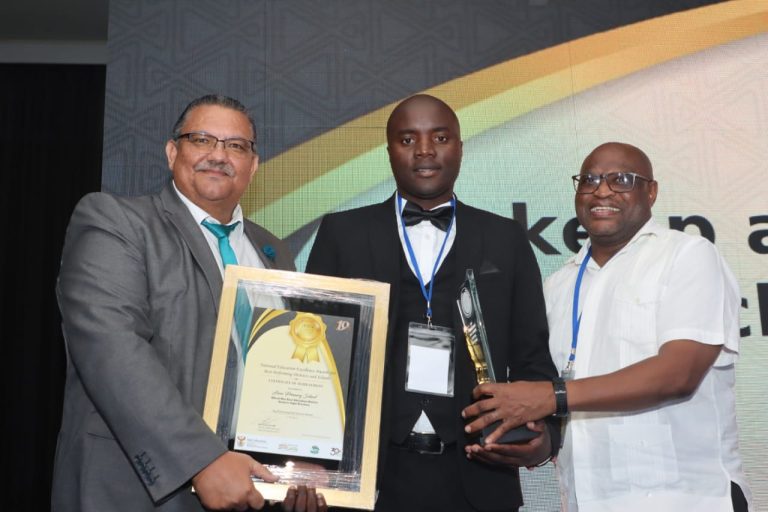
Gwarube, along with other top officials from the department, hosted the 2024 National Education Excellence Awards in Ekurhuleni, marking a decade of the awards for best performing schools and districts under the theme “Recognising Excellence in Education”.

“This event is one of the most inspiring moments in our annual calendar, as it allows us to reflect on and celebrate our schools and districts’ extraordinary contributions to shaping South Africa’s future,” Gwarube said.

The minister emphasised the transformative power of consistency and collaboration, reflecting on the awards’ evolution, and noted that while initially focused on district offices, they now included schools, acknowledging a broader spectrum of contributions.

The awards recognise schools maintaining a 100% matric pass rate for five years in Quintile 1-3 categories, showcasing the dedication of educators, learners and communities to fostering excellence in challenging environments.

Top-performing districts were lauded for their leadership and academic outcomes, with awards given based on metrics such as mathematics and science proficiency, Bachelor pass rates and effective school management.

Districts achieving over 85% performance consistently for five years would receive special accolades, serving as benchmarks of educational success.

As the minister celebrated achievements, she also reminded attendees of the ongoing journey toward equitable and quality education.

Gwarube said challenges such as resource disparities and access barriers required innovative and accountable approaches to service delivery.

She called on all stakeholders to renew their commitment to transforming education, ensuring no learner was left behind.

Schools excelling in health promotion received trophies and certificates, including Hani Park Primary and Meqheleng Primary in the Free State, and Reamohetsoe Primary in Gauteng.

The Star of the Sea Convent Primary was recognised for its outstanding performance.

Schools in quintile 1 to 5 were also celebrated, with top performers from quintile 1 to 3, hailing from KwaZulu-Natal, while Potchefstroom Gimnasium in the North West and Bloemhof High in the Western Cape led in Quintile 4 and 5.

Luna Primary in the Eastern Cape was recognised as the top full-service inclusive education school.

Awards for maintenance of school facilities were presented to Sekutupu Primary in Limpopo, while districts achieving a consistent pass rate above 85% from 2019 to 2023 included those from the Free State, the Western Cape and Gauteng.

Tshwane South in Gauteng emerged as the top-performing district in overall quality indicators, with districts like Umlazi and Ugu in KZN being recognised for outstanding Bachelor pass rates and science performance.

Bojanala District in the North West received top honors for leadership and management, while Motheo in the Free State led in improving primary school learning outcomes.

Districts demonstrating the most improvement in National Senior Certificate results over five years included Joe Gqabi in the Eastern Cape and Vhembe-East in Limpopo.

In closing, the minister honoured educators, principals and district officials for their foundational role in shaping South Africa’s future.

INSIDE EDUCATION

How to prepare your child for high school

By Willemien Strydom

The jump that a Grade 7 learner takes from primary school to Grade 8 in the high school system has a tremendous impact on your child and on you, as a parent. The change especially, affects your logistical arrangements and existing routines.

The typical Grade 7 learner has become accustomed to being one of the “seniors” of their primary school over the period of his/her primary school career: concessions are granted to them and certain responsibilities are fulfilled by them. These learners have grown and developed in a predictable system. They know the routine, they know what the average school day entails, and they know the teachers and what is expected of them. They are familiar with the learning content and know what to expect from assessments and exams/test series. In the process, their self-image and identity get the necessary boost to cope with the outside world.

During the last few months of their Grade 7 year, they attend high school open days, registrations are made, and admission letters are issued to welcome learners to the chosen schools. The process is accompanied by a multitude of circulars and orientation booklets containing everything they want/need to know about their new school – from the school song, vision and mission, to school clothes, school rules and complicated maps and graphics of the new school’s buildings and layout.

For your Grade 7 child, this may mean great stress.

It is important for you as a parent to remember that change is not easy. How much more so then for a child of 12 or 13? Some children handle change better than others.

In the meantime, start preparing your child for high school in an informal way. He or she needs to know that it is normal to feel a little scared and that you, as a parent, will be there to offer support. Talk to your child about what is included in the information received from the school – its orientation programme, the purchase of new school clothes/supplies etc. It is important that you empower your child so that he or she has a sense of knowing what to expect and looks forward to the new experience with excited anticipation.

Going to high school comes with new responsibilities for learners. Chat with your child about what this entails.

The pace of a high school programme is significantly different from what your child experienced at primary school level. High school learners themselves must remember about activities at school, especially where you as a parent will most likely not always receive formal notices about these matters from the school. Invest in a good diary / notebook for your child. An increase in the amount of homework and workload is very challenging for Grade 8 learners. Encourage your child to cultivate the habit of writing down homework, tasks and dates in time because the information is usually only communicated in class.

The school’s orientation programme in the first few weeks is usually full of activities that include initiation camps, day camps, auditions, sports heats and generally raising school spirit. Make sure your child gets enough sleep. Ensure that your child follows a balanced diet during this adjustment period, to ensure that energy levels are maintained throughout the day. Also consider a vitamin supplement and sunscreen.

The social adaptation usually presents our children with the greatest challenges. They are suddenly overwhelmed by unfamiliar and new friends and greater competition on a number of fronts both in and outside of the classroom. Prepare your child for that; it is what happens in life. Make time to listen to your child. High school is an important time in the life of a teenager.

Finally, as a parent, you are strongly advised to be involved in your child’s school – especially at the beginning of their high school career. Attend parents’ night to meet teachers and other parents. These people become your support team for the next 5 years. It is also important for your child to see that you are actively involved in school matters.

Strydom is the SAOU Professional Advisor: Independent Schools & ELSEN.

INSIDE EDUCATION

Chiloane first MEC to reject Bela agreement

0

By Johnathan Paoli

Gauteng education MEC Matome Chiloane has announced his rejection of the recent agreement signed between Basic Education Minister Siviwe Gwarube and Solidarity concerning certain provisions of the Basic Education Laws Amendment (Bela) Act.

In a statement on Friday, the MEC called for a more inclusive and consultative approach to addressing the transformation challenges in education, ensuring that the interests of all South Africans were considered in shaping the future of the sector.

“This bilateral agreement entered into by the minister, the National Economic Development and Labour Council and Solidarity, represents the minority and as such undermines what was intended by the President,” he said in a statement on Friday.

Chiloane said the agreement to introduce Sections 4(d), 4(f) and 5(c) on a phased basis was made undemocraticall,y and expressed concern over the possibility of effectively isolating certain public schools for the exclusive use of specific societal groups.

Additionally, he questioned the recommendation that Heads of Departments (HoDs) must seek the permission of School Governing Bodies (SGBs) to change a school’s language policy or to administer learner admissions.

This could enable SGBs to block attempts at transformation, the MEC contended, allowing certain single-medium schools to resist introducing additional languages, even when local demographics dictated inclusivity.

The MEC said that it remained paramount to note that the national and provincial spheres of government have concurrent legislative competence in accordance with Schedule 4 of the Constitution, in terms of Sections 43 and 44 of the Constitution.

“It is our view that the approach adopted by the minister is against the constitutional principles, that of engaging the provinces for matters of concurrent powers. In our opinion, the clauses that have been put on hold allow for sufficient consultation and adequately follow due processes with regards to admissions and language,” Chiloane said.

He raised concerns about Gwarube making public statements and agreements that implicated provincial HoDs and MECs without prior consultation, describing this approach as foreign to a sector that thrived on collaboration and consensus for effective governance.

His rejection comes on the heels of the call made by the South African Democratic Teachers’ Union, who called on MECs to publicly declare their commitment to transformation.

Meanwhile, the African National Congress has welcomed the Deputy President Paul Mashatile’s clarification of the processes surrounding the legislation.

Party spokesperson Mahlengi Bhengu-Motsiri said it was important that all parties within the Government of National Unity uphold the principles of integrity, transparency and collective decision-making.

“The ANC strongly condemns attempts by the Democratic Alliance (DA) to bypass established processes in a desperate effort to perpetuate apartheid-era standards in our education system,” Bhengu-Motsiri said.

Gwarube is a member of the DA.

She said her party was committed to ensuring collaboration and the transformation of the country for the benefit of all South Africans.

Afrikaans unions and advocacy groups are opposed to two sections in the Act that grant provincial education departments to power to override SGB decisions in certain circumstances, such as directing schools to adopt additional languages of instruction or change their admissions policies.

INSIDE EDUCATION