The Gauteng Department of Education (GDE) said on Wednesday that 8.5% (33,650) of applications for the 2026 placement of Grade 1 and Grade 8 learners through its Online Admissions System were submitted during the late application period from December 17, 2025, to January 30, 2026.
The department said that about 484 Grade 1 and Grade 8 learners had remained unplaced in Ekurhuleni, specifically in Tembisa and Kempton Park, but that by Tuesday, March 3, all remaining learners were successfully placed at alternative schools in their respective areas.
“In numbers, the total figure of Grade 1 and Grade 8 learners placed for the 2026 academic year through Gauteng’s Online Admissions system is 392,224,” the department said.
“The main application period, which ran from July 24 to August 5, 2025, accounts for most of these placements.”
The department said schools will implement catch-up programmes to help learners recover lost curriculum time.
GDE MEC Matome Chiloane said the online admissions system remains a key tool in transforming access to education.
South African education group Advtech is planning to build a new university “mega-campus” in Durban after securing 10 hectares of land for the development.
Construction is expected to begin in 2027, with the first phase scheduled to be completed and open in 2029, the group said.
The initial build is planned to accommodate about 8,000 students and include a purpose-built 500-bed student residence.
A second phase, targeted for completion in 2035, would expand overall capacity to about 10,500 students and add a further 500 residence beds, taking planned on-site accommodation to 1,000 beds, Advtech said.
The Durban project follows two other major tertiary developments that opened in February 2026 — the Emeris/Vega Sandton mega-campus in Johannesburg and the Emeris Nelson Mandela Bay mega-campus in Gqeberha.
Advtech Group Chief Executive Geoff Whyte said the Durban development forms part of the group’s longer-term growth plans in higher education.
“As South Africa confronts high youth unemployment and rapidly shifting market demands, sustained investment in higher education remains critical,” Whyte said.
“This new Durban mega-campus reflects our confidence in the province and our commitment to equipping students with the workplace readiness skills required to thrive in a fast-changing economy.”
Whyte also pointed to recent policy developments that, he said, create a formal pathway for private higher education institutions to apply for university status.
“We support a clear and transparent process for awarding university status. As soon as the framework allows, Emeris will apply,” he said.
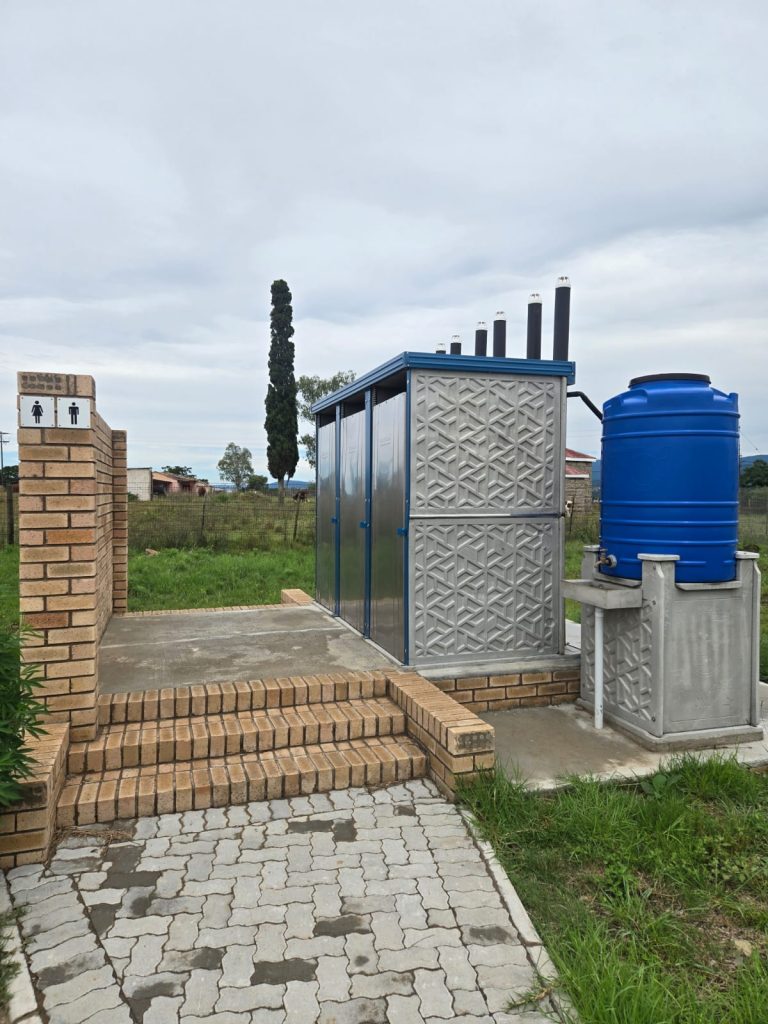
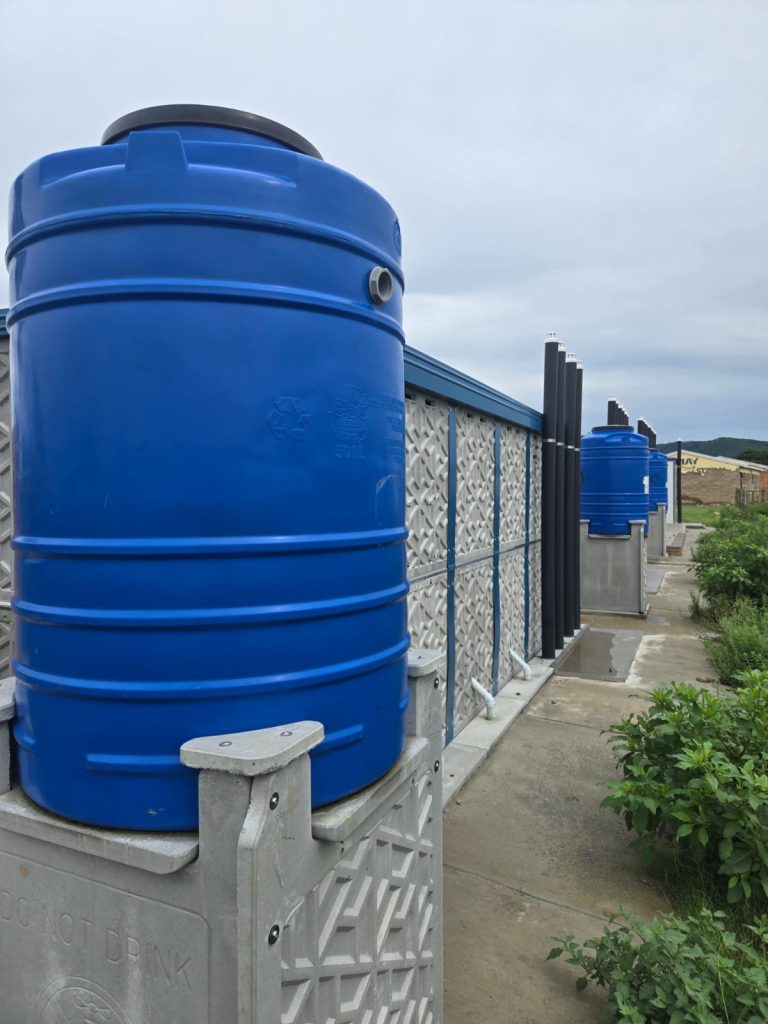
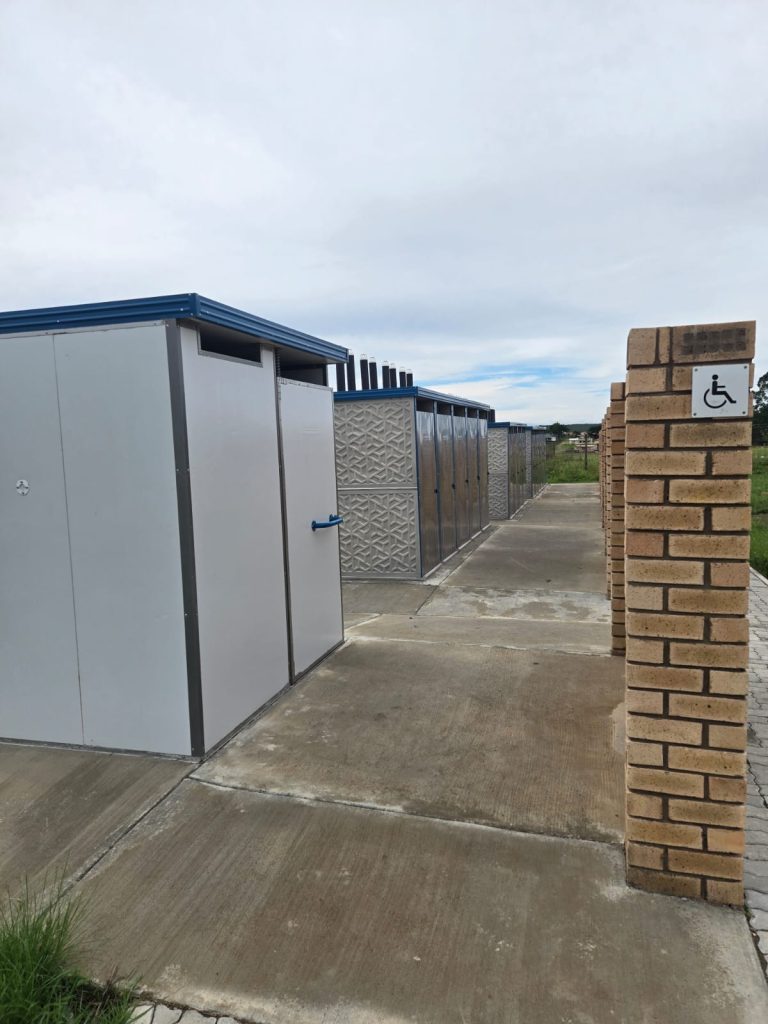
Mathanzima Mweli, Director-General of the Department of Basic Education, has continued with the monitoring and support programme for the Sanitation Appropriate for Education (SAFE) projects under Batch 4 in the Eastern Cape.
The Sanitation Appropriate for Education (SAFE) initiative was launched in 2018 and is funded through the School Infrastructure Backlog Grant. Its primary objective is to replace unsafe pit latrines with appropriate and safe sanitation facilities in line with the Norms and Standards for School Infrastructure.
The SAFE programme focuses on eradicating dangerous pit toilets in schools across the country. As of late 2024, more than 3,100 projects have been completed out of over 3,800 identified schools. The initiative includes the construction of proper flushing toilets, rainwater harvesting systems, and in some cases, facilities that are accessible to learners with disabilities.
At L.F. May Primary School in Mbaxa Location, King William’s Town, the impact of the project has is a positive impact in the school with learners showing gratitude and excitement of the new toilets that are safe and clean.
The principal of the school, Sulo Ge, said they are grateful for the new facilities.
“We did receive the toilet project from the Department of Basic Education, and we are very happy and comfortable with it because the old one was a pit toilet and it was dangerous for the children,” said Ge.
“Now these toilets are much more comfortable. We are happy as a school to receive them, and the children are safe very safe. They are clean and safe.”
According to the department, the current eradication rate stands at 99% of all pit toilets identified during the 2018 SAFE Initiative audit, marking significant progress in improving school infrastructure and ensuring learner safety.
Petrol 93 (ULP and LRP) will increase by 20 cents per litre, while Petrol 95 (ULP and LRP) will also go up by 20 cents per litre.
Both grades of diesel will see steeper hikes at the wholesale level. Diesel (0.05% sulphur) will increase by 62 cents per litre, while Diesel (0.005% sulphur) will rise by 65 cents per litre, the statement said.
The price of illuminating paraffin (wholesale) will increase by 44 cents per litre, while the Single Maximum National Retail Price (SMNRP) for illuminating paraffin will rise by 58 cents per litre.
The maximum retail price of LPGas will increase by 23 cents per kilogram, while the increase will be 26 cents per kilogram in the Western Cape, where LPGas is imported through the Port of Saldanha Bay.
The Road Freight Association (RFA) has warned consumers to brace for higher costs at the till following the increases.
“The increase in fuel prices in March 2026 is a direct result of upward pressure on the international price of oil due to both supply and logistics risks following the start of hostilities between Iran, the US, and Israel. The Road Freight Association has noted with both dismay and concern that the price of diesel is increasing between R0.60 and R0.65 per litre,” said Gavin Kelly, CEO of the Road Freight Association.
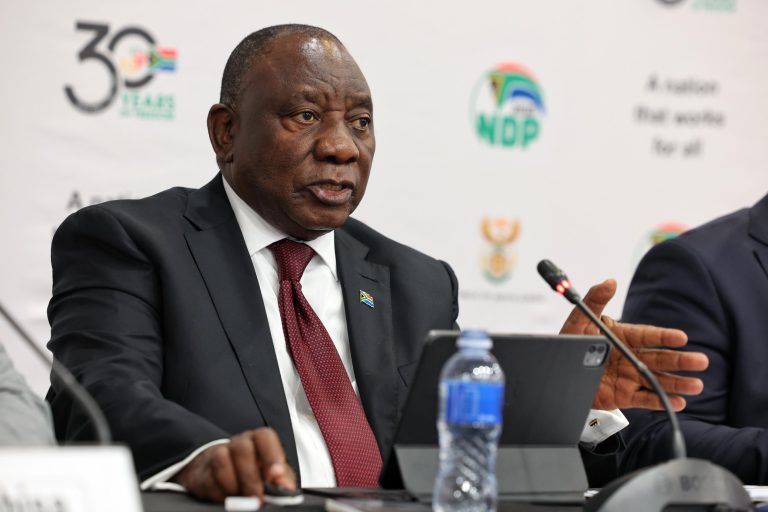
Higher Education and Training Minister Buti Manamela says decisive interventions at three troubled Sector Education and Training Authorities have begun restoring governance and unlocking billions in mismanaged funds, six months after the SETAs were placed under administration.
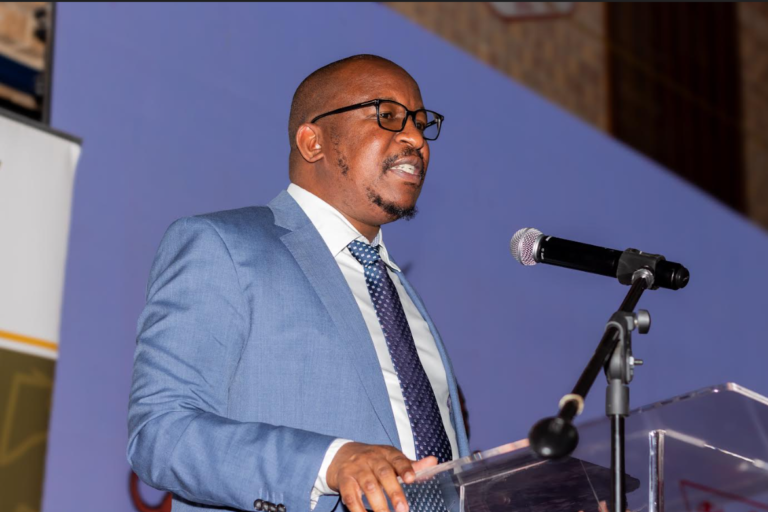
Higher Education and Training Minister Buti Manamela. Photo: Eddie Mtsweni
Addressing a media briefing on Tuesday, Manamela reported progress at the Construction Education and Training Authority (CETA), the Services Sector Education and Training Authority (SSETA), and the Local Government Sector Education and Training Authority (LGSETA), which were placed under administration on 19 August 2025, less than a month after his appointment.
He said the move followed systemic governance failures, including repeated qualified audit opinions, irregular appointments, ballooning financial commitments and alleged corruption.
“At Services SETA we have recouped about R600 million and started a process to recoup the additional R2.8 billion. That is money which will go back into training,” Manamela said.
The entity, which had received seven consecutive qualified audit opinions, is also under investigation by the Hawks and the Public Protector over alleged fraud and corruption.
An acting chief financial officer with a CA qualification was appointed in February, and the minister said no new irregular or wasteful expenditure has been recorded since administration began.
“This is money that belongs to levy payers and must serve learners,” he said.
A 20,000-internship programme and a R1.3 billion bursary scheme supporting 15,000 TVET and university students are currently underway.
The SETA has also entered a three-year partnership with Takealot to create 20,000 training and job opportunities for unemployed youth.
At the Construction SETA, administrator Oupa Nkoane has implemented a four-phase recovery plan, with 23 of 35 activities completed. A new chief financial officer started work on 2 March, ending nearly two years of acting financial leadership.
The SETA had accumulated four consecutive qualified audits and overcommitted discretionary grants by R1.4 billion against an annual income of R500 million.
“We have wiped off almost a billion rand of commitments from previous financial years that we consider invalid and non-responsive so that we can redirect that money for a proper cause,” Nkoane said.
He added that 10 officials are facing disciplinary processes, with at least three cases potentially resulting in dismissal, while six investigations linked to Auditor-General findings are under way.
“At LGSETA, part of the actions were to discipline the former CEO and to open criminal cases against former board members who participated in the irregular appointment,” administrator Zukile Mvalo said.
The LGSETA is implementing recommendations from a National Treasury forensic report that found the irregular appointment of its chief executive officer and the unlawful dissolution of its audit and risk committee. A criminal case has been opened with the Hawks, while the Public Protector is conducting a sector-wide probe.
Mvalo said 14,400 beneficiaries were enrolled in learning programmes by 31 December 2025, 58% of whom are unemployed youth. Revenue for the third quarter stood at just over R900 million, with expenditure of about R690 million.
In a related intervention, Manamela announced the appointment of Dr Robert Nkuna as administrator of the College of Cape Town following findings of governance collapse, irregular appointments and procurement breaches. The college council will be dissolved, and Nkuna will serve for up to two years.
“These institutions have been established to serve our communities and cannot become personal fiefdoms of individuals,” Manamela said.
“Where there was instability six months ago, governance has been restored,” he added, noting that new accounting authorities would be appointed before administration ends in August.
A fire has caused extensive damage to offices, equipment and administrative records at Kgamanyane Secondary School in Moruleng Village, North West.
North West Department of Education spokesperson Vuyo Mantshule told Inside Education police were still investigating the circumstances surrounding the fire, including if arson was involved.
A member of the School Governing Body, who lives near the premises, noticed the fire in the early hours of Sunday morning and alerted the school principal. The principal contacted the fire department and police.
The department said that by the time fire services arrived, the blaze had already destroyed a significant portion of the administrative block, including the staff room, food storage area, staff kitchen, ablution facilities for males and females, administration offices, the sick bay and the strong room.
Provincial education MEC Viola Motsumi said the fire was a serious setback for the school community.
“These acts are efforts that undermine education infrastructure in the province and cannot be tolerated,” Motsumi said.
“I want to assure the school management, learners, parents, and the broader community that the department will provide the necessary support to ensure that teaching and learning continue without disruption.”
Motsumi called on law enforcement agencies to thoroughly investigate the matter and urged community members to come forward with any information that may help identify those responsible.
An assessment by the department’s infrastructure unit will determine the full extent of the damage.
South Africa’s spending on education reflects its status as a core development indicator. Allocations to programmes such as school nutrition and Early Childhood Development (ECD), which formally enrols children into education as early as four years old, exceed global benchmarks on education spending.
A detailed review of the Budget Review and Estimates of National Expenditure (ENE) bears out the reality behind these numbers.
The overall allocation for learning and culture for the 2026/2027 financial year stands at R527,2 billion.
Basic education receives R358,5 billion, post-school education R155,8 billion, and Arts and Culture R12,8 billion.
A continued reflection of education as a strong development priority is evident over the Medium-Term Expenditure Framework (MTEF), where learning and culture grows at 3,4%, in line with the new inflation outlook, and accounts for 23,7% of total non-interest spending, the largest such allocation in the budget.
The National Student Financial Aid Scheme (NSFAS) receives R54,3 billion as it grapples with challenges that include improving access for poor students while sourcing and paying for adequate accommodation in major urban centres and outlying areas.
The Budget Review notes that the National School Nutrition Programme provides meals to more than 9,9 million learners across 19 800 schools.
“Allocations to the programme grow by 4,5 per cent to R33,9 billion over the medium term and have not been adjusted for the lower inflation outlook, given that food price inflation is higher than the overall inflation rate,” it stated.
Spending on Learner Teacher Support Material currently stands at R6,7 billion, while school infrastructure allocations amount to R1,7 billion.
These are levels of spending comparable to developed countries in prioritising foundational learning inputs.
Expenditure on Early Childhood Development increases from R12,2 billion in 2025/26 to R18 billion over the medium term.
This will enable ECD services to be expanded to an additional 300 000 children. In her recent contribution to the State of the Nation Address (SONA) debate, Basic Education Minister Siviwe Gwarube noted that the aim of ECD investment is to “ensure that a child from Giyani and Lusikisiki has the same head start as a child in Sandton.”
University transfers amount to R50,5 billion, while Technical and Vocational Education and Training (TVET) colleges receive R15 billion.
Given the renewed emphasis on TVET colleges as a pathway to employment, and the student numbers required to meet National Development Plan (NDP) targets, these allocations may require further review.
Skills development bodies, such as the Sector Education and Training Authorities (SETAs) and the National Skills Fund, are projected to receive R88 billion over the three years from 2026.
This is the funding envelope critics argue should not simply be redirected to skills development while scrapping SETAs altogether, as concerns persist that “these institutions are struggling to deliver the skills required to drive economic growth.”
The Budget Review notes that “the National Treasury has commissioned the Government Technical Advisory Centre to conduct a comprehensive review of the national skills ecosystem in the year ahead.”
In terms of public infrastructure spending, education receives R19,1 billion in the current financial year, while health receives R15,8 billion. Over the next three years, education is allocated a combined R58,5 billion, compared with health’s R43,5 billion.
Both figures pale in comparison to transport and logistics infrastructure spending, which receives R130,7 billion in the current financial year and a combined R417,6 billion over the medium term.
The purpose is to improve the efficiency of the country’s rail and port network to drive export performance and economic growth.
Last week, Minister of Finance Enoch Godongwana presented a Budget that will accelerate the momentum of inclusive growth, create jobs and tackle poverty.
Every budgetary allocation is a developmental choice: ensuring there are teachers in classrooms, nurses and doctors in clinics, electricity and basic services in homes and businesses, infrastructure to grow the economy, and employment opportunities for communities.
After a prolonged period of economic uncertainty, this Budget builds on the progress made over the last few years to stabilise, reform and transform our economy. Improvements in public finances, stabilising debt, a narrowing budget deficit, credit rating upgrades and improved market confidence all signal the beginning of an economic recovery.
A stable macroeconomic environment boosts investor confidence and increases government’s capacity to invest in both growth and poverty relief without compromising sustainability.
The stabilisation of public finances gives us space to accelerate public investment, sustain the social wage, and direct resources to reforms that drive growth and job creation.
The social wage accounts for over 60% of government spending after interest payments. The allocation for this financial year will enable us to provide healthcare services to 84% of the population, social grants to 26.5 million beneficiaries and free basic services to over 11 million indigent households. It will support approximately 13.6 million learners at school.
This is a redistributive budget that reduces inequality, builds the capabilities of our people and strengthens the foundations for inclusive growth.
Basic education is one of those key foundations. We will be allocating additional spending to employ more educators. Additional funds have been allocated to the early childhood development grant to reach an additional 300,000 children and to align the National School Nutrition Programme to food inflation.
The Budget supports inclusive growth by accelerating public investment, particularly on infrastructure. Improved infrastructure lowers the cost of doing business, raises productivity and supports our country’s exports.
Over the next three years, public spending on infrastructure will exceed R1 trillion to build and maintain roads and rail lines, expand energy infrastructure, and build and maintain water and sanitation infrastructure.
Government alone cannot finance the scale of infrastructure our country needs. We are therefore mobilising investment from private and other sources, and opening the space for public-private partnerships. As we encourage private investment in electricity, rail and port operations, we are maintaining state ownership of strategic national infrastructure.
Under Operation Vulindlela, government departments and public entities are undertaking impactful reforms in energy, telecommunications, water and logistics.
The Budget acknowledges that many municipalities are in financial distress, driven by weak revenue collection, poor management and substantial service delivery backlogs.
Many municipalities are not spending appropriately. For several years, water and electricity revenue has not been invested in infrastructure maintenance or expansion, but has been redirected to cover other municipal costs.
Local government finances have to be placed on a more sustainable footing to support the delivery of basic services. Over the medium term, R19.2 billion will be reallocated to the reform of electricity, water, sanitation and solid waste trading services in metros. These allocations will be linked to performance against clear targets.
The Municipal Infrastructure Grant is being reformed to address underspending and misuse of funds. Over the next three years, R86.9 billion has been allocated to support the provision of free basic services to indigent households.
This year’s budget reflects government’s goals of inclusive growth and job creation through additional support for mass public employment programmes and relief for small businesses.
An additional R4.1 billion has been allocated to the Presidential Employment Stimulus to provide work opportunities to more young South Africans.
To ease the regulatory burden for small businesses, the threshold for businesses to register for VAT has been more than doubled. For small business owners who wish to sell or transfer their businesses, the capital gains tax exemption has also been significantly increased.
Together, these measures will help small and informal businesses to grow and employ more South Africans.
This year’s Budget focuses on three imperatives: maintaining fiscal sustainability, driving inclusive growth and protecting society’s most vulnerable. It is a balanced budget that reflects the realities of our economy, limited financial resources, high unemployment and urgent infrastructure needs.
As we build on the momentum of our recovery, we will continue to be guided by fiscal discipline, structural reform, targeted investment and an overarching commitment to improving the material conditions of every South African.
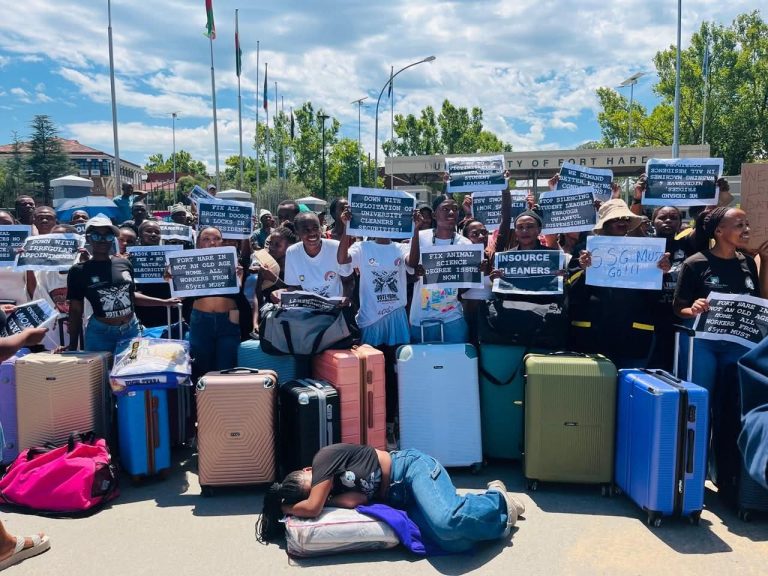
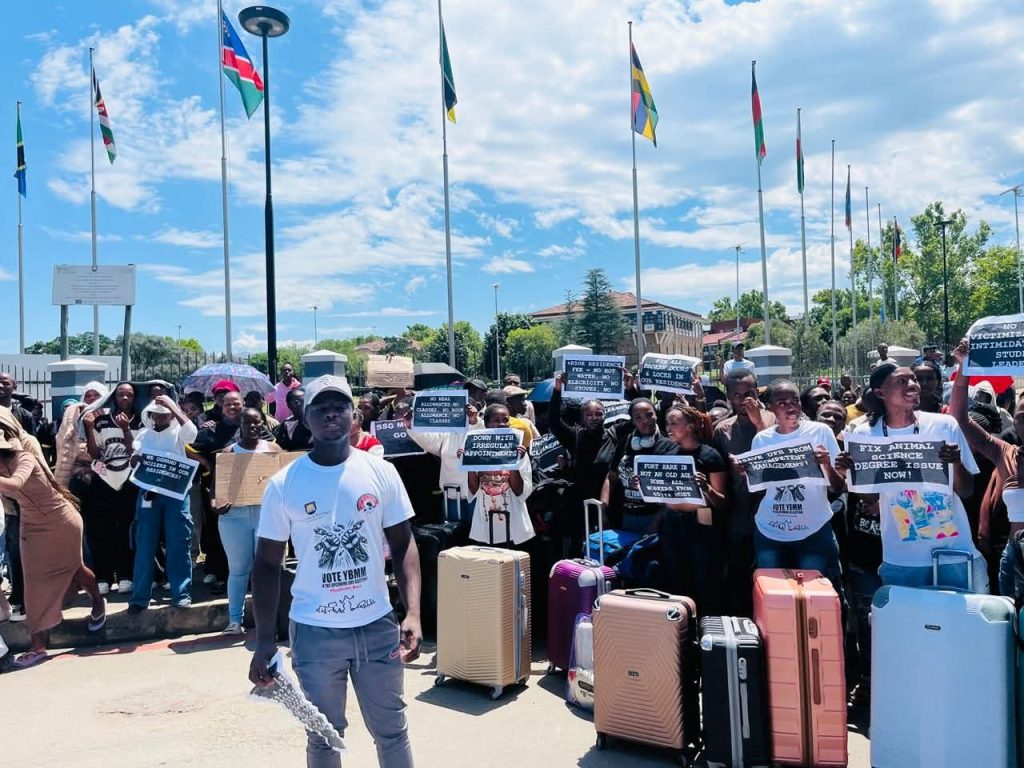
The start of a new academic year is meant to bring hope and excitement. Instead, for thousands of students across South Africa, it begins with anxiety and uncertainty over one basic necessity — accommodation.
At several institutions, on-campus residences are prioritised for first-year students, leaving unfunded and postgraduate students scrambling for alternatives.
While some postgraduate students secure funding before registering, many do not and are left juggling tuition, food and accommodation costs at the same time.
Students across the country have raised serious concerns about the shortage of available beds. Many come from other provinces and have no relatives nearby to rely on.
A young female student at Nelson Mandela University in the Eastern Cape, who spoke on condition of anonymity, shared her traumatic experience with Inside Education.
“I need help. I had sexual intercourse with the residence owner in Summerstrand because he promised to get me accommodation afterwards. I’m unfunded. Now he’s ghosting my texts when I ask about the accommodation. Where can I report this? I feel betrayed and manipulated. I’m stranded.”
Her account illustrates the dangerous situations students can find themselves in when desperation overrides safety.
At Stellenbosch University, management says that while the national demand for student accommodation is well documented, the primary challenge facing its students is affordability rather than availability.
Meanwhile, the National Student Financial Aid Scheme (NSFAS) has launched door-to-door inspections of student accommodation facilities. Unsafe properties are being flagged and students relocated, while non-compliant providers are ordered to improve conditions.
However, NSFAS currently owes accommodation providers R44 million in overdue rental fees. As a result, some landlords have threatened to evict students, leaving them without clear alternatives.
Across the country, universities are facing mounting pressure as protests over unpaid fees and housing shortages intensify. At the University of Cape Town (UCT), a student has already been provisionally suspended, with further disciplinary action possible.
Private housing providers argue that strict accreditation standards set by government and higher education authorities are increasing development costs. Buildings must meet specific design and safety requirements before qualifying for student funding support, limiting how cheaply accommodation can be developed.
According to private sector stakeholders, the problem is not excessive profit margins but a mismatch between actual development costs and what NSFAS contributes toward student accommodation.
The crisis extends beyond universities to TVET colleges, where access to housing has become one of the most significant barriers to higher education.
Kamogelo Nkabinde, a second-year accounting student at Tshwane University of Technology (TUT), said he is being pushed toward deregistration.
“I’m being pushed into a corner to deregister, but I’m still looking for other options. The SRC organised a strike, but Red Ants were deployed around campus to prevent mass gatherings. They did collect a list of students without residence.”
A report by the International Finance Corporation states that hundreds of thousands of students struggle each year to secure decent housing. Without dignified accommodation, students face costly commutes or unsafe living conditions, adding financial stress and distracting them from their academic responsibilities.
Leading institutions such as the University of the Witwatersrand and UCT can accommodate only a fraction of qualifying students. At the University of Johannesburg, nearly 359,000 applications compete for just over 10,500 undergraduate spaces.
At Rhodes University, students have reportedly resorted to sleeping outside due to housing shortages — a stark reflection of the severity of the crisis.
Student accommodation crisis. PHOTO: X/Supplied
According to the Tiso Foundation, 30% of students are unable to graduate due to outstanding fees, some of which are linked to accommodation costs.
Speaking toInside Education, the foundation’s programme manager, Miriam Mokwena, said affordability remains the biggest challenge.
“It’s not just the availability of accommodation — it’s the cost. When students are forced to rely on private accommodation, it doesn’t come cheap. We’ve seen accommodation costs more than double over the past five years.”
She said the foundation provides holistic bursaries covering tuition, accommodation, textbooks, meals and learning materials. However, rising accommodation costs have forced it to reduce the number of students it can support.
“If we planned to take 100 students, we now have to lower that number because accommodation costs have escalated. If affordable university accommodation were available, we could support more students.”
Mokwena added that many private funders prioritise tuition and exclude accommodation from funding packages, further worsening the crisis.
“We often see students who receive partial funding — tuition is covered, but accommodation is not. That leaves them stranded.”
She believes the Department of Higher Education must invest more in infrastructure and consider reclaiming or purchasing properties near universities that have been sold to private entities.
“They need to invest more in infrastructure and purchase available properties around universities.”
She also called for improved coordination between universities and Student Representative Councils (SRCs).
“Universities already know how many students they plan to onboard and how many beds are available. That information should be shared early so students can plan accordingly.”
For Gugulethu Mashinini, a postgraduate student at the University of the Free State, January was one of the most difficult months of her life.
She returned to campus without accommodation and moved from one friend’s room to another before eventually securing a place to stay. She recalls sleepless nights, overwhelming pressure and financial strain at home, where her grandmother was unemployed.
The student accommodation crisis is not new, but it is deepening. With an estimated national shortage of more than 200,000 beds, the problem reflects systemic failures that stretch from university admissions to daily student living conditions.
The Chairperson of the Portfolio Committee on Higher Education and Training, Tebogo Letsie, has called for the dismissal of the University of the Witwatersrand (Wits) Head of Sociology, Professor Srila Roy, following a controversial social media post that sparked national outrage.
Roy resigned as Head of the Department of Sociology after posting on her personal X account that South Africans “have little ambition, are complacent and have a poor work ethic”.
The remarks were made during a debate about foreign academics in South African universities and drew fierce criticism from students, academic groups and political figures.
The university has since placed her on precautionary suspension pending the outcome of an investigation.
Her resignation was confirmed by the Sociology Department on 26 February, and the investigation continues in line with Wits policies.
The saga has triggered debate about academic accountability, discrimination and the role of social media conduct by academics.
The South African Sociological Association condemned her comments, describing them as classist, racist and xenophobic, and said they contradicted the principles and values of South African higher education.
Letsie described the remarks as unacceptable and said such conduct should not be tolerated in the higher education sector.
“Her remarks were offensive, derogatory and undermined the dignity of many South Africans. Such views are completely unacceptable, especially from someone entrusted with teaching and leading in our universities. This is not a minor matter,” he said.
“These statements reflect deeply troubling views that cannot simply be overlooked.”
Letsie said the matter warrants serious consequences and that a demotion would not constitute sufficient accountability.
He said dismissal would be the appropriate sanction should the allegations be substantiated.
“We cannot tolerate individuals who openly express views that are widely regarded as discriminatory and then expect to continue shaping young minds and leading academic departments,” he added.
He said Wits leadership’s swift response demonstrates the seriousness of the matter, noting it would be untenable for a head of department to remain in position if their conduct is found to be inconsistent with institutional values.
“Leadership must reflect the values of equality, fairness and respect,” he said.
Letsie further stated that the committee has received information from members of the university community and the public raising concerns about fairness and equal opportunity.
“There are allegations that South Africans may have been unfairly excluded from opportunities in her department. These allegations must be fully investigated,” he said.
“Our universities must never be used to advance exclusion or discrimination.”
He emphasised that accountability must be decisive.
“We are determined to restore integrity, fairness and accountability. No one is above scrutiny. Our higher education institutions must remain spaces of dignity, fairness and transformation for all South Africans,” he said.
Roy issued an apology on 23 February, saying her comments were a “hasty pushback against xenophobic attitudes”.
“I fully understand that the tweet caused hurt, and I sincerely regret and apologise for it. Given South Africa’s painful history of racist stereotyping, the tweet was wrong, and I take full responsibility for the pain it has caused,” she said.
She stressed that the post was not intended to express derogatory views about South Africans or South African academics.
“I want to be clear that I do not hold such views. My academic work, committee contributions, supervision and mentoring reflect this,” she said.
“Despite the context of academic xenophobia, my response was not acceptable. I exercised poor judgment and take full responsibility,” she wrote.