Home Blog Page 140

Ramaphosa unconcerned about GNU collapsing: Magwenya

By Simon Nare

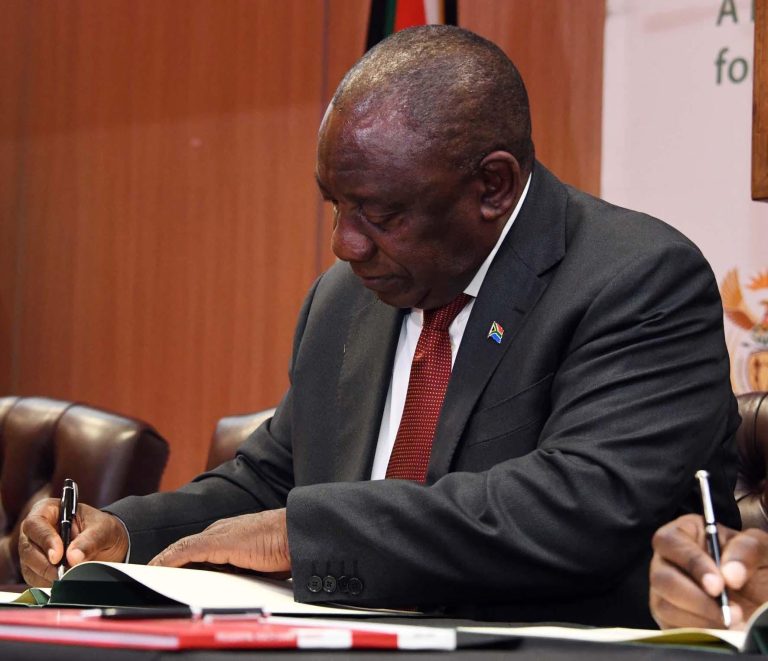
The Presidency has poured cold water on any threat to the multi-party government of national unity (GNU). This follow concerns raised by key partner, the Democratic Alliance (DA), over President Cyril Ramaphosa’s decision to sign the Basic Education Law Amendment Bill into law.

“The president is not concerned about the GNU collapsing. When South Africans see statements and hear leaders issuing threats to the stability of the GNU, it is the incumbent upon the president to continue to lead. He leads the GNU on behalf of political parties,” said Presidency spokesperson Vincent Magwenya.

“And so, it is a responsible thing to do for him to continuously provide assurance that the GNU is stable. That when there are issues of concerns and dispute those issues will be resolved constructively.”

Magwenya, who was updating journalists on the president’s public programme on Wednesday in Cape Town, said there were mechanisms in place within the multi-party agreement to address any differences, and the GNU deal was premised on the supremacy of the country’s Constitution.

He added that Ramaphosa remained committed to the GNU and he was satisfied with its work and ministers from rival political parties working together and collaborating.

DA leader John Steenhuizen earlier in the day announced that he wanted an urgent meeting with Ramaphosa before he signed the Bill on Friday.

“If he proceeds… he will violate both the letter and spirit of the joint Statement of Intent that forms the basis of the GNU,” said Steenhuisen.

Magwenya said it was the president’s constitutional responsibility to sign a Bill into law.

“Section 79 (1) of the Constitution states that the president must either assent to and sign a Bill passed in terms of this chapter or if the president has reservations about the constitutionality of the Bill, refer it back to the National Assembly for reconsideration.

“According to the Constitutional Court case in Doctors for Life International vs Speaker, the president cannot refuse to sign the Bill for political reasons. The only ground upon which the president can refuse to sign the Bill is constitutional reservations.

“This means that the president needs to apply his or her mind to evidence and submissions before him and make an independent determination on the constitutionality of the legislation,” he said.

But the DA, other parties and the Basic Education Minister are opposed to the Bill in its current form.

Steenhuisen said: “During the (GNU) negotiations, the DA made it clear that the BELA Bill was unacceptable to us in its current form, because it has constitutional implications for the right to mother-tongue education, amongst other issues. The DA urged President Ramaphosa to send the Bill back to Parliament for a few simple amendments to bring it in line with the Constitution.”’

He said that that despite this, and in “violation of the provisions of the Statement of Intent, the president seems intent on pushing ahead unilaterally”.

The president will be hosting a gala dinner for all leaders of the GNU where they will be afforded an opportunity to raise their issues of concern as well as give feed back to him.

“The president is also enthused with the level of dedication and commitment that has been demonstrated by members of his national executive, as well as the level of collaboration that ministers from different parties have applied in resolving challenges facing the government and the country,” Magwenya said.

He also announced that Ramaphosa had received a report by Justice Minister Thembi Simelane on the VBS loan saga and would not be making any public announcement on the matter just yet.

“The president appreciates the importance of the Justice Ministry in the leadership of the Justice, Security and Crime Prevention Cluster and contribution to the successful functioning of the cluster. The president is committed to ensure the highest levels of integrity within the national executive. He will consider all the facts on the matter before making any determination,” he said.

INSIDE EDUCATION

Limpopo health MEC deals with bilharzia scare in province

By Lungile Ntimba

Limpopo health MEC Dieketseng Mashego had led a health screening and testing initiative for learners at Thabina Primary School in Ga-Rakoma following a hike in bilharzia cases in the province.

The first outbreak recorded was from 142 learners at the Malwandla Primary School in Petanenge village.

Other cases were also reported in areas including Nkowankowa township, and Khujwana and Dan villages.

Wednesday’s visit comes after a rise in the number of confirmed cases to 155 in the Greater Tzaneen Local Municipality.

Limpopo acting premier Basikopo Makamu confirmed that the government had already set up a task team to coordinate efforts to tackle the outbreak, provide medical care to affected individuals and prevent a further spread of the disease.

“We urge all residents in the affected areas to exercise extreme caution, avoid direct contact with potentially contaminated water sources and seek medical attention if symptoms arise,” Makamu said.

While addressing learners and community stakeholders at the school, the MEC also stressed the importance of health screenings, prevention and education. 

“We are working with the local water service authorities to conduct water quality tests as one way of preventing the disease because as much as screening, testing and treatment is important, it is even more important to work towards prevention,” Mashego said.

She added that the screening campaign would be extend to other villages and schools in the region to ensure learners received any necessary treatment.

Meanwhile, the Democratic Alliance (DA) has criticised the provincial government for being incompetent and negligent.

DA Limpopo health spokesperson Lindy Wilson said that the government’s intervention of forming a provincial task team was a little too late.

“This negligence by municipalities coupled by their failure to provide safe potable water has led to water systems that are badly polluted and a danger to communities,” Wilson said.

INSIDE EDUCATION

SA to host its first IberCup for youngsters

By Jonathan Paoli

South Africa is set to host the prestigious IberCup International Youth Football Tournament, marking a groundbreaking moment for the country’s youth football scene.

The event will take place in Gauteng from 12 to 18 December, drawing elite youth teams from around the globe and promising to transform the landscape of South African football.

Established in 2010, the IberCup has become a major force in youth football, attracting over 10,000 teams and 150,000 players annually from more than 170 countries.

It serves as a vital platform for players aged 9 to 18, many of whom have gone on to shine at elite clubs and international competitions.

This year, the tournament’s expansion into South Africa represents a new era of opportunity for local aspiring footballers.
Scheduled to take place at Johannesburg’s top facilities, the IberCup will feature 156 teams.

They include powerhouse clubs such as Benfica from Portugal, River Plate from Argentina, Paris Saint-Germain from France, RCD Espanyol de Barcelona from Spain, Arsenal from England, Ajax from the Netherlands, alongside South African teams like Kaizer Chiefs and Supersport United, as well as Tecno Football Academy from Liberia.

The event is set to attract over 3,000 young players and numerous scouts from top-tier clubs.

Michael Bender, CEO of IberCup South Africa, expressed his enthusiasm for the event and the role it plays in developing football in the country.

“IberCup’s global reach brings young footballers, scouts, clubs, and academies together from every corner of the world. South Africa has not previously been able to participate due to the costs of traveling abroad.

“So, we decided to bring ‘overseas’ here. This tournament is about exposing our local talent to international standards and styles, but it’s also about building a legacy that benefits the youth in Gauteng,” Bender said.

The Gauteng government’s alignment with the IberCup’s mission underscores a commitment to leveraging football as a vehicle for socio-economic development.

Through the tournament, local players will not only compete at a world-class level but also benefit from community development programmes, football clinics and educational workshops.

“We are working hand in hand with the Gauteng government to ensure the long-term success of this event. Football can be a catalyst for change, and we aim to create a platform that not only develops young athletes but also empowers communities and creates opportunities for those previously excluded from the sport,” Bender added.

In addition to the tournament, IberCup will partner with local non-profit organisations to promote values of teamwork, discipline, and social responsibility.

Outreach programs will engage underprivileged communities, using football to inspire and uplift the next generation both on and off the pitch.

A bursary programme will allow selected Gauteng schools and clubs to participate, and one lucky team will win an all-expenses-paid trip to compete in the IberCup Cascais in Portugal in 2025.

Gauteng Education, Sport, Arts, Culture and Recreatio MEC Matome Chiloane praised the event, saying it promised to enhance local football standards and contribute significantly to regional social and economic development.

“The IberCup is an important tournament which the Gauteng government believes has a lot to offer in inspiring our young talent to greater levels.

It has the capacity to instil confidence in the minds of the players to realise that they too have enough talent to play and succeed in the big leagues and clubs anywhere else in the world,” Chiloane said.

As anticipation builds, South Africa is ready to showcase its passion for football, proving once again that it is a premier destination for international sport, with the IberCup set to leave a lasting legacy, echoing far beyond the final whistle.

INSIDE EDUCATION

DUT’s VC applies to the high court to interdict suspension

By Johnathan Paoli

Durban University of Technology vice-chancellor and principal Thandwa Mthembu has filed an application in the Durban High Court to interdict the university’s executive council from suspending him.

The council announced its intention to Mthembu last week, following recommendations by a forensic investigation last year into delays of the DUT 355 project.

The project was to construct its new engineering building and lecture halls at the Indumiso campus, as well as the construction of a student centre, multipurpose halls and parking garages at the Steve Biko campus.

The forensic report recommended that Mthembu be suspended and consequenced, however, three legal opinions have subsequently found the recommendations to be irrational, unjustifiable and illegal.

Nevertheless, the executive committee said the suspension was to allow the university to investigate possible charges of, among other things, gross negligence, substandard work performance, dereliction of duties, possible misappropriation of
funds and causing the institution financial losses relating to the project.

In addition, Mthembu is seeking an order interdicting the committee from institutingdisciplinary action against him.

He approached the court after the council resolved to suspend him at the beginningof the month.

Mthembu claimed that the external council members had excluded internal council members from both meetings to push through the resolution to implement the recommendations, and any decision was questionable in light of the failure to
achieve a quorum.

“The exclusion of internal council members, without affording them a right to be heard, on that exclusion in itself is unlawful, and any decision taken by the council in this regard is unlawful,” Mthembu said in his founding affidavit.

He claimed that the decision to exclude certain members from the decision-making process was a clear indication of bias on the part of a faction within the university that wanted to see him removed.

“In circumstances where the external council members deliberately exclude internal council members so that they may force the resolution through demonstrates that they are biased against me or at least demonstrates that there is a reasonable suspicion of bias against me,” Mthembu said.

Those wishing to oppose the application have until Friday to do so.

INSIDE EDUCATION

Miss SA and Gauteng education champion sign language in schools

0

By Johannah Malogadihlare

Miss SA Mia le Roux and Gauteng MEC for Education, Sport, Art, culture and Recreation Matome Chiloane teamed up on Tuesday to promote sign language at schools.

Chiloane told a sign language mini festival at Transoranje School for the Deaf in Pretoria that to support hearing and deaf learners, the department had introduced the Basic South African Sign Language (SASL) to hearing learners starting from Grade 5.

Since sign language was declared the 12th official language in 2019, the MEC said teaching it would enhance interaction and social inclusion.

Le Roux was thrilled to see the government taking more of an initiative on the matter. She said that by promoting SASL, learners would be keen to pursue studies in the field of deaf education and interpreting. 

Speaking to the learners, Le Roux said: “I believe that the deaf community, including me, we are so well capable of achieving our dreams if we are to believe in ourselves”.

While the MEC said: “We are building bridges and breaking barriers of teaching and learning.”

INSIDE EDUCATION

Voices of academics must be louder on the genocide in Palestine

0

Edwin Naidu

Academic freedom is said to be sacrosanct. Why aren’t more South African academics using their voices to speak out against the genocide in Palestine?

Are they concerned that expressing themselves could land them in hot water with donors or people who could thwart their academic ambitions?

Sometimes, it feels like there are more questions than answers. But while some sit on the fence there are brave voices that continue to call for an end to the Israeli attacks on Gaza. I won’t name them to draw attention to their powerful voices because that’s not why they’re doing it.

There’s a few in South Africa that daily keep their followers updated through social media platforms. However, it is not enough. In South Africa, and globally, there seems to be a pattern by universities to muzzle such voices or use silent bullying tactics to threaten university staff with sanction if they expressed views in the name of the university.

It does not make sense, however, expecting one to express their views in a personal capacity when tied to an organisation as a university, the embodiment of free speech, expression of ideas and pursuit of justice.

In South Africa, it is not as overt at the clampdown on voices in Britain and America, however, in some instances it is a question of “he who pays the piper, calls the tune”. Some people at universities in South Africa have been told to pipe down or face disciplinary action.

The genocide in Palestine was discussed during the recent 26th annual International Education Association of South Africa (IEASA) conference under the theme “Navigating Internationalisation in Challenging Times”, in Kempton Park, Johannesburg.

The academics and staff from university international offices gathered to examine a variety of issues, among them whether intercultural competence and “dialogue” should occur instead of taking a stance to immediately cease all partnerships, research activities, exchange programmes, etc.

There were questions about the academic freedom of the individual researcher versus the collective freedoms of academics, researchers, staff and students in the Palestine-occupied territories, which were also debated.

Academics and practitioners pondered how to balance values, ethics and human rights in contexts where universities are not taking a firm stance in support of the International Court of Justice ruling on 24 July that declared Israel’s occupation of the Gaza Strip and the West Bank was unlawful.

In her presentation, “Power: Of Speaking Truth in International (higher education) Relations”, Professor Ylva Rodny-Gumede, the Head of the Division for Global Engagement at the University of Johannesburg (UJ), said the main aim of higher education institutions should be to educate students about democracy and community and global engagement, in the interest of finding solutions to common problems and fostering solidarity and unity.

“What is emerging is a stronger emphasis on diversity and equity in international relations globally and within the global South, a voice that is becoming increasingly stronger and empowered to speak the truth,” she said.

While it might be trite to say that speaking truth to power is an act of bravery, Prof. Gumede said in international relations, diplomacy often trumps the ideal of truth-speaking. 

“Where in the mix does academic freedom sit and what is the state of academic freedom in our institutions amid increasingly fraught geopolitics?” she asked.

Prof. Gumede was clear that academic freedom is an as unbreakable covenant of the business and ethos of higher education. But in later years actions as well as talk of academic freedom have increasingly touched upon issues of how to deal with academic partnerships with states accused of domestic and/or international war crimes or human rights abuses.

For example, she said there were debates among and between academics and university leadership of whether to continue partnerships and whether an institution should follow its own ideas and ideals, i.e. exercise their right to academic freedom or align to government policy on issues of international relations.

She highlighted the views of 12 conversations with a select group of academics (ranging from full professors to lecturers) from five different universities, including the University of Johannesburg, University of South Africa, University of Cape Town, University of the Free State, and Stellenbosch University,

The conversations provided some illuminating responses.

“What are we if not a public good, the question is what public good we are, who we serve?” (Lecturer, University of Stellenbosch)

“We might have become lapdogs of government.” (Professor, University of South Africa)

“I don’t think our Senate debates are as open and free as they should be.” (Professor, University of the Free State)

“The level of debate within our universities could and should be much higher.” (Professor, University of Johannesburg

“Do academics see themselves as truth speakers and do they exercise their right and standing to be public intellectuals in their own right?” (Senior Lecturer, University of Cape Town)

“Does our academics understand their own role and how to exercise academic freedom?” (Senior Lecturer, University of Johannesburg).

In April, the United Nations expressed concern over the pattern of attacks on schools, universities, teachers and students in the Gaza Strip and the West Bank, describing the systemic destruction of the Palestinian education system as ‘scholasticide’.

Palestinian academic Amani Al Mqadma implored: “Please don’t lose hope in us. We started universities from tents and even without buildings. We will continue to provide education because education is part of our existence in Palestine, and we are doing a lot of things to be educated, providing education in Palestine in the Gaza Strip because without education, we will not have a future. So please don’t lose hope. We will continue to provide education. We need your support to continue.”

In a presentation entitled “The Role Paradox: Speaking Truth to Power or Soft (Power) Diplomacy?”, Anisa Khan, the Director of Academic Services in the Global Engagement Division at the University of Johannesburg, said some universities took distinct approaches to dealing with the genocide.

Coordinator of the Right-to-Education campaign, Birzeit University, Sondus Hamad, said education has become a casualty, with 17 higher education institutions in Gaza paralysed by the bombings which have claimed the lives of countless professors and students.

A day after the conference, she issued a statement saying that Birzeit University was raided again on Tuesday. The carnage continues.

If the pen is mightier than the sword, it’s time the voices of academia were louder than bombs.

Edwin Naidu is editor of Inside Education.

Soweto school gets multipurpose sports field as part of MOU deal

0

By Jonathan Paoli

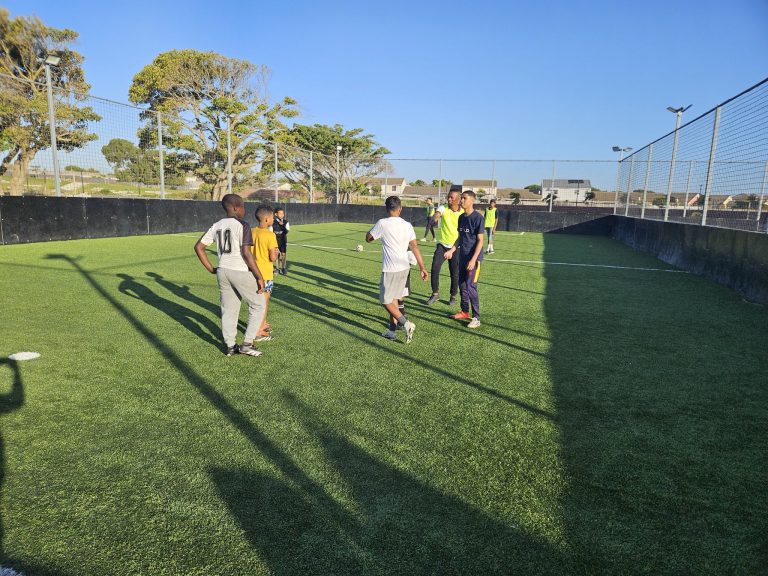
Basic Education Deputy Minister Reginah Mhaule and Sports, Arts, and Culture Minister Gayton McKenzie visited the Job Rathebe Senior Secondary School in Soweto, to present the school with a multipurpose sports field, aiming to enrich the students’ extracurricular activities.

The departments in partnership with Orlando Pirates, Nedbank and The Sports Trust commemorated the handover of a Multipurpose Sport Court on Monday as the first constructive step in implementing the drive to reintroduce sports into public schools.

It follows the signing of a Memorandum of Understanding between the departments last week. It is a framework between the two departments to implement extracurricular programmes, including school sports programmes, throughout the country.

The Orlando Pirates Football Club, who are champions of the 2024 Nedbank Cup, chose the school as the recipient of the field, due to a legacy of former students who have been selected to play for professional teams.

“This project will help improve school sports, supporting the objectives outlined in the recently signed Implementation Protocol on School Sports, Arts, and Culture,” Mhaule said.

McKenzie addressed the recent criticisms regarding previous government initiatives, especially concerning sports in public schools, saying it was actions and not paperwork that remained important in transforming schools.

“People say you are not the first one to sign a MOU. You can sign a million MOUs. I am an action man. Sport is not coming back, it is already back,” he said.

He thanked the Basic Education Department for being a partner in driving transformation within the country’s schools.

McKenzie said the agreement was a vital first step in unlocking talent and boosting transformation in both sport and the arts. It was also key to transforming South African sport to ensure that as many schools as possible gain access to similar kinds of facilities, coaching and equipment.

“For too long, South Africa’s national teams have relied on private schools as talent-feeders, which, while valuable, does not represent the full potential of this country,” McKenzie said.

The MOU is expected to materialise in a manner where facilities are built for numerous schools to be able to share and benefit from them.

McKenzie has been vocal about reviving sports in schools, particularly in rural areas, to give pupils equal opportunities and ensure representation in national teams.

INSIDE EDUCATION

Gauteng learners’ safety compromised with majority of teachers unvetted

0

By Johnathan Paoli

Gauteng’s educational environment faces a grave safety concern, as recent revelations indicate that a staggering 95.5% of teachers in the province have not been vetted against the Child Protection Register (CPR).

This shocking statistic was disclosed by Gauteng Department of Education (GDE) MEC Matome Chiloane, highlighting a severe lapse in safeguarding measures for learners.

According to the figures, only 4.5% of the total 83,828 teachers — equivalent to 3,750 educators — have undergone the necessary vetting process required by Section 120(4) of the Children’s Act.

Chiloane was responding to a written question from the Democratic Alliance (DA) in relation to what the status of the vetting process in the province was.

This legislation mandates that individuals convicted of serious offences, such as murder, attempted murder, rape and other violent crimes against children, should be deemed unsuitable to work with minors and consequently listed in the CPR.

Part B of the CPR specifically addresses the need to identify and bar individuals unsuitable for working with children, aiming to protect students from potential abuse.

Despite this critical mandate, it appears the department has failed to enforce this protective measure, leaving the majority of educators unchecked.

The lack of comprehensive vetting is particularly alarming given that the GDE has confirmed awareness of its legal obligations.

The revelation that only a fraction of teachers has been vetted, underscores a troubling disregard for the legislation designed to ensure child safety in schools.

DA Gauteng education spokesperson Michael Waters has condemned the GDE’s inaction as “unacceptable” and a blatant neglect of their responsibility to protect children.

Waters emphasised that the failure to vet over 95% of teachers represented a significant risk to student safety and undermined the trust that parents and guardians placed in the educational system.

In response to this pressing issue, the DA said on Monday it would urge the Chairperson of the Education Portfolio Committee to summon the GDE for an urgent accountability session.

Waters asserts that the current situation is untenable and demands immediate rectification to ensure that every teacher is vetted in accordance with the Children’s Act.

“We cannot allow our children to be at the mercy of individuals who may pose a threat,” Waters declared.

“A DA government is committed to upholding rigorous safety standards, including thorough vetting processes, to ensure that those entrusted with educating and caring for our children are held to the highest standards of safety and integrity,” he said.

Parents and guardians in Gauteng are now left to question the measures in place to safeguard their children’s well-being.

Waters said that his party’s call for accountability aimed to restore confidence in the safety protocols of Gauteng’s schools and ensure that all educators were properly vetted to prevent potential harm to students.

The vetting of teachers against the CPR has been a topic of concern, with recent reports indicating that many provincial education departments have not been consistently vetting teachers.

The South African Council for Educators has previously emphasised the importance of thorough background checks, including police clearances and checks against these registers, however, there have been challenges in accessing and utilsing these registers effectively.

This situation highlights the need for improved processes and stricter enforcement.

The Child Protection Register, maintained by the Department of Social Development, includes information on individuals who have been found guilty of child abuse or other serious offenses against children. Before hiring, schools and educational institutions are required to verify that prospective teachers and staff do not appear on this register.

This vetting process aims to prevent individuals with a history of child abuse or similar offences from being employed in positions where they will have direct access to children. It is a key component of South Africa’s efforts to safeguard children in educational settings and uphold a safe learning environment.

Inside Education reached out to the GDE spokesperson Steve Mabona for comment. He did not reply at the time of publication.

INSIDE EDUCATION

Technology classes at school can also teach skills for business and life: South African teachers share ideas

By Adri du Toit

Senior Lecturer in Entrepreneurship, Consumer Studies and Technology Education, North-West University.

Starting and running your own business takes hard work and a can-do attitude. Typically, entrepreneurs are the kinds of people who can identify and solve problems innovatively, are willing to take risks and learn from mistakes.

But many entrepreneurs also have a set of skills that anyone can learn, and use in work and life. Examples include adaptability, problem-solving, collaboration, communication, creative thinking, innovation and resilience.

South Africa’s Department of Basic Education sees these skills as an important part of the school curriculum, especially since about 60% of South Africans aged 16-24 don’t have work. The department’s 2016 Entrepreneurship in Schools Sector Plan is being implemented by the organisation E3 (E-cubed) to help all learners develop these skills. A department workshop reported that by the end of 2023, 13,215 (or 53%) of South African schools had put parts of this plan in place.

Can more be done?

As education researchers, we carried out a study to see how entrepreneurship education could be expanded in South Africa’s Technology curriculum at secondary school level. The subject of Technology is an ideal vehicle for integrating
entrepreneurship education because it is problem-based and combines practical knowledge and skills.

Previous studies have explored how Technology education can promote entrepreneurship. But they have largely overlooked the perspectives of teachers who put the curriculum into practice. This was our new study’s focus.

We sought the views of 30 senior phase (grades 7-9) Technology teachers. Almost all said they thought it was possible to include entrepreneurship in the Technology curriculum. They mostly showed a positive attitude to the idea and saw it as having value for the learners. They suggested some practical ways of combining the subjects.

Teachers play a pivotal role in turning curriculum ideas into practical learning experiences for learners. Taking their views on board could make a difference to the success of the plan in preparing learners for life and employment in South Africa.

Teachers’ points of view

The teachers who were part of our study had at least three years’ experience of teaching the subject, and 19 of them had more than 10 years’ experience.

The majority of these teachers believed it was feasible to integrate entrepreneurship into the current Technology curriculum without much difficulty.

One suggested that including entrepreneurship might increase learner interest in Technology education. This aligns with our belief that when learners perceive the subject as relevant to their lives – for instance, by showing them how to generate income – their motivation and engagement in the subject will increase.

Most teachers also said it would be good to introduce entrepreneurship education before grade 9 (when learners are around 15 years old). Many learners (up to 40%) leave school at that point. They saw this as enabling school leavers to create their own work opportunities.

One teacher noted: Learners need to develop the skills and mindset to create their own job opportunities, and if entrepreneurship skills are developed, they will be able to be self-sustainable.

There were also concerns, however.

The teachers pointed out that the Technology curriculum was already full of content. Adding new entrepreneurship-related material would be impractical. Instead, they suggested identifying existing Technology curriculum content that could be linked to entrepreneurship. For instance, the products learners already design and make as part of the curriculum could be tied to entrepreneurial thinking by exploring their potential as marketable goods.

Teachers proposed connecting entrepreneurship education to specific topics, such as cellphone towers, the jaws-of-life (emergency rescue equipment) and electromagnets. Learners could design innovative, problem-solving products with
real-world applications.

They said additional topics in the curriculum could be adapted to develop learners’ entrepreneurship skills. For instance, topics like “emergency shelters for disaster victims” are less prescriptive and allow learners to be creative and original – qualities essential for entrepreneurship.

Teachers also suggested new content for future curriculum updates. Learners could create functional products that combine technical skills with entrepreneurial ideas and are relevant to real life. Examples included doormats, toys, steam engine cars, carpentry products and household tools. Some teachers proposed merging product development with services like baking, cooking and running mobile tuckshops. All could be linked to existing Technology content.

Understanding the value of entrepreneurship

Our study participants’ suggestions show that they tend to think of entrepreneurship as mostly being about making a living. This is certainly important in South Africa, but we believe that to unlock the full potential of entrepreneurship education within Technology, teachers need to be trained to understand and appreciate the full value of entrepreneurship.

The knowledge and skills associated with entrepreneurship can also create social value when applied to solve problems in communities, not necessarily for profit.

Teachers who appreciate this will be able to explain it better to their learners. This could open up more opportunities for learners to apply what they learn in Technology education to solve real-life problems.

In conclusion, we argue that incorporating entrepreneurship education into the Technology curriculum holds great potential for addressing South Africa’s youth unemployment crisis. To do this successfully, existing curriculum content should be linked to entrepreneurial thinking, and teachers should receive the necessary training to guide learners in applying these ideas to their daily lives and future careers.

Master’s student Faren McCarthy-Kettledas carried out the study this article is based on, supervised by Prof Deon van Tonder.


This story was first published in The Conversation

Basic Education & NGOs launch literacy and multilingual education initiative

By Johnathan Paoli

Enriching children’s experiences through reading and writing to elevate the unique value of African languages will by the focus of the Basic Education Department in September, which is Literacy Month.

This follows the department, the National Education Collaboration Trust (NECT), the Nal’ibali Trust, Room-to-Read, South African Primary Education Support Initiative (SAPESI), Fundza, and A Better Africa Foundation launching the Literacy Promotion Collective (LPC). 

Department spokesperson Elijah Mhlanga said that the LPC was poised to advance reading development rooted in African languages and culturally relevant practices under Unesco’s International Literacy Day theme of “Promoting Multilingual Education: Literacy for Mutual Understanding and Peace”.

He said the LPC represented a landmark initiative aimed at fostering an inclusive literacy culture that celebrated and integrated Africa’s rich linguistic diversity during the month.

“By uniting these pivotal organisations, we are committed to enhancing literacy practices that reflect our continent’s cultural heritage and promote mutual understanding and peace through education,” Mhlanga said in a statement on Sunday. 

Basic Education Minister Siviwe Gwarube has praised the collaboration as a significant milestone in the department’s commitment to enhancing literacy by embracing and integrating the diverse linguistic and cultural landscapes of Africa. 

“The LPC aims to create an enriching educational environment where multilingualism is celebrated, and literacy development is deeply rooted in African cultural contexts,” Gwarube said.

NECT CEO Godwin Khosa emphasised the importance of home-language in teaching instruction, as learners who were taught using their home-language in the first six years of schooling fared better than those who were not taught in their home language.

Khosa said readers and storybooks written in African languages went a long way in restoring the esteem of African languages in the country. 

“This collaboration signifies our commitment to solving the reading challenges we face in the country by recognizing the importance of African languages in literacy development,” the CEO said. 

Fundza Literacy Trust Nadeema Musthan outlined the manner in which the LPC wold engage with communities across the country in meaningful ways. 

She said that face-to-face activities and interactive workshops that brought literacy to life would be facilitated in order to create opportunities for direct engagement and hands-on learning experiences.

“The Literacy Promotion Collective marks a significant step in recognising the critical nature of collaboration and solidarity that will be required to advance literacy, reading, writing, and learning among South African youth today,” Musthan said.

Mlhanga said the department would organise children’s literacy festivals as well ashost reading dialogues to explore the benefits of multilingual education and its impact on literacy and social cohesion.

“Storytelling and writing initiatives will play a pivotal role as we launch programmes that highlight and preserve African narratives, connecting learners with their cultural heritages through literature,” he said. 

The department invited educators, parents and community members to join in supporting the transformative initiative to make a significant impact on literacy development and build a brighter future for all.

 INSIDE EDUCATION