Home Blog Page 142

AfriForum to request DA and FF+ to leave GNU over Bela Act

By Simon Nare

The DA has refused to be drawn on whether it will heed a call by civil society group AfriForum to leave the Government of National Unity over the Basic Education Laws Amendment Act, which the organisation believes threatens the existence of Afrikaans schools.

Rather Democratic Alliance spokesperson Karabo Khakhau said the party was engaging the African National Congress in the GNU to resolve matters of concern in the legislation and properly protect mother tongue education for all.

“If the DA were not in the GNU, the full act would already be in force, but it isn’t,” said Khakhau.

She, however, refused to comment on whether the party would consider quitting the GNU if the talks over two clauses and court action failed, saying the party would report any progress soon.

AfriForum announced that its board has unanimously decided to officially request the DA and FF Plus to reconsider their participation in the GNU should the Act be implemented in its entirety.

President Cyril Ramaphosa recently signed the bill into law but suspended the clauses that deal with language and the powers of school governing bodies.

Ramaphosa gave the parties in the GNU three months to find common ground failing which he would sign the other clauses.

The DA in its initial response said it would take the matter court.

AfriForum CEO Kallie Kriel said the organisation decided on this move after learning about a group of ANC members acting contemptuously towards Ramaphosa’s decision to give parties three months to find a common ground.

Kriel described the group within the ANC as anti-African and was primarily within the Gauteng government.

“This anti-African group is openly out to derail constructive discussions and steamroll the implementation of the Bela Act in its current format and try to make any cooperation within the GNU impossible,” claimed Kriel.

Kriel said the hope that the GNU had ushered in a new era of cooperation would be dashed if it turned out that the ANC has simply co-opted the DA and FF+ to slavishly follow ANC policies.

He argued that parties like the DA and the FF+ did not have the right to participate in the injustice that would be perpetrated against Afrikaans children and schools by the Bela Act in its current format.

“Afrikaans speakers do not, like other cultural groups in the country, have large traditional areas in which their cultures are promoted and, therefore, Afrikaans schools play a central role in the survival of the respective Afrikaans cultural communities across the country.

“Precisely because of this, the fight against Bela is not just a fight against another law, but it is a fight for cultural survival,” said Kriel.

Kriel said the organisation’s concern stemmed from Gauteng premier Panyaza Lesufi who has publicly said there would be no room for a single medium Afrikaans school.

He said these comments by Lesufi were made while parties were negotiating. He also cited Gauteng education MEC Matome Chiloane for his “wistfully counting down the days” to implement the new law.

“This disdain for further discussion is also shared by a number of senior officials in the national Department of Education. This was clear during a meeting where an official acted very aggressively towards AfriForum, Solidarity and Saai’s (Southern African Agri Initiative) delegates and even indicated that the implementation of the Bela Amendment Act was a foregone conclusion,” said Kriel.

INSIDE POLITICS
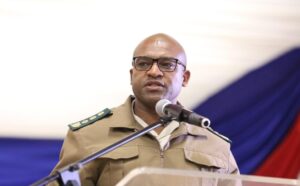
Inmates ready to write matric finals: Correctional Services

By Lungile Ntimba 

A total of 173 inmates will sit for the National Senior Exam, according to the Correctional Services Department.

Department spokesperson Singabakho Nxumalo said the department was pleased with the level of preparedness.

The inmates have completed the academic syllabus on time and have undergone various assessments throughout the year. 

“Educators from the department’s 18 schools remain optimistic, having made significant efforts to ensure that all candidates are thoroughly prepared,” he said in a statement on Thursday.

He added that during the exam preparations, the department ensured that all required textbooks and stationery were delivered in a timely manner.

Correctional Services national commissioner Makgothi Thobakgale has praised teachers for their dedication and hard work in preparing the inmates for this important milestone. 

“Education not only empowers offenders with knowledge, but also offers them a path to a new life. It remains our commitment to provide growth and development opportunities for every inmate, as we believe in the power of education to transform lives”, commented Thobakgale.

Last year, inmates achieved a 93% overall pass rate, with nine schools attaining a 100% pass rate.

“Correctional Services attributes these results to the conducive learning environment it fosters within correctional centres, as well as its commitment to providing offenders with education and skills that will help them reintegrate into society after their release,” said Thobakgale

He said that the department has also embraced technological advancements in education.

Earlier this year, the Johannesburg Correctional Centre introduced Intelsat Telematics System, which provided access to valuable study materials for both inmates and educators.

He said he appreciated the department’s officials for maintaining their professionalism and dedication in adhering the strict exam protocols set by the Basic Education Department.

INSIDE EDUCATION

Western Cape learners honoured with special awards at science fair

By Nkhensani Chauke

Western Cape education MEC David Maynier has congratulated two learners from the province who received special awards at the recent Eskom Expo for Young Scientists International Science Fair.

Salusiwe Mxayiya, a Grade 11 learner at Luhlaza High School, was presented with best development project award for investigating the population dynamics and infection rates of Hector’s lantern fish – a common species found along the West Coast.

And Grade 12 learner Lukusa Tshizubu from Parow High School won the award for best energy project.

The goal of his project titled ‘GreenHauler – Construction Debris Management’ was to build a truck designed to use renewable energy and innovative on-site debris processing for efficient construction debris management. 

This project expertly advanced sustainable practices in the industry, highlighting the importance of investing in green technologies and paving the way for further innovations in environmentally friendly construction solutions, the MEC said in a statement on Wednesday.

“Congratulations to our two Western Cape learners who have represented us so well on an international stage.

“It is exciting to see the innovative ideas of our learners in this field, and I look forward to seeing our achievers continue their journeys of curiosity and exploration in the sciences. I hope that their success will inspire other learners to follow this same path,” he said.

The expo served as a platform for young scientists to showcase their work and engage with peers, fostering the next generation of innovators.

It drew participants from across South Africa and the rest of the world.

Other winners included Ammarah Patel and Naveera Chana from the Johannesburg region for best female project, and Aman Pati from the Mopani region for best innovation project.

The winners each received R10,000.

INSIDE EDUCATION

DA calls on provincial treasury to deal with school uniform corruption

By Lungile Ntimba

The Democratic Alliance (DA) in Gauteng has called on finance MEC Lebogang Maile to investigate the social development department for alleged corruption in school uniform cooperatives.

DA social development spokeswoman Refiloe Nt’sekhe said earlier this year that sewing cooperatives enlisted by the department to supply school uniforms were abandoned because the former social development MEC Mbali Hlophe allegedly
failed to pay for services rendered. 

“At that time, MEC Hlophe denied knowing the cooperatives even though GDSD’s social media posts depicted her handing out uniforms made by cooperative,” Nt’sekhe said on Wednesday.

She said an investigation by the DA revealed that the department had implemented an “odd procurement process” whereby certain cooperatives would become main contractors and others would become subcontractors. 

“For about seven years, the department has failed to spend on school uniforms because the Treasury has released a circular… stating the government cannot procure goods and services from NPOs.

“During all portfolio committee meetings, the department repeatedly highlighted that they had discovered a way to comply with Circular 21. However, every year, funds remained unspent, and this has left many Gauteng learners in desperate need of these uniforms stranded,” she said.

Nt’sekhe said that when the committee suggested hiring a company as the primary contractor and using cooperatives as subcontractors, the department implemented an odd method and procured uniforms. 

“As of August, many of the cooperatives were still not paid. Some had even staged an overnight sit-in by the DSD provincial offices,” she said.

She said last month when the Gauteng social development portfolio committee visited NPOs that used to make school uniforms in Sedibeng, they revealed horrific practices by the department.

“The department’s staff had cooperatives which they fronted using friends’ or relatives’ details, while NPOs were registered as main contractors and the department-imposed subcontractors on them,” said Nt’sekhe.

It is alleged that while main contractors were given expired purchase orders, others received the tenders via WhatsApp without a purchase order.

She said many sub-contractors were not legitimate and they did not have proper equipment. Existing cooperatives had to borrow them sewing machines when inspectors visited.

One of the subcontractors is a company from KwaZulu-Natal.

“There was an inconsistency with the orders. The department would give a cooperative an order of 150 uniforms, and yet when they were delivered to the school, the school principal would be expecting an order of 300,” she said.

Nt’sekhe said that when the DA proposed that the tender should be divided amongst small businesses, the department ignored them leading to improper tender procedures.

“The DA will write to the MEC for treasury and economic development, Lebogang Maile, demanding an urgent investigation into the corruption allegations against GDSD staff… “In our letter we will demand that MEC Maile provide clear timelines as to when the investigation will be concluded, the public release of outcomes, and the implementation of recommendations,” she said.

The DA emphasised that there must be no delay in justice, and those found guilty must face the consequences.

INSIDE EDUCATION

KZN education department and Shell launch STEM bursary programme

By Lungile Ntimba 

With the final matric exams just around the corner, KwaZulu-Natal learners keen on furthering their studies in science, technology, engineering and maths, (STEM) now have an opportunity to do so through the newly launched Shell South Africa Bursary Programme.

KwaZulu-Natal education MEC Sipho Hlomuka and Shell Downstream South Africa chairman Aluwani Museisi attended the launch as part of the countdown to the 2024 National Senior Certificate exams.

Learners from Indukwenhle High School, Menzi High School and Velabahleke High School were assisted by officials from Shell to apply online for the bursary.

According to department spokesperson, Muzi Mahlambi, the learners were excited and said that even though there were only 20 days left before the exams, they were motivated to work extra hard to increase their chances of getting the bursary.

”I am very excited about this opportunity and the experience of applying online, and I am sure that I am going to succeed in these coming exams. I want to make my school as well as my parents proud,” said Fatima Khanyile, a learner from Velabahleke High School.

Museisi wished the learners the best of luck for the exams, saying the future was in their hands.

“We are grateful to the KwaZulu-Natal Department of Education for realising our vision of nation building and saying yes to the partnership, which will bring smiles and hope to the lives of our children” said Museisi.

“Shell Downstream South Africa is honoured to see this programme take off today and look forward to seeing you, the future leaders and innovators who will play an integral role, in building our nation in the years to come.”

Hlomuka expressed his gratitude to Shell for providing this opportunity to disadvantaged learners.

He encouraged them to work extra hard.

“The only thing standing between you and finally getting these bursaries from Shell, is you getting excellent results in these exams. There are a few days left in your basic education journey and you need to maximise the moment,” said Hlomuka.

INSIDE EDUCATION

W.Cape education department to celebrates teachers

By Johannah Malogadihlare

The Western Cape education department is encouraging its citizens to show their
appreciation for teachers as October is National Teacher Appreciation Month.

With World Teachers’ Day being on Saturday, the department has called on the public
to make the day more memorable by showering teachers with words of gratitude on
social media using the hashtag #ThankAteacher.

The department said on Tuesday that educators played a critical role in the upbringing
of children and they should be valued.

“Teachers shape the lives of our youth and provide them with the tools to succeed in the
workplace and as leaders in society. They make a lasting and positive influence on our
lives and that of our children, and this should be acknowledged,” said education MEC
David Maynier.

“We are also encouraging our learners to write a letter or card to their teacher, or draw a
picture for their special teacher, to share with them in the run up to World Teachers’
Day. These small gestures of thanks go such a long way.”

He said that as the province celebrated this noble profession, he was well aware of the
pressure that the “national fiscal emergency” had placed on educators and schools.

“We will continue to work with other provinces through the Council of Education
Ministers to outline the scale of the challenges facing provincial education departments,
and to fight for our teachers,” Maynier said.

INSIDE EDUCATION

Rail may be an option to end carnage on our roads

0

By Edwin Naidu

Are there too many vehicles on South Africa’s roads, and how is this affecting the nation?

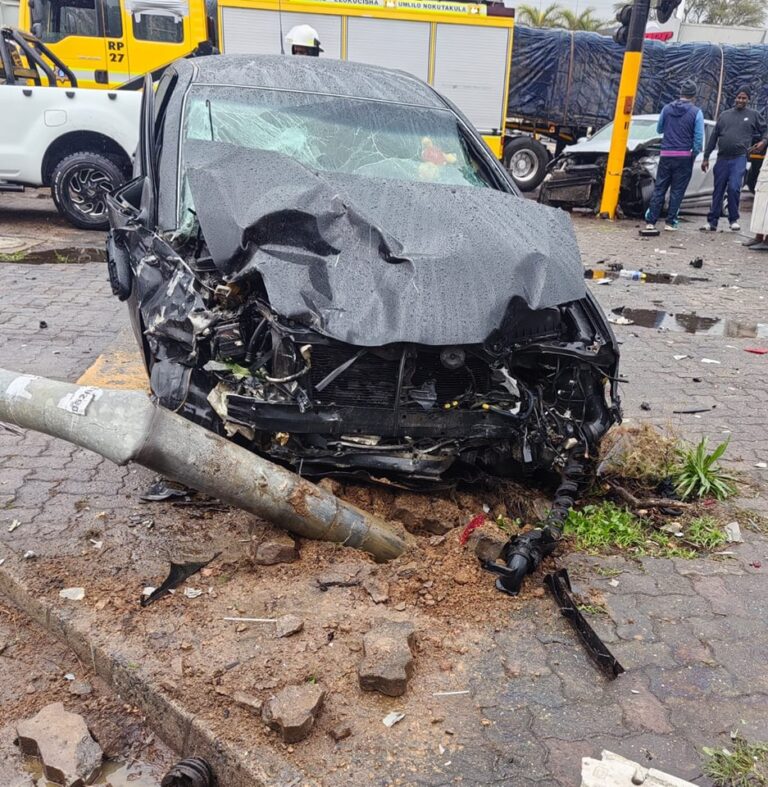
According to Stats SA, there are 12 million vehicles on our roads, with at least 7000 people dying every year in motor vehicle-related accidents.

This is despite South Africa signing the 2030 Agenda for Sustainable Development, which all United Nations members adopted in 2015. The Sustainable Development Goal Target 3.6 aims to halve the number of global deaths and injuries from road traffic accidents by 2030.

However, a recent report by Stats SA, ‘Road Transport Accident Deaths in South Africa, 2007-2019’, shows that the number of deaths from road transport accidents continues to increase.

Several factors contribute to road traffic accidents, including human error, inadequate infrastructure, vehicle defects and environmental conditions.

Human factors, such as speeding, reckless driving, distracted driving (often due to smartphone usage) and driving under the influence of alcohol or drugs, are among the primary causes.

I read in one article that the SA Police Services recently laughed at a drunken man in a Solar4Life Haval who wanted to stop several motorists because they were driving, in his words, too fast. It was no laughing matter when the drunk idiot crashed into a wall. Still, getting the police to do their job is like expecting snow in summer.

The cumulative figures for road transport accident fatalities between 2007 and 2019 indicate that individuals typically pass away in the province where they reside.

KwaZulu-Natal and Limpopo have the highest proportions of deaths occurring in the residents’ respective provinces, with rates of 92,1% and 93,4%, respectively.

In contrast, Gauteng displays a distinct pattern compared to other provinces, with a lower percentage of road transport accident fatalities occurring in the province of usual residence, at 54,2%.

These daily horrific accidents that remind us of the carnage on our roads, especially on the N3 to Durban where the number of truck accidents via Pietermaritzburg, is alarming.

On Monday, Higher Education and Training director-general Nkosinathi Sishi challenged Transport Education Training Authority (TETA) CEO Maphefo Anno-Frempong to help save lives by encouraging citizens to use rail as a means of transport.

“It would save many lives,” he said during the launch of the Green Hydrogen Centre of Specialisation at the Council of Scientific and Industrial Research in Pretoria.

Sishi, a former deputy director-general of public entity oversight at the national Transport Department, said his calls followed the tragic passing of a department parliamentary liaison officer in a road accident over the weekend.

The emphasis of the launch was on the groundbreaking formation of the centre, which is a first for hydrogen in South Africa.

This project involves collaboration between the Chemical Industries Education & Training Authority, the Mining Qualifications Authority and TETA. Its aim is to address the pressing need for hydrogen skills in the country.

Yet, the DG’s sadness about his late colleague was evident at the CSIR.

Anno-Frempong agreed with Sishi, saying the consequences of an accident involving hydrogen transportation were unimaginable.

“For us, it is ensuring the lives of people of South Africa are secure as hydrogen is stored and transported at distribution centres,” she added.

Preferably, it would be carried via rail.

However, if two recent incidents that negatively impacted citizens are honestly analysed, one is left with the feeling that our government has a poor track record of putting the nation first.

First, the SA National Defence Force lacked intelligence in decisively dealing with the July 2021 riots in KwaZulu-Natal. The government estimates 354 deaths during the rioting.  And recently, the unprecedented heavy snowfall, which sadly resulted in casualties, could have been prevented had the country’s disaster management team not been asleep.

The Transport Department could have acted on the SA Weather Service’s warnings of inclement conditions on the horizon by liaising with the traffic authorities to close the roads in anticipation of snowfall.

But in a country where traffic authorities are susceptible to bribes, letting people off the hook, or putting motorists through unnecessary roadblocks while leaving malfunctioning robots to be manned by beggars risking their own lives while keeping traffic moving, is ludicrous.  

If she makes good on her promise, a forward-thinking CEO like Anno-Frempong would go a long way toward ensuring the safety of citizens in our country with a poor track record.

Honest public servants like Sishi and Anno-Frempongmust be applauded for discussing ways to save lives rather than responding when it is too late. However, South Africa Inc. must first understand why the left hand must know what the right hand is doing to ensure we arrive alive.

Edwin Naidu is Editor of Inside Education.

Inside Education

National Science Week kicks off to improve science education

By Johnathan Paoli

National Science Week (NSW) is a critical opportunity to further the integration of science and technology into society, in light of the below average performance of the country in the sector, according to the SA Agency for Science and Technology Advancement.

SAASTA communication manager Mike Ellis highlighted the importance of science education, especially for the youth, saying that despite the achievements made so far, more needed to be done to put South African on the map.

“South Africa has been performing below average, with some significant challenges, including socio-economic disparity. However, we have made significant progress since 2003, especially regarding gender and other improvements including raising awareness,” Ellis said.

Ellis referenced the 2019 Trends in International Mathematics and Science Study (TIMSS), an assessment of learners from both the intermediate and senior phases, and facilitated by the Human Sciences Research Council.

It compares learners’ educational knowledge and skills.

The assessment found that out of a group of 17 countries, South Africa scored last with a score of 370, 130 below the centrepoint of 500.

Also, language was a major obstacle in science education, in addition to socio-economic barriers which impacted effective learning and educational support.

The TIMSS 2019 results indicated that learner performance, while improving, was still low.

There was an urgent need to identify ways to enhance science teaching and learning.

It called for the introduction of scientific terms in everyday speech among learners, an improvement in reading with meaning, and a practical as well as theoretical method which encourages critical thinking skills.

Ellis said there was a desperate need of more skilled teachers in order to help students on scientific educational development, but this required well-funded schools.

He said improvement within the sector hinged upon a comprehensive strategy which took into consideration the unique challenges of South Africa as a country.

Both the SAASTA and the Science and Innovation Department has welcomed the NSW as an opportunity to further integrate science and technology in schools and public spaces.

The week will consist of several activities at both national and provincial level that aim to bridge the gap between science and the nation.

In terms of the national scale, activities include daily five-minute quizzes at the beginning of the school day for schools at intermediate, senior and FET levels.

The Albertina Nontsikelelo Sisulu Science Centre in the Eastern Cape is expected to conduct a talk on the importance of cybersecurity in the digital age on Tuesday.

The Free State is expected to conduct public visits to government-funded infrastructure to experience astronomy and associated technologies at the Naval Hill Planetarium in Bloemfontein.

In Gauteng, the Tshwane University of Technology is expected to host a Science Festival on Wednesday, celebrating creativity and innovation among science students.

Postgraduates will showcase their innovative high-tech-based science projects through oral presentation.

In KwaZulu-Natal, an early childhood development event on coding and robotics will be held in Newcastle, as well as a hands-on science exhibition on virtual reality.

Limpopo will see an exhibition starting from Wednesday on smart farming using technology, and a school visit to St Mark’s Comprehensive Secondary School to showcase career opportunities in science and technology while educating students about the latest advances.

Mpumalanga will additionally host an ECD introduction to technology in Mbombela the entire week.

The Northern Cape will host public visits to the South African Astronomical Observatory field station near Sutherland, while the North West will celebrate science week at the Lerothodi Secondary School in Bojanala.

The Western Cape will host public visits to the SA Astronomical Observatory in Cape Town, is set to launch a hands-on activity for schools in the Overberg district, as well as a learner outreach in Laingsburg and a community engagement on sustainable fishing.

Science and Innovation Minister Blade Nzimande officially launched the NSW on Saturday at the Bloemfontein campus of the Central University of Technology.

He said his department sought to encourage a culture of critical conversations among ordinary people and the youth concerning the value of science to society.

SAASTA project coordinator Bafedile Kgwadi called for active participation in the week’s activities.

“Science is all around us, and people from all sectors of society are encouraged to participate and demonstrate how they relate to technology and it affects their everyday life,” Kgwadi said.

The department also launched the Science Engagement Information Management System in order to store and process raw project performance data.

It aligns the science engagement programme with the 2011 National Evaluation Policy Framework for the Performance, Monitoring and Evaluation Department as well as the National Treasury. The week-long celebration is expected to provide all stakeholders with the opportunity to advance the goals of the country’s science engagement programme, and generate the necessary buzz about science in everyday life.

INSIDE EDUCATION

South Africa needs more nautical scientists and maritime engineers – if you love the sea these may be the careers for you

0

By Ekaterina Rzyankina

When most people are asked to picture an engineer at work, they probably imagine a civil engineer in a hard hat at a construction site, a chemical engineer in a laboratory or an electrical engineer examining a complex circuit board. Very few, I’m willing to bet, visualise someone aboard a ship.

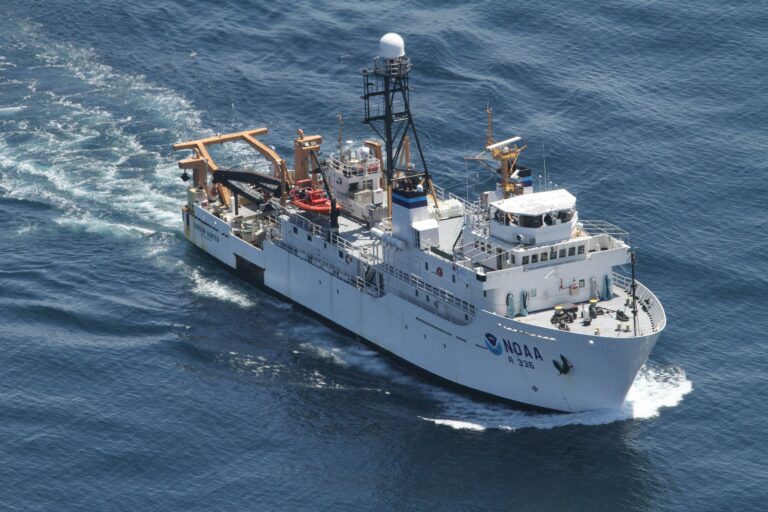
But, for those drawn both to engineering and a seafaring life, marine engineering and nautical science are ideal careers – especially in a country like South Africa, uniquely positioned where the Atlantic and Indian Oceans converge.

Over 90% of the world’s good are transported by sea. That means both marine engineers and nautical scientists are crucial to global trade, transportation and resource management. These professionals play a critical role in ensuring that vessels operate reliably, comply with environmental regulations and navigate safely through the world’s oceans.

South Africa’s Department of Higher Education does not distinguish between different types of engineering when collecting statistics about graduates. However, those of us in the marine engineering and nautical science space in academia can confirm the numbers are low. At my own institution, the Cape Peninsula University of Technology (CPUT) in Cape Town, between ten and 20 people graduate each year from these programmes. At another, Nelson Mandela University in the Eastern Cape province, around seven people graduate in these fields each year. With so few people studying these disciplines, the skills they impart are in high demand. The government’s list of scare skills for 2024 includes “marine engineering technologist”.

I’m an engineering lecturer in the Department of Maritime Studies at CPUT. There, I teach in both the Bachelor of Nautical Science and Marine Engineering programmes, lecturing on a variety of subjects, including mathematics and applied thermodynamics (the branch of physics that deals with the relationships between heat, energy and work).

Watching my students complete their degrees and start careers in marine engineering or nautical science has made it clear that this work offers a blend of adventure, technical challenge, and the opportunity to contribute to an industry that is essential to global commerce and environmental stewardship.

Whether it’s designing cutting-edge marine technology or navigating the world’s vast oceans, the maritime field promises a fulfilling professional journey.

Theory and practice

Three universities – CPUT, Nelson Mandela University and the Durban University of Technology in KwaZulu-Natal – offer maritime studies courses aimed at those who intend to work at sea. A fourth, the University of KwaZulu-Natal, offers this degree with a focus on maritime law and logistics. There are also some specialised training institutions, among them the South African Maritime Safety Authority that provide various qualifications and certifications.

You’ll need to have taken mathematics, physical science and English in your school-leaving matric year, and to have passed them well. (Contact individual universities to find out their precise degree requirements.) A strong interest in and commitment to a career at sea or in the maritime industry more broadly is crucial.

Being a strong swimmer can be an advantage. But it is not necessarily a requirement. Students who do not know how to swim will typically have the opportunity to learn and develop their swimming skills as part of their training.

There are practical and theoretical components to these degrees. At our Granger Bay campus near the V&A Waterfront in Cape Town, for instance, we’ve set up a survival centre – a practical facility where students receive training to equip them for life at sea. It is fully equipped with three fully enclosed lifeboats, two open lifeboats, a rigid capsule, two fast rescue craft, a heated 12 x 7 metre pool, an underwater escape training dunker, various life rafts, life jackets, immersion suits, and more.

On the theoretical side, a Bachelor of Nautical Science programme focuses on the navigation and operation of ships. It encompasses navigation techniques, ship stability, cargo handling, meteorology, and maritime laws. This prepares students for careers as navigators in the merchant navy. (Not to be confused with the military navy – a merchant navy is a country’s commercial shipping industry, which includes all the cargo and passenger ships that are registered under that nation and used for trade, transport and other non-military purposes.)

Some of our graduates have gone on to become ship’s masters, also called captains – the highest ranking officer on any ship.

Marine engineering programmes, meanwhile, focus on the design, development, operation and maintenance of the mechanical systems and equipment used on ships and other marine vessels. This includes everything from engines and propulsion systems to refrigeration and steering mechanisms. Marine engineers ensure that these systems function efficiently and safely. They often work closely with naval architects to integrate these technologies into new ship designs or retrofit them into existing vessels.

Ample opportunities

Oceanic African countries, like South Africa, need people with these skills to harness the full potential of their maritime resources.

The development of local expertise in maritime engineering and nautical science is essential for ensuring safe and efficient maritime operations. It also helps to protect marine environments and contributes to global maritime trade. Skilled professionals in these fields help these countries take advantage of their maritime assets, promote economic growth and enhance their roles in international commerce.

As a proud lecturer, I am thrilled to see my students progress and develop both internationally and locally. Many have gone on to work in various exciting and prestigious roles around the world. Some have become ship’s masters, navigating and managing large vessels on international waters, while others have taken on critical roles in maritime operations, port management and logistics in countries such as Singapore, Norway and the United Kingdom. Some have pursued careers in maritime law and policy. Their career paths reflect the diverse and global opportunities available in the maritime industry.

Rzyankina is a Lecturer at the Cape Peninsula University of Technology

This article was originally published in The Conversation 

Matriculants will face dire consequences if they cheat

By Johannah Malogadihlare

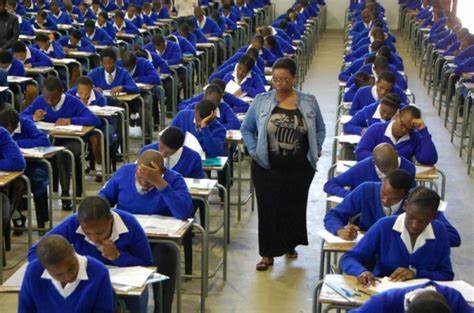
Western Cape education MEC David Maynier has warned of serious consequences for matric pupils who are caught cheating in the final exams.

The exams start on the 21 October. Matriculants will sign a pledge and a commitment agreement which details the rules and consequences for breaking the rules.

“The candidate’s results could be nullified, and they could even be barred from writing one to three subsequent examinations, delaying their post-school employment or education”, Maynier warned.

The MEC reminded pupils to eliminate any items that would assist them in cheating, saying the teachers would not tolerate any excuses.

“Despite the warnings, 22 candidates who were found in possession of crib notes or cellphones during the November exams last year, were disqualified,” said Maynier.

The department also warned candidates that they would face criminal prosecution if they were found to be involved in leaking of examination question papers.

Maynier has encouraged matriculants to use their final weeks before the exams to study and prepare themselves.

INSIDE EDUCATION