Home Blog Page 143

‘We nicknamed it Eddy’: What do schools and teachers think of AI in classrooms?

0

By Vitomir Kovanovic, Maarten de Laat and Rebecca Marrone

It’s almost two years since ChatGPT burst onto the scene in late 2022. Since then, educators worldwide have been grappling with what generative artificial intelligence might mean for classrooms and learning.

ChatGPT has been met with both anxiety and a sense of optimism. While there has been a lot of discussion about what is happening in universities, there has been less attention given to schools.

We have been looking at trials of AI in schools in South Australia. Here’s what we found.

What has happened so far in Australia?

Most Australian states initially banned ChatGPT and other generative AI tools in government schools (many private schools have been using the technology).

In a different approach, the SA government began a trial of AI in schools in 2023 with its own tool, EdChat.

Other jurisdictions have since reconsidered their stance. For example, at the start of 2024, New South Wales began trialling its own AI tool.

In November 2023, the federal government also published a framework for generative AI in schools, which said AI has “great potential” to help teachers and students, and to reduce administrative workloads.

Last month, a federal parliamentary inquiry recommended generative AI in schools should be a “national priority”, finding the benefits of AI outweigh its significant risks and challenges.

What happened is South Australia?

EdChat is a generative AI tool owned by the SA Department for Education, which was designed with Microsoft. It can be used in classrooms and at home. According to the department, it has “extra safety features” to protect students’ privacy and stop them accessing inappropriate content.

In the first phase of the trial, EdChat was used in eight SA government high schools for eight weeks. In the second phase, a further eight schools were included.

We have been evaluating the trial using survey data from about 90 teachers and 700 students. A journal article on this work is currently under review. In this article, we speak about our results from teachers.

‘It reduces time pressure’

Teachers told us they felt safer using EdChat than other tools such as ChatGPT, because student data is not being used to train generative AI models.

However, teachers still wanted to know more about how the student data is stored and who can access EdChat records.

Teachers also reported significant benefits of the tool. They said it helped save time developing lesson plans and learning materials – allowing for more time with students in the classroom.

One teacher told us how the tool had been adopted by the class.

We nicknamed it Eddy as a class and Eddy is now embedded as part of our class culture.

Teachers also used EdChat to provide personalised learning activities to students and “reduce time pressure and brain power required to create [teaching examples] and plan fun activities”. EdChat also allowed students to get personalised feedback or support when teachers were not around.

‘We need to be careful’

Teachers noted issues with hallucinations (when the AI comes up with nonsense) and incorrect information. This means students need to have the skills to recognise this.

As one teacher told us:

I think we need to be careful since students can treat AI like how they treat anything on the internet, without any critical thinking and taking it at face value.

They also said students need to learn to write better prompts and develop their critical thinking skills for working with AI.

They said content filters could also be challenging. While designed to keep students safe, they sometimes interfered with learning, especially for sensitive topics such as history, reproductive health or politics. For example, one history teacher said the “censorship was difficult to get around”.

Teachers also said it was more difficult to work out whether students’ work was plagiarised or not.

What happens now?

The SA government is looking at ways to expand the use of EdChat in schools.

Our research suggests we need to do more work in several areas.

The first is specific education for students around how to use AI critically and effectively.

We also need more research now about how AI is being used in different schools. There are no large-scale studies yet in Australia but there is growing evidence from other parts of the world, such as Estonia, the United States and United Kingdom, which show AI is significantly changing the way teachers are teaching.

This includes spending more time on students’ critical thinking skills and using AI to generate ideas.

We also need to make sure all students can gain access to AI (not just those who can afford the technology) and that the AI itself it not biased against minorities.

Meanwhile, teachers need more support and professional development, and schools need help to plan and make changes.

This includes a wider community awareness of the profound effects these new technologies are having and will have on the teaching profession and student learning.

This article was originally published in The Conversation
Universities must do more to create a society free from gender inequality

By Edwin Naidu

A new report by the Commission on Gender Equality (CGE) has reinforced the need for universities to improve the recruitment and retention of women and persons with disabilities in senior positions at tertiary institutions.

“The universities must improve recruitment of women and persons with disabilities in academic, top and senior management positions to achieve equal representation according to the Employment Equity Act,” says the report.

The State of Gender Transformation at Tertiary Institutions 2023/2024, as part of ongoing hearings, focuses on four universities: Walter Sisulu University, Sefako Makgatho Health Sciences University, University of Fort Hare and the University of the Western Cape.

The responses were analysed and investigative hearings were held as part of the commission and the country’s goal of creating a society free from gender inequality.

In its report, the CGE urged universities to provide adequate funding for gender transformation to achieve their employment equity targets and manage the retention of female staff.

However, the commission found that some universities were reluctant to review their sexual harassment policies to align with the Code of Good Practice 2022.

This reluctance to review policies subjected staff and students to lesser protective measures than what the law provided.

The GGE’s annual performance plan for 2023/24 required it to conduct hearings on gender transformation at universities.

The hearings aimed to understand gender dynamics, the slow pace of transformation and the creation of inclusive environments.

Despite legislative progress since the adoption of the Constitution, challenges remained in achieving gender equality in higher education.

Findings and Recommendations

Walter Sisulu University

  • Findings: Skewed gender representation at senior levels, lack of disability representation, inadequate policies for parental obligations and sexual harassment.
  • Recommendations: Develop an employment equity plan, implement flexitime policies, conduct sexual harassment workshops and ensure the employment equity manager performs their duties.

Sefako Makgatho Health Sciences University

  • Findings: Over-representation in senior positions, lack of policies for LGBTQIA+ inclusion and challenges in addressing employment equity barriers.
  • Recommendations: Address skewed representation, finalise policies for disability and LGBTQIA+ inclusion, align sexual harassment policies with the Code of Good Practice and conduct awareness campaigns.

University of Fort Hare

  • Findings: Over-representation of black men in senior positions, lack of policies for persons with disabilities and LGBTQIA+ inclusion, and non-compliance with sexual harassment policy standards.
  • Recommendations: Implement programmes for designated groups, finalise and approve inclusive policies and align sexual harassment policies with the Code of Good Practice.

University of the Western Cape

  • Findings: Majority representation of women in senior positions, outdated policies and non-compliance with sexual harassment policy standards.
  • Recommendations: Review and update policies, implement planned transformation programmes, provide gender awareness training and ensure inclusion of gender non-conforming persons.

Higher Education Resources South Africa (HERS-SA) executive director Brightness Mangolothi said much more needed to be done to advance women in the tertiary space.

She said HERS-SA, which has been working to improve the status of women in higher education, found that, in general, women were given the most challenging jobs when men did not seem to want them, resulting in them being destined to fail.

Universities South Africa (USAf) chairperson Francis Petersen said gender equality was an imperative that could not be ignored, and that it was committed to bringing about change.

Petersen, the vice-chancellor designate of the University of Pretoria, said USAf has several projects targeting meaningful gender transformation. It was mindful that women’s leadership was significantly underrepresented in most universities’ senior executive, management and academic positions.

“Active measures must be implemented to increase the representation of women in these positions.”

INSIDE EDUCATION

Sadtu ready to fight for BELA law and against budget cuts

By Johnathan Paoli

The SA Democratic Teachers Union (Sadtu) has declared that it is ready to resist the expected austerity measures in the education sector following budget cuts, while at the same fighting for the implementation of the Basic Education Laws Amendment Act.

Speaking during the last day of the union’s 10th national congress in Boksburg in Ekurhuleni, Sadtu president Magope Maphila said that the union, in line with a global campaign of “Go Public, Fund Education”, would do all in its power to fight the cutbacks in services, positions and other resources within the basic education sector.

“We will fight that there are no austerity measures, that our schools are funded and that our teachers are paid in order to build a developed and inclusive society, and ensure that neoliberal policies are something of the past,” Maphila said.

He said that Sadtu, which is the largest teacher union in the country, would demand that funding be made available for the rescuing and retraining of teachers, and that education be prioritised within the national government’s fiscal ambitions.

This follows the announcement by the Basic Education Minister Siviwe Gwarube of a budget shortfall of between R70 billion and R118 billion expected over the next three years.

It is not only limited to teacher positions, but across the board, including nutrition programmes, scholar transportation and early childhood development.

Furthermore, the union issued a stern warning to the minister, saying it would resist any attempt at undermining the implementation of the legislation.

“The non-implementation of BELA is a declaration of war on the part of the minister, and we can fight and teach at the same time,” Maphila said.

Meanwhile, the union announced its national leadership, with all candidates in the top eight retaining their positions.

Maphila and his deputy, Mabutho Cele, have been serving in their positions since 2014, while general secretary Mugwena Maluleke has been in his position since 2009. They will serve for another five years.

Sadtu declared its five pillars of its 2030 Vision. They comprise servicing union members, creating a learning nation, building socialism for the present, creating international partnerships and building a capacity-based organisation.

It said it would facilitate workshops and seminars to further the political education of its members as well as training opportunities to ensure the transfer of both foundational and functional skills for educators and learners.

Maphila called the union’s members to support the African National Congress in the 2026 local government elections, saying Sadtu was a dependable ally that could be relied on.

He recognised that the Government of National Unity was a peculiar change to the political landscape, but called on the ANC and its alliance partners to remain loyal to the transformation agenda.

In closing, the president called for unity within the union.

There were reports discontent among some branches on Sadtu’s position on the GNU and the ‘unopposed’ election of its leadership.

INSIDE EDUCATION

Africa University Games demonstrates the developmental potential of university sports

0

By Johnathan Paoli

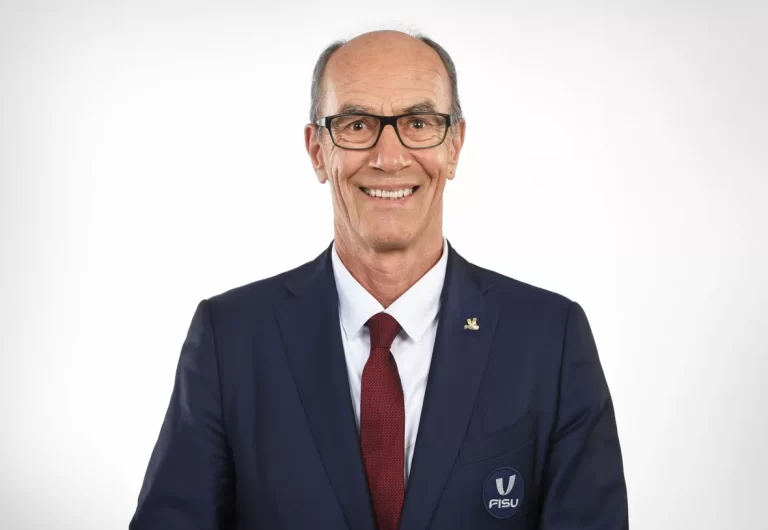
International University Sports Federation (FISU) president Leonz Eder has called for more to be done in ensuring the utilisation of sports in encouraging national growth across the continent.

The 11th Africa University Games, which ends on Sunday, officially commenced with the International University Sports Federation, Federation of Africa University Sports and National University Sports Federations seminar held at the University of Lagos.

It highlighted the role played by sports at a tertiary level in development.

The seminar under the theme “Empowering University Sports: Pathways to Excellence”, gathered key stakeholders in university sports, including vice-chancellors, sports directors and student leaders.

Eder joined virtually, urging African universities to pursue excellence and support one another in advancing university sports.

In the keynote address, he emphasised the importance of university sports as a catalyst for national development, aligning with the African Union’s goals of unity, education and health.

The discussions also centred around strategies for enhancing sports programmes and the benefits of hosting major events, drawing on successful practices from various institutions.

Day two of the seminar emphasised “equity, diversity and inclusion”, with a dedicated session focused on promoting safe environments for all athletes, underscoring the necessity of robust safeguarding policies against abuse and discrimination.

The games marked a historic milestone as they were co-hosted for the first time by two prestigious Nigerian universities, the University of Lagos and Lagos State University.

With participation from 65 universities across Africa, the event showcased the unity and sporting excellence of the continent.

INSIDE POLITICS

KZN education department getting ready for 2025

0

By Alicia Mmashakana

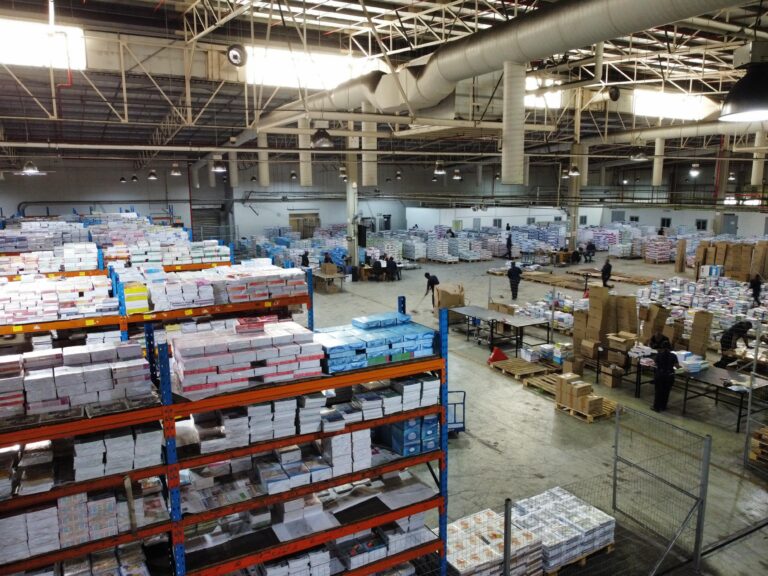
Following a site visit, KwaZulu-Natal education MEC Sipho Hlomuka is satisfied that the department will meet its target of delivering learning and teacher support materials (LTSM) to government schools.

“As a department we are very pleased and satisfied that the service provider is going to meet the October 30 deadline of the delivery of textbooks and stationery to schools throughout the province of KwaZulu-Natal,” Hlomuka said in a statement.

He visited the LTSM warehouse in Amanzimtoti on Friday to monitor and evaluate the state of readiness for the delivery of the materials.

“The MEC expressed his appreciation at the state of readiness and was satisfied that all learners are going to receive their LTSM come the first day of the 2025 academic year,” the statement read.

According to the Stats SA’s 2021 General Household Survey, 21.2% of learners dropped out of school because of poor academic performance.

There are many reasons for the dropouts including a lack of LTSM, not enough quality educators and a failure to provide adequate and safe infrastructure.

LTSM is one element of the right to basic education. Getting books and stationery in the hands of learners remains a struggle in some provinces.

According to the Government Technical Advisory Centre, provincial governments spent about R18.9 billion on textbooks, stationery and other forms of LTSM between 2016/17 and 2020/21.

KwaZulu-Natal spent the most on materials, followed by Gauteng, the Eastern Cape and Limpopo.

LTSM include textbooks, workbooks for learners and manuals for teachers.

INSIDE EDUCATION

Increasing alarm over impending budget cuts to Basic Education in the country

By Johnathan Paoli

The Budget Justice Coalition (BJC) has issued a stark warning regarding proposed budget cuts to the country’s basic education sector, following a press briefing by Minister Siviwe Gwarube.

BJC spokesperson Gillian Pillay, representing a coalition of civil society organisations dedicated to equitable and rights-based budgeting, said resources needed to be mobilised to ensure that the state fulfilled its obligations to provide quality education.

“Budget cuts towards basic education will hinder the government’s ability to address critical issues such as teacher shortages, overcrowded classrooms and inadequate infrastructure,” Pillay said in a statement on Friday.

The minister revealed that seven provincial education departments may not meet their financial obligations by the 2027/28 fiscal year, raising concerns about the future of quality education for millions of learners.

The briefing highlighted alarming budget constraints, with the department’s CFO Patrick Khunou estimating a cumulative pressure of between R78 billion and R118 billion across provinces from 2021/22 to 2027/28.

Gwarube described the potential cuts as “brutal,” emphasising that they would disproportionately impact vulnerable populations, thereby exacerbating existing inequalities and violating the constitutional right to education.

Since 2018, the coalition has been advocating for increased education funding and reported on the detrimental effects of budget cuts.

Pillay said the trend of below-inflation allocations to the provincial equitable share has left many education departments struggling to provide essential services, ultimately impacting economic participation and the long-term growth of South African society.

The Western Cape education department has already announced a staggering loss of 2,400 teaching posts due to a R3.8-billion budget shortfall over the next three years.

Other provinces are expected to follow suit, further limiting their capacity to fill existing teacher vacancies and worsening classroom overcrowding.

While the proposed 2024/25 budget includes a 3.2% increase in compensation for basic education personnel, the reality of inflation means this equates to a 2.2% real cut.

Pillay said this was insufficient to address the ongoing crisis of under-staffing in public schools, as recognised by the National Treasury.

The Gauteng education department has already warned that it is looking at slashing funding for critical programmes like school transport and learning materials to save jobs.

Pillay warned that such trade-offs were ultimately detrimental to the most marginalised learners, who may lose their right to quality education altogether.

With women constituting 70% of educators, she called on the government to consider gender implications in budgetary decisions, especially as reductions in public sector wages could further marginalise these vital contributors to society.

The coalition is advocating for innovative fiscal approaches to safeguard education rights and has proposed several solutions.

They include utilising the Gold and Foreign Exchange Contingency Reserve Account to reduce the budget deficit without further compromising public spending, leveraging the Government Employees Pension Fund to purchase bonds at favourable rates, and implementing progressive tax reforms to eliminate tax rebates for high-income earners.

It has also called for revising the education component of the Provincial Equitable Share formula to address disparities among provinces and adjusting post-provisioning norms to ensure equitable salary distributions in no-fee schools compared to fee-charging institutions.

She said the BJC was ready to engage with policymakers, teachers and communities to safeguard the rights of learners and ensure a just and equitable education system.

“Now is the time for forward-thinking strategies that promote sustainable growth and economic transformation,” Pillay said.

Meanwhile, Anglican Archbishop of Cape Town, Thabo Makgoba, has similarly warned that the proposed cuts will exacerbate conditions in light of the growing unemployment in the country.

“In the sea of unemployment in which we are drowning, cutting education budgets spells disaster. If we are to educate a modern workforce, we should be increasing investment in education, not reducing it,” Makgoba said.

Speaking at the Anglican Church’s provincial Synod, he called on the national government to do all in its power to address the funding crisis in education, and not sacrifice feeding and transport services in an attempt to mitigate expected unemployment.

The Budget Justice Coalition (BJC) has issued a stark warning regarding proposed budget cuts to the country’s basic education sector, following a press briefing by Minister Siviwe Gwarube.

BJC spokesperson Gillian Pillay, representing a coalition of civil society organisations dedicated to equitable and rights-based budgeting, said resources needed to be mobilised to ensure that the state fulfilled its obligations to provide quality education.

“Budget cuts towards basic education will hinder the government’s ability to address critical issues such as teacher shortages, overcrowded classrooms and inadequate infrastructure,” Pillay said in a statement on Friday.

The minister revealed that seven provincial education departments may not meet their financial obligations by the 2027/28 fiscal year, raising concerns about the future of quality education for millions of learners.

The briefing highlighted alarming budget constraints, with the department’s CFO Patrick Khunou estimating a cumulative pressure of between R78 billion and R118 billion across provinces from 2021/22 to 2027/28.

Gwarube described the potential cuts as “brutal,” emphasising that they would disproportionately impact vulnerable populations, thereby exacerbating existing inequalities and violating the constitutional right to education.

Since 2018, the coalition has been advocating for increased education funding and reported on the detrimental effects of budget cuts.

Pillay said the trend of below-inflation allocations to the provincial equitable share has left many education departments struggling to provide essential services, ultimately impacting economic participation and the long-term growth of South African society.

The Western Cape education department has already announced a staggering loss of 2,400 teaching posts due to a R3.8-billion budget shortfall over the next three years.

Other provinces are expected to follow suit, further limiting their capacity to fill existing teacher vacancies and worsening classroom overcrowding.

While the proposed 2024/25 budget includes a 3.2% increase in compensation for basic education personnel, the reality of inflation means this equates to a 2.2% real cut.

Pillay said this was insufficient to address the ongoing crisis of under-staffing in public schools, as recognised by the National Treasury.

The Gauteng education department has already warned that it is looking at slashing funding for critical programmes like school transport and learning materials to save jobs.

Pillay warned that such trade-offs were ultimately detrimental to the most marginalised learners, who may lose their right to quality education altogether.

With women constituting 70% of educators, she called on the government to consider gender implications in budgetary decisions, especially as reductions in public sector wages could further marginalise these vital contributors to society.

The coalition is advocating for innovative fiscal approaches to safeguard education rights and has proposed several solutions.

They include utilising the Gold and Foreign Exchange Contingency Reserve Account to reduce the budget deficit without further compromising public spending, leveraging the Government Employees Pension Fund to purchase bonds at favourable rates, and implementing progressive tax reforms to eliminate tax rebates for high-income earners.

It has also called for revising the education component of the Provincial Equitable Share formula to address disparities among provinces and adjusting post-provisioning norms to ensure equitable salary distributions in no-fee schools compared to fee-charging institutions.

She said the BJC was ready to engage with policymakers, teachers and communities to safeguard the rights of learners and ensure a just and equitable education system.

“Now is the time for forward-thinking strategies that promote sustainable growth and economic transformation,” Pillay said.

Meanwhile, Anglican Archbishop of Cape Town, Thabo Makgoba, has similarly warned that the proposed cuts will exacerbate conditions in light of the growing unemployment in the country.

“In the sea of unemployment in which we are drowning, cutting education budgets spells disaster. If we are to educate a modern workforce, we should be increasing investment in education, not reducing it,” Makgoba said.

Speaking at the Anglican Church’s provincial Synod, he called on the national government to do all in its power to address the funding crisis in education, and not sacrifice feeding and transport services in an attempt to mitigate expected unemployment.

INSIDE EDUCATION

Stellenbosch University calls out male toxicity in positions of power

By Johnathan Paoli

Leading expert in public procurement, anti-corruption and development law, Mercantile Law department head Sope Williams from Stellenbosch University (SU) has called out the toxic nature of men in positions of power. 

The topic will be in the spotlight at SU on Friday when a documentary entitled “Rising Voices: Unmasking Sexual Corruption in South Africa” will be shown followed by a discussion.

Williams first started delving into the issue of sexual corruption when she was approached by the Open Contracting Partnership, a United States-based NGO, to examine gender-responsive procurement in South Africa.

Her findings reveal that women-owned businesses often face unique challenges in accessing public contracts, including being asked for sexual acts in exchange for securing government tenders.

“I was asked to look at the legal framework on sexual corruption in South Africa. I mapped out the legal framework against sexual corruption in South Africa, looking at the extent to which sexual corruption is criminalised and why those legal frameworks are not working. For the past three years, I’ve been interested in this topic and researching it in different facets in procurement and in other sectors,” she said.

Williams notes that sexual corruption is seldom recognised as a distinct phenomenon within either the anti-corruption framework or the frameworks addressing gender-based violence, and that barriers to reporting sexual corruption and obtaining effective redress further contribute to its low profile.

She emphasises the importance of using the term “sexual corruption” rather than “sextortion,” which havebeen used interchangeably, but taken on different meanings in recent years due to the rise of cyberbullying and blackmail.

She said that women were particularly vulnerable to corruption due to their need for greater access to public services, such as reproductive health care, and that they often bore the responsibility of caring for children, persons with disabilities and the elderly, requiring them to access these services on behalf of their dependents.

“In South Africa, it happens in every sector where there are gatekeepers. We see it in health, education, immigration and public procurement. 

“It usually manifests in the same way – a woman might be asked to meet a man who can provide her with access to certain services or opportunities. He then asks for some kind of sexual contact, or sometimes asks for an intimate image for access to the service or opportunity to be granted,” she said.

While accurate statistics are hard to come by due to the sensitive nature of the crime and under-reporting, Williams cites a survey published by Corruption Watch that found 14% of young people had been victims of sexual corruption.

However, she believes the actual prevalence is much higher.

“It’s especially problematic in sectors such as education and immigration. Women who need refugee permits or work permits are extremely vulnerable. We also found that there’s a big problem in the court system, and the extent of sexual corruption in the criminal justice system will shock you,” she said.

While evidence shows that women are disproportionately targeted, men, transgender and gender non-conforming people are also affected.

South Africa’s legal framework against corruption has historically focused on financial transactions, criminalising both the giver and the receiver of bribes, but this approach is inadequate for addressing sexual corruption, Williams asserts.

“Sexual corruption should be treated differently from other corruption, because it includes a sexual offence. We can’t say both the giver and the receiver are complicit and both committed a crime,” she said.

Williams points to several countries that have taken steps to address sexual corruption more effectively.

Tanzania has a separate offence called “sexual bribery” that criminalises the public official who obtains sexual gratification.

India requires organisations with more than 10employees to have committees empowered to investigate reports of sexual harassment or corruption.

Countries like Sri Lanka, Croatia and Brazil have also enacted specific laws to address sexual corruption, recognising it as a gendered crime for which suitable reporting channels are required.

Beyond legislative changes, Williams emphasises the importance of education and awareness-raising.

“As a society we must think about how we can improve education and how we can counter the normalisation of violence against women and girls. It must start in school already, teaching girls and boys that sex should never be a bargaining tool.”

She highlighted the reality that sexual corruption wassometimes treated as an employment matter in workplaces and not seen as a criminal offence.

“By the time sexual corruption comes before a tribunal or court, it’s usually the tip of the iceberg. It takes a special kind of strong person to put themselves through the justice system because it’s brutal on women. You’re often revictimised all over again as you’re being interrogated,” she said.

Williams concluded that to address sexual corruption required an understanding that it was mainly a problem created and perpetrated by men.

“It’s not a problem that can be solved by women, because it’s something that benefits men. We need men to come along as real allies and as feminists and as people who care about the future wellbeing of their own daughters and sisters, to help us deal with this problem,” she said.

The documentary explores the issue of sexual corruption in South Africa through the eyes of victims and survivors.

INSIDE EDUCATION

Kenyan school blaze victims mourned at mass funeral

0

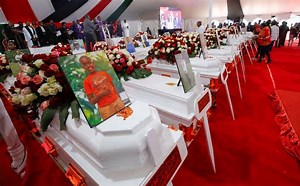
Thousands of mourners stood before rows of small white coffins on Thursday at a memorial service for 21 children who died in a boarding school fire in central Kenya earlier this month.

The coffins were topped with bouquets of flowers and photographs of the young boys from Hillside Endarasha Academy in Nyeri town, most between nine and 13, trapped in their dormitory.

“To come to Nyeri and see all these coffins, this is one of the greatest national tragedies that we’ve had in our country,” said Eugene Wamalwa, an opposition party leader.

Kenya has a sad history of school fires. There were more than 60 cases of arson in public secondary schools in 2018, according to most recent data in a parliamentary report.

It is not yet known what caused the fire at Hillside Endarasha Academy, but researchers say many similar fires have been set by students protesting harsh discipline and poor conditions.

In 2017, ten girls lost their lives in a high-profile fire at a school dormitory in Nairobi.

A teenage student was charged with manslaughter for committing arson.

Maryanne Mwangi’s 14-year-old daughter, Virlear, was among the victims. When she heard about Endarasha, Mwangi was angry that the government’s creation of various task forces had done nothing to improve conditions in schools, she said.

“I (didn’t) want to look at social media because I’m telling myself, ‘it can’t be happening again,'” she told Reuters.

“I always prayed Bubbles will be the last child who will die of a school fire,” Mwangi said, using her daughter’s nickname.

Kenyan boarding schools often impose too many strict rules, creating discontent that lead some teenagers to commit arson so they could go home, Mwangi said.

“Our schools are a school of rules. It’s actually like a military camp,” she said.

Reuters

School violence is a prime concern for KZN Education MEC

By Lungile Ntimba

Addressing school violence and improving infrastructure was a priority of KwaZulu- Natal education MEC Sipho Hlomuka during his first 100 days in office.

Hlomuka prioritised safety in schools, demonstrating his commitment to providing a secure learning environment.

He also facilitated maintenance and upgrades of school facilities, creating conducive spaces for education. 

Earlier this month, the MEC officially opened the Battlefields Primary School and unveiled the school’s plaque in uMzinyathi district.

Education department head Nkosinathi Ngcobo said the school’s opening was a testament to the MEC’s commitment to providing quality education. 

Hlomuka also used his first 100 days in office to address the issue of unemployed teachers, working towards optimal staffing through post provisioning norms and held discussions with unions.

He visited crime-affected schools such as Mukelani Primary and Phikiswayo Primary, and engaged with Verulam High School learners to address bullying in schools.

Ngcobo praised the MEC for addressing challenges at schools and driving long-term strategic improvements in the administration of the province’s education system.

INSIDE EDUCATION

Teachers will not be retrenched: Basic Education Minister

By Johnathan Paoli

The budget crisis in the education sector will not culminate in teachers losing their jobs, but rather on a reduction of posts going ahead, according to Basic Education Minister Siviwe Gwarube.

Gwarube was providing an update on the provincial analysis of the impact of the budget cuts in the education sector to the media in Tshwane.

The minister highlighted the growing financial pressures faced by provincial education departments across the country, emphasising that recent budget cuts were jeopardising the quality of education for millions of learners.

She revealed that over the past five years, the number of learners in the education system has increased by approximately 292,820, while there were fewer teachers.

“We are on a path where most provincial education departments will not be able to maintain their respective basket of posts,” she warned.

However, she stressed the importance of distinguishing between a reduction of the basket of posts and cutting jobs, and wished to prevent mass panic based on inaccurate information.

The minister said a budget shortfall of between R70 billion and R118 billion was expected over the next three years, which was not limited to just teacher provisioning, but across the board.

Gwarube pointed out that these financial strains were the culmination of years of aggressive budget reductions, economic stagnation and fiscal mismanagement.

“These budget pressures are not just numbers on a spreadsheet. They translate into fewer teachers, reduced textbooks and diminished administrative support staff. The very fabric of our children’s future is under threat,” she said.

The minister attributed the crisis to a combination of stagnant economic growth and misaligned government spending priorities, including substantial bailouts to state-owned enterprises that have drained public resources.

She highlighted that nearly 35% of government spending now went to public sector salaries, leaving little room for investment in critical sectors like education.

In response to the mounting crisis, Gwarube convened meetings with the Council of Education Ministers to analyse budget challenges and engage with the Treasury.

In addition, the minister confirmed that she had requested an urgent “10×10” meeting with Finance Minister Enoch Godongwana, the nine finance MECs and the nine education MECs to discuss strategies for alleviating the financial burdens faced by the education sector.

“We must work together with all 10 treasuries to unlock additional funds to alleviate the pressures facing the education sector, even if it is for the short term, and to prevent further cuts to teaching posts and critical support services like school
nutrition and transport,” she said.

The minister called for a renewed commitment to prioritise education, emphasising that it was not merely an expense, but an investment in the country’s future.

She specifically called for a cross-departmental reprioritisation of budgets from departments that have under-performing programmes, ensuring that funding across government was directed to appropriate national priorities.

“A well-educated population is essential for a prosperous, competitive economy,” the minister said.

Her long-term vision includes increased investment in education, teacher development, the integration of technology in classrooms and appropriate investment in infrastructure.

Gwarube expressed her gratitude to the education MECs and other stakeholders for their tireless efforts in navigating these challenges.

“While we face significant obstacles, these are not insurmountable,” she said.

The deadline of declaring posts is looming.

Only the Western Cape, the Free State and Mpumalanga, have declared available posts, with the other provinces expected to finalise by the end of the month.

INSIDE EDUCATION