Home Blog Page 146

Deaf Gauteng learners receive support to overcome leaning barriers

0

By Johannah Malogadihlare

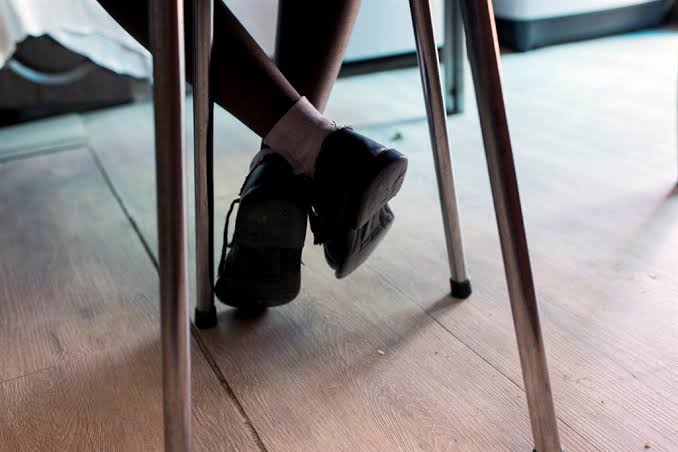
The Gauteng health department and school health teams have been visiting primary and secondary schools to assess learners in Grade R, 1, 4, 8 and 10 for hearing loss.

A total of 33,813 Grade 1 learners and of 36,008 Grade 8 learners were screened through the Integrated School Health Programme and 875 were identified as having hearing problems.

Out of 875 learners, 334 were issued with hearing aids while the others were referred to local health facilities and hospitals for further treatment.

“It is important that people avoid prolonged exposure to excessive noise and avoid putting anything in the ear canal to prevent hearing loss,” the department said in its news bulletin.

Furthermore, it advised pupils who experienced hearing problems including pain, to visit local health facilities.

“In 2023/2024 financial year, the department issued 6236 hearing aids across healthcare facilities, 32 new cochlear implants were issued to patients who permanently lost their hearing, while 28 patients had their devices upgraded,” the department said.

Section 29 of the Constitution guarantees the right to basic education for all citizens, including children with disabilities.

September is Deaf Awareness Month. It coincides with the International Month for Deaf People in commemoration of the first World Congress of the World Federation of the Deaf which took place in September 1951.

INSIDE EDUCATION

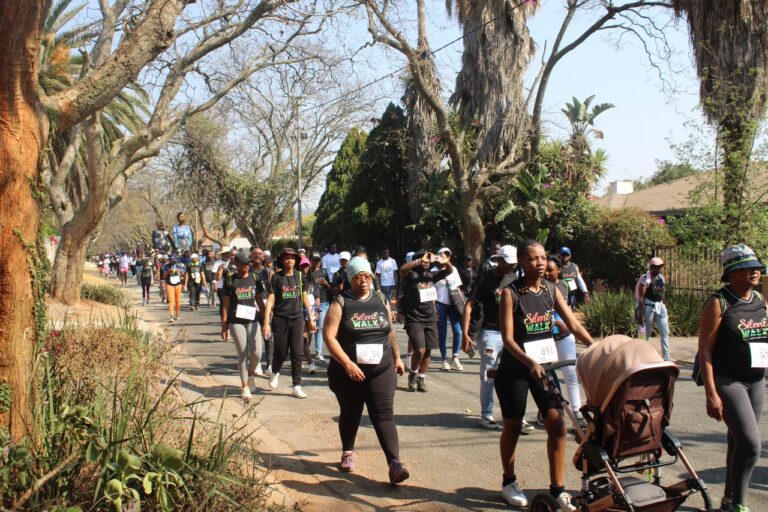
Record attendance #SilentWalkAndRun to promotes deaf awareness

0

By Johnathan Paoli

The event drew a diverse crowd of learners from local schools for the deaf, including Ekurhuleni, Sizwile, St Vincent, and Dominican schools, as well as Filadelfia Secondary and MCK Special School.

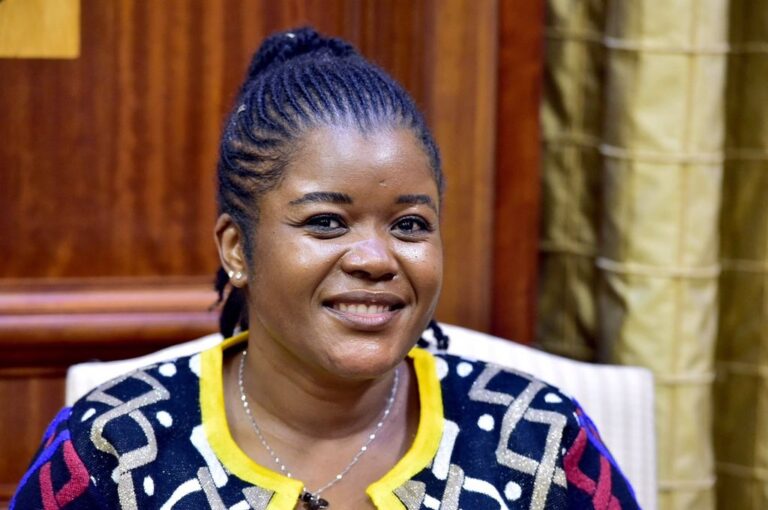
Organised by the Neema Foundation for the Deaf, this year’s event was distinguished by its impressive turnout and the presence of the Sport, Arts, and Culture Deputy Minister Peace Mabe, whose attendance highlighted the event’s
significance in promoting Deaf Awareness Month and underscored the importance of inclusivity and support for the Deaf community.

Neema Foundation chairperson Itumeleng Motaung expressed her gratitude for Mabe’s participation.

“Their presence at the #SilentWalkAndRun underscores the importance of Deaf Awareness Month and aligns perfectly with our mission to foster a society where the deaf community is not only included but celebrated,” Motaung said.

The event saw growing support from major corporate sponsors, including African Bank, Telkom, the Ancora Group, Workerslife Insurance Solutions, HCI Resources and Prestige Clothing.

Motaung praised the corporate involvement, noting that it significantly contributed to the support and empowerment of the deaf community.

“We are grateful for the unwavering support from both the corporate sector and the government. This commitment plays a crucial role in our efforts to support and uplift the Deaf community,” she added.

The #SilentWalkAndRun, coordinated in collaboration with the City of Johannesburg, City of Ekurhuleni, Safer South Africa Foundation, eDeaf and other stakeholders, aims to foster unity and understanding between deaf and hearing individuals.

It also serves as both a platform to raise awareness about the challenges faced by the deaf community and a celebration of their contributions to society.

African Bank chief marketing officer Sbusiso Kumalo emphasised the bank’s dedication to financial inclusion.

“As a bank committed to serving all people, we are proud to support the Neema Foundation’s initiative. Financial literacy and access to resources are vital for everyone, including the deaf and hard-of-hearing community. Our partnership aims
to enhance their access to essential financial services,” Kumalo said.

In conjunction with Deaf Awareness Month, City of Johannesburg’s MMC for health and social development, Ennie Makhafola, urged attendees to learn South African Sign Language (SASL).

“Learning SASL is a step towards greater inclusion of the deaf community in mainstream society. We must support deaf and hard-of-hearing individuals, especially those affected by gender-based violence,” Makhafola said.

Telkom’s executive of group communications, Mooketsi Mocumi, highlighted the company’s commitment to inclusivity.

“Our involvement in the #SilentWalkAndRun reflects our belief in creating a society where everyone is valued. We hope our support will strengthen the Deaf community and inspire others to advocate for inclusivity,” Mocumi said.

A significant development from this year’s event is the launch of a new WhatsApp chatbot by the Neema Foundation, designed to provide the deaf community with real-time access to vital information.

Developed with support from African Bank and the Gender-Based Violence and Femicide (GBVF) Response Fund, the chatbot will assist deaf victims of GBV by offering instant access to services such as police support, safe homes, legal aid and psychosocial help.

Motaung emphasised the importance of this platform in assisting the hearing impaired with a range of challenges.

“The chatbot will provide crucial support to deaf victims of GBV, offering them immediate assistance when it is most needed. It will also help address issues of financial abuse within the deaf community, empowering individuals to take control of their financial wellbeing,” she explained.

She said that despite SASL being recognised as the country’s 12th official language, many essential services and communications remained inaccessible to the deaf community.

Platforms like the chatbot were vital in closing these gaps and providing broader opportunities and support.

The #SilentWalkAndRun event not only celebrated the achievements and resilience of the deaf community, but also served as a powerful reminder of the ongoing need for awareness, inclusion, and support.

INSIDE EDUCATION

Gauteng school placements open on Monday

By Thapelo Molefe

The wait is almost over for anxious parents and guardians who want to know where their children will be placed for the 2025 academic year. 

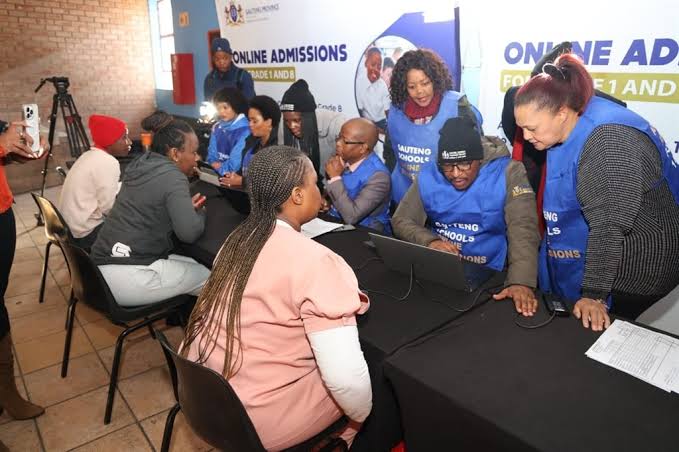
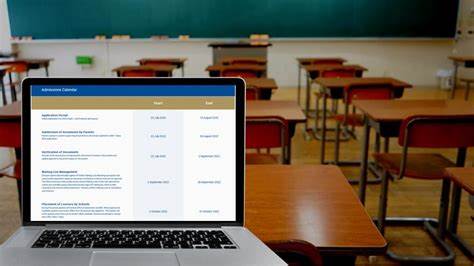
The Gauteng Education Department has confirmed that the online admissions for Grade 1 and 8 start on Monday.

The department said on Sunday 828,364 applications were submitted during the application period, which ran from 11 July to 14 August. Of these, 325,858 were complete applications and would receive placement offers from tomorrow.

Parents and guardians could expect to receive SMS notifications with placement offers, which must be accepted within seven school days.

The department has cautioned that not all applicants would receive an SMS on the first day, but successful applicants could expect a notification throughout the year.

“The placement offers will be made based on the priority of placement criteria and availability of space per school,” the department said in a statement.

The priority criteria include a home address within the school’s feeder zone, sibling or previous school attendance, work address within the school’s feeder zone, home address within a 30km radius, and home address beyond 30km.

The department has identified 292 primary schools and 277 secondary schools as high-pressure schools, having received an overwhelming number of applications.

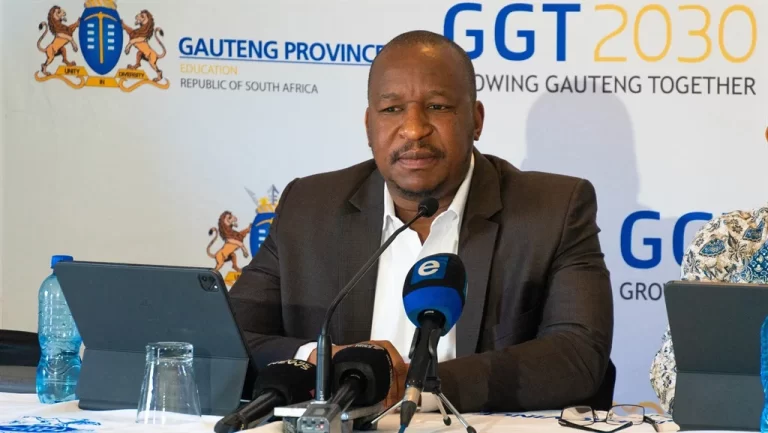
Gauteng Education MEC Matome Chiloane said there were 19,032 incomplete applications and they would not receive offers of placement until they had placed all the applicants with completed applications.

“We have capacity to place 430,446. This number seems as if we can place everyone, but these spaces are not where people are, so that is where the challenge is,” Chiloane told reporters. 

To accommodate all applicants, the department has made provision for transfer offers to schools with available space.

Parents can log on to http://www.gdeadmissions.gov.za/ to view their application status and accept placement offers. Assistance is also available at district offices and schools.

The placement period will run throughout the remainder of the year until all learners are placed.

INSIDE EDUCATION

All systems go, ahead of the launch of NSFAS online application

By Johnathan Paoli

With applications for the 2025 academic year expected to open next week, higher education students who wish to apply for financial aid are encouraged to submit their applications as soon as possible.

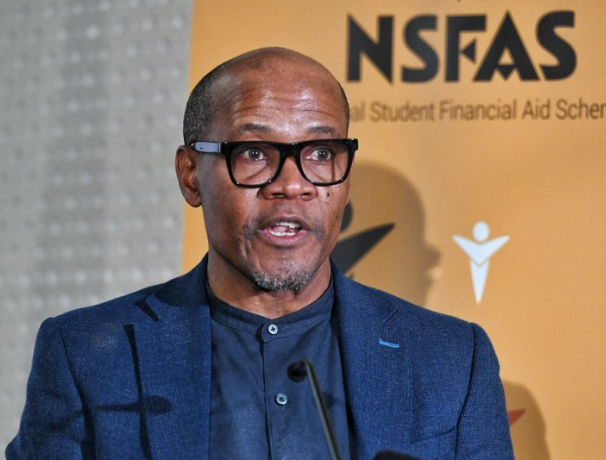
National Student Financial Aid Scheme (NSFAS) administrator Sithembiso Nomvalo has confirmed that certain bugs within the application programme had been ironed out and that the application process would be smoother, more user-friendly and accessible for prospective applicants.

Students can start applying from Tuesday.

Nomvalo was speaking during a meeting held by Higher Education and Training Minister Nobuhle Nkabane.

In a significant step towards enhancing engagement with the education sector, the minister conducted a series of meetings with various stakeholders over two days, which served as an introductory session between the department and key representatives from the higher education and training sector.

The intention of the meetings was to foster collaboration and dialogue.

On the first day, Nkabane engaged with student political formations and representative organisations, including the Progressive Youth Alliance, the African National Congress Youth League, the South African Students Congress, the Young Communist League, the Congress of South African Students, the Economic Freedom Fighters Student Command, the uMkhonto weSizweParty Student Wing, the Pan Africanist StudentMovement of Azania, and the Democratic Alliance Student Organisation.

These discussions aimed to address student concerns and perspectives as the new academic year approaches and to ensure that the forthcoming NSFAS application process was smooth and effective.

Nkabane used the opportunity to outline the key features of the online application system and gather input. 

On the second day, she met representatives from the South African Union of Students, the South African Technical Vocational Education and Training Sector Association, and the Universities South Africa Forum.

Their focus included aligning the new NSFAS application process with the needs of higher education institutions and addressing any operational challenges.

The minister told reporters that the engagements marked a proactive approach by her department to ensure that all voices were heard and considered in the implementation of critical education policies.

She said the outcome of the discussions would play a pivotal role in shaping the future of student financial aid in South Africa.

INSIDE EDUCATION

Gauteng continues to improve school twinning programme

0

By Akani Nkuna

In an effort to foster partnerships between schools and share resources, the Gauteng education department is improving its School Twinning Programme by going virtual.

The programme, which is unique to the province, pairs schools from different communities, encouraging resource-sharing and collaboration to enhance learner performance.

Speaking at Halfway House Primary School in Midrandthis week at the virtual launch, Gauteng Education MEC Matome Chiloane said the aim of programme was to “facilitate social cohesion in schools, enable sharing of resources, sharing of best practices and improve learner performance”.

He was addressing learners and principals from various schools participating in the project. 

Excited pupils were keen to show off different projects, including a “smart yard” that used different kinds of technology to operate.

The MEC also attended a classroom session where he was shown how Grade 7 learners from different schools were connected virtually to a maths lesson at Halfway House.

The virtual teaching includes Halfway House Primary, Mikateka Primary School in Ivory Park, Bovet Primary School in Alexandra and Lyndhurst Primary School in Lyndhurst. 

Mikateka Primary School principal Mandhla Sibanyonisaid that the programme was extremely beneficial for the pupils from his school, many of whom came from impoverished backgrounds. 

The school is one of Gauteng’s fully ICT-equipped township schools, where learners engage in robotics and coding. Lessons are delivered through smartboards and computer tablets.

“Pupils from a township school can now code robotics,” he added.

Sibanyoni said that he embraced the “bromance” he shared with his counterpart at Halfway House and expressed his eagerness to have more schools in Gauteng come on board.

In order to address educational challenges, the department amended Section 17 of the SA Schools Act to incorporate the school governance of twinned schools. The initiative allows for one governing body to govern two schools.

INSIDE EDUCATION

Sexual abuse and gender-based violence rife in SA schools

By Edwin Naidu

One in five children has experienced sexual violence in schools throughout South Africa. 

“This is higher than the global estimates where 18% of girls and 8% of boys have experienced child sexual abuse,” according to Likho Bottoman, the Director for Social Cohesion at the Department of Basic Education.

“One in three children (34.4%) experienced child physical abuse compared with 23% of the globalaverage.”

In South Africa, Bottoman said physical abuse was more likely to be reported by girls and by coloured and Black children than by boys, white, or Indian children.

During a briefing to the Portfolio Committee on Basic Education this week on progress made in ending school-related gender-based violence (GBV), the department said GBV was pervasive in South Africa, impacting all aspects of life. 

The committee heard that women were disproportionately affected the most. However, the burden was often twofold – affecting the victim, with a ripple effect of violence on the family – in particular, children.

Bottoman told MPs that the 2020 Review on Violence Against Children in South Africa found that 19.8% of children had experienced sexual abuse.

Commission for Gender Equality (CGE) chairperson Advocate Nthabiseng Sepanya-Mogale told the committee that the commission was involved in several ongoing court cases and others that had resulted in successful convictions. 

She spoke about a 2015 case in which an accused had forcefully married a 14-year-old girl and trafficked her to Cape Town. 

He was charged and convicted of rape, human trafficking and assault with intent to do grievous bodily harm. 

He was found guilty at Western Cape High Court and sentenced to 22 years imprisonment but appealed his conviction, arguing that he had married the girl legitimately through the customary practice known as uKuthwala, and the court should have considered the practice of uKuthwala when deciding whether his action was unlawful. 

The court heard that an integral part of uKuthwala was that the “bride” may be coerced and that the practice required her to pretend to object. 

The court dismissed the appeal, emphasising the need for consent by both parties to conclude a legitimate marriage and noted that customary practices such as uKuthwala could not be utilised as a legitimate defence for criminal offences. 

Sepanya-Mogale told MPs that the commission’s legal department was investigating several complaints of gender discrimination received from the public or initiated by the body. 

Mostly they were related to the fact that there was no guiding policy issued by the education department dealing with LGBTQIA+ learners.

The CGE is currently seeking an order that both the Western Cape education department and the national department issue regulations ensuring that transgenderlearners can fully express their gender identity. 

It is also investigating an allegation of discrimination concerning six learners who identify as members of the LGBTQIA community in Newcastle, KwaZulu-Natal.

The province has concluded investigations into complaints where school-related allegations were referred to the South African Council for Educators (SACE) for intervention. This resulted in the suspension of the involved teachers. 

Other complaints are still pending in court and the CGE is actively monitoring proceedings.

Sepanya-Mogale said the commission, acting on behalf of a learner from Bushbuckridge in Mpumalanga who was prevented from sitting for exams because she was pregnant, was immediately allowed to write the tests. 

Again, in Mpumalanga, she told the committee that a 13-year-old learner at Vulamasango Primary School was impregnated allegedly by a 21-year-old neighbour. The case is still before the court. 

The commission has been developing the GBV Index to assist in tracking trends and measuring the country’s GBVF indicators. The United Nations Population Fund istechnically supporting the process, which is expected to be completed by the end of the current financial year.

During the 2022/2023 financial year, the CGE conducted a project on school dropouts of adolescent girls during pregnancy and postpartum in selected provinces.

The commission said there was a higher teenage pregnancy rate in more rural provinces like Limpopo, Mpumalanga and Eastern Cape compared to urban provinces such as Gauteng and the Western Cape.

On measures by the department to promote gender sensitive classrooms, acting Director-General Dr Granville Williams said this was addressed by providing comprehensive sexuality education.

It included access to sexual and reproductive health services (secondary schools), including a focus on the prevention of alcohol and drug use and learner pregnancy as risk factors for GBV. 

In primary schools activities mainly focused on raising awareness of social justice and vulnerabilities, such as reporting abuse and support for GBV-affected learners.

In addition to the curriculum interventions, the department also implements the Girls and Boys Education Movement (GBEM) through the support of Unicef, a learner participation movement. 

The aim of GBEM is to encourage girls and boys to work together as equals and to foster respect for all genders’ human dignity and rights. 

The GBEM programme is also part of the co-curricular offering in the Care and Support for Teaching and Learning (CSTL) framework, which coordinates multi-sectoral support for schools. 

Another key pillar in the CSTL framework relates to the promotion of social cohesion, social inclusion and human rights, particularly children’s rights.

Whittle told the committee teacher unions had signed an agreement through the Education Labour Relations Council that when teachers were found guilty of sexual offences, they would be automatically blocked by the South African Council of Educators to ensure that they never taught again in the country.

He said the department would continue to collaborate with sister departments and agencies to implement measures to create awareness and stop GBV. 

Through the “Let’s Talk” programme, it would also continue to engage communities on social matters that required a partnership.

Whittle emphasised that anti-GBV messages needed to start as early as possible, both at home and school. 

In August, during an induction session with Basic Education Minister Siviwe Gwarube and her deputy, Dr Reginah Mhaule, the committee expressed concern about various matters, including the safety of learners and teachers in schools.

INSIDE EDUCATION

Higher Education Minister ready to tackle post-school education challenges

By Johnathan Paoli

Higher Education and Training Minister Nobuhle Nkabane has admitted that there are dismal failures and challenges within the post-education and training sector, saying her ministry is prepared to tackle them head-on in an attempt to turn the situation around.

Nkabane, who was joined by top officials from the education sector, held the first of a series of meetings to discuss the reality facing the post-school educational landscape in Ekurhuleni on Friday.

South African Union of Students secretary general Lukhanyo Daweti raised several concerns that students faced in relation to the National Student Financial Aid Scheme (NSFAS).

He said NSFAS remained a critical problem for the department and it needed to be prioritised.

“NSFAS is the biggest elephant in the room. We cannot and will never allow it to fail, but it remains unfortunate that people view it as a gravy zone,” he said.

Another issue he raised was the utter failure of ICT systems within the sector, despite the injection of R116 million funding from the National Treasury in order to facilitate upgrades and development.

Daweti also said student accommodation was a problem. Despite receiving funding of up to R12 billion, students were still sleeping in libraries and there was a shortage of approximately 500,000 beds within institutions of higher learning.

In light of the recent escalation of crimes specifically against women students, he said the government’s failure in adequately ensuring secure and safe accommodation had reached a point of crisis.

“Our students are dying and it’s painful. Student safety is one of the issues that we need to prioritise and more effective work needs to be done in ensuring their protection,” he said.

Daweti further discussed the issue of transitioning between learners from TVET colleges to universities, and the failures of the latter to recognise the qualifications from the former. 

He called for an alignment of curriculum between the two in order to facilitate a smoother transfer of students who were seeking to improve their qualifications.

Meanwhile, Nkabane recognised that there were issues that needed attention.

She highlighted the inability of NSAFS to oversee the payment of student allowances timeously in a way that could effectively assist students in their daily lives and experiences.

The minister said that the systems were not only dysfunctional, but that backlogs continued to compromise how quickly appeals from students were addressed.

Nkabane said that these institutions were themselves under-performing and regressive. Also, corruption needed to be dealt with.

She admitted that despite previous initiatives and funding, the ICT infrastructure remained outdated and was clearly no longer serving the people.

The meeting concluded with a reiteration of its purpose as an initial account of the issues, with the minister promising that more meetings will follow.

INSIDE EDUCATION

Public support for education bill increases ahead of signing

By Simon Nare

Gauteng Education MEC Matome Chiloane and Cosatu have called on President Cyril Ramaphosa to disregard the noise and threats around the Basic Education Laws Amendment Bill and sign it into law on Friday as planned.

Chiloane and the federation both hailed the bill on Thursday, saying it would strengthen and improve the education sector, and accused some organisations who were opposed to it of spreading lies about the proposed law.

“The Gauteng Department of Education (GDE) welcomes the Bill as it will empower the head of department (HOD) to make critical decisions regarding school admissions and language policies.

“This is crucial in assisting the department to manage school admissions effectively and address resistance from certain school governing bodies (SGB) that oppose transformation,” said Chiloane.

Cosatu said that the Bill, which would become law when Ramaphosa signed it, contained long overdue progressive provisions that would help protect the rights of learners to dignity and protection.

“It is a tragedy that in the course of the public debate some have chosen to deliberately distort some of its provisions and others have simply decided to fabricate things which are actually not in the bill,” it said in the statement.
Some of the key amendments in the Bill include:

Making Grade R compulsory and ensuring that all children receive early childhood education so that they are better prepared for formal schooling
 Holding parents accountable for ensuring that their children are enrolled in school
 Criminalising the disruption of school activities and ensuring that learners can study in a safe and focused environment
 Compelling SGB members to declare personal or financial interests to promote transparency and prevent conflicts of interest in school governance

 Empowering an HOD to investigate the financial affairs of schools when irregularities are suspected and ensuring that school funds are managed properly and benefit learners directly
 Imposing penalties for submitting false or forged documents during the admission process, protecting the integrity of the admissions system and ensuring that all learners are treated fairly

The MEC also spoke about concerns raised by some political parties on the language they were taught in.

“We fully support the president in signing this Bill into law. Changing demographics in our communities mean that it is unacceptable for schools to deny learners access to schools closer to their residence based on language,” he said.

Chiloane argued that if numbers dictated that a school must be changed to be a dual-medium school, that should happen without interference.

“Public schools serve the public and no learner should be excluded. The HOD will be empowered to ensure that language policies are inclusive and responsive to the needs of the community,” said Chiloane.

The signing of the Bill threatened to collapse the government of national unity, with Democratic Alliance leader John Steeinhuisen calling for an urgent meeting on Wednesday with Ramaphosa to discuss the matter.

But on Thursday DA spokesperson Willie Aucamp told Newzroom Afrika that the signing of the Bill is not a deal breaker and the party would rather go to court to stop it from being implemented.

“It’s very important to realise that the DA is not threatening to exit the government of national unity; the threat currently is from the president’s side.

The president knew how we and other parties feel about this and he decided to carry on irrespective of our feelings.

“So, it is the ANC that is in their action being a threat to the GNU. We must protect this GNU at all costs and the Democratic Alliance will look at all options available to us should it be signed into law. We will take this court, we will take this to the Constitutional Court,” threatened Aucamp.

ActionSA is also considering taking the matter to court.

The president is set to sign the Bill into law at the Union Buildings.

INSIDE EDUCATION

Details on some Gauteng school placements to be outlined 

0

By Nkhensani Chauke

The Gauteng education department is expected to start sending placement offers for Grade 1 and 8 learners to parents and guardians on Monday.

Department spokesperson Steve Mabona said on Friday that Gauteng Education MEC Matome Chiloana would outline the details for the placements on Sunday.

Once the applications haven sent, they must be completed by the parents and guardians.

Chiloana will highlight what is expected of parents during this process.

“Among others, the MEC will highlight the important details applicants must be aware of during the placement period, starting from the 16 of September 2024.

“This where placement offers will be sent to parents and they will then have to go to the system and accept the offers that would been sent to them,” Mabona said.

In previous years, parents have faced a number of challenges while trying to secure a placement in the province’s public schools.

INSIDE EDUCATION

Ramaphosa unconcerned about GNU collapsing: Magwenya

By Simon Nare

The Presidency has poured cold water on any threat to the multi-party government of national unity (GNU). This follow concerns raised by key partner, the Democratic Alliance (DA), over President Cyril Ramaphosa’s decision to sign the Basic Education Law Amendment Bill into law.

“The president is not concerned about the GNU collapsing. When South Africans see statements and hear leaders issuing threats to the stability of the GNU, it is the incumbent upon the president to continue to lead. He leads the GNU on behalf of political parties,” said Presidency spokesperson Vincent Magwenya.

“And so, it is a responsible thing to do for him to continuously provide assurance that the GNU is stable. That when there are issues of concerns and dispute those issues will be resolved constructively.”

Magwenya, who was updating journalists on the president’s public programme on Wednesday in Cape Town, said there were mechanisms in place within the multi-party agreement to address any differences, and the GNU deal was premised on the supremacy of the country’s Constitution.

He added that Ramaphosa remained committed to the GNU and he was satisfied with its work and ministers from rival political parties working together and collaborating.

DA leader John Steenhuizen earlier in the day announced that he wanted an urgent meeting with Ramaphosa before he signed the Bill on Friday.

“If he proceeds… he will violate both the letter and spirit of the joint Statement of Intent that forms the basis of the GNU,” said Steenhuisen.

Magwenya said it was the president’s constitutional responsibility to sign a Bill into law.

“Section 79 (1) of the Constitution states that the president must either assent to and sign a Bill passed in terms of this chapter or if the president has reservations about the constitutionality of the Bill, refer it back to the National Assembly for reconsideration.

“According to the Constitutional Court case in Doctors for Life International vs Speaker, the president cannot refuse to sign the Bill for political reasons. The only ground upon which the president can refuse to sign the Bill is constitutional reservations.

“This means that the president needs to apply his or her mind to evidence and submissions before him and make an independent determination on the constitutionality of the legislation,” he said.

But the DA, other parties and the Basic Education Minister are opposed to the Bill in its current form.

Steenhuisen said: “During the (GNU) negotiations, the DA made it clear that the BELA Bill was unacceptable to us in its current form, because it has constitutional implications for the right to mother-tongue education, amongst other issues. The DA urged President Ramaphosa to send the Bill back to Parliament for a few simple amendments to bring it in line with the Constitution.”’

He said that that despite this, and in “violation of the provisions of the Statement of Intent, the president seems intent on pushing ahead unilaterally”.

The president will be hosting a gala dinner for all leaders of the GNU where they will be afforded an opportunity to raise their issues of concern as well as give feed back to him.

“The president is also enthused with the level of dedication and commitment that has been demonstrated by members of his national executive, as well as the level of collaboration that ministers from different parties have applied in resolving challenges facing the government and the country,” Magwenya said.

He also announced that Ramaphosa had received a report by Justice Minister Thembi Simelane on the VBS loan saga and would not be making any public announcement on the matter just yet.

“The president appreciates the importance of the Justice Ministry in the leadership of the Justice, Security and Crime Prevention Cluster and contribution to the successful functioning of the cluster. The president is committed to ensure the highest levels of integrity within the national executive. He will consider all the facts on the matter before making any determination,” he said.

INSIDE EDUCATION