Home Blog Page 146

Ventersdorp Principal and circuit managed busted for selling teachers posts

By Alicia Mmashakana

A Ventersdorp principal and a circuit manager in the North West this week appeared in the Ventersdorp Magistrate facing charges of corruption after they were nabbed for selling teachers posts.

Principal Lydia Masiu and co-accused circuit manager Petrus Mokobe were arrested by the Hawsk serious corruption investigating unit in Klerksdorp and Ventersdorp following allegations that they were selling teachers posts for R15 000 each.

The two were granted bail of R8 000 each and their case postponed to September 6 2024 for further investigation. They were facing five accounts of corruption.

Hawks spokesperson in the North West, Lieutenant Colonel Tinyiko Mathebula said the pair were arrested on Monday following an investigation into the allegations.

According to Paul Esterhuizen, CEO of education rewards company School-Days, teachers were in the firing line of budget cuts in basic education.

“Given the large class sizes in most public schools, we cannot afford to expand these classes further because we do not have the funds to hire more teachers.

“The unfortunate reality is the problems in our education system are not due to a lack of resources but rather the mismanagement of those resources that means we are not getting bang for our educational budget,” Esterhuizen said.

Three months ago, then minister of basic education, Angie Motshekga, confirmed that teacher vacancies in South Africa have skyrocketed to 31,000, triggering a huge problem.

INSIDE EDUCATION

Unemployed angry teachers demand jobs

Johannah Malogadihlare

Angry qualified unemployed KZN teachers this week embarked on sit-ins in some parts of the province demanding employment from the provincial department citing financial hardships and frustrations in the current hard economic times.

One group of 70 teachers staged a sit-in outside the education department offices in Pietermaritzburg since Monday and vowed to remain on the site until their demands were met.

In their confrontation with officials of the department, the group emphasized that they had been applying for posts for years and have even tried in other provinces with no success.

They went on to claim that instead unqualified teachers were being preferred over them.

The group pointed out to the officials that it felt like an insult to have spent many years studying and yet the department was unable to secure them employment so they could take care of their families.

Another group picketed in Port Shepstone at the district education office with the intention to handover a memorandum to the director.

However, the group was unable to handover the memorandum as the director was said to be in a meeting.

One of the teachers, Mdu Nyuswa, who spoke on behalf of the group, said out of desperation the teachers are forced to hustle to make ends meet and support their families.

KwaZulu-Natal Department of Education spokesperson Muzi Mahlambi said the department has consistently been engaging teachers on the process of hiring in the database and all posts are advertised publicly.

Mahlambi said the department will find out how many unemployed educators were in the area as well as their area of specialization as some of the subjects were not in demand.

“The matter of unemployment is not yet to be resolved anytime soon because currently there are no post 1 level opportunities,” Mahlambi said.

Teachers union SADTU has also engaged new MEC Sipho Hlamuka on some of the issues raised including the requirement for transparency in appointing post level one educators. The union said it was encouraged by the attitude of the MEC.

“We were happy to learn that the MEC was also of the same idea of transparent processes.  To see the statement of the Department on this matter just less than ten days after our meeting is an indication that the MEC is a man of action who walks the talk.” said SADTU in a statement.

The union said it was delighted that the MEC was speaking the same language with them in terms of introducing more transparent and inclusive processes when appointing teachers and ensure that vacant posts are advertised publicly.

In his statement, the MEC seeks to introduce more transparent and inclusive processes when appointing teachers and ensuring that vacant posts are advertised publicly.

“There has been great confusion and discontent especially on the side of unemployed graduates who do not know how the department is appointing teachers. In as much as they know that people are identified from the App or data base, it remains a mystery

how some have never had an opportunity though being registered in the App for years,” said the union’s statement.

It added that while the App was useful in keeping the data on unemployed graduates in most cases it caused delays in filling vacancies.

INSIDE EDUCATION

More than 20 children who survived Usindiso Inferno, are still out of school – NGOs

By Johannah Malogadihlare

Civil society organisations and activists have condemned the continuing non-placement of the children of survivors of the Usindiso building tragedy in schools, despite promises made by the Gauteng Education department.

According to “Save the children Organisation” more than 20 children still have not been placed in schools, since their removal to Denver, south of Johannesburg.

The  organisation said they remained concerned over the ongoing violations of both the Bill of Rights as well as the Children’s Act, with spokesperson Margaret Zulu saying the continued exposure of the children and absence of learning called for fresh investigations into the matter.

“Being in school means accessing education and also serves as a safety net against other violations. Our understanding is the places where these children currently are, are not safe,” Zulu said.

Zulu said her organisation has received reports regarding the abuse of some of the children, and many more required effective access to early childhood development programmes.

Human rights activist and Usindiso fire survivor advocate, Andy Chinnah criticised the various departments concerned, especially the education department and said there has been a marked absence of follow up after the tragedy.

“We hoped the relevant role players like disaster management, human settlements and City of Joburg officials, who were at the scene on the day of the fire, would intervene to ensure that children were attending school,” Chinnah said.

He said despite similar issues being voiced in the Khampepe Commission of Inquiry, urgent and decisive action was required.

However, Chinnah said that while parents were directed to schools, they were subsequently turned away due to the lack of space.

“The process looks good on paper, but execution by various departments is lacking,” he said.

Chinnah said that the South African Human Rights Commission has been informed of the situation, but remedies are yet to be confirmed.

The number of children affected by the fire in Marshalltown in August last year, which left 77 people dead, many injured and scores homeless – exceed the initial 20 and stand closer to fifty, including those living in informal settlements across the CBD.

INSIDE EDUCATION

Teacher unions say Mboro must face the consequences of his actions

By Alicia Mmashakana

Cosatu, Sadtu and other teacher trade unions are outraged by the actions of Pastor Paseka ‘Mboro’ Motsoeneng, who was caught on video wielding a panga at a primary school in Katlehong yesterday.

Cosatu spokesperson Zanele Sabela, commended law enforcement  for arresting Motsoeneng and his criminal companions.

“Schools are places of learning and children should feel safe on the premises, without having to contend with adults bringing violence and weapons onto the premises,” Sabela said in a statement.

Sadtu has in a tweet said that schools are not appropriate platforms to address family disagreements. 

“We call on the relevant law enforcement institutions to act in the interest of the innocent children who are trapped in this terrible situation.

“Cosatu and Sadtu urges communities to participate in the ‘I am a School Fan Campaign’, to ensure that schools become safe havens where children can prosper.

“Schools must be a place of safety for children to be free and where our educators can provide a conducive learning environment. We must stop tolerating the violence, gangsterism and anarchy that has been endemic for years across many township schools. Our children and teachers deserve better,” said Sabela.

Videos of Mboro and his goons caused a storm on social media, where he was seen wielding a panga and threatening to cut people allegedly teachers at Matshidiso Primary School before one man, also holding a panga, was seen grabbing two young boys and leaving the school with them.

Mboro appeared shortly in the Palm Ridge Magistrates’ Court on Wednesday, with his co-accused, bodyguard Clement Camllot Baloyi and son Vincent Revival Motsoeneng. Their bail hearing is scheduled for August 16.

The three men face 12 charges including assault, handling a firearm recklessly, rendering security services while not registered, assault and intimidation and malicious damage to property.

INSIDE EDUCATION

NSFAS introduces cost-cutting measures and improves its operations

By Johannah Malogadihlare

THE National Student Financial Scheme (NSFAS) has introduced measures to streamline the funding scheme and cut costs in its efforts to turn its finances around.

NSFAS administrator Freeman Nomvalo said during a media briefing at Hatfield, in Pretoria that the scheme is making progress in terms of governance, management and administration.

Nomvalo said the scheme intends to eliminate the middleman to save on charges that render the disbursement and payment process for student accommodation costly, adding that NSFAS saves R21 per transaction by paying allowances directly into accounts of students in Technical and Vocational Education and Training colleges.

“We need to streamline that and make sure that it’s cost-effective and efficient and ensures that students and accommodation providers receive their monies or funds in time,” he said.

NSFAS terminated the contracts of eZaga, Noracco, Coinvest and Tenet Tech in May after an investigation by law firm Werksmans Attorneys and advocate Tembeka Ngcukaitobi, found irregularities in the awarding of the contracts.

The scheme has reportedly appointed auditing firms KPMG and BDO Global to help with problems facing the fund.

Nomvalo said the auditors are expected to help tackle backlogs following the scheme’s historical failure to pay accommodation as well as tuition fees and other allowances, leaving vulnerable students in the lurch.

Scheme beneficiary, Phologo Mantjane, expressed optimism at the new measures and said it will cut on both delays as well as additional charges.

“I think the measures that the NSFAS are using will work to every student’s advantage because they won’t wait longer for the money to reflect into their accounts and they will be saved from bank charges,” Mantjane said.

Another student, Lindiwe Moremi, said the proposed changes would put students at ease.

“It would be best for the NSFAS to take full control of paying students directly, we won’t have to worry about how we are going to complete our studies or whether the institutions will accommodate us in times where the middleman fails to pay in time,” Moremi said.

INSIDE EDUCATION

Pastor Mboro and his goons besiege a Katlehong primary school armed with pangas and a rifle

By Alicia Mmashakana

THE Gauteng Education, Sport, Arts, Culture & Recreation MEC, Matome Chiloane has strongly condemned an incident on Monday, at Matshidiso Primary School in Katlehong, in which three armed men threatened teachers before grabbing two young boys and leaving with them.

In a series of shocking videos that have gone viral on social media, a well-known pastor, Paseka Mboro, is seen wielding a panga and threatening to attack teachers on the school premises. A man with an assault rifle is standing next to him while another is seen grabbing two learners.

The Department said in a statement that there had been a growing dispute between two families regarding the custody of two pupils enrolled in Grade RR and Grade 2. It is said that the mother of the children passed away in April this year, leading to a dispute between the paternal and maternal sides of the family.

On the day of the incident, the father of the children had a meeting with the principal in the morning. Later in the day, the maternal grandmother, who is the alleged guardian of the children, also met with the principal as well to report and inform him about a conflict that occurred during a meeting held over the past weekend at the house of the paternal grandfather, Mboro.

The incident occurred on Monday afternoon after school, when the children’s father arrived to pick them up, accompanied by two men, one of whom was Mboro, armed with pangas and with an assault rifle.

The deputy principal and some staff members refused to release the children without the grandmother’s permission. Teachers, acting on the grandmother’s alleged instructions, attempted to prevent the father from leaving the school grounds with the children.

This resulted in the pastor arriving at the school with bodyguards and weapons. He threatened the teachers with a panga, allowing the father to leave with the children.

The community became involved after realising there was commotion at the school. The principal, School Governing Body (SGB), reported the matter to the police.

The Child Protection Unit is set to mediate the situation.

“The safety and well-being of our students and educators is of the utmost importance. Such acts of violence and intimidation not only undermine the foundation of our educational system, but they also have the potential to traumatise the entire school community, especially since the incident occurred in front of young children and their teachers.

“The Department is committed to ensuring that justice is served in this case. We will not tolerate any acts of violence or intimidation, and we will take all necessary measures to protect our students and teachers,” said Chiloane.

Psycho-social support will be provided to the affected teachers and students to help them cope with the trauma caused by this incident.

INSIDE EDUCATION

Let’s strike at the heart of racism – the brain

Edwin Naidu

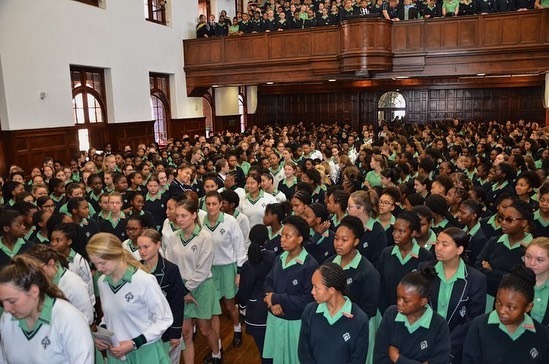
Another year, another racism probe involving students at a school in South Africa. The furore over the incident at Pretoria High School for Girls is understandable.

Indeed, three decades after democracy, the stories unfolding at the school have more to do with the failings of our education system than the racist hearts which engulf our society.

Gauteng MEC for Education and Sports, Arts, Culture and Recreation Matome Chiloane has launched another probe after the 12 learners accused of racism were cleared of misconduct. 

The evidence to convict the pupils was not strong enough. 

Chiloane is empowered to probe further, but this is a waste of resources. The South African Human Rights Commission says many complaints it received relate to racism. South Africa is a nation divided. 

Many believe that the so-called “Rainbow Nation”, a term coined by the late Archbishop Desmond Tutu around the time of democracy, has been a false dawn. Incidents like the one at the Pretoria school and many similar unsavoury incidents throughout the country show how democracy has not grown. 

Thirty years after our first democratic elections, this appalling racism continues to manifest itself in varying ways. 

The question is whether another investigation by the MEC into the same incident will yield a different result. After all, this school has a history of racist incidents. 

One does not need another investigation to find out whether the girls are guilty of racism. Their conduct is despicably racist even if they were cleared of wrongdoing because of a lack of evidence. 

This shows that perpetrators can be protected through whatever means, highlighting a more significant societal problem. The racists do not know they’re racist. Or they pretend that they’re part of the so-called new South Africa. 

As the man in charge of education in Gauteng’s economic capital, Chiloane should petition the Minister of Basic Education, Siviwe Gwarube, to introduce anti-racism teaching from preschool to Grade 1 and throughout the schooling curriculum. 

This should ensure that racism is nipped in the bud at schooling, avoiding instances like the ugly behaviour of expelled Stellenbosch University student Theuns du Toit, who urinated on the property of fellow student Babalo Ndwayana. 

South Africa has laws to deal with racism. But is it enough? The racist girls of Pretoria could very well be punished, but will they learn unless the system addresses their deficiency in respecting all human beings?

In March 2021, former MEC for Education Panyaza Lesufi wrote that basic rights are based on shared values like dignity, freedom of expression, justice, non-discrimination, human dignity, fairness, equality, respect, and independence. These values are defined and protected by law to emphasise that everyone counts.

As a leader in education, he suggested that human rights education be incorporated in the school curriculum to promote peace, democracy and social order. 

This call was fueled by the World Conference on Human Rights Declaration of Human Rights Education (HRE) as key to promoting and achieving stable and harmonious relations among communities and fostering mutual understanding, tolerance, and peace. 

The UN has urged all member countries to promote and include HRE in their school systems.

Article 26(2) of the Universal Declaration of Human Rights states, “Education shall be directed to the full development of the human personality and to the strengthening of respect for human rights and fundamental freedoms.”

That’s why Chiloane should focus on the bigger picture rather than setting another example to the young racists. 

As the country with one of the best laws in the world, what good is it when citizens are none the wiser about democracy, freedom of speech, justice, equality, human dignity, solidarity, and peace?

It’s time for the Bill of Rights to become part of the curriculum – a suitable punishment for the racist learners – and their parents at Pretoria High are compelling them to memorise the Bill of Rights. 

Edwin Naidu is Inside Education Editor. 

GDE launches an independent investigation into culture of racism at Pretoria Girls High

Nkhensani Chauke

The Gauteng Education MEC Matome Chiloane will be launching an independent investigation into Pretoria High School for Girls (PHSG) to determine whether a culture of racism exists at the school.

The probe follows the lifting of the suspension of twelve Grade 12 learners who were charged with acts of racism and subsequently found not guilty by the School Governing Body (SGB) and returned to school.

According to the report outlining the charges and ruling, the SGB found the implicated learners not guilty of the charges of violence and bullying, disruptive behaviour and violation of school rules due to insufficient evidence.

However, the GDE wasn’t satisfied with the outcome of the hearing and spokesperson Steve Mabona said the MEC has launched the investigation to determine if the culture of racism exists at the school. The investigation will focus on the suspensions of allegations of racism which were not included in the initial disciplinary process by the school, he said.

The MEC will institute the investigations looking at the allegations of racism in the entire school community, said Mabona. “This probe that the MEC has decided to pursue will not investigate the 12 learners but rather the allegations that racism exists at the school”.

The spokesperson said the department received the report on Friday and took legal advice to check the elements of the allegations.

The department said it respects the outcome of the SGB ruling since it is empowered by law to initiate and facilitate disciplinary hearings against learners.

“We did receive that report and took legal advice on it to check on what are its elements. They investigated allegations of violence and bullying. We are aware that there are allegations of racism at school. We need to independently investigate these allegations,” he said.  

Mabona said 12 pupils were suspended for statements made in a white only WhatsApp group that had racial connotations and displayed microaggressions.

The school principal Phillipa Erasmus remains suspended for not acting against racism at the school.

The department says it will unveil a diversity program at the school focusing on the parents body, learners and employees.

INSIDE EDUCATION

Chiloane to meet Youth Brigade Candidates over expired contracts

Johannah Malogadihlare

THE Gauteng Education (GDE) MEC Matome Chiloane is expected to meet Gauteng Youth Brigade (GYB) candidates after their protest last week over the renewal of their contracts.

GYB beneficiaries at the Sol Plaatjie House in Tshwane staged a protest, in an attempt to lock down the building and demand permanent employment.

Speaking on behalf of the protesters, Sihle Mzizi said they demanded answers from both the Premier as well as Basic Education Minister Siviwe Gwarube.

“We have locked down the place, nobody is going inside, nobody is coming outside,” Mzizi said.

In a written communication seen by Inside Education, Chiloane’s office said the meeting will take place in Johannesburg on Wednesday after the contracts for 32,000 teaching assistants ended on 31 July prompting a protest by the beneficiaries who said Premier Panyaza Lesufi had promised to extend it to 2025.

Speaking at Dobsonville Stadium earlier this year, Lesufi had initially promised an extension of the programme until 2025. However candidates were informed of the summary termination at the end of July.

GDE spokesperson Steve Mabona said the sudden cut was due to a lack of funding, despite the provincial government carrying the cost of the programme for six months following a drop in funding from the national education department.

“It is important to note that we no longer receive any funding from the National Department of Basic Education, consequently we have no option but to terminate the program,” he said.

Mabona said GYB were part of the Presidential Youth Employment Initiative (PYEI), started by the presidency as part of the Covid-19 relief programs to schools, funded by the National Treasury and managed by the Department of Basic Education (DBE) provincially.

However, Mabona said the department has repeatedly insisted and informed the candidates that the initiative was never intended to be a permanent employment opportunity.

“The intention of this programme was to afford the youth, on a rotational basis, an opportunity to earn an income while benefiting from training and gaining experience,” he said.

He said the PYEI was managed in phases based on the availability of funds, with each phase duly advertised and the duration of which clearly communicated to all stakeholders.

Mabona confirmed that the conclusion of the initiative at the end of September last year was scheduled in all provinces, and said the Gauteng department subsequently decided to enter into new contracts with GYB candidates for a six month period which ended in July.

“The GDE fulfilled this mandate using its own resources and wishes to clarify that there was no promise to extend these contracts beyond July 2024,” he said.

INSIDE EDUCATION

Taking Smart Skills to people where it is most needed

Yershen Pillay, CEO of the Chemical Industries Education and Training Authority (CHIETA), says every community should have a Smart Skills Centre to bridge the digital divide between rural and urban groups.

Pillay told Inside Education that since the first centre opened in Saldanha Bay in October 2022, more than 10,000 youth in rural parts of the country have visited these centres to access free data services or print their CVs to apply for jobs.
“We want 20,000 youth to access the Smart Skills Centres that we have opened throughout the country by the end of the year,” Pillay adds.

As an “innovating” CHIETA, Pillay says the goal is to take the Fourth Industrial Revolution (4IR) to rural communities to ensure no one is left behind.

Smart Skills Centres have opened in the Western Cape, Kwazulu-Natal, and the Eastern Cape. The latest is the R5 million Brits Smart Skills Centre in North West, which promises to catalyse innovation and opportunity.

Spearheaded by CHIETA in collaboration with Orbit TVET College, this groundbreaking initiative aims to accelerate the development of basic digital skills for a future-fit workplace.

Next up is the launch of the Emalahleni Smart Skills Centre at the Highveld Industrial Park, Elandsfontein in Emalahleni,
Mpumalanga, which has three virtual reality pods, 12 workstations, and a smart boardroom and meeting rooms.

On 19 July, CHIETA will launch the Modjadjiskloof Smart Skills Centre at the Letaba TVET College’s Modjadji Campus in Ga-Kgapane, Modjadjiskloof. The centre will focus on enterprises, individuals, and schools, and specifically on rural youth.

The opening of the centres is part of their plan to ensure that rural communities throughout South Africa can engage with the latest on the 4IR and robotics, mainly to ensure their inclusion in the digital age.

Since October 2022, CHIETA has established a chain of Smart Skills Centres (SSCs) in four South African provinces,
including the one in the North West. The other SSCs are in Saldanha Bay in the Western Cape, at the Mthashana Skills Centre in Babanango, a small rural town in Melmoth, KwaZulu-Natal, and at the Iqhayiya Campus of Port TVET College in Gqeberha, Eastern Cape.

Thousands of learners have already engaged with the technology at Melmoth and Saldanha Bay centres as part of CHIETA’s plans to build an “intelligent centre” in every province in the country.

This will ensure that people in rural areas can access free services, training courses, and data access for job seekers, small and medium enterprises, and business start-ups.

The SSCs are fully automated and have equipment that meets the requirements of 4IR training – AI and robotics. With a particular focus on rural learners, the centres aim to bridge the digital divide by offering access to data and a wide range of training courses.

“Whether you’re a job seeker, a budding entrepreneur, or a small business owner looking to expand, our services are designed to empower you on your journey to success,” says Pillay.

“The Smart Skills Centres usher in a new era of skills development and training that would be located within rural communities and able to offer digitised training programmes for rural masses.”

Innovating for Impact
Calling the idea of starting Smart Skills Centres “Innovating for Impact,” Pillay said every community should have an SSC in every corner of the country working with big business, where the “focus is on execution”, while lobbying the government and big business to join in.

CHIETA Chairperson Wezi Khoza highlights the importance of reaching all age groups.

She says CHIETA’s Smart Skills Centres provide training and support services to the youth and older people, who must learn digital language to keep up with technological advancements.

“We have many grandmothers on TikTok. So they, too, can learn digital skills like holding Skype meetings online,” says Khoza.

Zukile Nomvalo, the Deputy Director-General of Higher Education and Training, hailed the opening of the SSC as a significant milestone in ushering in a new era of skills development and training aimed explicitly at rural communities.

“It paves the way for digitised training programmes for rural masses, ensuring they are not left behind and are equipped for the future,” says Nomvalo.

“CHIETA’s groundbreaking initiative to develop digital skills in Brits and its surrounding regions has been spearheaded by CHIETA in collaboration with Orbit TVET College; this centre promises to catalyse innovation and opportunity in the community.

Nomvalo says the opening of Smart Skills Centres countrywide follows a call from the former Minister of Higher Education and Training, Dr Blade Nzimande, who wanted them established in all parts of the country.

“Indeed, this is a critical step in the context of the demand and opportunities presented by the 4IR. Launching the CHIETA Brits Smart Skills Centre in the North West is particularly important in our quest to ensure nobody gets left behind in this revolution,” he adds.

“In the future, when we talk about digital transformation, the Fourth Industrial Revolution, and workers of the future, thanks to this initiative, Brits is a part of the exciting journey ahead.

“Brits is the type of place at risk of falling further behind the digital skills divide, with its youth at risk of being excluded from meaningfully participating in the new digital era that is upon us. In this context, I cannot overstate the importance of this Smart Skills Centre being located there.

“As a Department, I must say that this is part of our ongoing efforts to bridge the digital skills divide and accelerate the
development of basic digital skills among rural communities across the country.”

Nomvalo says the department noted that CHIETA has recognised the need to prepare youth and small business sectors by developing digital readiness through tech-enabled learning programmes, such as virtual and augmented reality, robotics, and the Internet of Things.

He stresses that the Smart Skills Centres do not exclude those over 35, although the emphasis is on the 15 to 24 cohorts, more than three million of whom are unemployed, and whose unemployment rate is close to 60%.

“There is an unemployment crisis in our country. We are multiplying skills centres so young people can venture into these terrains to learn about mobile repairs, data capture and data analysis skills.

“We talk about all gadgets, and millions of people use them. If we train our young, we can exploit these areas,” Nomvalo says.

INSIDE EDUCATION