Home Blog Page 15

Vodacom foundation rolls out R1.5m School of Excellence at Lavelilanga Secondary in Komani

0

By Levy Masiteng 

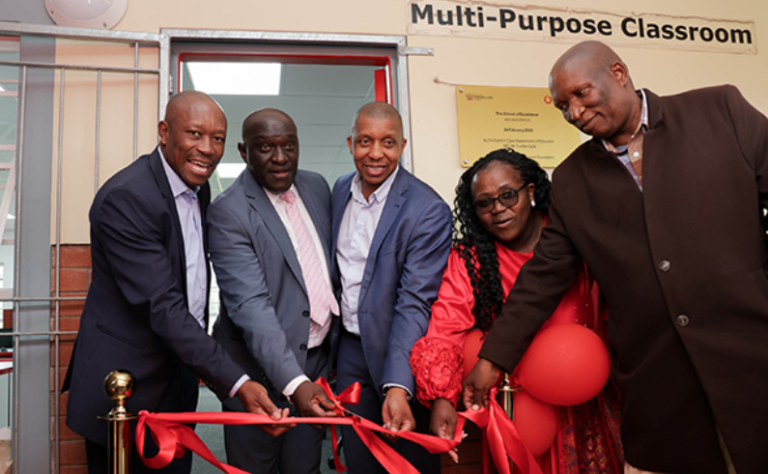
The Vodacom Foundation this week launched a R1.5 million School of Excellence (SoE) model at Lavelilanga Secondary School in Komani (formerly Queenstown), marking a significant boost for digital learning and infrastructure development in the Eastern Cape.

The R1.5 million investment over the first 12 months is said to go towards upgrading facilities, strengthening digital infrastructure and deploying dedicated ICT and psychosocial support staff, at the school. 

ALSO READ: MQA Lekgotla: Manamela says skills development is a mandate, not a favour

The Foundation said it will enhance a refurbished computer centre, improved security systems, sanitation upgrades and reliable connectivity. 

“The model also provides at least two ICT coordinators to offer technical support to teachers and learners, as well as psychosocial professionals to address challenges such as violence and gender-based violence,” the foundation added.

The investment was funded by the Foundation together with their partner the Eastern Cape Department of Education.

They said they aim to entrench a culture of academic excellence by integrating technology, infrastructure upgrades and psychosocial support into the school environment.

ALSO READ: Early childhood development gets R12.8bn boost in budget

“Public-Private Partnerships like the launch of this Vodacom Educational Ecosystem are essential in helping us overcome the challenges in providing the quality education that South Africa’s Constitution promises and envisages,” Eastern Cape MEC for Education, Fundile Gade said. 

The ecosystem further includes connectivity provisions and access to a zero-rated Vodacom e-learning platform.

Zakhele Jiyane, Vodacom SA Managing Executive for the Eastern Cape Region, said the initiative reflects the company’s broader social purpose.

“Through our work with the Vodacom Foundation, we are dedicated to advancing quality education and creating meaningful opportunities for learners and educators. Bringing this to Lavelilanga exemplifies our commitment to leveraging innovative, technology-enabled solutions that transform lives.”

The launch formed part of Vodacom’s broader Educational Ecosystem, introduced in 2019 to support government’s Vision 2030 goals and expand access to quality education in previously disadvantaged communities. 

The Foundation said each SoE is strategically located near an Early Childhood Development (ECD) centre, a Teacher Centre and a Vodacom ICT Youth Academy hub, ensuring learners benefit from a comprehensive, community-linked support system. 

Principal Sisanda Hexana welcomed the partnership, describing it as transformative for the school community.

“We are incredibly grateful to Vodacom for this exceptional partnership and the incredible doors this Educational Ecosystem will open for our learners and the wider Zingquthu community.”

ALSO READ: Winde touts early-grade gains and R1.5bn school build in Western Cape SOPA

Nationally, the Vodacom Schools of Excellence model currently supports 39 schools, 39 ECD centres and 10 Youth Academy centres. 

To date, more than 1,800 young people have been trained in accredited ICT skills through Vodacom’s Youth Academy programme, with many now deployed across supported schools and communities.

Meanwhile, the Eastern Cape currently hosts six Schools of Excellence, including Lavelilanga, supported by Vodacom’s comprehensive ecosystem model with an investment of over R5 million to date.

“We believe that access to quality education is the key to breaking the cycle of poverty and empowering young learners to reach their full potential,” Jiyane, said. 

INSIDE EDUCATION
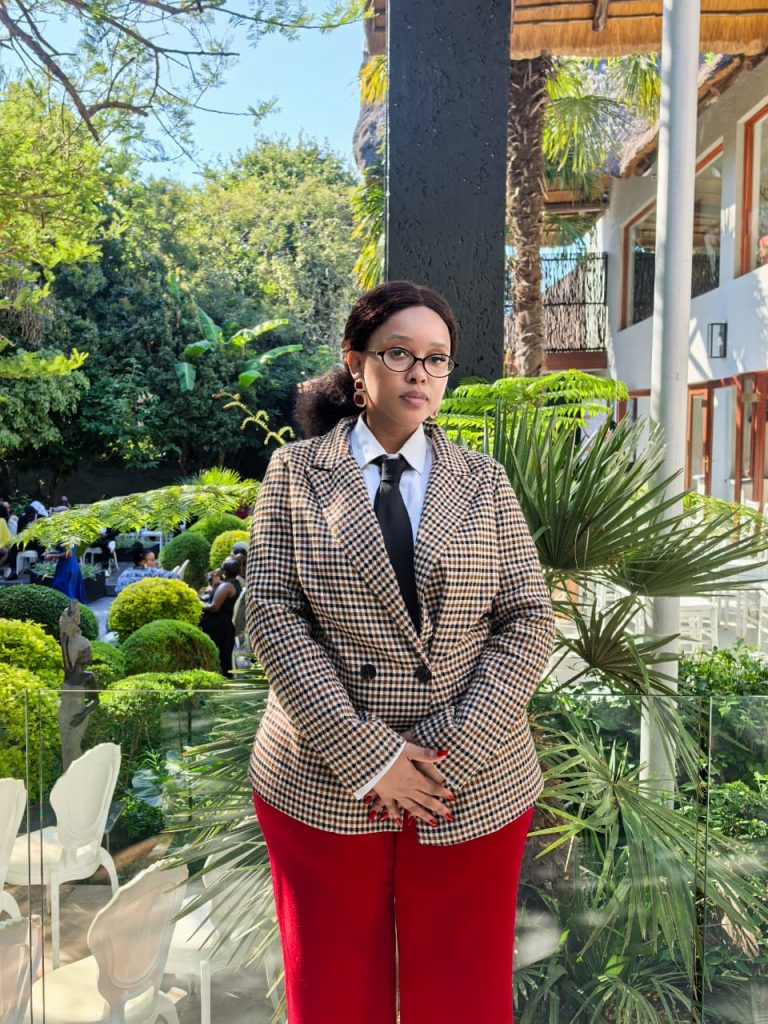
Rising star: Senty Maphosa connects youth, ECD practitioners and communities through Jozi My Jozi

By Charmaine Ndlela

In a country where youth unemployment and socio-economic challenges dominate headlines, Senty Maphosa is quietly rewriting the narrative by building community and restoring a sense of dignity and belonging.

Born and raised in Kamagugu, Mbombela, Mpumalanga, twenty-eight-year-old Maphosa’s journey into community development was shaped not in boardrooms but on dusty soccer fields, in early childhood development (ECD) centres, and through conversations with young people searching for direction.

“I’ve always believed that when you help one person, you create a ripple effect,” she says. “You might not see it immediately, but positive contribution always comes back in some form.”

Her early work at Royal Chili’s Soccer Academy became a turning point. Initially assisting with administrative tasks, Maphosa realised the academy was more than sport – it was keeping boys off the streets, away from drugs, crime, and teenage pregnancy.

She pushed for recognition events to celebrate the boys’ achievements, understanding that acknowledgment fuels motivation.

Driven by a desire to expand her impact, Maphosa moved to Johannesburg, where she describes her time in the city as a strategic mission: “I am here to learn, grow, and network, and find myself in a position where I can implement and develop projects with support from various stakeholders.”

Her work with Jozi My Jozi’s Education workstream has positioned her as a central connector, aligning people, stakeholders, and purpose.

She coordinated a career expo at Phefeni Secondary and held a successful ECD mass registration drive, assisting nearly 100 practitioners to navigate the government’s transition from the Department of Social Development to the Department of Basic Education.

“It’s not just about telling them to register,” she says.

“It’s about helping them understand what compliance means and connecting them to people who can help.”

Maphosa’s motivation is rooted in impact, not financial gain.

Her volunteer work with river cleanups and youth programmes reflects her commitment to sustainability and the UN Sustainable Development Goals.

She emphasises empathy and community love, seeing herself as a safety net for those in need and a catalyst for small, meaningful acts that ripple into larger change.

Though her work is grounded in grassroots engagement, Maphosa’s ambitions extend to academic and national leadership.

She envisions pursuing a Master’s degree and eventually a PhD on community deterioration and social cohesion, with long-term aspirations to serve as a presidential advisor.

From organising soccer medal ceremonies to connecting ECD practitioners with government compliance systems, Maphosa’s work is a testament to the power of purposeful action.

Her journey shows that impact does not always begin with funding or titles – sometimes it starts with seeing a gap and stepping into it.

“You never know where life will take you, just keep doing your best and the rest will align,” she says.

INSIDE EDUCATION

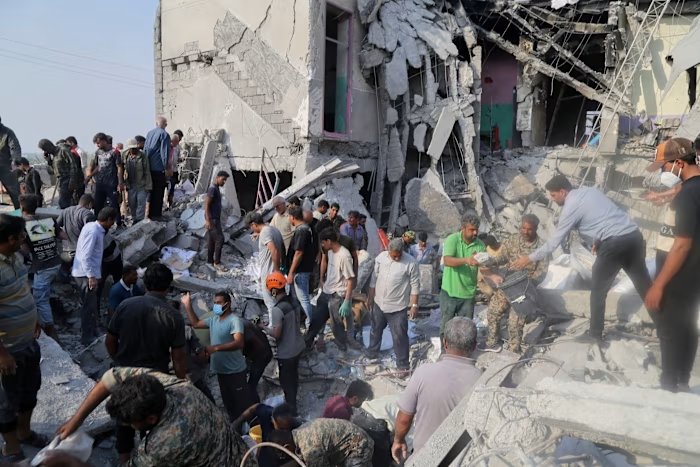
Strike on Iranian primary school kills dozens, authorities say

A primary school in southern Iran was struck during Saturday’s joint US-Israeli military operation, killing at least 148 people who were mostly schoolgirls, according to Iranian authorities.

The attack came as the US and Israel launched joint military action against Iran on Saturday, beginning in Tehran and expanding across the country.

Mohammad Ashouri, governor of Hormozgan province, said Shajareh Tayebeh primary school in the coastal city of Minab was struck at 10.45am.

Some 170 schoolgirls were present, Ashouri said, adding that he hoped rescue operations would find survivors trapped under rubble. The Minab judiciary said 148 people had been killed and 95 injured. The semi-official ISNA news agency said on Sunday that the death toll had risen to 153.


State television showed the destroyed school with benches under debris, while mothers screamed in the school’s courtyard.

The Islamic republic described the attack as an example of what it called US and Israeli atrocities. President Masoud Pezeshkian said it was “savage” and “inhumane”.

The foreign ministry spokesperson, Esmail Baghaei, called it a “war crime”.

Neither the US nor Israel has commented on the reason for the strike, but the US military said it was aware of reports of civilian casualties in Iran from its joint operation with Israel.

“We are aware of reports concerning civilian harm resulting from ongoing military operations. We take these reports seriously and are looking into them,” said Captain Tim Hawkins, a spokesperson for US Central Command, which oversees American operations in the region.

“The protection of civilians is of utmost importance, and we will continue to take all precautions available to minimise the risk of unintended harm.”

Nadav Shoshani, a spokesperson for the Israel Defense Forces, said on Sunday that the force was “not aware of any IDF operations in that area” of the school.

The strike raised anger among some US politicians. Marjorie Taylor Greene — the former Republican congresswoman who resigned her seat at the start of the year after falling out with President Donald Trump — wrote on X on Saturday: “I did not campaign for this. I did not donate money for this. I did not vote for this, in elections or Congress. This is heartbreaking and tragic.”

“And how many more innocent will die? What about our own military? This is not what we thought MAGA was supposed to be. Shame!”

Iranian state television reported that “many” civilians had been killed across the country, describing the strike on the school in Minab as the most tragic incident so far. It did not provide further details on overall civilian casualties.

Ali Alizadeh, governor of Lamerd in southern Iran, said the joint operation targeted four residential neighbourhoods in that area, including a sports hall, killing at least 15 civilians and injuring many more.

Several rounds of attacks targeted various neighbourhoods in Tehran.

A text message sent to residents urged people to evacuate the capital if possible and move to safer areas “due to the continuation of the joint US and Zionist regime operation against Tehran and other major cities”.

Roads leading from Tehran to coastal cities along the Caspian Sea in the north have been converted to one-way routes and are crowded with residents fleeing over fears that residential buildings could be targeted.

During the June 2025 war with Israel, which centred on Tehran, officials said more than 8,500 buildings were damaged, 650 were completely destroyed and more than 1,000 civilians were killed nationwide.

Additional reporting by Steff Chávez in Washington

Financial Times

Weekend roundup | Strike on Iranian primary school kills dozens, Vodacom foundation rolls out R1.5m, Manamela says skills development is a mandate

0

A primary school in southern Iran was struck during Saturday’s joint US-Israeli military operation, killing at least 148 people who were mostly schoolgirls, according to Iranian authorities.

The attack came as the US and Israel launched joint military action against Iran on Saturday, beginning in Tehran and expanding across the country.

For the full story, click the link below

______________________________________________________________________________

ALSO READ: Vodacom foundation rolls out R1.5m School of Excellence at Lavelilanga Secondary in Komani

The Vodacom Foundation this week launched a R1.5 million School of Excellence (SoE) model at Lavelilanga Secondary School in Komani, marking a significant boost for digital learning and infrastructure development in the Eastern Cape.

The R1.5 million investment over the first 12 months is said to go towards upgrading facilities, strengthening digital infrastructure and deploying dedicated ICT and psychosocial support staff, at the school. 

_________________________________________________________________________

ALSO READ: Manamela says skills development is a mandate, not a favour

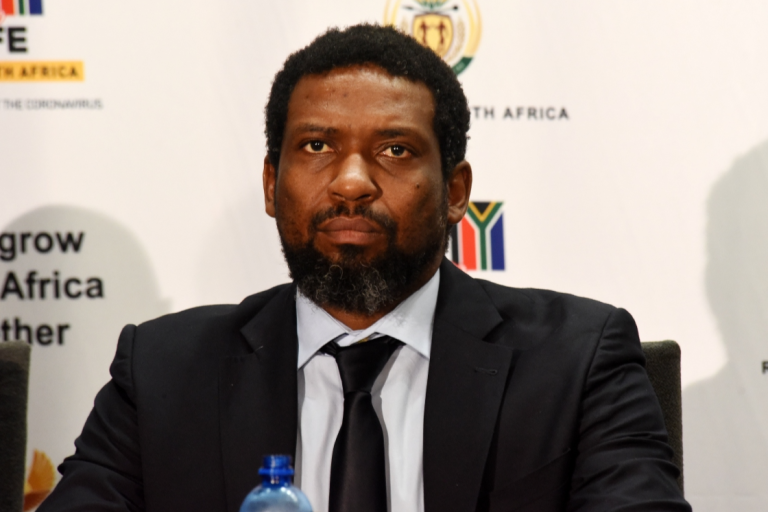
Higher Education Minister Buti Manamela says skills development is central to South Africa’s growth and restoring dignity to previously disadvantaged and vulnerable youth, stressing that it is not a favour but a constitutional mandate of government and its entities.

“Skills development is not a favour that we do for South Africans. It is an important investment that we make for the future of our country. If we get it right, it means we are unlocking growth, dignity and social cohesion,” Manamela said on Thursday.

For the full story, click the link below.

INSIDE EDUCATION

MQA Lekgotla: Manamela says skills development is a mandate, not a favour

By Akani Nkuna

Higher Education Minister Buti Manamela says skills development is central to South Africa’s growth and restoring dignity to previously disadvantaged and vulnerable youth, stressing that it is not a favour but a constitutional mandate of government and its entities.

“Skills development is not a favour that we do for South Africans. It is an important investment that we make for the future of our country. If we get it right, it means we are unlocking growth, dignity and social cohesion,” Manamela said on Thursday.

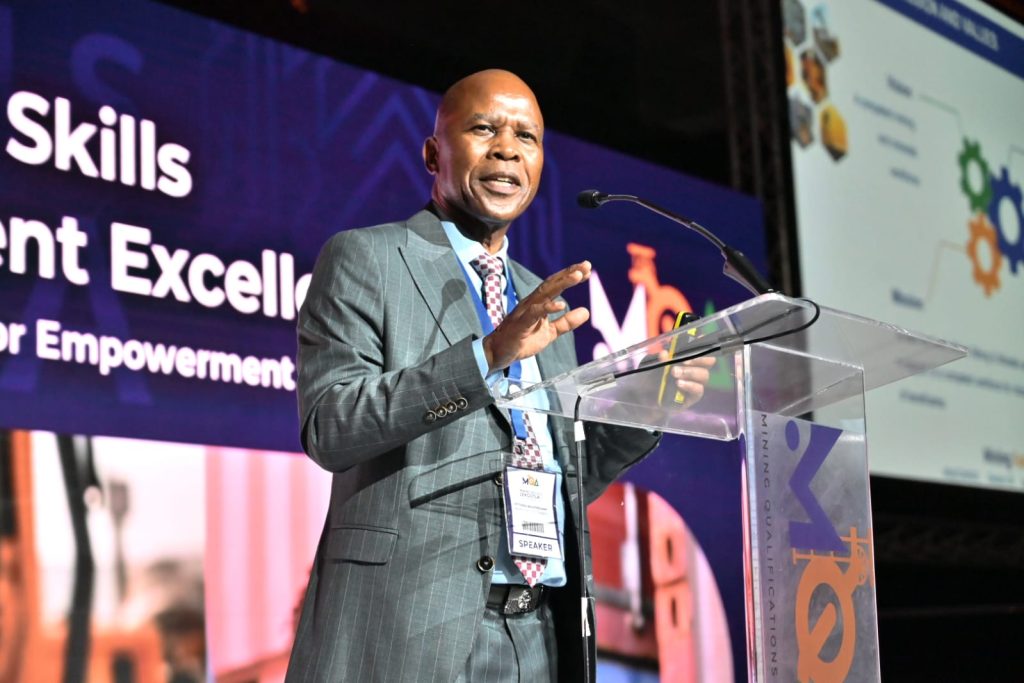
He was speaking at the Mining Qualifications Authority (MQA) Mining Skills Lekgotla held at the Gallagher Convention Centre, where mining and government leaders reflected on the role of the MQA over the past three decades.

Manamela called for stronger partnerships between the mining industry, Technical and Vocational Education and Training (TVET) colleges and city colleges to align training with industry demand.

Since his appointment, Manamela has maintained that the state of post-school education and training is closely linked to the country’s economic performance and overall development.

“Part of the ambition should be the commitment that the mining industry needs in terms of potential partnerships with specific TVET colleges or the sector as a whole. Given the work done in partnership with industry around the just energy transition and related skills proposals, this is an opportunity to look at commitments towards a skills resolution,” he said.

He emphasised that cohesion across industry players was critical to ensure that skills development translates into real job opportunities and helps combat youth unemployment.

“If we continue at the pace at which we are going, we will reproduce exclusion and frustration. Given the role mining plays in our economy, institutions in the sector carry a bigger responsibility to ensure continued skills development for young people,” he said.

“The responsibility rests with all of us to ensure that the next 30 years of the MQA are defined not only by longevity, but by impact.”

The minister also spoke about the reform and repositioning of the Sector Education and Training Authorities (SETAs).

“We want SETAs including the MQA to function as sectoral convenors and system integrators not just as grant disbursing entities. The President was clear in the SONA that we require a skills revolution that is responsive to the economy we are building, not the economy we inherited. Skills revolution that prepares young people not just to survive but to contribute meaningfully to industrialisation, to beneficiation and to inclusive growth,” said Manamela.

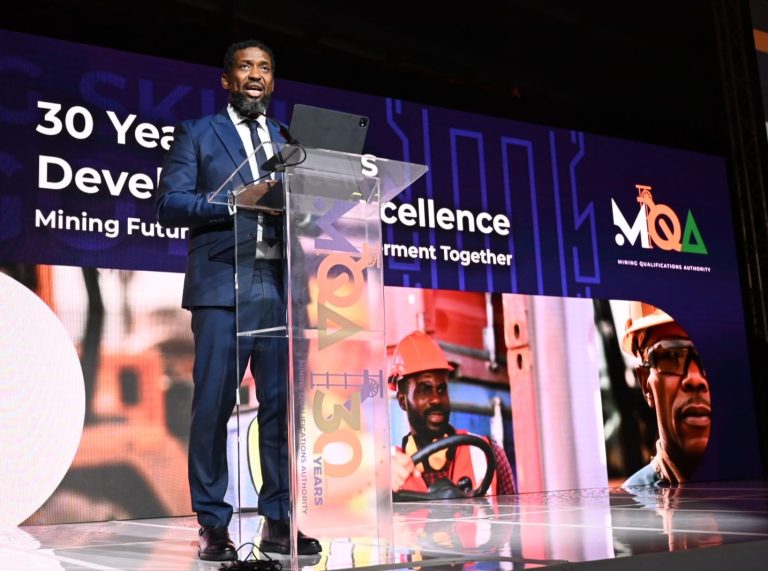
MQA CEO Thabo Mashongoane at the 2026 MQA Mining Skills Lekgotla in Midrand. PHOTO: Eddie Mtsweni

MQA chief executive Thabo Mashongoane, speaking at the same event, said the authority’s 30-year history has been marked by adaptive growth and transformation, with a focus on lecturer and graduate development, support for women and learner funding aimed at expanding access for previously excluded groups.

He said the MQA is fast-tracking digitisation, Fourth Industrial Revolution (4IR) and green mining skills, alongside adult education and literacy programmes, to ensure the sector remains competitive in what he termed the “Future Skills Focus Era” of the 2020s.

“We are engaging with universities to ensure that their mode of delivery incorporates 4IR and digitalisation components so that we build skills that enable better work in the mining sector,” Mashongoane said.

According to the MQA Discretionary Grants Expenditure Report for 2003–2025, nearly R12 billion has been spent over the period. The TVET College Support Programme received just over R664 million, while the Internship Programme accounted for R1.9 billion and the Learnership Programme R1.5 billion.

The Artisan Development Programme received more than R3 billion, underscoring the authority’s focus on strengthening technical skills and supporting economic growth in the mining sector.

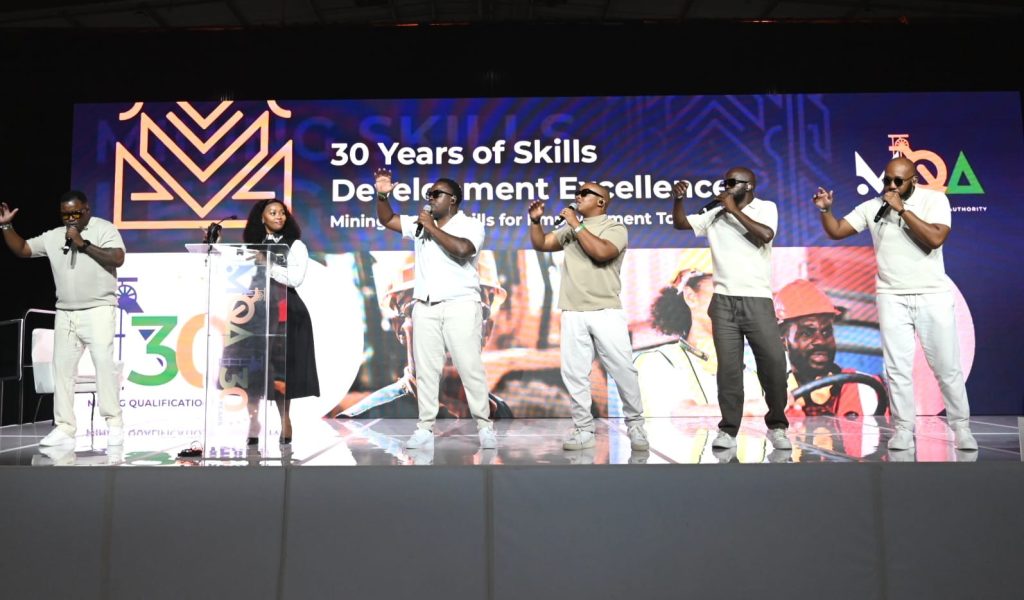
Entertainers performing at the 2026 MQA Mining Skills Lekgotla in Midrand. PHOTO: Eddie Mtsweni

INSIDE EDUCATION

Winde touts early-grade gains and R1.5bn school build in Western Cape SOPA

0

By Thapelo Molefe   

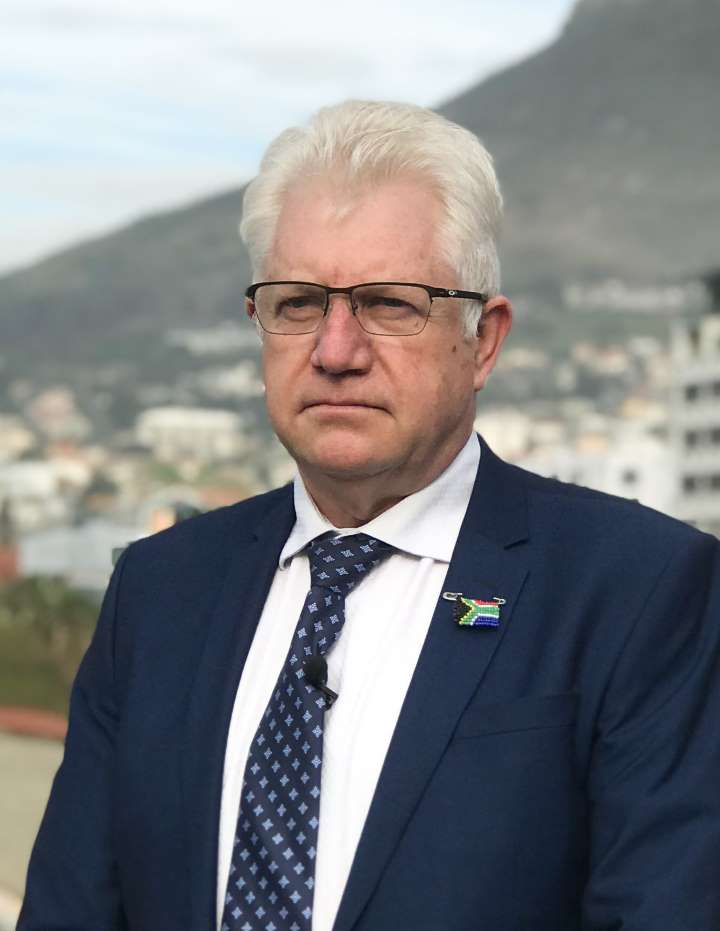
Education took centre stage during Premier Alan Winde’s 2026 State of the Province Address on Wednesday night, where he presented improved early-grade test scores, record matric results, and expanded school infrastructure as evidence of progress in the province.

“Education is the key to independence, economic inclusion and employment,” Winde said during his address in George.

ALSO READ: Only 3 in 10 pupils read at grade level in early years, Reading Panel says

The Premier cited results from the province’s 2025 systemic tests, written by more than 91,000 Grade 3 learners. According to the figures presented, the mathematics pass rate has increased from 44.3% in 2021 to 62% in 2025. Language pass rates rose from 36.9% to 51.2% over the same period. 

“They achieved their highest results ever,” Winde said.

According to the Premier, these gains come after the introduction of a structured language programme in all primary schools since 2024. Teachers in Grades 1 to 3 were trained in the science of reading, and additional time was allocated to reading and mathematics during the school day. 

“Teachers in Grades 1 to 3 were trained in the science of reading, and teacher and learner support materials were provided to all our schools,” he said.

ALSO READ: Deputy ministers back local suppliers after visit to disability employment factories

Winde said the province is “bucking this trend through innovation and agility,” referring to the national literacy crisis. He added that the #BackOnTrack programme, which provides additional academic support, “is working, which will keep more children in school and out of a life of poverty.”

Infrastructure expansion has accompanied the academic interventions. Nine new schools opened in the past year in high-demand areas in Cape Town and along the Garden Route, and 15 more are under construction. Ahead of the 2026 school year, 175 new classrooms have been added to existing schools.

“We are building schools faster than most other provinces combined,” Winde said.

The Western Cape Education Department has set aside R1.5 billion this year for new schools and classroom construction. The province now has just under 1,500 schools, with enrolment continuing to grow as families move to the province.

School nutrition remains a significant part of the education strategy. More than 550,000 learners receive a free meal each school day. 

“A learner with a full stomach is more likely to stay in school,” Winde said.

At the end of the schooling system, the province recorded its highest-ever matric pass rate in 2025 at 88.2%, alongside a bachelor’s pass rate of 49.2%. 

ALSO READ: Only 3 in 10 pupils read at grade level in early years, Reading Panel says

“Our Matrics did us proud once again,” Winde said. Learners with special education needs achieved a 91.9% pass rate.

The Premier also highlighted the Khulisa Care pilot programme, which provides nutritional support to undernourished pregnant women and mothers of low-birth-weight babies. He said early intervention is necessary because malnutrition and stunting are linked to poorer educational outcomes later in life. 

“When children begin life with strong foundations of nutrition, stimulation and care, they have a much better chance of succeeding at school and into adulthood,” he said.

INSIDE EDUCATION

Early childhood development gets R12.8bn boost in budget

0

Des Erasmus

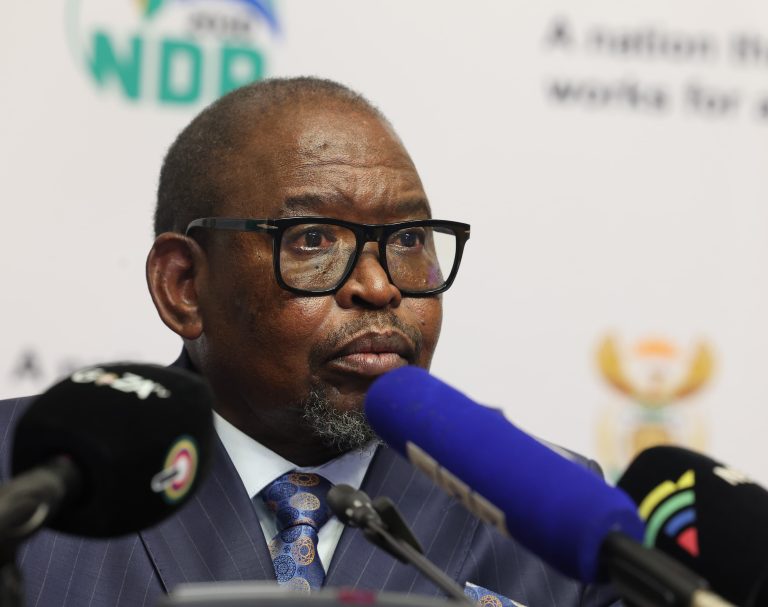
Early childhood development (ECD) will receive an additional R12.8 billion over the next three years, Finance Minister Enoch Godongwana said on Wednesday while delivering his budget speech.

This would expand services to an extra 300 000 children while maintaining a per-child, per-day subsidy of R24, he said.

ALSO READ: Only 3 in 10 pupils read at grade level in early years, Reading Panel says

Godongwana said the extra funding forms part of wider education allocations, with spending on education the largest component of consolidated expenditure at 23.7% over the medium term.

Basic education will receive R22.7 billion for carry-through costs announced in May 2025, with ECD receiving the majority of those funds, he said.

He said that R9.9 billion would support “employee compensation and other pressures in education”.

He said increased allocations would align the National School Nutrition Programme to food inflation to keep meals flowing to over 9.9 million learners in almost 20 000 schools.

Godongwana said additional allocations to the provincial equitable share included R342 million to “progressively equalise Grade R teacher pay”, alongside other items such as funding for the presidential employment initiative.

He said basic education was a pillar of the social wage, and that it, together with health and social protection, would make up 70.3% of the social wage in 2026/27, supporting 13.6 million school children.

ALSO READ: Deputy ministers back local suppliers after visit to disability employment factories

Regarding skills and training, he said government was reforming the national skills ecosystem.

The skills development levy, Sector Education and Training Authorities and the National Skills Fund “have not yielded the outcomes we expected”, he said.

He said government would explore reorganising training through “a dual-training skills acquisition system” and look at how institutions could equip job-seekers and graduates with artisanal skills.

Addressing long-term higher education infrastructure needs, he called for proposals under the Budget Facility for Infrastructure that could include “the development of new tertiary institutions like the proposed Ekurhuleni University and student accommodation”.

INSIDE EDUCATION

Only 3 in 10 pupils read at grade level in early years, Reading Panel says

0

By Charmaine Ndlela

Only about 30% of pupils in Grades 1 to 3 can read at the expected level, while 15% of Grade 3 pupils cannot read a single word correctly, the 2030 Reading Panel said on Tuesday as it released its 2026 report on early-grade literacy.

The report found the share of Grade 3 pupils unable to read a single word increased to about 25% in Sepedi and Xitsonga.

ALSO READ: Deputy ministers back local suppliers after visit to disability employment factories

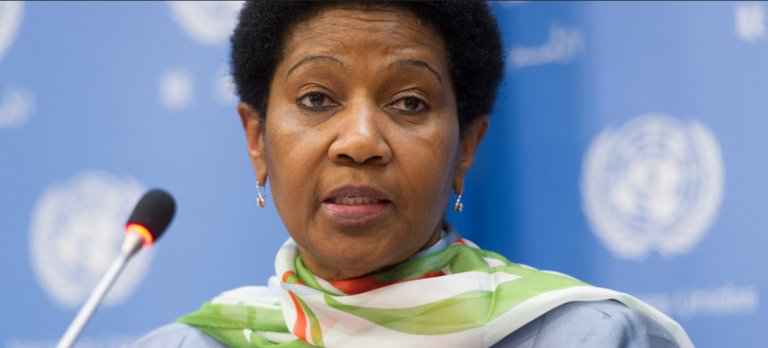
The panel was convened by former deputy president Phumzile Mlambo-Ngcuka. It meets annually to drive progress towards the goal that children can read for meaning by age 10 by 2030.

The Umlambo Foundation, which hosts the Reading Panel conference and works with the panel around the convening, is a non-profit founded by Mlambo-Ngcuka. It focuses on  improving education outcomes in public schools.

Basic Education Minister Siviwe Gwarube said during her keynote address at the event, held at Melrose Arch in Johannesburg, that the findings reinforced that South Africa’s learning crisis starts early, not in later grades.

“International and national assessments have long indicated that learning gaps begin in the early grades and not in matric, not in the intermediate or senior phase, but in the foundation phase itself,” she said at the event.  

“The survey gives government a clearer picture of where children are falling behind. It shows specific weaknesses in areas such as letter-sound recognition and oral reading fluency.  

“Literacy is the only way we can unlock economic opportunities for our learners in the future,” she said.

ALSO READ: Lesufi moves to ease placement crisis with 18 new schools

She called for more community involvement and urged parents and caregivers to read with children at home. “It all starts in the home,” she said.

The country’s early literacy challenges have also been flagged in international assessments. The PIRLS 2021 study, released in 2023, found that 81% of South African Grade 4 learners could not read for meaning in any language.

INSIDE EDUCATION

Deputy ministers back local suppliers after visit to disability employment factories

0

By Lebone Rodah Mosima

Supported Employment Enterprises (SEE) took the spotlight during a joint oversight visit by Deputy Minister of Employment and Labour Judith Nemadzinga-Tshabalala and Deputy Minister of Basic Education Makgabo Reginah Mhaule this week, as government looks to expand disability-inclusive procurement and job creation.

President Cyril Ramaphosa has called for the public service to raise its employment equity target for persons with disabilities to 7% by 2030, and for government and public entities to set a 7% preferential procurement target.

ALSO READ: Lesufi moves to ease placement crisis with 18 new schools

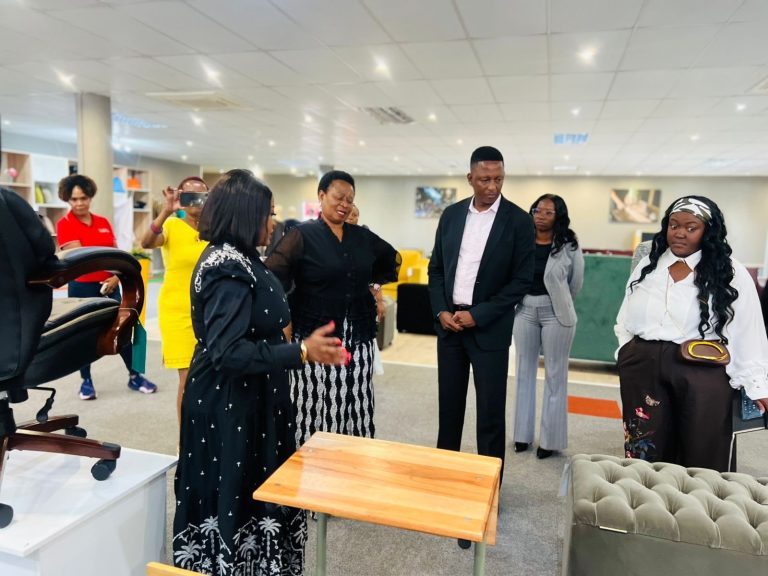
The deputy ministers visited SEE’s Rand and Springfield factories in Johannesburg — a public entity under the Department of Employment and Labour — after conducting a back-to-school oversight visit at Elethu Themba Combined School in southern Johannesburg, where they handed over donations including 100 pairs of shoes and 30 trees.

At the factories, the department said the deputy ministers saw first-hand the work produced by persons with disabilities, as SEE positions itself as a capable supplier to the public sector.

SEE’s mandate is to create sustainable employment opportunities for persons with disabilities.

It operates 13 factories across eight provinces and produces goods including office furniture, metal safes, school and household furniture, hospital linen, protective clothing and uniforms, embroidery, screen printing, upholstery, cupboards and bookbinding.

ALSO READ: R113m Mpumalanga school repair corruption: 33 suspects appear in Nelspruit court

Mhaule said the Department of Basic Education is considering using SEE as a supplier, particularly for school furniture. She said SEE, as an “arm for government”, needs support given its role in supporting the socio-economy and creating opportunities for persons with disabilities.

Mhaule said the outcome of the engagement would be taken forward with the development of a formal memorandum.

INSIDE EDUCATION

Lesufi moves to ease placement crisis with 18 new schools

By Thapelo Molefe

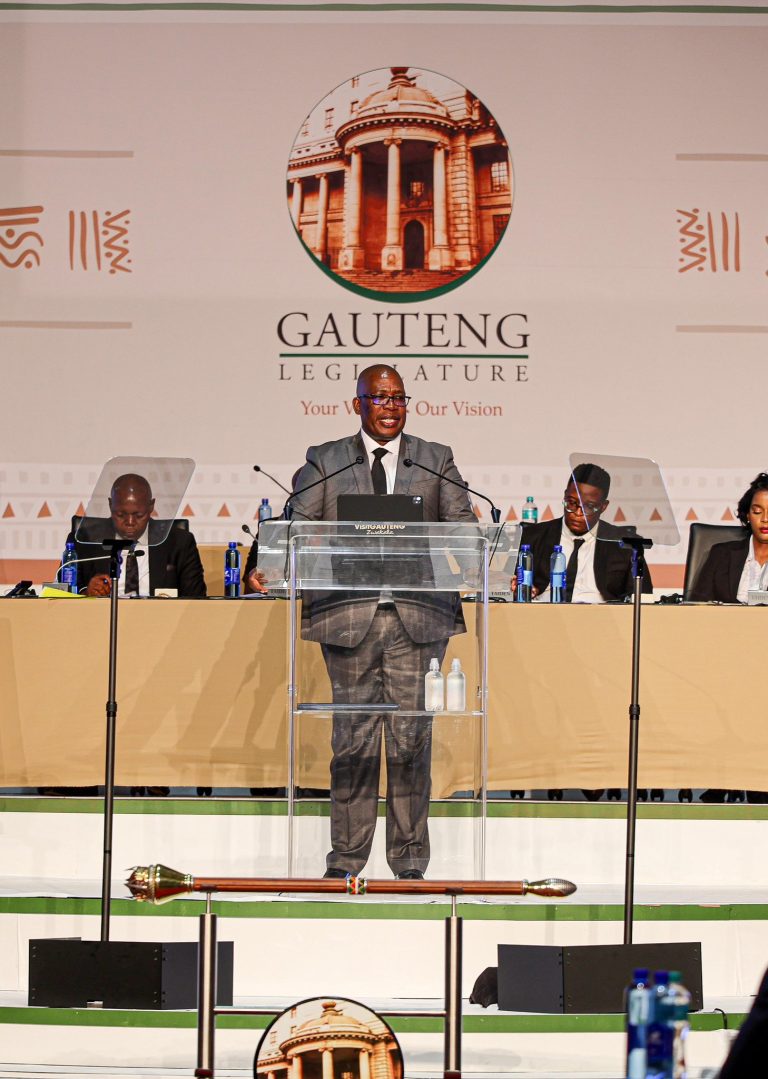
Premier Panyaza Lesufi has announced the construction of 18 additional schools in Gauteng as the province grapples with a placement crisis that has left about 2,000 learners still without classrooms.

Delivering the 2026 State of the Province Address on Monday, Lesufi framed education as central to social mobility and economic transformation, while acknowledging mounting pressure on the admissions system.

“Education is a great equaliser. It accounts for the difference between poverty and social mobility,” he said.

The new schools form part of efforts to ease overcrowding and reduce the annual admissions backlog that continues to frustrate parents across the province.

“Our school admission online registration process will be improved and strengthened to ease pain and frustration of our parents,” Lesufi said. 

“The online registration is an important transformation tool to ensure all our schools are accessible to all our children. To ease this pain, we are constructing 18 additional new schools.”

Gauteng’s rapid population growth has placed severe strain on infrastructure, particularly in township communities. Each year, thousands of parents compete for limited spaces, and this year around 2,000 learners remain unplaced.

Lesufi confirmed that two new schools opened in January, with another set to open next month.

“In January, we opened two new schools, and next month we will open Ratanang Primary School in Hammanskraal,” he said.

He described the Hammanskraal school as a flagship facility.

“This top school features 28 classrooms, computer labs and a fully digitised teaching environment, sports facilities and learner-friendly combi courts. No one invests better in township school infrastructure than us.”

The Premier also highlighted strong matric outcomes as evidence that infrastructure investment is paying off.

“Allow me to also congratulate the matric class of 2025 on attaining 89.06%, the highest ever overall pass rate achieved by the Grade 12 cohort since the introduction of the NSC qualification,” he said.

He added that 20 township schools achieved a 100% matric pass rate, with Lufhereng Secondary School and Siyabonga Secondary School producing exceptionally high Bachelor pass rates.

While celebrating these achievements, Lesufi acknowledged safety concerns following the scholar transport tragedy in Vanderbijlpark that claimed 14 learners’ lives.

“We must do so much more to ensure that the lives of our children are safe and sound,” he said. “We are focusing on ensuring that all scholar transport in the province is safe and compliant.”

With thousands of learners still awaiting placement, pressure remains on the provincial government to ensure the new schools come online quickly enough to stabilise the system and prevent future admissions crises.

INSIDE EDUCATION