Home Blog Page 157

Gauteng 2025 Online Admissions for Grade 1, 8 opens on Thursday

Phuti Mosomane

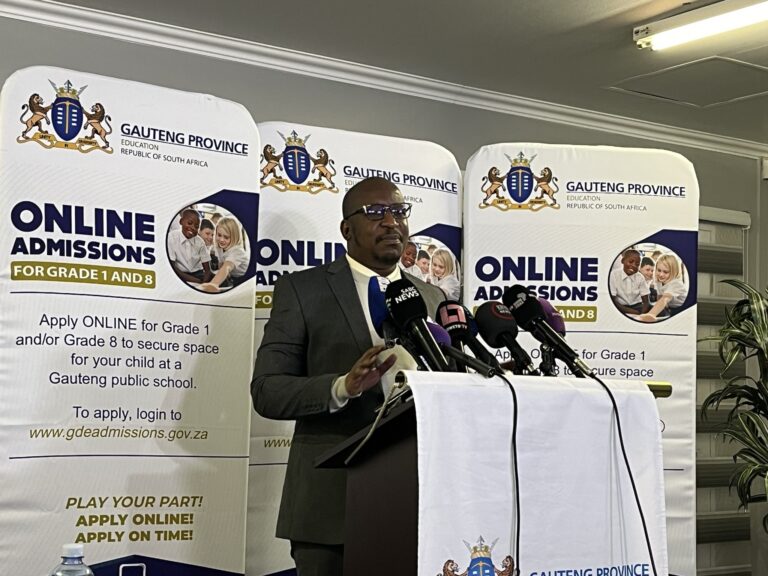
THE Gauteng Education MEC Matome Chiloane has declared Thursday as the opening for online application for the 2025 Online Admissions for Grade 1 and 8.

The period for online application will be opened from this Thursday till 12 August 2024 and Chiloane urges parents to use this period to make sure their children’s applications are in to stand a chance to be admitted in the 2025 Academic Year.

The online application was introduced in the province by current premier Panyaza Lesufi after chaotic queues in schools across the province in last ditch efforts to ensure their children were admitted in schools.

This was done to centralize all applications and do away with the Walk-In centers that were deemed chaotic.

All applications for Grade 1 and Grade 8 learners will be processed through the GDE Online Admissions System. This allows only parents and guardians applying for Grade 1 and Grade 8 to apply.

Further, parents of children that are currently in Grade R should also use this opportunity to also apply online for their children to be admitted to Grade 1.

Since its introduction in 2015, the Gauteng Online Admissions Application System has proven a success and assisting many parents and guardians of Grade 1 and 8 learners with securing a space for their children in schools.

The department said the current system has proven to be much more advanced than the previous manual approach, which led to thousands of parents and guardians camping outside of certain schools especially in high pressure areas for days when seeking placement.

Addressing the media in Midrand on Tuesday, Chiloane said the online system helps the department with immediate access to data and statistics to facilitate a transparent admissions process. It will also assist eliminate long queues at schools during application periods.

“Accordingly, the system has a 100% placement rate of all complete applications submitted online; which recently successfully processed the placement of approximately 400 000 learners ahead of the 2024 Academic Year,” Chiloane said.

To apply, parents and guardians must first register on: www.gdeadmissions.gov.za which will go live on Thursday, 11 July 2024 at 08:00 am for applications.

The department said parents will not be able to access the system before it goes live on 11 July 2024. Chiloane encouraged all parents to register, previous login details will not work.

“Only parents with children going to Grade 1 and/or Grade 8 seeking space at a public school in Gauteng for the 2025 Academic Year will be able to register and apply online. Applications will then close on Monday, 12 August 2024 at 00:00 AM (midnight). No new applications will be accepted once the application period has closed,” he said.  

After registering, the system will prompt parents to create login credentials (username and password) which they will use to access the Online Admissions System to view and manage their application details.

Once applicants have gained access to the system, they must begin with the application process and ensure that they complete the five (5) step process. When applying for Grade 1 and/or Grade 8 during the 2025 GDE Online Admissions application process, parents must complete the following 5 Step application process to submit a complete application:

  • STEP 1 Register Parent/Guardian Details
  • STEP 2 Register Home Address Details
  • STEP 3 Register Learner Details
  • STEP 4 Apply to a Maximum of Five (5) Schools
  • STEP 5 Uploading Documents to System or Submitting Documents at Schools (Within 7 school Days of Applying)

Applicants must ensure that they complete the full 5 step application process, and register one reliable and active cellphone number to receive SMS notifications.

Chiloane said the department will not be responsible for information shared with private entities such as Internet cafés that can be potentially misused.

The MEC rather urged parents and guardians to visit any of the 80 Walk-In Centres set up by the Department for assistance.

Parents are further encouraged to use the home address within school feeder zone application option to see schools with feeder zones that cover their home address

To increase the chances of placement closer to the parent’s home address, parents should select schools with feeder zones that cover the parent’s home address selecting a minimum of three schools and a maximum of 5 schools.

However, parents who select 1 or 2 schools when applying, limit the chances of their children being placed in the instance of those selected schools reaching full capacity.

Selecting more schools increases the chances of being placed and parents cannot make more than one application for one learner to the same school.

Gauteng Education launches 2025 Online Admissions for Grades 1, 8

INSIDE EDUCATION 
Chiloane to implement PP recommendations on Mayibuye School Construction Saga

Phuti Mosomane

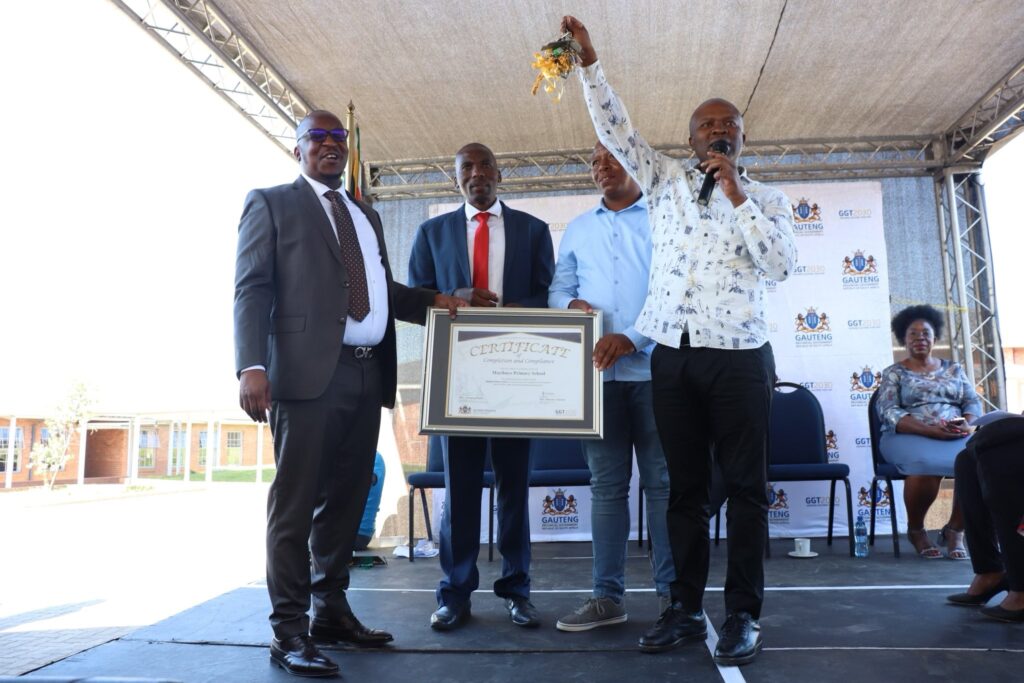
THE Gauteng MEC of Education, Matome Chiloane, wholeheartedly welcomed the Mayibuye Formal Report of the Public Protector on Monday. He assured the public of his unwavering commitment to implementing the recommended remedial actions, reassuring the public and stakeholders.

The Public Protector’s report, a crucial document released two weeks ago, has brought to light serious allegations of improper conduct by functionaries of the Gauteng Department of Infrastructure Development (GDID) and the Gauteng Department of Education (GDE) in the construction of Mayibuye Primary School.

The report, issued under Section 182(1)(b) of the Constitution and Section 8(1) of the Public Protector Act, scrutinises whether the GDID and GDE adhered to legal prescripts and procedures during the construction of Mayibuye Primary School and whether their actions constituted maladministration and undue delay.

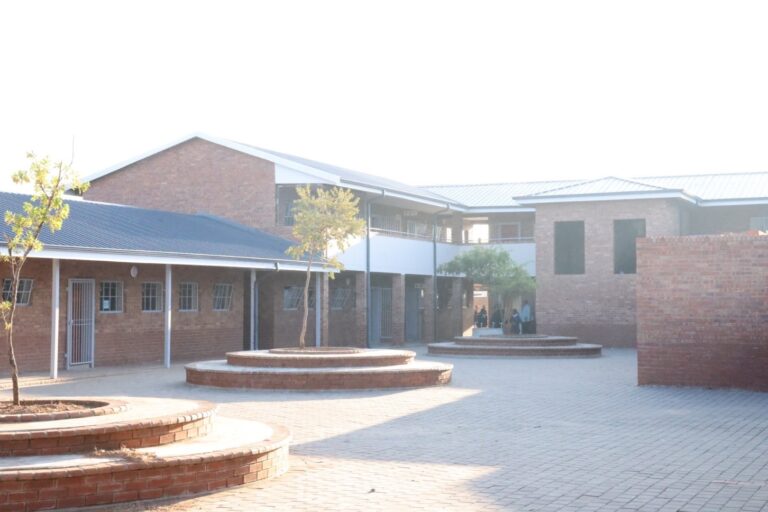
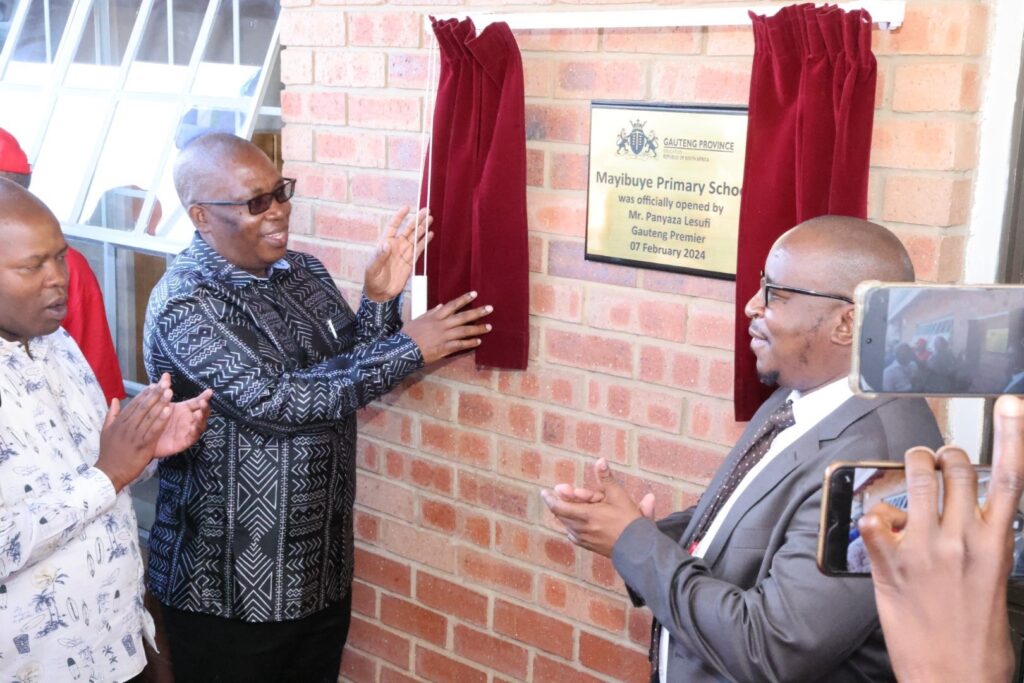
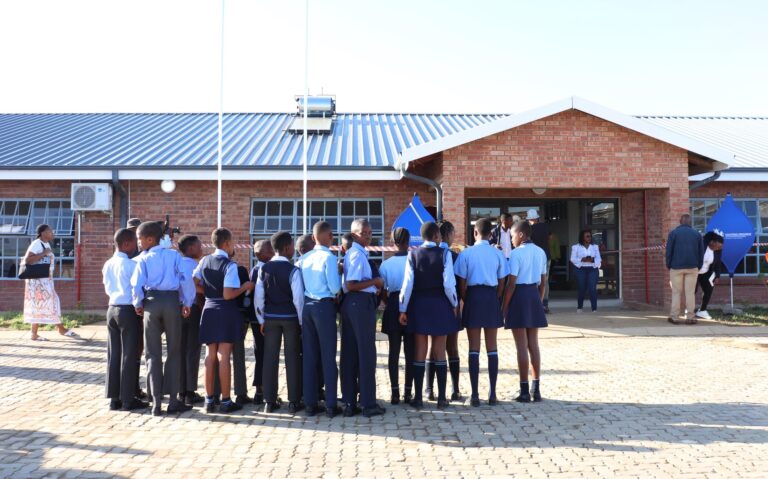
Mayibuye Primary School was officially opened on 7 February 2024.

The investigation found a lack of procedural integrity in the procurement and supply chain management procedures used in building the school. Additionally, the report alleges that a critical wetland study was not conducted before construction began, suggesting further improper conduct and maladministration.

The Public Protector’s investigation revealed that the Department of Education and the Department of Infrastructure Development’s poor project management led to a significant delay in handing over the site to the contractors. This delay, which lasted nearly two years, resulted in taxpayers forfeiting R10m.

The PP has also instructed the Gauteng Department of Infrastructure Development (GDID) to provide her office with a project plan within 60 days of receiving the report indicating how and when the completion of the remaining external civil works will be finalized.

Chiloane, speaking on Monday, reiterated his department’s commitment to implementing the recommended remedial actions and ensuring strict monitoring mechanisms are in place.

“The GDE acknowledges the findings of this report and is committed to implementing the recommended remedial actions.

“Such implementation includes ensuring continuous compliance and strict monitoring mechanisms of the Project Plan, which was already provided to the Public Protector on 14 June 2024, to ensure that the school is fully operational in line with the efficient and economical management of the working capital in terms of S 38(1)(c)(iii) of the PFMA,” Chiloane said.

INSIDE EDUCATION

Representative Council of Learners urged to become agents of change in SA schools.

Staff Reporter

THE Department of Basic Education (DBE) maintains its commitment to strengthening the Representative Council of Learners (RCL) functionality in public schools across all nine provinces.

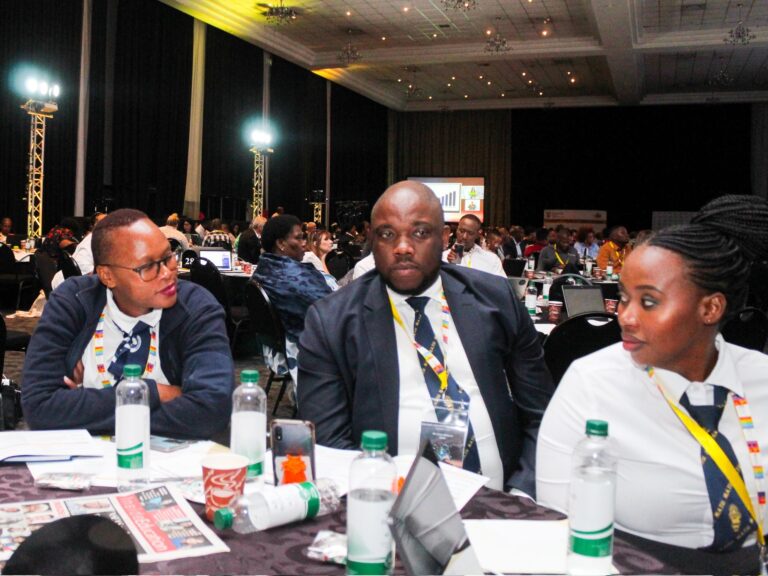
As Youth Month activities continue nationally, the DBE gathered more than 90 RCL delegates at The Lakes Hotel and Conference Centre in Benoni for a two-day RCL Conference under the theme, “Equipping Learners with Knowledge and Skills for a Changing World”.

The Conference was organized as a platform for the DBE and Stakeholders to engage in progressive ways to improve RCL functionality.

The Conference also featured two-panel discussions, which explored strategies for curbing Gender-Based Violence (GBV) whilst promoting Sexual Reproductive Health and Rights (SRHR) in the schooling system, as well as supporting RCLs by way of equipping them with knowledge and skills for the changing world.

During the Conference, it was confirmed that many schools did not administer RCL structures well. “Where RCLs exist, they are not adequately established, trained and supported to play their expected roles effectively. In some schools, teachers appointed RCLs as prefects.

Some schools use dual systems of RCLs and prefects, with prefects being given a higher status by the schools. Poorly developed capacity-building programmers and lack of provincial support for RCLs have been cited as the main contributory factors for ineffective RCLs.

Some schools seem to have little appreciation of the youth’s role in creating a healthy learning environment for themselves. In this case, schools could mistakenly deny learners the right to contribute meaningfully to their academic development and well-being.

Chief Director for Planning Implementation and Support, James Ndlebe, recommended that RCLs should forge strong cooperation with School Management Teams (SMT) and School Governing Bodies (SGBs) to ensure quality school leadership and management, especially with respect to escalating factors that are affecting quality learning and teaching in schools.

“The voice of young people should be accommodated in all decision-making processes in the Basic Education Sector. The RCLs are a cornerstone in turning schools into centers of excellence,” remarked Mr Ndlebe.

According to Mr Matsetsebale Tleane, Managing Director for the Agape Youth Movement, RCLs are the voice of learners, adding that they should be used to improve quality learning and teaching in schools: “Learners in the RCLs play a significant role in school governance and paving the way for the academic and personal development of all learners.

“They, therefore, need to be guided and supported in discovering that future-focused and influential leader within themselves to present the RCL as a meaningful body and integral part of the school”.

Many presenters and RCL delegates pointed out that the DBE has made significant strides in providing guidelines on how GBV cases should be processed within the sector. They, however, urged provincial education officials to ensure that the RCLs were familiarised with the Protocol for the Management and Reporting of Sexual Abuse and Harassment in Schools to sustain a healthy learning environment.

The Protocol provides schools, districts and provinces with standard operating procedures for addressing allegations and ways in which schools must respond to reports of sexual abuse and harassment perpetrated against learners, educators and other school staff.

Schools are mandated to assist victims of sexual abuse and harassment by following standard reporting procedures and through the provision of appropriate support to learners.

Deputy Director-General for Delivery and Support, Ms Simoné Geyer, encouraged RCLs to be a bridge between learners and leadership, the voice for their peers, and the champions for positive change in their respective schools.

“The world is changing, and you, the RCLs, are at the forefront. Embrace the challenges, harness the opportunities, and, most importantly, believe in yourselves. You can shape the future, not just for yourselves, but for all South Africans.

“Through the RCL platform, you develop valuable communication, collaboration, critical thinking and problem-solving skills. These are the skills you need to navigate this changing world and become the innovators, the entrepreneurs and the leaders of tomorrow,” she said.

Day two of the conference saw delegates and stakeholders engaging in robust discussions during various commissions, where critical insights and a way forward regarding issues raised during the conference were tabled.

INSIDE EDUCATION

Incoming UCT vice-chancellor to commence on 1 August

Staff Reporter

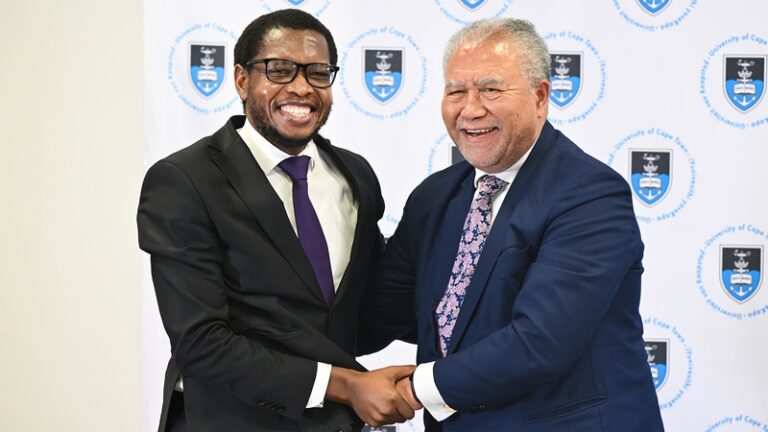
THE University of Cape Town (UCT)’s incoming Vice-Chancellor, Professor Mosa Moshabela, will commence his tenure on 1 August 2024.

Further to the announcement of 24 May 2024 conveying the decision of the UCT Council to appoint Professor Moshabela, the incoming vice-chancellor has since become available to take up the appointment earlier than 1 October 2024.

He will succeed Emeritus Professor Daya Reddy, who has led UCT on an interim basis since March 2023.

Chair of Council, Norman Arendse (SC), said: “Professor Reddy, who is in full support of the earlier start date, will step down as vice-chancellor interim on 31 July 2024 and will continue to be available to support Professor Moshabela in a part-time advisory capacity for a period that is to be determined.

“UCT owes Professor Reddy a debt of gratitude for taking on the responsibilities of vice-chancellor at a very challenging time for our institution, and making a significant leadership contribution when it was most needed. 

“The UCT Council extends its deep gratitude to Professor Reddy and welcomes Professor Moshabela as the next vice-chancellor with effect from 1 August 2024.”

The new UCT Council, which held its first plenary meeting on Saturday, 6 July 2024, has been constituted and all members (30 in total) have been appointed in terms of the institutional statute. 

The most immediate order of business was for Council to elect its chairperson and deputy and appoint members and chairpersons of key Council committees. Arendse was elected as Council chairperson, and Nomarashiya Caluza as deputy chairperson.

“Ms Caluza and I are honoured to have been elected to serve as the deputy chairperson and chairperson of the Council, respectively. We, and each of the members of the Council, embrace the fiduciary duties and associated responsibilities that we now have, and I am confident that as a Council, we will work collectively in the best interest of UCT.

INSIDE EDUCATION

UWC Cricket Star Set Sights on Blind Proteas

Sports Reporter

Allanzo DONN-LEA Mapoe survived a scare of losing his sight in Grade 3. When he was in Grade 6, a sister at the special school he attended predicted that he would only be able to gather information until the end of Grade 7.

Today, he is a second-year BA student at the University of the Western Cape (UWC) and a star cricket player.

Mapoe was born with cortical blindness, a condition that occurs when one loses their visual perception due to damage to specific brain areas. But Mapoe defied the odds to complete high school with good results and got into university. He excelled in sports and set his sights on representing his country on the world stage.

“From what the sisters told me in Grade 6, I’m overachieving. It is not supposed to be possible to do what I do, but I’m doing it. I’m truly grateful for what I’m achieving, and I’m hungry to achieve even more,” he said.

Mapoe was dealt a terrible blow when he missed the selection for the national blind cricket team – a sport he played from a young age – for the next Blind Cricket World Cup in Pakistan later this year.

“The afternoon I found out, I was sad and angry because I thought I would get the invitation to the national team. I left everything on the playing field during those past days. But my mother texted me to say I mustn’t be worried, as this time around, it might not be my time. God’s time is right, and He is preparing me for something big,” he said.

Mapoe vowed to work even harder to earn the national call-up in the future.

This is evident in his improved performance for the Boland provincial team at this year’s Blind Cricket South Africa (BCSA) T20 National Tournament, held in Potchefstroom in April.

“I had a wonderful tournament, taking five wickets and ending fourth overall. It is hard to take wickets in blind cricket because the bat is straight down on the pitch, and they mostly play swift shots. Getting so many wickets was pretty odd. But yeah, there is improvement for me. I would love to be on the Proteas team one day and don the green and gold. It has been a dream of mine since I was young, and I will wear the South African badge on my chest,” he said.

Born in Oudtshoorn and raised in Worcester, Mapoe’s love affair with the sport started when he watched cricket on television with his aunt and uncles.

When his friends introduced him to blind cricket at school, he loved it.

“I remember the first time I made zero runs. They bowled me out. Then I made eight, 10, 11, and then 21 runs, which became my highest score for quite some time. But then I got the knack of it. I love this game, and I have the desire to win. It gives me hope in life. That’s what blind cricket does for me.”

The all-rounder is the captain of Worcester Victorians in club cricket and has been grateful for the support UWC has offered him toward his studies.

“The university is supportive of students with disabilities. The Disability Unit is always available to help, and I appreciate it from the bottom of my heart. It’s so nice to know some people will support you through and through and walk the journey with you.”

On the sporting front, he believes the university could do more to support all athletes with disabilities. “They should just give us the necessary facilities that we can use. For me, in cricket, it’s just the nets to practice. I think the university is still learning when it comes to disability sports.”

The UWC Sports Council is reviving efforts to promote para-sports on campus. Plans are afoot to ensure that athletes with disabilities like Mapoe will be given the necessary resources to reach their sporting goals.

INSIDE EDUCATION

Basic Education Minister Gwarube’s clarion call for effective teaching and learning

Johnathan Paoli

BASIC Education minister Siviwe Gwarube has called on all stakeholders to intensify efforts aimed at creating a conducive environment for teaching and learning.

Gwarube said over the weekend that the Department of Basic Education (DBE) welcomed all teachers, non-teaching staff and learners back to school following a three-week long break.

“We urge school communities to mobilise the rest of the society to ensure that effective teaching and learning takes place so that our learners can achieve their full potential,” she said.

The Minister said schools should ensure the completion of the set work for the year and should adequately ensure that revision is done in a timely and proper fashion.

In addition, Gwarube appealed to communities to support schools and refrain from causing disruptions to the school schedule in light of the devastating impact it had on learning outcomes.

She condemned the recent burglaries at four schools in Limpopo, including the Blinkwater Gidela Secondary school, where valuable items were stolen and one school set alight.

“We call upon members of the community to work with the police in order to bring the criminals to face the full might of the law. We cannot afford a situation where the future of our children is jeopardised,” the minister said.

Gwarube said the department could only achieve its goals with the assistance of stakeholders, school governing bodies and parents in ensuring that learners are in classrooms with teachers and receiving the quality education they require.

While teachers and non-teaching staff returned on Monday, learners are expected back in school on Tuesday.

The department confirmed that the new semester consisted of 11 weeks, with 53 actual school days.

INSIDE EDUCATION

Ghost of Mayibuye Primary School construction scandal, back to haunt Gauteng Government

Johnathan Paoli

ActionSA has welcomed the Public Protector Kholeka Gcaleka’s recent report into the mismanaged construction of the Mayibuye Primary school.

Gauteng Provincial Caucus leader Funzi Ngobeni said on Thursday this case not only had taxpayer funds wasted, but also persistent delays caused by the negligence of the provincial government denied the Tembisa community access to the sorely-needed school for years.

Ngobeni said the poor project management by both the Department of Education and the Department of Infrastructure Development caused taxpayers to forfeit R10 million due to a nearly two-year delay in handing the site to the contractors.

He said the school serves as an example of the widespread mismanagement and incompetence across provincial government departments and agencies in Gauteng, which either fail to deliver projects or poorly manage them.

“This is exactly why ActionSA believes in stricter performance and consequence management practices in supply chain and procurement processes that hold under-performing and non-performing service providers accountable, and as made evident in this matter, that expectation must also extend to government departments and their officials involved in procurement and project management,” Ngobeni said.

The caucus leader said his party would closely monitor both departments’ compliance with the remedial actions suggested by the PP’s reports.

The Economic Freedom Fighters (EFF) Gauteng similarly welcomed the public protector report, but said the remedies suggested were too light for the seriousness of the crimes.

Provincial Chair Nkululeko Dunga said harsher accountability was required in order to deter criminality and misconduct in public office.

“The EFF Gauteng asserts that true accountability for this incident, which directly impacted human rights of the people of Mayibuye informal settlement and Gauteng at large, requires those responsible for maladministration to face the consequences,” Dunga said.

Democratic Alliance (DA) in Gauteng, however, has rejected the report and called for an official inquiry into the case.

DA Shadow MEC for Infrastructure Development Alan Fuchs said the ANC-led provincial government has backtracked on its decision to hold a formal inquiry and was protecting officials implicated.

Fuchs said the provincial legislature speaker approved an official inquiry into the matter, however, after the delay, no official inquiry was to take place, with the PP report only calling for preventative measures going forward.

“This is a clear indication that the government is undermining the institution that has a mandate to protect the interests of Gauteng residents,” Fuchs said.

The project was approved in August 2015 but spanned over eight years due to numerous administrative and technical incompetencies by the GDID and GDE under former MECs Nandi Mayathula-Khoza and Panyaza Lesufi, respectively.

According to a report released by the Public Protector of South Africa, procurement and supply chain procedures were violated during the contract awarded to Basic Blue/NEBAVEST for school construction.

Her report mandated that both departments adhere to and report on compliance, as well as implement strict monitoring mechanisms and cost control measures for all future projects to ensure that this negligent conduct is not repeated.

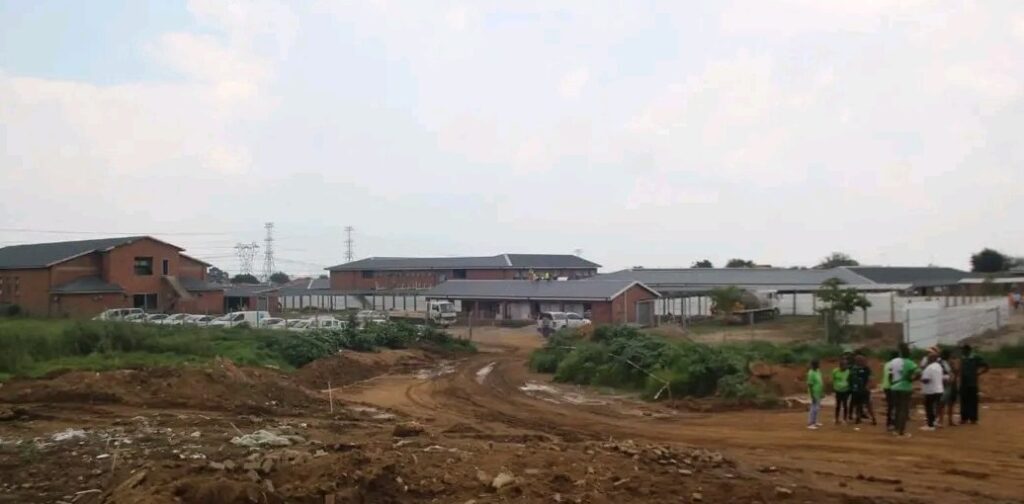
Additionally, the school was built atop an old sewer line without a wetland study, resulting in significant delays and additional costs.

After the contract was awarded, it took the contractor over a year to obtain site permission, resulting in R10 million in compensation.

Although construction was completed in 2017, the school remained unusable due to the hazardous wetlands.

The project was intended to accommodate over 2,000 learners from the Mayibuye Informal Settlement, Thembisa.

INSIDE EDUCATION

SADTU urges newly-appointed Higher Education minister to drive transformation, root out corruption

Johnathan Paoli

THE South African Democratic Teachers Union (SADTU) has noted the appointment of Nobuhle Nkabane as the Minister of Higher Education and said it hoped her appointment would usher in a new drive for transformation and the rooting out of corruption.

“We would like to see her challenging the stubbornness of higher education institutions to decolonise the curriculum and being resolute in rooting out corruption in institutions of higher learning and SETAs,” the union said.

The union further called on the Minister to focus on rooting out corruption in NSFAS and in TVET colleges, with immediate effect, “where colleges are managed Hollywood-style where everyone is acting”.

Sadtu said there was an urgent need for collective bargaining and there was clearly an obligation by the government to meet the needs of the country as it related to higher education.

President Cyril Ramaphosa appointed Nkabane as Minister of Higher Education last week, taking over from former higher education minister Blade Nzimande, who was moved to Science, Innovation and Technology.

She previously served as the Deputy Minister of Mineral Resources and Energy from 2021 until this year.

Nkabane holds a BA (Honours) in Administration, an MBA, and a PhD in Administration, and is currently studying towards further qualifications at Wits and the University of London.

She has over 9 post-matric qualifications and impeccable public service experience.

Nkabane has experience as a tutor at the University of South Africa, which should stand her in good stead in dealing with student challenges ranging from financial to academic stress.

Throughout the previous administration, issues relating to increased tuition fees, outstanding student debt, and disruptions in the distribution of financial assistance have affected students.

Academics, institutions and students have expressed high anticipation of Nkabane’s contribution to possible reforms that will tackle long-standing challenges and create a fair and encouraging higher education environment in the country.

INSIDE EDUCATION

Mixed feelings, but the new education chiefs promise fresh thinking

Edwin Naidu

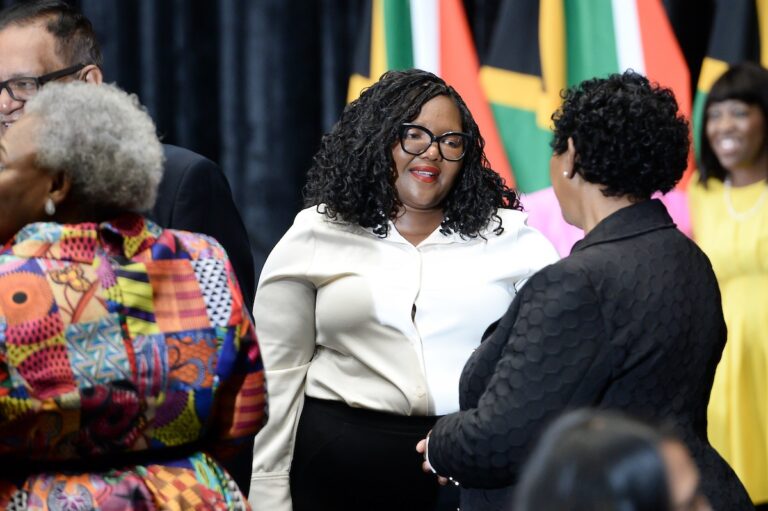
The South African education sector is on the brink of a new era, with the unexpected and intriguing appointments of Siviwe Gwarube and Nobuhle Nkabane as Minister of Basic Education and Higher Education, respectively.

Their fresh perspectives and innovative approaches promise significant change, but they were among the pleasant surprises when President Cyril Ramaphosa announced his new Government of National Unity Cabinet on Sunday.

The Democratic Alliance’s Gwarube is described as a “rising star” in political circles, though commentators say she is less experienced in terms of the portfolio’s demands.

Gwarube was elected the Chief Whip of the Opposition in the National Assembly in 2022. She began her career in politics as a professional staff member working in communications in 2012.

She then worked for the Western Cape government as a spokesperson and the Head of the Ministry for the Department of Health in the province.

Before being sworn into the National Assembly, she was the executive director of communications for the DA in the lead-up to and during the 2019 elections.

Nkabane has mainly been anonymous as deputy minister of mineral resources and energy since 2021. But her new role thrusts her into the public eye to fill the enormous shoes of Dr Blade Nzimande.

Nkabane is a National Assembly of South Africa member of the African National Congress. She was first elected an MP in the 2019 general election. Nkabane previously worked as a tutor at the University of South Africa while serving as an MP before being appointed Deputy Minister.

The two young women are being given the keys to the expanded education portfolio in the Seventh Administration which includes a standalone Science and Innovation Ministry and Sport arts and Culture under Gayton McKenzie of the Patriotic Alliance.

The long-serving former Minister of Basic Education Angie Motshekga and Nzimande have moved to Defence and the re-established Science and Innovation Ministry, respectively.

Motshekga and Nzimande have made way in education for individuals who are expected to bring a ‘winning mentality’ into the stale ways of doing things. Our country’s education system is in dire need of this kind of inspiration and motivation.

Arguably, Motshekga and Nzimande have transformed the basic education and tertiary landscape. But neither has shot out the lights.

In Basic Education, Gwarube inherits a dysfunctional system known annually for putting a positive spin on the matric examinations, even though 300,000 school leavers join the unemployment lines.

According to the Minister’s Report on Progress in International Reading Literacy Study (PIRLS), more than 80% of South Africa’s grade 4 pupils –on average nine or ten years old – cannot read for meaning. They can’t answer basic questions or draw inferences from a text they’re reading.

Turning to the tertiary sector, only a few make it to universities, while many scrap for free government training programmes via the Sector Education Training Authorities, some of which are effective, most not. The high failure rate of first-year students – and university throughput generally indicates a system churning out more failures than success stories. Yet, there is excellence.

Motshekga leaves behind a legacy of a transformer. But hers is a work in progress. Ditto: Nzimande.

Siviwe Gwarube

Gwarube, the new appointment, however, starts on the back foot. A day before the long-awaited announcement from the dithering President, Sadtu complained about the expected Democratic Alliance appointment to the post, claiming the DA wants to destroy the union.

Let’s give Gwarube – and Nkabane a chance to lay a solid foundation for education in the 21st century.

Nzimande’s standalone Science and Innovation Ministry keeps the Minister in the power seat, but it is a demotion. The Department of Science and Innovation (DSI) has an R10,9 billion budget for the 2023/24 financial year. According to the National Treasury, the Department of Higher Education’s (DHET) expenditure will top R135,6 billion in the 2023/24 financial year.

Science is a soft portfolio for a minister who is seemingly always at war, but he is a science champion.

Let’s hope the singular focus helps South Africa step up a gear. The country needs to discuss what must be done in education to ensure the future we want and deserve. Education has a fresh start.

Minister of Sport, Arts and Culture Gayton McKenzie has his critics too. But if he succeeds in building sport at the grassroots level, getting our children healthy, and making arts and culture fashionable, it may be needed.

INSIDE EDUCATION

From TikTok Tutorials to Fashion Triumph: UWC Student’s Journey

Staff Reporter

In 2020, during her gap year, Asenathi Unabantu Mjacu, a third-year student at the University of the Western Cape (UWC), embarked on an unexpected journey. With time on her hands and a desire to stay productive, she started a clothing line despite initially not having a deep passion for fashion.

Mjacu mastered the craft of sewing and designing outfits, relying solely on her determination and online resources, including YouTube and TikTok tutorials.

The 23-year-old purchased her first sewing machine using an R1000 voucher awarded by the Mayor of Mossel Bay for her matric performance. This pivotal moment marked the beginning of her fashion line, Asenathi Couture.

“In Mossel Bay, when you pass matric with good marks, the Mayor invites all those learners and awards us vouchers. I didn’t consider myself a top student, but I suppose I did well enough to be recognised by the school for academic achievements,” said the third-year Sports Science student.

Her first order came from a high school friend who saw her work on Facebook. The positive response and subsequent orders encouraged Mjacu to continue. Her first creation was a yellow outfit with a skirt and a tunic top. This early success led to more orders, primarily promoted on Facebook, TikTok, and Instagram.

“For clients outside Cape Town, requests are telephonic, and they send me pictures. I need the client’s waist and bust size and a full-length photo of the client. From there, I require a 50% deposit, purchase the material, and start with the garment. My turnaround time is two weeks.” But few things in life come without the challenges. One of the most difficult aspects of her work has been creating intricate designs like matric dance dresses, mainly due to the complex materials.

“Sometimes the material is very delicate, and it’s hard to sew intricate accessories.” Despite these hurdles, she has received big orders, which she tackles head-on as a one-woman show.

“I received an order from an entrepreneur with his clothing line. He ordered 15 hoodies and about 12 tracksuit sets. That’s been my biggest order to date. It was difficult to manage alone.”

The full-time student said balancing her studies with her growing fashion business has been difficult. Time management and dealing with diverse client personalities are ongoing challenges. Despite this, she has maintained a policy requiring a 50% upfront payment to ensure client commitment.

It’s been over four years since Asenathi Couture started, but the Mossel Bay local has big plans. She hopes to continue her studies and later pursue short courses in fashion design. Her goal is to register her business and expand its reach officially.

She advised other students to consider starting “side hustles” or small companies to support their finances, emphasising the importance of self-reliance and entrepreneurship.

Through her journey, Asenathi Unabantu Mjacu exemplifies the power of initiative and self-education, transforming a gap year into a thriving business venture.

INSIDE EDUCATION