Home Blog Page 160

Prof Francis Petersen wants to help UP realise vision to be the best in Africa

Edwin Naidu

Professor Francis Petersen, the Vice-Chancellor designate of the University of Pretoria, has expressed his unwavering commitment to aligning with Tuks’ vision.

He envisions the university to be a leading research-intensive institution in Africa, renowned globally for its quality, relevance, and impact, and for its role in developing people, creating knowledge, and making a difference locally and globally.

“Rest assured, my strategy for UP fully aligns with the vision,” he assured Inside Education.

Prof Petersen said that he would be taking over a respected, stable university, one of the largest residential universities in the country. His unwavering focus would be on consolidating, recalibrating, and examining what works and what does not, with a firm commitment to addressing the challenges rather than adding to them.

With a leadership style rooted in listening, Prof Petersen is acutely aware of UP’s status and standing, acknowledging that no institution is immune from the challenges facing all learning institutions. 

However, he is confident in leveraging his extensive experience in education and the corporate sector to propel UP towards its vision of becoming the best in Africa, instilling a sense of assurance in his capability to lead.

On Friday, UP said in a statement that Professor Petersen’s appointment is a testament to his distinguished academic leadership record and wealth of experience in higher education.

“His unique blend of engineering, finance, and academic management expertise positions him to lead the University of Pretoria into a new era of innovation and excellence. Professor Petersen’s educational journey is a testament to his academic prowess.”

He holds a Bachelor of Engineering (Chemical Engineering) and a Master of Engineering (Metallurgical Engineering) from the University of Stellenbosch, and a Ph.D. in Engineering. A Financial Skills for Executive Management course from IIR Training further enhanced his academic achievements.

Throughout his illustrious career, Professor Petersen has held various academic positions at the University of Stellenbosch, Cape Peninsula University of Technology, University of Cape Town, and University of the Free State. His leadership roles have ranged from Head of Department to Dean and Deputy Vice-Chancellor, showcasing his extensive and proven experience in academic management at departmental, faculty, and institutional levels.

In a statement to staff on Friday, Free State University confirmed that Prof Petersen who has been Vice-Chancellor and Principal of the University of the Free State (UFS) since 1 April 2017 and has been reappointed by the Council for a second five-year term as of 31 March 2022 would take up the role at UP.

“Prof Petersen’s tenure at the UFS was characterised by remarkable leadership, and the Council greatly appreciates his work and the university’s achievements under his leadership. Excellence, inclusivity, innovation, academic freedom, a particular focus and emphasis on critical enquiry, social responsiveness, and integrity were the value characteristics through which Prof Petersen led as Vice-Chancellor and Principal of the UFS. 

“He led the university through challenging and complex times – not only for the institution but also for the higher education sector – with a primary focus on and commitment to stakeholder engagement. He brought stability to the university and emphasised the institution’s visibility and its impact on society.”

“On behalf of the Council and the entire university community, I thank and commend Prof Petersen for his dedicated leadership and wish him all the best in his new role as Vice-Chancellor and Principal of the University of Pretoria,” said David Noko, Chairperson of the UFS Council.

“Serving as Vice-Chancellor and Principal of the University of the Free State has been one of the greatest honours of my career, and I am immensely proud of everything we have achieved together over the past seven years. 

“During my tenure, I have been blessed to work with and meet exceptional staff, students, and other stakeholders from one of the greatest universities in the country to advance the UFS further nationally and internationally. 

“As I step down, I am grateful for the support and collaboration from our university community. I am confident that the university is well positioned for continued growth and success,” said Prof Petersen.

The UFS Council will appoint an acting Vice-Chancellor and Principal to serve in this position from 1 October 2024 until a new incumbent is appointed.

INSIDE EDUCATION
HSRC survey finds trust in IEC by voters was high

Staff Reporter

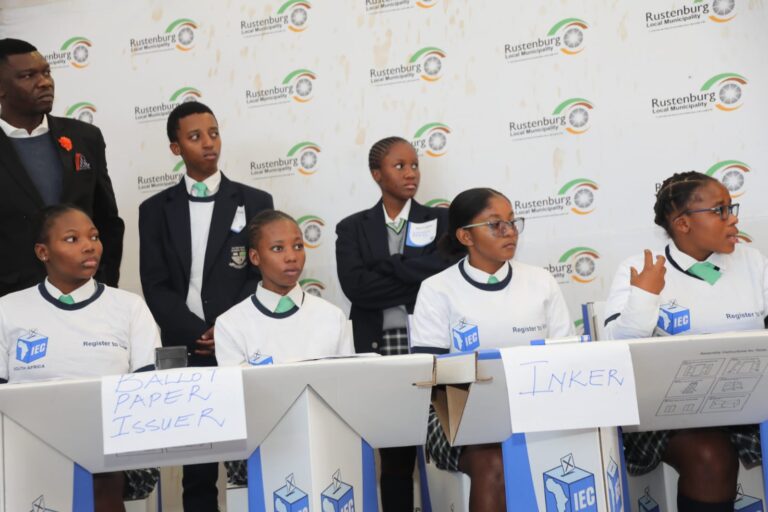
Voter education is crucial, but only 52% of respondents in a survey labelled the education campaign run by the Electoral Commission of South Africa as “beneficial” and “somewhat useful.”

In a boost for democracy, a Human Sciences Research Council (HSRC) survey found that voters’ trust in the Electoral Commission of South Africa (IEC) was high.

More than 16 million citizens cast their votes in the National and Provincial Elections (NPE) on Wednesday, 29 May, translating into a voter turnout of 58.61%

The HSRC’s preliminary findings on the survey conducted on Election Day, as South Africans voted, marking 30 years since the historic first democratic elections in 1994.

The HSRC released its preliminary findings on Friday at the IEC National Results Operations Centre (ROC) in Midrand. 

Regarding the level of information, roughly 13% stated that they had far too little information, and 10% said they had too little information about the voting procedures.

Meanwhile, 42% said that the IEC website was “very useful” in providing information and education, and 23% said it was “somewhat useful.”

With more than 40 million citizens eligible to vote and 28 million registered to participate, turnout was low.

In the Election Satisfaction Survey (ESS), voters were asked questions about the election process, including whether the 2024 NPE were free and fair. 

The survey aimed to establish the opinions and perceptions of voters and their electoral experience. The research sampled 300 voting stations selected countrywide, proportional to race, geographic type and the number of voting stations in each province.

“Trust in the Electoral Commission was high, and almost all voters felt that they were safe to cast their ballot in secrecy,” the survey found.

According to the HSRC’s Dr Benjamin Roberts, trust in the country’s election management body is at an all-time high of 80%. 

“The trust in the commission remains dominant… Amongst the general public, trust in the commission has been declining, as it has in all core political institutions over the last decade and a half, although the IEC remains among the trusted institutions in the country.

“But obviously, the voting public trust is much higher.” 

Roberts believes this is predominantly because those who had a positive experience left the

aspect of the queuing time, which translates to the institution’s validation. 

“The other reason is that for many South Africans, the predominant response to unhappiness with the function of the political system is the abstention and not electoral turnout. We’re finding increasing polarisation of happier voters and discontent and abstinence. That’s what’s probably driving the positive evaluations,” said Roberts.

Meanwhile, results indicated that voters overwhelmingly believed the 2024 NPE were free and fair and positively rated the conduct of officials at voting stations.

“Almost all voters felt safe to cast their ballot in secrecy,” said Roberts.

The majority of voters also felt that the IEC adequately considered the needs of vulnerable groups, including older people and people with disabilities. 

However, the finding showed that queuing times at voting stations increased relative to more recent elections, which affected electoral evaluations. 

In addition, most voters were pleased with the ballot papers, with 58% indicating they were “delighted” and 35% told researchers they were “satisfied”.

However, 38% wanted to improve the ballot paper for future elections.

In addition, fewer people believe their vote counts than those who think they must vote. 

Shifting the focus to coercion, 12% reported experiencing someone trying to force them to vote for a particular political party or candidate, while nine % said it happened before Election Day. 

Four percent said they were forced by party agents, and four per cent by friends and family. 

“Of those reporting coercion, 73% reported that it had no bearing on electoral choice, 25% said it did, and two were uncertain. This translates into three per cent of all voters who changed their vote,” Roberts said.

INSIDE EDUCATION

CHIETA and National Lotteries Commission to collaborate on SMARTS Skills Centres and New Skills Programmes

Staff Reporter

THE Chemical Industries Education and Training Authority (CHIETA) and the National Lotteries Commission (NLC) have agreed to collaborate on the rollout of CHIETA’s SMART Skills Centres in rural areas nationwide.

CHIETA confirmed that it has agreed to formalise its collaboration with the NLC and the areas it wishes to work on.

The NLC regulates the National Lottery Operator, Society lotteries, Private Lotteries, and Lotteries Incidental to exempt entertainment.

The Memorandum of Understanding (MOA) between CHIETA and the NLC provides a framework for cooperation that leverages joint research from the two entities and CHIETA’s Smart Skills Centres to support NLC grant applicants in different provinces.

The parties aim to support initiatives supporting the CHIETA and the NLC strategic objectives through different projects. The collaboration will foster closer cooperation between the NLC and CHIETA, promoting information sharing, mutual accountability, and transparency in their respective entity roles.

“This is a major boost for our efforts as CHIETA to ensure that nobody in rural South Africa is left behind on the digital revolution,” says Yershen Pillay, the CHIETA chief executive.

The opening of the Brits SMART Skills Centre in the North-West last month brings the number of centres to four since the first centre was launched in 2022 in Saldanha Bay.

The centre aims to bridge the digital skills divide and accelerate the development of basic digital skills for a future-fit workplace as part of the CHIETA strategy to innovate for impact in societies nationwide.

Since October 2022, CHIETA has established smart skills centres in Saldana Bay in the Western Cape, the Mthashana Skills Centre in Babanango, a small rural town near Melmoth in Kwazulu-Natal, and the Iqhayiya campus of the Port Elizabeth TVET College in Gqeberha.

It follows a call from the Higher Education, Science and Innovation Minister, Dr Blade Nzimande, who articulated a vision for SMART Skills Centres to be established in all parts of the country by 2020.

The Brits SMART Skills Centre will provide comprehensive digital skills programs tailored for enterprises, individuals, schools, and TVET colleges. With a particular focus on rural learners, the centre aims to bridge the digital divide by offering access to data and a wide range of training courses.

CHIETA will open the Emalahleni Smart Skills Centre in Witbank at the Highveld Industrial Park, Elandsfontein, Emalahleni, next week.

The Emalahleni Smart Skills Centre is equipped with 3 VR pods, 12 workstations, a smart boardroom, and meeting rooms. The centre will be linked to various technology-based programmes, including robotics and virtual welding, as well as skills programmes and e-learning initiatives.

The centre will focus on enterprises, individuals, and schools, with a specific emphasis on rural youth.

INSIDE EDUCATION

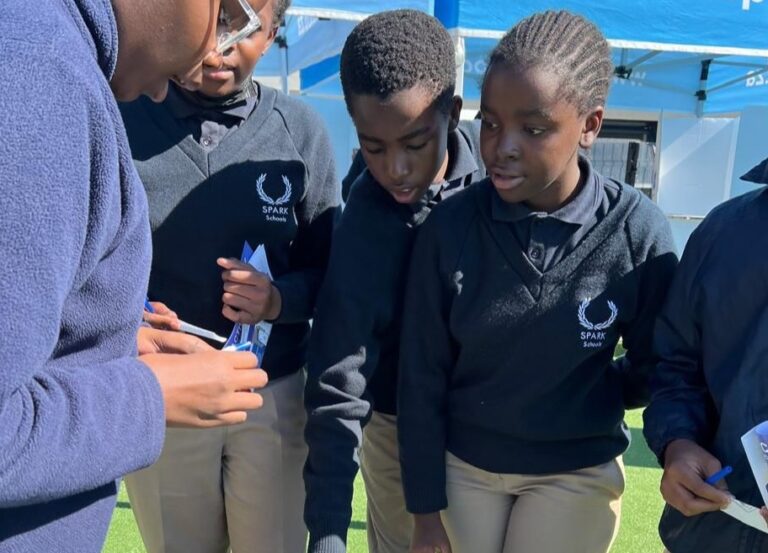
SPARK Schools continues to win global awards

Staff Reporter

For the second year, SPARK Schools was again named one of Africa’s Fastest Growing Companies in the 2024 Financial Times (FT) and Statista annual ranking.

This comes shortly after the school group was named one of Time Magazine’s top 250 EdTech companies worldwide in May 2024.

The FT ranking, now in its third year, identifies companies with the strongest revenue growth between 2019 and 2022. SPARK Schools is one of 41 of South Africa’s fastest-growing companies for 2024, ranking in the 118th spot of Africa’s 125 overall. In the Education and Social Services sector, SPARK Schools is one of only five companies that made the ranking.

“In the last six months, we have had fantastic international acknowledgement of our work. Besides the FT and Time accolades, SPARK Schools has been recognised as a 2023 T4 Education World’s Best School winner and named by Global Brands Magazine as the most innovative education provider in South Africa,” says Stacey Brewer, co-founder and CEO of SPARK Schools.

“The FT ranking is a testament to the work we have put into developing a sustainable, low-cost private school model offering world-class education outcomes,” she says.

Brewer says the recent global accolades prove that the education sector remains critically important and noteworthy. “We are so incredibly proud to be recognised in South Africa.

“This award particularly also underscores the appetite for quality education in Africa. Our continued growth means that the model we have developed to challenge the education status quo is working,” Brewer says.

Brewer says the foundations of SPARK Schools’ successful education model are blended learning, the importance of the teaching and support staff, and the core values central to the school’s culture.

“We implemented Africa’s first blended learning model for primary school scholars. Way before the COVID-19 pandemic introduced scholars to online learning, we were already getting scholars to split time between digital content (that adapts in difficulty to their learning pace) and classroom interaction based on best practice tuition.

“We know that our success lies with our team. We work hard to recruit young teachers and invest seriously in their professional development. All teachers at SPARK Schools undergo 200 hours of professional training every year. This means that our teachers are constantly upskilling themselves about education innovations. We have also created our internal pipeline for promotions and leadership,” she says.

Brewer says the concept of values helps scholars become responsible global citizens who are aware of their opportunities and responsibilities. The five core values are Service, Persistence, Achievement, Responsibility, and Kindness. Each school has its unique sixth value.

“The work we do at SPARK Schools is a great example of what is possible in the education sector. Our vision is to make South Africa a global leader in education. The whole journey of SPARK Schools has been about not giving up; we believe we have a bigger role in pushing society into a different way of managing education – so that it lasts generations,” Brewer says.

INSIDE EDUCATION

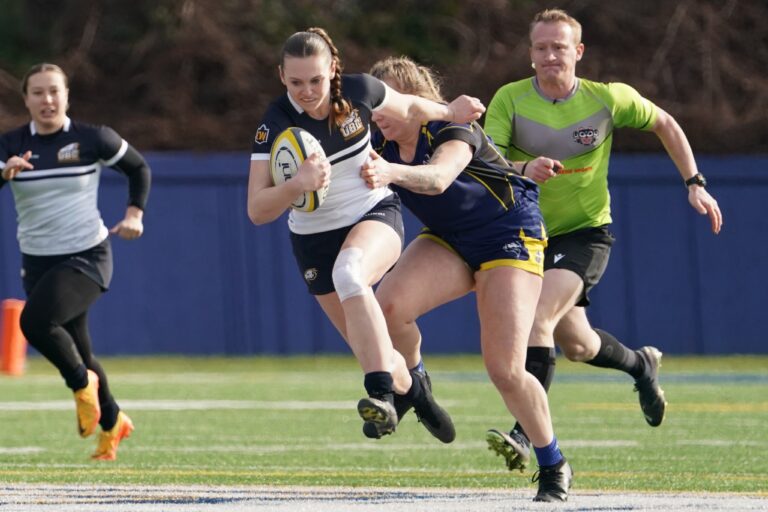
FISU World University Championship Rugby Sevens

Staff Reporter

For the first time since its inception, the FISU (Fédération Internationale du sport universitaire) will host the FISU World University Championship Rugby Sevens will be hosted in South Africa.

Stellenbosch University will be honoured to become only the second African university – the 2018 edition took place at the University of Namibia – to host the biannual international university rugby showpiece in 2026.

Incidentally, it was also the year that the South African men’s team won the gold medal, while the women finished in fourth place after narrowly losing to Belgium in the bronze medal match.

This year’s tournament will be hosted in Aix-Marseille-Provence, France, and will take place over two days, 10-12 June. Drikus Hancke, head of Rugby at Maties Sport, believes the 2026 edition of the FISU World University Championship Rugby Sevens will show the world what Maties Sport has to offer. Stellenbosch University is well-known for producing top-quality athletes in individual and team sporting events.

However, it is the logistics, potential tourist influx, and event management of this magnitude that a very proud Hancke hopes the public will get to experience and view what the beautiful town of Stellenbosch offers. A tournament of this magnitude has certain standards that have to be adhered to even before the event is awarded to a university.

Maties’ facilities and the people who manage them across all sporting codes have the necessary experience hosting large groups of international travelling teams. This keen sense of detail has set the Maties organising committee on a path to setting a new bar for hosting world-class university competitions.

“We are very proud to have been awarded the bid,” Hancke said.

“The significance of it lies in the fact that it is an international competition showcasing the best Universities 7’s talent of participating countries. We are very proud to host such a big event, allowing us to showcase our facilities and capabilities. It will give us international exposure and bring a high-quality international event to Stellenbosch. The large influx of teams and supporters will benefit the town of Stellenbosch and its surrounds.”
Events of this size have a lasting impact on the community within the institution and the broader communities, districts, towns, and neighbourhoods in which it is situated. Tourists flock to the Cape Winelands town to experience its vineyards, wine farms, and beautiful summer events. The Maties Sports leadership hopes to leave a legacy that will forever be etched in the annals of Stellenbosch.

“The exposure we receive from the tournament will be wide and might attract talent we do not normally reach. Our facility and event management will hopefully attract more potential tournaments to be held here. An event of this size creates a lot of awareness and hopefully attracts more people to rugby in our area.”

INSIDE EDUCATION

Sisters are doing it for themselves at Fort Hare

Sports Reporter

THE experienced former Banyana Banyana players Amanda Sister and Chantelle Esau have brought to the Baby Wolves since signing with the university club a few weeks ago have proved invaluable.

With dozens of international caps between them, the pair have been able to impart years of footballing wisdom to their younger University of Fort Hare teammates.

The side are currently enjoying a good run in the Hollywoodbets Super League, winning their last two matches to place them a respectable ninth on the log in their first season of elite women’s football.

Sister, 34, boasts a hugely impressive resumé. Aside from making more than 40 appearances for her country, the Gqeberha-born defender has played for Hungarian club Győri ETO as well as Italian Serie A side San Zaccaria.

Striker Esau, 33, arrived in Alice after a stint with Hollywoodbets Super League champions Mamelodi Sundowns and has played more than 25 matches for Banyana Banyana.
Fort Hare interim head coach Sibonelo Doyisa said the experienced duo were brought on board to help the younger players adapt to the challenges of big-time football while learning to show no fear for well-known players.

“We thought, ‘Let’s add a few players who can motivate them, who can add that factor in the camp, clubhouse and change room’. And now it’s working wonders for the team,” he said.

“With Amanda, we told her what her role would be; not just to be a player on the field but off it as well. She accepted the challenge to explain to the other players how to approach games, how to act as individuals and teammates.”

The arrival of Sister and Esau at Fort Hare was largely thanks to the efforts of sports officer Sibabalo Feni, described by Doyisa as the “man behind the magic”.

Passionate about the team’s success, he visited their respective homes to recruit them.
Esau was not getting as much game time at Sundowns as she once did and embraced the opportunity to play for a smaller team where she could add more value.

Though Sister was on the books of Super League team Copperbelt FC, she had been sidelined for some time after a series of injuries.

Feni’s timing in securing their talents could not have been more perfect and they have duly given UFH a huge boost 12 games into the season.
Though the ladies might be older than their teammates, Doyisa emphasised that age was not really a factor in women’s football.

“What matters most is how you communicate with your teammates, telling them when to run and not to run. If you have experience, age is just a number.”

As much as the coach was thankful for the addition of the two stars, he also did not want to diminish the hard work all his players were putting into the campaign.

They always gave more than what was expected of them and put his advice into practice “with ease”, he said.

“It’s not just the experience we now have but the willingness of all our players.”

Fort Hare’s next fixture is against UWC on June 8.

With students writing exams, they have suspended training for the time being but “will be back at the office” on Monday.

INSIDE EDUCATION

The Year of Education: Shaping an African Fit for the 21st Century

Inside Education Reporter

As South Africa prepares for its upcoming elections, the tail-end of May, also Africa Month, is an appropriate time for reflection.

The Africa Month theme, ‘The Year of Education: Educating an African Fit for the 21st Century’, resonates with a sense of urgency. In a rapidly changing global landscape, the future of our children and the prosperity of our nation depends on the choices we make at the polls. It’s a collective responsibility to shape an education system that prepares our youth for the challenges and opportunities of the 21st century. 

This 7th democratic election is not just about selecting leaders but about shaping the trajectory of our education system and, consequently, our country’s future.

According to a 2020 report by Amnesty International, the South African education system is characterised by crumbling infrastructure, overcrowded classrooms, and relatively poor educational outcomes. This perpetuates inequality and, as a result, fails too many of its children, with the poor hardest hit.

Given the current situation, it’s no wonder that educational outcomes are abysmal. A recent international survey revealed a shocking truth: over three-quarters of Grade 4 children struggle to read for meaning. In some provinces, this figure soars to 91% in Limpopo and 85% in the Eastern Cape. Out of every 100 learners who embark on their educational journey, only 50%- 60% will reach Matric, 40% –  50% will pass Matric, and a mere 14% will proceed to university.

According to Amnesty International’s Executive Director, Shenilla Mohamed: “South Africa has one of the most unequal school systems in the world. Children in the top 200 schools achieve more distinctions in mathematics than children in the next 6,600 schools combined. The playing field must be levelled.

“The 21st century demands paramount digital literacy, critical thinking, and innovative problem-solving. Our education system in Africa must adapt to this new reality. It must empower our youth with skills that match the needs of the modern world. This entails a focus on traditional academics, integration of technology and creativity, and fostering entrepreneurial mindsets.

“As citizens, we can influence this transformation through our votes. Each candidate’s stance on education policies will directly impact our children’s ability to compete globally. It is crucial to scrutinise each party’s plans for educational reform, funding, teacher training and curriculum development”.

Are they committed to reducing disparities in access to quality education? Do they have a clear strategy for integrating digital skills into the classroom? These questions should guide our voting decisions, posits Afrika Tikkun Group CEO Dr. Onyi Nwaneri.

Afrika Tikkun is a leading youth development organisation celebrating 30 years of providing education, social services, skills development, and training to underserved communities within South Africa through its five centres of excellence across Gauteng and the Western Cape.

Nwaneri reckons that candidates prioritising education understand that it is the foundation upon which a robust economy and a vibrant society are built. Investing in education means investing in the future of doctors, engineers, artists and leaders.

“It is essential to support leaders who recognise the importance of early childhood education, the need for continuous professional development for educators and the necessity of making higher education accessible to all,” adds Nwaneri.

She says: “The future of South Africa is inextricably linked to the quality of education we provide to our youth today. As we approach the polls, we must consider the long-term impact of our choices. An informed electorate can drive the change needed to create an equitable education system,

Currently assisting over 40,000 children and youth across the country, Afrika Tikkun’s primary goal is to create a sustainable future through economic empowerment for the youth of South Africa for 30 years and beyond.

INSIDE EDUCATION

Public universities are invited to showcase their positive impact on South African society.

Staff Reporter

Universities South Africa (USAf) recently invited universities to submit case studies illustrating the positive outcomes of their research and academic work in society.

This initiative is led by the Research and Innovation Strategy Group (RISG), one of USAf’s six strategy groups mandated to advise the USAf Board on research and innovation matters in higher education. The RISG works collaboratively with stakeholders in the national research and innovation system.

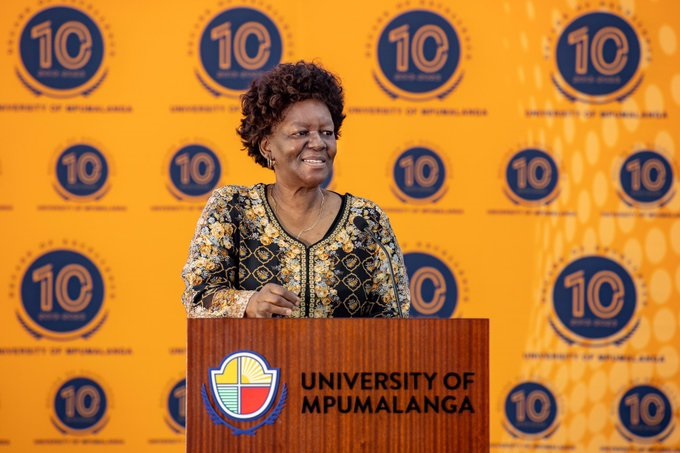
According to Professor Thoko Mayekiso, Chairperson of the RISG and Vice-Chancellor and Principal of the University of Mpumalanga, these case studies will enable USAf to highlight and celebrate the impact on society derived from research conducted at South African universities.

“Recognising that an engaged university identifies and responds to societal challenges in its context, we want to illustrate the developmental and transformative value of our universities in society,” she said, adding that this is one of the many ways “to invoke appreciation for our institutions of higher learning.”

The call to universities was distributed on 29 April 2024, targeting the offices of Deputy Vice-Chancellors responsible for Research and copying Research Directors. The submission deadline is 14 June 2024.

In this project, USAf collaborates with Professor Chris Brink, a widely recognised authority in the concept of an engaged university.

An Emeritus Vice-Chancellor of Newcastle University in the United Kingdom and former Rector and Vice-Chancellor at Stellenbosch University, Professor Brink was extensively involved in the conceptualisation, in South Africa, of the National Research Foundation (NRF) Framework to Advance the Societal and Knowledge Impact of Research. For the unfolding project, the RISG adopted the research impact definition provided in that Framework.

The NRF, mandated to support, promote and advance research and human capacity development through funding and providing essential research infrastructure, defines research impact as:

“A beneficial change in society or knowledge advancement, brought about as a direct or indirect result of the NRF’s research support interventions, whether planned or unintended, immediate or longer-term.”

Furthermore, top case studies could be presented at the upcoming 3rd USAf Higher Education Conference in October.

Professor Mayekiso specified that these case studies should provide evidence of already achieved and not anticipated change. “We look forward to receiving these fascinating narratives to factually demonstrate the value of our universities to the South African society,” she concluded. 

INSIDE EDUCATION

Accessible new career development avenue for SA teachers

Education Reporter

South African teachers face several challenges on the personal and professional development front, hindering them from progressing as leaders and managers. Topping their challenges are time and money, both needed to further their qualifications.

ADvTECH, SA’s leading private higher education provider, is addressing this challenge. It recently launched the Occupational Certificate: School Principal, offered via its distance learning college, Oxbridge Academy.

“The importance of accessible development opportunities for South African teachers cannot be overstated,” says Siyavuya Makubalo, Marketing Manager at Oxbridge Academy.

“Our teachers are tasked with raising the leaders of the future. However, they seldom can reach their full potential and become leaders themselves. When teachers have the chance to engage in professional development, it directly impacts not only the quality of teaching and learning they deliver in the classroom but also their career trajectories and self-fulfilment.”

Makubalo says the new occupational certificate’s purpose is to prepare teachers to become school managers.

“School managers lead, plan, develop and manage developed systems for effective and efficient delivery of quality education by ensuring the implementation and support of a value-driven ethos for quality teaching.”

“Teachers need to learn to lead and manage teaching and learning in a school; plan and manage the resources of the school; establish, lead and manage the relationship between and the impact of the internal and external community for the development of the school, and develop self and others through life-long learning to deliver quality teaching and learning.”

Makubalo says the benefit of continuing professional development via distance learning is that time-and-finance-stretched teachers can affordably study at their own pace while working and taking care of their loved ones.

“We believe this will be a game-changer for teachers in general, and also the skills complement in South African schools in particular, which is so desperately needed,” she says.

The Occupational Certificate: School Principal is NQF Level 6 accredited by the QCTO and SAQA accredited.

INSIDE EDUCATION

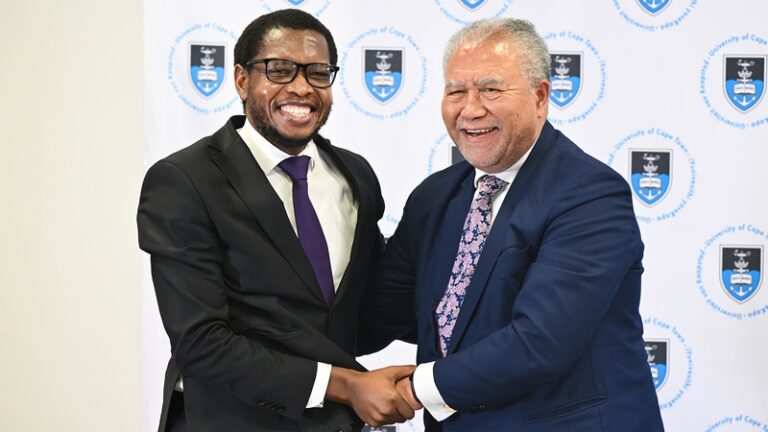
Professor Moshabela was announced as the new UCT VC

Staff reporter

THE University of Cape Town (UCT) has announced that Professor Mosa Moshabela has accepted an offer to become the university’s 11th vice-chancellor.

This concludes a thorough and consultative six-month recruitment and selection process and Professor Moshabela  will formally take up the UCT vice-chancellor position on 1 October 2024.

UCT Chair of Council Norman Arendse (SC) said: “Throughout the recruitment and selection process, he demonstrated deep knowledge and an appreciation of the challenges the UCT vice-chancellor may encounter. He showed a sincere commitment to agile, transformative, and values-based leadership.

“The selection committee believes that Professor Moshabela is the best candidate for such a time as this in UCT’s history and will work with conviction and vision to ensure UCT’s sustainability into and beyond 2030.”

Professor Moshabela has been the deputy vice-chancellor for research and innovation at the University of KwaZulu-Natal since 2021.

An esteemed academic and clinician scientist, he is a member of the Academy of Science of South Africa. He has a decorated career and multiple awards. Among these, the Public Health Association of South Africa awarded him the PHILA Annual Award in 2022 for his contribution to Public Health in South Africa and a Ministerial Special COVID-19 Award in 2020–2021 for COVID-19 Science Communication and Public Engagement.

Professor Moshabela is the Chairperson of the Governing Board at the National Research Foundation and Health Commissioner to the Premier of KwaZulu-Natal, one of the seven multi-sector commissioners on the premier’s Provincial Planning Commission.

He is a former member of the South African Medical Research Council board and former chairperson of the Standing Committee on Health in the Academy of Science of South Africa.

A medical doctor by profession, his research is focused on the implementation science of health innovations. This multidisciplinary practice seeks to improve healthcare access, quality, equity, and impact, especially in resource-constrained sub-Saharan African countries.

Professor Moshabela’s contribution to health research has primarily been improving access and quality in healthcare to combat infectious diseases, particularly HIV and TB, and in the areas of health systems, services, and policy research.

Globally, he is a member of the international advisory board for the Lancet Healthy Longevity, the Lancet commission on synergies between Health Promotion, Universal Healthcare Access, and Global Health Security, and the commission of the US National Academies for Science, Engineering, and Medicine on the Global Roadmap to Healthy Longevity.

Arendse concluded: “We are excitedly looking forward to having Professor Moshabela join UCT, and we have no doubt that he will be an excellent appointment to take the university a notch higher.”

Professor Moshabela will take over from Emeritus Professor Daya Reddy, who has been serving as vice-chancellor on an interim basis since March 2023. Professor Reddy has committed to working with Professor Moshabela over three months to hand over the vice-chancellor baton.

INSIDE EDUCATION