Home Blog Page 164

Free the Ukrainian Children Conference held in South Africa

Inside Education Reporter

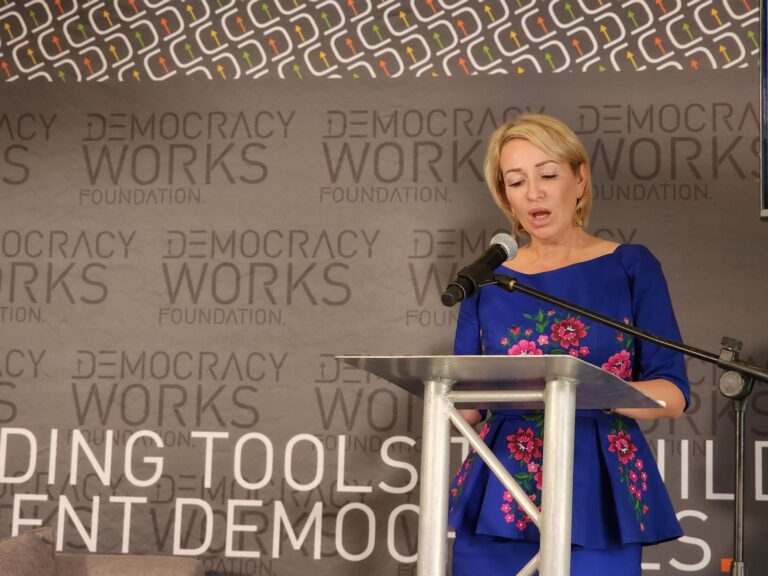
The two-day Free the Children Conference and civil society engagement whose aim is to design a roadmap to support the repatriation of children forcibly removed to Russia at the start of the Ukraine invasion in February 2022  – was held in South Africa recently.

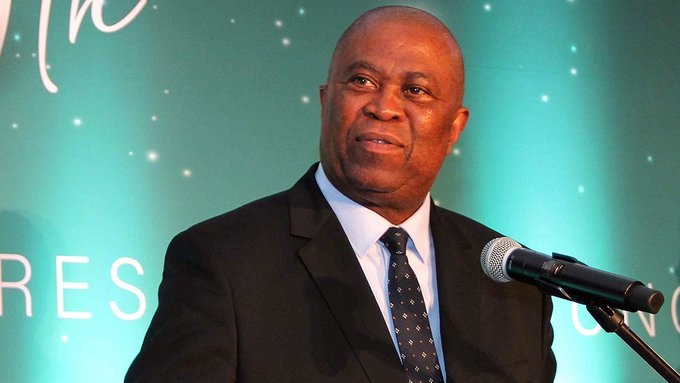
Among the delegates was former Ukrainian President Viktor Yushchenko, 

Ukrainian Ambassador Extraordinary HE Ms Liubov Abravitova, Professor Cheryl            Hendricks – former Executive Head of the African Institute of South Africa in the Human Sciences Research Council, Professor William Gumede – Associate  Professor, School of Governance at Wits University and Executive Chairperson of Democracy Works Foundation. 

Moderator and In Transformation Initiative member Daniel Ngoepe pointed out that South Africa has a history of the struggle for human rights and has a lot in common with Ukraine and its fight for its existence and, more especially, the freedom of the more than 19,000 children abducted from Russian-controlled territories including Ukraine.

Ngoepe said there was no greater crime against humanity than the abduction of Ukrainian children and the children stolen from the Russian-controlled territories. 

He urged society not to just speak up but to act because children everywhere were becoming victims of crime. “Children in Nigeria, South Sudan and in many war-torn countries are subjected to violence and crime”.


“South Africa has a role to play in campaigns, engagements, and finding practical ways to solve the problem. South Africa can reclaim its credibility as the voice for those who are being oppressed, as we did with Palestine, and apply the same principle to the children of Ukraine.”


Ukrainian Ambassador HE Liubov Abravitova said the 10 years of Russian occupation of Ukraine and the two years of its invasion have unleashed untold horror and violence on the people of her country, with thousands losing their lives and thousands more losing their homes.


“The suffering of the children is difficult to pronounce. But more than 500 children have been killed and hundreds of thousands displaced and removed from their homes. The children are targeted and taken to Russia in what Moscow says are attempts at rehabilitation and ending gangsterism.


“This is nothing but an attempt at re-education and collective brainwashing of Ukrainian children. There are many similarities with South Africa during apartheid when children were targeted at a young age.


“Estimates are that during apartheid 8 000 children under the age of 18 were held in prisons with little protection. So our pain is understandable to South Africans.

“South Africa believes in the rights of children as enshrined in your wonderful Constitution. South Africa’s cooperation with Ukraine can help us get the children back.  Your President Cyril Ramaphosa’s initiative and his peace mission is an example of your support for our plight”.


Professor Cheryl Hendricks in her opening remarks said South Africa will always support those who feel injustices because of its past.


Former Ukrainian President Viktor Yushchenko painted a picture of the horrors of what the Ukranians were being subjected to during what he described as his country’s “12th war” with Russia.

“The first victim is always a child when occupiers come into a country,” he said. 

“Thousands of elderly people are raped and murdered. Please don’t look away. Be on the side of the good. Being neutral in the face of evil is to multiply evil. You have lived through what we lived,” he said while appealing to South Africa to support their cause.


Professor William Gumede assured the Ukranians that South Africa’s civil society wants to give support to their cause and that the Democracy Works Foundation needs to build capacity and support those who fight for democracy in Africa and beyond.


Gumede said the economic costs of Russia’s invasion of Ukraine were huge not only for South Africa but for the continent as a whole and that is the reason why it is important for South Africa to help resolve the conflict.

He said Ukraine is waging a colonial war against Russia “the same way South Africans waged a colonial war against apartheid which gave rise to our democracy.

“Our foreign policy,” therefore, Gumede said, “must also reflect our constitutional democracy”. And “As Africans, if we do nothing, we will provoke a global impunity”.


On the issue of children: “Why are children important? Children and women suffer the most during conflict. It is imperative we support children and women in war-torn countries such as Sudan, Nigeria and in Gaza”.

INSIDE EDUCATION
UCT to honour close to 5 000 students in the March graduation season

Staff Reporter

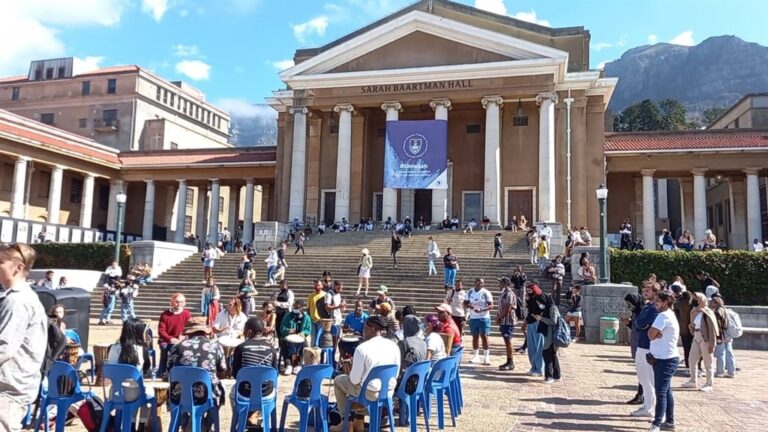
The University of Cape Town (UCT) will honour approximately 4 850 graduates – including 26 PhD degrees – during the ongoing March graduation ceremonies taking place over five days.

UCT will also confer honorary doctorates on four distinguished individuals who have contributed exceptionally to their respective fields: Mr Lionel Basil Davis, Ms Shirley Gunn, Professor Brian John Huntley and Professor Lehlohonolo Burns Banda Jiyane Machobane.

The March 2024 graduation ceremonies began on Saturday, 23 March, and will continue until Thursday, 28 March 2024.

  • See the full schedule of March graduation ceremonies.

UCT Vice-Chancellor (interim) Emeritus Professor Daya Reddy said: “To all our graduates, I extend my heartfelt congratulations on reaching this significant milestone. Your commitment to academic excellence and personal growth has been exemplary, and your achievements are a testament to your hard work and determination.

“Graduation is a time not only of personal celebration, but also one of reflection on the transformative power of education. Your qualification from UCT is a testament to your intellectual capabilities and will serve as a valuable asset in your professional career. As graduates of a premier university in Africa and the world, you have received a high-quality education that equips you to make meaningful contributions to society.”

The four honorary doctorates will be conferred as follows:

  • Ms Gunn will be awarded the degree of Doctor of Social Science (DSocSc) (honoris causa) on Monday, 25 March at 14:00.
  • Professor Huntley will receive the degree of Doctor of Science (honoris causa) on Tuesday, 26 March at 14:00.
  • Mr Davis will be awarded the degree of Doctor of Social Science (DSocSc) (honoris causa) on Wednesday, 27 March at 10:00.
  • Professor Machobane will receive the degree of Doctor of Social Science (DSocSc) (honoris causa) on Thursday, 28 March at 10:00.

The ceremonies are live-streamed on the UCT graduation feature page and the university’s social media platforms: Facebook and X. Recordings of the ceremonies will be made available at a later stage on the UCT YouTube channel as well as on the graduation feature page.

INSIDE EDUCATION

Responsible AI in higher education: Balancing innovation and accountability to unearth solutions

Inside Education Correspondent

What are the implications of Artificial Intelligence (AI) in higher education and what does applying such a technology responsibly look like for the African continent?

These are some of the questions that were explored during the recent UP – Meta AI Policy Dialogue that was held at the University of Pretoria’s Javett Art Centre at the Hatfield Campus. The policy dialogue brought together leaders and practitioners from the higher education, government and private sectors who explored the use of AI under the theme: “Responsible AI: Current Realities and Future Possibilities for Africa.”

“One of the things we foster at the University of Pretoria is what we call trans-disciplinary work because the world’s problems are not an engineering problem or a computer science problem or a law problem. They encompass different facets and we try and bring all facets to work on challenges and opportunities,” said Professor Sunil Maharaj, Vice-Principal: Research at UP.

“I hope that through this dialogue we’ll have today, we’ll develop actionable and context-specific recommendations and contribute to the development and governance of AI in South Africa and more broadly, in Africa,” he said.

Prof Maharaj added that the dialogue can also “offer guidance to inform the actions and decisions of AI developers, researchers, funders, and policy makers and of course, how we teach and learn going into the future.”

Deputy Minister of Higher Education, Science and Innovation, Buti Manamela, who delivered the keynote address at the dialogue said: “As a continent, we have immense diversity of potential and are standing on the cusp of a technological renaissance. The possibilities for artificial intelligence in Africa today are vast and diverse.”

Manamela said in order for the continent to fully tap into the potential offered by AI it needs to address challenges such as access to technology, infrastructure, data privacy, security concerns and skills development.

“We have to, probably under the African Union, consolidate our discussions as governments so that we have a clearer African agenda in terms of the use and deployment of artificial intelligence,” Deputy Minister Manamela said.

“AI is not just a buzzword,” he added. “It’s a tool that can be used to leverage some of our most pressing challenges from predictive analysis in healthcare, improving patient outcomes and managing diseases, to AI- driven agricultural technologies that promise higher yields for farmers. 

“We’re also seeing artificial intelligence transform the educational sector by personalising the learning experience and making education accessible to all, regardless of geographical location.”

Dr Chijioke Okorie, the founder and leader of UP’s Data Science Law Lab, emphasised the importance of context-specific solutions when developing AI solutions for the African continent.

“Within the AI policy space for the continent of Africa we know what to do, and what we need to do is focus on our context and our realities and use them to inform how to do AI policy research and how to devise policy implementation strategies,” she said.

Dr Okorie pointed out that even within the continent “there are comparable and similar experiences – but the engagement and impact of those similar experiences differ across the board, and so we must be nuanced and contextual in our approach in dealing with this”.

Sir Nick Clegg, the President of Global Affairs at Meta said events such the policy dialogue are important because being clear about what generative AI does and doesn’t do allows society to marry innovation and responsibility with the right blend.

“Transparency and openness are two foundational principles for us when it comes to innovating responsibly,” he said.

“I think it’s important to remember that this technology, far from disempowering people, will play a really vital role in empowering people. It isn’t realistic to imagine that very soon, every single person in this room will have an online AI assistant equal to the very best executive assistants found in corporate life. The degree of personalised help that can be given to people, I think, should lead to an immense democratisation of power.”

Clegg said the value exchange of AI is immensely beneficial for people.

“It’s not just a one-way street where your data is being sucked into some impenetrable machine and you get nothing out of it. We will all get a lot out of this and we can already see the beneficial applications of the technology in education, health, agriculture and in raising productivity across the economy.”

INSIDE EDUCATION

SA’s Baby Spar Netball team shine

Sports Writer

The Baby Spar South Africa netball team scored impressive wins over Tanzania and Zambia on Day 1 of the Netball World Youth Cup 2025 Qualifiers Africa, which played at the University of Pretoria’s Rembrandt Hall from 18 – 23 March 2024.

The SA U21 team is eyeing qualification for the Netball Youth World Cup in Gibraltar later this year. The recently announced squad is in the hands of newly-appointed Head Coach Precious Mthembu, together with Phumza Maweni, for the duo’s first assignment on the international stage.

South Africa last played at the Netball World Youth Cup some eight years ago, and this is an opportunity for them to return next September in Gibraltar. The Baby Proteas opened the first match day with an encounter against Tanzania.

The team was playing for the first time together today since they were assembled – the hosts were very quick to send a clear message to their opponents as soon as the whistle went off. The Baby Proteas restricted Tanzania to only scoring seven goals over an entire match while they put 75 past them.

The win for South Africa for the host was a great confidence booster ahead of their second match of the match against Zambia to close off the first day of play, and with many excellent choices on offer, the difficult choice of who would be unveiled as the match’s MVP was decided when Sanmarie Visser was voted Player of the Match.

The second match of the day was a battle between Kenya and Zimbabwe, with both teams seeking to secure their seat at next year’s Netball World Youth Cup. Unlike the first match, this was a bit more competitive, with both teams going at each other, with Zimbabwe coming up tops to win their first match 49 – 39.

Malawi squared off against Namibia in the third match of the day. On the opening day, Malawi was the stronger side, thrashing their Namibian counterparts 43 – 28 for a comfortable win.

After the official opening ceremony of the tournament, attended by government dignitaries at the municipality and provincial levels, the final match of the day saw hosts South Africa take on Zambia in the day’s top-billing fixture. 

Coach Precious made a few changes to her starting seven to allow some players who did not play in the earlier fixture a starting run. The hosting team got out of the starting blocks very quickly to convert their chances as early as possible in the match.

Zambia was only allowed to open their scoring after four minutes—such was the home defence and discipline that kept Zambia at bay. At the end of the first quarter, South Africa had a lead of 23 – 4.

There was no letup in the second quarter. They had extended their lead to 35 to Zambia’s 7, and at the end of the match, it was the Baby Proteas that emerged victorious, winning the game 72 – 9.

SA’s Baby Spar Netball team shine

Sports Writer

The Baby Spar South Africa netball team scored impressive wins over Tanzania and Zambia on Day 1 of the Netball World Youth Cup 2025 Qualifiers Africa, which played at the University of Pretoria’s Rembrandt Hall from 18 – 23 March 2024.

The SA U21 team is eyeing qualification for the Netball Youth World Cup in Gibraltar later this year. The recently announced squad is in the hands of newly-appointed Head Coach Precious Mthembu, together with Phumza Maweni, for the duo’s first assignment on the international stage.

South Africa last played at the Netball World Youth Cup some eight years ago, and this is an opportunity for them to return next September in Gibraltar. The Baby Proteas opened the first match day with an encounter against Tanzania.

The team was playing for the first time together today since they were assembled – the hosts were very quick to send a clear message to their opponents as soon as the whistle went off. The Baby Proteas restricted Tanzania to only scoring seven goals over an entire match while they put 75 past them.

The win for South Africa for the host was a great confidence booster ahead of their second match of the match against Zambia to close off the first day of play, and with many excellent choices on offer, the difficult choice of who would be unveiled as the match’s MVP was decided when Sanmarie Visser was voted Player of the Match.

The second match of the day was a battle between Kenya and Zimbabwe, with both teams seeking to secure their seat at next year’s Netball World Youth Cup. Unlike the first match, this was a bit more competitive, with both teams going at each other, with Zimbabwe coming up tops to win their first match 49 – 39.

Malawi squared off against Namibia in the third match of the day. On the opening day, Malawi was the stronger side, thrashing their Namibian counterparts 43 – 28 for a comfortable win.

After the official opening ceremony of the tournament, attended by government dignitaries at the municipality and provincial levels, the final match of the day saw hosts South Africa take on Zambia in the day’s top-billing fixture.

Coach Precious made a few changes to her starting seven to allow some players who did not play in the earlier fixture a starting run. The hosting team got out of the starting blocks very quickly to convert their chances as early as possible in the match.

Zambia was only allowed to open their scoring after four minutes—such was the home defence and discipline that kept Zambia at bay. At the end of the first quarter, South Africa had a lead of 23 – 4.

There was no letup in the second quarter. They had extended their lead to 35 to Zambia’s 7, and at the end of the match, it was the Baby Proteas that emerged victorious, winning the game 72 – 9.

INSIDE EDUCATION

Educor Colleges including Damelin and CityVarsity deregistered by Higher Education Department

Johnathan Paoli

The Department of Higher Education and Training has officially announced its deregistration of several educational institutions owned by Educor, including Damelin College, City Varsity, Lyceum colleges and Icesa City Campus.

The closure of the popular institutions will have a huge impact on thousands of students who have already registered with them and now have to find alternative places to study.

The Department’s DG Nkosinathi Sishi confirmed on Monday that the institutions have been deregistered due to their failure to submit annual financial statements for the years 2021 and 2022, as well as their non-compliance with legal requirements.

The affected institutions are owned by Educor, which claims to be the largest providers of private tertiary instruction in the country, with many of its programs offered through distance learning.

Deregistered institutions are required legally to inform students within 14 days, provide academic transcripts, reimburse students unable to access education, and make arrangements for affected students to complete their programs at alternative institutions.

In 2022 the Department made known its intentions to deregister Educor Colleges for failing to submit their audited annual statement. It also said a year ago it would deregister some programmes at Damelin College.

However, Educor denied the Department’s assertions at the time.

Veli Mbele, the spokesperson for the Minister of Higher Education and Training Blade Nzimande said the department had experienced significant problems with Educor Colleges and had received many complaints from students at Intec College and Damelin Correspondence College.

Lyceum was evicted from the campus in Woodmead late last year after allegedly owing more than R2 million to Adcorp.

Adcorp Group’s general counsel and company secretary Lisa Laporte said that Lyceum had continued to occupy the premises unlawfully until it left at the beginning of November, and Adcorp had requested the Department to investigate the matter.

“As of 10 August 2023, the sublease agreement between Adcorp and Lyceum was canceled pursuant to unremedied breach for non-payment by Lyceum of rental and other direct expenses,” Laporte said.

Mbele said in January this year the Council on Higher Education withdrew the accreditation of nine of Lyceum’s programmes; including diplomas in fleet managements; and higher certificates in credit management, financial management, fleet management, human resource management, marketing and sales management, public relations, small business management and supply chain management.

With regard to Damelin, a certificate issued by the Department on 12 December 2022 stated that the college may not market and have new intakes in a number of programmes pending the ruling of the high court on the withdrawal of accreditation for programmes including higher certificates in PC engineering, bachelor of commerce in information management and diplomas in financial accounting, HR, journalism and media studies.

The impact remains significant considering thousands of students will need to find alternative places to study, as the institutions mentioned will have no choice but to close by the end of the year.

INSIDE EDUCATION

Tributes to out-going Science and Innovation Director-General Dr Mjwara

Inside Education Reporter

The Minister of Higher Education, Science and Innovation, Dr Blade Nzimande, has paid tribute to Dr Phil Mjwara, the retiring Director-General of the Department of Science and Innovation (DSI).

Mjwara has a long and distinguished career as a senior public servant. With 18 years of service, he is the country’s longest-serving Director General.

“He played a leading role in shaping the policy and institutional architecture of South Africa’s National System of Innovation (NSI) and led the establishment of some of our country’s key science institutions, such as the Technology Innovation Agency (TIA) and the South African National Space Agency (SANSA),” said Nzimande.

Nzimande said the DG also played a leading role in laying the basis for and repositioning National Science Innovation through such policy interventions as South Africa’s first national Science and Technology Foresight Exercise in the 1990s and later the White Paper on Science, Technology, and Innovation and the Decadal Plan for Science, Technology, and Innovation.

“As chairperson of the Forum of South African Directors-General (FOSAD), he was critical in coordinating some of the key government projects and ensuring inter-departmental synergies.”

Dr Mjwara leaves the public service with a solid visionary and ethical leadership reputation.

Daan Du Toit has been appointed acting Director General for the Department of Science and Innovation for 12 months.

Du Toit brings with him a wealth of experience. He started his career in government at the then Department of Foreign Affairs, where he trained as a diplomat. Since 2002, he has been attached to the Department of Science and Innovation and has served as the Department’s representative in Europe.

Du Toit has big shoes to fill in Dr Mjwara’s place.

A three-time graduate of the University of Fort Hare (UFH), Mjwara was lauded by the South African Medical Research Council (SAMRC) for his immense contribution to promoting SA’s science, technology, and innovation when the council bestowed him with the Presidential Award during its 10th Annual Merit Awards held recently.

The award was granted a few days before the Higher Education, Science and Innovation Minister, Nzimande, announced Mjwara’s retirement from being the country’s longest-serving Director-General as the DG of the Department of Science and Innovation (DSI).

Dr Mjwara obtained a Bachelor of Science, Bachelor of Science (Honours) and Master of Science degrees from UFH between 1981 and 1987.

SAMRC President Professor Glenda Gray said: “Dr Mjwara has set the vision for all policy development in the science and technology sector in SA. He saw the need to create sustainable programmes, infrastructure, and human capacity to ensure SA achieves excellence in critical areas of science and technology,”

At Fort Hare, the university said that, as a community, it prides itself on alumni such as Dr Mjwara, who continue to portray Excellence in their roles.

INSIDE EDUCATION

UP and Czech Academy of Sciences explore collaborative efforts to advance research

Staff Reporter

Professor Sunil Maharaj, Vice-Principal of Research, Innovation and Postgraduate Education at the University of Pretoria (UP), along with various UP representatives, recently met with Prof David Honys, member of the Council of the Czech Academy of Sciences (CAS), and delegates from the Embassy of the Czech Republic to discuss opportunities for collaboration between the two institutions.

Prof Maharaj facilitated the discussion and emphasised UP’s continuous efforts to cultivate global collaborations and partnerships, including within the European Union, with a focus on identifying areas of mutual academic interest and exploring the potential for establishing a formal partnership.

“The Forestry and Agricultural Biotechnology Institute, which we have been running for 25 years, is one of the biggest plant science institutes in South Africa,” Prof Maharaj said. “They are leaders in terms of research, with a number of the researchers in the Institute ranked in the top 1% of the most highly-cited researchers in the world by the Institute for Scientific Information (ISI). We also have a platform called Innovation Africa @UP, where we do cutting-edge research, particularly on forestry, agricultural and natural sciences.”

Prof Wolf-Dieter Schubert, Chair of Postgraduate Studies in UP’s Department of Biochemistry, Genetics and Microbiology in the Faculty of Natural and Agricultural Sciences, was part of the UP delegation. He and Prof Honys are optimistic about the research the CAS is doing on water management, land protection, land conservation, agricultural energy production and energy storage.

UP and the CAS recognise the importance of global collaboration to advance scientific research and innovation. The partnership will allow for a transfer of skills and knowledge as doctorate students will get the opportunity to conduct research in world-class laboratories under excellent tutelage.

While no formal agreement was finalised, both parties expressed a desire to continue discussions about potential student/faculty workshops, collaborative research projects and other partnership opportunities, and establish a comprehensive roadmap for cooperation between the two institutions.

INSIDE EDUCATION

UWC’s Eye-Opening Teacher Training Excursion Prepares Students for Real-Life Challenges in Education

Staff Reporter

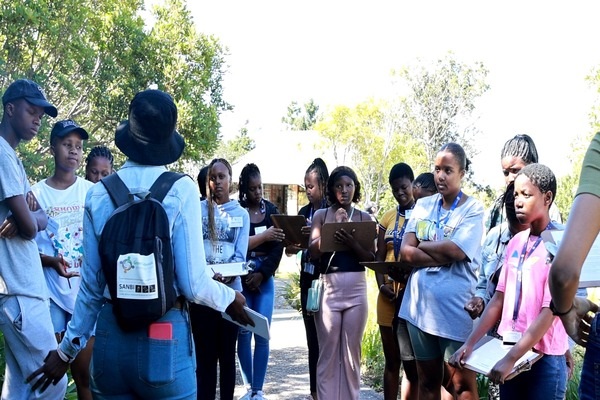
THE dire socio-economic challenges many teachers and their learners face are why the University of the Western Cape’s (UWC) Education Faculty has embarked on an effective teacher-training student excursion to expose first-year students to the obstacles that might lie ahead.

The faculty arranged an orientation weekend excursion to Betty’s Bay to introduce the new cohort of foundation phase teaching students to a South African future education workforce experience.

Professor Josef de Beer, Director of the Science Learning Centre for Africa (SLCA) at UWC, said the excursion was a perfect base for them to build on and to provide foundation phase student teachers exposure to the social background of their future learners, especially those from underprivileged backgrounds, while sensitising them to the complexity of the teaching profession.

As an example, some learners are forced to warm water on a fire to wash themselves before school, and thanks to these excursions, teaching students can better relate to some of their future learners’ lived experiences.

“We use a teaching method of play that would disrupt their current thinking by asking critical questions such as whether they are truly inclusive and what barriers they will be facing as a teacher in the making. It is a way of addressing their fears and confronting their biases,” said Prof De Beer.

An activity was developed where students built sun stoves or solar cookers from scratch using recyclable materials such as boxes, aluminium foil and cling wrap. They then had to boil water in cold drink cans to as high a temperature as possible.

“The idea with this exercise is to prepare students for any situation, whether they teach at a rural school or a school in an affluent area, the aim is to bring them to the real-life situation to address another goal: to make students aware of the socioeconomic divide they will face in a classroom.”

The sunstove activity also required out-of-the-box thinking, where student teachers had to design stoves taking the laws of physics into consideration, and also outsmarting the baboons in the area, who were very curious about these contraptions.

One specific activity, the Famine and Abundance Game, made students aware of some learners’ limited access to resources.

“This is just one of the important characteristics of the education environment that students may encounter, and it is important that they experience it themselves through the activity we applied. Students could engage with questions about what they have to do to be a truly inclusive teacher and think about how they should include it in their teaching methods.”

Prof De Beer said that according to research; student teachers often hold very naive perceptions of what it means to become a teacher.

“It is called the apprenticeship of observation. This means the 12 years we spend in schools, as with our first years, we are exposed to observing teachers who are very often bad role models, resulting in new students having the perception that they are ready to teach, but this is definitely not the case.”

A visit to the Harold Porter Botanical Garden showcased activities highlighting the environmental crisis the country is experiencing.

Teachers have a significant role to play in advocating for environmental education because they work closely with a new generation of learners who may have yet to be exposed to nature, and need to realise the importance of conserving this natural asset.

Dr Carli Schoeman, a first-year education lecturer at UWC, said: “It is very important that students should be exposed to the complexities of education as a profession. The activities we’ve been doing with students exposed them to some elements of the multi-dimensional classroom they will encounter in future, opened their eyes to the social backgrounds of other students, and helped them experience totally new perspectives.

“We received positive feedback from our students. It was important for them to form a unit in the classroom setup. It also helps us as lecturers to link our lessons to what we experienced here during this excursion.”

First-year student Somalia Mhlauli said this educational excursion changed her perspective. “It taught me what it will be like stepping into the classroom and explained my role in changing someone’s life.”

Click here to watch the first year education students and lecturers speak about their experience during their excursion in Betty’s Bay.

INSIDE EDUCATION

Applications for Irish Tech Challenge now open to South African innovators

Inside Education Writer

Local technology entrepreneurs have an opportunity to showcase their innovations to a global audience with the official launch of the 2024 instalment of the Irish Tech Challenge South Africa.

The challenge is a partnership between the Embassy of Ireland in South Africa, the Department of Science and Innovation (DSI), the Technology Innovation Agency, along with implementing partners, Wits University’s Tshimologong Digital Precinct and Dogpatch Labs, a start-up incubator in Ireland.

Launched on 15 March 2024 by Ireland’s Minister for Housing, Local Government and Heritage, Mr Darragh O’Brien, TD, this year’s competition will have seven winners, an increase from five winners in past editions.

Speaking at the launch at the Tshimologong Digital Innovation Precinct in Braamfontein, Minister O’Brien said the continued collaboration between South Africa and Ireland is important for his government.

“Ireland is committed to deepening trade and investment relations with South Africa. This includes the promotion of entrepreneurship among women and young people from backgrounds of historical disadvantage. Our partnership with the South African government on the Irish Tech Challenge reminds us of the crucial role of technology and innovation in achieving the Sustainable Development Goals and inclusive economic growth.”

The winning start-ups will receive €10,000 each in grant funding and travel to Ireland on a 10-day trip where they can engage with global customers and partners, access Ireland’s top tech expertise and business acceleration, and benefit from increased visibility through support from both governments.

Chief Director for Overseas Bilateral Cooperation at the DSI, Ms Anneline Morgan, expressed South Africa’s commitment to bilateral relations with Ireland on science and innovation.

“This initiative underscores the two countries’ commitment to fostering innovation and driving technological advancement. Programmes like the Irish Tech Challenge provide a platform for aspiring technologists and entrepreneurs to showcase their talent, collaborate on groundbreaking projects, and contribute to the growth of tech ecosystems in both countries,” said Ms Morgan.

“The DSI encourages all participants to seize this opportunity, embrace the spirit of collaboration, and unleash their potential to shape a brighter future for the two countries and beyond,” she said.

Prof. Zeblon Vilakazi, Vice Chancellor of Wits University, reaffirmed the university’s dedication to fostering innovation and entrepreneurship. He emphasised the pivotal role of the Tshimologong Precinct in nurturing start-ups, positioning it as a key contributor to their growth and development.

“Wits University is committed to supporting the vibrant entrepreneurial ecosystem, exemplified by its active participation and coordination in initiatives like the Tech Challenge, which greatly benefits the start-up community,” said Prof. Vilakazi.

Innovative companies working in clean and green technology, healthcare, education, and water sanitation and hygiene are particularly encouraged to apply, as part of the Tech Challenge’s aim is to address pressing global challenges while promoting economic development and job creation in South Africa.

In line with its commitment to diversity and inclusivity, the Irish Tech Challenge South Africa encourages applications from women, young entrepreneurs, and historically disadvantaged communities. By providing a platform for underrepresented groups to showcase their innovations, the challenge aims to create a more inclusive and equitable tech ecosystem.

Building on previous successes, the Irish Tech Challenge 2024 marks a new phase of innovation advancement and promotion in South Africa. With a focus on sustainability, social impact, and economic development, the challenge promises to catalyse positive change and work towards a brighter future.

Applications close on 26 April 2024. For more information, including how to apply, visit www.irishtechchallenge.com or www.dst.gov.za.

For media inquiries, please contact Veronica Mohapeloa at 082 882 3818 or veronica.mohapeloa@dst.gov.za.

INSIDE EDUCATION

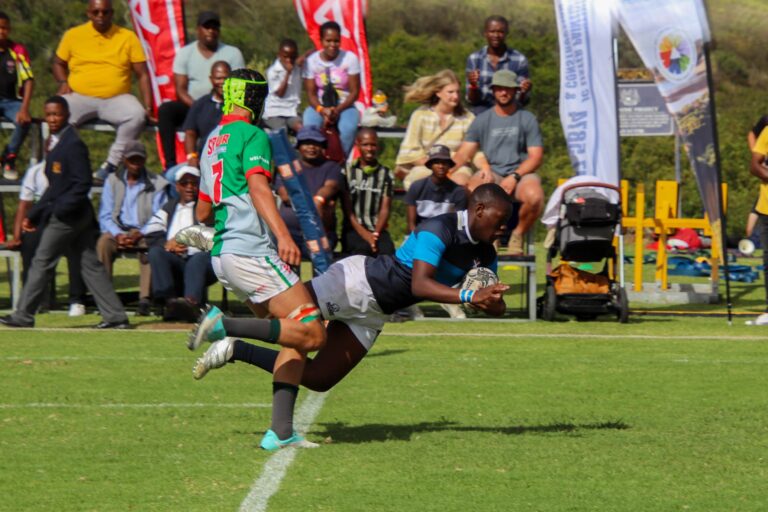
Graeme College Rugby Festival packed plenty of highlights

Sports Reporter

The Graeme College Rugby Festival packed plenty of punch with rousing performances and plenty to cheer for spectators.

In some of the most exciting matches at the weekend, Grey High romped to Victory with Jon Hobson unstoppable, powering through the Hudson Park defence for a hat-trick of tries.

The Grey champion kept Hudson Park on their toes with a dominant performance, leaving them trailing 20-0 at halftime. Hudson Park showed some spark in the second half, but Grey piled on another five tries for a convincing 44-5 win.

In a game of dramatic swings, Dale College found itself in a rut against Nico Malan. The first half saw Malan score four tries, leaving Dale floundering at 32-8. But Dale dug deep in the final quarter, scoring a flurry of tries and threatening a comeback. Unfortunately, their final try came after the hooter, sealing their fate with a slim 32-29 defeat.

Mary Waters won an absorbing encounter against Port Rex with a last-gasp drop goal. The match was hard-fought. Mary Waters sneaked ahead through a Peterson penalty midway through the second half. Port Rex returned with a try to take a 12-10 lead with just 12 minutes remaining. But Mary Waters wouldn’t give up.

Capitalising on territorial dominance, they earned a tap penalty just five meters out. With the Port Rex defence holding strong, Shaneen Peterson displayed some magic with a cleverly executed drop goal that sailed through the posts, giving Mary Waters a dramatic 13-12 victory.

Kingswood Cruises Before Marlow Mounts a Late Charge: Kingswood capitalised on Marlow’s mistakes, racing to a commanding 14-0 lead at halftime thanks to tries from Vizi Labase and Tapiwe Zhanda. The second half seemed like a formality as Kingswood added two more tries to stretch the lead to 24-0. However, Marlow refused to give up. They clawed their way back with tries from Jan Els and Hermanus Steyn. Despite a glimmer of hope, Kingswood shut the door with another try to secure a hard-fought 29-14 win.

Daniel Pienaar Puts on a Masterclass: Daniel Pienaar dominated Union High with a clinical display of power and precision. Mariano Pillay’s double strike in the second half highlighted their dominance, while Armand van Rensburg orchestrated the attack with pinpoint kicks and a well-deserved try. The final score reflected Daniel Pienaar’s complete mastery: 43-6.

INSIDE EDUCATION