Home Blog Page 171

MEC Chiloane praises the skills, partnerships and opportunities of Schools of SoS at Festival

Johnathan Paoli

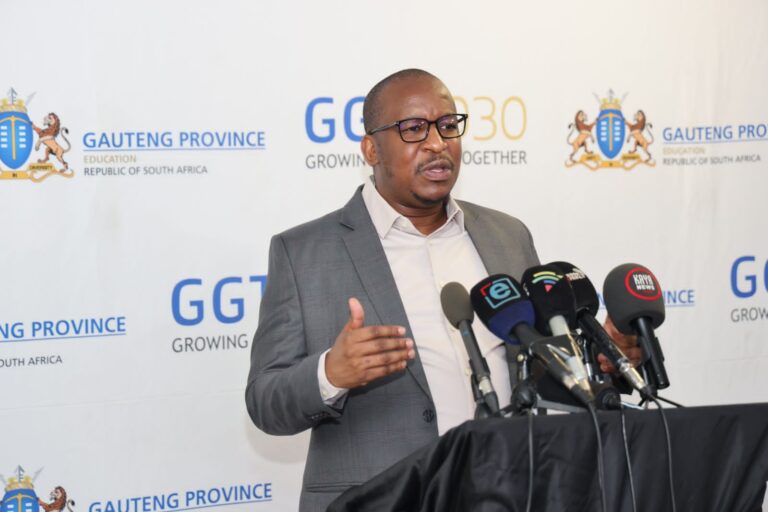
MEC for Education and Youth Development Matome Chiloane praised the achievements on display at the Schools of Specialisation (SoS) Festival and said  the programme is about post-matric career pathing for learners and with the resources, facilities and support required to prepare learners for work and for life beyond school.

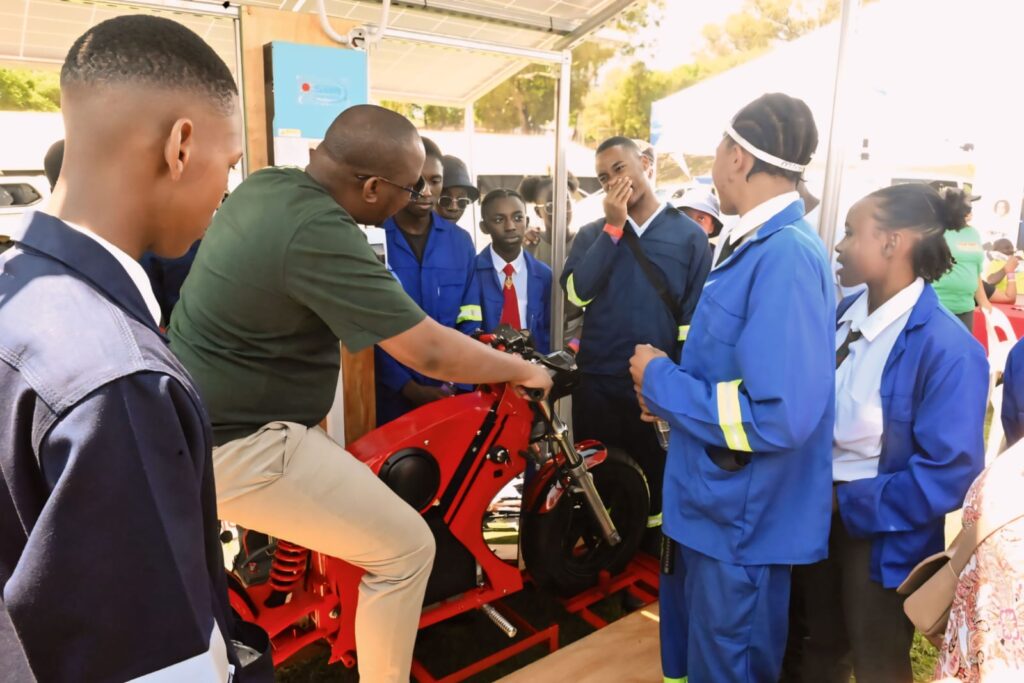
MEC Chiloane made a keynote address ahead of the festival held in Milpark, Joburg on Saturday which saw over thirty stalls set up, representing the province.

Chiloane said through the SoS, the intention is to produce learners who have accumulated a well of technical skills; and who have skills in leadership, good citizenship and entrepreneurship; and a range of soft skills such as interpersonal relations, among others.

“Today is truly not a day for speeches. We are here today to celebrate and have the various schools of specialization experience each other’s greatness that they have been hearing of,” Chiloane said.

The MEC said the department was proud of all the schools where education is focused and targeted on a specific industry or economic activity for which learners can be prepared to understand and appreciate the nature of the industry.

Chiloane said the winners and achievers of this festival will put Gauteng on the map in relation to advancing innovation and knowledge through the SoS.

He said that he was excited to see the passion and creativity on display and that the future is in good hands with these young minds leading the way.

“I’m grateful for the opportunity to connect with students, educators, and innovators at events like these. Together, we can make a difference in education,” Chiloane said.

The MEC also encouraged more partnerships to propel the SOS programme across more schools in the province, and said these schools have demonstrated over time that the intended objective of developing skills have been achieved.

“The anchor for SoS is partnership. Partnership so that the learners can get bursaries, apprenticeships, and all other opportunities that they require to go further,” the MEC said.

CEO & Founder of Sifiso Learning Group Sizwe Nxasana said that these schools are a shining example of future education not only in the province, but in the country.

“Today we are surrounded by vibrant potential coming from our learners and it shows that it’s not only knowledge but also skills, including problem solving and critical thinking, which would serve the learners well in the future,” Nxasana said.

He said that graduating from the schools of specialisation set the learners apart from any other learner in the country and that all the schools represented were winners in the long run.

INSIDE EDUCATION

School ceiling collapsed: Chiloane denies GDE failed to maintain infrastructure

Johnathan Paoli

Gauteng Education MEC Matome Chiloane has denied reports that the department is failing to sort out decaying infrastructure at schools.

The statement comes after a group of Grade 6 pupils at Umthambeka Primary School in Tembisa were injured on Tuesday when a ceiling board in their classroom collapsed.

The Gauteng Education Department confirmed that 18 Grade 6 pupils sustained injuries and were rushed to nearby hospitals and said that two pupils are still recovering at medical facilities while the others were sent home.

GED Spokesperson Steve Mabona said the cause of the incident is being probed, but that it remained uncertain at this stage.

“The cause of the incident is uncertain at this stage. As such, we have launched an investigation into circumstances surrounding this incident. Further information will be acquired from the School Management Team, School Governing Body (SGB) and the district accordingly,” Mabona said.

The MEC vehemently denied allegations by some that the incident was an example of the department’s failure to actively ensure sustainability of school infrastructure.

“There are a number of schools that we’ve also earmarked for major refurbishments, and these are some of schools, like for instance, Umthambeka, is also earmarked for major refurbishments because the infrastructure is quite old,” Chiloane said.

This comes on the heels of an accusation by EFF member Naledi Chirwa-Mpungose accusing the department of mishandling funds intended to address the infrastructure challenges in township schools.

Chiloane arrived at Soshanguve on Wednesday in order to launch the Lethabong Maths, Science and ICT School of Specialisation with a focus on Automotive technologies, in partnership with BMW South Africa, this being the 34th school of its kind to be launched in the province.

INSIDE EDUCATION

Parental participation in school governance is a must, says MEC Chiloane

Lerato Mbhiza

MEC of Education in Gauteng Matome Chiloane officially launched the 2024 School Governing Body (SGB) Elections on Wednesday, at Raymond Mhlaba Maths, Science & ICT School of Specialisation in Tshepisong, Roodepoort and urged the SGB members to appreciate the importance of parental participation in school governance

Video by Tlholohelo Mosala

Every three years, schools in South Africa are expected to elect new SGB members, and the tenth cycle of elections will take place from 1 – 31 March 2024 at all public, ordinary, and special schools throughout Gauteng.

Chiloane said the parents need to ensure they elect people who have the best interest of the school in the upcoming elections.

“Don’t elect people who will cause confusion in schools,” he cautioned.

He added that all schools are urged to adhere to the current regulations and procedures established for conducting SGB elections as outlined in GENERAL NOTICE 786 of 1997.

Chiloane said SGBs serve as guardians and caretakers of the school and set the school culture and climate.

“The SGB election launch determines the school’s vision and mission, values and ethos, and policies,” he said while reminding the parents that SGB is established to ensure quality education for all learners at the school.

“We have every reason to have so much faith in our SGB’s because, upon election, our governors go through several developmental programs by Matthew Goniwe School of Leadership and Governance to ensure that they are fit for purpose,” he said.

On challenges faced by the school, Chiloane said SGB needs to find new ways to help the school, such as cleaning the premises and finding people to help patrol the facility if there is a crime taking place..

The SGB chairperson of Thulani secondary Nkosinathi Thwala said the coming elections are coming at a time where schools have difficulties such as school learners killing each other learners and shooting principals.

Thwala said members of SGBs need help from the parents to join hands with the school. SGB is in order to have a school that’s functional .

“We need help as pupils misbehave, such as fighting after school. We need parents to join hands with parents to reduce this situation”.

Noxolo Mtetwa from Slovoville primary school SGB Treasure said they welcomed the elections of which will bring new members of SGB

Makie Mtonga from Westridge High School said they need to move parents to be involved, and in her school, they need all parents to be involved in the school performance.

“It needs school governance parents and SGB .. The challenges that we face, such as school learners misbehaving in school and when you call parents in parents, don’t show up for meetings “

INSIDE EDUCATION

Cap Exorbitant Vice-Chancelors Salaries– CHE Report

Edwin Naidu

A long-awaited report on Vice-Chancellors’ pay has recommended that their salaries be capped and subject to monitoring.

The report showed that VCs in South Africa receive, on average, 1.4 times more than senior executives, 2.2 times more than senior professors, 2.3 times more than professors, 4.1 times more than lecturers, 6.6 times more than junior lecturers; 2.3 times more than P4 senior directors; 6.2 times more than senior administrators; 8.5 times more than P11-P12 administrators; and 12.3 times more than P13-P16 general workers.

The inquiry into the Remuneration of University Vice-Chancellors and Senior Executive Managers in South Africa was presented in the National Assembly during a sitting of the Portfolio Committee on Higher Education, Science and Innovation on 21 February.

The probe began in January 2020, after the Minister of Higher Education, Science and Innovation, Dr Blade Nzimande, asked the Council on Higher Education (CHE) to undertake an enquiry into the salaries of Vice Chancellors (VCs) and other senior executive managers and look at possible measures for regulation.

The Terms of Reference for the enquiry included: the annual salaries and increases of VCs and senior executive managers since 2005; how these compared to those of academic and professional, administrative and support staff in universities; administrative and governance arrangements that determine the salaries of VCs and senior executive managers; whether remuneration committees utilize external benchmarks in determining salaries; performance evaluation mechanisms, and how they are used to determine VCs’ salaries and benefits.

In 2019, the university VCs’ average total cost to the company (TCTC) was R4 129 835 (median: R3 966 069). The university VC with the highest TCTC was at the University of Johannesburg (R7 166 995), and the VC with the lowest TCTC was at the University of Venda (R3 033 988).

In 2019, VCs’ average basic salary was R2 912 846 (median: R2 785 633). The university VC with the highest basic salary was Stellenbosch University (R4 198 875), and the VC with the lowest basic salary was Vaal Triangle University of Technology (R1 915 565).

From 2005 to 2019, VCs’ median TCTC grew from R1 296 987 to R3 966 069, which is a 206% increase and when compared with inflation, the real annual increase is 2.41% points on average. From 2005 to 2019, VCs’ median basic salary grew from R821 185 to R2 785 633, which is a 239% increase and, when compared with inflation, the real annual increase is 3% points on average.

According to the report, obtaining data and information on every component of the remuneration of hundreds of individual university executives over some 15 years faced several challenges: Some universities had not kept, lost, or could not retrieve or withheld vital records (including minutes of Council meetings and remuneration data).

A lack of institutional memory was proffered as a reason not to answer specific questions. Considerable delays were caused by some universities having to make extensive corrections to submitted data, which the enquiry found – and the institutions belatedly admitted – to be incorrect.

Poor institutional governance and management and lax financial practices were unearthed at several institutions, often involving large financial payments to executives, sometimes repeatedly and over several years, without such payments following established financial and accounting processes and channels. As a result, many of these payments could not be adequately explained or accounted for.

At most universities, VCs’ and senior executives’ remuneration packages are decided by a relatively small group of individuals, such as a Remuneration Committee, whose deliberations are not always disclosed to the full Council.

Three instances of significant concern in the report were raised as follows:

The University of Johannesburg kept no records of decisions regarding and failed to report annually or adequately account for large payments paid for performance bonuses (e.g. R4 055 035 in 2016), deferred compensation (e.g. R4 392 135 in 2016 and R12 800 000 in 2017) and other incentives and benefits paid to a former VC over several years.

After a limited investigation, which did not cover the VC’s entire term of office, some of this money was recovered from the VC and outstanding taxes were paid to SARS, but the bulk was written off or not recovered.

The University of Limpopo paid a large amount of R3 745 000 to its VC in 2017 to ‘rectify lost benefits’ because he had not utilised certain perquisites (including a university house and private staff) which, for years, had been available to him, as well as an amount of nearly R1.5m in ‘leave encashment’ in 2018. This VC was, after that, immediately re-appointed on a five-year post-retirement contract with little difference to his remuneration arrangements.

The University of Pretoria failed to divulge fully (and partly misrepresented what it did divulge regarding) millions of Rands paid to its executive managers in retention agreements. These agreements twice included large payments intended to retain the services of a VC (R3.5m in 2009 and R7.7m in 2014) who, despite receiving, in addition, a very generous remuneration package, left the institution anyway and was nevertheless permitted, somewhat dubiously, both to keep the retention payments and take up full-time employment elsewhere, as long as she returned (as a professor).

The enquiry also identified the poor corporate governance and lax financial practices of several other universities.

The report said VCs’ and senior executives’ generous remuneration packages and spiralling above-inflation increases had been facilitated by weak institutional governance and accounting practices, including decisions made by limited numbers of university councillors based on selective and sometimes problematic assumptions.

The report recommends greater external and institutional oversight, more regular scrutiny, improved institutional governance, accounting, and reporting practices, and strengthened and more developed policy frameworks concerning executive remuneration.

The reporting of executive remuneration in university Annual Reports must be made more detailed, comprehensive, comparable, and standardized; DHET monitoring of such reporting must be enhanced, and the Auditor-General should be requested to oversee the external auditing companies employed by each university, as is the practice for other public entities in the sector. Guidelines and policy frameworks should be developed and strengthened to cap executive remuneration.

INSIDE EDUCATION

Unemployed youth receive GCRA bursaries to study

Inside Education Reporter

Recently, the French Southern African Schneider Electric Education Centre (F’SASEC) at VUT, hosted a warm and insightful orientation programme for the 120 students who have been awarded bursaries by the Gauteng City Region Academy (GCRA).

The awarding of bursaries to this cohort of unemployed youth by GCRA resonates profoundly with Nas’ ispani, a mass recruitment programme spearheaded by the Gauteng Premier, Honourable Panyaza Lesufi.

Launched in June 2023, the programme stands as a pioneering initiative to address unemployment and enhance access to job opportunities within the Gauteng Provincial Government departments and state-owned agencies.

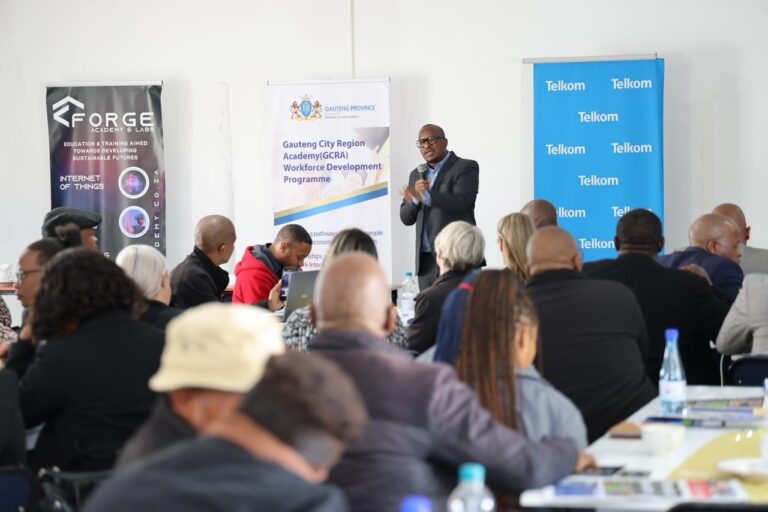
Dr. Amuzweni Ngoma, Director at the GCRA under the Department of Education, delivered an inspiring address to the students, emphasising the importance of igniting a passion for their studies.

Dr Ngoma underscored that this opportunity is not merely about academic pursuits but about self-discovery and moulding their futures. Dr. Ngoma urged the students to seize this rare chance, emphasising the need to proactively engage in research to enhance their chosen career paths and personal development.

The students will immerse themselves in various programmes offered, including domestic and industrial installations, Programmable Logic Controller (PLC) training, solar panel installation, and N3 and N4 programs.

With the programme kicking off in mid-February, these initiatives promise to equip them with valuable skills and knowledge essential for their professional growth and success.

The Head of Department for the Centre of Excellence at F’SASEC, Welile Nyembe, stated that she is truly grateful for this opportunity and is filled with enthusiasm at the prospect of collaborating with GCRA.

“Anticipating our partnership with great eagerness, I believe that VUT F’SASEC has a pivotal role to play. Our commitment extends beyond merely imparting skills; we aim to empower GCRA candidates, fostering their development into highly employable and productive individuals. Together, we are poised to make a tangible difference in the lives and careers of these aspiring professionals,” added Nyembe.

The collaboration between F’SASEC and VUT has been hailed as exemplary in attaining youth development through public-private partnerships (PPP).

INSIDE EDUCATION

Unlocking the potential of business school graduates by equipping them with ‘plug and play’ skills

The demand for highly skilled and adaptable professionals has never been greater. As businesses navigate the complexities of the Fourth Industrial Revolution (4IR) and the Digital Era, they require graduates equipped not only with technical expertise but also with the soft skills and innovative mindsets necessary to thrive in this dynamic environment.

This reality presents a significant challenge for higher education institutions, particularly business schools, tasked with preparing students for the multifaceted demands of the modern workforce. From the importance of soft skills to the power of ideation and innovation, he explores how forward-thinking institutions can and should be embracing change, fostering creativity, and empowering graduates to excel in the ever-changing landscape of global commerce.

By Hoosen Essof

Imagine being faced with the task of selecting between two candidates whose academic credentials are equally impressive, yet you can only accommodate one. What criteria would you employ to make this decision?

According to a 2021 Harris Poll survey, 81 percent of businesses prioritise soft skills, such as adaptability, communication and problem-solving, over technical expertise1. These skills enable graduates to thrive in a rapidly changing and competitive business environment.

Generally, employers seek graduates with a diverse set of skills and attributes to meet the ever-evolving demands of the workforce. According to the National Association of Colleges and Employers (NACE)2 and other surveys, employers value skills and qualities such as: leadership, problem-solving ability, adaptability, teamwork, communication, analytical and quantitative skills, initiative and self-motivation. Together with soft skills, these are described as 21st century transversal skills or cross-functional competencies.

In essence, employers are seeking graduates who possess a combination of technical expertise, soft skills and personal qualities that enable them to thrive in a rapidly changing and competitive business environment. These skills and attributes are highly valued and can significantly enhance a candidate’s employability and long-term career prospects. But how do you prepare graduates for the world of work beyond academic achievement?

Disrupt. Rethink. Innovate.

Business schools play a pivotal role in this regard. Institutions must recognise the imperatives of the Fourth Industrial Revolution (4IR) and the Digital Era. Schools should be exploring pedagogical methods that integrate academic programs with hands-on, real-world experiences which at first glance seems out of place for a business school.

Take, for instance, a trailblazing technology-related hub established at Regent Business School called the iLeadLAB, which, in effect, is a Makerspace (a place for making, exploring and using high-tech tools). Through the auspices of these labs, students are encouraged to adopt a hands-on approach and are taught various technological skills that synergise with industry needs, specifically in commerce, finance and business. Five such iLeadLAB’s have been established across various Regent Business School campuses in Southern Africa, each one equipped with laser cutting machines, 3D printers, sublimation equipment, high-spec computers, VR sets, and electronic and robotic kits. In preparing students for the new world through new integrated core curriculums, higher education institutions can equip students with technological skills for a disruptive 21st century.

Hoosen is Essof Head of Employability at Regent Business School

Winners Announced: Nedbank & Old Mutual Budget Speech Competition Celebrates Excellence

Staff Reporter

THE Nedbank & Old Mutual Budget Speech Competition, a prestigious annual event celebrating academic excellence and innovative thinking, proudly announces the winners of this year’s challenge.

Recognising the brightest minds from across the nation, the competition has once again highlighted the significant contributions of both undergraduate and postgraduate students to economic discourse and policy development. With awards recognising outstanding essays that tackle complex socio-economic issues, this initiative continues to foster a generation of leaders poised to shape the future of South Africa’s economy.

The postgraduate students were tasked with presenting their insights on the concept of the “Just Energy Transition” and its potential ramifications on South Africa’s economy. Their essays delved into the examination of whether this transition could act as a catalyst for the nation’s economic growth agenda or whether it could present headwinds and ultimately fail to deliver the intended outcomes.

With aspirations of becoming a researcher, University of Johannesburg student Sandile Mbatha’s well-articulated essay secured him the coveted first place, along with an incredible amount of R150 000 in the postgraduate category.

Expressing his excitement following the announcement, Mbatha said “Winning the Nedbank & Old Mutual Budget Speech Competition shows how much I care about this subject. It makes me even more excited and determined to look closely at the country’s economic problems and come up with innovative ideas to solve them. I am honoured to have my thoughts and voice recognised in this prestigious competition and by leading figures in the field.”

The Competition also recognised the outstanding essays presented by fellow participants, awarding second and third places to Ziyanda Magazi and Irshaad Mayet respectively. Their exceptional contributions have earned them prizes of R100 000 and R50 000.

In the undergraduate category, Hamzah Mia from Wits University emerged as the winner, earning himself the first prize of R60 000. Shuaib Mahomed from Wits University secured second place in the category, earning the prize of R40 000, while Paula Prinsloo, also from Wits University received the third-place honour, valued at R20 000.

In the undergraduate category, students were tasked with analysing the inflation dynamics in emerging markets from 2017 to 2022, focusing on the implications for monetary policy in South Africa.

Talking about his win, Mia said: “Winning the Nedbank & Old Mutual Budget Speech Competition is an indescribable feeling, a culmination of endless dedication, perseverance, and passion. In this moment, every sacrifice, every late night, and every setback feels worth it.

“It’s a validation of not just my abilities, but also of the unwavering support and belief from my loved ones. Yet, amidst the overwhelming joy, I’m reminded of the journey’s humbling lessons and the camaraderie shared with fellow competitors. Now, as I bask in the glow of success, I’m filled with gratitude for this opportunity and a readiness to embrace what lies ahead with newfound confidence and determination.”

Over the past 52 years, the Competition has demonstrated Old Mutual and Nedbank’s commitment to intellectual rigour in pursuit of education and solving societal challenges. This competition is a key annual event and has already helped to fund future academic research by some of the country’s most influential economists, intellectuals, and business leaders.

“The essays continue to demonstrate outstanding academic prowess and innovative thinking, making this cohort of students champions of economic insight and societal progress,” said Old Mutual CEO Ian Williamson.

“We congratulate these exceptional young thought leaders for their commitment to applying their talent to help in solving complex and pressing socio-economic challenges facing our country,” says Nedbank Chief Executive Mike Brown.

The essays provide more than uniquely valuable insight into our most vexing challenges but also offer practical solutions for consideration by the country’s decision-makers, added Williamson.

Old Mutual and Nedbank support this annual competition as part of our commitment to being corporates that wish to make our mark in supporting the national agenda to reduce poverty, unemployment and inequality, which are our three most pressing challenges, he added.

2024 TuksRace a resounding success: Lace up and run Pretoria’s most loved race

Sports Writer

THE 2024 instalment of the TuksRace, in collaboration with Bestmed Medical Scheme, painted the streets of Pretoria red and blue on Saturday, 17 February.

Runners across the country joined the multi-distance event at the University of Pretoria’s Hillcrest Sports Campus.

The bussing ambience and electrifying atmosphere were a signal of one thing: the Road running in Pretoria is back on the up.
The race is synonymous with being well-organised and scenic, with this year’s rendition living up to that.

Zimbabwean Olympian Rutendo Joan Nyahora streaked to victory on Saturday to win the TuksRace half marathon.  

She led from the front for most of the race to win in 1 hour, 23 minutes, and 22 seconds.

The two Comrades legends, Yolande Maclean and Charne Bosman duelled it out for second. When it mattered, Maclean had the “stronger” legs. Maclean finished in 1:27:14 and Bosman in 1:28:27.

Bosman is a former Comrades champion and holds the distinction of having won the inaugural TuksRace Marathon, while Maclean has nine Comrades gold medals to her name.  

The feel-good story of the day was undoubtedly Philani Buthelezi’s performance in the men’s 21km race. Last year, he finished third. But as it is often said, if you fail at first, don’t give up. Persevere. Look at failure as another step closer to success.

That’s what Buthelezi did. His winning time is 1:09:29.

Philani Buthelezi 21kms men’s winner

Kgosi Tsosani was second in 1:10:11, and Doctor Mathale placed third in a time of 1:15:10.

Running is Buthelezi’s thing. According to him, he has been running ever since he can remember.

“I think I was born to run. When I can’t run, it gets to me emotionally. I am at my happiest when logging kilometre after kilometre on the road.”

His challenge for this year is to try and qualify for the Paris Olympic Games in the marathon. He admits he will have to be at his best to do so. The qualifying standard is 2:08:10. The former South African 10 000-metre champion’s best marathon time is 2:13:15.

The men’s 10km race was a humdinger. Ultimately, the top three athletes were separated by a mere 21 seconds. Lesotho’s Namakoe Nkhosi won, running 30:21.

Simonya Mokonyama was second in 30:26, and Collins Kgadima was third in 30:42. Cornelia Joubert won the women’s 10km race in 38:31. Alexandra Stuart-Smith finished second, running 41:21. Leandri de Beer was third in 42:18.

First-year BSc Actuarial Sciences student Tarika Harilal and final-year BSc Human Physiology student Sphesihle Kubheka each took home the R5 000 study bursary spoils for completing their races.

INSIDE EDUCATION

Mashatile promises government will do whatever it takes to attract and keep good teachers

Lerato Mbhiza

Deputy President Paul  Mashatile said teachers have a crucial role in nurturing, fostering critical thinking, inspiring dreams and pushing the limits of human potential, while speaking  at the 14th policy dialogue forum of the International Task Force on teachers for education 2030 in  Johannesburg on Monday. 

“We thus owe it to these titans of our society to recognise, honour, empower, and value them as well as the job that they do. Most importantly, significant consideration must be made on how we should improve their working conditions and remuneration as a way of appreciating their hard work, so that they can be able to fulfill their important task without getting discouraged”  he said.

The Task Force is a global platform for education stakeholders, which aims to foster advocacy, knowledge exchange, peer learning and monitoring progress towards Sustainable Development Goal 4 on quality education.

Mashatile added that as we are in a digital age, educators  need to learn  how to  effectively utilise new technologies to remain relevant and efficient.

“To increase participation in the teachers profession, we should provide competitive compensation and recognise teachers’ achievements. This may be achieved by creating a culture that promotes excellence and creativity, as well as cultivating a sense of pride and purpose among educators” Mashatile said.

“We have to do whatever it takes to attract young people with bright minds to this profession and address the issue of teacher shortages”.

“As we gather here at this conference, we anticipate that the six outcomes of the 2024 Policy Dialogue Forum will present opportunities for improvement, develop insights and policy recommendations, and strengthen methods of addressing teacher shortages”.

To tackle the worldwide shortage of teachers, a comprehensive strategy is needed that focuses on improving, diversifying, and embracing the teaching profession, he said.

“Let us commit to working together to create a safe and inclusive learning environment for young children, while also recognising the important role played by our teachers.

“As policymakers and leaders, it is our responsibility to attract and retain exceptional educators. I also believe that a key component of any effective educational system is the ability to recruit and maintain a workforce of highly qualified teachers”.

INSIDE EDUCATION

DBE and partners host 10th South African National Conference on Play-Based Learning

Inside Education Reporter

The adoption of play-based learning in grooming young minds remains a key lever in terms of strengthening the functionality of Early Childhood Development (ECD) programmes in South Africa.

The Department of Basic Education (DBE), in partnership with UNICEF, Cotlands, the LEGO Foundation, the Sesame Workshop South Africa, HOPE Worldwide South Africa and Caregiver, hosted the 10th National Conference on Play-Based Learning at the Indaba Hotel in Johannesburg from 21 to 22 February 2024, as part of the delivery of the National Curriculum Framework (NCF) for children from birth to four in the country.

According to the organisers, learning through play starts with parents in the home. Play offers the opportunity for every parent to engage with his or her child to build healthy relationships.

Parents respond naturally to their children’s need to learn through play, and this instinctive ability needs to be respected and kindled. A child’s home is the primary learning environment where children play, learn and develop with the support of parents, caregivers, siblings and family members.

Parents require information and support to enrich learning through play as this stimulates healthy brain development. Evidence shows that brain development and growth, as well as the establishment of new neural connections and pathways, are influenced and advanced through exploration, thinking, problem solving and language expression that occurs during play.

During the Conference, DBE senior officials, led by Deputy Director-General for Delivery and Support, Ms Simoné Geyer, and researchers from various institutions of higher learning, were given a platform to share insights on play-based learning and its impact on the holistic development of children from birth to 5 years of age. In her presentation, Dr Julia Norrish, Executive Director at Book Dash, said that the DBE and partners should work towards increasing the accessibility of books for children to complement play-based learning in home and school settings.

“According to our survey, 87% of parents have some print materials at home (newspapers, magazines, religious books, dictionaries or textbooks); however, most parents have a serious shortage of children’s books”.

Several academia and key role players pointed out that educators and caregivers should be equipped with the necessary skills to facilitate play-based learning in ECD programmes.

Tabling the study on parental knowledge, attitudes and practices regarding play-based learning in children from birth to 5 years, DBE’s Ms Mpho Papale and UNICEF representative, Ms Lungile Mdluli, agreed that parents and primary caregivers are critical stakeholders in their children’s early learning and continued education.

“Over 60% of birth-to-four-year-old children are at home in the care of their parents/caregivers who should be supported in terms of providing support for early learning and development. Our study revealed that play was not a priority for many parents living in difficult circumstances who were only concerned with basic survival needs.

“Parents were often lacking social support or confidence in their parenting. There was also a lack of safe spaces for children to play. Older caregivers were more likely to spend time playing with children and to pass down traditional games.

“Intergenerational families offered benefits for young children in terms of play. Young mothers needed the most support with parenting and spent less time playing with young children. A high level of neglect in terms of absent fathers was reported in most provinces”.

DDG for Basic Education Simone Geyer indicated that the Conference enabled stakeholders to share best practices in terms of promoting play-based learning in ECD programmes.

“Key issues that emerged from the discussion were the prioritisation of the parental programme around play-based learning; the provision of learning material to support play-based learning; and the training of caregivers and educators to master technical skills in incorporating play-based learning into curriculum pedagogies.

“The Conference also provided networking opportunities amongst participants in the field of ECD. The insight shared during the Conference will enable the DBE to make informed decisions when supporting ECD Centres throughout the country”.

A consolidated Conference Report detailing insights and recommendations drawn from various key role players will be published on the DBE website and will also be accessible on the websites of the participating partners by 31 March 2024.

INSIDE EDUCATION