Home Blog Page 171

Free State MEC Mohale tackles ECD challenges with Minister 

Inside Education Reporter

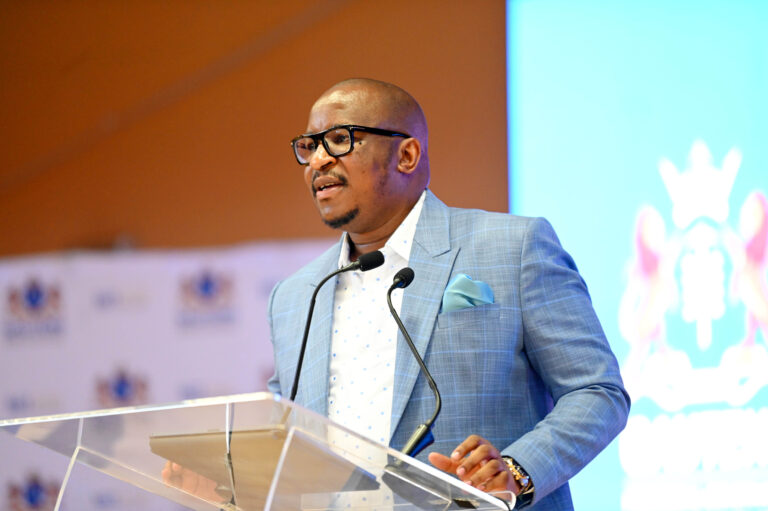
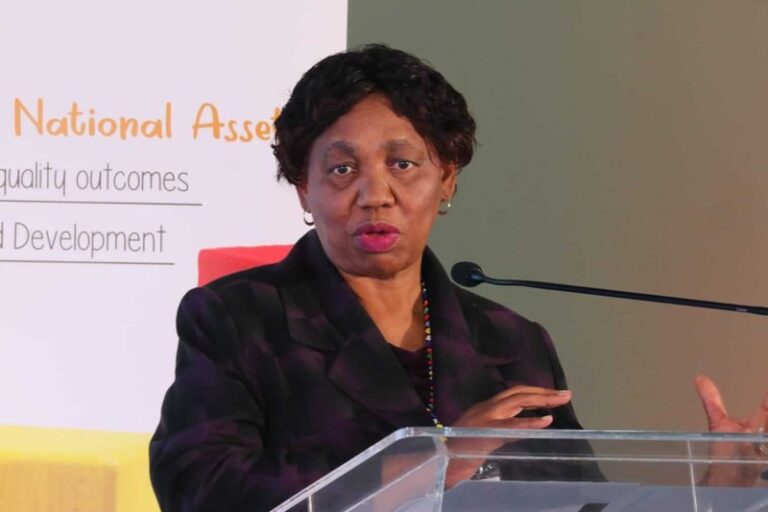
Basic Education Minister, Angie Motshekga, accompanied by Free State Education MEC, Makalo Mohale, last week, met with Free State education officials at the Fezile Dabi District Office to pinpoint challenges hampering the smooth implementation and integration of ECD into the sector. 

Minister Motshekga said that quality drivers such as resources, infrastructure, training and centre registration remain some of the key areas of focus to build on an inclusive and holistic ECD space within the sector.

The Minister has been engaging with ECD practitioners as part of a mass registration drive since the latter part of 2023 as the Basic Education Sector continues to ramp up its efforts to ensure full-scale integration of ECD. 

In addition, the engagements serve at better capacitating forums and centres on what the landscape of ECD will look like as the five outcomes for ECD in 2024 are being identified and implemented. During the session, challenges hampering the smooth implementation and integration of ECD into the Sector, were discussed to find solutions to common challenges.

According to Dr Janeli Kotze, Acting Director for ECD, the Department has put measures in place to ensure that South African children have access to opportunities for learning through play, and to integrate with other departments to enable all children to have access to good health, adequate nutrition, safety and security, as well as responsive caregiving.

“Our goal as the Department is to coordinate the distribution of health and safety packs and play and learning materials to ensure key resources reach the most under-resourced early learning programmes. 

“Another focus will be on scaling up access to early learning programmes for 3 to 5-year-olds, targeting 170,000 children each year, by building new public private partnerships with social partners. 

“In addition, parental support interventions across departments, to ensure families with young children access support, and reaching 17,000 parents and caregivers in 2024. New mechanisms to drive progress against an agreed ECD Outcomes Framework must be put in place to improve ECD leadership and coordination across departments and spheres of government. 

“Government is using population-based planning to target resources and effort so that families in townships, informal housing and deep rural areas benefit most. Government is also launching a Social Compact for ECD to bring together the best efforts of the ECD sector, donors, business and social partners behind these ambitious goals,” explained Dr Kotze.

“The Department is implementing the mass registration drive, which will target 20,000 unregistered ECD programmes and provide them with conditional registration for one year. 

During this year, the DBE and municipalities will support ECD programmes to become compliant through the provision of pre-registration support packs, after which they will be required to apply for full registration.

“All ECD programmes will need to register according to legislation. This includes independent community-based programmes, private programmes, NPOs and micro-enterprises. A certificate with the DBE’s logo will be provided to ECD programmes to indicate that they have been conditionally/fully registered. However, registration does not equate to funding,” added Dr Kotze.

INSIDE EDUCATION

Gauteng hat trick for University of Pretoria as top matrics #ChooseUP

Inside Education Reporter

“South Africa needs doctors and if I can make a difference it would be an honour for me to give back to my country,” says Gauteng’s top matric student, Sheliza de Wet who was head girl at Hoërskool Menlopark in Pretoria. 

De Wet will be studying medicine and surgery at the University of Pretoria (UP) from February this year.

“I’m very excited, I was a bit overwhelmed as I didn’t expect to be first but I am very thankful and very happy that I got into UP as it has a fantastic medical campus and I can’t wait to experience student life.”

With 9 distinctions, she is in good company as Gauteng’s second and third top matric students have also chosen to study at UP, all with and 96%+ averages.

Wian van Rooyen from Afrikaanse Hoër Seunskool in Pretoria achieved 8 distinctions, he was second in Gauteng and will also be studying medicine and surgery at UP. “It was an easy choice for me,” he says.

 “The new era of medicine is an exciting field with rapidly evolving technologies that assist doctors and surgeons in their work and expand the reach of medical professionals to people everywhere.”

They are both keen to meet Stevie the telemedicine robot in UP’s Faculty of Health Sciences at the Steve Biko Academic Hospital. Stevie is a mobile robot who assists in the treatment of patients through live discussions between intensive-care unit teams in Germany and South Africa.

“UP positions itself on being a future-oriented university in all the programmes it offers,” says UP’s interim Vice-Chancellor and Principal Professor Themba Mosia. 

“We are ranked in the top 1% of universities worldwide in 10 fields and incredibly proud of our brand, reputation and educational quality. This is confirmed year on year by the escalating number of top matric achievers choosing to study at UP.”

Competition for admission in 2023 proved hugely competitive in a range of courses, including medicine, engineering, veterinary, law and actuarial science, with many of the top students being admitted to UP achieving 95%+ and 7+ distinctions.

Second in South Africa for mathematics, first in Gauteng for mathematics and third overall for all subjects in Gauteng is Jéan Goodey from Hoërskool Oos-Moot who achieved 7 distinctions and who will be studying actuarial and financial mathematics at UP.

I focused on consistency every day so that I didn’t fall behind and I always do the best that I can, says Goodey. “I chose actuarial and financial maths because I have a natural feeling for numbers. Maths is one of my favourite subjects and actuarial science fits well with it. I think I got the ability from my parents because they are both chartered accountants.”

Another top matriculant with a gift for numbers is Zonke Thwala from Siphesihle Secondary School in Waterloo, KwaZulu-Natal, who came third in South Africa in the Quintile 3 schools. She achieved 7 distinctions and is pursuing accounting sciences at UP.

She says a lack of electricity “made studying for matric very hard”. “The transformer in my area blew and I had to use a candle and torch to study. I persevered and I am so proud of myself. It’s really unbelievable and I am grateful to God, my family and teachers. Matric was the longest year of my life!”

One of the top private school matriculants, Carine Pretorius, from Helpmekaar College in Johannesburg who achieved 10 distinctions will be studying industrial engineering at UP. “I attended the engineering faculty’s career week last week and industrial engineering appealed to me because it’s all about processes, systems and productivity. 

“During the week we also experienced the virtual mine – it’s as if we were standing in a real mine. I hadn’t seen anything like that, and the technological advancements that are happening now are amazing.” 

Pretorius also plays the recorder and did her UNISA Grade 8 exam in 2023 and will be doing her licentiate this year.

INSIDE EDUCATION

MEC Chiloane launches Sikhululekile School of Specialisation

Inside Education Reporter

Gauteng Education MEC Matome Chiloane officially launched Sikhululekile Maths, Science & ICT School of Specialisation with a focus on Research and Innovation on Thursday, 8 February 2024, at Temba, Hammanskraal. 

The focus of this School of Specialisation is based on the Economic Development Corridor in Tshwane, which has Research, Innovation (Knowledge) Nuclear Science & Technology and Automotive industries. 

Learners from the school demonstrated an array of innovative scientific solutions for issues faced by their community. Grade 9 and 10 learners created a smart farm from a dumpsite on the school premises, where they cultivate a wide variety of vegetables using their very own four-switch water irrigation system. Grade 11 learners developed their own biofuel using bioethanol, which will be utilised by the school as an alternative sustainable energy source. 

Learners also created their own water purification system following a cholera outbreak in the community. They also developed a water testing kit which can be sold to the community for only R80. All of these innovations emanated from their own research into issues affecting the community. 

The school is also fully equipped with smart classrooms, 3D printers, virtual reality/augmented reality headsets, science labs, and a maths park. 

Schools of Specialisation are a legacy programme that was started in 2014 following extensive research on contemporary curriculum. A need to provide a more advanced curriculum that equips learners with skills that are pertinent in today’s economy, and increasingly prepares them for diverse careers upon exiting our system, was identified. 

The answer to this was re-establishing existing schools into institutions that specialise in Maths, Science and ICT, Engineering, Commerce and Entrepreneurship, Performance and Creative Arts, and Sports respectively. 

The specialisation, and focus, within each of these is determined by the economic corridor they reside in. Therefore, the Department forms partnerships with industry-leading companies to enhance the provision and credibility of these skills. 

Sikhululekile Maths, Science & ICT School of Specialisation is the 31st School of Specialisation to be launched in the province, and the first of six such schools that will be launched between February and March 2024. The province aims to have 36 School of Specialisations in total. 

“With the launch of this school, we are not only cementing our commitment to quality education and youth development, but we are also building highly skilled learners whose knowledge and innovation has the capability of revitalising the economy of Temba, and the province at large. They need to be the beacon of hope for the community, the country and the world. This is what we seek to achieve across our province, equipping our learners to compete on a global scale and become industry leaders,” said MEC Chiloane.

INSIDE EDUCATION

Gauteng Government employed 32,000 Youth Brigades as teacher assistants through Nasi iSpani

Lerato Mbhiza

Gauteng Premier Panyaza Lesufi said the Nasi iSpani Gauteng youth recruitment programme is aimed at reducing unemployment in the province, while addressing young people gathered at Dobsonville Stadium in Soweto on Sunday.

The provincial government will employ 32 000 people to work as Education Assistants, General School Assistants, and Early Childhood Development Assistants in Gauteng schools.

Lesufi said this incentive is to give young people an opportunity rather than them joining the unemployment queue. “What is strange is that everyone in the political landscape wants to fight unemployment, when you do that they also accuse you of electioneering. 

“Our mission is to ensure that young people get opportunities. I’m excited more that than 20,000 of the youth are here to collect and the employment letter so that they can go and work for their families rather than live on handouts and food parcels,

“They will do the attendance registers, they make sure that the class is convened orderly and they collect books after homework has been written. They ensure that administrative support of teachers is there,” he said

“Many People don’t understand this. They say we live in a world of emails, but to me an email is cold. I have called you today as the Premier of Gauteng saying to the Minister of Social Development that all these 32 000 people gathered in this stadium today; Minister of Social Development keep your social grant, we don’t need social grant for these people. We will employ them to work and stand on their own,”said Lesufi”.

The Premier also rejected the criticism from opposition parties who claim the Nasi iSpani programme, which was launched in June 2023, was “electioneering” ahead of this year’s national and provincial elections.

“It’s just our enemies, they don’t want to dig deeper and understand what you’re trying to do, they’re just taking it just above face value and rejecting it out of hand. These 20,000 young people, if we don’t convince them, they’ll be hijacking your car properly today. 

“They are now reclaiming their lives and doing something good for everyone and we’re excited about it and those that want to help insert feel free we’re insult proof we are vulgar proof we are only.

“So if people say it’s electioneering work, it’s unfortunate. We just want to give these people an opportunity rather than for them to join the unemployment queue”.

INSIDE EDUCATION

SIU recovers almost R740 million in unallocated funds from Institutions of Higher Learning

Johnathan Paoli

THE Special Investigating Unit (SIU) has announced that it has so far made a recovery totaling R737 926 351, with the figure including R688 220 611.56 in unallocated funds and signed acknowledgment of debt agreements of R49 705 739.60 as part of an investigation into the affairs of  NSFAS.

The SIU was presenting its findings to Parliament’s Standing Committee on Public Accounts (SCOPA) on Wednesday in Cape Town and said that the unallocated funds were due to poor control systems and a lack of reconciliation processes by NSFAS and were not collected from institutions of higher learning.

When approached by the SIU, the institutions subsequently cooperated, which led to a quick recovery process.

Institutions of Higher Learning that was approached by SIU included; West Coast College, Northlink College, Walter Sisulu University, Nkangala TVET, University of Johannesburg, University of Zululand, University of Pretoria, Majuba TVET College, and the University of Mpumalanga.

SIU Head of Communications and Stakeholder Relations, Kaizer Kganyago said the unit signed acknowledgment of debt agreements of R49 705 739.60 with the Motheo TVET College in the Free State, and with parents and students who did not meet the NSFAS funding criteria.

Kganyago said that investigation has revealed that NSFAS failed to design and implement controls to ensure that there was an annual reconciliation between the funds disbursed to the institutions and the allocation of those funds to the students.

“These control weaknesses have led to overpayments and underpayments of funds to the different institutions over the period 2017 to date. NSFAS has recently appointed a service provider to assist them in performing this reconciliation via a process called close-out reporting”, the unit said.

Kganyago said that the reconciliation process was still ongoing and that the SIU found that the e-wallet/voucher payment system, Celbux had many “dormant” accounts lying active on the system dating back to 2018 amounting to an estimated value of R320 million.

With regards to NSFAS-funded accommodation, the unit said that it found that details of the accommodation such as physical addresses and details of the landlord or owner of the accommodation were not captured on the NSFAS system, nor were the details vetted by the funding scheme.

The SIU is in terms of Proclamation R88 of 2022 authorised to investigate allegations of corruption and maladministration in the affairs of NSFAS and to recover any financial losses suffered by the State through corruption and negligence and further empowered to institute civil action in the High Court or a Special Tribunal in its name, to correct any wrongdoing uncovered during both investigations caused by acts of corruption, fraud, or maladministration.

In line with the Special Investigating Units and Special Tribunals Act 74 of 1996, the SIU is entitled to refer any evidence pointing to criminal conduct it uncovers to the NPA for further action.

This follows the recent announcement of the Higher Education, Science and Innovation Minister, Blade Nzimande, approving the proposed 2024 eligibility criteria and conditions for financial aid.

INSIDE EDUCATION

Horror bus crash claims the lives of 6 school children in the Free State

Lerato Mbhiza

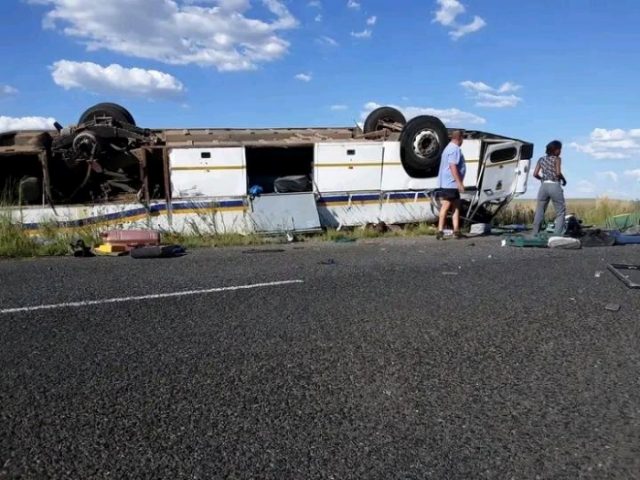
THE community of Welkom in the Free State  is reeling after a tragic incident involving a school bus transporting learners back from a school event on Tuesday which overturned on the R70 between Senekal and Ventersburg, killing six pupils and injuring scores of others.

The bus had been transporting Hoërskool Riebeeckstad pupils from an outdoor school event in Moolmanshoek near Rosendal to Welkom when the crash happened.

According to the Road Traffic Management Corporation (RTMC), six children died on scene, while 28 suffered minor injuries, one had severe injuries, and another six pupils were treated for moderate injuries.

Department spokesperson Simon Zwane said it is alleged one of the tyres of the bus came off and the driver lost control of the vehicle, and it overturned.

“Members of the Free State emergency medical services, private emergency medical services, traffic officers and the members of the South African Police immediately attended to the scene.

“Injured school children were transported to various hospitals in Welkom and Senekal.

“Crash investigators from the Road Traffic Management Corporation have been dispatched to the scene to establish all the factors that could have led to this tragic collision,” said Zwane.

The national Minister of Transport Sindisiwe Chikunga, has sent her heartfelt condolences to the families of six pupils killed in a horror bus crash .

Premier Mxolisi Dukwana also conveyed condolences. “The deaths of those souls have robbed us of the future of our province. Words fail me, and I can only imagine what the families are going through.”

Parliament’s Portfolio Committee on Basic Education expressed its shock and sadness at the death of six learners.

Committee Chairperson Bongiwe Mbinqo-Gigaba said the committee is heartbroken following the news that six girls passed away in a horrific bus accident while being transported from a sports event.

“This is such a tragedy; six young lives ripped away. We mourn with the parents, families, school community and all those affected by this accident.”

“We wish those injured and those recovering in hospital a speedy recovery,” said Mbinqo-Gigaba.

“The committee is saddened by the event. This comes a few weeks after schools began the 2024 academic year and shortly on the heels of the country celebrating the Class of 2023’s excellent pass rate. It is truly sad for the province and South Africa that we have been robbed of these young learners, who are the future of our country.”

INSIDE EDUCATION

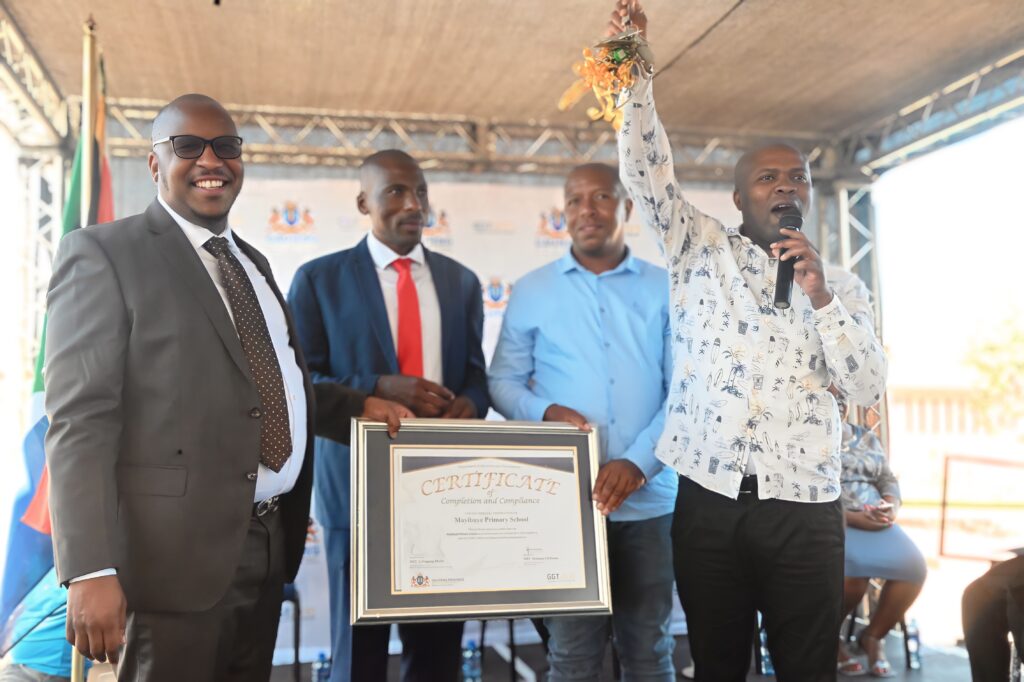
Gauteng Premier, Education MEC open the state-of-the-art Mayibuye Primary School

Lerato Mbhiza

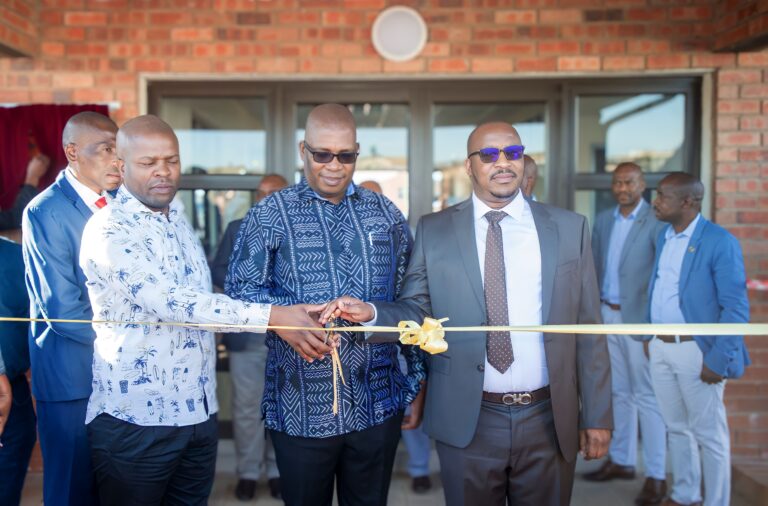
Gauteng Premier, Panyaza Lesufi, accompanied by Education and Youth Development MEC, Matome Chiloane and Infrastructure Development and Human Settlements MEC Lebogang Maile, on Wednesday fulfilled the Gauteng Provincial Government’s (GPG) commitment to the community of Mayibuye by officially opening the state-of-the-art Mayibuye Primary School in Tembisa, Ekurhuleni. 

Speaking at the event Lesufi said the school has 28 smart classrooms, 2 Smart Science laboratories, a Computer Lab, an Early Childhood Development section, a library, and an Administration block. 

Lesufi added that Phase 2 will be launched on 27 April 2024 and it will consist of a Nutrition Centre combined with a dining hall, a soccer field and Combi Courts (netball, basketball and tennis courts. 

This phase has been faced with numerous ownership, contractual and construction delays, including misinformation that the school had been built on a wetland, which was not the case. A sewerage line was identified as the main challenge, but it has been fixed, he said. 

Concerned about the delays and their impact on the delivery of quality education to learners in and around Mayibuye, the Gauteng Provincial Government (GPG) has been working around the clock to ensure the school is handed over to the community. 

To ensure that such delays do not occur again, the GPG is awaiting a final report from the Department of Infrastructure Development (GDID) which will determine whether any party needs to account.

“Today’s handover is about delivering on the promise of handing over this beautiful infrastructure to the people of Mayibuye, who have been calling for the swift resolution of the challenges which have led to these delays. 

“We promised that we will ensure the school is up and running in 2024 and we are doing exactly that. Through the completion of the Mayibuye Primary School, we are showing our commitment to the completion of incomplete projects and the delivery of state-of-the-art education infrastructure,” said Lesufi . 

Mayibuye Primary School is further proof of Gauteng’s promise of building quality schools and increasing access to quality education in Townships, Informal Settlements and Hostel areas. The handover of the Mayibuye Primary School is also expected to help alleviate admission and placement pressure. 

“By the end of March, over 1 200 young people will have full access to all these exciting facilities. Today, we are allowing certain grades to begin using the school while waiting for the contractor to conclude works on the hall and the redirection of the sewer line,” said Lesufi. 

Speaking at the event, MEC Chiloane said the launch of Mayibuye Primary School was an indication of the government’s unwavering dedication to delivering quality education infrastructure within communities where our people reside. 

“With this school, our TISH learners are also being given the opportunity to excel in the sciences as there is a science lab; and because this is a smart school, our learners will be using the latest technology,” the Education MEC said.   

INSIDE EDUCATION

Another Learner dies after consuming spaza shop snacks 

Lerato Mbhiza

A Grade 1 girl learner from Mandlethu Primary School in Tsakane, Brakpan, died after allegedly consuming biscuits from a local spaza shop. The incident took place on Tuesday. 

It is alleged that the learner began experiencing health complications in class just before break at 11h00, and started vomiting a few minutes later. 

The learner’s parents were contacted immediately to come to the school, while emergency services were also alerted to provide necessary medical assistance.

The learner was certified dead by paramedics upon arrival. 

Gauteng Education MEC Matome Chiloane said the parents confirmed that the child had consumed biscuits which were bought from a local spaza shop owned by foreign nationals. 

 He added that Police are investigating circumstances surrounding this incident. 

“Our Psycho-Social Support Unit will be deployed tomorrow, on Wednesday, 7 February 2024, to provide trauma support and counseling to all affected individuals. 

“We are deeply saddened by this unfortunate incident. We plead with parents to be vigilant concerning the edible goods that their children consume. We call upon law enforcement agencies and municipalities to be more stringent on compliance matters related to spaza shop products. Indeed, we wish to extend our sincerest condolences to the family and the school community at large,” said Chiloane.

INSIDE EDUCATION

Turkey mourns tens of thousands dead, surrounded by the ruins of last year’s earthquake

0

ANDREW WILKS

Millions of people across Turkey on Tuesday mourned the loss of more than 53,000 friends, loved ones and neighbors in the country’s catastrophic earthquake a year ago.

To mark what it calls the “Disaster of the Century,” the government arranged a series of events to commemorate the one-year anniversary of the disaster in southern Turkey.

In Antakya, the capital of the southern province of Hatay, angry crowds jostled with police as officials were led to the commemorations. Mayor Lutfu Savas was greeted with chants calling for him to resign, while Health Minister Fahrettin Koca was jeered and booed as he gave a speech.

Amid the fog by the Orontes River, people chanted “Can anyone hear me?” — echoing the voices of those buried under the rubble a year ago — and ”We won’t forget, we won’t forgive.”

After a moment of silence at 4:17 a.m. to mark the time the quake struck, carnations were tossed into the river in an act of remembrance and a local orchestra played a song to honor the victims.

Hatay, which lies between the Mediterranean Sea and the Syrian border, was the worst affected of the 11 southern provinces hit by the 7.8 magnitude quake. Including the 6,000 people killed in neighboring Syria, the quake left more than 59,000 dead.

Crowds in Adiyaman held a silent march, passing a clock tower that has shown the time of the earthquake for the past year.

President Recep Tayyip Erdogan will be in Kahramanmaras, the earthquake’s epicenter, to inspect the work being done to rebuild the city and rehouse thousands of people who remain in tents and pre-fabricated containers.

He also will take part in handing over completed homes to survivors, and then spend the rest of the week touring other cities in the earthquake zone.

In a social media post, the president said the loss from the disaster “continues to burn our hearts as fresh as the first day,” adding: “Thank God, our nation has successfully passed this painful and historical test.”

Opposition politicians are also visiting the region, with the Republican People’s Party leader Ozgur Ozel attending the commemorations in Hatay before traveling to Gaziantep and Kahramanmaras.

Schools were closed for the day in many of the earthquake-affected porvinces. In Malatya, the governor banned any marches or other public displays outside officially sanctioned events for three days.

AP

DBE matric support programme provides a ray of hope for thousands

Johnathan Paoli

IN an interview with Inside Education, the Director of the Second Chance Matric Support Programme (SCMSP), Dr Sandy Malapile, emphasised the importance of learners obtaining a matric certificate to improve their economic circumstances and said there was hope for those who performed poorly in previous examinations.

Dr Malapile said the programme was aimed at candidates who had not met the requirements to attain the National Senior Certificate (NSC) or the extended Senior Certificate (SC) as well as offering an opportunity to those who would like to improve their results.

He said that the Department of Basic Education and provincial education departments have decided to expand the SCMSP to young people with special needs to ensure inclusivity amongst the targeted candidates across all nine provinces.

The director said that the Basic Education Sector deliberately redirected resources to the SCMSP centres catering for young people with special needs to re-emphasise the value of a matric certificate or an equivalent qualification.

Launched in January 2016, the Second Chance Matric Support Programme helps anyone – regardless of age – who wants to achieve or improve a matric qualification, subject-by-subject and on a part-time basis, with no costs involved.

“The programme played an important role in retaining learners beyond the formal schooling programme, by allowing candidates to register for one, two or more subjects, and write the examinations either in May/June or October/November,” he said.

Dr Malapile said that registered learners on the programme are supported through four platforms: broadcast on TV and radio; access to digital educational resources; the provision of printed Learning and Teaching Support Materials; and face-to-face classes in selected centres throughout the country.

Importantly, the director said that teaching and learning takes place after hours and at weekends and that learners could continue their studies irrespective of whether they had moved to another province.

Dr Malapile said that, initially, the SCMSP catered for mainstream learners; however, it was expanded to accommodate learners with disabilities, starting with those who were blind, deaf or partially sighted.

The director said that this was a clear demonstration that the government was implementing principle number 8 of the Freedom Charter by bringing dignity to learners with special needs who were not attending school full-time.

Dr Malapile praised the programme and said that it provided psycho-social support to both learners and parents dealing with inadequate results.

In the 2023 NSC examinations, 691,160 learners wrote with 572,983 achieving a pass, meaning the number of learners who failed stood at 118,177.

The director said that despite an estimated 20% of applicants who drop out, the programme has helped over 2.5 million people since its inception in 2016, with roughly 500,000 people a year getting assistance.

Dr Malapile said that the programme expected over 600,000 applicants this year, namely learners who had failed the 2023 exams, 200,000 applicants from previous years, approximately 150,000 applicants for the extended Senior Certificate and about 160,000 applicants who, despite not failing, intended to improve their marks.

The director confirmed that the Department of Basic Education was working in partnership with Absa bank, which assists applicants with both career counselling as well as facilitating job entry processes.

He said that the programme had a fundamental impact on society in that it culminated in higher motivational levels as well as better performance, and that it equipped applicants with independent learning skills and self-discipline, which is vital for undertaking further tertiary education.

“The future will belong to learners who have at least a minimum level of qualifications. This programme provides a ray of hope for those who feel lost. Despite being proud of the recent results, we have to care for those who did not achieve,” Dr Malapile added.

INSIDE EDUCATION