Home Blog Page 172

More money for teachers, but severe cutbacks in for Basic Education and tertiary sector in tough-luck Budget

0

Edwin Naidu

In a boost for public school teachers throughout South Africa, the Minister of Finance Enoch Godongwana has announced an additional R25.7 billion in the Budget for the education sector for the carry-through costs of the wage increase over the medium term. 

But the tertiary sector is facing severe cutbacks amounting to close to R5 billion, which will lead to delays in infrastructure development. 

At the same time, Godongwana said the National Treasury was able to protect the budgets of critical programmes such as the school nutrition, which provides food to pupils in almost 20,000 schools. The early childhood development grant is allocated R1.6 billion, which will rise to R2 billion over the medium term. 

According to the National Treasury Expenditure overview, over the medium term, the department will continue to focus on accelerating the delivery of and improving school infrastructure, providing educational opportunities to learners with severe to profound intellectual disabilities, enhancing teaching and learning by ensuring access to high-quality learner and teacher support materials; increasing the supply of quality teachers and preparing teachers to teach new subjects that will prepare learners for a changing world; improving the quality and reach of early childhood development (ECD) services; and providing nutritious meals for learners through the national school nutrition programme.

Transfers and subsidies, mostly for conditional grants to provinces, make up 85.3 per cent (R86.8 billion) of the department’s allocation over the MTEF period, increasing at an average annual rate of 5.9 percent, from R25.3 billion in 2023/24 to R30 billion in 2026/27. 

Cabinet-approved reductions of R2.8 billion over the medium term are effected on various programmes, including the school infrastructure backlogs grant (R1.2 billion), the education infrastructure grant (R611 million), the Funza Lushaka bursary scheme (R397.9 million) and workbooks (R97 million). Total expenditure is set to increase at an average annual rate of 5.3 per cent, from R30 billion in 2023/24 to R35.1 billion in 2026/27.

The department is committed to ensuring all schools have safe and appropriate infrastructure. This is delivered through the education infrastructure grant and the school infrastructure backlogs grant, which account for 95.8 per cent (R47.6 billion) of spending over the MTEF period in the Planning, Information and Assessment programme. 

The education infrastructure grant’s allocation of R42.3 billion over the period ahead will be transferred to provinces as supplementary funding to accelerate the construction, maintenance, upgrading and rehabilitation of new and existing infrastructure in the basic education sector. 

The school infrastructure backlogs grant addresses infrastructure backlogs at schools that do not meet the norms and standards for basic school infrastructure. This grant is allocated R5.3 billion over the MTEF period, which will be used to replace a targeted 100 inappropriate and unsafe schools with newly built schools, and to provide water to 350 schools, sanitation to 320 schools and 220 additional classrooms to address overcrowding.

Cabinet-approved reductions of R1.2 billion to the school infrastructure backlogs grant and R611 million to the education infrastructure grant will delay projects still in the planning phase so that those currently being implemented can be completed. 

The Learners with profound intellectual disabilities grant aims to improve the provision of quality education to learners with severe to profound intellectual disabilities. The grant is expected to provide access to quality publicly funded education to more than 13,000 such learners over the MTEF period through an allocation of R874.7 million in the Curriculum Policy, Support and Monitoring programme. 

Providing high‐quality learning materials Recognising that quality learning materials enhance the effectiveness of teaching and learning, the department plans to print and deliver grades R to 9 life skills, languages and mathematics workbooks to all public schools that request them. 

An estimated 60 million workbooks will be provided to about 9 million learners in each year of the MTEF period. To fund this, R3.9 billion is allocated over the period ahead in the Curriculum and Quality Enhancement sub programme in the Curriculum Policy, Support and Monitoring programme. 

Despite Cabinet-approved reductions of R97 million to the programme’s budget over the MTEF period, the department still expects to print and distribute all workbooks requested by schools by maximising cost-saving measures, particularly on printing. 

Increasing the supply of quality teachers The Funza Lushaka bursary scheme provides bursaries to prospective teachers to address critical educator shortages in priority subject areas such as inclusive education, mathematics, coding, robotics, and science and technology. 

Despite Cabinet-approved reductions to the programme’s funding amounting to R397.9 million over the MTEF period, the department plans to increase the number of bursaries awarded from 9,700 in 2024/25 to 10,300 in 2026/27. 

This will be done by funding more students completing the one-year postgraduate certificate in education and increasing the number of bursaries awarded to institutions with lower fee structures. 

The bursary scheme is allocated R4 billion over the MTEF period in the Teachers, Education Human Resources, and Institutional Development programme. Improving Early Childhood Development Services in provinces is supported by the Early Childhood Development grant of R5.6 billion over the MTEF period to provide subsidies for children accessing ECD services, infrastructure support to ECD providers and pre-registration support packages, and to pilot the construction of low-cost ECD centres. An additional R197 million in 2024/25 is earmarked for piloting a nutrition support programme that targets low-cost ECD centres.

The department plans to continue providing nutritious meals to more than 10 million learners each school day at 19 950 schools each year over the period ahead, in line with the National Development Plan’s priority of eliminating poverty and supporting food security. The national school nutrition programme grants funds the programme, and it allocated R30.9 billion over the MTEF period in the Educational Enrichment Services programme.

Turning to the tertiary sector, the Expenditure overview noted that as part of implementing its mandate, the Department of Higher Education and Training oversees universities, TVET colleges, CET colleges, SETAs, quality councils and private education providers. Its goals include expanding access to higher education and training opportunities and improving the quality of the provisioning, responsiveness and efficiency of the post-school education and training system. 

It aims to give effect to these goals over the medium term by focusing on upgrading ailing infrastructure at higher education institutions and providing bursaries and loans to students from poor and working-class backgrounds. 

The department’s expenditure is expected to increase at an average annual rate of 4.8 per cent, from R130.5 billion in 2023/24 to R150.2 billion in 2026/27, driven mainly by transfers and subsidies to departmental agencies, accounts, and higher education institutions. These account for an estimated 90.6 per cent (R389.8 billion) of total spending over the period ahead. 

Spending on compensation of employees’ accounts for an estimated 8.6 per cent (R37.3 billion) of the total budget over the same period, mainly in the Technical and Vocational Education and Training programme for TVET college lecturers (R26.6 billion) and the Community Education and Training programme for CET college lecturers (R8.6 billion). 

Cabinet-approved reductions amounting to R27 billion over the medium term are mainly on transfer payments to the university infrastructure and efficiency grant, TVET infrastructure and efficiency grant, university subsidies, and the National Student Financial Aid Scheme. Of these reductions, an estimated R4.9 billion over the MTEF period is on university subsidies. 

Although these subsidies are set to be reduced over the period ahead, the main funding source for universities is set to increase at an average annual rate of 3.7 per cent, from R44 billion in 2023/24 to R49 billion in 2026/27. To accommodate the reduction, universities must implement cost-containment measures – including revisiting contracts and reducing travel and subsistence costs.  This considers the expected increase in university enrolments from 1.1 million in 2023 to 1.2 million in 2027. 

Upgrading ailing infrastructure at higher education institutions will suffer as the reductions of R6 billion to infrastructure grants over the MTEF period are expected to delay the start of new capital projects. 

They will also ensure closer alignment with the sector’s capacity to spend infrastructure allocations, as these grants have been underspent in recent years. The department plans to ensure institutions have appropriate infrastructure to accommodate students accessing higher education. 

The university infrastructure and efficiency grant is allocated R4.5 billion over the medium term, decreasing at an average annual rate of 24.3 per cent, from R2.2 billion in 2024/25 to R1.2 billion in 2026/27. 

The TVET infrastructure and efficiency grant is allocated R539.4 million over the same period, decreasing at an average annual rate of 41.7 per cent, from R491.9 million in 2023/24 to R97.6 million in 2026/27. 

Despite these decreases, these allocations will enable infrastructure repairs and maintenance in priority areas such as bulk services, sanitation, teaching and learning facilities, and student accommodation. Allocations amounting to R989.4 million will be used to construct basic skills centres, teaching and learning facilities, workshops and ICT laboratories at CET colleges.

The department will ensure that all students offered a place to study at a university or TVET college based on academic merit will be afforded that opportunity. The National Student Financial Aid Scheme provides bursaries that cover tuition at these institutions and living expenses to students from families earning below R350 000 per year. Despite reductions of R16 billion over the MTEF period, transfers to the National Student Financial Aid Scheme to provide a projected 2.9 million students with loans and bursaries are expected to increase at an average annual rate of 3.6 percent, from R45.6 billion in 2023/24 to R50.8 billion in 2026/27. The reductions will, however, affect the number of bursaries the scheme can award over the medium term.

INSIDE EDUCATION

Teacher allegedly caught in possession of drugs at a Tokoza, Ekurhuleni School

Tlholohelo Mosala

Gauteng Education MEC Matome Chiloane said he is deeply concerned following an incident where a teacher was allegedly caught in possession of drugs at Thoko Thaba Secondary School in Tokoza, Ekurhuleni.

The incident took place last Wednesday where the teacher was reportedly found with drugs on school premises which led to community protesting outside the school on Tuesday.

According to the department, the educator was allegedly found last week with a bag and box of drugs inside the school premises. Police were called in and he was arrested. He appeared in court last Thursday.

MEC Chiloane said he is also concerned that this matter was not reported to the Department by the School Management Team (SMT) in a timely manner, which has led to a planned protest by the community.

“We are disappointed about this incident, and vehemently condemn such conduct and we will be acting against it accordingly. We also plead with the community to allow this matter to be handled by the Department and relevant law enforcement authorities for appropriate resolution,” said MEC Chiloane.

The Department has launched an investigation, and the educator has been removed from the school as a precaution.

INSIDE EDUCATION

GDE calls out parents and community for school violence

0

Johnathan Paoli

Speaking from the grounds of Primrose Primary school, the MEC for Education Matome Chiloane said the recent attack upon the principal was an unexpected shot from the dark, despite being a planned assault.

Chiloane said on Monday that whilst the department was taking every measure to ensure the health and safety of all pupils, it remained alarming that no one could really predict an extreme situation of violence such as this.

In line with the policy of the Gauteng Department of Education, maintaining and sustaining educational values in the area has proven all but impossible.

MEC Chiloane outlined the problem of both parents and communities abandoning children once they enter educational institutions.

He said that the department was setting out psycho-socio programs to assist the community in moving on from this traumatic event.

However, Chiloane has called for the might of the law be meted out against the 13-year-old learners’ parents, and confirmed that the father of the accused was similarly charged with child neglect

“How did the child get a hold of the gun is what is running in our minds. For that irresponsibility the parents will be charged. Such recklessness will be dealt with. I hope a high sentence is done to set an example to many parents that they must be responsible all the time and monitor their children ” Chiloane said.

This stands in line with previous calls, that while there is a desperate need for transformation within educational structures, similarly there is a requirement for transformation and specifically more involvement of parents and the community in the education of the youth.

INSIDE EDUCATION

NSFAS receives almost 2 million grant applications for the 2024 academic year

Lerato Mbhiza

NSFAS has received over 1 936 330 bursary applications of which 1 000 389 are provisionally funded, 395 265 are awaiting evaluations, 80 111 have been withdrawn by the student, 141 886 are in progress and 136 558 applications are on the not-started status as applicants only created profiles and did not submit applications. 

NSFAS has rejected 124 918 applications and 1 258 appeals have been lodged thus far.

The student finance loan scheme received 22 954 loan applications (as of 16 February 2024), and the application closing date was also on the 15 of February 2024.

Of the 22 954 loan applications received, 139 are provisionally funded, 12 890 are awaiting evaluations, 841 have been withdrawn by the student, 30 are in progress and 8 345 applications are on the not-started status as applicants only created profiles and did not submit applications. 

NSFAS has rejected 476 loan applications and only 5 appeals have been lodged so far

The NSFAS Board met over the weekend to consider various policy and operational matters relating to the commencement of the 2024 academic year.

Deployment of NSFAS servicing administrators

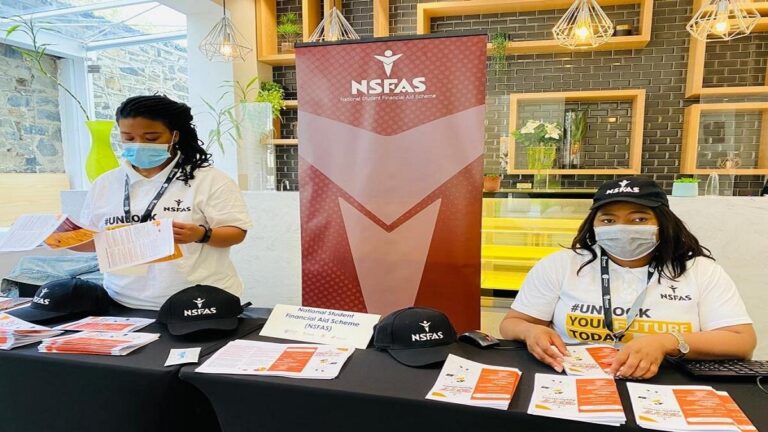
In a Statement NSFAS said it has deployed its Servicing Administrators to all institutions (TVET colleges and universities), to provide registration support-related to all NSFAS processes. 

“The servicing team has been assisting institutions to conclude all NSFAS outstanding processes, including data preparation and uploading”.

“The team will also assist students who have been confirmed for funding with their enquiries. They will assist students to upload supporting documents, guide students in the appeals process and in the student accommodation processes” said the statement .

In term of in-front payment to institutions

NSFAS said it has advanced an upfront payment to both the universities and the Technical and Vocational Education and Training (TVET) colleges.

“For universities, NSFAS disbursed R2.8 billion in January 2024. This disbursement does not include the calculation of the tranche payments, which NSFAS will disburse at the beginning of April 2024.

“This upfront payment covers one month of student accommodation and the book allowance. The book allowance is calculated at half of the total cost whilst the accommodation is calculated as one month of the accommodation cost” said NSFAS, in a statement.

“For TVET colleges, a total of R580,150,950.00 was paid to colleges as tuition upfront in January 2024. An additional R1 billion is earmarked for three (3) months’ worth of allowances to be paid based on registration from the January-march period”.

All these upfront payments are meant to enable institutions to register all NSFAS approved students for the academic year 2024.

INSIDE EDUCATION

Sports Minister, Deputy hand over facilities in KZN

0

Sports Reporter

Minister of Sports, Arts and Culture Zizi Kodwa and Deputy Minister Nocawe Mafu handed over sports facilities and sports attire in ministerial outreach programme in KwaZulu-Natal from 20 to 23 Feb

 
These engagements form part of the Ministerial Outreach Programme in which the Minister and Deputy Minister formally hand over sports facilities commissioned by the Department of Sport, Arts and Culture through its agencies. 

This programme continues interventions by the Department of Sport, Arts and Culture to develop schools in rural communities, and to make school sport the bedrock of sports development.
 
On Tuesday, 20 February 2024 at the Greater Kokstad Local Municipality, the Minister and Deputy Minister will hand over two multipurpose sports courts as part of the Netball World Cup Legacy programme, in conjunction with The Sports Trust, the implementation partner of the Department of Sport, Arts and Culture. The Sports Trust celebrates 30 years of enhancing education through sport. Following this engagement, the Minister and Deputy Minister will open a library at Shayamoya Secondary School.

On Thursday, 22 February 2024, a sports field will be handed over at Banqobile Secondary School in Mkhambathini, while on Friday, 23 February 2024, a sports field will be handed over in Impendle.

INSIDE EDUCATION

With a clean audit and meeting 100% of its goals, CHIETA has a great story to tell 

0

 Inside Education Correspondence

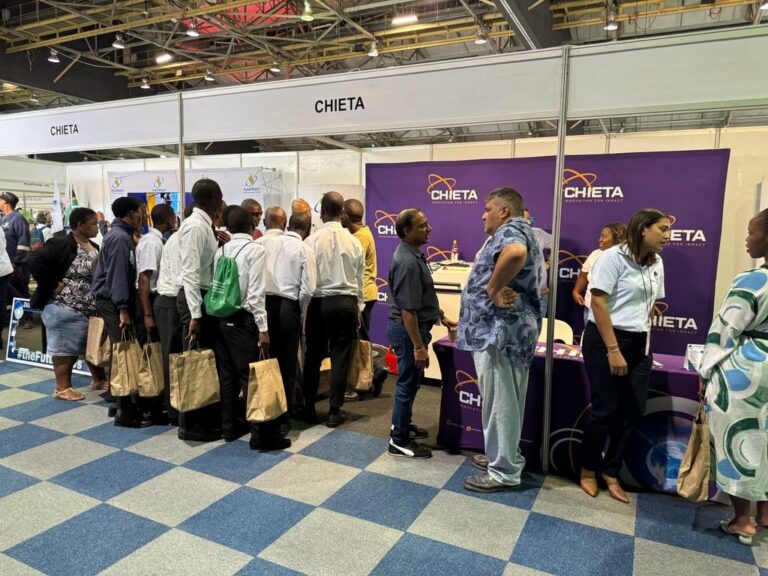
Breaking the trend of negative publicity around institutions like them, the innovative Chemical Industries Education and Training Authority (CHIETA) has gone beyond the narrow confines of the industry to launch Smart Skills Centres in Saldanha Bay, Gqeberha and Babanango. 

More than 6,000 youth from the communities have used the centres. 

While the centres come in different sizes depending on the communities they serve, they all feature several pods in which virtual reality and augmented reality technologies can be used, with other pods providing laptops for surfing the internet, doing training or even job interviews. Connectivity and data are also provided. 

Getting people, especially women and girls, familiar with and confident in using technology is part of making them work-ready. At these centres, rural youth are taught digital skills, and they can keep up to date with artificial intelligence developments and get the latest in robotics and artificial intelligence. 

The following smart centre will be launched in the Highveld Industrial Park in Mpumalanga, on the former Highveld Steel and Vanadium factory site. The CHIETA wants to establish similar centres in all nine provinces. 

Although their research shows that data analysis is the number one skill petroleum companies seek, CHIETA remains duty-bound to do what it can to deepen the pool of data analytics talent for the benefit of its stakeholders. But it is also broadening how it interprets its remit, ensuring that it can positively impact the country’s high youth unemployment challenge. 

One of their groundbreaking initiatives is What About the Boys, a Gender Violence initiative in partnership with Primestars and several corporations, teaching 20,000 young boys about dealing with masculinity and learning about entrepreneurship. 

“We’ve got a good story to tell,” remarked Yershen Pillay, the chief executive officer of CHIETA, which received a clean audit, met 100% of its targets and grew levy income year-on-year from R592 million to R621 million. 

With a mission of “innovating for impact”, Pillay presented the CHIETA 2022/2023 Integrated Annual Report at its Annual General Meeting on 1 December in Sandton, saying that CHIETA was determined to continue making a difference and continue working on the hydrogen economy for which it has gained a growing reputation as a leader in the green economy. 

During International Day of Women and Girls in Science at the weekend, CHIETA could take comfort from the fact that they’re putting resources behind dozens of young girls – at least 217 last year – with positive results to boot. 

The Eastern Cape Department of Education recognised hard-working matriculant Liyabona Ncanywa as one of the province’s top achievers in the National Senior Certificate Examinations. 

CHIETA assisted her with tuition and school fees through its Science, technology, engineering, and Mathematics (STEM) fund, which supports 1,000 learners nationwide. 

Through its various programmes, including the upcoming Discretionary Grant Funding Windows and working with corporations. CHIETA provides potential opportunities for 615 internships, 1085 leadership, 1 395 skills programmes, and 1285 TVET students for Work Integrated Learning. 

Such investment in skills development is vindicated when learners like Liyabona show evidence that investment in our youth bears fruit. It certainly encourages others to do more to ensure that the goals of the United Nations become a reality for women and girls worldwide. 

In 2016, the UN declared the 11th of February International Day of Women and Girls in Science to encourage more girls and women to take jobs in science, technology, engineering, and mathematics (STEM subjects). But can they take their place without support? 

INSIDE EDUCATION

Time to break the mould says former Mauritius President

Staff Reporter

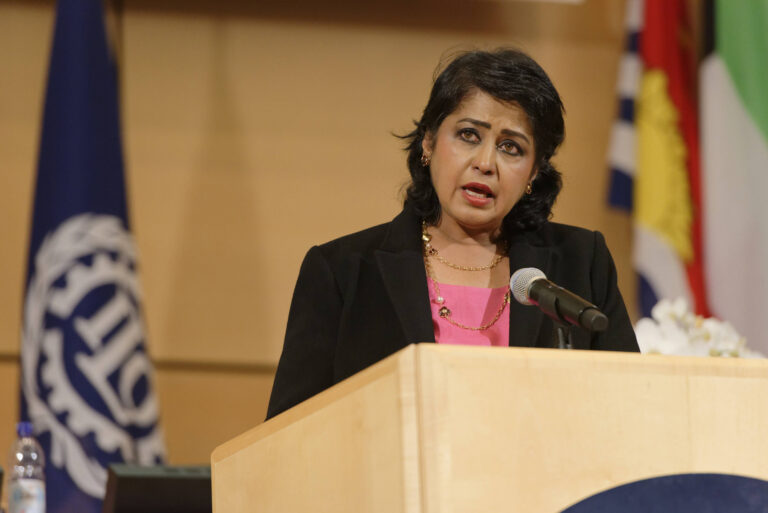
There Is A Lot Of Stereotyping In The Way Sciences Are Taught To Girls, says Dr Ameenah Gurib-Fakim, the world-renowned biodiversity scientist and former first female President of Mauritius. 

Mom of two, Gurib Fakim, says increasingly on the continent, women and girls are not being encouraged to do the sciences, and this is for many reasons.

“For example, if you look at the [teaching] textbooks, there is a lot of stereotyping in the way that the sciences are being taught to girls. If you look at the infrastructures in schools, they don’t really cater for girls to stay. 

“These issues need to be looked into. We need more mentoring, more advocacy. We need to take the girls by the hand and make them believe that they can do anything. By building their confidence from a very young age, telling them that the sky’s the limit, it will lead to more in the sciences.”

When it comes to women in leadership, she said: “I have been advocating that we need to have better representation and there is a need to fix what we are all talking about – the ‘leaky pipe syndrome’ – which loses a lot of women in the pipeline, instead of bringing them along into systems and institutions. 

“But the onus is also on all Africans. People have to start asking the right questions. Politicians, leaders, policymakers in normal democracies, are all accountable to the people. But, and I am sorry for saying this brutally, we get the government that we deserve. The one we vote in. It’s your vote.”

Gurib Fakim said we all need to push gender be it in medicine, food, education, agriculture – in everything that we do in all sectors. “We cannot compromise on quality. This is the message that we need to spread across our continent. And to get to the required degree of excellence and quality, we need to empower our youth, more so our girls, with the right tools and education that will take them to the highest levels of excellency.”

INSIDE EDUCATION

New Direction for Business Higher Certificate Course

0

Inside Education Reporter 

In the South African tertiary education landscape, Higher Certificate training plays an important role in providing bridging courses for school-leavers who are not yet ready for longer term studies, as well as stepping stones into entry-level positions for young job seekers.  

SACAP (The South African College of Applied Psychology) has announced a new direction for its Higher Certificate in Business Management and Higher Certificate in Human Resources Management programs to make these one-year training courses more accessible.

Lee-Ann Drummond, Head of SACAP’s Management & Leadership faculty says, “SACAP is committed to finding innovative ways to ensure that our high-quality education is within the reach of the many young people who are thirsty for knowledge, skills, and work opportunities in the business field.  

These two redesigned SACAP Higher Certificate programmes give students meaningful insights into the Business Management and Human Resource Managements fields.  

They are vocational qualifications that focus on the practical skills and theoretical knowledge required for taking up entry-level positions in different industries.  Students have opportunities to develop essential skills such as problem-solving, critical thinking and communications.” 

Higher Certificate qualifications can serve as a bridge to a bachelor’s degree studies for students who did not pass Matric with a university exemption or for those who need to gain a better understanding of the world of work before they feel ready to choose a degree study path.

Students enrolled in SACAP’s Higher Certificates in Business Management and Human Resource Management can expect high levels of academic excellence and opportunities to develop applied skills, while being surrounded by community.  

Drummond says, “We’ve streamlined course costs by redesigning our delivery model to focus on providing a facilitator-led, structured learning path that is more self-directed.  These smart adaptations to our business-focused Higher Certificate courses have meant that we can make them more accessible by offering them at a significantly lower cost.”

Every week a facilitator will guide students through the targets and requirements.  There will be facilitated learning activities such as a forum discussion or a live presentation with a Q&A session.  

Students will engage with video and multimedia content as well as academic readings in their own direction, in their own time. Assessments such as quizzes are embedded in the learning process so that students get feedback and can gauge their mastery of a topic in real-time. 

Technology within the course structure includes built-in automatic triggers to activate personalized support from SACAP facilitators. 

SACAP has also introduced several new subjects in the education programs. The Higher Certificate in Business Management now includes coursework on Professional Communication and the Digital Landscape, Principles of Economics, Marketing Management, Supply Chain Management and Project Management. New subjects in the Higher Certificate in Human Resource Management program are Occupational Health and Safety Management, Professional Communication and the Digital Landscape and Project Management.

Drummond concludes, “There’s facilitation, feedback and support, however, as with all online learning, these are courses that require students to be self-directed, self-motivated and able to engage independently with a variety of information sources and formats.  

“SACAP Higher Certificate programs offer adaptive learning pathways that empower young people to develop their capacities for self-management and self-mastery.  These are abilities that are highly valued in the modern world of work and so through studying, they have opportunities to hone the 21st century skills that employers are seeking.”

Applications for SACAP’s Higher Certificate programs are now open. Visit sacap.edu.za to register.

INSIDE EDUCATION

MEC Matome Chiloane launches Thuto-Tiro School of Specialisation


Tlholohelo Mosala

Gauteng Education MEC Matome Chiloane launched Thuto-Tiro Engineering School of Specialisation with a focus on Energy at Sebokeng on Thursday, making this the 33rd school of its kind to be launched by the Gauteng Province – etching it closer to the envisioned target.

“It is clear what we hope to achieve as a government, to create model citizens out of our learners by exposing them to critical skills that are needed in this economy. We are creating the future of our province, and our country as education is the foundation of all careers,” Chiloane said.

MEC Chiloane said that focus of School of Specialisation was based on the Southern Economic Development Corridor, which has tourism and entertainment, agri-processing and logistics industries.

The school is based in Sebokeng, a middle-class township in the Emfuleni Local Municipality in southern Gauteng; and in light of the township being segmented into various zones, the hostel residence was located on the periphery, when entering from Vanderbijlpark. 

Chiloane said the schools of specialisation do not have a fixed feeder area, so anyone should be able to benefit by having their children accepted at the school, depending on the outcome of the assessment for admission.

He said that the establishment of this school is aligned with the Gauteng Provincial Government’s (GPG) commitment to developing Townships, Informal Settlements and Hostels (TISH), enabling communities to benefit from the vast array of resources at the school’s disposal, as well as the advanced skills that learners will acquire.

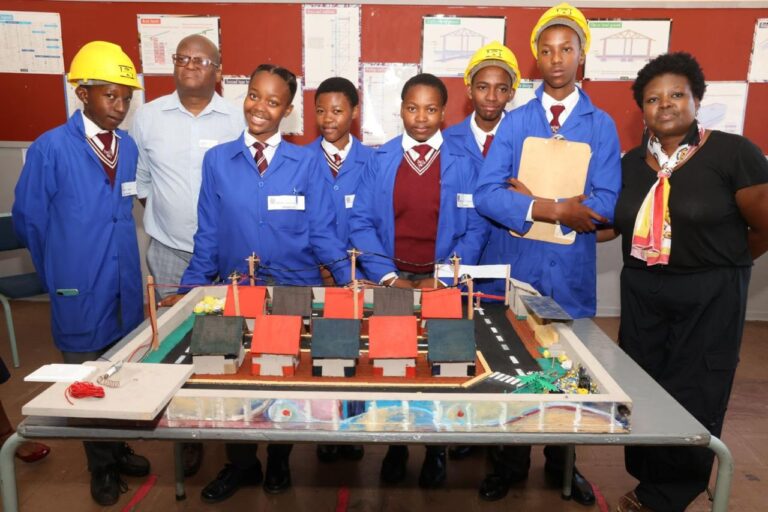
As such, learners demonstrated an extensive knowledge in Engineering Graphics & Design (EGD) as a subject, which provides knowledge and skills that centre around mechanical, civil and electrical technology.

In addition, learners showcased their proficiency in Electrical Technology and Power Systems, demonstrating their own automated power system as well as solar inverter.

Mechanical Engineering and Civil Technology is also taught at the school, where learners gain skills in welding, sawing, fitting and turning, as well as woodwork and construction.

“This level of advanced education, coupled with commercial stream subjects, prepares learners to utilise these skills on an entrepreneurial level, not only tackling the skills gap, but addressing unemployment as well,” Chiloane said.

The MEC said enriching the foundation with an abundance of advanced skills, would result in more competent, knowledgeable, capable and proficient learners who were ready to either be employed upon exiting the system, or venture into entrepreneurship and create employment for others.

He said that the launch of these schools was in line with the department’s vision of creating problem-solvers that could effectively facilitate the development of solutions to the problems facing communities by members from the community itself.

INSIDE EDUCATION

NSFAS not up to scratch, says the Auditor-General’s office

Johnathan Paoli

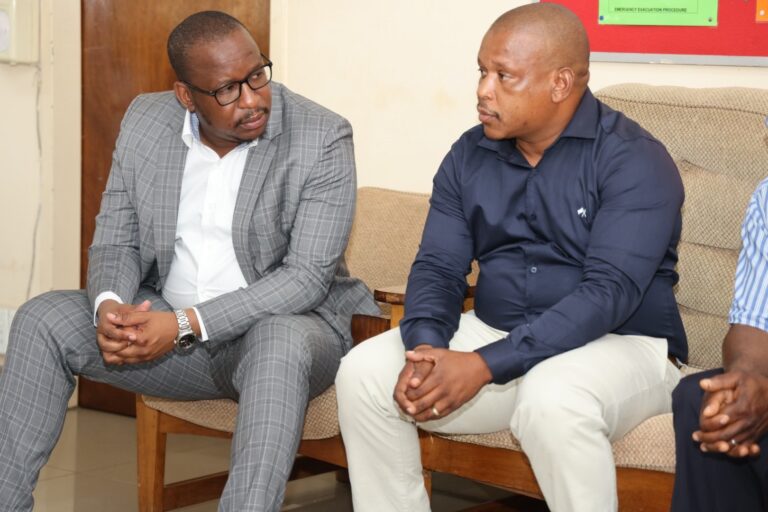
THE National Student Financial Aid Scheme (NSFAS) has received an adverse finding from the Auditor-General’s (AG’s) for its 2021/2022 financial report; this emerged in Parliament on Wednesday when officials from both entities were deliberating on student funding for 2024 and on the Werksmans report on corruption allegations.

Officials from the AG’s office and NSFAS briefed parliament’s higher education portfolio committee and the AG representative Ignatius Fourie told the committee that the adverse audit stems from unreliable financial statements provided by NSFAS and said this was due to the inefficient systems and a lack of capacity within the scheme.

“We were not able to conclude on the accuracy of the information in the annual performance report. There’s insufficient measurement definitions and processes to collate and to report performance information. As a result of that we are then unable to do reliability testing, and to see if the figures that are being included are reliable,” Fourie said.

Fourie told the committee that when they audited the books of NSFAS, they found a number of mistakes and that a lot of data was not supported, and subsequently could not be audited, and that there were errors in the calculations.

Fourie said the adverse audit meant that there were a number of material misstatements in the financial statements and the figures in the financial statements were not reliable, nor were they fairly stated.

The office found that there was no reconciliation between what is owed by universities to NSFAS and what is owed by NSFAS to universities and that there was a delay in submitting the annual report by NSFAS to Parliament, which was finally tabled in December last year.

Fourie confirmed that in terms of addressing those matters, NSFAS started the process of reconciling between the institutions’ students data and their own data to determine any overall underpayments to students.

“There are various reasons why over and underpayments can happen, because they do payments on the original registration and if there are changes, like students changing their course, there could be an impact on that,” Fourie said.

INSIDE EDUCATION