Home Blog Page 173

TVET’s key to unlocking opportunities, says CHIETA CEO

Staff Reporter

As the Class of 2023 celebrate their matric success, it’s time for matriculants to consider the options that provide a lifeline to the future underpinned by job creation and entrepreneurship. 

That’s the message from Yershen Pillay, Chief Executive Officer of the Chemical Industries Education and Training Authority (CHIETA), who believes that not all matriculants will find a place at the country’s 26 universities, for example, the University of Kwazulu-Natal received more than 160 000 applications for 9 000 first year places. 

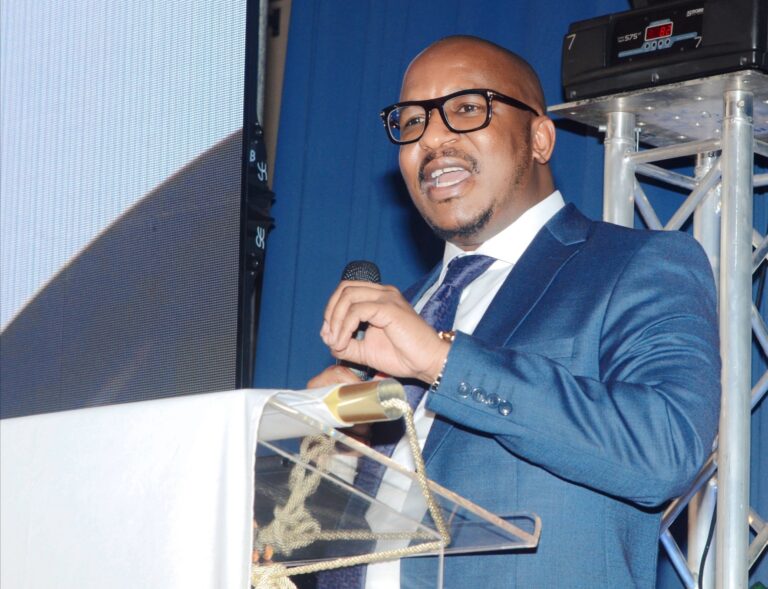
“Therefore, we believe that the opportunities for further studies at Technical and Vocational Education Training (TVET) are key to building the skills pipeline. At CHIETA, learners through companies are also given extensive opportunities to learn skills that will gear them for a better future,” says Pillay. 

Through its various programmes, CHIETA, through its Upcoming Discretionary Grant Funding Windows, working with corporates provides potential opportunities for 615 internships, 1085 learnerships, 1 395 skills programmes,1285 TVET student for Working in Learning and 1 000 learners receive STEM training. 

Against the backdrop of South Africa’s unemployment rate, which according to Statistics SA is expected to trend around 34% percent in 2024, the need for using skills development opportunities is key to changing the narrative. 

StatsSA found that some young people have been disengaged from the labour market and are also not building on their skill base through education and training – they are not in employment, education, or training (NEET). The NEET rate is an essential additional labour market indicator for young people. There were about 10,2 million young people aged 15–24 years, of which 36,1% were not in employment, education or training. 

“This gives us a vital opportunity as the CHIETA to push forward with our strategy for innovating for impact to contribute to sustainable livelihoods through innovative solutions for skills development, education, and training,” says Pillay. 

Therein lies the opportunity to make a dent in unemployment, especially among the youth, through skills development. 

In a boost for skills development in South Africa and Africa, one among many innovative initiatives was the signing of a ground-breaking memorandum of understanding between the CHIETA and the China Europe International Business School (CEIBS). 

The goal of the MoU is to merge efforts by the two institutions to drive innovation, skills development and training in Africa and will be in place until 31 March 2025. CHIETA’s role includes sourcing corporate entrepreneurs in the chemicals sector to upskill them and identifying 4th Industrial Revolution-linked programs. The impact of this is that it will help provide youth with skills to combat unemployment. 

CHIETA has continued identifying strategic opportunities to support the National Development Plan (NDP) and the Economic Recovery and Reconstruction Plan (ERRP) to ensure we tackle unemployment and the skills shortage. 

Transformational goals are being met through a wide range of discretionary grant funding directed towards women, youth and people living with disabilities. One project that has contributed to poverty alleviation by reducing unemployment is the smart food cart programme. 

Beneficiaries of the programme are provided with computer tablets, allocated a food cart fitted with a location-tracking and reporting device, and an e-commerce app. In this way, township-based small and medium enterprises are empowered, increasing their numbers in townships. It has had a transformative effect on communities. 

Another major programme launched during the year is the Smart Skills Centres, in which rural learners are taught digital skills to keep abreast with artificial intelligence developments. 

The CHIETA intends to establish these centres in all nine provinces. Another project that stands out is the AlgoAtWork Robotics Academy in Richards Bay, in which children are taught essential skills for an AI-driven workplace in the future. Numerous bursaries flow into learning support and programmes for retrenched employees, a fundamental way the CHIETA supports the ERRP.

“As the statistics show, unemployment is a real challenge – and concern. Bold initiatives must be implemented to enable youth to succeed beyond matric, and CHIETA is determined to play a key role in changing the landscape,” concludes Pillay.

INSIDE EDUCATION
Students suffer amid growing irregularities at INSETA

Edwin Naidu

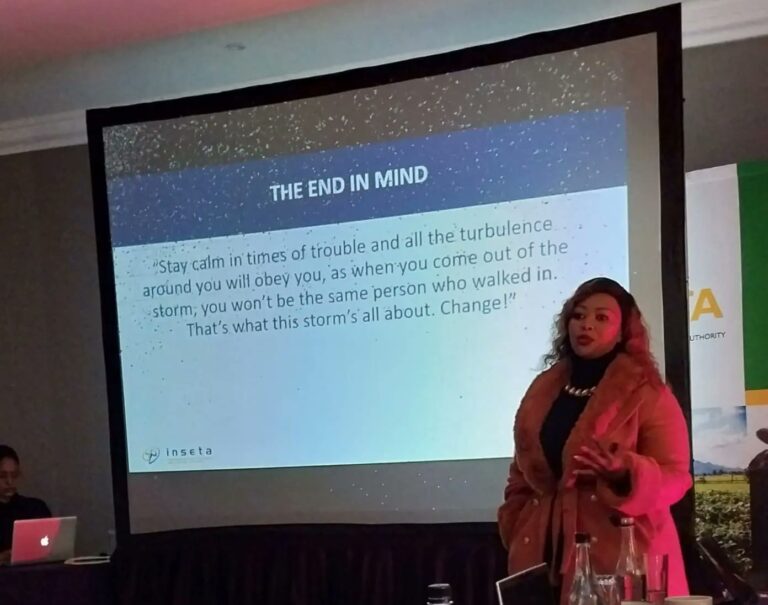
One of the country’s leading training institutions, the Graduate Institute of Financial Sciences (GIFS), claims it has been victimised because it blew the whistle on alleged corruption at the Insurance Sector Education and Training Authority (INSETA). 

GIFS won a court judgment in December ordering INSETA to reinstate GIFS’ full certification within 24 hours; withdraw all unlawful notifications it had distributed to industry stakeholders informing them of GIFS’ de-accreditation; reassure the public on its website and via email of the complete restoration of GIFS’ accreditation and pay the costs of GIFS’ legal counsel. INSETA has ignored the court order.

While INSETA fights a provider which works with top skills levy-paying South African companies, hundreds of students have not received their accreditation, leaving them in limbo, unable to work in the sector. 

In its urgent High Court interdict on January 4, GIFS’ legal counsel accused INSETA of corporate bullying and victimisation. They argued that the withdrawal of GIFS’ accreditation was based on a GIFS fraud investigation report compiled just over two years ago, now under review in the courts. GIFS maintains the report is fraught with trumped-up allegations, overt bias, glaring irregularities and multiple procedural flaws. It has only held off on its legal review as INSETA renewed its accreditation after the report was finalised in 2021.

GIFS gas asked the Public Protector for assistance in resolving the impasse, citing concerns centre around key personnel changes, potential conflicts of interest, and apparent irregularities in tender processes, which have raised serious questions about the organization’s adherence to ethical and legal standards.

“We have encountered persistent inefficiencies and incompetence on the part of INSETA, specifically in the issuance of certificates for learners. GIFS has repeatedly brought to INSETA’s attention the inaccuracies in certificates and instances of certificates being issued to learners who do not qualify.”

INSETA has been accused of issuing certificates to learners who do not meet the necessary qualifications, not only compromising the quality and integrity of the education system but also raises serious questions about INSETA’s commitment to upholding industry standards. 

“Despite our continuous efforts to address this issue, there has been no response or corrective action from INSETA.”

Instead of addressing the issues at hand, INSETA has chosen to victimize GIFS, creating an environment that stifles legitimate concerns.

In light of INSETA’s mandate to enhance skills and generate employment, the current predicament reveals a concerning backlog of 5500 learners within the system. This backlog, according to GIFS, not only places the employment opportunities for these learners in jeopardy but also exposes employers to potential compliance risks. 

“There is a prevailing concern that INSETA may not have the intention to disburse the funds owed to employers for the learners, potentially attributing the delay to administrative issues. This situation raises serious questions about the fulfilment of INSETA’s core objectives and the safeguarding of the interests of both learners and employers within the framework of its mandate,” claimed GIFS. 

Furthermore, GIFS called for specific entities such as QI Solutions, Milumbe Consulting CC and Octomate to be thoroughly investigated for their involvement in irregularities, especially in relation to ghost learners and collusion of tenders.

Senior managers at INSETA have raised concerns about the tender processes and the awarding of an IT contract to QI Solutions, asserting that it was unsuitable and incompatible with the sector. They advocated for the removal of the provider on grounds of non-performance and, as a result, have faced victimization. 

These officials forewarned of the potential decline of the sector. The unjust allocation of tenders to unqualified providers has become evident in the day-to-day operations of the insurance sector, where Skills Development Providers (SDP) witness individuals who do not meet the qualification criteria obtaining certificates, nonetheless. 

Similar to the repercussions faced by employees who spoke out, comparable actions have been taken against Skills Development Providers to stifle their voices and dissent. Tenders are being awarded to entities beyond the insurance sector, exacerbating the disadvantage faced by South African youth in securing meaningful opportunities and consequently widening the unemployment gap. 

“INSETA, through its actions or lack thereof, is falling short of its mandated responsibilities. Moreover, the organization is misappropriating public funds designated for skills development to initiate and finance legal actions against its own employees and other stakeholders, including an SMME like GIFS.”

INSETA CEO Gugu Mkhize confirmed that the Graduate Institute of Financial Sciences (GIFS) has been de-accredited effective as of 14 December 2023. This was following an appeal ruling made by the Quality Council for Trades and Occupations (QCTO). 

“We are aware of the correspondence received from the Office of the Public Protector. At this time, we would like to inform you that the issue in question is currently being handled internally. 

“We understand the importance of transparency and accountability, and we are committed to addressing any concerns in a thorough and timely manner.  As the INSETA, our primary focus is on resolving matters efficiently and ensuring that we maintain a fair and impartial process. 

“We recognise the value of open communication with the public and the media, and we will provide updates as appropriate, keeping in mind the confidentiality and sensitivity of the allegations,” she said. 

As regards to the specific questions raised, which most of them are directly or indirectly related to pending legal proceedings, kindly note that INSETA is currently prejudiced to make comments on incomplete legal proceedings and matters that are sub judice. 

“As a public institution, INSETA remains committed to the promotion of the Skills Development Act aimed at inclusive and participatory skills development. INSETA endeavours to fulfil this mandate in partnership with the QCTO, stakeholders and learners.”

OUTA is expected to partner with GIFS in taking up the investigation as an extension of its work on unearthing corruption in South Africa. 

On Wednesday, former Deputy President, Dr Phumzile Mlambo-Ngcuka, will deliver a keynote address via video and GIFS CEO, Dr Kershen Pillay, will lead a discussion on ‘Ethical Leadership in Education’, together with other high-profile guests on a panel, exploring the growing need for ethical leadership in our country, especially in education. 

INSIDE EDUCATION

DBE concerned about ‘disregard for work of Parliament’ in the Eastern Cape

Staff Reporter

A Portfolio Committee on Basic Education delegation has expressed its concern for the “utter disregard of the work of Parliament” when a delegation led by the MEC’s office did not attend a scheduled meeting to wrap up the committee’s oversight visit to schools in the Eastern Cape.

The committee delegation last Friday concluded its two-day oversight visit to assess school readiness for the 2024 academic year. It had planned to meet with the office of the national Department of Basic Education, the Eastern Cape Provincial Department of Education (including the Office of the MEC, heads of department and senior and district officials), the provincial legislature’s Portfolio Committee on Education, the provincial House of Traditional Leaders, school governing body associations, organised labour and the South African Principals’ Association.
 
The leader of the delegation, Tebogo Letsie, said the committee has verified that the email address to which the invitation to the meeting was sent is the correct one and the venue was secured by the provincial department. 

“At this stage, everyone claims they have not received the email and were not aware, yet they have confirmed that the email addresses we used are indeed correct. 

“Many issues and challenges were highlighted over the last two days and a commitment was made by us to discuss it further at the meeting. We see this as blatantly disrespectful and a disregard for our work. We will make it clear in our report,” Letsie said.
 
Earlier in the day, the delegation visited two schools in the Buffalo City education district – Nosizwe High School and Bhaliti Junior School. Yesterday, they visited four schools in the Amathole education district. The delegation also visited schools in the North West province.
 
Letsie said the focus of the Eastern Cape visit included, among other things, infrastructure; ablution facilities; monitoring grade R/early childhood development sites, as per the departmental migration shift of 2022; delivery of learner-teacher study material; nutrition; learner transport; support to special schools; and meeting with stakeholders to discuss the state of schooling in 2024.
 
At Nosizwe High School, the delegation commended the school for the steady increase in National Senior Certificate results over the years. The class of 2023 obtained an 88.6% pass rate, increasing from 77.14% in 2020. 

“We need to commend our schools, our learners, education officials, parents and the whole school community for making this possible,” said Letsie.
 
However, he emphasised to the school leadership that an increase in the pass rate is not good enough. “We need quality passes to ensure that our learners are accepted at institutions of higher learning and for the courses of their choice. 

“It is very competitive in this space, so to ensure this our learners must not just be getting distinctions, but high distinctions in order to get placement.”
 
The committee also raised concerns about the asbestos roofing at the school. “We appeal to the authorities in the province to work together to solve this matter. Asbestos is a health risk for both learners and teachers,” Letsie advised.
 
At Bhaliti Junior School, the committee was confronted with the challenge of the community fighting rationalisation. The small school has 156 learners with three educators and a principal. 

The delegation heard that the provincial education department has plans to merge the school with another, but the community is not in favour of this move. The school governing body said the reason for this is that the department has no plans to provide transport to the new school and the community is too poor to pay for private transport.

 “This sounds like a challenge that can easily be addressed if stakeholders put their heads together. We cannot fail our children. The interest of the child needs to come first,” Letsie said.
 
Both schools reported challenges with theft and burglaries, vandalism, a lack of security and a lack of infrastructure maintenance. The delegation assured them that all observations made during the two-day visit to the province will be contained in its report to be tabled in Parliament. In addition, its recommendations will be included in its hand-over report to the new committee in the seventh administration.
 
“We are cautiously optimistic by the strides made in the province. It is a sign of a stabilising system in terms of education and improvement, despite some challenges. It must be commended,” said Letsie.

INSIDE EDUCATION

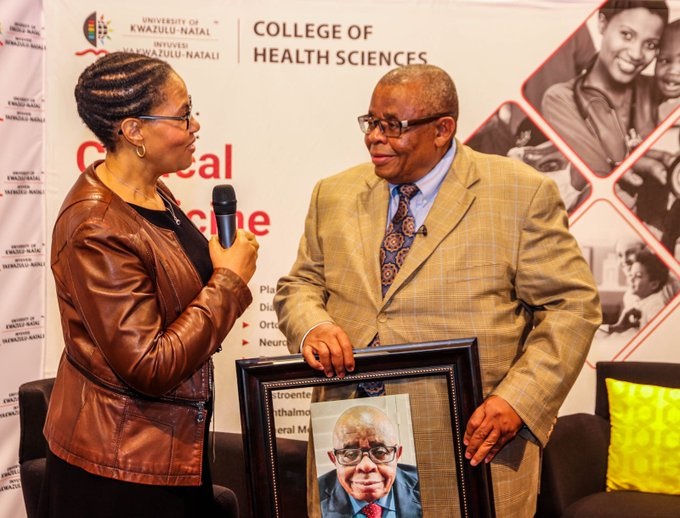
UKZN pays tribute on passing of Professor Mochichi Samuel Mokgokong

Staff Reporter

THE University of KwaZulu Natal has paid tribute to the country’s first Black neurosurgeon, Professor Mochichi Samuel Mokgokong who passed away last week. 

“It is with deep sadness and regret that we received the news of the passing of one of our own alumni, Professor Mochichi Samuel Mokgokong. Mokgokong was the first Black neurosurgeon in South Africa and hails from a family of medical giants including the renowned Professor Ephraim Thibedi Mokgokong, one of the first Black gynaecologists in South Africa, who was one of his greatest influences and pillars of strength,” the university said in a statement. 

Mokgokong is renowned for being part of the surgical team that separated conjoined twins, Mpho and Mphonyana Mathibela, at Chris Hani Baragwanath Hospital on 7 December 1986. 

He further headed the surgical teams for three separations of craniopagus Siamese twins and has trained and produced more than 15 neurosurgeons so far as well as produced the youngest neurosurgeon in Africa in 2017. 

In 2022, UKZN honoured Professor Mokgokong with a Living Legend award for his invaluable contribution to the medical field through clinical skills but also through leadership, scholarly work and community outreach programmes.

Professor Mokgokong held several academic and clinical positions during his illustrious career including as a Professor Emeritus of the University of Pretoria, Head of Tembisa Hospital’s Adult Intensive Care and High Care Units; Professor, Chief Specialist, and Head of the Neurosurgery Department at the University of Pretoria’s Steve Biko Academic Hospital; Emeritus Professor and Acting Head of Neurosurgery at Sefako Makgatho Health Sciences University and Dr George Mukhari Hospital. 

A visiting lecturer and consultant at the University of Pretoria’s Department of Neurosurgery under Prof M Van Rensburg; and Specialist and Lecturer in the Department of Neurosurgery at the University of the Witwatersrand’s Baragwanath Hospital, Mokgokong graduated with a BSc from the University of the North, a medical degree from UKZN, an MMed in Neurosurgery from Medunsa, and DSc Honoris Causa of Public Health from the University of Venda for Science and Technology in 2001. 

Professor Mokgokong was an active member of the South African Medical Council; Health Professions Council of South Africa; the South African Medical Association, Colleges of Medicine of South Africa; and the South African Neurosurgical Association. He was a council member of the Critical Care Society of South Africa. 

He has received several accolades for his amazing work including the CEO Award for the Best Employee at the Steve Biko Academic Hospital for 2017; the Order of Merit Award for Outstanding contribution in the Medical Field from the Executive Reserve Club in 1999; scooped the University of the North Onkgopotse Tiro Order of Merit Award in 2000 and received the Tribute Achievers 2000 Health Category Award presented by the then President of South Africa, Thabo Mbeki. 

Professor Ncoza Dlova, dean of the School of Clinical Medicine said: “We can learn a lot from Professor Mokgokong because he was a selfless leader, academic and clinician who served his country with pride and enjoyed passing on his skills to his students. Professor Mokgokong always encouraged his students to ‘to step away from private practice and instead give back to their communities as lecturers and academics to inspire Black students to enter the profession. 

He advised students to, ‘Stay in school and specialise instead of going into private practice to make money because once you’re a specialist you can impart your knowledge and expertise and become an even bigger success. He will be missed. We convey our heartfelt condolences to his loved ones. May his soul rest in eternal peace.”

INSIDE EDUCATION

Celebrating South African Sporting Heroes: Toyota pledges support for Paris 2024 Olympic and Paralympic Dreams

Sports Reporter

AS THE countdown to the Paris 2024 Olympic and Paralympic Games intensifies, Toyota South Africa Motors (TSAM) has announced its collaboration with four exceptional South African sporting heroes.

Paralympians Puseletso Mabote and Louzanne Coetzee, along with promising swimmer Pieter Coetzee and dynamic mountain biker Matt Beers, are set to inspire the world, and Toyota is committed to supporting their journey towards excellence.

Toyota furthermore reaffirms its commitment to the spirit of sportsmanship and the celebration of human potential through its Global Team Toyota Athletes Programme. At the heart of Toyota’s corporate philosophy lies a profound belief in the power of sport to inspire, unite, and transcend boundaries.

The Global Team Toyota Athletes Programme is a testament to this commitment, aiming to support and uplift athletes in their quest for excellence on the grand stage of the Olympic and Paralympic Games.

TSAM is proud to officially announce Puseletso Mabote, Louzanne Coetzee, Pieter Coetzee and Matt Beers as the South Africans to join the esteemed mother company’s Global Team Toyota Athletes Programme.

Global Team Toyota Athletes consist of athletes who have been selected from various countries because they share Toyota’s philosophies and values, such as challenge, continuous improvement, sincerity, teamwork, humility, gratitude, accountability and honesty.

The athletes ignite the “Start Your Impossible” philosophy whenever they compete in their respective sports.

The Global Team Toyota Athletes Programme builds upon Toyota’s legacy of supporting various local sporting codes as well as the Olympic and Paralympic Games. By fostering a global community of athletes, Toyota seeks to create an environment where athletes can share experiences, learn from one another, and inspire the world with their achievements.

“We believe in the unifying power of sport to create a better society,” says Glenn Crompton: Vice President of Sales and Marketing at TSAM.

“Through the Global Team Toyota Athletes Programme, we aim to champion the values of determination, perseverance, and excellence that athletes bring to the world stage,” he adds.

Each athlete brings a unique and inspiring story to the tapestry of South African sport. Puseletso Mabote, a decorated Paralympian (athletics T63 100m, 200m and long jump), has overcome challenges with grace and determination, serving as an inspiration to many.

Louzanne Coetzee (athletics T11 and F11 marathon), with her unwavering spirit, has carved a path of success as a Paralympic middle-distance runner, showcasing the true essence of resilience.

Pieter Coetzee (100m and 200m backstroke), an emerging swimmer, embodies the potential of the next generation of South African athletes. His dedication and passion for the sport have positioned him as a rising star in the competitive world of swimming. Matt Beers (MTB gravel mountain biker), who is a force to be reckoned with on the mountain biking scene, brings adrenaline-fueled excitement and an indomitable spirit to his craft.

For the three Olympic and Paralympic athletes planning to partake at this year’s Games, the road to Paris 2024 is not just about competition; it’s a journey that transcends limits and redefines what is possible. Toyota is committed to walking alongside these athletes, providing the support they need to chase their dreams and leave an indelible mark on the world.

While Matt will not be taking part in the Paris 2024 Olympic and Paralympic Games, TSAM recognises his exceptional talent and determination.

Aligned with Toyota’s “Start Your Impossible” campaign, the Global Team Toyota Athletes Programme embodies the idea that when people are free to move, anything is possible. By supporting athletes worldwide, Toyota strives to break down barriers, challenge the status quo, and empower individuals to overcome obstacles.

“The “Start Your Impossible” campaign reflects our belief that mobility goes beyond cars; it is about overcoming challenges and making dreams come true,” adds Crompton. “Through the Global Team Toyota Athletes Programme, we aim to empower athletes to push their limits and achieve the impossible”.

INSIDE EDUCATION

MEC Chiloane says he is against electioneering in public schools

Johnathan Paoli

Gauteng Education MEC Matome Chiloane has vehemently condemned political parties for entering Gauteng public schools during curriculum delivery time, as a strategy of campaigning.

This follows a campaign trail by a certain political party at some schools in Eldorado Park on Thursday during school hours.

“We strongly condemn the intrusion of political parties into Gauteng public schools. Education environments must remain apolitical to ensure a focused and unbiased learning atmosphere, curriculum delivery time, must always be respected, no one must disrupt schools,” said Chiloane.

A video showing EFF members in Johannesburg allegedly handing out food parcels to learners at La Rochelle Primary School in the south of the city was doing the rounds, has prompted Chiloane’s response.

DA MPL Sergio dos Santos said that this type of political messaging within schools, and in particular during school hours, was unacceptable as it undermined the primary purpose of educational institutions.

“While the DA acknowledges and comends any organisation contributing to the welfare of the learners through the provision of food packs, we firmly reject the exploitation of such initiatives for political campaigning during school hours,” dos Santos said.

The IEC has said the elections will be held somewhere from May and August to elect a new National Assembly, and the legislature in each province.

“These will be the seventh elections held under democracy since the end of apartheid in 1994. The new national council of provinces will be elected at the first sitting of each provincial legislature,” the IEC said.

Concerns have been raised over the possibility of cutting off late applications for registration, and opposition parties have called for the disclosure of a provisional date at the least.

The IEC is expected to hold its final voter registration drive on the weekend of February 3 and 4.

INSIDE EDUCATION

Equal Education demands immediate placement of a 1000 plus, learners in Gauteng and the Western Cape

Johnathan Paoli

THE NGO Equal Education has demanded the immediate placement of over a thousand learners in the Western Cape and Gauteng from the provincial departments that it said are being kept out of class.

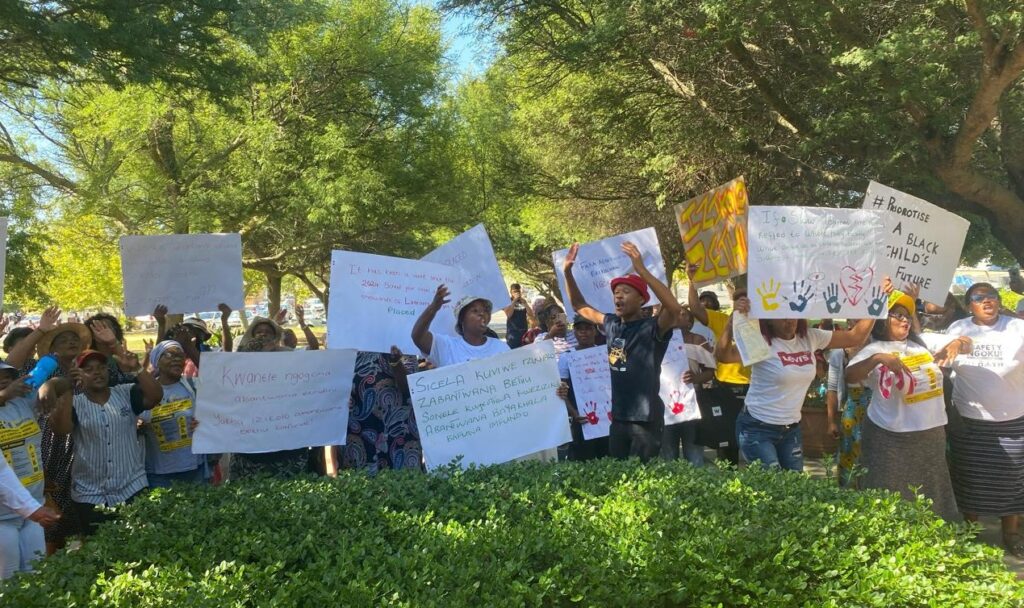
EE said in a statement on Wednesday that it would picket at the Benoni and Metro East education department district offices respectively, against the ineffective and frustrating school admissions processes keeping thousands of learners out of school.

The NGO said that the online school admission application process posed significant challenges for parents and caregivers seeking to enroll their children and that while technological progress was commendable, there was a need for alternatives to accommodate those who may not have access to digital tools.

“Provincial education departments, particularly in the Western Cape and Gauteng, repeatedly state that schools are overcrowded or oversubscribed because they do not have the funds to build more schools. They also continue to blame parents for applying late or for only applying to schools that are in high demand,” the statement read.

EE said that in light of the re-prioritisation of school infrastructure money, many learners remained unplaced and missing because space in schools have become the new luxury and overcrowding threatens access to equal and quality education.

Equal Education demands include: all unplaced learners must be placed immediately; that the provincial education department equip all schools with sufficient and appropriate infrastructure as required by the Norms and Standards for Public School Infrastructure; and that provincial education departments facilitate forward-looking infrastructure development plans to address current and future overcrowding in schools; the development of binding school capacity norms to ensure more equitable distributions of learners in schools; and that national and provincial treasuries allocate enough funds to school infrastructure and provide the necessary oversight to ensure the funds were appropriately spent.

The Equal Education Law Centre in a statement on Sunday said that even though schools in the Western Cape reopened on 17 January, thousands of learners, largely in under-resourced areas with overcrowded schools, are still without a school and were unable to unlock the most basic component of their constitutional right to access education.

The law centre said that it remained aware of the challenges faced by the provincial department, however reminded the WCED about declining its request early last year for admitting pop-up stations into the beginning of the school year in order to assist with late school applications.

“The WCED no doubt faces significant challenges in ensuring sufficient space in schools, however, many of these factors show up each year and are therefore predictable, yet the WCED’s response has been inadequate,” the centre said.

EELC said that the department did not acknowledge or address other critical factors contributing to this crisis and claimed that there were instances of gerrymandering by former model-C schools of their feeder zones in order to exclude economically disadvantaged and Black learners as well as exclusionary language policies.

The centre said that despite the immediate realisability of the right to basic education enshrined in the constitution, the education budget continued to dwindle, with more impending cuts.

The EELC said that despite committing R2.9 billion in March last year to the Rapid School Building Plan for 21 new schools and 289 classrooms, the WCED backtracked in November and scaled down to only nine new schools and 496 classrooms due to budget constraints and Treasury deprioritising social spending.

The department previously estimated that R105 billion was needed to meet minimum standards nationwide, seven times more than the adjusted 2023/24 school infrastructure budget of R14.2 billion.

“As these cuts persist, the ability of provincial education departments to deliver essential schools and classrooms is poised to decline,” the centre said.

WC MEC for Education David Maynier previously said his department was finalising the operation of 10 new schools and three replacement schools as part of its RSB programme.

“We will work to place every learner for whom an application is received going forward, but we want to be clear that schools are full in the Western Cape,” Maynier said.

In Gauteng, the department has called upon parents to consider township schools in light of the limited amount of spaces at some of the more popular schools in the province, as well the general improved performance of township schools in the 2023 NSC examinations.

INSIDE EDUCATION

Premier Lesufi praises researchers at the World Conference on Qualitative Research 

Johnathan Paoli

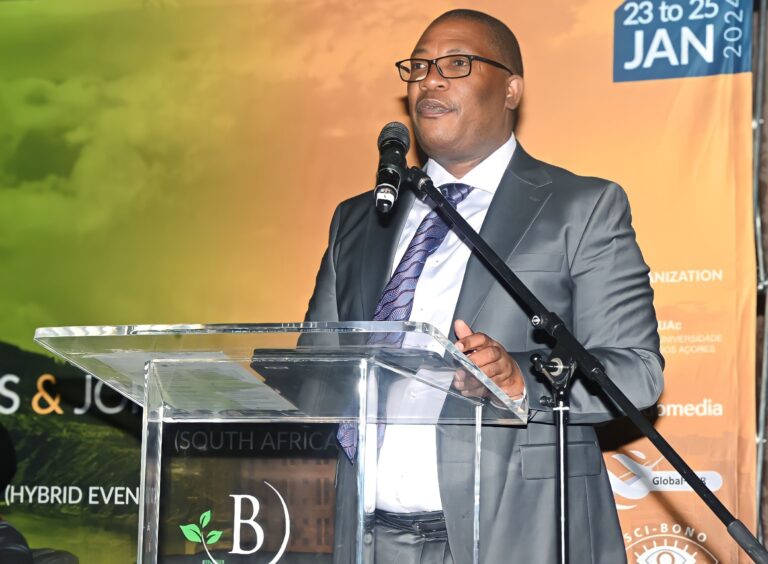
Gauteng Premier Panyaza Lesufi kicked off the 8th World Conference on Qualitative Research in Boksburg and said that he remained excited over possible solutions which the conference could provide for the province.

The three-day conference is concurrently being held in São Miguel – Azores (Portugal) and in Johannesburg (South Africa), virtually with each edition of the conference bringing together researchers from over 40 countries, world-renowned authors, and research groups to share their experiences in the field of Qualitative Research.

Speaking at the opening address at the South African leg of the conference on Tuesday, Lesufi praised the role played by researchers in the development for the province, the nation, and the continent as a whole.

The premier expressed his excitement at the conference and said that the researchers did not only represent the people, but more importantly would be the innovative source of solutions which could assist the province, namely ensuring that the province’s economy remained being the biggest economy as well as the challenges of human settlement in light of the increasing wave of immigrants, both nationally and internationally that have flocked to the overcrowded areas of Gauteng.

“In this room, you carry the aspiration of the future, you carry the aspiration to reposition and represent us appropriately in ensuring that not only our province but our country and the continent by extension is better positioned to respond to the challenges we are facing currently,” Lesufi said.

The premier said that he wished them well and that in the next three days, he hoped they would supply solutions to some of the key challenges faced by the province.

Lesufi mentioned three particular challenges, namely the ongoing growth and sustainability of the provincial economy, the problem of housing and space in light of the increased immigration and lastly the issue of crime and its impact on the lives of the people and the functioning of business.

The premier said that if the three main issues could be packaged more effectively through research and innovative measures, the country would be in a position to continue to be beautiful and to reaffirm the future of the country, in terms of the economy, resources and legislative framework.

“If you can get the best minds to deal with the challenges that we are facing in our country, we’ll be a competitive country that will be in a position to take care of its residents,” the premier said.

Lesufi said that this engagement which requires effort, labour and time, in order to produce solutions and was proud to be in dialogue with delegates from across the globe who were willing to provide their experience and solutions that would aid everyone.

The World Conference on Qualitative Research (WCQR) is an annual event that brings together researchers, world-renowned authors, and research groups from 40+ countries1. The conference aims to promote the sharing and discussion of knowledge, new perspectives, experiences, and innovations in the field of Qualitative Research.

The conference is hosted by The Global Centre for Academic Research (GCAR) and the Sci-Bono Discovery Centre.

Lesufi said that he was proud to be a part of a conference that was being held for the first time on the African continent, with Gauteng being the host province.

The WCQR is a globally recognized platform that brings together researchers, scholars, and professionals from diverse fields to explore, discuss, and exchange ideas on qualitative research methodologies.

The conference includes a diverse program with renowned keynote speakers and the best authors and researchers in the field.

Lesufi said that as the host partner, the Gauteng government was committed to advancing knowledge, research and innovation that seeks to develop the economy of the Gauteng City Region.

INSIDE EDUCATION

Gauteng Transport MEC gives motivation talk to Petit High School Pupils in Benoni

Johnathan Paoli

Gauteng MEC for Transport and Logistics, Kedibone Diale-Tlabela, on Monday, conducted an over-site visit at Petit High School in Ekurhuleni North, Benoni.

The visit formed part of the Gauteng Provincial Government’s oversight visits in Gauteng schools to monitor the overall readiness of schools upon re-opening for the 2024 academic year and are part of the Back-to-School campaign, which also includes activities such as the handover of new schools.

The department said that the oversight visits to schools were meant to ensure that there was effective teaching and learning in all schools and further ensured that appropriate resources were in place.

The provincial government, led by Premier Panyaza Lesufi, has a tradition of conducting oversight visits to schools across the province to monitor their readiness for the new academic year which were led by MECs, including Education MEC Matome Chiloane.

During these visits, the MECs observe the first day of teaching and learning and conduct oversight visits to Early Childhood Development Centres (ECDs) to gauge their preparedness.

The 2020 matric class of Petit High School obtained a 76.7% pass rate higher than 70% attained in the year 2019 National Senior Certificate Examination. The 193 learners wrote the exam in 2020 from 200 in 2019. From 2018 to 2020, the school attained an average of 78.6% pass rate.

In the year 2023, the matric class of Petit High School obtained a drop in the pass rate to 67.9 %.

Petit High School is a public secondary school located in an industrial area of Benoni in Gauteng Province, South Africa.

The school was formally reopened in 1998 as a High School to accommodate the overflow of learners from former Model C schools.

While starting off with 500 learners from areas such as Daveyton, Benoni, Kempton Park and Springs, the GDE decided to place the grade 8-12 learners from two farm schools, namely Bekekayo Primary and Mehlaring Combined School due to poor performance.

This movement led to an increase in enrollment numbers beyond capacity, and as a result, an extra Home language (isiZulu) and first additional language (English) was introduced.

In addition, the exponential increase of learners resulted in the introduction of a number of additional makeshift or temporary classrooms with the SGB assisting in erection.

In 2020, the school received a budget of R982 570 from the GDE for the Self-Built classroom project, with which the school managed to efficiently build 3 classrooms and completed them in record time.

The school is a Section 21 school meaning it is allocated finances by the department and is responsible for ordering stationery, textbooks, paying water and lights accounts and undertaking their own maintenance under ACD functions and classified under quintile 4.

MMC for Transport Planning Andile Mgwevu said it remained important to remember the future that lies ahead of learners were decided upon by their own decisions and encouraged the matriculants that life started after matric.

Diale-Tlabela called on the learners not to rush into life, and remain focused on achieving their goals and warned the learners on making the right choices in life and said that it was one’s commitments that determined one’s achievements.

“The growth of the economy is fundamentally dependent upon a good infrastructure, which would only be possible through good education,” the MEC said.

She referred to the learners as the investment of the SA government and warned against teenage pregnancy.

“In our democratic government it is free for someone who cannot afford to have a child, to access the clinics, as the child has rights and needs to be protected,” the MEC said.

Petit High school Principal D.D Mkhabela said that three learners of Grade 12 and seven learners from Grade 11 were currently pregnant and called on them to focus on their studies.

Both the MEC as well as the circuit manager hailed the fact that fees at the school were meant to be R1200 and yet due to government funding only required parents to pay R500 per month.

The MEC said that the high HIV rate of the youth called for a warning surrounding the dangers of unprotected sex, physically, psychologically as well as the more long term consequences, namely the importance of delaying in order to make the right decision that one could live with for the rest of one’s life.

Diale-Tlabela said that students should remain vigilant over the challenges facing high-school life and keep in mind that the decisions made today bore an impact on the future one was trying to create.

In conclusion, the MEC, MMCs and the principal Mkhabela partook in a walk-about around the school grounds, inspecting the developments thus far achieved.

INSIDE EDUCATION

Celebration for South Africa’s matric Class of 2023 – disappointment for some

Edwin Naidu

South Africa celebrated its highest National Senior Certificate (NSC) pass rate of 82.9% since the examinations began in 2008 as the Class of 2023 triumphed against COVID-19 pandemic.

But fact that around a third of youth do not successfully complete twelve years of education, leaving the education system without a formal qualification with which to join the labour market, is a concern that is often raised, according to the 2023 Exam Results Technical Report. Annually, it has been estimated that at least 300 000 matriculants join the ranks of unemployed.

Minister of Basic Education Angie Motshekga told matriculants, parents, national and provincial education leaders that the class of 2023 was severely impacted by the disruption to schooling due to the Covid -19 pandemic in 2020 and 2021. The full Grade 9 and Grade 10 curricula could not be covered in 2020 and 2021 respectively.

The latter part of the Grade 11 year can be considered closest to an ordinary academic year, as all learners returned to full schooling in 2022. The DBE attempted to establish the potential of this cohort compared to previous cohorts and to ensure that learner support programmes are tailored to meet their needs.

As a result, Learner support from 2021 to 2023 at national and provincial levels, was customised to mitigate reduced contact time and to address learning gaps and learning losses. These support programmes further attempted to improve learner performance across the system.

A total of 715 719 full time (FT) and 182 056 part time (PT) candidates respectively registered to sit for the October/ 2023 NSC examinations. But 897 775 candidates wrote the examination.

“The Class of 2023 was subjected to unusual and adverse learning conditions during their Grade 9 and Grade 10 academic years in 2020 and 2021 respectively. The cumulative effect of COVID-19 and the resultant learning losses and disengagement from education had a significant impact on this cohort,” said Motshekga.

The pandemic has affected schooling, including Grade 12 results, through three key factors:

  • declines in learner attendance during the pandemic;
  • declines in the availability of teachers due to illness and death;
  • and pandemic-related household traumas.

These effects, in turn, impacted negatively on what learners could learn.

The national pass rate for the Class of 2023 is 82.9% which is an increase of 2.8% from the 80.1% in 2022. Significant improvements in performance have been recorded in all subjects,
except a few. In the table below which represents the subjects with high enrolment, an improvement is noted in all subjects except History and Mathematical Literacy.

The National Senior Certificate (NSC) examination is in its sixteenth year of implementation in its current format and structure, and 2023 signifies 28 years of successful administration of public examinations in South Africa.

Motshekga was pleased to announce that an increase in admission to Bachelor studies, at 5,0% a year for the entire 1994 to 2023 period, has been the strongest. Youths qualifying annually for entry into a bachelor’s programme at a university has increased from around 100 000 in 1994, to over 250 000 in the last three years.

But there was no doubt that the pandemic has affected schooling, including Grade 12 results, through three key factors: declines in learner attendance during the pandemic; declines in the availability of teachers due to illness and death; and pandemic-related household traumas. These effects, in turn, impacted negatively on what learners could learn.

The Minister praised the swift and collaborative responses of the Department of Basic Education (DBE), teachers, parents, our partners in education and South Africans at large, which led to the development of a holistic recovery plan that, to a large degree, mitigated the negative impact of the achievement of the key learning milestones.

“The father of our great nation, Nelson Rolihlahla Mandela, believed that “Educating all our children must be one of our most urgent priorities. We all know that education, more than anything else, improves your chances of building better lives”, she said.

“These words resonate with the 2023 State of the Nation Address when the President of the Republic of South Africa, the Honourable Cyril Matamela Ramaphosa, highlighted that “the performance of learners from poorer schools is steadily improving, confirming the value of the support that Government provides to them”. The President coined the improvement in Grade 12 results as “a silent revolution taking place in our schools”,” she added.

INSIDE EDUCATION