Home Blog Page 176

ECD lays the foundation for decolonisation of education on the African continent, says Motshekga

INSIDE EDUCATION REPORTER

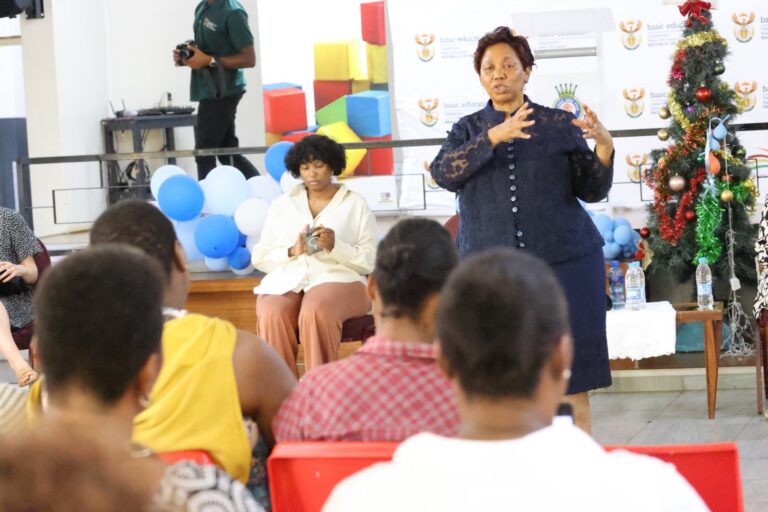
THE direction to be considered in transforming the landscape of education in Africa, especially the need for innovative strategies such as integrating technology into education and revising curricula, is imperative said the Minister of Basic Education, Angie Motshekga, when sharing her insights at a high-level conference on decolonisation in Johannesburg.

“These strategies can help bridge gaps exposed by recent crises and align with broader Sustainable Development Goals. It is a call to action to rethink and restructure educational frameworks in an equitable, inclusive and forward-thinking manner. By standing together and
pooling our resources and expertise, we can recover from current setbacks and build stronger, more enduring educational foundations for future generations in Africa,” she said.

Motshekga added that the journey towards building resilient education systems begins with a focus on Early Childhood Education (ECE). “According to the United Nations Children’s Fund (UNICEF), investing in Early Childhood Development (ECD) is highly efficient and effective for achieving equitable, sustainable growth,” she said.

Motshekga was speaking at the 10th Education International Africa Regional (EIRAF) Conference held at the Sandton Convention Centre in Johannesburg last month.

The Conference, which is a platform for the South African Government to share recent developments in the Basic Education Sector, as well as future plans around education reform, was attended by President Cyril Ramaphosa, accompanied by Basic Education Deputy Minister, Dr
Reginah Mhaule, with delegates from across the African continent.

Also present were Gauteng MEC for Education, Matome Chiloane; Executive Mayor of Johannesburg, Cllr Kabelo Gwamanda; Education International President, Susan Hopgood; Education International General-Secretary, Dr David Edwards; Education International African
Region Chairperson, Dr Christian Addai-Poku; Education International Africa Director, Dr Dennis Sinyolo; the President of the South African Democratic Teacher Union (SADTU), Magope Maphila; and SADTU General-Secretary, Mungwena Maluleka.

During the Conference, participants were afforded an opportunity to share common goals in terms of transforming and strengthening education systems in Africa under the theme, “Standing Together for Resilient Education Systems in Times of Crisis”.

Deputy Minister Mhaule stated that education systems should be robust enough to maintain continuity of learning in the face of adversity, yet sufficiently agile to evolve in response to new challenges and opportunities.

“This balance between steadfastness and adaptability is crucial in ensuring that our education systems can survive and thrive in times of crises.

In our deliberations, we must factor the educational aspirations that are articulated as guiding pillars of UNESCO’s Sustainable Development Goals (SDGs) 2030; as well as the African Union’s Continental Education Strategy for Africa, 2016-2025. These two frameworks are intended to reorient education systems of the world to meet the knowledge; competencies; skills; innovations; and creativity for a changing world, whilst promoting sustainable development.”

In his address, President Ramaphosa said that the decolonisation of education on the African continent has been long overdue. “The discussions at this Conference, focusing on tackling racism; decolonising education and promoting democracy; human rights; and trade union rights, are vital. We must challenge colonial theories and practices to build resilient education systems that are centred on African perspectives and experiences.

This requires a shift away from a Eurocentric worldview to embrace a more diverse and inclusive perspective. We must acknowledge and value the knowledge systems of all people and integrate them into our curricula and knowledge selection processes. The responsibility to nurture and defend the right to education extends to all spheres of society.”

President Ramaphosa considers education as the cornerstone upon which societies build their future. “Through education, we cultivate respect for human rights, the rule of law and the principles of democracy. As the work of the UN High-Level Panel on the Teaching Profession demonstrates, the adaptation of education systems to a rapidly changing world is one of the most important tasks facing us. This panel draws expertise from diverse stakeholders, including

ministers of education; labour representatives; teacher unions; and civil society organisations. It underscores the importance of educators’ voices in finding solutions to educational challenges.”

The President added that educators play a fundamental and irreplaceable role in shaping societies, and their insights are invaluable in the quest for sustainable solutions. Curriculum reform that responds to the changing world of work is another vital task.

“In South Africa, we are on the brink of significant educational reform with the implementation of the Coding and Robotics curriculum from Grade R to Grade 9. This initiative is part of our broader strategy to integrate STEM subjects into our education system. By doing so, we aim to equip our learners with the digital skills necessary to thrive in a fast-paced world. Labour movements, civil society organisations and non-governmental organisations in the educational sphere must collaborate to protect this critical space. Through such partnerships, we can prepare our learners to be active, informed citizens in democratic societies. The role of organisations such as Education International are vital. As advocates for quality education, your mission is to ensure inclusive and equitable learning opportunities for all,” concluded the President.

INSIDE EDUCATION
UCT leads way in global Sport Science Schools ranking

Staff Reporter

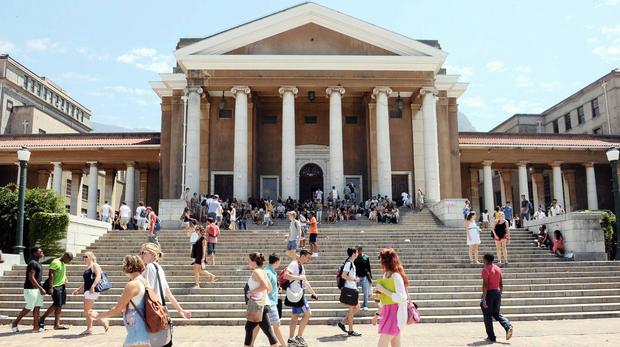
The University of Cape Town (UCT) has placed 31st in the world and top in Africa in Shanghai Ranking’s Global Ranking of Sport Science Schools and Departments. UCT jumped up 18 places from 49th position in the 2022 ranking to 31st in 2023.

First published in 2016, this ranking highlights the performance of more than 300 universities, among which 15 are now sports universities and 285 have sport-related units. Of these, 42 universities have more than one sport-related institution or unit.

“UCT has long been an international leader in the field of sport science, and many elite athletes owe their success at least partly to innovations pioneered by our researchers,” said Professor Sue Harrison, deputy vice-chancellor for Research and Internationalisation.

“We owe our impressive standing in this ranking to this committed team of researchers, scientists, and eager postgraduates at the Research Centre for Health through Physical Activity, Lifestyle and Sport (HPALS),” Professor Harrison added.  “At the same time, HPALS is increasingly focused on its work with communities, addressing the many non-communicable diseases that arise from lack of access to physical activity and a healthy diet. This type of work is generally not reflected in rankings but is equally important.”
 
“UCT has long been an international leader in the field of sports science, and many elite athletes owe their success at least partly to innovations pioneered by our researchers.”

The ranking’s 2023 methodology assesses universities according to several indicators, including papers indexed in Web of Science (10%), total citations (20%), citations per paper (30%), papers published in the top 25% of journals (30%), and the percentage of papers with international co-authorship (10%).

“We are fortunate to collaborate with outstanding colleagues, locally, nationally, and globally. We are a small, committed, and passionate group of researchers who strive to make a difference in human health, mobility and performance,” said Professor Vicki Lambert, the outgoing director of HPALS.

In 2023, UCT performed strongly once again and is leading in Africa in all five major world university rankings: Times Higher Education (THE) World University Rankings, Quacquarelli Symonds (QS) World University Rankings, the Center for World University Rankings (CWUR), the Shanghai Ranking’s Academic Ranking of World Universities (ARWU) and the US News & World Report Best Global Universities Rankings.

INSIDE EDUCATION

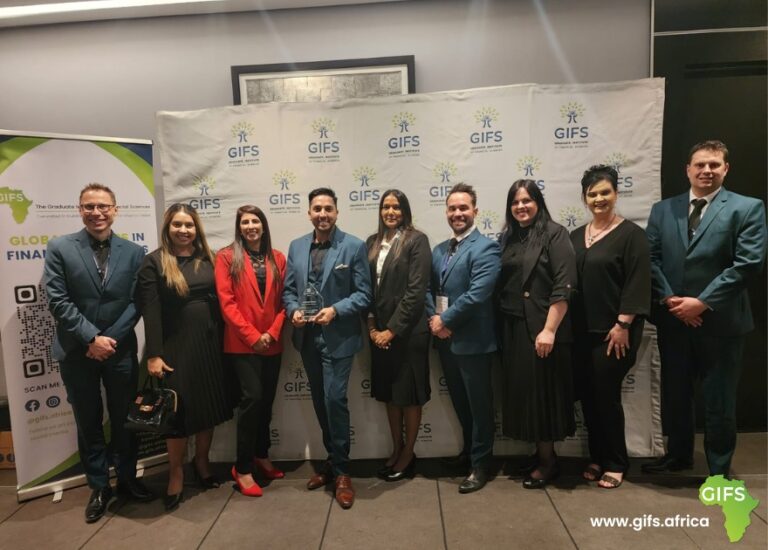
Graduate Institute of Financial Sciences wins first round in desperate battle to save South Africa’s financial services sector

Staff Reporter

THE Graduate Institute of Financial Sciences (GIFS) is leading the charge to save South Africa’s financial services sector from state capture, and possible long-term collapse. GIFS is challenging the Insurance Sector Education and Training Authority (INSETA), which appears to be ignoring its mandate to ‘grow the pool and quality of critical and scarce skills within the insurance sector.’

The work of thousands of professionals is now under threat, with the INSETA holding back 192 GIFS students’ full completion certificates, and those of 555 others who have completed skills programmes or achieved part-qualifications, some dating back to 2020. Hundreds more learners from other institutions are similarly affected.

Despite numerous requests, the training authority has failed to produce the certification, putting peoples’ jobs at risk. Worse still, it often unfairly blames the institutions when students complain.

A wider concern within the financial services sector is that the Skills Development Levy (which companies pay towards upskilling their staff) is growing annually, yet learnership funding has been reduced year-on-year. Employers who raise questions around the reduced funding and INSETA’s poor service delivery are seemingly victimised by having their funding further cut.

On 17 October 2023, GIFS wrote to the Public Protector to intervene, expressing concern that the INSETA was riddled with corruption. Despite it being framed as a neutral regulatory body, GIFS had also uncovered evidence that the INSETA was deliberately streaming prospective learners to one favoured learning institution whose educational practices have been called into question.

GIFS’ decision to tackle these issues head-on, has resulted in the INSETA launching a brazen public campaign to discredit GIFS, and drive it out of business, despite the educational institution’s crucial role in training the majority of South Africa’s insurance professionals. After the institute had closed its offices for the end-of-year holiday on 14 December 2023, the INSETA sent GIFS a letter at 5:38pm,
informing it of its immediate de-accreditation as a Skills Development Provider.

The move came as a shock to the respected, international award-winning educational institution, which has trained thousands of students from corporate South Africa in the last 18-years. GIFS programmes form part of the National Qualifications Framework and are approved by the South African Qualifications Authority.

In addition, the INSETA itself had awarded GIFS Full Accreditation status up to June 2024 in line with its practice of awarding certification annually.

But GIFS has risen to the INSETA’s challenge, turning to the courts to restore its accreditation. In an urgent High Court interdict on Thursday, 4 January 2024, GIFS’ legal counsel accused the INSETA of corporate bullying and victimisation. They argued that the INSETA’s withdrawal of GIFS’ accreditation was based on a GIFS fraud investigation report it compiled just over 2-years-ago, now under review in the courts. GIFS maintains the report is fraught with trumped-up allegations, overt bias, glaring irregularities and multiple procedural flaws, and has only held off on its legal review as the INSETA had renewed its accreditation after the report was finalised in 2021.

In view of this, the court ordered the INSETA:
To reinstate GIFS’ full accreditation within 24-hours;
To immediately withdraw all unlawful notifications the INSETA had distributed to industry stakeholders informing them of GIFS’s de-accreditation;
To reassure the public on its INSETA website and via e-mail of the full restoration of GIFS’
accreditation, and;
To pay the costs of GIFS’ legal counsel.

Unfortunately, the INSETA has ignored the court order.GIFS lists this as an example of the INSETA’s bad faith and says it cannot rule out that its December 14th de-accreditation stems from having reported the INSETA to the Public Protector, and to oversight body, the Quality Council for Trade and Occupations (QCTO), for incompetence over the certification delays. By December, the Public Protector had already confirmed to GIFS that it had asked INSETA for its response to the GIFS corruption allegations.

Still, GIFS CEO, Kershen Pillay, says the court’s finding is not just a victory for GIFS, but the entire financial services sector. “The impact of the INSETA’s conduct extends well beyond the effects on one educational institution and its learners. Thousands of accredited students have been left without proof of their qualifications and risk losing their livelihoods, while the unqualified, in possession of their fraudulent certificates, are allowed to dole out dodgy financial advice.”

Pillay goes on to say, “This represents the hollowing out of the country’s financial services industry, as has already occurred in many other South African sectors due to corruption and incompetence.”

There will be serious repercussions for those buying homes, motor vehicles, life- and short-term insurance, for pensioners and many others who will be forced to deal with individuals wholly unqualified to be advising clients on critical matters of personal finance. We, at GIFS, are therefore committed to playing our role in ensuring that ethical standards are respected and upheld in the financial services industry and that members of the public are protected.” Pillay is concerned that the QCTO has remained alarmingly silent in the face of the INSETA’s questionable conduct. “We again appeal to the QCTO to please exercise its oversight duty and intervene to help us save the
industry,” Pillay said.

INSIDE EDUCATION

Nzimande rejects Outa claims, Nsfas defends him whilst PAC calls for his removal

Johnathan Paoli

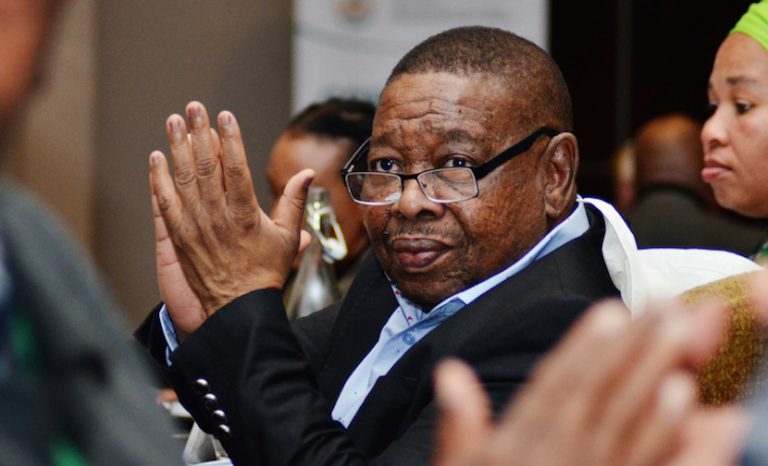
THE Minister of Higher Education, Science and Innovation Blade Nzimande has responded to the recent startling report on allegations of bribery made by Outa saying they were “concerning”. 

Nzimande said he rejected the allegations and wanted to reassure the public that he never used any money from any of the department’s entities for the purpose of funding the SACP.

Nzimande said that he viewed the allegations as reckless and largely based on gossip and are intended to undermine a smooth start to the 2024 academic year.

The minister said that due to the potential damage of the allegation, he reserved his right to take possible legal action in response to the report.

Nzimande said that he wished to reaffirm his and the department’s commitment to clean governance within the department and its entities, and focused on preparations for the start of the 2024 academic year.

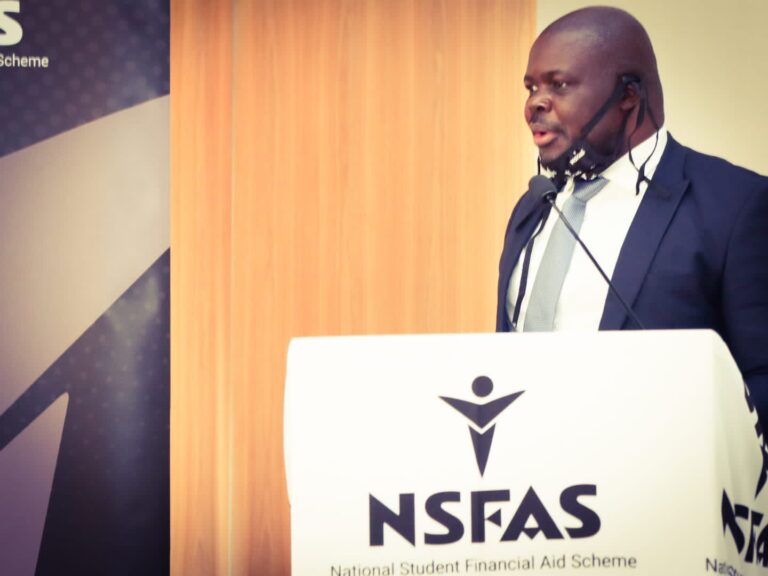
Nsfas responded to the report by defending both Nzimande and the chair of the Board Ernest Khosa and said that both Khosa as well as the board strongly dismissed with contempt the voice recording and insinuation of possible corruption between him, the minister, the SACP and other third parties.

The Board similarly called into question the motives of OUTA and said that it was now apparent that the NGO was gradually drifting away from its claimed high moral values and as an impartial organisation by perpetually venturing into politics, informed by the quest to influence the South African political landscape.

Nsfas defended the implementation of the Werksmans report and said that the Board remained committed to transformation and assisting the students of the country.

The Board said that it would work in conjunction with law enforcement agencies to further probe and investigate the recordings released by the organisation.

“The Nsfas Board Chairperson will at an appropriate time take the public into confidence on the recordings in circulation and attempted threats on his life, by some unscrupulous individual following the implementation of the Werksmans Attorneys report and the fight against corruption within Nsfas,” the statement read.

Meanwhile, the PAC has cautiously approved the recent OUTA allegations against Nzimande and the SACP, and said that allegations against the minister using the higher education sector as a way to channel money for himself and the communist party was not new.

In a statement on Friday the party referred to the incident as an example of the negative impact of the Fanonian concept of “national petty bourgeois class” which arose after 1994 and enriched themselves at the expense of the people.

The PAC said that the latest recording proved once more the important need to remove Nzimande from cabinet and called on the SIU to thoroughly investigate the corruption at Nsfas and the department of higher education.

However, whilst agreeing with the findings of the report, the party said that it remains concerned of the possible agenda behind certain NGO actions, and that it was no coincidence that OUTA started being interested in corruption at the funding scheme, after white capital was denied the tender to manage direct payments to students.

“While we must vigorously call out the petty bourgeois parasitic class, we must not lose site of the invisible hand of white power in trying to take back power and control of the country back into their hands,” the party said.

INSIDE EDUCATION

OUTA calls for Nzimande and Khosa’s immediate removal, following an explosive expose

Johnathan Paoli

THE Organisation Undoing Tax Abuse (OUTA) has called for the resignation of Minister of Higher Education and Training Blade Nzimande and chairperson of the Nsfas board Ernest Khosa.

This follows the release by OUTA of voice recordings of two meetings between Khosa and a representative of a service provider which revealed how service providers allegedly paid millions of rand in kickbacks to Nzimande and Khosa, as well as at least R1 million to the SACP, in return for tenders and protection for service providers.

Nsfas has been dogged by controversies and last year its CEO Andile Nongogo was fired after allegations of corruption had surfaced involving four service providers who were awarded tenders irregularly. The service providers often failed to meet their obligations resulting in missed payments for student fees, accommodation and allowances among others.

The four service providers awarded the tender for facilitating direct payments to students in July 2023, included Coinvest Africa (Pty) Ltd, Tenet Technology (Pty) Ltd, Ezaga Holdings (Pty) Ltd and Norraco Corporation (Pty) Ltd.

Earlier this week, Nesfas admitted that at least 20 000 students countrywide were still waiting for 2023 allowances to be paid.

OUTA’s Investigations Manager Rudie Heyneke said the voice recordings have already been shared with the SIU, which has been investigating corruption at NSFAS since 2022 and that there needed to be a thorough investigation into the vast web of corruption in the higher education sector, which OUTA’s various reports and these recordings have revealed.

Heyneke said it was unethical, highly irregular and against all the principles of good governance for the chairperson of the board to meet with service providers and request input on board decisions and that it was unnecessary for Khosa to meet these people and to update them on internal matters and request their input for the way forward.

“It is clear that the students are the last thing on the minds of the minister, the chairperson, NSFAS management and the service providers who were appointed to serve the students. With elections around the corner, we remind students that they should not allow self-serving leaders with questionable integrity to remain in powerful positions, or for similarly tainted leaders to be elected to those positions,” Heyneke said.

Heyneke said that the findings of the Werksmans’ report vindicated OUTA’s findings on Nongogo’s involvement with the awarding of tenders to Coinvest, Ezaga, Norraco and Tenet Technology (also known as Tenetech) and that the NGO was satisfied with the outcome of the investigation.

In addition, Heyneke said that the NGO was expected to open a criminal complaint against Nzimande, Khosa and Ntumba and hoped that the SAPS would thoroughly investigate the corruption charges that have been submitted.

Lastly, OUTA called on Nedbank to thoroughly investigate their client Coinvest and reconsider their sponsorship.

Whilst the allegations OUTA has made against the Higher Education Minister have not been independently verified, Nzimande has yet to respond to questions sent to his spokesperson.

INSIDE POLITICS

DBE confirms Matric results release date, whilst WCED blames budget cuts for lack of new schools

Johnathan Paoli

THE national Department of Basic Education (DBE) is expected to release the results of the 2023 final matric exams later in the month.

DBE spokesperson, Elijah Mhlanga, said the department will announce the exam outcomes a day before the provisional release.

“We are on schedule. The minister will announce the pass rate for the class of 2023 on 18 January,” Mhlanga said.

The DBE noted that the 2023 exam period went off with only a few glitches, including 45 pupils who were found with crib notes in Gauteng and an impostor was caught in KwaZulu-Natal.

Mhlanga said that the department is set to meet with quality assurance body Umalusi on Friday, with preliminary meetings being held on the previous two days.

Meanwhile, the Western Cape Education Department (WCED) has blamed a R790 million budget cut for its inability to build 21 new schools in the province.

WCED spokesperson Bronagh Hammond, said about 18,000 new learners from outside the province would need to be placed at the start of the school year.

Hammond said that the department was only able to build nine schools following the budget cuts from the national government in 2023.

“It’s nine new schools and then additional classrooms that we are placing onto existing schools and that equates to 608 additional classrooms,” Hammond said.

The department urged parents to be patient when trying to get their children placed in schools this year, as the budget cuts of June last year were heavily affecting the placement process.

Hammond said that the conditional grant for infrastructure was cut by R179 million, while a further R243 million was cut from the infrastructure budget.

INSIDE EDUCATION

NSFAS 2024 rollout open but questions linger over budget cuts

Lucas Ledwaba

In early 2022, Magdeline Makoša Ratsatsi applied to the National Student Financial Aid Scheme (NSFAS) for herself and
on behalf of her two younger siblings.

To her amazement, all three applications were approved. Magdeline, 30, is now a student at the University of South Africa where she’s studying for a diploma in research and archiving.

Her sister is studying at a FET College in Limpopo. Both their tuition fees and related expenses are covered by the NSFAS. The third sibling is repeating matric but has already applied for next year’s funding rollout.

“I was happy that I was a beneficiary among more than one million other students countrywide,” said Magdeline from Mentz village near Polokwane in Limpopo.

last month, the Minister of Higher Education, Science and Innovation, Dr Blade Nzimande, announced at the opening of the 2024 funding rollout that in this current financial year, NSFAS is funding 1,6 million students. Applications opened officially on 21 November and will close on 31 January 2024.

Among the new measures introduced, Nzimande said students don’t have to wait for their matric results to apply for NSFAS and that for this application period, there will be no supporting documents required at the time of applying.

He further revealed that in 2023, NSFAS continued to fund SA Social Security Agency (SASSA) beneficiaries in real-time.

“This year, SASSA beneficiaries account for 35% (526,970) of the funded students,” Nzimande revealed. In March, the SASSA revealed that 18,829,716 people were receiving various types of social grants in South Africa. Like many NSFAS applicants, Magdeline and her siblings come from a single-parent family that depends on the state’s welfare.

“I experienced financial problems since matriculating in 2011,” she said.

In 2013 she received an NSFAS grant to study human resources management at the Capricorn TVET College in Polokwane and graduated two years later. But a string of unfortunate incidents plunged her and siblings into deeper financial trouble.

She has, however, worked in various roles as a community liaison officer in government projects and last year she decided to apply to NSFAS and pursue her studies.

NSFAS covers her book allowance to the tune of R5,046. She also receives R304 for transport plus 30 gigabytes of data monthly.

Her sister, who studies at the Letaba TVET College in Tzaneen, was covered for R6,000 for transportation and rent in her first semester. She received a further R10,000 to cover registration, transport and rental for the second semester.

“I think how they (NSFAS) are supporting us with data and transport is enough. I appreciate the way they implement it. The money they gave us is enough. I felt blessed to have that R5,000. It was the first time that I received such money,” Magdeline reflected on the NSFAS support.

Nzimande said NSFAS has grown from disbursing R21.4 million in funding to almost R48 billion “to fund children of the working class and the poor seeking to further their studies in public universities and TVET colleges”.

In February, a meeting of the Parliamentary Portfolio Committee on Higher Education, Science and Innovation heard that the NSFAS received 978,402 first-time applications this year, which was a 14% growth compared to 2022. It was also revealed that NSFAS has funded over 657,000 new applicants, representing 66% of those who applied, 81% of whom were SASSA beneficiaries.

One such student is Tshepo Masike, 19, from Soshanguve in Tshwane.

The first-year BCom student at the University of Pretoria applied in November 2022 but experienced delays in getting approved.

“My application was stuck in one stage for a long time until around April/May this year when I was provisionally selected,” he said.

Tshepo was raised by his unemployed mother and grandmother, who is a pensioner.

“It’s tough for them to pay my fees. I didn’t get a bursary so I applied for NSFAS funding,” he said.

Tshepo who resides on campus in Pretoria receives R200 from his mother every month which he spends on toiletries and other basic needs.

NSFAS pays R14,400 for his meals on campus for one academic year and a further R3,000 for personal care which
translates into a R301 monthly stipend.

While the scheme has helped millions of students access higher education, it hasn’t been without challenges. These include being late in paying out allowances, fees and accommodation resulting in some students missing classes or being evicted from their lodgings.
The NSFAS acknowledged its shortcomings in a blogpost saying “students had to wait for their allowance to be provided
before they could register for the academic year, which meant they missed valuable learning time”.

Tshepo also experienced a delay in receiving his allowance in June. “I never had a problem except that it once came late. I think this was at the time when they introduced a new system. I only got my June allowance at the end of July,” he said.

Chantel King, the DA spokesperson on higher education, science and innovation said after Nzimande’s announcement last month that the party wants him to clarify among other issues how the Medium Term Budget Policy Statement (MTBPS) budget cuts for both NSFAS and universities will affect students and institutions.

The DA also wants Nzimande to explain where the funding shortfall for the 2024 academic year and additional funding will be sourced from, to explain the status of the contracts of the NSFAS direct payment service providers and how students will receive their 2024 funds, and the progress on accrediting student accommodation service providers.

In his budget vote speech in May, Nzimande announced that NSFAS was funding 1.1 million students with a budget allocation of R47,6 billion in the 2023 academic year. He said of this amount, universities had been allocated R38.6 billion and TVET Colleges R8,9 billion.

However in his MTBPS in early November, the Minister of Finance Enoch Godongwana announced that in the current financial year government spending has been revised down by R21 billion and that further reductions of R64 billion in 2024/25 and R69 billion in 2025/26 are proposed.

Trade union federation Cosatu has added its voice to Godongwana’s announcement of budget cuts saying it is “pained by reckless cuts in the MTBPS to NSFAS [of R3 billion).

But Nzimande has expressed optimism, saying for NSFAS to successfully implement the funding of 2024, there needs to be closure of the 2023 funding cycle.

“This includes the finalisation of all the appeals and payment of all outstanding allowances for the academic year 2023. NSFAS committed that all appeals and the payment of outstanding allowance will be finalised this year,” he said.

How to Apply for NSFAS Online 2024-2025
Application for the 2024-2025 academic cycle opened on 28 September 2023 and close on 31 January 2024. Please, be reminded that
there will be no late application for any reason. Students are encouraged to apply within the period given by the National Student
Financial Aid Scheme (NSFAS) www.nsfas.org.za
Are you from a family with a household income of R350,000 or less and want to attend a Public University or TVET College? Then carefully
read the following: You are eligible for a government grant by the National Student Financial Aid Scheme (NSFAS).

The NSFAS covers the following; Registration fees, tuition fees, and allowances for learning materials, food, personal care,
transportation, and accommodation.

NSFAS Application General Instructions for 2024: Below are the NSFAS Application instructions for applying for the 2024-2025 academic year.

  • Before filling out the application form, please read the following notes carefully. Make sure that you read all of the sections and that the information you give is correct.
  • All applicants should write their identity (ID) number in the top right-hand corner of all the pages of the application form and on every
    page of all supporting documents
  • If you submit application forms without ALL the required supporting documents, your application will not be processed by NSFAS.
  • The National Student Financial Aid Scheme (NSFAS) will process only the first application that will be received. No one is allowed to
    submit more than one application unless NSFAS requests you to do so.
  • Your cellphone number or email address will be required by NSFAS in order to reach you during the application process. If you don’t
    have an email address, it is necessary to create a free email account on Google at www.gmail.com, on Yahoo at www.yahoo.co.za,
    or any other free email service.
  • NSFAS will use the cellphone number you provided on the application form to make payment for some of your student allowances
    by cellphone voucher in case your application is successful.
  • If you don’t have a bank account, you need to open one at any nearby bank such as Postbank, ABSA, Capitec, FNB, Standard
    Bank, Nedbank, or others. Some student allowances will be paid into your bank account.
    The closing date for submitting all applications and other completed supporting documents for students who are already studying at a
    university or FET college, but who are applying for NSFAS financial aid for the first time, is 15 December for the following academic year.
    NSFAS Required Supporting Documents for 2024 Application if you want your application to be processed by NSFAS, please make sure you complete all sections of the application form and attach all the required supporting documents. Below are the needed documents:
  • Certified copy of your Identity Document.
  • Certified copy of your birth certificate.
  • Certified copy of Identity Document of each household member including parents or legal guardian.
  • If your parents are divorced, please provide a certified copy of the divorce decree.
  • If you are a SASSA grant recipient, no proof of income will be required.
  • Applicants with a disability must submit a completed and signed Disability Annexure A Form.
  • An applicant who is recognized as a Vulnerable Child by the Department of Social Development must provide a completed and
    signed Vulnerable Child Declaration and Consent Form.
    NSFAS Online Application for 2024 is very simple, easy, and accurate. To apply online, follow the steps below:
  1. Go to www.nsfas.org.za online and apply for 2024.
  2. Then, click on the ‘myNSFAS’ tab.
  3. Create a myNSFAS account.
  4. After that, click on the ‘APPLY’ tab.
  5. Complete the sections on the screen.
  6. Upload the needed supporting documents where applicable
  7. Click on the “Submit” button to finish the application.

Apply Online: https://applynsfas.com

– Mukurukuru Media

Saftu calls out Educor Holdings for non-payment of College lecturer salaries

Johnathan Paoli

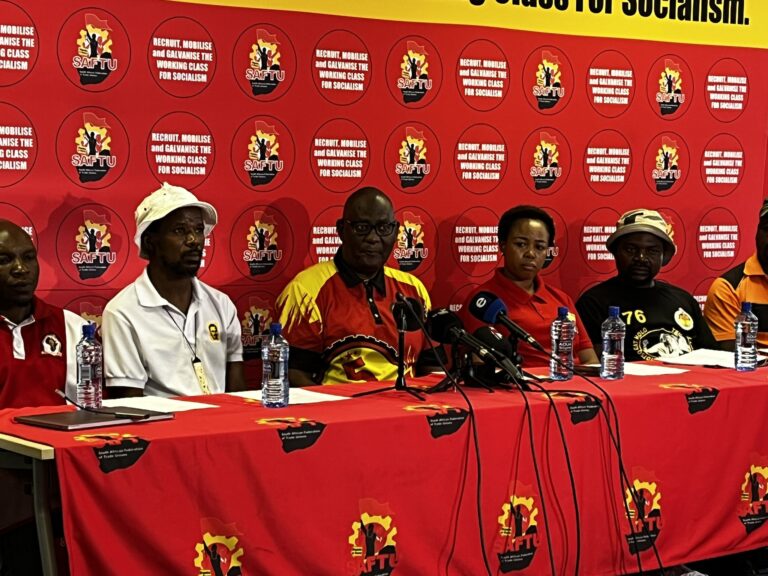
Saftu general secretary Zwelinzima Vavi said the union was completely disappointed by Damelin and its sister colleges, ICESA, Lyceum and Central Technical College, for the non-payment of salaries to their employees at different campuses across the country.

“This is a kick in the teeth of workers especially when considering that these employees need the money to meet their household spending obligation for the festive season,” Vavi said.

According to Vavi, the colleges have not paid their staff for November and December 2023 wages, that especially college lectures have been receiving late payments since after Covid-19, and that despite their efforts, the Damelin College management has been avoiding the union federation and failed to respond.

Last month SAFTU released a statement calling out Damelin’s abuse of workers by not paying them on time consistently for the rest of this year, allegedly unprofessionally handling their grievances and terminating some contracts without following due process.

“It is our contention that such money must not be used to lure prospective students to register for 2024, but to pay the employees who have already credited these institutions with their labour power,” Vavi said.

In addition, Vavi said that staff members were allegedly intimidated by the institution for attempting to address their grievances.

Saftu spokesperson Trevor Shaku said Damelin was not the only college affected under the group and that Damelin’s sister college, CTC, had closed its branches in Pretoria and Johannesburg and retrenched employees, without following due processes.

“Each time they raise complaints about the payments and other grievances, they are told they can leave the company if they are not satisfied. These are tantrums only selfish children can throw and this has led to a working culture where workers are not free to raise their dissatisfaction and grievances,” Shaku said.

Educor Holdings describes itself as a premier education group and is the owner of Damelin, City Varsity and Intec colleges, and also includes Lyceum colleges and Central Technical College.

INSIDE EDUCATION

31 educators implicated in sexual offences struck off teachers’ roll: Youth NGO welcomes the move

Johnathan Paoli

New LoveLife Trust has welcomed the decision by the South African Council for Educators (Sace) to indefinitely strike sex-offending educators off the roll for alleged sexual misconduct, including sexual harassment of learners and having sexual relations with their learners.

The New loveLife Trust, also known as “LoveLife”, is a non-profit youth organisation  established as a joint initiative of leading non-governmental organisations, private foundations and the South African government.

Earlier this week the Education Labour Relations Council revealed that 30 teachers have been fired since April for sexual misconduct and would soon be registered with the National Child Protection Register and barred from ever teaching children again.

LoveLife spokesperson and Gauteng provincial manager Thilivhali Livhadi said the decision to deal with sex offenders would significantly improve the lives of millions of learners who are forced to spend time in the midst of known sex offenders.

“The organisation further calls for strict adherence to the National Child Protection Register so that such sex pest educators should never be allowed near learners again,” Livhadi said on Wednesday.

Livhadi said learners were exposed to appalling crimes and behaviour such as sexual assault, sharing pornographic material, assault, unwelcome behaviour, poor performance, dishonesty and theft.

“LoveLife is alarmed by the high number of misconduct cases, showing that there needs to be stringent methods in hiring the right caliber of educators who would be fit for purpose and competent in ensuring that learners are safe and not sexually exploited or abused,” Livhadi said.

In addition, professional teachers’ body, the SA Council for Educators, has also struck 31 members from its register, with the council’s spokesperson Cindy Foca confirming that the council appointed independent arbitrators to preside over cases which involved cases of sexual assault at schools.

Foca said that once a perpetrator was found guilty, they would be reported to the department of social development and effectively barred from working with children again.

The National Child Protection Register is a register maintained by the Director General in terms of section 111 of the Children’s Act 38 of 2005, consisting of a part A and a part B.

Prospective employers offering services which allow for access to children must establish from the registrar whether or not the potential employee’s name was listed on part B of the register.

INSIDE EDUCATION

Basic Education Minister Angie Motshekga on 2024 mass ECD registration drive

 Edwin Naidu

THE Department of Basic Education (DBE) is currently preparing for an accelerated mass registration drive for Early Childhood Development (ECD) programmes, which will be launched early in 2024. 

The project will be rolled out in all education districts across South Africa. Basic Education Minister Angie Motshekga, accompanied by DBE ECD officials, as well as officials from the Gauteng Department of Education (GDE), visited ten ECD centres to share information on the full-scale institutionalisation of ECD in the country. 

During the visits, Minister Motshekga addressed various stakeholders, including ECD managers; practitioners; NGOs; and Forums representing ECD centres operating in the Johannesburg Central, Johannesburg North, Johannesburg South, Tshwane East and Tshwane West Districts. 

The registration of ECD centres is the first step to increasing quality programme delivery and enabling children to receive the stimulation and care required to thrive in school.

This move to formalise the ECDs comes after a 2021 ECD Census revealed that there were still many ECD programmes that were operating without being formally registered. 

Furthermore, the 2022 General Household Survey indicated that there are currently 1.3 million children aged 3 – 5 who are not accessing ECD programmes. 

Increasing access and ensuring that the newly established ECD programmes are registered, is therefore a key priority for the DBE.

The oversight visits to ECD programmes are conducted through the DBE’s Chief Directorate for Foundations for Early Learning, under the leadership of Ms Kulula Manona. 

Manona informed ECD stakeholders that the strengthening of ECD is necessary to address the learning deficits encountered by learners as they move into the formal schooling system.

 “Our main objective is to accelerate the registration of all the ECD centres so that they operate procedurally and constitutionally. Through a series of engagement meetings conducted in the province, we managed to exchange critical views around the effective implementation of the National Curriculum Framework for Children from Birth to Four (NCF)

“ECD stakeholders are willing to work with the government in elevating the standard of early learning in the country. The valuable inputs and insight shared during these visits will inform our decision-making process as far as ECD administration is concerned”.

During the engagements, ECD stakeholders indicated the need for uniformity in programme delivery across all nine provinces. 

The ECD stakeholders alerted the Minister that programmes require qualified teachers, proper infrastructure, access to the ECD subsidy and proper funding to provide nutritious meals at the programmes. 

Inclusive education was also highlighted as a critical aspect that needs to be enhanced and supported. They urged the Basic Education Sector to prioritise inclusive education since there are rising figures of learners with special needs enrolled in ECD centres. 

Additional training and support for ECD practitioners in supporting children with disabilities has been highlighted as a critical need.

As quoted in the ECD Census 2021, Motshekga said: “We as the DBE have always been a firm believer in the fact that building the future starts with strengthening early learning and development”. 

Motshekga indicated that the visit will pave the way for the mass ECD registration drive as it highlights success stories and shortcomings around ECD institutionalisation.

“We have decided to give ECD managers sufficient time to ensure that they comply with the Constitution. As a result, the unregistered ECD centres will be given three years to sort out all administrative issues as the government will not allow the operation of unregistered ECD centres in communities once the three years have lapsed. 

“ECD migrated to the Basic Education Sector to lay a solid foundation for early learning so that our children can be school ready at the appropriate age”. 

In her response to issues raised during the visit, Motshekga said the DBE will engage various education stakeholders, including the Departments of Home Affairs, Health and Cooperative Governance and Traditional Affairs to deal with existing obstacles hindering the operation of ECD programmes in various communities.

INSIDE EDUCATION