Home Blog Page 178

PlayerNation unites communities through sport with summer athletics games in the Karoo

STAFF REPORTER

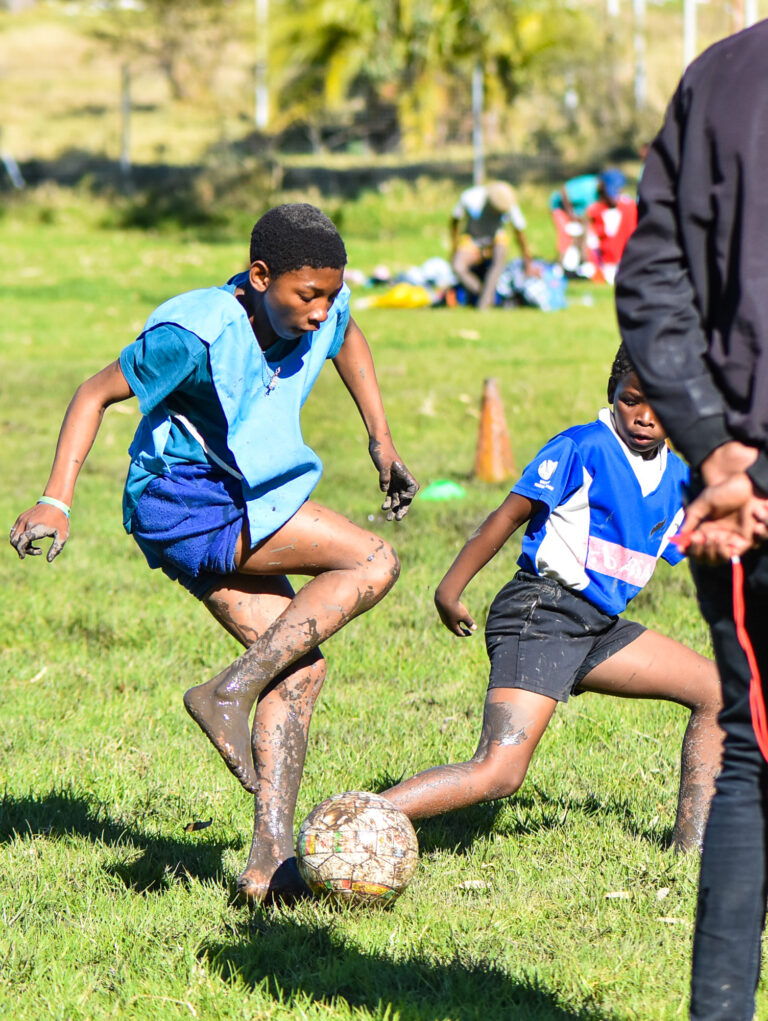
Following the success of the winter games in July this year, PlayerNation brought yet another wave of excitement to the Karoo earlier this month, with its much-anticipated summer athletics games completing on December 5 and 6. School learners, communities and surroundings had an unforgettable experience.

The two-day event provided not only fun to sport enthusiasts but also relaxation for residents and school learners in the Karoo, offering a much-needed opportunity to unwind after long exams.

The winter holiday sports programme attracted more than 1000 young people, boys and girls from Somerset-East, Cookhouse, Bed-
ford, and Adelaide communities.

The programme, featuring rugby, soccer, netball, and indigenous games, surpassed expectations and set the stage for a comprehen-
sive rollout.

“PlayerNation is all about showing the incredible impact that sports can have on our young people, shaping their future in
ways beyond imagination. We are thrilled to bring this amazing wave of excitement to the Karoo with our upcoming summer athletics games,” said John O’Connor, CEO of Arch Group Holdings and its Institute of Sport.

“The games are not just about competition; they are about empowering youth through sports excellence. We are inviting all communities in the Karoo and surroundings to join us in this thrilling two-day event,” he added.

The two-day event took place at Bedford, Eastern Cape, and at tracted an overwhelming participation of young people who ea-
gerly engaged in a day filled with fun, and the joy of sports.

“This unique platform provides young athletes with the opportunity to showcase their skills, promote active living, and foster a sense of pride in their accomplishments. We could not wait to welcome the scores of talented individuals who will contribute to the vibrant sports community that we are building,” said O’Connor.

PlayerNation, is an initiative developed by the Institute of Sport partnering with Exxaro as the first founder partner, through its re-
newable energy business Cennergi.

It was launched in May 2023. With a multifaceted approach encompassing sport, health, education, and skills development, PlayerNation, in partnership with the Department of Sport and the Department of Basic Education aims to become the ultimate school sports programme, impacting 28,000 schools nationwide.

Designed as a day out event in the Karoo, for young people, family and friends, the summer games focused on empowering youth through sports excellence, contributing to their physical, mental, and emotional well-being.

Cennergi’s Economic Development and Community Programmes Coordinator in Amakhala Emoyeni Windfarm, Mr. Simphiwe Mbenya, expressed the organisation’s pride in supporting the programme to create a lasting impact on South African schools and communities. “PlayerNation goes beyond sculpting athletes; it’s about cultivating a new generation of champions and laying the foundation for a nationwide movement that extends beyond sports.”

“At Cennergi, we believe in contributing to the communities that we serve, and partnering with PlayerNation aligns with our commitment to holistic development. We are proud to support an initiative that creates a positive impact on the lives of young indi-
viduals,” he added.

The summer athletics games featured various types of sports including, soccer, rugby and netball and indigenous games.

Reflecting on the winter games, School Governing Body Chairperson for Templeton High School, Rudi Arends noted with satisfaction the remarkable transformation witnessed among school learners in the community. He stated that the spark of interest in sports that ignited during the winter games has continued to grow.

“It’s heartening to see our learners eagerly anticipating future sports games with such enthusiasm,” he said. The excitement and impact of the winter games have not only lingered within the school but has extended beyond our school gates. It’s not just the learners who are enthusiastic; even parents have expressed their desire for these games.”

Arends urged learners and communities in the Karoo to come out in full support and embrace the summer games as an opportunity to connect, enjoy, and actively participate in promoting a healthy lifestyle.

INSIDE EDUCATION

Matthew Goniwe’s legacy a gift for future generations

Lucas Ledwaba

Matthew Goniwe’s excellent skills and commitment to teaching and empowering the community extended way beyond the
classroom. His discipline, passion and dedication to the profession and deep love for his community made him an
outstanding educator and community builder.

This is how Professor Mbulelo Goniwe, a former student of the slain political activist remembers the man who has come
to epitomise the ethos of ethical, committed and dedicated leadership and servitude both inside and outside the
classroom.

Professor Goniwe was a pupil of Matthew’s during his high school years in Mqanduli, a rural village in the Eastern Cape in
the early 1970s.

“He was a patriot, someone who had a genuine love for the motherland and his people, starting from his own family. He
had that kind of love. That really inspired so many of us to actually achieve the best of their potential. He was that kind of
person,” said Prof Goniwe.

“That’s how this whole passion for education is centred, in that love. That was the springboard of his commitment and
the innovative, interconnectedness of education and achievement,” he said.

Matthew was Prof Goniwe’s tat’omncinci, his father’s younger brother. In his youth the family entrusted him into the
hands of Matthew, the man who because of his prowess in boxing, was nicknamed Bullet.

“I was handed over to him to groom me and even look after my needs. That’s what led me then to be part of the active
resistance, taking forward the family tradition that has been imparted on us from generation to generation,” he said.
Prof Goniwe is an academic, a former political activist and ANC member of Parliament.

Matthew specialised in mathematics and physical science education and always went the extra mile to impart
knowledge on his learners.

“His world outlook and the life he led was to empower the black child to really understand mathematics and physical science
to broaden their horizons,” said Prof Goniwe.

The school in Mqanduli, like many in rural areas and townships at the time had no such resources as laboratories or
libraries. Instead of resigning himself to the fate laid out by the authorities then, to deprive black children of critical knowledge
and skills, Matthew took matters into his own hands.

“And he went the extra mile. Sometimes, he would use his own salary to buy material to do experiments,” Prof Goniwe
recalled.

The theme for this year’s 10th anniversary lecture of the Matthew Goniwe School of Leadership is Transformative
Leadership for Social Change – Empowering the next generation.

Prof Goniwe believes that to be able to empower the next generation teachers need to possess and implement some of
Matthew’s qualities.

“The love for his people, the flora and fauna, and everything that you find. Then the second thing would be the dedication.
You have to be dedicated to what you do,” he said.

He cited the example of how during Matthew’s time, his work wouldn’t stop at the ringing of the bell in the afternoon.
“Imagine [back then] there were less teachers, but after school, they would coach rugby, they would coach athletics,
boxing. They would do a lot of extramural activities, not only focused on what they were paid for.

“So they heavily invested in us because we were actually the generation that would follow them,” he said.
This kind of dedication, coupled with an inclusive leadership style made Matthew a shining star and beacon of hope in his
community.

“He had that participatory leadership that doesn’t seek to take the credibility for achievement. He would delegate tasks
to people and try to empower them to be able to deliver to on their expectations,” Prof Goniwe said.

“He knew the importance of collective leadership, a servitude kind of leadership where you really want to serve the
people and not to be worshipped or adored or be populist,” he said.

Above all, Matthew understood how his position as a schoolteacher was perceived and respected in the broader
community. He knew that in the eyes of the community he was not just a man who stood in front of a class with a chalk.

“My own understanding of things is that, firstly, people, society, communities, where we are from, looked up to the
teachers and ministers of religion as important societal assets. So they had an unquestionable respect for such people.
They respected them,” Prof Goniwe reflects.

Added to that Matthew had already proven his political mettle after serving four years on Robben Island after being
convicted for furthering the aims of the ANC which was banned at the time.

Prof Goniwe believes that institutions such as the Matthew Goniwe School of Leadership have a significant role to play
in society.

“They are very critical because once you seek to define yourself outside of your heritage, that is a very problematic
approach to life. You need to know and learn from your forebears.

“And once you have institutions like the Matthew Goniwe School of Leadership that seeks to uphold, preserve and
advance a legacy of people like Matthew; it then speaks to the entire liberation struggle, heroes and heroines.

“That legacy is very beneficial to the future generations because they have to understand the link, how far did they go, and
what is it that they achieved. How you take forward their vision, interpret it in the context of the present,” he said.
It’s been 38 years since Matthew and his three comrades were brutally tortured and killed by Apartheid death squads.
Yet his name and the legacy of his work continue to live on.

“Memories fade, new people come up and so on. But he remains one of the few people that even after 30 years of their death is
still very prominent in the thoughts of many, many people. There are people that are never spoken about. After a month of their
death, they are forgotten.

“That’s why I said that the approach of the Matthew Goniwe School of Leadership and many other legacy preservation and promotion
activities also contribute to that memory to be kept alive,” he said.

INSIDE EDUCATION

Chiloane praises MGSLG’s role in improving the quality of education as it celebrates 21 years

Matome Chiloane

WHEN the Gauteng Education Department conceptualised the formation of the Matthew Goniwe School of Leadership and
Governance 21 years ago, it was just a dream. But we had a solid vision. It was one rooted in a commitment to
continuously develop all stakeholders in the education system in the province.

Our reflection of the past 21 years has been nothing short of a marvel. The work of the institution has not only been an
infinite well of impressive success, but now also serves as an inspiration across the country. Other provinces have
reached out to us enquiring about the model of the MGSLG.

This is a demonstration that the results of the sweat and hardwork of the men and women who have committed to ensuring the institution is a beacon of light, is clear for all to see.

The school has undoubtedly served its mandate which includes being responsible for the training of school governing bodies, teacher development and student bodies. This gives us a great sense of contentment.

For the past 21 years, the institution has achieved its role of ensuring that everyone is capacitated. And this is something that we want to see continue. Our role in the department is simple. It is to ensure that we educate and prepare those who are the future of our province and country to meaningfully contribute to society because everyone’s journey in life starts with educators.

Having acknowledged that this responsibility is centred around teacher and school leadership development, we must guarantee that we consistently resource the institution.

Undoubtedly, we are full of praise to the board and staff of the Matthew Goniwe School of Leadership and Governance for their unwavering commitment and exemplary efforts extended by the school in fostering training and augmenting capacities of schools, teachers, SGBs, and RCLs.

The task ahead is daunting, and we look forward to walking this journey alongside you. The province was committed to ensuring that learners – and teachers benefited from the latest in technology to make an impact in the classroom.

As a province, we have decided to future-proof our schools, teachers, and learners, by staying ahead of the curve when it comes to the role and use of digital technologies in teaching, learning, and curriculum.

Your institution and your partners will continue to play a massive role in this regard. The infusion of coding and robotics in education is no longer a matter of preference; it’s a critical pivot.

Continually training our teachers on the new curriculum, information and communication technology (ICT), and new teaching methods has been central to the overall performance of our schools.

The MGSLG also has the mandate to train school governing bodies; they are charged with the important duty of securing peaceful and conducive teaching and learning environments. They need to understand their mandates within the schools as do the teachers.

It is also important to reflect on how the institution has leaned on its innovative capabilities to adapt to the times.

Education, like all facets of life, is an ever-evolving feature of the human development process.

Most recently, during the Covid-19 pandemic, we witnessed how ICT was a catalyst to the few solutions we could lean on to navigate the
challenges we were confronted with concerning face-to-face teaching and learning. However, because some of educators in the province had already received ICT training from the MGSLG, the transition was not impossible to achieve in many areas.

Our desire as a province is for the institution to continue in this vein. We must focus on these skills and include even more beneficiaries. We envision an education system in the province where all school governing bodies are well-informed and knowledgeable about their constitutions and the responsibilities they are elected to meet. We want to see educators whose ability to adapt to new curricula and methods of teaching, is seamless.

Learners must be taught leadership skills so that they too can meaningfully contribute to building effective and successful schools. The development of the respective stakeholders will also lead to a more harmonised relationship between the entire school body and leadership.

For 21 years, the MGSLG has pushed the boundaries. The programmes on offer have adapted to meet the needs of our beneficiaries.

And this is why we are confident about the future of the institution for many decades to come. The work done in the past 21
years is no small feat. However, as we prepare for a more advanced world, with evolution moving at a swift pace, the
institution must prepare to respond to the needs of the thousands of early childhood development (ECD) teachers, who are
now a responsibility of the Basic Education Department.

There are some 3000 private and 4000 public ECD centres in the province. One of the key reasons for transferring the portfolio from the Social Development Department to the Department of Basic Education was to centralise the sector.

At the heart of this work is the need to capacitate teachers with the necessary skills to mould South Africans so that they can build the country of our dreams as their development will have been well crafted from their very foundation. I want to congratulate the Matthew Goniwe School of Leadership and Governance on being instrumental in the education landscape not only in the province, but across the country over the past 21 years.

It is with great anticipation and hope that I look forward to joining hands with the Matthew Goniwe School of Leadership and
Governance to traverse this transformative path. Let us forge ahead with unified resolve and unwavering dedication to elevate our
educational standards, foster innovation, and ultimately, build a brighter, more equitable future for all our learners.

INSIDE EDUCATION

MGSLG Strategy to combat the root cause of crime and violence in Gauteng schools

Edwin Naidu

THE Matthew Goniwe School of Leadership and Governance in collaboration with the Gauteng Department of Education
has designed a three-year programme to capacitate and promote safety at schools in the province.

“It is the mission of the Gauteng school safety programme to create centres of excellence with strong community links,
quality learning and teaching, and effective management and governance,” says Sibusiso Mahlangu, the Chief Executive
Officer of the MGSLG. “In so doing, the strategy will help combat the root causes of crime and violence, and thereby
advance social cohesion.”

Mahlangu was among the speakers at a high-level School Safety Indaba in Ekurhuleni on 11 November 2023 – part of
the Safe Schools Campaign under Operation Kgutla Molao (Restore Order) – to mobilise different stakeholders to
safeguard schools against criminal activities, especially during the holidays.

The Gauteng Department of Education, under Education MEC Matome Chiloane, hosted the Indaba at the Birchwood
Hotel, Boksburg, to evaluate the progress of the campaign so far, develop further interventions for emerging threats and
provide a status update on identified high-risk schools in the province.

Chiloane launched Operation Kgutla Molao in response to reports of safety concerns at Gauteng schools and the
programme, under the department and its partners, plans to deal with and reduce incidents of violence, bullying, suicide,
substance abuse and sexual harassment at schools.

With an over-arching strategy to find solutions to escalating crime, which manifested itself on several occasions during this
year’s National Senior Certificate examinations, the Safety Summit brought key stakeholders together to collectively agree
on a way forward.

The School Safety Capacity Building Programme is premised on the training of school safety committees and forms part
of the programme to revive these committees at all public schools, empower teachers with the tools to positively manage
discipline in class, provide training to school governing bodies (SGBs) on school safety issues and conduct advocacy
programmes at community level to promote social cohesion and discipline.

The plan is two-fold, with the first part focused on training on school safety and the roles and responsibilities of the
safety committee; the second phase is the monitoring, coaching and certification of all participants.

As part of the second phase, all schools at high risk have to, among other tasks, conduct a safety audit for the year, compile monthly safety reports, compile and revise safety plans on a quarterly basis or as recommended by the SGB, draw up safety
programmes and make provision for the representation by the school’s safety officer and/or principal on the cluster.

In addition, Mahlungu says, the programme will also empower SGBs and SGB Associations with dispute resolution skills
to ensure proper processes and the necessary skills to conduct disciplinary hearings.

Overall, he adds, the programme seeks to be more remedial than relying on the expulsion and criminalisation of
learners. “It is only when all else fails that the disciplinary committee should request the expulsion of learners, so it is
important to keep updated files of all learner behaviour,” Mahlungu adds.

The programme will be implemented over a three-year period by the MGSLG and the Gauteng Department of Education
to ensure that all public schools, especially those in townships, informal settlements, hostels and/or crime-dense areas
are capacitated and supported.

The intervention plan will be implemented by working together with safety coordinators and managers within the GDE so
that efforts are synergized and not duplicated. According to the South African Schools Act, SGBs are responsible for the
safety of schools.

However, according to Mahlangu, SGB safety committees do not exist or are non-functional. It is
against this background that the plan proposes the resuscitation of safety committees among other steps to stop crime at
schools.

Mahlungu says the programme will be rolled out over a period of three years, as it seeks to make an impact on all
schools found to be at high risk because of several factors, including crimes against school infrastructure, violence against
learners and/or teachers, and crimes and violence that hamper effective learning and a safe environment.

The key objective of the campaign is to ensure that all ordinary public schools in Gauteng have functional school safety
committees.

“This proposed intervention action plan will be implemented over a period of three years with the year 2023/2024 focused on the
improvement of hotspots and schools at high risk,” Mahlangu says.

“The year 2024/2026 will see the finalisation of the implementation of the current Gauteng Safety Strategy and inform the formulation of a five-year cycle strategy. Information gathering and implementation of education sector safety policies shall remain at the forefront of ensuring safety at schools.”

Matric final exams went smoothly and online admission system for Grade 1 and 8, open until January 2024: Chiloane

Johnathan Paoli

More than 180 000 candidates consisting of some 133 2885 full-time candidates and 54 789 part-time/repeater candidates sat for the Matric final National Senior Certificate (NSC) exams this year which started on 30 October and finished on 6 December, the MEC for Gauteng Education Matume Chiloane confirmed on Sunday.

Chiloane said that Weekly Quality Promotion (QP) meetings were held throughout the examination period, to review processes, sharing of practices, and necessary guidance from management and stakeholders. 

The reports from these meetings confirmed NSC examination credibility in Gauteng, meaning that protocols were followed, policies adhered to, excellent security maintained, just on-time material distribution, and smooth collection schedules observed, he said.

“Question papers were distributed and collected smoothly, with timely dissemination to exam venues, ensuring an overall successful process,” Chiloane said.

Chiloane said that despite a few irregularities being reported in each week, none of them impacted negatively on the quality of examination.

Overall, there were fifty-one overall irregularities and incidents which included 45 learners caught with crib notes, 5 learners in possession of cell phones and 1 imposter.

“The vigilance of chief invigilators, invigilators and monitors was commendable, good administrative measures put in place by the Districts to manage irregularities was outstanding,” the minister said.

The department confirmed that marking has been divided into two sessions, namely a session from the 16 to 28 November with the main marking session commencing on 3 December and is expected to conclude on 20 December, across 25 undisclosed centres.

Chiloane said that 10 541 personnel were appointed, for various roles including chief markers, senior markers, and monitors.

In addition, examination assistants and quality assurers were also appointed and allocated to centres in order to ensure smooth processes, with deputy chief and senior markers trained in November for both sessions.

In terms of 2024 online applications, the department said that it was nearing the completion of the placement process for grade 1 and 8 learners.

Chiloane said that the department has placed 99.8% (272 639) of all 305 981 complete applications and await only 0.1% (324) of parents to accept their placement offers; and that the placement of applicants commenced on 4 September 2023 and is expected to close when all applicants are placed.

In conclusion, the MEC said that in order to give parents an opportunity to finalise their applications, the Online Admissions Application System will be open from 11 December 2023 to 15 January 2024 to allow parents to select a school with available space.

INSIDE EDUCATION

Deputy Minister praises impact among youth of Huawei initiative to plant Seeds for the Future

Edwin Naidu

“Together, we must ensure that the benefits of the digital age are accessible to all, regardless of background or circumstances.

Scaling up skills development to support innovation and the digital revolution is an investment in the future. It’s not only about empowering individuals with the tools to succeed but also about driving economic growth and societal progress.”

This was the message from Deputy Minister of Communications and Digital Technologies, Philly Mapulane at the Seeds for the Future, Huawei’s global CSR flagship ICT student training programme, which has been running in South Africa since 2016 in partnership with the Department of Communications and Digital Technologies (DCDT)

Acknowledging appreciation for Huawei’s partnership and collaboration in a broad range of initiatives aimed at nurturing ICT skills, including Seeds for the Future, the Deputy Minister said: “It has been seven years since the initiative started and it remains an important platform in our pursuit of bridging the digital divide.”

This year, Huawei has recruited 12 outstanding candidates from universities in Limpopo, Mpumalanga, North West, Eastern Cape, Western Cape, Free State and Gauteng. The programme also targets a 50-50 gender split.

The transformative power of technology education, giving back to communities and continuous learning were the key messages from speakers attending the annual Huawei Seeds for the Future 2023 programme launch in Woodmead, Johannesburg.

So far, 102 students have benefitted from the programme, which aims to ensure that tech-savvy and change-resilient young people have the skills and mindsets needed to be competitive in the workplaces of the future.
The key focus areas for this year are digitalisation, innovation, entrepreneurship, and sustainability.

Kian Chen, Deputy CEO, Huawei South Africa, said South Africa’s digital economy development depends on ICT infrastructure development, but without an abundant and sustainable ICT talent supply, the target will be too far to reach. “We want to cultivate young people who are socially responsible and innovative,” he added. “We want our Seeds to think about how technology can be used in the future to solve complex global problems, such as climate change, and the green transition.”

During the event, Seeds for the Future alumni who are now Huawei employees shared their experiences of the programme and their growth at Huawei, which proves the programme not only provides a learning platform but also a career path for South Africa’s outstanding youth.

Among them was Siyabonga Thomas Shandu, a University of Johannesburg graduate who now works as a project lead at Huawei. “In my two years at Huawei, I’ve been privileged to contribute to the Openserve FTTH (Fibre to The Home) Project, witnessing more South African households and businesses being connected with Openserve Fibre,” he said. “This journey has not only been about numbers but about growth – both personal and professional growth.”

Munyai Vhutuhawe, a computer science graduate from the University of Limpopo, who works as an IT Facility & Equipment Engineer at Huawei, said: “In 2021, when I participated in the programme, our team made it to the top three globally in the Seeds for the Future Tech4Good competition for our project aimed at protecting South Africa’s rhino population from illegal poaching.”

University of the Witwatersrand graduate and current Huawei IP Technical Engineer Basani Mathebula described the programme as a “transformative experience” that provided her with a “unique platform to dive deep into the world of technology and gain valuable hands-on knowledge.”

“It has not only equipped me with technical skills,” she said of the programme, “but has also nurtured my passion for innovation and fuelled my aspirations to contribute to the telecommunications industry as a wireless, microwave and IP Technical Engineer in the MTN Huawei Project.”

Kim Smalls, one of this year’s students, spoke about how much she was looking forward to grasping the opportunities presented by Seeds for the Future. “Imagine a world where technology breaks down barriers, where opportunities are accessible to all, and where innovation drives positive change,” she said. “This is the world we can create together. As we embark on this Seeds journey, let us embrace the excitement and possibilities that lie ahead. Let us harness our collective knowledge, inspire one another, and make a lasting impact on the world around us.”

Originally from the community of Malibu Village in Blue Downs, South Africa, her story is one of ambition, resilience, and a desire to make a difference. “I come from a close-knit family of 4. It is their belief in my potential that has fuelled my determination to chase my dreams and work towards a better future. Malibu Village, like many underprivileged communities, faces its fair share of challenges. Yet, it is within the midst of these challenges that my passion for change took root. I have witnessed firsthand the power of determination, the strength of community, and the transformative impact that individuals can make when they strive for something greater than themselves,” said Smalls.

Nikkesha Pillay, a third-year student at the University of Pretoria pursuing a Bachelor of Commerce Degree in (Informatics) Information Systems, said her journey in the world of technology began at a young age, inspired by an uncle who is a computer programmer.

“I always loved listening to the various projects he was working on. I’ve witnessed how the programmes he developed impacted positively on the company and made operations more efficient and effective. Technology has made it possible for the world, amid the unprecedented global crisis we experienced, Covid-19, to continue to function, monitor and recover from the consequences of the pandemic. Technology has become even more important now in the ‘new normal’ with many working remotely and online. The resilience of us as humans to adapt and create new platforms has intrigued me and reinforced my enthusiasm for ICT,” she said.

As a young woman, she said her goal is to use the skills obtained to motivate young women to empower themselves to pursue IT and business skills in this technology driven world.

“This opportunity with Huawei Seeds for The Future Programme has provided me with an excellent foundation for my career development and has further strengthened my passion for the IT environment. The Huawei programme turned learning into a truly wonderful adventure, making it an experience that I’ll cherish and carry with me in all my future endeavours,” she said.

INSIDE EDUCATION
Nxasana calls for establishment of Teacher University Colleges

Tlholohelo Mosala

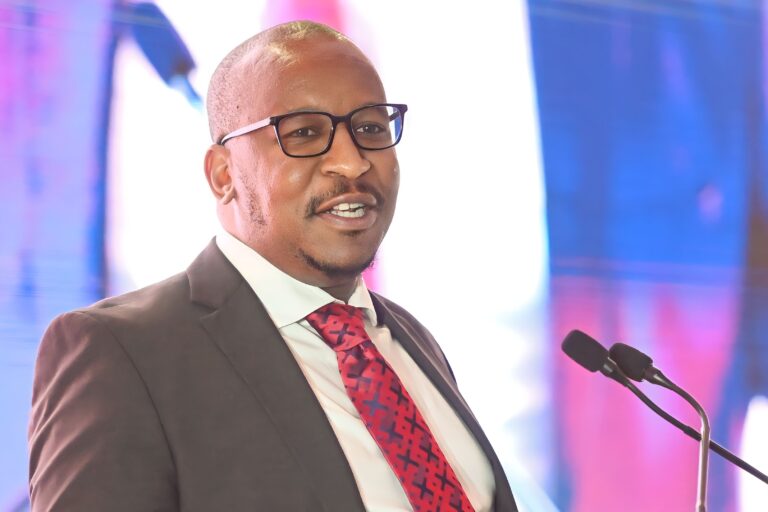
FORMER Chairperson of the National Student Financial Aid Scheme (NSFAS) Sizwe Nxasana said South Africa should consider establishing teacher university colleges in order to provide better training for educators. 

Nxasana was delivering a keynote address at the Matthew Goniwe School of Leadership and Governance (MGSLG) Colloquium on the theme: “transformative leadership for social change- to empower the next generation.”

He said universities are only focusing on research, and because most professors and educators have never been to a school, there exists a gap between theory and practice. 

“Let’s establish teacher university colleges, not the old colleges of the apartheid regime but the ones that are going to focus on pedagogical content, youth developments in education, and teaching practices, producing and developing teachers to help the country. If we continue on the current trajectory, we are going to fail our children, he said, calling for a rethink and for the sector to learn from the unintended consequences as a results of the separation between basic and higher education departments.

He said such colleges will go a long way in addressing the crisis of mathematics in the South African education system.

Gauteng Education MEC Matome Chiloane with education expert Sizwe Nxasana. Picture: Eddie Mtsweni

INSIDE EDUCATION

NWU looking beyond load-shedding to sustainable greener energy solutions

Inside Education Reporter

While addressing the current challenges posed by load-shedding, the North-West University (NWU) is also looking at long-term sustainable and greener renewable energy-generation solutions. 

This will not only ensure energy security, but also underscore the university’s commitment to just energy transition.

The NWU is already struggling to balance the utility budget with the added procurement of diesel for the emergency generators. 

“This is why we are constantly looking at ways to reduce our usage and costs,” says Hendrik Esterhuizen, director of Engineering Compliance at the NWU’s Facilities department.

According to Esterhuizen, the NWU has continually used multiple energy-saving initiatives such as installing LED (light-emitting diode) lights in its buildings and the sophisticated Schneider Electric Power Monitoring Expert software systems to ensure effective energy management. 

Other measures include new electrical and water main-ring reticulations to reduce municipal connections, and various meters for electricity, water and controllers respectively.

It is also anticipated that clean drinking water will become the next big challenge and will be very scarce by 2030. 

The NWU is already looking at initiatives in this regard. Solar energy is one of the greener energy solutions that the NWU believes will save costs and reduce the profoundly negative impact of load-shedding. 

The NWU’s latest project is the five-phase installation of solar photovoltaic electric generation facilities (PV plants) on all three of its campuses and the installation of solar systems at the three main libraries. 

There are two other phases of decentralised solar plants with the following capacities:

  • Mahikeng Campus: 1 000 kWp
  • Potchefstroom Campus: 2 000 kWp
  • Vanderbijlpark Campus: 385 kWp

Project manager Willem Erasmus says each of these installations will be completed as individual projects. Two of the phases will take place on the Potchefstroom Campus and one specifically at the Fanie du Toit Sports Grounds (K block area). 

The other two phases will be at the Mahikeng Campus and the Vanderbijlpark Campus. These solar systems will operate while the campuses use normal power and when the emergency generators are used, providing a dual benefit in energy reduction.

“We are very excited about these installations and aim to have all the phases in their construction stages by March 2024.” He says the official starting date for the installations is 15 January, with full completion of all phases expected by April 2024.

“The importance of this project is that we are not only looking at relieving the ongoing and immediate energy supply challenges brought on by load-shedding. We also, and more importantly, want to address issues of environmental sustainability – especially in reducing the NWU’s carbon footprint,” says Ntokozo Kunene, chief director of Facilities.

INSIDE EDUCATION

Grade 12 learners urged to stay focused and not to participate in ‘pens down parties’

Lerato Mbhiza

Basic Education Minister Angie Motshekga says the ongoing final year matric exams have so far proceeded smoothly as more than 700,000 matric candidates sat for their exams this year in more than 8,000 exam centres across South Africa.

Motshekga was addressing the media on Sunday where she cautioned the Class of 20233 to desist from participating in parties to make the end of exams.

This sentiment has been reiterated by various other stakeholders, including political parties. 

The Gauteng Education Department has also urged matriculants to stay focused and refrain from taking part in these parties.

The department has also appealed to owners of liquor stores and taverns not to sell alcohol to learners.

The Inkatha Freedom Party in KwaZulu-Natal called on education MEC, Mbali Frazer to ban ‘pens down parties’.

IFP member of parliament Thembeni Madlopha said such parties have led to many unfortunate incidents.

In June 2022, 21 people died while attending a ‘pens down’ party at Enyobeni Tavern in East London.

Motshekga also touched on the issue of safety, urging communities to keep a close watch on schools over the December and January holidays.

“As a sector, we become very anxious when schools close for a long period. Schools get vandalised, and there are a lot of difficulties that we normally have. So, we want to again appeal to communities to take care of their schools.”  

 INSIDE EDUCATION 

Wits researchers pioneer ways to shed new light on Dark Matter


Inside Education
Reporter

THE existence of Dark Matter is a long-standing puzzle in our universe. Dark Matter makes up about a quarter of our universe, yet it does not interact significantly with ordinary matter. 

The existence of Dark Matter has been confirmed by a series of astrophysical and cosmological observations, including in the stunning recent pictures from James Webb Space Telescope. 

However, up to date, no experimental observation of Dark Matter has been reported. The existence of Dark Matter has been a question that high energy and astrophysicists around the world have been investigating for decades.

“This is the reason we do research in basic science, probing the deepest mysteries of the universe. The Large Hadron Collider at CERN is the largest experiment ever built, and particle collisions creating big bang like conditions can be exploited to look for hints of dark matter,” says Professor Deepak Kar, from the School of Physics at the University of the Witwatersrand in Johannesburg, South Africa.

Working at the ATLAS experiment at CERN, Kar and his former PhD student, Sukanya Sinha (now a postdoctoral researcher at the University of Manchester), has pioneered a new way of searching for Dark Matter. Their research has been published in the journal, Physics Letters B.

“There have been a plethora of collider searches for Dark Matter over the past few decades so far have focused on weakly interacting massive particles, termed WIMPs,” says Kar. “WIMPS is one class of particles that are hypothesised to explain Dark Matter as they do not absorb or emit light and don’t interact strongly with other particles. However, as no evidence of WIMPS’ has been found so far, we realised that the search for Dark Matter needed a paradigm shift.”

“What we were wondering was whether Dark Matter particles actually are produced inside a jet of standard model particles,” said Kar. This led to the exploration of a new detector signature known as semi-visible jets, which scientists never looked at before.

High energy collisions of protons often result in production of collimated spray of particles, collected in what is termed as jets, from decay of ordinary quarks or gluons. Semi-visible jets would arise when hypothetical dark quarks decay partially to Standard-Model quarks (known particles) and partially to stable dark hadrons (the “invisible fraction”). 

Since they are produced in pairs, typically along with additional Standard-Model jets, the imbalance of energy or the missing energy in the detector arises when all the jets are not fully balanced. The direction of the missing energy is often aligned with one of the semi-visible jets.

This makes searches for semi-visible jets very challenging, as this event signature can also arise due to mis-measured jets in the detector. Kar and Sinha’s new way of looking for Dark Matter opens up new directions into looking for the existence of Dark Matter.

“Even though my PhD thesis does not contain a discovery of Dark Matter, it sets the first and rather stringent upper bounds on this production mode, and is already inspiring further studies,” says Sinha.

The ATLAS Collaboration at CERN has highlighted this as one of the flagship results to come out at summer conferences in a press briefing: https://atlas.cern/Updates/Briefing/Semi-Visible-Jets.

INSIDE EDUCATION