Home Blog Page 18

WATCH LIVE: Young leaders recognised at 9th Annual 100 South African Shining Stars awards

0


Watch the announcement of the 100 South African Shining Stars here.

Click below to celebrate 100 South African trailblazers honoured for inspiring youth, uplifting communities, and carrying forward Nelson Mandela’s legacy.

Watch live here

By Johnathan Paoli

Randburg was dressed up in black, red, and white on Thursday for the 9th annual 100 Shining Stars awards, which will see some of the most inspiring youth in South Africa celebrated for their contributions within their professional fields.

The event is taking place at The Garden Venue in Randburg.

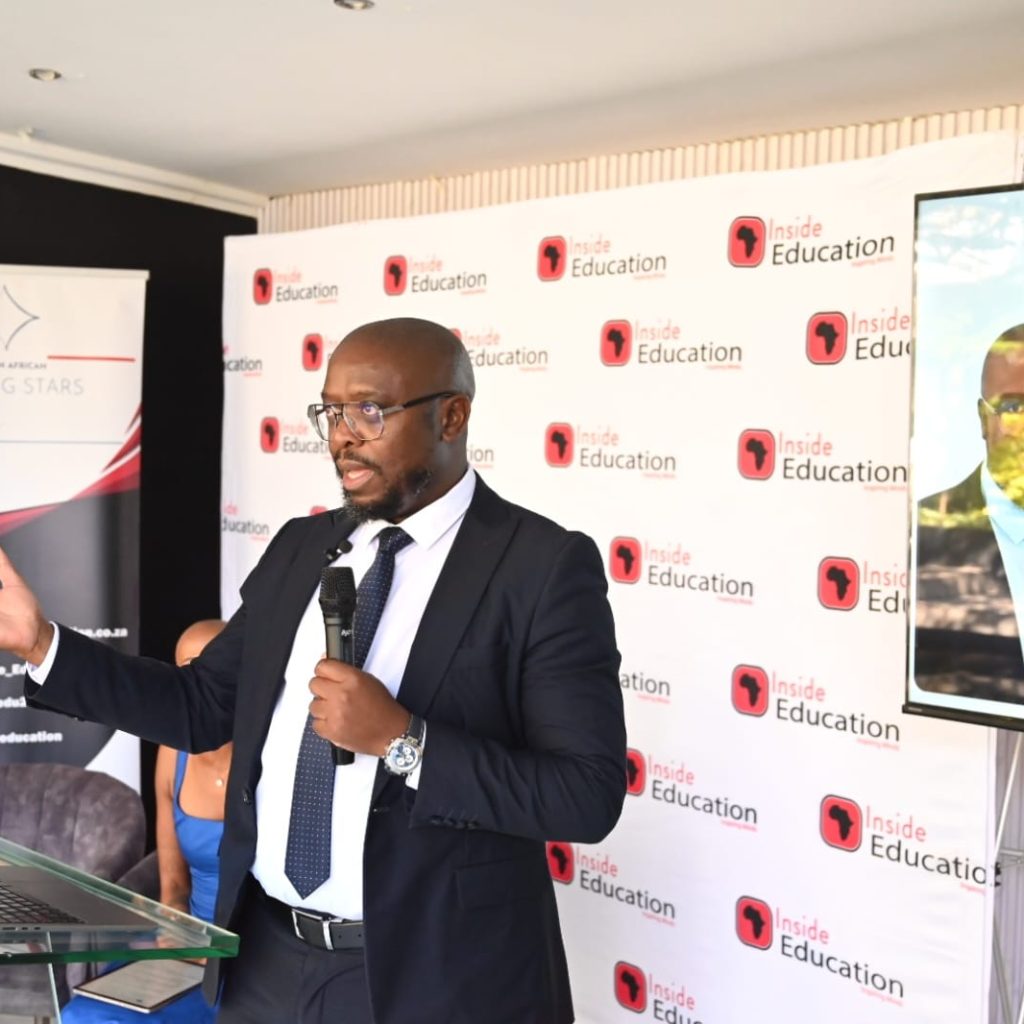
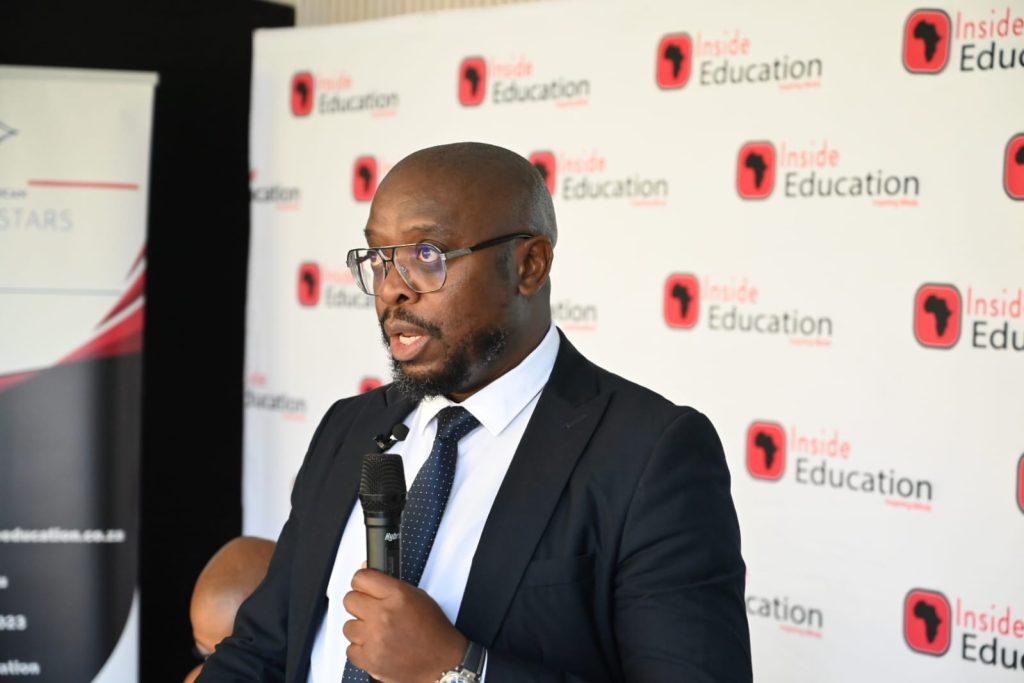
Chairman of the InsideEducation Foundation, Matuma Letsoalo

The 100 award winners are being celebrated as beacons of hope and drivers of change for young people in the country.

Speaking ahead of the event, K and K Media’s special projects manager for the event, Faith Murumbi, maintained an optimistic outlook on a celebration Inside Education has facilitated since 2018.

“I have been doing this for many years, I am fortunate and excited to help host an event that recognises some of the most talented people of South Africa,” Murumbi said.

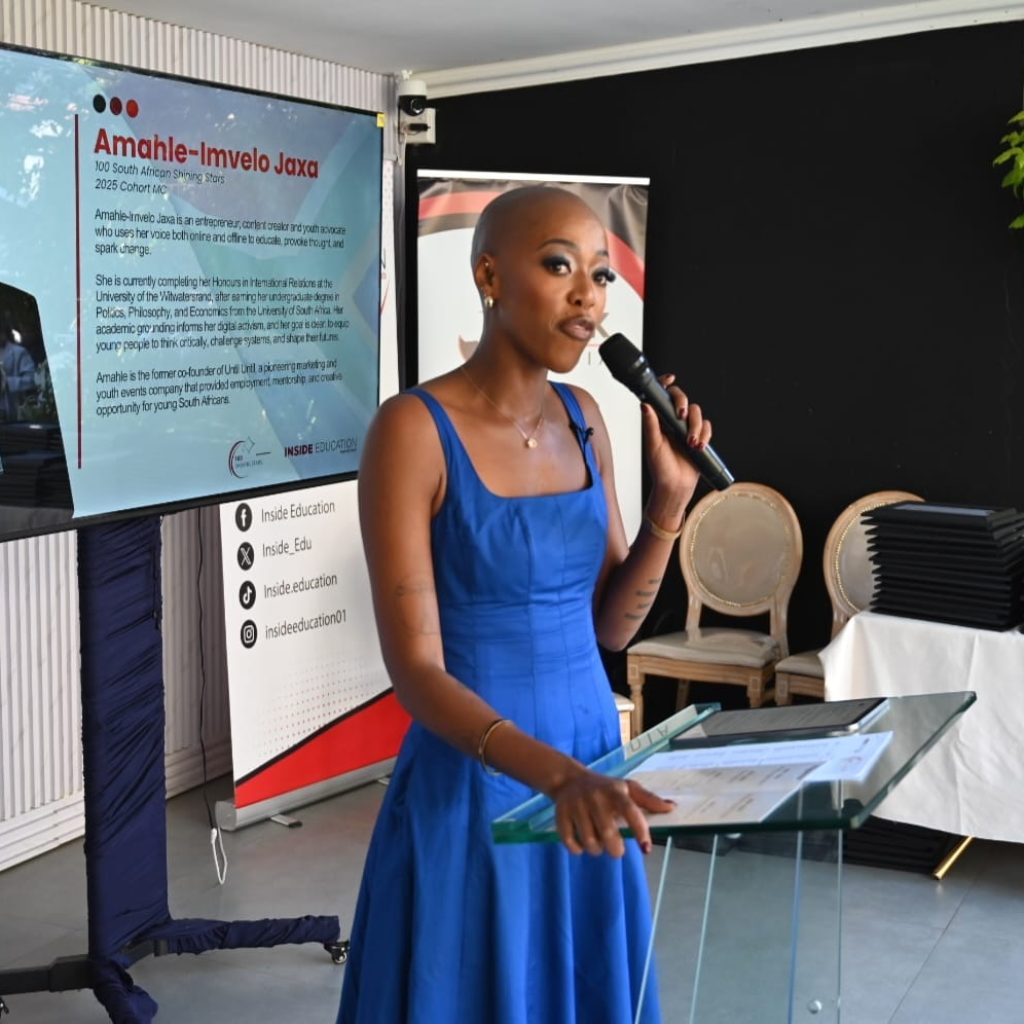
The master of ceremonies is Amahle‑Imvelo Jaxa, an entrepreneur, content creator and passionate youth advocate who brings both substance and spark to the 100 Shining Stars event.

Program director Amahle Imvelo Jaxa

Currently completing her Honours degree in International Relations, Jaxa uses her platform to educate, inspire, and drive meaningful conversations around youth empowerment and social change.

A former co-founder of initiatives focused on creating opportunities for young people, she is known for blending insight, energy and purpose, making her a natural choice to guide the programme and connect authentically with audiences throughout the day.

Although they come from diverse fields, the Shining Stars share a unified goal — to make a positive impact in their communities and uplift underprivileged youth.

Their collective vision focuses on creating meaningful change, providing opportunities and improving lives to ensure a brighter future for people from disadvantaged backgrounds.

The 100 recipients are awarded under 12 categories, including education, philanthropy, health, civil society, science and technology, sports, politics and governance, business, arts and culture, environment, transport and tourism, and justice and law.

INSIDE EDUCATION

Tshwane launches youth education orientation programme

0

By Charmaine Ndlela

The City of Tshwane has launched its Youth Development Orientation Programme across its five regions, aiming to link pupils and students with career guidance and education support.

Run by the Youth Development Unit in the Community and Social Development Services Department, the programme forms part of Tshwane’s back-to-school campaign.

It will conclude on 27 March.

ALSO READ: Fort Hare VC: Political forces orchestrated campus violence to remove me

The initiative is being delivered through a series of career expos hosted with Nzalo Careers, Letsema Youth Development Centre, city departments and external stakeholders.

“The programme specifically targets the matric class of 2025, newly registered university and TVET college students, and learners in Grades 10 and 12,” said MMC for Community and Social Development Services, Palesa Modise.

She added that the programme would address challenges faced by the youth.

“It aims to address post-matric challenges such as access to higher education institutions, financial aid, skills development opportunities, and entrepreneurship support, while promoting inclusivity across race, gender, geographic location, and disability.”

ALSO READ: IEC to host annual tertiary student democracy campaign in North West

“The city encourages young people, parents, educators, and community stakeholders to participate actively, reaffirming its belief that education remains a powerful tool in shaping the future of Tshwane’s youth and the broader community,” Modise said.

INSIDE EDUCATION

Exclusive: TETA CEO Maphefo Anno-Frempong unpacks decision to halt awarding of discretionary grant contracts

0

Inside Education Reporter

Transport Education and Training Authority (TETA) Chief Executive Maphefo Anno-Frempong explains why the board took a decision to halt the initial awarding of Discretionary Grant contracts valued at more than R380 million.

The initial discretionary grant window was withdrawn following the discovery of widespread discrepancies.

Three executives have since been suspended pending the outcome of the forensic investigation.

INSIDE EDUCATION

Manamela vows relief for students with historic debt as SA faces 200,000-bed accommodation shortfall

0

By Thapelo Molefe

Higher Education and Training Minister Buti Manamela has said that government will soon unveil measures to ensure students with historic debt can complete their studies, as South Africa’s post-school education system grapples with a critical shortage of nearly 200,000 student beds.

Speaking during the State of the Nation Address (SONA) debate in Parliament on Tuesday, Manamela said his department is working with student organisations, vice-chancellors and college principals to address the financial exclusion of students unable to register due to outstanding fees.

ALSO READ: Santa Shoebox Project calls for volunteers to help deliver festive boxes

“Within a short space of time, we will announce measures to ensure that students with historic debt are accommodated so that they are not financially excluded from completing their studies,” the minister told the National Assembly.

The announcement comes as student protests over accommodation erupted at Cape Peninsula University of Technology (CPUT), the University of Cape Town, and Durban University of Technology.

Manamela revealed he left the SONA chamber immediately after President Cyril Ramaphosa’s address last week to personally intervene in the CPUT protests.

“On the evening of the State of the Nation Address, I left this Chamber not to rush to television studios or issue press statements, but to meet students from CPUT who were protesting outside Parliament about the quality of their accommodation. They were anxious, angry, exhausted, and uncertain,” he said.

ALSO READ: UFS study detects hormone-disrupting chemicals in menstrual products

Working with police, student leaders and university management, the minister said the last of those students would be moved to improved accommodation within days.

Defending government’s hands-on approach, Manamela stated: “So when some ask, ‘Where is government?’ the answer is simple: sometimes government is not on social media…sometimes government is in the corridor at midnight, fixing problems.”

The minister acknowledged: “Student accommodation remains one of the most urgent challenges in the post-school system. We face a shortfall of close to 200,000 beds.”

Manamela said government would not rely solely on traditional infrastructure development to address the crisis.

“We will not resolve this challenge through bricks and mortar alone,” he said, outlining plans for digital expansion through the National Online Learning System alongside physical infrastructure.

However, he cautioned that quality improvements are needed at the University of South Africa (UNISA), which serves more than 350,000 students.

“Digital and distance expansion must enhance learning outcomes, not merely inflate enrolment numbers,” Manamela said.

ALSO READ: Santa Shoebox Project calls for volunteers to help deliver festive boxes

He said active discussions are underway with the Finance Minister on university funding sustainability, infrastructure planning, and accelerating work on new specialised universities, including a University of Science and Technology.

His department is also engaging Public Works and Infrastructure to release state land and unlock blended financing models for constructing new universities and TVET colleges.

“This is not abstract ambition. This is not sophistry. It is coordinated state action,” he said.

Addressing 3.4 million young people not in education, employment or training (NEETs), Manamela outlined plans to position Community Education and Training (CET) and TVET colleges as primary institutions serving this cohort.

“CET colleges, through the National Senior Certificate for Adults, will provide young people with life skills, digital, financial and functional literacy as well as modular vocational skills such as bricklaying, motor mechanics, welding, cooking, sewing and related trades, linking them to work opportunities or further study,” he said.

ALSO READ: UFS study detects hormone-disrupting chemicals in menstrual products

Manamela welcomed the restoration of the 40% mandatory grant to employers and announced forthcoming consultations on reforming Sector Education and Training Authorities (SETAs).

He demanded new accountability standards from SETAs.

“We no longer want PowerPoint presentations, we want evidence. If you say you trained young people, tell us how many, where, at what cost, and how many are now employed.”

The minister cited the CATHSSETA-McDonald’s partnership, where approximately 5,000 young people were trained and absorbed into employment, as a model to be scaled up.

Manamela said TVET colleges must focus on “occupational trades leading to employment, modern workshops in partnership with industry, quality lecturers, and effective workplace-integrated learning.”

“We will mobilise all resources, partnerships and energy towards full implementation of the dual-system, already demonstrated through Centres of Specialisation. We will present further detail during the Department’s Budget Vote,” he stated.

In closing, the minister emphasised government’s focus on delivery over debate.

“Planning is not paralysis, and shouting is not governance. Some believe that if they shout their sophistry loudly enough, reality will surrender. But they blame you for believing in boring things: plans, budgets, engineers, timelines, and students actually sleeping in beds,” he said.

“Some are interested in noise. We are interested in progress. Let me tell you, before I drop the mic, that some ears in this house are too small for complexity, for patience and for work, but governing a country, unlike playing tennis, requires all three. The debate may be yours. The action is ours.”

INSIDE EDUCATION

Manamela appoints veteran academic to stabilise College of Cape Town

0

By Akani Nkuna

Higher Education and Training Minister Buti Manamela has appointed veteran academic Dr Robert Nkuna as administrator of the College of Cape Town to help stabilise the institution.

“The appointment is time-bound and will endure for a period not exceeding two years, or until a duly constituted Council is established. The Administrator will assume the governance functions of Council and will focus on implementing key recommendations arising from oversight and audit processes, and safeguarding teaching, learning and student wellbeing,” said Matshepo Seedat, DHET spokesperson, in a statement on Wednesday.

ALSO READ: Santa Shoebox Project calls for volunteers to help deliver festive boxes

Nkuna’s appointment follows a year of escalating dysfunction at the TVET college.

In September, the department set up a Stabilisation and Governance Support Team (SGST) to intervene in governance and management disputes, including a breakdown in relations between the principal, council and senior management.

Also cited were labour-relations tensions and concerns about the impact on teaching, learning and student welfare.

The SGST’s final report, received by the minister this month, found governance failures and serious weaknesses in financial controls. It recommended corrective action, while a separate GPSSBC arbitration ruling found principal Mhangarai Muswaba guilty on multiple misconduct charges, including irregular appointments, procurement breaches and bullying. He was dismissed on 13 February.  

ALSO READ: UFS study detects hormone-disrupting chemicals in menstrual products

“The minister emphasises that this intervention is corrective and restorative in nature, undertaken in the best interests of students, staff and the broader public,” Seedat said.

INSIDE EDUCATION  

Santa Shoebox Project calls for volunteers to help deliver festive boxes

0

By Lebone Rodah Mosima 

The Santa Shoebox Project is calling for volunteers to help deliver gifts to vulnerable children as it marks its 20th anniversary.

The award-winning charity has delivered more than 1.35 million Santa Shoeboxes to underprivileged and socially vulnerable children over the past two decades, each containing eight specified items of treats, essentials and other goodies. Sponsorship and Regional Manager for the project in Gauteng, Margie Kostelac, said they are specifically seeking volunteers to join from all provinces.

“The work is a lot of fun and very fulfilling — our long-time volunteers have many beautiful stories to tell,” Kostelac said.

The organisation said that every year, people from all over South Africa volunteer as Santa’s helpers and offer a few hours of their time to ensure that more than 75 000 children experience the magic, joy, and dignity it provides.

ALSO READ: UFS study detects hormone-disrupting chemicals in menstrual products

Its website portal opens for corporate pledges on 1 August and for individual pledges on 1 September, with volunteers in each region collecting the packed, decorated, and labelled boxes on specific dates.

Boxes undergo quality checks and are then liaised with schools, Early Childhood Development (ECD) centres, and other registered beneficiaries in communities to arrange the handovers of personalised boxes.

CEO of the Santa Shoebox Project, Deb Zelezniak, said the support of volunteers, donors, and sponsors countrywide over the past two decades had created countless moments of joy.

“Giving to a child might seem like a small act of generosity to the giver, but it can make a big difference to a child’s life, and many children treasure their letters and gifts into adulthood,” Zelezniak said.

ALSO READ: IEC to host annual tertiary student democracy campaign in North West

Beyond gifting, the Santa Shoebox Project also channels financial donations from companies and individuals to upgrade and build ECD centres, train teachers, and install reading corners in under-resourced ECD centres.

INSIDE EDUCATION

Ten year old dies at Tembisa school in playground accident

0

By Lebone Rodah Mosima

A 10-year-old Grade 5 learner died after a goal post fell on him at Reagile Primary School in Tembisa, Johannesburg, the Gauteng Department of Education said on Tuesday.

Gauteng MEC for Education Matome Chiloane said he was “deeply saddened” by the death.

 ALSO READ: UFS study detects hormone-disrupting chemicals in menstrual products

“According to preliminary reports, the incident allegedly occurred during second break,” the department said.

“It is reported that a group of learners, including the deceased, were playing around the soccer posts at school when a goal post fell on the learner, resulting in severe injuries.”

The department said the school immediately called paramedics, who arrived about 20 minutes later and attempted to resuscitate the learner, but he was declared dead at the scene.

It said it would conduct an enquiry with police, who will investigate the circumstances surrounding the incident.

ALSO READ: IEC to host annual tertiary student democracy campaign in North West

“The department has dispatched its psycho-social support unit to the school to provide the necessary counselling and support to learners, educators, and the bereaved family during this extremely difficult time,” it said.

Chiloane offered condolences to the learner’s family, classmates, educators, and the entire school.

INSIDE EDUCATION

UFS study detects hormone-disrupting chemicals in menstrual products

0

By Charmaine Ndlela

Menstrual products used by millions of South Africans may contain hormone-disrupting chemicals, including in items marketed as free from harmful chemicals, according to new research from the University of the Free State (UFS).

The study detected endocrine-disrupting chemicals (EDCs) in every sanitary pad and pantyliner tested, with each product containing at least two of the targeted chemicals, the university said in a statement.

ALSO READ: IEC to host annual tertiary student democracy campaign in North West

Bisphenols were detected in 100% of sanitary pads tested and 75% of pantyliners, while parabens were present in more than 81% of pads and 75% of liners, UFS said. Phthalates were identified in all pantyliners and in 50% of sanitary pads.

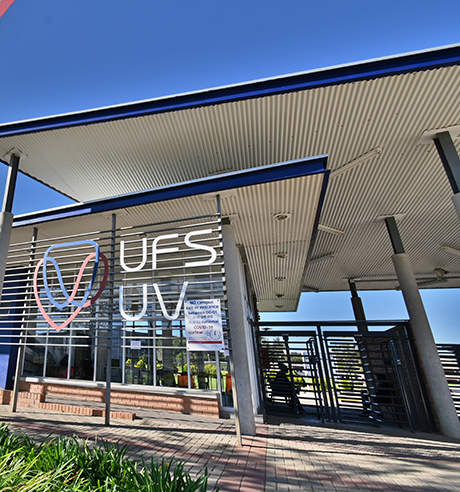
The research was conducted by a UFS team including Janine Blignaut (PhD candidate), Dr Gabre Kemp from the Department of Microbiology and Biochemistry, and Professors Elizabeth Erasmus, Deon Visser and Marietjie Schutte-Smith from the Department of Chemistry.

“Our study highlights a concerning reality regarding the safety of menstrual products,” said Visser, Head of the Department of Chemistry at UFS. “Many sanitary pads and liners contain hormone-disrupting chemicals, even when they are marketed as being ‘free from harmful chemicals’.”

The researchers analysed 16 brands of sanitary pads and seven pantyliners commonly sold in South African retail stores.

ALSO READ: SETAs to be reduced to improve governance – Ramaphosa

The study focused on three groups of EDCs — phthalates, bisphenols (including BPA) and parabens — and found their presence across the products tested.

According to the researchers, these chemicals are not always intentionally added but may migrate into products from plastics, adhesives and manufacturing processes.

“The heat-pressing process can cause these chemicals to move into the top layer that touches your skin,” Visser said.

While the levels detected in a single product may appear low, the researchers said the concern lies in repeated exposure over time.

The study also highlighted gaps in chemical regulation in South Africa. “SABS does have the SANS 1043 test, but it focuses on microbiology, absorbency and similar factors. To our knowledge, there are no standards addressing the chemicals we observed,” Visser said.

Manufacturers are generally not required to disclose the full chemical composition of menstrual products. “We believe manufacturers should disclose all chemicals in their products, even if they fall below daily limits,” he added.

ALSO READ: Cape Peninsula University students hold protest outside SONA

“This study serves as a wake-up call,” Visser said, “that current regulations and ‘clean’ labels in South Africa may not be providing the protection consumers expect.”

INSIDE EDUCATION

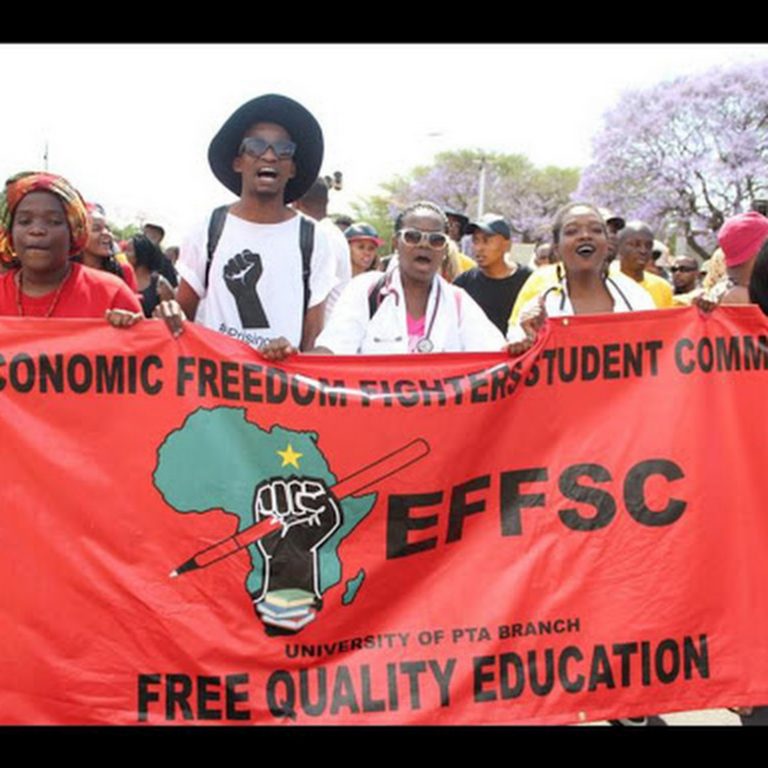
EFF slams NSFAS over ‘creeping privatisation’ of student funding, housing

0

By Thapelo Molefe

The Economic Freedom Fighters Molly Blackburn Sub Region has condemned what it calls the centralisation and “creeping privatisation” of student funding and accommodation by the National Student Financial Aid Scheme (NSFAS), warning that the system is excluding poor students and exposing them to unsafe living conditions.

In a statement issued this week, the sub-regional chairperson Nkosiyoxolo Zane Mncam, said what is being presented as administrative efficiency has become “a bureaucratic weapon that excludes poor students, weakens accountability, and empowers unaccountable private actors at the expense of access and academic success”.

ALSO READ: IEC to host annual tertiary student democracy campaign in North West

The party raised concerns about the outsourcing of accommodation accreditation and inspections, saying that the move has destabilised student housing governance across campuses.

It cited Nelson Mandela University as an example, claiming the shift has undermined the institution’s concession model, which links accommodation, funding and student welfare.

According to the EFF, the university is now constrained from granting concessions for compliant on-campus residences and from using the 4% accreditation levy to assist unfunded but academically admitted students.

“Private inspectors carry no public mandate. They cannot negotiate in the public interest, balance social outcomes with academic needs, or advance equity for poor students,” Mncam said.

ALSO READ: Fort Hare VC: Political forces orchestrated campus violence to remove me

The EFF further alleged that the outsourcing model has reduced student housing to “a transactional system of checklists and payment divorced from education, safety, and development,” and has opened space for corruption.

“Student leaders are increasingly co-opted to channel students into off campus accommodation through inducements and informal fees,” the party said. 

It added that students are being placed in unsafe environments near crime, drugs and nightlife, while compliant on campus residences are marginalised in contradiction of standards set by the Department of Higher Education and Training.

The party also questioned the role of private companies such as Proficia IT in overseeing accreditation processes, asking how outsourcing advances the department’s mandate to ensure student access and success.

The sub region has demanded an immediate end to outsourced inspections, the restoration of institutional authority over accommodation and concessions, full transparency in accreditation and placements, and an independent investigation into private inspectors and alleged corrupt recruitment practices.

“Education is a public good. Student housing is part of the academic project, not a marketplace. NSFAS must fund access, not facilitate exploitation,” Mncam said.

INSIDE EDUCATION

IEC to host annual tertiary student democracy campaign in North West

By Charmaine Ndlela

The Electoral Commission of South Africa (IEC) will host its annual tertiary institutions campaign on Wednesday, aimed at encouraging students to be active, engaged, and responsible citizens in the country’s democracy.

The campaign will take place at Taletso TVET College in Zeerust, North West.

The initiative will be led by Electoral Commission chairperson Mosotho Moepya, accompanied by the Deputy Director-General at the Department of Higher Education and Training, Sam Zungu, the college principal, MZ Nkomo, and other stakeholders.

Launched in March 2022 during Human Rights Month in partnership with Wits University, the IEC campaign has encouraged students across the country to become active and engaged participants in South Africa’s democratic processes.

Between 2022 and 2024, more than 94,000 university students were reached, with 6,292 registering to vote. At TVET colleges, over 104,000 students were engaged through direct contact, resulting in 13,659 registrations during campus activations.

In 2025 alone, a total of 197 tertiary institutions were visited, reaching more than 77,000 students and registering over 60,000.

According to the IEC, during the 2021 municipal elections, 71% of registered youth aged 18–19 voted, compared with only 35% of registered voters aged 20–29. However, less than 10% of eligible voters aged 18–29 were registered to vote in those elections.

IEC spokesperson Khanyi Nkosi said this year’s campaign will expose more than 3,000 students enrolled at the college to electoral processes.

“This year’s campaign, now in its fifth year, aims to improve voter participation among students at tertiary institutions and encourage broader participation in the country’s democratic processes,” Nkosi said.

INSIDE EDUCATION