Home Blog Page 180

Late online applications open for Gauteng’s Grade 1 and 8 pupils

Lerato Mbhiza

THE Gauteng Department of Education (GDE) says its online system will reopen on Monday to allow for parents and guardians to submit late applications to find space for the Grade 1 and 8 pupils in the province’s public schools in 2024.

Spokesperson Steve Mabona said on Sunday applications will open at 8am but will only apply to schools with available space for new pupils.

“Parents must apply at one school which would automatically place them and the documents must be submitted to schools when we reopen on January 17.”

For the parents who are unable to use the system, Mabona said they can visit the district offices and head offices for assistance from the second week of January as staff members were on festive season leave at the moment.

The department said applications are set to close on the 31st of January 2024.

MEC for Education, Matome Chiloane, said the department received 306 000 applications for the 2024 academic year. 

To date, 273 186 pupils with complete applications have been placed in schools.

INSIDE EDUCATION

Future Africa hosts conference to strengthen the voice of African science

Strengthening the voice of African science globally through pan-African collaboration is imperative for shaping a stronger continent, says UP Future Africa Director

Edwin Naidu

PRETORIA – Inter-African collaboration among academics and science researchers on the continent remains low despite widespread calls at a political level to foster partnerships, according to Dr Heide Hackmann, University of Pretoria’s Director of Future Africa at the University of Pretoria.

“There’s been steady growth in international (foreign) collaborative papers with countries outside Africa: 58% of all papers in 2022 were multi-authored papers with at least one African author compared to 34% in 2003,” says Dr Hackmann.

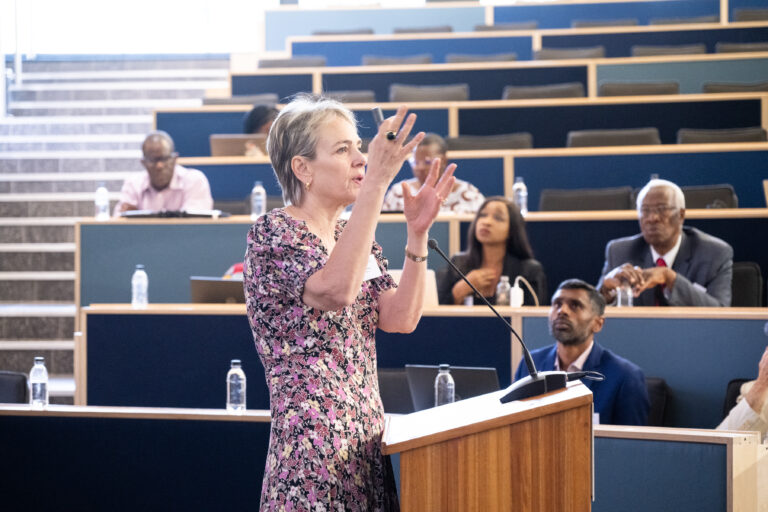
Dr Hackmann was part of a panel discussing “Research funding flows in and for Africa: A SGCI Masterclass Working Paper” by, among others, fellow presenter Prof Johann Mouton, (Director of the Centre for Research on Evaluation, Science and Technology (CREST) at Stellenbosch University) at a Masterclass under the auspices of the Science Granting Council Initiative (SGCI) Annual Forum and Global Research Council (GRC) Sub-Saharan Africa Regional Meeting in Mombasa, Kenya.

The draft paper, funded by the International Development Research Centre (IDRC), shows that an increase in foreign collaboration (measured only by multi-authorship) in any study of science in Africa was linked to the massive investment by international funders in fields (such as global health, agriculture, climate change, astronomy, and astrophysics) where international collaboration is essential.
In addition to Prof Mouton, and Dr Hackmann, the research team that compiled the review was made up of Stellenbosch University’s Dr Isabel Basson, Dr Ahmed Hassan, and Ms Lynn Lorenzen; Future Africa’s Mr Jason Owen, STEPRI (CSIR-GHANA): Dr Wilhemina Quaye, Dr Gordon Akam-Yonga, Dr George Essegbey, Dr Justina A. Onumah and Dr Nana Kofi Safo; and, the Centre for Science and Technology Studies (Leiden University): Dr Rodrigo Costas, Dr Ismael Rafols and Mr Jonathan Dudek.

Considering the challenges faced by the world, Dr Hackmann adds that people are recognising the importance of strengthening African science systems by strengthening the voice of African scientists in global science arenas. Ahead of a consultative meeting, which is part of the 2023 South Africa Science Forum event, convened by Future Africa and the International Science Council (ISC), entitled “Unleashing the global potential of African science: Towards the next level of collaborative action,” on 4 December, Dr Hackmann says longstanding efforts to build scientific capacity and develop African science systems are starting to yield positive outcomes with Africa’s share of academic publication output more than doubling from 1.5% in 2005 to 3.2% in 2016, and the citation impact of African-authored papers has been increasing steadily over the past 30 years from 0.48 in 1980 to 0.73% in 2014.

“Furthermore, institution-building efforts such as the Science Granting Councils Initiative (SGCI) were strengthened, and new multilateral funding partnerships have emerged, for example, the 20 clusters of research excellence of the African Research Universities Alliance (ARUA) and the Guild of European Research-Intensive Universities (The Guild).” Despite these positive developments, persistent challenges exist across the broader African science ecosystem.

During the presentation in Mombasa, Prof. Mouton says, however, that the low public and private investment levels in research and development (R&D) remain a trend in most African countries. This bleak narrative contrasts with knowledge production patterns by African nations as bibliometric studies of articles authored or co-authored by scientists and scholars over the past two decades show healthy annual growth, according to findings in a paper on global science funding flows in Africa. According to Mouton, research publication output increased nearly tenfold, from 13,470 articles in 2003 to 128,076 published articles by African academics and scientists in 2022.

Prof Mouton indicates that the results presented at the Masterclass only constitute the work of the first three months of a more extensive study that will continue until the end of 2024 as the team will systematically track the flow of science funding to the 17 SGCI countries in Africa by analysing the top funders in the world. The aim is to understand better who funds science in what fields in African countries and the beneficiaries of such funding.

He says the paper reviewed many publications, highlighting the structural effects of the new and changing funding landscapes in and around Africa, with two significant aspects emerging from this overview of scientific research institutions in the African continent today: the increasingly complex governance arrangements amidst multilateral funding frameworks and the increasing involvement – even need – of national institutions and the very central role of universities.

Discussing the paper, Dr Hackmann adds that the extensive data-driven study notes a clear link between the increase in overall publication output (and world share), which is linked to a commensurate increase in foreign-authored publications. “And the latter are most prevalent where African scientists have received the biggest chunks of international funding. The increased output and prominence of African science was driven by increased international collaboration, which is linked to the increased funding of research by international funders,” Dr Hackmann says.

While knowledge production in many African countries remains fragmented, Dr Hackmann says the study attributes it to various factors: low academic population, low if non-existent participation of private businesses, insufficient budgets, and often uncertain commitments of national Governments. However, large philanthropic funders and global actors have tried to address the issue with apparent policies or clustering of knowledge sources such as the Centres of Excellence.

Despite positive developments, Dr Hackmann says persistent challenges still exist across the broader African science ecosystem, with a large share of scientific outputs from the continent primarily noticeable in “islands of excellence”, mainly in South Africa, Kenya, Egypt, Tunisia, and Algeria, leaving most of the continent with weaker science systems, underscoring the imperative for the global science system to collaborate with the continent.

In terms of options for next-level collaborative action, Dr Hackmann urges the establishment of an African Science Leaders’ Forum – not a new institution, but an alliance of committed partners that will regularly convene and connect African science system leaders across various science sectors to boost the visibility and voice of African science on a global stage.

INSIDE EDUCATION

Using AI technology, innovative Educate Girls wins WISE Prize for Education

Edwin Naidu

India’s Safeena Husain, Founder and Board Member of Educate Girls, was a worthy winner of the WISE Prize for Education – the first global award of its kind that honours an individual for an outstanding contribution to education.

Mumbai-based Husain, who spent time working in the healthcare sector in South Africa, was recognized for dedicating 16 years to building the non-profit organisation focused on empowering communities for girls’ education in some of India’s hardest to reach villages.

An excited Husain told Inside Education after her triumph that her programme to reach the most vulnerable, ensuring that girls’ lives are transformed through learning, can be replicated throughout the world. 

“We are happy to share our programmes with organisations wishing to use our model to change the lives of girls through education,” she said. 

A video of the work undertaken in villages throughout India showed how, through champions, they would seek girls who would be working in the field or carrying out household chores and speak to their families to explain the importance of education to help them secure a better life. 

Husain’s journey with WISE began with a WISE Award in 2014 that acknowledged Educate Girls for its positive social impact and ability to scale. Over the years, Educate Girls has mobilised more than 1.4 million girls for enrolment and supported over 1.9 million children in their learning in India.  

Adopting a precision targeting method using Artificial Intelligence (AI), Educate Girls can target, in five years, the same number of out-of-school girls, which would otherwise require 45 years. Through a network of over 21,000 community-based champions in some of the most marginalised communities in the country, the organisation has been working to break the intergenerational cycle of inequality and exclusion.

Under Husain’s guidance, Educate Girls has evolved into a leading global force, harnessing innovative financing and AI technology to bridge the gender gap in education. This is mirrored in its global milestones: the delivery of the world’s first Development Impact Bond in education, and the organisation becoming Asia’s first The Audacious Project – which, housed at TED, is a collaborative funding initiative catalyzing social impact on a grand scale.

Commenting on the award, Husain said: “This is a collective win for all of us working toward girls’ education, right from the government and local communities to dedicated gender champions and our supporters. It is a testament to the array of initiatives that are actively addressing this global challenge, embracing grassroots innovations and technology-driven solutions that are tirelessly working to ensure that every girl, in every village, is in school and learning well.

“Girls’ education is the closest thing we have to a silver bullet to solve some of the world’s most complex problems. We must recognise that the right to education is a girl’s inherent right – a right that must always take center stage.”

Her Highness Sheikha Moza bint Nasser, Chairperson of Qatar Foundation (QF), spoke at the opening of the 11th edition of the WISE Summit taking place from 28-29 November in Doha, Qatar, under the theme ‘Creative Fluency: Human Flourishing in the Age of AI’. 

The global summit convenes more than 2,000 education industry stakeholders, including influential thought leaders, young trailblazers, and key decision-makers to foster dialogue on the transformative power of Artificial Intelligence AI in the global education landscape. 

“I want to ensure WISE is a platform for new ideas that keep pace with the changes taking place in the world, and the obstacles that education faces in certain countries for reasons of which we are all too aware. There is no alternative but to innovate if we are to find solutions to intractable problems,” said Sheikha.

Among the highlights of the opening plenary was a heartfelt performance by 15-year-old Palestinian rapper Abdulrahman AlShanti – known as MC Abdul.

The official strategic partner of WISE 11, Education Above All (EAA), a global non-profit organisation established by Her Highness Sheikha Moza, dedicated to transforming lives through education, is at the forefront of the summit’s programme creating dialogue around inclusive education, innovative financing, and protecting education in crises.

Day one was spread across distinct thematic zones that included diverse sessions covering some of the core summit discussion topics: Classrooms of the Future; AI and Digital Sovereignty; and Building Ethical AI.

A series of thought-provoking panel discussions and policy roundtables explored topics such as strategies for educators to future-proof classrooms in the era of AI and navigating the impact of AI superpowers to build an inclusive global AI landscape, among others.

Young innovators and advocates led discussions on a range of topics including personalised learning for students with disabilities, and cultural perspectives of Arabic learners in classrooms at the Youth Studio.

A number of partner-led workshops provided students and teachers with hands-on learning and immersive experiences in the use of cutting-edge AI tools and systems across the education space, as part of WISE’s Learning Labs.

A special plenary honored the 2023 WISE Awards winners this year for their innovative projects addressing global educational challenges and driving positive societal impact. Jeffrey Sachs, University Professor and Director of the Center for Sustainable Development, Columbia University, addressed the economic impact of conflict on education in his keynote speech at the session.

Founded in 2009 by Qatar Foundation under the visionary leadership of its Chairperson, Her Highness Sheikha Moza bint Nasser, WISE (World Innovation Summit for Education) has evolved into an international, multi-sectoral platform dedicated to fostering innovation and evidence-based approaches in education. WISE 11, the summit’s 11th edition, marks a significant milestone, emphasizing a new era of global educational transformation. Through its biennial summit, collaborative research, and several ongoing programs, WISE has become a global point of reference for new educational paradigms.

Qatar Foundation for Education, Science and Community Development (QF) is a non-profit organisation that supports Qatar on its journey to becoming a diversified and sustainable economy. QF strives to serve the people of Qatar and beyond by providing specialized programmes across its innovation-focused ecosystem of education, research and development, and community development.

QF was founded in 1995 by His Highness Sheikh Hamad bin Khalifa Al Thani, the Father Amir, and Her Highness Sheikha Moza bint Nasser, who shared the vision to provide Qatar with quality education. Today, QF’s world-class education system offers lifelong learning opportunities to community members as young as six months through to doctoral level, enabling graduates to thrive in a global environment and contribute to the nation’s development.

QF is also creating a multidisciplinary innovation hub in Qatar, where homegrown researchers are working to address local and global challenges. By promoting a culture of lifelong learning and fostering social engagement through programmes that embody Qatari culture, QF is committed to empowering the local community and contributing to a better world for all.

Inside Education was a media partner at WISE 2023.

SPORTS CORNER

Staff Reporter

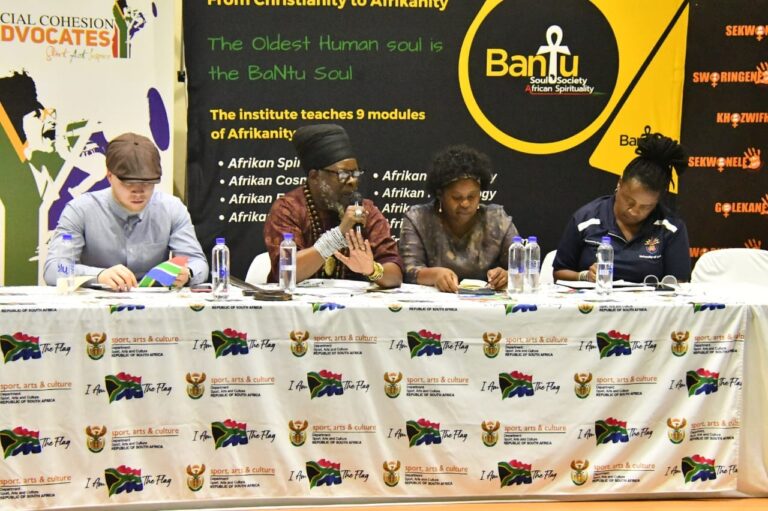
THE National Department of Sport, Arts and Culture in collaboration with the Limpopo Provincial Department of Sport, Arts and Culture hosted a Social Cohesion Community Dialogue on Active Citizenry, Healing, Nation Building and Reconciliation. 

The community dialogue took place at the Thulamela Library Auditorium, in Vhembe, Limpopo on 15 December 20024. 

This year’s dialogue was hosted under the theme, “Promoting active and responsible citizenry, reconciliation, and unity in a healing society.” 

The purpose of the dialogue was to discuss the role of society in promoting healing, reconciliation, and tolerance. 

This platform will also provide the community of Thulamela with the opportunity to highlight the challenges that are negatively impacting on the fostering of social cohesion and social justice. 

All community members of Thulamela, especially the youth, are invited to participate as active and responsible citizens. Most importantly, this dialogue also served as a build-up activity towards the national reconciliation day commemoration which took place on the 16th of December at the Thohoyandou Stadium, in Vhembe.

The panelists and audience engaged robustly in various ways in which individual community members can actively contribute towards the strengthening of unity and social cohesion in a healing nation.  

INSIDE EDUCATION 

Ramaphosa sets aside a R1-billion investment for Science and Technology PhD students

Lerato Mbhiza

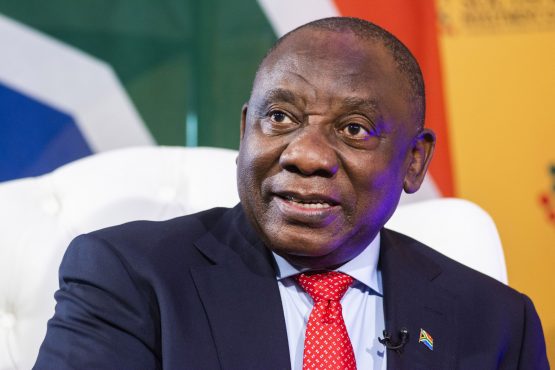
President Cyril Ramaphosa announced a R1-billion investment from the National Skills Fund called the Presidential PhD Initiative for Science and Technology PhD students. 

“The first phase aims to expose our country’s brightest young minds to cutting-edge thinking and research by negotiating opportunities at world-leading universities and research centres,” said Ramaphosa during the inaugural Presidential Science, Technology and Innovation (STI) Plenary in Pretoria. 

The initiative will build critical skills in artificial intelligence research, advanced biotechnology, fuel cell development, battery storage, and next-generation mining, he said. 

Ramaphosa called on the private sector and international partners to assist in growing the investment for the Presidential PhD Initiative fund to R5-billion by 2030 saying science, technology and innovation are essential for economies to thrive. 

“According to the 2022 Global Innovation Index published by the World Intellectual Property Organisation, South Africa ranked 61st out of the 132 economies featured for innovation capabilities. Our country performs above the upper-middle-income group average in three areas, namely market sophistication, knowledge and technology outputs, and creative outputs.”  

South Africa has made significant strides in higher education, with the number of students graduating from public universities increasing from about 60,000 in 1994 to about 230,000 by 2018, he said.

“The share of graduates in science, engineering and technology fields has been increasing compared to graduates in the humanities.

“In 2021, gross expenditure on R&D in South Africa was 0.6% of GDP, far below our target of 1.5%. By comparison, in 2022, the US spent 2.6% and South Korea spent 5% of their respective GDPs on research and development.”

Despite the demands on the economy, Ramaphosa said the situation needs attention while he pointed out that the jobs fund was investing in science and technology activities that directly contribute to sustainable job creation and small business development. 

“Earlier this month, the Technology Innovation Agency issued a call for proposals from grassroots innovators looking for funding and technical assistance on developing new products or processes.” 

Scientific innovation was harnessed during the floods in KwaZulu-Natal and other parts of the country in 2022 and given the reality of climate change, Ramaphosa said, this kind of scientific collaboration will become increasingly important because “it is clear that we are certainly progressing but not at the pace we should be”.  

INSIDE EDUCATION

100 South African Shining Stars Awards 2023

0

Join our live stream of the 100 South African Shining Stars Awards for 2023

Lesufi Calls for a Singular Matric Exam for both Private and Public Schools

Dineo Bendile

Gauteng Premier Panyaza Lesufi has called for the creation of a singular matric final exam, that will be written by all learners regardless of whether they are private or public school educated. 

Lesufi says the current separation and  the existence of both the Independent Examination Board (IEB) exam and the National Senior Certificate (NSC) exam is an example of the continuation of the apartheid education system, through the separation of classes.

“This thing of an IEB examination for the rich and another examination for the poor must come to an end. We must have one examination for all our children in our country.

“There is no reason why some children should write IEB, [and] there is no reason why others should write the National Senior Certificate, but they will go to the same lecture room, to the same university,” says Lesufi.

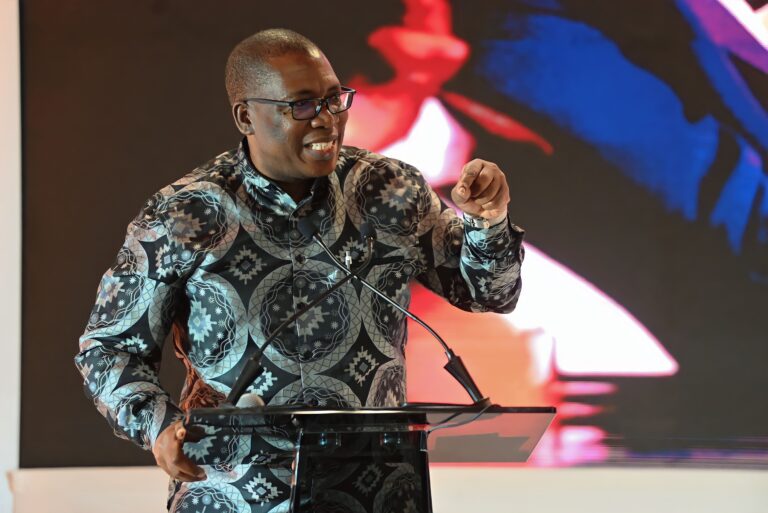
Lesufi was speaking on Friday at the 10th annual Matthew Goniwe Memorial Lecture held at the Riversands Incubation Hub in Fourways.

The event is hosted by the Matthew Goniwe School of Leadership and Governance (MGSLG) as a remembrance of the anti-apartheid activist, who fought against the apartheid government’s enforcement of Bantu Education in favour of quality education for all.

Lesufi points out that the segregation of the IEB and NSC exams is reminiscent of the apartheid-era education system, as it afforded privileged learners an unfair advantage in their future studies and careers.

“Others [IEB learners] have an advantage because they write early. They get their results early. They apply [to universities] early and are taken in early. And we [NSC learners] have to come later. In our own country? It must not happen.

“We must remain firm in our beliefs. Every South African must write the same examination to go to the same universities. And if we fail to do that. We would have betrayed people like Matthew Goniwe”.

Lesufi, who is the former MEC for Education in Gauteng, also raises issues with the quality of teaching provided to learners attending schools in previously disadvantaged areas such as townships. 

For the Premier, clear differences in the quality of teaching provided in private and public schools, particularly those in townships, is another example of how the patterns from South Africa’s unjust history are continuing in present-day education. 

The Matthew Goniwe School of Leadership and Governance (MGSLG) serves as the training wing of the Gauteng Department of Education (GDE), providing courses in teacher development, Early Childhood Development, ICT and e-learning and School Governance. 

The organization has now set its sights on transitioning from being just a training agency under the GDE, to becoming a fully-fledged higher education institution with a national footprint.  

Lesufi has congratulated MGSLG for the work it has done to date, and says the next challenge would be for the institution to address the inconsistencies in the quality of teaching being provided to learners. 

“All teachers in this country are trained from the same institution(s). There is no university that prepares teachers for private school. There is no university that prepares teachers for former model-c schools, there is no university that prepares teachers for township schools. All teachers are trained from the same pot, but the outcomes are different when they are deployed. It must come to an end.

“If you [teachers] are trained from the same pot the outcome must be the same. And therefore Matthew Goniwe [School of Leadership and Governance], you should be that first institution that will train teachers and [ensure that] all the teachers trained by you give the same output”.

On a positive note, Lesufi is pleased with the adoption of the Basic Education Laws Amendment (Bela) Bill, which introduces penalties for parents who do not ensure their children are in school and stipulates that a school’s language policy should consider the needs of the wider community. 

Lesufi says the new guidelines on language also means that schools could no longer reject learners on the basis of language, a practice that has commonly been reported at Afrikaans-medium schools.

Calling on all leaders in the education sector to apply the guidelines of the Bill in order to honour the memory of activists like Mathew Goniwe, who fought for the education many enjoy today, Lesufi says: “They [anti-apartheid activists] can rest in peace knowing that we will implement that Bela Bill and we must not turn back.  

“You will be cowards MECs, you will be a coward if you are a minister, you will be cowards if you are principals or SGBs, if you can’t implement that bill so that our children can finally be free”.

INSIDE EDUCATION

My favourite teacher – Devi Sankaree Govender

Edwin Naidu

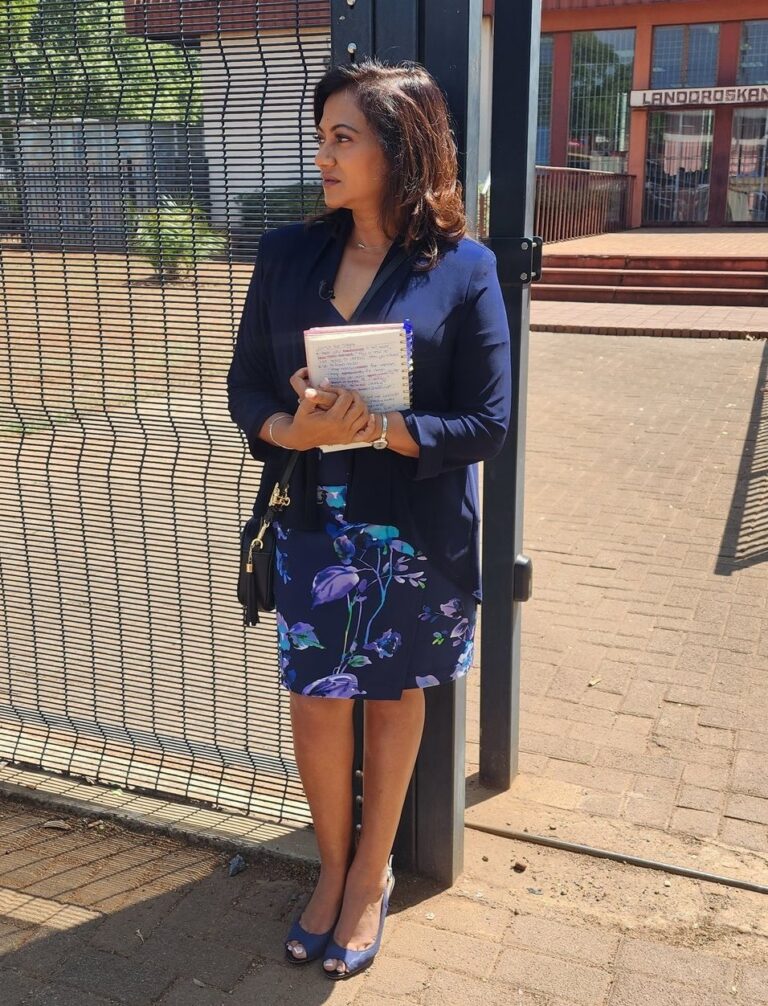
SHE may come across as feisty, but Devi Sankaree Govender is a friendly face with a warm smile. I once bumped into her at a famous Fourways eatery which made the best Cornish chicken curry on a Saturday. She posed for a selfie.

But get on her wrong side and one would easily become a dog’s breakfast. The many tales of woe from those who have crossed paths with her cannot make for happy reading. But that is what happens when you play with fire.

One of the country’s foremost investigative journalists and consumer champions, stet Devi is fearless. She made her name during 18 momentous years on Carte Blanche and is currently stirring up a hornet’s nest among baddies on Devi, herself titled 30-minute weekly blast on e-tv on Sunday evenings at 6pm.

Asked how difficult it was to crack it in investigative journalism, in a male dominated field and what hope is there for young girls and boys who want to follow in her footsteps, stet Devi told Inside Education that television journalism may seem to be a really glamorous career choice but there is nothing glitzy about it.

“Behind the scenes there is a lot of slog, and you can forget working normal office hours. But, if you feel you have the gees for it, put your head down and get on with it,” she added.

School Days: in this pic: Devi Sankaree Govender receiving the Best Speaker Award in 1988 from
(left) Principal Mr WS Moonsamy and (right) Mr K Ramsugit.

She has received several awards and accolades, including the 2022 GQ Woman of the year. But her goal is not awards. Instead, Devi, who has two children aged 22 and 20, is happiest fighting for the underdog. Taking on bullies is par for the course.

At 15 Devi watched Carte Blanche and made up her mind that her future lay in television.

But her route to national television actually began as a teacher for a year before she joined the SABC’s Radio Lotus, which has spawned many a talent plying their trade on the national stage. Speaking about her school days at Umzinto Secondary School on the South Coast of KwaZulu-Natal, Devi shared her story on her favourite teacher.

  • What was his/her name?
    Radha Guypersad Lalla
  • Name of school attended and year/s?
    I attended Umzinto Secondary School from 1985 to 1990
  • How did your favourite teacher endear herself to you?

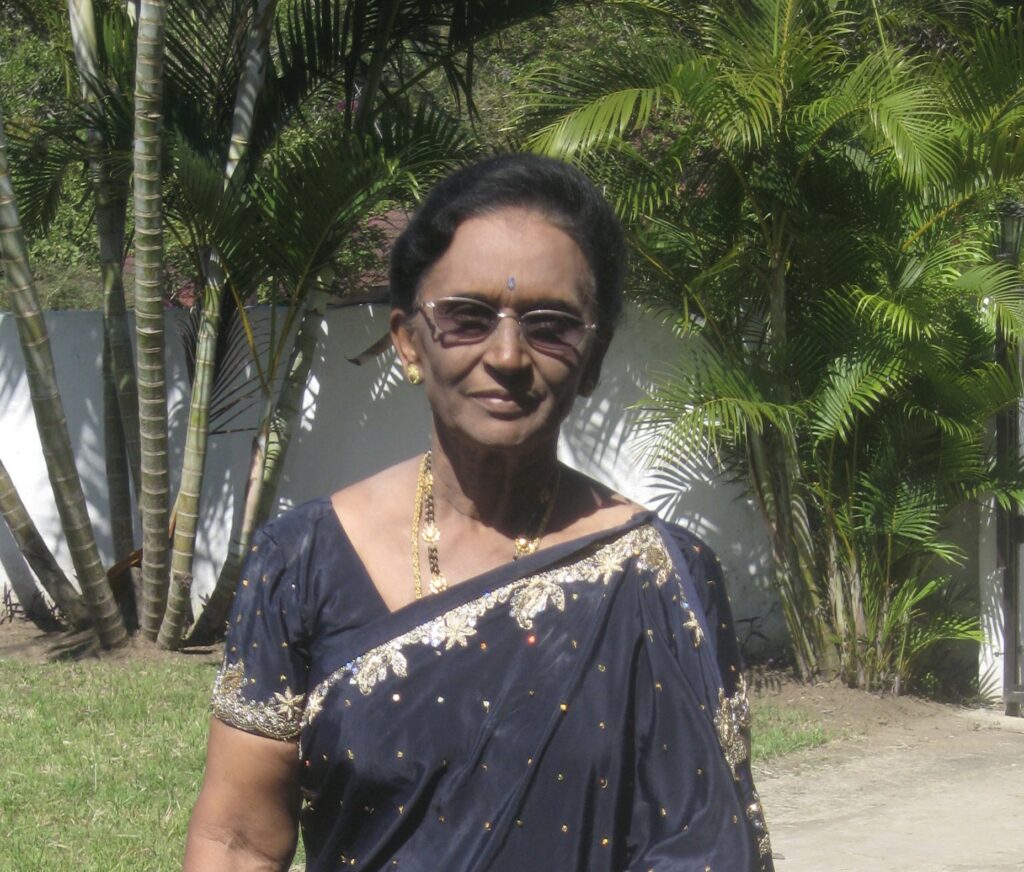
When I started high school, which in those years, you joined in Standard Five (Grade 7), I was always so fascinated by Mrs Lalla. She wore a sari to school every day and always had her hair in an updo. She looked so beautiful and really glamorous.

My admiration for her was certainly from afar because she only taught Standard Nine and Matrics – so I had to wait a bit longer before I could join her class.

  • What subjects did she teach you?

English. It was my favourite subject. I loved everything about it. The set-works, the grammar, the creative writing and most important of all – the class speeches. I had always been a voracious reader and gobbled up books at a fast pace.

I also had a flair for speech and creative writing – I really did look forward to opportunities where I could flex myself.

  • Did you look forward to her subject?
    Absolutely!!!! Without a doubt. She was just so smart, and she did the cryptic crossword every day from the Natal Mercury. I felt we were kindred spirits and I love how she bent her mind, and mine too!
  • What did you like about your teacher?
    I had to wait till Matric when I finally got to sit in her English class. I loved how she challenged me and kept pushing me to experiment with new writing styles.
  • What was your favourite subject at school?
    English. There was no contest there!
  • Has this influenced your choice of career?
    Mrs Lalla and I shared a deep love for the English language. I knew that writing would be the backbone of any career I chose.
  • What was the one phrase from any teacher that stuck with you or inspired you?
    Mrs Lalla’s famous line was “do not be a one trick pony.”
  • Have you kept in touch with your favourite teacher?
    I did stay in touch with her, but she sadly passed away a few years ago. The outpouring from her former pupils was testimony to the impact she had had on so many of us, growing up in apartheid South Africa.
  • If so, what was the first meeting like beyond being a learner in the classroom?
    She spoke to me for the first time when I was in Standard 5. I had won an essay competition where you had to write an impactful piece on road safety. I titled it “Licence to Kill” and I still remember that moment when she came up to me as I was leaving the principal’s office and congratulated me with these words: “If you continue writing like that, then you will get an A in English in matric. But, you must continue to work hard at it.” I was beyond thrilled that Mrs Lalla, herself, had acknowledged me.
  • Why are teachers so important to society?

Teachers shape young minds. They provide safe environments where their young charges can explore a variety of subjects.
Most parents are so focused on getting their families across the breadline while teachers provide spaces where you are able to nurture your true self.

  • Finally, what advice do you have for learners?
    Don’t be a one trick pony!!!
  • On final final were you naughty inquisitive or chirpy at school?
    I was very well-behaved. Head Girl of my high school. Extremely inquisitive and a bundle of energy.
  • Did teacher’s sigh: Oh here comes big mouth Devi?

Probably – but I doubt the majority would have. I was extremely supportive of teachers, and I wouldn’t say I was argumentative.

  • Is there anything you felt that was not asked and should have been?

All through school, I was surrounded by the most remarkable teachers – which is probably what motivated me to become a teacher myself! I’m a qualified senior phase educator. I taught for a year – Effingham Secondary (1994) and Nilgiri Secondary in (1995) before I joined SABC Radio fulltime.

  • Anyone from your class (I know there is a huge Umzinto brigade in Jhb) doing amazing things and still in touch with you?
    Three decades later, the Class of 1990, Umzinto Secondary, still shares a very strong bond. We are in daily contact via a WhatsApp group and everybody has done well in their own fields.

INSIDE EDUCATION

PlayerNation unites communities through sport with summer athletics games in the Karoo

STAFF REPORTER

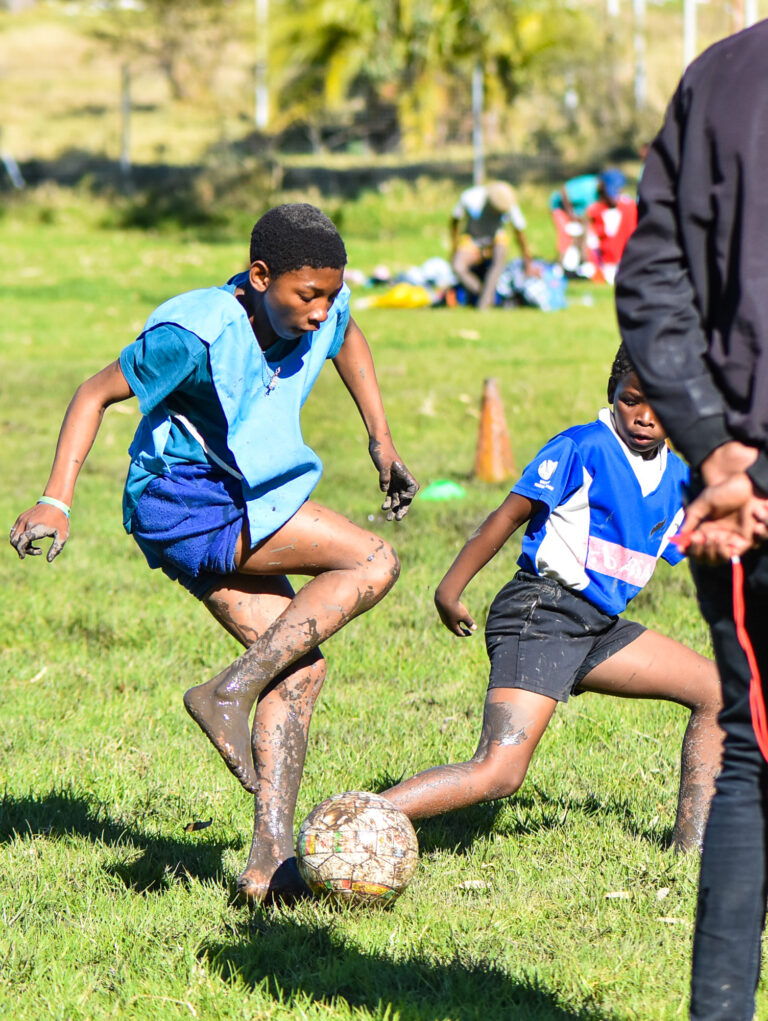
Following the success of the winter games in July this year, PlayerNation brought yet another wave of excitement to the Karoo earlier this month, with its much-anticipated summer athletics games completing on December 5 and 6. School learners, communities and surroundings had an unforgettable experience.

The two-day event provided not only fun to sport enthusiasts but also relaxation for residents and school learners in the Karoo, offering a much-needed opportunity to unwind after long exams.

The winter holiday sports programme attracted more than 1000 young people, boys and girls from Somerset-East, Cookhouse, Bed-
ford, and Adelaide communities.

The programme, featuring rugby, soccer, netball, and indigenous games, surpassed expectations and set the stage for a comprehen-
sive rollout.

“PlayerNation is all about showing the incredible impact that sports can have on our young people, shaping their future in
ways beyond imagination. We are thrilled to bring this amazing wave of excitement to the Karoo with our upcoming summer athletics games,” said John O’Connor, CEO of Arch Group Holdings and its Institute of Sport.

“The games are not just about competition; they are about empowering youth through sports excellence. We are inviting all communities in the Karoo and surroundings to join us in this thrilling two-day event,” he added.

The two-day event took place at Bedford, Eastern Cape, and at tracted an overwhelming participation of young people who ea-
gerly engaged in a day filled with fun, and the joy of sports.

“This unique platform provides young athletes with the opportunity to showcase their skills, promote active living, and foster a sense of pride in their accomplishments. We could not wait to welcome the scores of talented individuals who will contribute to the vibrant sports community that we are building,” said O’Connor.

PlayerNation, is an initiative developed by the Institute of Sport partnering with Exxaro as the first founder partner, through its re-
newable energy business Cennergi.

It was launched in May 2023. With a multifaceted approach encompassing sport, health, education, and skills development, PlayerNation, in partnership with the Department of Sport and the Department of Basic Education aims to become the ultimate school sports programme, impacting 28,000 schools nationwide.

Designed as a day out event in the Karoo, for young people, family and friends, the summer games focused on empowering youth through sports excellence, contributing to their physical, mental, and emotional well-being.

Cennergi’s Economic Development and Community Programmes Coordinator in Amakhala Emoyeni Windfarm, Mr. Simphiwe Mbenya, expressed the organisation’s pride in supporting the programme to create a lasting impact on South African schools and communities. “PlayerNation goes beyond sculpting athletes; it’s about cultivating a new generation of champions and laying the foundation for a nationwide movement that extends beyond sports.”

“At Cennergi, we believe in contributing to the communities that we serve, and partnering with PlayerNation aligns with our commitment to holistic development. We are proud to support an initiative that creates a positive impact on the lives of young indi-
viduals,” he added.

The summer athletics games featured various types of sports including, soccer, rugby and netball and indigenous games.

Reflecting on the winter games, School Governing Body Chairperson for Templeton High School, Rudi Arends noted with satisfaction the remarkable transformation witnessed among school learners in the community. He stated that the spark of interest in sports that ignited during the winter games has continued to grow.

“It’s heartening to see our learners eagerly anticipating future sports games with such enthusiasm,” he said. The excitement and impact of the winter games have not only lingered within the school but has extended beyond our school gates. It’s not just the learners who are enthusiastic; even parents have expressed their desire for these games.”

Arends urged learners and communities in the Karoo to come out in full support and embrace the summer games as an opportunity to connect, enjoy, and actively participate in promoting a healthy lifestyle.

INSIDE EDUCATION

Matthew Goniwe’s legacy a gift for future generations

Lucas Ledwaba

Matthew Goniwe’s excellent skills and commitment to teaching and empowering the community extended way beyond the
classroom. His discipline, passion and dedication to the profession and deep love for his community made him an
outstanding educator and community builder.

This is how Professor Mbulelo Goniwe, a former student of the slain political activist remembers the man who has come
to epitomise the ethos of ethical, committed and dedicated leadership and servitude both inside and outside the
classroom.

Professor Goniwe was a pupil of Matthew’s during his high school years in Mqanduli, a rural village in the Eastern Cape in
the early 1970s.

“He was a patriot, someone who had a genuine love for the motherland and his people, starting from his own family. He
had that kind of love. That really inspired so many of us to actually achieve the best of their potential. He was that kind of
person,” said Prof Goniwe.

“That’s how this whole passion for education is centred, in that love. That was the springboard of his commitment and
the innovative, interconnectedness of education and achievement,” he said.

Matthew was Prof Goniwe’s tat’omncinci, his father’s younger brother. In his youth the family entrusted him into the
hands of Matthew, the man who because of his prowess in boxing, was nicknamed Bullet.

“I was handed over to him to groom me and even look after my needs. That’s what led me then to be part of the active
resistance, taking forward the family tradition that has been imparted on us from generation to generation,” he said.
Prof Goniwe is an academic, a former political activist and ANC member of Parliament.

Matthew specialised in mathematics and physical science education and always went the extra mile to impart
knowledge on his learners.

“His world outlook and the life he led was to empower the black child to really understand mathematics and physical science
to broaden their horizons,” said Prof Goniwe.

The school in Mqanduli, like many in rural areas and townships at the time had no such resources as laboratories or
libraries. Instead of resigning himself to the fate laid out by the authorities then, to deprive black children of critical knowledge
and skills, Matthew took matters into his own hands.

“And he went the extra mile. Sometimes, he would use his own salary to buy material to do experiments,” Prof Goniwe
recalled.

The theme for this year’s 10th anniversary lecture of the Matthew Goniwe School of Leadership is Transformative
Leadership for Social Change – Empowering the next generation.

Prof Goniwe believes that to be able to empower the next generation teachers need to possess and implement some of
Matthew’s qualities.

“The love for his people, the flora and fauna, and everything that you find. Then the second thing would be the dedication.
You have to be dedicated to what you do,” he said.

He cited the example of how during Matthew’s time, his work wouldn’t stop at the ringing of the bell in the afternoon.
“Imagine [back then] there were less teachers, but after school, they would coach rugby, they would coach athletics,
boxing. They would do a lot of extramural activities, not only focused on what they were paid for.

“So they heavily invested in us because we were actually the generation that would follow them,” he said.
This kind of dedication, coupled with an inclusive leadership style made Matthew a shining star and beacon of hope in his
community.

“He had that participatory leadership that doesn’t seek to take the credibility for achievement. He would delegate tasks
to people and try to empower them to be able to deliver to on their expectations,” Prof Goniwe said.

“He knew the importance of collective leadership, a servitude kind of leadership where you really want to serve the
people and not to be worshipped or adored or be populist,” he said.

Above all, Matthew understood how his position as a schoolteacher was perceived and respected in the broader
community. He knew that in the eyes of the community he was not just a man who stood in front of a class with a chalk.

“My own understanding of things is that, firstly, people, society, communities, where we are from, looked up to the
teachers and ministers of religion as important societal assets. So they had an unquestionable respect for such people.
They respected them,” Prof Goniwe reflects.

Added to that Matthew had already proven his political mettle after serving four years on Robben Island after being
convicted for furthering the aims of the ANC which was banned at the time.

Prof Goniwe believes that institutions such as the Matthew Goniwe School of Leadership have a significant role to play
in society.

“They are very critical because once you seek to define yourself outside of your heritage, that is a very problematic
approach to life. You need to know and learn from your forebears.

“And once you have institutions like the Matthew Goniwe School of Leadership that seeks to uphold, preserve and
advance a legacy of people like Matthew; it then speaks to the entire liberation struggle, heroes and heroines.

“That legacy is very beneficial to the future generations because they have to understand the link, how far did they go, and
what is it that they achieved. How you take forward their vision, interpret it in the context of the present,” he said.
It’s been 38 years since Matthew and his three comrades were brutally tortured and killed by Apartheid death squads.
Yet his name and the legacy of his work continue to live on.

“Memories fade, new people come up and so on. But he remains one of the few people that even after 30 years of their death is
still very prominent in the thoughts of many, many people. There are people that are never spoken about. After a month of their
death, they are forgotten.

“That’s why I said that the approach of the Matthew Goniwe School of Leadership and many other legacy preservation and promotion
activities also contribute to that memory to be kept alive,” he said.

INSIDE EDUCATION