Home Blog Page 182

Nzimande seeks answers on NSFAS irregularities

Inside Education Reporter

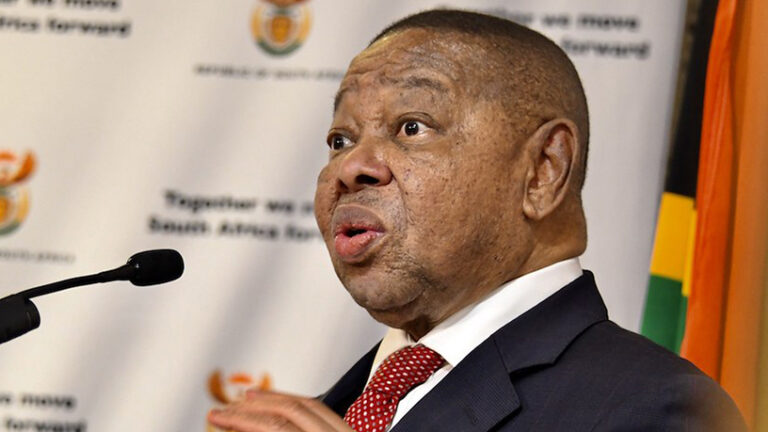
Minister of Higher Education, Science and Innovation, Dr Blade Nzimande, wrote to the Board of the National Student Financial Aid Scheme (NSFAS) on the outcomes of the investigations by the Werksmans attorneys relating to BID NO. SCMN022/2021 and related matters and demanded answers.

In the letter to the Board, Nzimande said notwithstanding and given the urgent need to address the challenges currently facing NSFAS, he wrote to the NSFAS Board to communicate his initial response to the report, request some information, and direct the Board to take certain steps immediately to avert further descent into the abyss of the current challenges.

Nzimande also expressed his deep disquiet about the irregularities, mismanagement and poor governance that is revealed in the report and that the findings of the report are of a very serious nature, and need to be taken as such.

“Given the serious and sensitive nature of the report, officials of the department are still studying the report, guided by our legal department, to be in a good stead to advise me on how best comprehensively to respond thereto,” said Minister Nzimande.  

In this regard, the Minister commended the Board for having accepted the report, its findings, and its recommendations. 

“Given the serious nature of the matters that were under investigation however, the question does arise as to what was the role of the board throughout the whole saga. 

“I therefore require a detailed explanation of the role played by the board during the entire process, outlining what information was provided to the board and at what stages of the process, and what approvals were sought from, and given by the Board,” asked Minister Nzimande.

The Minister requested the Board to furnish him with a detailed plan of how they will implement the recommendations of the report, given the very serious risk of instability that it poses to the system, and the inherent implications thereof. 

“I trust that this plan will have considered all options available, and motivated for the best option, with clear timelines, and resource requirements,” said Minister Nzimande.

“Without turning the board into an operational structure, I would like to implore you to work very closely with management, as they implement the organisational turnaround plan that you devised at your last board bosberaad a few weeks ago. 

“This is crucial in ensuring that we strengthen and capacitate the organisation moving forward and ensure that such lapses, as the very serious ones we have seen in the recent past, do not occur again. 

“This must inevitably include close monitoring of the very important service delivery aspects, which include the timeous payment of student allowances, as well as the continued accreditation of student accommodation,” emphasised the Minister.

The Minister also directed the Board to conduct a full investigation into the allegations made by the former NSFAS CEO about the process of issuing off-take agreements. The Board is expected to provide the report to the Minister within the next three weeks.

INSIDE EDUCATION
Plan to fix potholes with recycled material wins Mbilwi top tech prize

EDWIN NAIDU

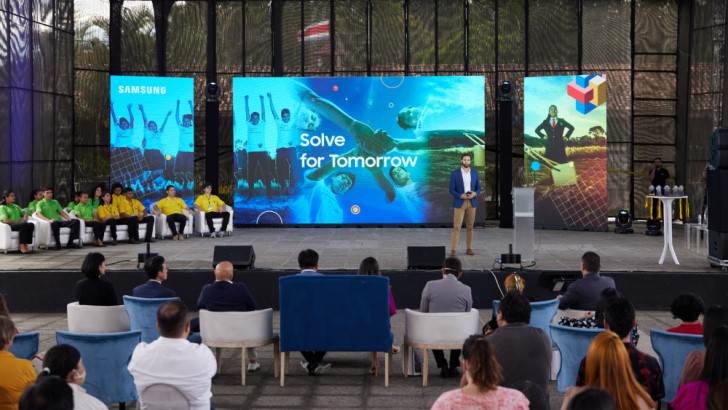
Acclaimed maths and science place of learning, Mbilwi Secondary School from Venda, Limpopo, won the Solve for Tomorrow school competition at the Birchwood Conference Centre in Johannesburg with an idea that speaks to genuine need in their community.   

The victorious spark from learners is an ambitious plan to fix potholes in their town’s roads using recyclable and sustainable materials – addressing both a societal need and fulfilling their green credentials towards a better planet.

The school, which has had a 100% pass rate for its matric students since 1994, has urged learners to continue to lead the way with distinction.

Teacher Tshifhiwa Tshidzumba said winning the competition will help keep the school’s name on the map.

“We are one of the top schools in the region and have made a habit out of winning, and we are happy to keep it that way. Winning such contests reinforces our status as a great school with a highly competitive edge. We are proud of our learners and their achievements because we don’t enter competitions to add the numbers; we enter to win. When we compete, regardless of the contest or the opponents, we always want to be number one,” said Tshidzumba,

The contest for Grade 10 and 11 learners from underserved communities was announced on 4 October. Learners were encouraged to solve some of the challenges within their communities using Science, Technology, Engineering and Maths (STEM).

Former pupils from Mbilwi Secondary School include the Minister of Small Business Development, Khumbudzo Ntshavheni, and top academic Professor Tshilidzi Marwala, Rector of the United Nations University. The school received a prize of R100,000.

Maphuthaditshaba Secondary from Acornhoek in Mpumalanga came second and won R50,000, and third-placed Umlazi Comprehensive Tech from KwaZulu-Natal won R30,000.

The money will be used for STEM equipment for each school, according to their unique needs. Samsung sweetened the deal by rewarding each learner in the top three teams with a Samsung device.

The schools had to identify problems in their communities that they could solve using STEM. With Samsung helping them with resources and mentors guiding them, they had to conduct research and develop prototypes for their identified challenges.

The winning prototype from Mbilwi is an ambitious plan to fix potholes in their town’s roads using recyclable and sustainable materials, including discarded plastic bottles they collected.

“This project has been a huge part of our lives in the past year, so winning it means a lot to us,” said Igoline Coelho, a Grade 11 learner and member of the team. “We have worked hard as a team as we met every day to put in the work needed to get us over the line and victoriously, so winning is awesome. This win will also encourage other learners in our school to participate in such competitions. We are happy that the competition allowed us to do something good for the environment. Hopefully, it will spark even more interest in others to work on making the environment better for all,” Coelho said.

Leading technology giant Samsung South Africa ran the competition with the State Information Technology Agency (SITA).

Deputy Minister in the Presidency, Pinky Kekana, said in line with efforts to improve the education system, the Department of Basic Education highlighted the importance of increasing the number of schools that focus on critical learning areas such as science, technology, engineering, mathematics, and the arts.

“The skills acquired by the educators and the learners will benefit them beyond this competition,” Kekana said. “We look forward to seeing the inclusion of more schools from underserved communities in South Africa. We are optimistic that some of the solutions from this competition will eventually be implemented, thus putting South Africa on the map, with accompanying job opportunities for the youth.”

Solve for Tomorrow is Samsung’s ambitious effort to increase interest and proficiency in STEM and help the country contribute to the Fourth Industrial Revolution. The competition encourages innovative thinking, creative problem-solving, and teamwork among the learners as they grow and learn important skills that could benefit them greatly in their future careers.

Hlubi Shivanda, Samsung’s Director for Business Innovation Group and Corporate Affairs, said Solve for Tomorrow strives to help equip the youth with various technological, artisanal, and electronic skills. “We are proud to see this group of young people applying their minds to learn and help solve some of their communities’ problems and hope such programmes spark the revolution for positive and sustainable change within communities,” she said.

INSIDE EDUCATIONS

Like the Boks, let’s build a winning nation

Nomkhitha Mkhuma

Celebrate good times, come on, South Africa! The 2023 Rugby World Champions, globally known as the Springboks arrived at The OR Tambo International Airport to be met by a united rainbow nation beaming with hope and purpose. 

School children, varsity students, moms, dads and grandparents throughout the country took the opportunity to welcome the trophy celebrations when the Boks came home and lifted all our spirits making us forget our loadshedding blues for once.

Their arrival on the 31st of October 2023, showed what a country that strives for equality and economic liberation can achieve when united. 

The team embarked in a Four Day Victory Tour – Webb Ellis Cup and set the streets of South Africa ablaze. Before the tour could commence, we witnessed the 25-Year-Old star, Damian Willemse tattoo the Ellis Cup on his derrière, making this his second World Cup win with the Springbok.

Last week’s Springbok victory against New Zealand made him the youngest player to achieve this feat, so who could ever blame him for wanting to ensure the memory is embedded somewhere on his body? 

Our hearts were softened as a nation, when Cheslin Kolbe at the Multichoice Headquarters in Johannesburg, stood up from his seat and handed his medal over to a kid who had voiced out how Kolbe was not only his favourite player, but was also inspired by him.

The tour kicked off on Thursday (2 November) in Gauteng, The City of The Vodacom Bulls where supporters showed up in their hundreds to show their love and adoration for the “country’s heroes”. 

As they travelled through Braamfontein and into Soweto, where they had their final stop of the day at The FNB Stadium that was filled with fans from all over the region, social media attendees were able to capture some of the Kaizer Chiefs players attending the celebration and commented on their ‘unsportsmanlike’ appearance. Talk about loyalty.

The next stop was in the City of Cape Town, while the weather was on the right side of the celebration a Springbok supporter was in the opposite, a video went viral on social media platforms showcasing a young witkant trying to throw a rugby ball to The Springbok Captain – Siya Kolisi, only for him to miss the ball as it went above his hand, landing right on Rachel Kolisi’s face, it was brutal to witness. 

On the lighter side of things, Siya Dlamini, from Volksrust, in Mpumalanga, who went viral on TikTok for renaming Eben Etzebeth  “Elizabedi” while cheering him on television during the game with New Zealand, was seen hugging the Springbok Number 4 Lock, with a champion’s spirit he had shared with the country on the video.

On Saturday, the team graced KwaZulu-Natal with their never dying spirit, while Faf who had been prancing around in speedos was missing in action. The rest of the team showed up and showed out. 

Our beloved country wouldn’t be what it is, if there wasn’t a little bit of chaos here and there to remind us how far we still have to go as a nation. A party pooper indeed, when a  video showed a man attempting to steal a cell phone and then being met with the fists from the growing crowd of.

It is on the 5th of November, in East London where men were seen climbing up and down street light poles in an effort to see the Springboks from a better view. 

As the tour came to its final stop, the Springbok Captain climbed off the bus to join the rest of his team members in the venue, where he was met with a woman who tried to jump and kiss him. There was no kiss from a rose, to borrow from the lyrics of Seal. 

Video footage shows an irate Siya Kolisi resisting the overture before he got escorted through the crowd and into the building. 

The Springboks went to the World Cup, Conquered and came home as champions. 

Who knows among the hordes of adoring fans one day we may hear a fairytale story of ‘I was there”. But first let’s build a winning nation.

INSIDE EDUCATION

My Matric ball on a budget of under R1000

EDWIN NAIDU

Matric 2023 pupil Samara Chinnapen from The King’s School in Robin Hills in Randburg reflects on her recently completed matric dance achieved on a budget of less than R1 000. She was taken to the event in a vehicle, which costs R2.75 million.  

Accompanied by handsome chaperone, Bjorn Mhlanga, the stunning Samara, 18, was the belle of the ball.

Daughter of Enver and Linda Chinnapen, Samara told Inside Education all about her matric dance and future plans.

What was the experience like?

It was nothing as I’d expected a matric dance to be. The event had both positive and negative aspects. The downside of the whole experience was the planning, money, and stress of making sure that you had to look good on the night. This was a feeling shared by many other learners. All of this stress is definitely not worth it as you are wearing an outfit for one night, and you are most probably not going to be using it in the future. Although this night shared its negative aspects, it also shared a few positives, like creating memories with the people you’ve been with daily for your whole high school career. Although you may not see them after school, it is a great experience that you will be able to look back on.

How much did the dress cost?

I purchased a dress online as it would be more cost-effective since I’d only use it once. It cost R825. Purchasing or making a dress is based on an individual’s preference and how much they are willing to spend on a dress. My sister Kaylene helped me glamour up for the night without any fuss.

What about the wheels for the night?

Luckily for me, my cousin organised a fantastic car for me. The Mercedes Benz EQS SUV 450. It was a one-of-a-kind car that many people were fascinated by. For me, the car took all my focus as I share a love for them. I do understand the whole entrance with the cars as it is a time to show off and it’s one day of your life.

Was it an experience that it was all cut out to be?

It could’ve been a better experience based on all the stress and preparation that went into it. I felt that the night was overhyped and could’ve been better planned.

Has it distracted you from examinations?

It hasn’t distracted me from my exams as I only began preparing for the dance two weeks before the event.

What did you do after the ball?

I went home after the matric dance and chilled with my parents.

Are you ready for exams?

Yes, I am as it is the last push of my final schooling career, so I want to go out with my best.

What do you want to do next year?

I would like to study animation at the SAE Institute or graphic design at the University of the Witwatersrand.

INSIDE EDUCATION

COVID-19 gathering on O.R. Tambo Africa Research Chairs Initiative a success

Inside Education Correspondent

THE Covid-19 Africa Rapid Grant Fund (CARGF) Reflection and Foresight Convening and the O.R. Tambo Africa Research Chairs Initiative (ORTARChI) Annual Gathering, both monumental meetings that the National Research Foundation (NRF) hosted last week, were a major success in terms of their set objectives. 

The meetings were called to celebrate and showcase the CARGF and ORTARChI initiatives, and provide a space for peer-learning, networking, and the exploration of avenues of collaboration among the participants, the majority of whom are stakeholders in Africa’s science ecosystem. These included both researchers and the participating councils of the Science Granting Councils Initiative in sub-Saharan Africa (SGCI).

CARGF and ORTARChI are two significant multilateral research funding partnerships that the NRF has administered under the auspices of the SGCI since 2020 and 2018 respectively. As a multi-funder and multi-stakeholder initiative, the SGCI partners with public funders of research in 17 African countries to support capacity strengthening with the aim of contributing to research and evidence-based policies for economic and social development.

In his opening address, NRF Chief Executive Officer, Dr Fulufhelo Nelwamondo, said the NRF was delighted to host the gatherings. He stressed that CARGF demonstrated that establishing partnerships across Africa and the world was key.

“Africa’s science community managed to put up CARGF together within a short period following the coronavirus outbreak because partnerships were already established. Partnership is a key word here because it is all about us knowing that we cannot do what we want to do on the continent if we work alone. 

“It’s a question of how we work as a collective team across Africa to ensure that we achieve what probably has not been achieved before,” Dr Nelwamondo added. 

Dr Gugu Moche, Acting Deputy CEO: RIISA, chaired the opening session. She pointed out that the CARGF gathering was an important opportunity to reflect on what was achieved, thereby preparing Africa’s scientists for the next pandemics. 

“As we engage, there are three fundamental questions that we should be answering: what are we doing, why are we doing it and what do we learn from implementation. If you look at those, they speak to the reasons behind our engagements, they speak to our reason for pursuing long-term partnerships, and they speak to whether we are getting the results we thought we would.”

CARGF and ORTARChI were established to fulfil a variety of roles for the benefit of Africa’s science system. Established in May 2020 to support Africa’s response to COVID-19, CARGF funded 73 projects across three strands, i.e. research, science communication and science advice, in 50 institutions from 16 African countries. 

The CARGF was supported by the NRF and the DSI; Canada’s International Development Research Centre (IDRC) and Fonds de Recherché du Québec (FRQ); the Swedish International Development Cooperation Agency (Sida); the United Kingdom’s Foreign, Commonwealth and Development Office (FCDO); the United Kingdom Research and Innovation (UKRI) through the Newton Fund; and SGCI participating councils.

ORTARChI, on the other hand, was established to contribute to the expansion of research and innovation capacities in and for Africa, in alignment with African Union Agenda 2063 and Science, Technology and Innovation Strategy for Africa 2024 (STISA-2024); to contribute to Africa’s global research competitiveness while responding to the continent’s socio-economic needs; and to contribute to Africa’s career pathways for young and mid-career researchers, with a strong research, innovation and human capital development output trajectory.

Ten O.R. Tambo Africa Research Chairs have been awarded across seven countries, namely Botswana, Burkina Faso, Ghana, Mozambique, Tanzania, Uganda, and Zambia since its launch. The NRF and DSI, together with the Oliver and Adelaide Tambo Foundation (OATF), IDRC and SGCI participating councils have partnered to implement the initiative.

Importantly, the initiative honours and promotes the legacy of O.R. Tambo, emulating his values of professional excellence, integrity, inclusiveness, honesty, humility, and respect for human dignity. The late Oliver Tambo is recognised for his lifelong dedication to the struggle against apartheid. He criss-crossed Africa and the world as a longtime leader of the African National Congress in pursuit of freedom and equality. ORTARChI recognises Mr Tambo’s science background.

INSIDE EDUCATION

‘SA needs emotionally, morally and ideologically invested teachers’, Qwabe

JOHNATHAN PAOLI

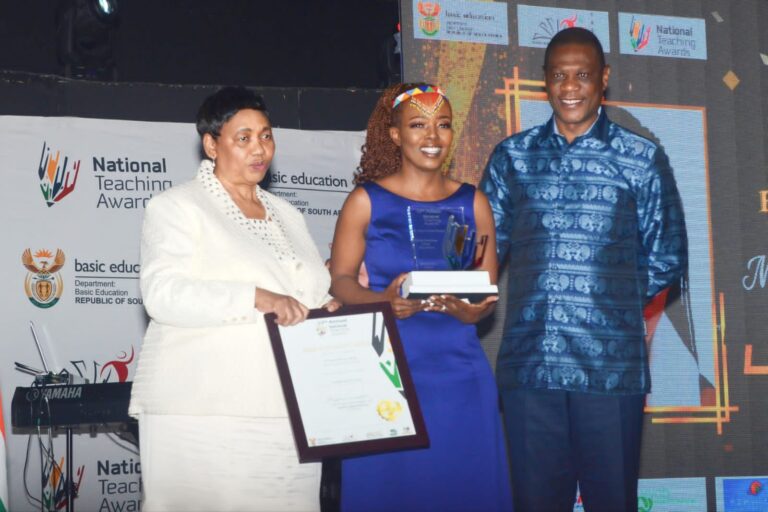
Gugu Qwabe – South Africa’s Best Teacher of the Year 2023 – says “the best resource for any school is a motivated educator” and the English teacher and departmental head of languages at Mandla Mthethwa School of Excellence in Umkhanyakude in KwaZulu Natal, should know because she certainly walks the talk. 

Qwabe, who has been teaching for 15 years, was honoured by Deputy President Paul Mashatile at the awards ceremony at the Heartfelt Arena in Pretoria on Thursday 5 October.

In his keynote address, Mashatile acknowledged that “teaching is a labour of love and passion, [and] as a government we are committed to reinforcing teacher support and prioritising the professional growth of the women and men who are key drivers of basic education”.

The National Teaching Awards were launched in 2000 and have become one of the ways in which the Department of Basic Education acknowledges the extraordinary efforts made by excellent teachers, often under very difficult conditions.

Qwabe, who has been automatically entered into the African Union Continental Teachers Award for 2023/24, is passionate about educating and grooming future leaders and has authored a book called Holistic Ubuntu Development — a textbook and a teacher guide.

The book focuses on the practical applications of African values to corporate aims, merging progressive thinking with models of sustainability. She said her motivation comes from being an author and her passion for technology, which she uses to assist learners. She also coaches other teachers and organises workshops for them.

Qwabe, who is pursuing an MBA at Regent Business School, supports the use of indigenous languages as tools of instruction, saying: “It has long been due for Africans to enjoy the fruits of their own existence. I believe that it is time as a country that we deserve everything others have.

“One important value is exhibiting resilience in the process, believing in what you’re doing, and meeting with policymakers,” she says, stressing the importance of uBuntu in developing a strong moral code and sense of social responsibility in learners.

Qwabe expressed her gratitude at being awarded the prize and an appreciation for her senior colleagues for recognising her vision of the humanising transformation of education for learners, especially for marginalised learners in rural areas.

Raised by a single mother, who was also a teacher, Qwabe, who has three other siblings, says her mother’s resourcefulness in the face of the struggles faced by their low-income household inspired her.

“My mother did not want me to do teaching since she was a teacher herself. She faced so many struggles, and being as innovative and different as I am in a system of conformity, she experienced a lot of resistance,” Qwabe told Inside Education.

After completing her basic education, which was interrupted by her transfer from a former model-C school to a local public school because of financial constraints, Qwabe graduated with a degree in Psychology and English from the University of KwaZulu-Natal and then transferred to the School of Education where she graduated in 2007.

Her teaching career kicked off in one of the poorest schools in Jozini,  Amandla Awethu School. She taught Life Sciences and English without any formal teaching qualifications simply because of her “good English”  in her Grade 12 results, she says.

The main motivation for her decision to teach in Jozini was that both learners and teachers were making great strides despite the school being badly under-resourced and with poor sanitation provision.

However, the teachers’ and learners’ resilience in the face of their challenges, strengthened Qwabe’s resolve that only educators with passion should be recruited into the teaching profession.

In 2009, Qwabe acquired a Postgraduate Certificate in Education before being recruited by a circuit manager, who recognised her potential, to join the newly formed Mandla Mthethwa School of Excellence (MMSE) in 2018.

MMSE is in Ndumo, a deeply rural area bordering Eswatini and Mozambique in the uMkhanyakude education district, and has its roots in an initiative dating back to 2001 when members of the private sector and the KwaZulu-Natal Department of Education collaborated in an effort to improve the quality of the lives of the people in one of the poorest and most under-resourced communities in KwaZulu-Natal.

MMSE Headmaster Dr BH Mthabela has described the school’s mission as instilling in learners values such as respect for themselves and others, level-headedness, self-control and self-discipline, compassion, and embracing others and the environment.

Mthabela said the school was designed primarily to offer the best possible education to learners in Umkhanyakude, in particular, and those from KZN and other provinces in general. Qwabe, he said, was a natural fit at the school whose pupils have secured more than 200 distinctions in its short existence.

Qwabe said she hopes the school system will attract “more teachers who are emotionally, morally and ideologically invested in ensuring equal and quality education for all children. We need more good people in our society, we need more people to stand up for the right things. Our learners need to grow up in healthy spaces.”

INSIDE EDUCATION

Almost 100 000 students haven’t received their November NSFAS grants 

Lerato Mbhiza

THE National Student Financial Aid Scheme (NSFAS) says close to 100 000 students have not received their November allowances because institutions delayed submitting the required information. 

Information from universities still needs to be verified before funds are released and that thousands of students from five universities have been affected and have been left stranded as the academic year draws to an end, NSFAS said.

NSFAS spokesperson Slumezi Skosana said the scheme needed to implement control measures after some universities failed to stop paying the allowances themselves after June, as instructed, but that they were working with these institutions to address the problem.

Skosana also denied weekend reports that some students were starving during exams at the University of North West, University of Venda, Durban University of Technology, University of Limpopo and the University of Cape Town.

He added that university students, tuition, and allowances disbursement were initiated on 25 October.

“Unfortunately for some universities, these payments were withheld pending the finalisation of the Universities reconciliation, which is very critical information to ensure that NSFAS disburses allowances correctly to the institutions for tuition and living allowances to students. 

“This is an important measure to ensure that NSFAS accounts for each and every disbursement it makes to properly account for using public money”.

In June, NSFAS introduced a new direct-payment system that allows for funds to be paid directly to students instead of to the institutions they attend. 

However, the system has had challenges with students complaining about late-payments and high transactional costs leading up to protest action earlier this year. 

A Parliamentary inquiry was instituted against NSFAS and based on its recommendation the CEO was fired and all the contracts of direct-payment service providers were revoked.

INSIDE EDUCATION

TEACHER’S CORNER: Iconic son of the soil, Sipho ‘Hotstix’ Mabuse shows no signs of Burnout

EDWIN NAIDU

South Africa’s heritage would be incomplete without mentioning the iconic Sipho “Hotstix” Mabuse. Now 71, the internationally renowned musician from Soweto continues to perform with zest. He is an integral part of the country’s musical heritage – and remains a legendary role model to mature and younger fans.

It all began in 1966 in Orlando West, the stomping ground of not one but two Nobel laureates, former South African president Nelson Mandela and apartheid activist and churchman Archbishop Desmond Tutu.

Mabuse performed with friends during a school fund-raising concert at Orlando West High School in Soweto. Five decades later, the love Mabuse received as a school band member has since snowballed along with his legendary reputation. His bright, shining star is linked to his hometown via the 1986 hit Jive Soweto.

When his Eighties band Harari split, Mabuse’s debut, Burn Out, became an international hit, earning him a R1.5 million deal with Virgin Records, founded by Sir Richard Branson.

Record sales multiplied as he toured the world. Mabuse’s musical heritage hits the right notes. He comes from a musical family; his coal merchant dad played harmonica. Baba Manuel, a neighbour, inspired him to take up drumming. It helped that some of the country’s best-known exponents with the sticks, like Early Mabuza, Gordon Mfandu and Gerald Khoza, set him on the way up.

With the limelight keeping him busy, Mabuse still needed to complete matric. Eleven years ago, at 60, he decided to change that. Mabuse returned to school in 2012 to achieve matric at the Peter Lengene Community Learning Centre in Soweto.

That was a momentous achievement which inspired learners throughout the country. Several popular brands signed him up to promote learning as a result.

Mabuse has performed throughout the country to celebrate Heritage Month and plays a concert in Botswana in October.

On his website, there is an explanation of how this humble son of the Soweto soil got the nickname “Hotstix”.

If you’re wondering about the “Hotstix”, the explanation is simple and charming. Playing at a gig years back in a hall, the lights suddenly went out, but Mabuse, on the drums, was the only musician able to continue playing, which he did for the next 20 minutes. One of his fellow band members approached him afterwards and said: “Hey, hot sticks”, and it stuck.

MY FAVOURITE TEACHER

Asked the name of his favourite teacher, Mabuse recalls it was a Mr Lepesa when he was in Grade 3 at Tsholomani Higher Primary School in Soweto.

“I don’t know his first name. In those days, we called our teachers Mr. and Mrs., whatever the surname was.”

“When he was in front of the class, he became an animated teacher, and the way he expressed himself, you could tell that he enjoyed teaching and had a way with words.

“In those days, one teacher would teach us several subjects. He taught us English, Sesotho and Arithmetic (mathematics).

“Mr Lepesa never meted out corporal punishment. He would shout but never at any stage strike a child, bearing in mind that teachers were allowed to punish children in those days.

“I remember a woman teacher would hit us with a steel ruler on our fingers in those days. I really disliked her. She was always ready to hit us.”

“But Mr. Lepesa made us love school. I always looked forward to attending school because of him, to watch him teach and the elegant way he used the language.

“He would inspire me to understand the language better. I was often picked to read in class.

“One day a few years ago, he came home to visit me. I was overjoyed. We sat and chatted on my stoep. Our conversation was on equal terms, and I kept referring to him as Sir to remind him that my favourite subject was English.”

Mabuse told Inside Education that teachers have a crucial role in society. “What would we know without teachers? They shape what we know; without them, you cannot have scientists or doctors.

“Teaching is power in itself because it provides the knowledge to fire up society.”

INSIDE EDUCATION

Phakeng threatens legal action over ‘damaging and inaccurate’ panel report

Johnathan Paoli

Former University of Cape Town Vice-Chancellor Professor Mamokgethi Phakeng has responded to the recent damning panel report on her conduct while at the university, by claiming the allegations contained in it were not only inaccurate, but were damaging to her reputation.

“I will study the report further with my legal team and I will take appropriate steps, as deemed necessary, in due course,” Phakeng said in a short statement.

Phakeng was responding to a 179-page report from an independent panel, led by Judge Lex Mpati, released on Friday which found her and council chair Babalwa Ngonyama guilty of ‘serious governance failures’.

The report also alleged that the former VC acted in an abusive and violent manner against top executive members of the management team and also contained testimonies and other evidence to her infamous tenure and the manner in which the university council protected her.

Phakeng said due to the litigious nature of the matter, and based on the advice of her legal team that she would not be conducting any interviews at this stage.

The report found that Phakeng engaged in activity that was prohibited in the UCT workplace, including using threats, intimidation, ethnic slurs, personal insults and also posting racially offensive material on social media.

Phakeng was further accused of instituting petty charges if she disliked a staff member or academic which saw about eight individuals resign or retire “prematurely” due to her conduct, creating a “toxic work environment”.

Allegedly her victims included former deputy vice-chancellor of transformation, Loretta Feris, who according to the report, was a victim of an abuse of power, often in the presence of others, by the VC over a protracted period of more than three years.

In addition, Ngonyama was implicated in the report as assisting Phakeng in her actions and behaved unprofessionally by berating Feris in a council meeting, shortly before initiating her removal.

“To conclude that Ngonyama and Phakeng’s conduct during this period amounted to a governance failure would be an understatement. In an attempt to shield themselves from accountability, they subverted the policies and procedures of UCT,” the panel said.

In line with their recommendations, the panel suggested that a written public apology be made to eight individuals for the circumstances giving rise to their resignations and commending them for their meritorious service to UCT.

While Phakeng is seeking legal advice Ngonyama has not directly responded to questions.

However, Vukile Property Fund Limited’s board of directors announced that she resigned as an independent non-executive director of the company, as chairperson and member of the audit and risk committee on Thursday.

INSIDE EDUCATION

MEC Chiloane mourns the passing of Nomvuyo Violet Ntsali, Matthew Goniwe School Deputy Chair

Johnathan Paoli

The Gauteng Education MEC Matome Chiloane has passed his condolences to the family and colleagues of Nomvuyo Violet Ntsali, the Board of Directors Deputy Chairperson of Matthew Goniwe School of Leadership and Governance (MGSLG).

“We wish to convey our sincerest condolences to her family, colleagues and friends. This is indeed a huge loss to the education sector. Ms Ntsali has been a dedicated and selfless leader. We will dearly miss her valuable contribution to the sector, may her soul rest in peace,” Chiloane said.

Ntsali passed away on Thursday morning at her home, following a short illness. However, she had been hospitalised before but discharged in September.

Department of Education Spokesperson Steve Mabona said the deputy chairperson showed commitment to improving education as she carried on with her duties, despite her ill-health, until her untimely death.

The department said that through the leadership, dedication and support of the Ntsali, MGSLG succeeded in providing training on governance to members of School Governing Bodies (SGBs) across the province, funding the studies of prospective Early Childhood Development (ECD) practitioners, helping them obtain their qualifications, and ultimately spearheading research which necessitated urgent interventions on advancing school safety.

In addition, the department said that MGSLG had consistently worked alongside the Gauteng Department of Education, playing a pivotal role in shaping the standard and inclusivity of education in the province.

The MGSLG was established in 2002 to continue with the legacy of anti-apartheid activist and dedicated teacher Matthew Goniwe (1946 – 1985), to improve quality of education and currently has two branches in Benoni, Ekurhuleni and Vrededorp, Johannesburg.

INSIDE EDUCATION