Home Blog Page 183

Partnerships drive the Plastic Changemakers programme

Inside Education Correspondent

THE Plastic Changemakers programme, which aims to teach primary-school children on the environmental impacts of plastic pollution, was recently launched in Cape Town by the Breteau Foundation. 

The Breteau Foundation aims to inspire and empower over 1 million primary school children around the world to act against plastic pollution in their homes and communities. 

Mona Ewees Mkumatela, regional development manager for the Breteau Foundation in South Africa, says the programme has already seen significant take-up from education practitioners, community organisations and NPOs. 

“Since we launched the programme in October, we have had extremely positive feedback from our partners across sectors,” she says. “This is very encouraging for us. We rely heavily on others to help us in our quest to reach one million children across the world and turn them into ambassadors for change in the plastics pollution space.”

Bruce Probyn, Chairman of the Western Cape Education Council, says engaging today’s learners requires a shift away from traditional teaching methods. 

“We need to think differently about the way we interest and excite pupils,” he says. “The days of ‘chalk and talk’ are fading. They’re being replaced by a need for innovative, engaging approaches.”

Probyn’s long-term vision for the programme is optimistic. 

“I envision that if the Plastic Changemakers programme becomes deeply embedded over time, it could lead to litter-free schools, which, in turn, would influence the surrounding communities.”

Probyn highlights the importance of a clear plan, well-thought-out steps, and consistent support. 

“We collaborate with foundation phase colleagues who are actively engaged in approximately 18 schools, where multidisciplinary teaching is being implemented,” he says. “In this context, the Plastic Changemakers programme has a unique and valuable role to fulfil.”

The programme has also raised interest among local community organisations, including the Bonteheuwel Training Skills Squad (BTS). 

Zaironesa Karriem, the driving force behind BTS, says, “It’s not just about training and life skills; it’s about cultivating a sense of exploration, adventure, and fun.”

BTS serves three high schools and 14 primary schools in Bonteheuwel and aims to engage all these institutions in the initiative.

“Our motivation is rooted in the desire to reshape the perspectives of young individuals. We aim to provide our learners with a practical understanding of how what is often perceived as waste and pollution can, in fact, hold the potential for creating sustainable opportunities,” says Karriem. 

“By exposing learners to initiatives like the Plastic Changemakers programme, BTS aims to instil seeds of change, nurturing values that the children can carry with them into the world as responsible ambassadors.”

Karriem says the programme engages children in a relatable and tactile way.

“It’s about bridging the gap between classroom theory and real-world practice, ensuring that every child’s inherent creativity finds expression. It’s also about building confidence and nurturing skills that, with ongoing support, will evolve into positive action.”

Jocelyn Anderson, Sustainable Schools Programme Manager at environmental education organisation, Nature Connect, says the Plastic Changemakers programme is the perfect addition to Nature Connect’s online library of quality, curriculum-aligned resources to support teaching and learning in schools.

“What sets it apart is its ability to engage youth actively in environmental action,” she adds. “It provides students with opportunities to take real steps towards caring for the environment, instilling in them a sense of agency and empowerment.

“It cultivates a sense of agency in both teachers and learners, motivating them to actively participate in nature conservation efforts.”

Anderson says her hope is to include the Plastic Changemakers programme in teacher training workshops, events, and immersive education experiences. 

“Specifically, we are looking at incorporating the programme into our initiatives designed to raise awareness about plastic pollution, such as our beach clean-ups and in-school lessons. 

“We will also be adding the programme materials to our online resource library for teachers to access.”

For more information visit https://breteaufoundation.org/

INSIDE EDUCATION

Teeing off with a purpose

Sports Reporter

A blustery wind greeted the more than 100 golf players who gathered for a day of sport and charity at the University of the Western Cape’s (UWC) Cape Town Golf Dayrecently.

The event, hosted by the University’s Department for Institutional Advancement at the King David Golf Club in Mowbray, brought together avid golfers, local business people and philanthropists – all aiming to raise funds for the #AccesstoSuccess campaign.

The campaign focuses on providing much-needed funding to students performing well academically but with historic debt that makes it impossible for them to graduate and join the world of work..

In its 47th year, the support every year at both the Johannesburg and Cape Town Golf Days is overwhelming, says Vera Adams, Manager of Donor Relations and Fundraising.

She said this year’s event was especially poignant as it honoured Melissa Maans, long-term coordinator of the UWC golf days who passed away unexpectedly on 13 October 2023.

Beyond the competitive swings, the main objective of the day was fundraising. Through entry fees, donations and sponsorships, the event successfully raised R242 000, surpassing the previous year’s records.
 
The business sector continues to play an important role, with Pro Events as the Platinum sponsor for the Golf Day. Edward Beeka, Head of Operations at Pro Events, said: “We are proud of our distinct culture and strongly embedded ethical values with an uncompromising commitment to transforming society. We have embarked on collaborative initiatives with UWC to promote equality and opportunities for greater inclusivity.”
 
The Primary Sponsors were Securitas. 

Vera also thanked the various sponsors for the waterholes and the numerous prizes that were donated. As the sun set on a day filled with good sportsmanship, laughter and generosity, UWC Rector and Vice-Chancellor, Professor Tyrone Pretorius, expressed his extreme gratitude to all participants and sponsors. 

An exciting prize giving culminated in an impromptu auction with some vigorous bidding. Louis Mkhethoni, CEO of Securitas, issued a call to establish “The Melissa Maans Memorial Fund” and for all proceeds of the auction to go to the fund, which will support students. 

He also committed R3000 towards the fund. A special thank you goes to Imas Finance, who sponsored the Golf Day commemorative T-shirt.

This year’s champions were Jaftha Benjamin and Baldwin Kock from SA Quantum.

INSIDE EDUCATION

Flourishing in the Age of AI the major theme at the 2023 WISE Summit in Doha

Edwin Naidu

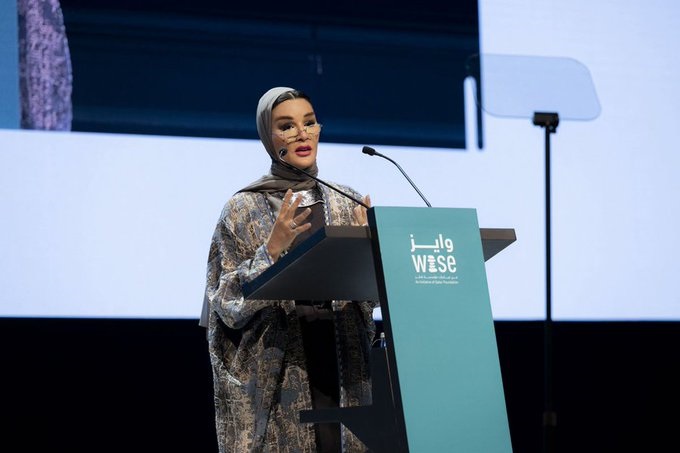
Several high-profile speakers will arrive in Doha, Qatar, this week for the 2023 World Innovation Summit for Education (WISE) Summit; a global platform for innovation in education.

Established by the Qatar Foundation, this year’s WISE meeting is held under the pertinent theme “Creative Fluency: Human Flourishing in the Age of AI”. In the realm of education, the theme encourages stakeholders to thoughtfully integrate AI to enhance learning, stimulate creativity, and prepare the next generation for a future closely intertwined with AI.

The packed line-up for the 11th WISE Summit includes Rawaa Augé, Presenter, Al Jazeera, Jeffrey Sachs, University Professor and Director of the Center for Sustainable Development, Columbia University, Sayasat Nurbek, Minister of Science and Higher Education, Kazakhstan, Hayfa Al Abdulla, Innovation Director, Qatar Foundation, and Jason Czyz, Co-President, Institute of International Education.

Scheduled for 28-29 November 2023 at the Qatar National Convention Centre (QNCC) in Doha, WISE 11 promises a unique blend of insights and interactions. In particular, the Summit will look at the emergence of Artificial Intelligence and the ways it is challenging traditional views on creativity and raising important questions about the future of education. The Summit will also encourage the WISE community to explore topics like computational literacy, personalised learning, AI-integrated teaching approaches, and equity issues in emerging educational technologies worldwide.

Of particular interest to teachers around the world, is a panel discussion on ‘Classrooms of the Future: Will AI Necessitate a Fundamental Rethink of Teaching and Learning?’ In addition, panels will consider roadmaps for charting the future of education as well as digital sovereignty as it related to AI.

With Artificial Intelligence dominating debate in the tertiary education sector, many believe it can revolutionise education, including widening access and inclusion for underserved youths. However, the ethical considerations of AI, and the potential it has to contribute to discrimination, inequality, and exclusion must not be overlooked – and will be the basis of one of the panel discussions.

Stavros N. Yiannouka, CEO of WISE, says WISE 11 is a dedicated space where the intersection of human creativity and artificial intelligence will be thoroughly examined.

“We’re bringing together leading experts, educators, and innovators from around the world to work hand-in-hand, ensuring that our approach to AI in education centers around the betterment of human lives”.

The Qatar Foundation says the WISE Summit remains a beacon for innovation and intellectual discourse in education. The Foundation believe’s this year’s theme aligns perfectly with its mission of cultivating a culture of lifelong learning and creativity. “We are honoured to host this pivotal event that resonates with our vision of empowering individuals to adapt and excel in a dynamically evolving world,” says the Foundation.

The authors of WISE Research will also present their latest reports addressing critical education issues around the globe, and propose action-oriented recommendations and policy guidance for stakeholders in the education industry.

Throughout its time, WISE has contributed to the creation of a vibrant community with more than 50,000 members across 140 countries, engagement of over 3,000 international attendees in 2019, participation of over 2,000 in-person delegates and 11,000+ online participants in the 2021 Edition, and expanding the reach of WISE to cities such as Tunis, Beijing, Madrid, Accra, New York City, Paris, and Medellin since 2016.

Global leaders, such as Michelle Obama, Julia Gillard, and Gordon Brown, have addressed platforms at WISE.

This 11th edition brings together educators, tech pioneers, AI ethicists, and students for collaborative discussions and diverse sessions, featuring high-level local and international stakeholders.

The summit will address pivotal topics, including:
● Scaling for Equity and Access
● Envisioning the Classrooms of the Future
● Aligning Higher Education with an AI-Driven Job Market
● Building Ethical AI Systems
● Preserving AI and Digital Sovereignty.

WISE is set to welcome an audience of around 1,200 delegates attending throughout the day, with up to 2,200 participants expected for the opening and closing sessions.

Inside Education is a media partner at WISE 2023 and will be reporting on proceedings.

INSIDE EDUCATION

Gauteng Education Department official survives shooting incident

Lerato Mbhiza

A Gauteng Education Department official was shot at while driving along the Chris Hani Road and Golden Highway intersection on Thursday afternoon and spokesperson Steve Mabona said the official from the Johannesburg south district – who oversees learning and training support material – survived the “unfortunate” shooting incident.

“According to information at our disposal, the male official from our Johannesburg south district, overseeing learning and teaching support material, was in his vehicle at the Chris Hani Road and Golden Highway intersection when he was suddenly shot by an unidentified assailant.

“Immediate medical attention was provided, and we are relieved to report that the official is currently in a stable condition and receiving medical attention at a local facility.

“We extend our heartfelt wishes for the speedy recovery of our colleague and assure the family that we will provide the necessary support during this challenging time,” Mabona said.

Gauteng Education MEC Matome Chiloane said that while the motive is unknown, it is worrisome that an official can be targeted and shot at in that manner. 

“We wish to call upon law enforcement agencies to bring the perpetrators to book. Anyone who might have information regarding this incident is encouraged to share the same with the police. We wish our employee a speedy recovery”. 

INSIDE EDUCATION

Nzimande slams the scourge of GBV at the launch of NSFAS 2024 application season

Primrose Lerato Mbhiza

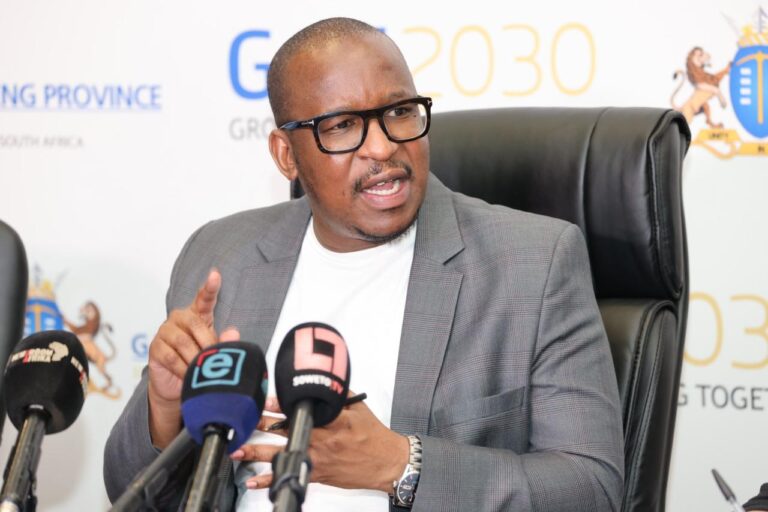
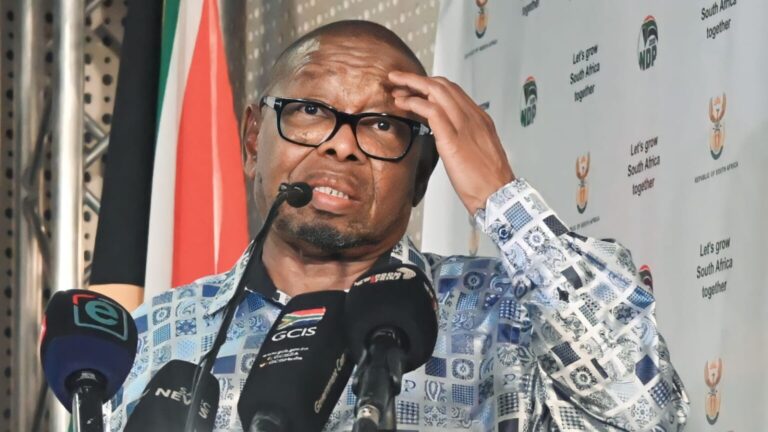
At the official announcement of the NSFAS bursary application season for the academic year 2024, Minister of Higher Education Dr Blade Nzimande took the time to highlight and condemn the disturbing trend of Gender-Based Violence that he said was a scourge afflicting not only in society but also plagued institutions of higher learning as well.

“I have convened this media briefing to announce the official opening of the National Student Financial Aid Scheme bursary application season for the academic year 2024. 

“However before I provide further details on the 2024 application season, I would like to raise concerns and necessary for both the government and the post school education and training sector to intensify campaigns to confront and defeat the scourge of gender based violence in our institutions the issue of Gender Based Violence in our society and at our post school education and training institutions. 

“In the past weeks we have seen video footage of a university student stabbing his wife at a private student residence in Belhar, Cape Town. This kind of barbaric behaviour by males against women must be condemned and perpetrators must face the full might of the law. 

“We cannot continue like this in our society where as many as 38% of murders are committed against women, often by their intimate partners. 

“As part of dealing with gender-based violence in our institutions, I launched  the Transforming MENtalities Initiative, which is a multistakeholder partnership within the PSET, with a particular focus on mobilising men in our sector to be part of championing a world free of gender biases, stereotypes, violence and discrimination. 

“I urge all institutions working with Higher Health (which oversees wellness at higher education institutions) to continue to collectively implement programmes towards addressing the challenges of sexual and gender based violence within the PSET (Post School Education and Training) system,” Nzimande said.

The Minister also said he welcomed the arrests that have been made at the University of Fort Hare for the killings that have taken place there including a most recent incident where a student was stabbed to death allegedly over a missing laptop.

Two bodyguards of Fort Hare Vice-Chancellor Sakhela Buhlungu were killed in separate incidents this year in what has been alleged were assassination attempts of the VC.

“We had indicated to Minister Cele that indeed no stone must be left unturned in going to the reasons for the killings at Fort Hare. Without prejudging the situation, as Minister, I am however deeply concerned about the latest arrest of someone inside the Vice-Chancellors office and ostensibly responsible for the security in the institution.

“This may point to the fact that the problems at UFH may be deeper than meets the eye. I will be further engaging with Council on the latest developments, particularly given the fact that complaints have been raised with me about alleged illegal surveillance of Council and staff members”.

Nzimande said he wanted to remind all South Africans that the mandate of the National Student Financial Aid Scheme (NSFAS) was to provide financial assistance to deserving beneficiaries who qualify for access to post-school education.

As a scheme, NSFAS represents one of the most progressive efforts by the government to systematically break the legacies of intergenerational social inequality in access to and outcomes of post school education and training, Nzimande said. 

“This is particularly important if we consider the structural and social constraint to accessing education that was imposed by centuries of colonial and apartheid rule. 

“There is no doubt that this government has made a decisive contribution towards a break with these reproductive legacies of the past. 

“Since 1991, NSFAS funding has grown from disbursing R21.4 million to almost 48 billion to fund children of the working class and the poor seeking to further their studies in public universities and TVET colleges. 

“This is a clear indication that the government has prioritised student funding and broadening of access to those sections of our communities who had no access to post school education and training in the past. 

“The other notable milestone for the scheme has been the integration of all public universities and TVET colleges to the student-centred model wherein students apply directly to NSFAS for funding. 

“In this current financial year, NSFAS is  funding 1,6 million students. This follows an unprecedented surge in the number of applications received by the scheme.

“The entity has been working tirelessly to ensure that it improves on its processes for applications and ensuring quick turnaround times on funding decisions in preparation for the 2024 funding year. 

“You would agree with me, that in order for NSFAS to successfully implement the funding of 2024, there needs to be closure of the 2023 funding cycle.  This includes the finalisation of all the appeals and payment of all outstanding allowances for the academic year 2023. 

“NSFAS committed that all appeals and the payment of outstanding allowance will be finalised this year. For all those  students who did not get successful funding outcomes for the 2023 academic year, they are all encouraged to apply for 2024 funding.

“Let me also indicate that the proposed 2024 funding policy is almost complete, and will be issued by the end of November, to allow stakeholders to prepare for the 2024 academic year. 

“The funding policy will cover the eligibility criteria and student allowances”.

INSIDE EDUCATION 

Covid-19 was not only a pandemic but it also had a devastating impact on education – Ramaphosa

Lerato Mbhiza

President Cyril Ramaphosa said while some learners adapted swiftly to online learning during the two years of the Covid-19 pandemic, others, particularly those from poorer communities experienced greater challenges.

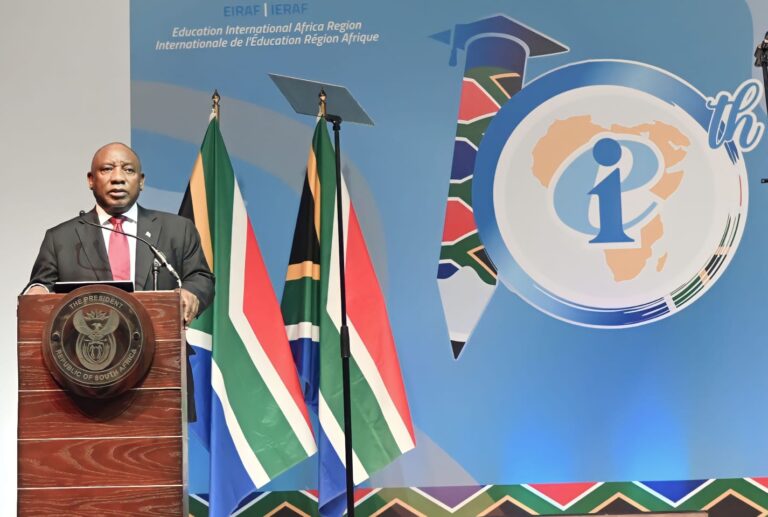
Ramaphosa was addressing the 10th Education International African regional conference at the Sandton Convention Center on Tuesday where he spoke about the devastating impact the pandemic had on South Africa, saying as we navigated the turbulent waters, the world was confronted with political upheavals and conflicts.

“We saw how rural communities and students with disabilities were disproportionately affected. With schooling disrupted, inequalities in education were exacerbated”. 

Basic Education Deputy Minister Reginah Mhaule. Picture: Eddie Mtsweni

Ramaphosa added that Covid-19 and the lockdowns which resulted in schools, businesses and other public enterprises being forced to shut down,  further strained social fabric, affecting the livelihoods of countless individuals and denying many children their fundamental right to education. 

On the other hand, the pandemic hastened digital transformation and altered patterns of work and education. 

“It forced us to confront and appreciate the essential nature of health care, revealing both the robustness and fragility of our societies in the face of hardship”. 

Ramaphosa also added that the education system needs to be decolonised as education has become increasingly important in the world.  

“The discussions at this conference, focusing on tackling racism, decolonising education and promoting democracy, human rights and trade union rights, could not be more timely”‘. 

“The project of decolonising education in Africa is not just a matter of academic interest. It is a pressing need,” said Ramaphosa. 

Ramaphosa told delegates that they need to challenge colonial theories and practices to build resilient education systems that are centered on African perspectives and experiences. 

“This requires a shift away from a Eurocentric worldview to embrace a more diverse and inclusive perspective. We must acknowledge and value the knowledge systems of all peoples and integrate them into our curricula and knowledge selection processes ” said Ramaphosa. The responsibility to nurture and defend the right to education extends to all parts of society”.

INSIDE EDUCATION

Watch: Tackling the state of security in Gauteng schools

Reporter Johnathan Paoli and Multimedia editor Kgalalelo Setlhare

The Matthew Goniwe School of Leadership and Governance has partnered with the Gauteng department of education in a campaign to address learner suicides in the province’s schools.

On the 11th of November, the Gauteng department of education held a School Safety Indaba in Ekurhuleni, as part of its Quality Learning and Teaching Campaign also known as the QLTC.

The QLTC was launched in 2008 to promote the treatment of education as a societal issue, which is subject to environmental, legislative and cultural influences.

This year, as part of its social support focus, the campaign examined the safety of learners at Gauteng schools following alarming statistics on learner and teacher deaths, particularly those that were by suicide.

Speaking at the School Safety Indaba, Gauteng education MEC Matome Chiloane addressed the safety status of the province’s schools, highlighting the interventions that had been implemented at schools across Gauteng.

Gauteng education MEC Matome Chiloane. Pictures: Eddie Mtsweni

As part of its various measures to address the prevalence of learner deaths, the department has partnered up with various organisations such as:

  • – the Matthew Goniwe School of Leadership & Governance,
  • – the South African Depression and Anxiety group and
  • the National Association of Child and Youth Care Workers in order to address the psychological challenges affecting learners and teachers.

CEO of the Matthew Goniwe School of Leadership and Governance Sibusiso Mahlangu highlighted the findings of an environmental report on the state of school safety, which found fundamental deficiencies in capacity building, community-based advocacy as well as infrastructural upgrades to monitor schools.

As a solution, MGSLG in collaboration with the Gauteng department of education has designed a three-year programme to capacitate schools and promote safety in order to create centres of excellence with strong community links, quality learning and teaching, and effective management. In so doing, MGSLG aims to help combat the root causes of crime and violence and advance social cohesion.

The School Safety Indaba is part of the Safe Schools Campaign, a commitment under the Operation Kgutla Molao – Restore Order Campaig. Pictures: Eddie Mtsweni

The education department has already started with other safety measures such as the placement of an additional 120 social workers to assist with learner risk assessments.

INSIDE EDUCATION

Phakeng says report on governance lapses at UCT is ‘gossip’ while council draws roadmap to enforce code of conduct

Edwin Naidu

While former University of Cape Town (UCT) Vice-Chancellor Professor Mamokgethi Phakeng has dismissed the UCT report into governance lapses during her tenure as “gossip”, the Chair of Council, Norman Arendse says the university has agreed on a roadmap to fix past governance failures.

The University of Cape Town (UCT) Council met on 11 November 2023 to discuss the implementation plan of the recommendations made by the report of the independent panel of investigation on governance matters at UCT during the period 2018-2022.

At the meeting, Arendse said Council reaffirmed its commitment to remedying past governance failures and strengthening current structures by complying with UCT’s regulations and policies and enforcing the Council code of conduct.

This includes ensuring the delineation of the oversight governance role of Council from the executive management function together with matters that fall within the purview of the Senate.

Student governance via the Student Representative Council (SRC) and the role of the Institutional Forum (IF) remain important arms of institutional governance.

However, while the university is grappling with her chequered career at the UCT, Phakeng has received an international award for her contribution as a leader in Information and Technology Communications.

She also took to social media to let her former employers know that she will respond to every single “gossip” contained in the report.

In a statement, Arendse said a Council sub-committee will establish a framework to strengthen the university’s governance. This will include induction processes for Council members, reviews of Council performance, tightening the terms of reference for key committees of Council, alignment of the functions to execute Council decisions through the management systems and without any undue impediments that may undermine good governance.

The governance role of key committees of Council, like the Remuneration Committee of Council and the University Human Resources Committee, as well as the operational function of key university departments, will be included in this process.

Council took further resolutions:

(1) to report wrongdoing by individuals to external professional bodies;

(2) to initiate disciplinary procedures in instances where university jurisdiction applies;

(3) to reassign the executive reporting line for Human Resources to the Vice-Chancellor;

(4) to recall the current chair of the University Human Resources Committee from that role and from all other Council committees to which Council had made this appointment;

(5) to offer a written apology to be posted on the UCT website to those who had been wronged as referenced in the report of the panel, and so too in the case of the 37 anonymous complainants referred to in the Ombud Report referenced in the report of the panel.

“We believe that this revised focus on governance will set the right tone for a future marked by accountability and transparency. The measures agreed to in the roadmap and framework will live beyond the term of the current Council and go a long way in ensuring that the failures as identified in the report of the panel do not happen again.

“The council is determined to ensure UCT moves forward and in doing so restore the university community and the public’s trust and confidence in us as a leading institution of higher learning,” Arendse said.

INSIDE EDUCATION

Ramaphosa to open the 10th African Regional Education International Conference in Joburg

Lerato Mbhiza

President Cyril Ramaphosa will on Tuesday address the opening of the Education International 10th Africa Regional (EIRAF) Conference in Sandton, Johannesburg – a global teacher and education workers labour federation with more than 32 million members.

Education International affiliates in South Africa are the South African Democratic Teachers’ Union, the National Professional Teachers’ Organisation of South Africa, the National Teachers’ Union, the Professional Educators Union and the Suid-Afrikaanse Onderwysersunie.

Hosted by South African Education International member organisations, this week’s conference is themed “Standing Together for Resilient Education Systems in Times of Crisis.”

The conference started on Sunday, 19 November and ends on Thursday, 23 November 2023.

In line with the principle of rotation, the Regional Conference is being held in Zone 6 (Southern Africa) with sub-themes: “Guaranteeing Quality Public Education for All During and Beyond Crises” as well as “Rebuilding our Profession and our Education Systems”

Spokesperson for the Presidency, Vincent Magwenya said the conference seeks to formulate strategies for equitable, inclusive, and high-quality public education; addressing challenges such as the COVID-19 pandemic, Ebola, HIV/AIDS, conflict, and climate change.

“Taking place every four years, EIRAF serves as a platform for reports, policy adoption, and future program approval in accordance with its Constitution. It offers member organisations a vital opportunity for substantive discussions on trade unions, education, the future of education, and other critical regional issues” said Magwenya.

Conference delegates include representatives from global unions and partner organisations.

Some of the discussion during the conference will focus on crucial topics such as making Early Childhood Education for all a reality in Africa, creating safe and healthy schools and education institutions, evidence-based social and policy dialogue, and defending and promoting academic freedom and professional autonomy in Africa.

INSIDE EDUCATION

Harambee accelerates youth unemployment by aggregating jobs

Staff Reporter

Out of one million youth entering the labour market annually, 2/3rds will end up not in education, employment, or training (NEETs) within a year, according to the Steel and Engineering Industries Federation of South Africa (SEIFSA).

South Africa has a slow growth economy that results in young people being locked out of the labour market due to various barriers and although there is high investment in education and training programs, we see limited transition of these youth into earning opportunities.

Citing the example of youth employment accelerator Harambee, which uses innovative technology to speed up youth employment by unlocking and aggregating jobs to make them visible and accessible to youth and providing tools for young people to make themselves more employable. This zero-rated platform is called SA Youth and is part of the Presidential Youth Employment Intervention.

Harambee breaks barriers for youth through research, intelligence, and advocacy: data and insights gathered from the over 3.5 million young people we have supported through our platform give us the insights we need to reduce the barriers that exclude young people from the labour market.

This platform will give business leaders knowledge of how to reduce existing barriers in youth unemployment. It will also give them a platform to source young talent and be able to give employment to the youth to address the socio – economic issue which is unemployment.

INSIDE EDUCATION