Home Blog Page 186

UKZN Hosts ‘Inspiring Impact Challenge’ 

Inside Education Reporter

THE University of KwaZulu-Natal (UKZN) is gearing up for the Finals of the 2023 UKZN Inspiring Impact Challenge – an annual competition showcasing initiatives by UKZN students, staff, and alumni. Participants in the competition are social entrepreneurs tackling some of society’s biggest challenges in alignment with the United Nations Sustainable Development Goals. 

Now in its third year, the competition forms part of the UKZN Inspiring Impact Campaign. This year’s instalment kicked off with a call for submissions in August. Following a rigorous screening and shortlisting, 30 out of around 220 entrants were selected. 

The 30 entrants are undergoing a 3-week Accelerator Training programme sponsored and led by enterprise development agency and implementing partner Kulisha Consulting. 

The training prepares competitors for the main event and focuses on leadership, design thinking, business modelling, sustainability, and pitch readiness. 

The competitors, divided into four categories – Undergraduate Students, Post-graduate Students, Staff, and Alumni – are experts in various disciplines, including mathematics, agriculture, business management and engineering. The focus of the projects to be showcased ranges from youth empowerment and career guidance to STEM education and Agribusiness. 

Managing Director of Kulisha Consulting, Kwazini Zulu, says this year’s competition has gained more entries from women as well as more international attention, “There are several local projects with international reach as well as entries from alumni who are based in a few Southern African Development Community (SADC) countries. We are impressed with the calibre of entrants and excited to see how they’ll perform as we enter the next phase of this competition.”

The finalists, to be shortlisted on the 24th of October, will go on to compete in the main event on the 30th of October, where they will deliver elevator pitch presentations on each of their social enterprises to a panel of judges made up of experts from the Banking industry, Academia and Small and Medium-sized Enterprises. 

INSIDE EDUCATION

Ministry urges District Directors Forum to “push harder” for success in matric exams 

Inside Education Correspondent

THE Ministry of Basic Education met with district directors and national and provincial officials at the Premier Hotel OR Tambo in Johannesburg on 6 October 2023, to discuss shortcomings and the latest developments in the Basic Education Sector. 

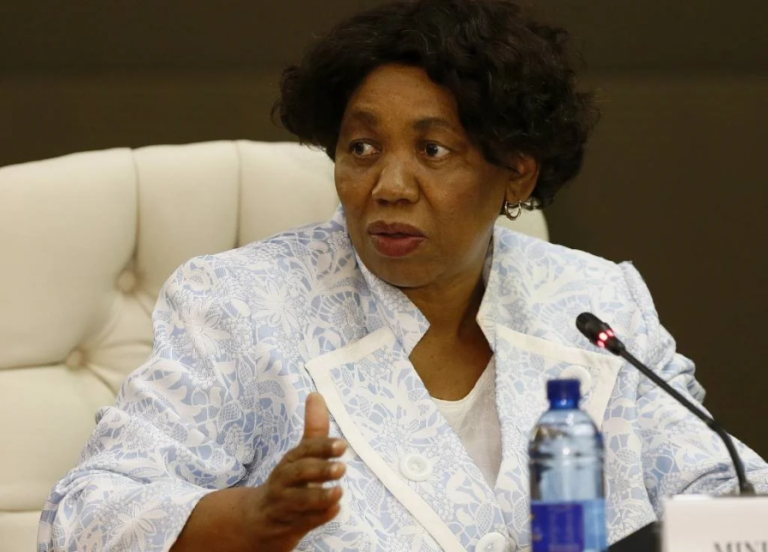
The event was organised as part of the District Directors Forum hosted by Minister of Basic Education Angie Motshekga since she took office in 2009. The Ministry has urged education districts across all nine provinces to push harder to prepare for the 2023 National Senior Certificate (NSC) examination from October to November 2023. 

Before 2009, the overall performance of the majority of education districts was always between an average of 60% and 65%. Significantly, the Forum has allowed the education districts to share best practices. As a result, provinces have, over the years, shown a significant improvement in the NSC examination results.

Motshekga indicated that education districts are achieving excellent results due to the commitment and dedication of teachers in schools.

The meeting focused on taking the sector forward in the implementation of identified flagship programmes, as well as critical areas: The critical role of districts in the proposed Early Childhood Development (ECD) Service Delivery Model Using the Integrated District Improvement Programme (IDIP) to strengthen districts to drive sustainable education change; and The National Strategy on Improving Reading Literacy.  

INSIDE EDUCATION

Report from the independent panel of investigation given to the UCT Council 

Staff Reporter

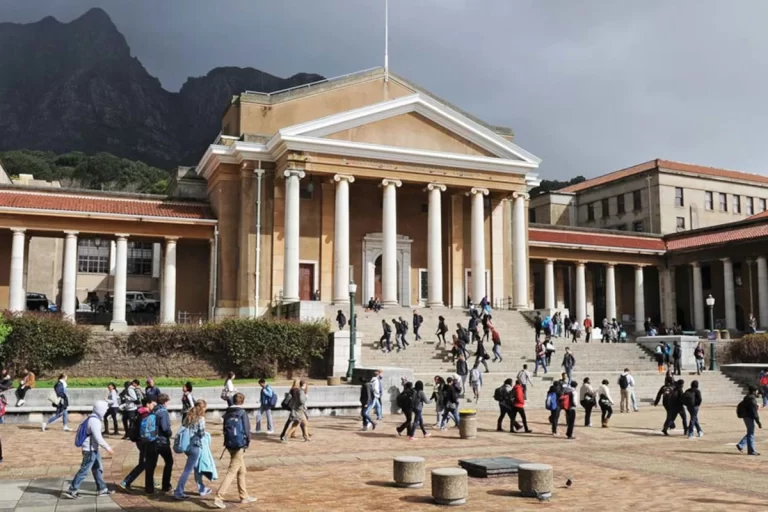
The University of Cape Town (UCT) Chair of Council, Norman Arendse (SC), has received the report from the independent panel of investigation into matters about governance at UCT. 

The report was issued and considered by the Council at its meeting on Saturday, 14 October 2023. This follows the Council’s decision in October 2022 to establish an independent panel, whose work commenced in January 2023.

Council extends its appreciation to the panel for the detailed and important work it has done and is confident that the report is a crucial step in assisting the Council to strengthen the university’s governance. The content of the report and recommendations are now under consideration by the Council and will be discussed at a further meeting scheduled shortly.

“Until the content and recommendations of the report have been fully considered, Council has resolved that the report will remain confidential. It is recognised that many of the university’s stakeholders expect to be more fully informed, and Council therefore undertakes to take the necessary steps to provide further details as soon as appropriate,” said Arendse. 

INSIDE EDUCATION

It’s all systems go for the 2023 Matric Exams – Umalusi

Lerato Mbhiza

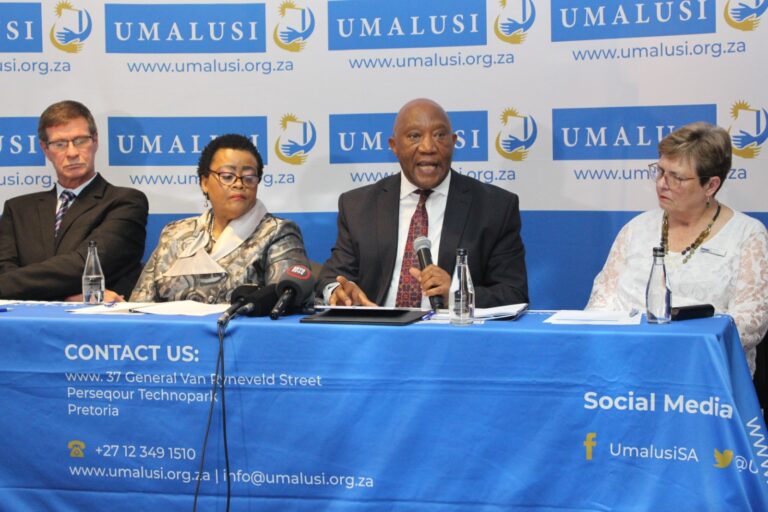
Umalusi, the council that sets and monitors standards for general and further education in South Africa has given the clear for the more than 920 000 learners to write their Matric Exams this year.

The class of 2023 will begin writing the National Senior Certificate (NSC) exams on Monday, 30 October and in a briefing last week Umalusi said the candidates would write at almost 6 340 public schools and more than 550 private centres.

Umalusi CEO Dr MS Rakometsi said measures have been put in place to mitigate the impact of load shedding during the exams and said Umalusi was satisfied with arrangements the Department of Basic Education had made to procure generators and engage with Eskom.

While the quality assurer was satisfied with the state of readiness, however, Rakometsi said he was concerned that exams could be negatively affected by various factors, including load shedding, cheating and community protests.

On load shedding, he said Umalusi had advised all assessment bodies to make alternative arrangements for the supply of power during the writing of exams.

“Umalusi would like to issue a stern warning to all learners and teachers to refrain from all forms of cheating, including group copying, where teachers are sometimes implicated.

“At the same time, Umalusi discourages communities from using the national exams as leverage for their protest actions,” he said.

Rakometsi also raised concerns about unaccredited institutions and the selling of fake certificates.

“Umalusi is satisfied with the work done to curb unaccredited institutions from registering candidates for the national exams.

“The meeting that Umalusi convened on 18 August 2023 with the senior officials from the national and provincial education departments, the Independent Examinations Board and the South African Comprehensive Assessment Institute agreed on measures to be taken to prevent the operation of illegal independent schools and ensure that examinations are only administered at independent schools accredited by Umalusi.”

Umalusi also urged parents to ensure that centres where candidates are registered to write their matric exams are accredited while warning against schools and colleges that had scammed unsuspecting candidates into registering with them when they were not accredited to carry out the exams.

“Umalusi and senior officials from different stakeholders agreed to prevent the operation of illegal schools and ensure that the schools are registered with the body as exam centres,” Ramoketsi said.

INSIDE EDUCATION

Gauteng MEC launches the Raymond Mhlaba School of Specialisation with a focus on mining  

Lerato Mbhiza

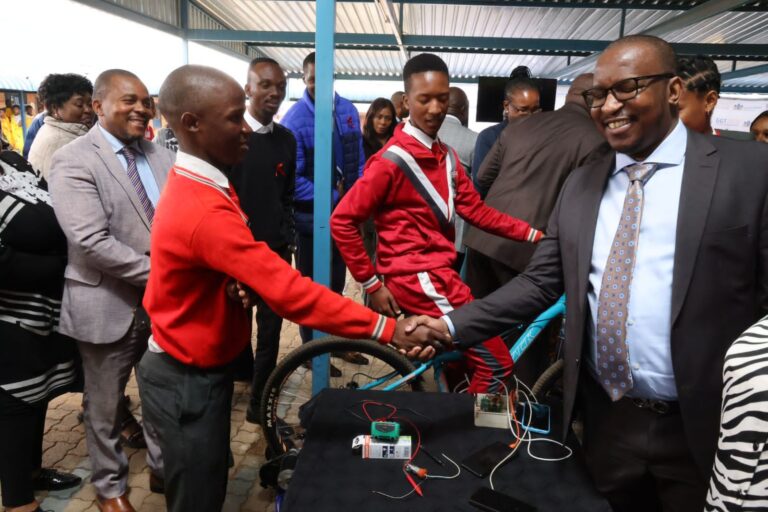
Gauteng Education MEC Matome Chiloane officially launched Raymond Mhlaba Maths, Science and ICT School of Specialisation with a focus on Mining on Thursday, at Tshepisong, Roodepoort, Mogale City. 

This is the 29th specialisation school that the MEC has launched since he took office in October 2022.

Chiloane  said  that Raymond Mhlaba Secondary School now stands as a beacon of excellence in the realm of Mathematics, Science, and Information and Communication Technology (ICT), specifically tailored to cater to the skills of the mining industry.

Tshepisong, a township within the City of Johannesburg, derives its name from the hopeful prospect of a better life, attracting residents from nearby areas in pursuit of improved living conditions.

The school is named after Raymond Mhlaba, a prominent anti-apartheid activist, Communist, leader of the ANC, and the inaugural Premier of the Eastern Cape. Mhlaba, who lived in Gqeberha, died in February 2005.

Throughout its history, Principal Angie Mokiti has steadfastly led the school with unwavering commitment.

Chiloane said the strategic choice of Raymond Mhlaba as a Maths, Science & ICT School of Specialisation focusing on mining is underpinned by the significant presence of mining operations in the vicinity. 

Notably, Harmony, located approximately 4.3 kilometres from the school, and Sibanye, are key players in the mining sector in this area.

Moreover, mining equipment enterprises are established within the community and many parents in the area are employed in these mining companies.

However, “the overarching objective is aimed at providing learners with an expanded perspective on the mining industry. This encompasses recognising mining as a multifaceted industry requiring a diverse range of professionals”, he said.

This includes not only miners but also engineers and technicians. The school aims to empower its learners to explore the myriad of career opportunities within the mining sector. It is crucial that they comprehend the broader scope of this field and the vital role they can play in shaping its future, Chiloane said.

“As we continue our journey, we are dedicated to preparing our learners for the future, instilling confidence, and expanding their horizons. Raymond Mhlaba marks the 29th School of Specialisation to be inaugurated, exemplifying the progressive strides of the Gauteng Department of Education. 

“We are moving forward with a clear vision of reimagining the future for our learners, where they can showcase their talents and access top-quality education right in their community,” said Chiloane.

INSIDE EDUCATION 

Operation Kgutla Molao on track and progressing, says Chiloane

Johnathan Paoli

Gauteng Education MEC Matome Chiloane said he remains confident that the culture of violence within the province’s schools will come to an end and that Operation Kgutla Molao will bring law and order back into the classrooms.

Chiloane met with principals, SGB members and other educational stakeholders at Sizwe High school in Elandsfontein on Tuesday,  to reaffirm the ongoing implementation and interventions of Operation Kgutla Molao.

Sizwe High School is one of 75 prioritised schools within a list of 245 Gauteng schools identified as high-risk.

Chiloane said factors being used by the department identifying high-risk schools include criminal acts against learners and educators, vandalised school infrastructure; drug and substance abuse; and undesirable behaviour such as bullying, racism, and sexual harassment.

“The unwavering commitment of the department and partnering stakeholders towards the safety and well-being of learners in Gauteng schools is evident through the rigorous implementation of Operation Kgutla Molao,” Chiloane said.

In addition, the MEC said that by addressing various safety concerns and collaborating with law enforcement, government agencies, communities and organisations, the department is actively working to create a safer and more secure learning environment for all.

“The initiatives outlined here not only prioritise the safety of learners and staff but also emphasise the importance of comprehensive training and awareness programs,” the MEC said.

Chiloane concluded by saying that the department remains steadfast in its dedication to ensuring that schools in the province become beacons of safety, learning and growth for all students.

However, it seems Chiloane might be painting too bright a picture, following criticisms from both within the meeting as well as from detractors outside.

One of the issues raised in the Question & Answer session following the MEC’s statement, was the concern over the increasing collapse and non-functioning of the “Adopt a Cop” program.

The initiative to revive school safety forums and to encourage pupils to report crime which started in 2013 has seen decreased cooperation since; with some principals claiming that the police officers assigned to their schools are never being replaced after resignation or retrenchment.

In addition, a principal from Boksburg, raised the issue of the departmental disciplinary committee’s slow response and backlog when it comes to effectively treating, punishing and rehabilitating learners who have been found guilty of misconduct.

Furthermore, this comes on the heels of the recent failure to keep up with rental payments on mobile classrooms at Nancefield Primary School, with the detrimental effect of interrupting learning and teaching.

DA Gauteng Spokesperson for Education Sergio Dos Santos said that the GDE and the department of infrastructure development owed the service provider R2 million, with only R200 000 having been paid so far.

Dos Santos further criticised the department’s allocation of two security guards (in line with the department’s allocation of ‘two per day and two per night’ security presence), saying they were not enough bodies to monitor the whole school, including the construction site.

Despite the ongoing disagreement over progress, Chiloane said that he expects the operation to facilitate the comprehensive interventions outlined within the Gauteng School Safety Action Plan, and effectively reduce incidents of violence, bullying, suicide, substance abuse, and sexual harassment at schools within the country.

INSIDE EDUCATION

Tshwane Council Transfers Land for Tshwane North TVET College developments

Johnathan Paoli

The City of Tshwane Council on Monday approved the transfer of key properties to the SANRAL and the Tshwane North TVET College.

MMC for Corporate and Shared Services Kingsley Wakelin said the city is expecting to transfer properties to the Tshwane North TVET College at its Atteridgeville, Mamelodi and Kudube campuses.

Wakelin said the college is set to undertake significant upgrades at its campuses across the city through funding from the Chinese government adding that the city was facilitating a transfer of title deeds, as ownership of the properties was a fundamental requirement for the upgrades to commence.

“I look forward to the next cohort of artisans trained at these campuses to join our local industries and find work opportunities,” Wakelin said.

There are 50 TVET colleges operating across more than 270 campuses around the country in both rural and urban settings, and there are 21 SETAs in South Africa, covering 21 industry sector clusters.

Earlier this year Minister of Higher Education Blade Nzimande said to date the department has has opened up 14 954 TVET placement opportunities to the value of R726 Million and committed to achieve a target of 20 000 placements of TVET graduates work placements as per the President’s commitment at the SONA at the beginning of the year.

Nzimande also praised the drive for infrastructural development, saying the department has invested over R3.701 Billion for the maintenance and repairs of TVET Colleges’ infrastructure through the Capital Infrastructure and Efficiency Grant (CIEG) since the grant inception during the 2018/19 financial year.

Areas of maintenance included renovations of existing student accommodation, new roofing, painting, plumbing, glazing, electrical works, water as well as sewer reticulation.

In addition, the department has also completed the construction of 9 TVET college campuses at a cost of R2.6 billion.

In addition, the city has also approved the transfer of over 9 hectares to the roads agency to enable Phase 1 of the Moloto road corridor upgrades which is expected to cover Moepel street overpass across Sefako Makgatho drive including roads and interchanges in Eersterust.

Wakelin said the project will be facilitated through a council-approved memorandum of understanding, which has been signed by both parties as a commitment to see the Moloto road upgrades completed and to facilitate working relations between the two organisations.

“With this progressive step, SANRAL will now finalise the next key phases of the Moloto road corridor project, which is a crucial development for local communities and commuters who use this road daily,” Wakelin said.

Wakelin said that the city is committed to unlocking local economic development through education and training opportunities.

INSIDE EDUCATION

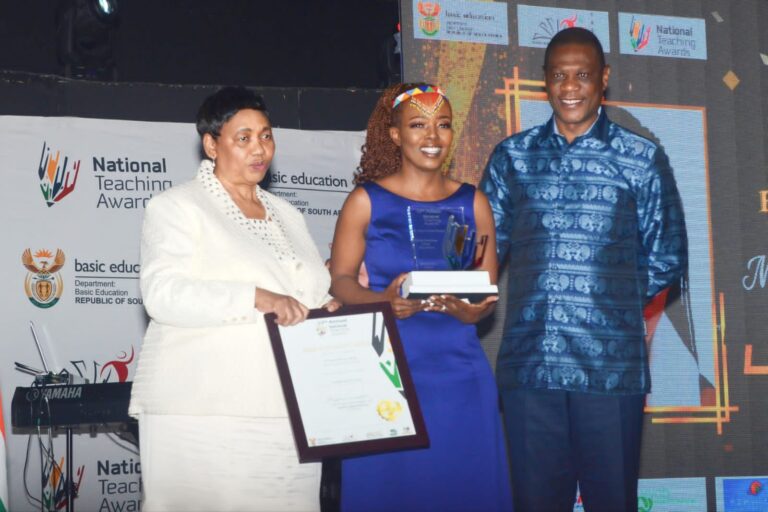
KZN’s Gugu Qwabe scoops the National Best Teacher Award 

Phuti Mosomane

Deputy President Paul Mashatile on Thursday paid tribute to teachers at the 23rd National Teaching Awards (NTAs) held at the Heartfelt Arena in Tshwane when he said the role of the teaching profession will remain unmatched.

The National Best Teacher Award went to KwaZulu-Natal English teacher Gugu Qwabe from the Mandla Mthethwa School of Excellence, Umkhanyakude District.

Mashatile together with the Minister of Basic Education Angie Motshekga, officiated at the teacher awards held under the theme ‘Transformation of Education Begins with Teachers’ where educators representing all nine provinces were receiving awards in several categories.

The Deputy President applauded the work done by the Department of Basic Education (DBE) in introducing the Three Stream Model, saying that it will provide vast learning opportunities within the school system. 

The DBE’s mantra is that Three Stream Model prepares learners for the future, by providing them with diverse and essential skills aligned with what our nation requires to rebuild and surge forward. 

Mashatile commended Motshekga, Basic Education Deputy Minister Dr Reginah Mhaule and Director- General Mathanzima Mweli for steering the sector in the right direction, amidst numerous challenges.

 “Your commitment and dedication to transforming the sector is commendable. I congratulate all the educators who are being honoured today; your dedication and commitment to the development of our country and its youth does not go unnoticed as we, in the presence of your family and friends, recognise your efforts, and hope that you will not tire in doing good.

“I want every teacher to know that the nation sees you, values you and cherishes the difference you make in the lives of your learners and to our communities. The task of a teacher is diverse, not only are you imparting knowledge, but you are also shaping characters, instilling values and crafting the future leaders of our country. Educators play a critical role in building the foundations upon which society exists.

“It is a well-known fact that every successful person had a teacher who once had faith in them and helped them through their formative years. In the 29 years of concerted efforts to transform the education system, we are proud to say that many products of our education system have gone on to make a difference in their communities, government and various other sectors”.

As part of the NTAs, cash prizes, international study tours and digital devices were awarded to the top performing teachers for excellence in Special Needs leadership and teaching; excellence in teaching Mathematics, Physical Sciences, Special Needs, Natural Sciences, Grade R and the use of technology in enhancing teaching and learning. 

The teachers and school principals were also saluted for their excellent teaching and leadership skills in primary and secondary schools across all nine provinces as part of the World Teachers’ Day Celebration, commemorated annually on 5 October 2023. 

The annual NTAs have been facilitated by the Education Sector in honour of teacher excellence in South Africa since 2000.

In her speech Motshekga said teachers should be celebrated for their undying commitment to the venerable cause of basic education. 

“This year’s theme expresses the core of the endeavours undertaken by our award recipients. Beyond being disseminators of knowledge, they have been the torchbearers of hope, inspiration and the guiding principles that shape life’s journey. 

“To each of our honoured recipients, I offer my deepest congratulations. Your innovative approaches, boundless energy, and undying dedication have raised the bar of excellence. The futures you have helped shape and the flames of curiosity that you have kindled will light up the world for years to come”.

INSIDE EDUCATION 

Sex education classes often don’t include LGBTQ+ students. New restrictions could make it worse

0

BY CHEYANNE MUMPHREY

PHOENIX (AP) — In fifth grade, Stella Gage’s class watched a video about puberty. In ninth grade, a few sessions of her health class were dedicated to the risks of sexual behaviors.

That was the extent of her sex education in school. At no point was there any content that felt especially relevant to her identity as a queer teenager. To fill the gaps, she turned mostly to social media.

“My parents were mostly absent, my peers were not mature enough, and I didn’t have anyone else to turn to,” said Gage, who is now a sophomore at Wichita State University in Kansas.

Many LGBTQ+ students say they have not felt represented in sex education classes. To learn about their identities and how to build healthy, safe relationships, they often have had to look elsewhere.

As lawmakers in some states limit what can be taught about sex and gender, it will be that much more difficult for those students to come by inclusive material in classrooms.

New laws targeting LGBTQ+ people have been proliferating in GOP-led states. Some elected officials, including candidates for the Republican presidential nomination, have been pushing to remove LGBTQ+ content from classrooms.

Sex education curriculum varies widely. Some groups including Planned Parenthood have called for sex education to be inclusive of LGBTQ+ students, but some states outright forbid such an approach.

The penal code in Texas, for one, still says curriculum developed by the Department of State Health Services must say homosexuality is not acceptable and is a criminal offense, even though such language was deemed unconstitutional by the U.S. Supreme Court in 2003. Attempts in the Legislature to remove that line from state law have failed.

In practice, LGBTQ+ students say they have looked elsewhere for sex education. Some described watching their peers turn to pornography, and others said they watched videos on YouTube about how to tell if someone is gay and how to flirt with people of the same sex.

Gage grew up in Oklahoma before her military family relocated and she spent her eighth and ninth grade years in a U.S. Department of Defense school in the Netherlands. She then finished high school in Kansas, where she began to recognize she wasn’t attracted only to men.

Not seeing a safe outlet at her high school to explore who she was, she went online to research for herself the history of the LGBTQ+ community in the U.S.

“I started to realize there is a huge portion of our history that is conveniently left out. But that history is important to queer youth,” she said. She never really questioned gender or social norms, she said, until she started to learn about discrimination others have faced throughout history. 

“We have such rigid boxes that we expect people to fit into. If you didn’t fit, you were called slurs. I wasn’t really aware that if you strayed from those norms that people would feel you were attacking their way of life.”

Still, the internet contains vast amounts of false information. Some advocates worry students turning to the internet to fill gaps in sex education will struggle to find their way through the morass.

“Any time you have a political controversy, there is a greater potential for a lot more disinformation to be generated,” said Peter Adams, senior vice president of research and design at the News Literacy Project.

When schools address sexuality, it is often in the context of disease prevention or anti-bullying programs. School can be a difficult place if your identity is seen only in such negative ways, said Tim’m West, a former teacher and now executive director of the LGBTQ Institute at the National Center for Civil and Human Rights in Atlanta. West can relate: He grew up in Arkansas as a queer Black kid and preacher’s son and was constantly made to feel ashamed.

“What if you are a boy in high school that knows you like boys, and you sit in a divided room and listen to a teacher explain how not to have sex with girls. You would be sitting there rolling your eyes, because that is not your issue. But you also haven’t been given any instructions on how to protect yourself should you experiment with a person of the same gender,” West said.

Students need more applicable sex education regardless of their gender identity or expression, said Gage, who volunteers with a youth justice advocacy group and is also president of the Planned Parenthood Generation Action Chapter at Wichita State.

“We all have to make large decisions for ourselves about our sexuality and reproductive health. Those decisions should be grounded in knowledge,” she said.

Growing up in Washington, D.C., Ashton Gerber had more sex education classes than most. But Gerber, who is transgender, said the lessons weren’t all that applicable to their experience.

“Even if you can have sex education every day of the year, there is always going to be something that gets left out,” said Gerber, who is a student at Tufts University in Massachusetts. Gerber said educators should point students to trusted online resources so they can do their own research.

Not knowing who you are is a horrible feeling many LGBTQ+ students wrestle with, Gage said. But equally horrible is not feeling accepted once you do understand your sexual identity.

“Had I known then what I know now, I would have felt safe and confident coming out sooner,” Gage said. “No one should feel like they don’t understand themselves because we are forced to conformity in a world that doesn’t care. We can all be inclusive.”

AP

Parliamentary Committee on Higher Education Dissatisfied with Nzimande, NSFAS and Service Providers’ report back

Johnathan Paoli

THE National Assembly’s Standing Committee on Higher Education expressed its disappointment at the lack of comprehensive information provided by NSFAS’s four direct payment service providers in addressing the non-payment of students and other problems associated with investigations into the financial aid scheme.

The meeting with NSFAS and the four direct payment service providers on Wednesday 4 October was to establish steps to deal with NSFAS’s information and communication technologies challenges, gather further information on the accreditation and cost associated with accommodation service providers, the efficiency, capacity, fee structure and non-payment of allowances by direct payment service providers, and to establish the progress of the Werksman investigation regarding alleged tender irregularities committed by NSFAS CEO Andile Nongogo, who is on leave of absence while the probe continues.

Last month, NSFAS briefed Parliament on its new direct payment system and other issues and faced sharp criticism from the committee for its continued failures.

NSFAS was given a two-week deadline to present a plan to fix itself, but  NSFAS and Higher Education Minister Blade Nzimande cancelled their appearance at the next meeting.

NSFAS chief financial officer and acting CEO Masile Ramorwesi said that, following the last portfolio committee meeting, the executive board met with the student leadership to discuss how challenges with direct payments could be addressed and devised a seven-step approach, of which the first two steps had already been completed.

Ramorwesi said that two teams will report directly to him about students’ challenges, after having visited 10 universities and 29 TVET colleges over 10 days to observe challenges on the ground. The teams are expected to report to the acting CEO in writing, after which Ramorwesi will draft a response strategy.

Thami Mazibuko, project manager at Coinvest, said the company is responsible for disbursing funds to over 268,000 students at 13 TVET colleges and seven universities and confirmed that all outstanding amounts have been paid.

Saud Ally, the group CEO for eZaga, said the company is responsible for disbursing funds to over 143,000 students at six universities and 11 TVET colleges.

Neal MacIntyre, of Norraco, said the company disbursed funds to over 131,000 students at 13 TVET colleges and seven universities. It has paid out R1.3 billion in the past year.

Ryan Passmore, project executive at Tenet Technology, which is responsible for allocating allowances to 225,000 NSFAS beneficiaries at 13 TVET colleges and six universities, said they had already disbursed R1.4 billion to NSFAS students.

The committee chair, Nompendulo Mkhatshwa of the ANC, said NSFAS and the service providers’ presentations lacked critical information.

“You’re telling us how many students you’re supposed to be disbursing to, how many have been KYC’d (Know Your Customer), and how many have cards, but we want to know how many you have paid each month,” said Mkhatshwa.

The DA’s Karabo Khakhau said there was a lack of clarity on how NSFAS was going to capacitate its call centres and by when.

Tensions were evident during the meeting when EFF committee member Mandla Shikwambana insisted that Nzimande should release a previous report into corruption at NSFAS before he could make a new presentation. 

“The turnaround strategies of NSFAS — where does it come from because it should be guided by the report which is in the hands of the minister and the minister does not want to release that report,” Shikwambana said.

In response, Nzimande told the committee he was not hiding the report into NSFAS investigations.

Mkhatshwa concluded the meeting by saying that most of the committee’s concerns were data-related and gave the service providers seven working days in which to submit the additional information required.

INSIDE EDUCATION