Home Blog Page 187

Curro Esports Gaming a hit with young learners

Inside Education Reporter

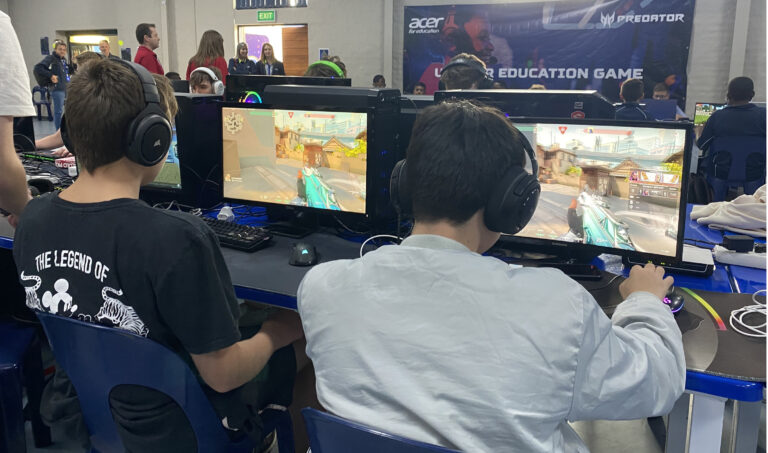
Last week, the gaming world was on the edge of its seats as Curro Esports, a pioneer in providing competitive gaming opportunities for young learners, concluded its highly anticipated Curro Clash National LAN 2023. 

Spanning across two physical venues, Curro Durbanville in Cape Town and Curro Rivonia in Gauteng, as well as the limitless digital frontier, this event brought together the most passionate and skilled gamers from various schools nationwide. 

From Wednesday, 27 September to Saturday, 30 September 2023, the virtual stage hosted 293 players from 32 schools, who battled it out in a thrilling Esports extravaganza supported by 50 dedicated coaches. 

Over the course of three intense days, participants were organised into teams based on age and competed in several gaming titles such as Minecraft Build Battle, Minecraft PVP, Apex Legends, Overwatch 2, and Rocket League. The competition structure was designed to push players to their limits, with Round Robin stages leading to nail-biting knockout rounds.

Adding to the excitement, Curro Esports provided a front-row seat to the action by live-streaming the final matches on Twitch. Fans, families, and Esports enthusiasts from around the country had the opportunity to witness the incredible skills and sportsmanship displayed by these young gaming prodigies.

“The remarkable performance of the Group schools in the Curro Clash National LAN 2023 tournament is a testament to our dedication to providing a holistic education,” says Magdeleen de Kock, Digital Transformation Facilitator: Esports project lead.

“We observed remarkable teamwork, sportsmanship, and a genuine display of talent throughout the event. From thrilling matches to inspiring moments of collaboration, this tournament showcased that Curro Esports is not solely about gaming; it’s about nurturing our learners’ potential and connecting their passion with opportunities in the constantly evolving digital world. We congratulate all the participants for their outstanding efforts.”

The complete list of winners is included below:

TitleSchoolTeam Rank
Minecraft Build Battles Open Cooper College No Circles1st
 Herzlia High School Senior UHS Minecraft League2nd
 Curro Vanderbijlpark The Eagles3rd
Minecraft Build Battles u/14Curro Mossel Bay Mossel Bay Sharks1st
 Curro Durbanville Wolfpack Junior2nd
 Curro Krugersdorp Rhinos3rd
Minecraft PVP u/14Curro Krugersdorp Rhinos1st
 Curro Vanderbijlpark Team_War2nd
 Curro Rivonia Rivonia Raptors3rd
Minecraft PVP OpenPinelands High School 1st
 Cooper CollegeEnder2nd
 Curro Krugersdorp Tshukudu3rd
Rocket League u/14 Curro Durbanville Primary School Wolfpack1st
 Curro Krugersdorp Primary School Rhinos2nd
 Curro Brackenfell Primary School  3rd
Overwatch 2 u/14Curro Krugersdorp High School   1st
 Curro Aurora High School 2nd
 Curro Brackenfell Primary School 3rd
Overwatch 2 OpenThomas More College 1st
 Curro Krugersdorp High School  2nd
 Curro Mossel Bay  3rd
Apex LegendsPinelands High School 

    UKZN VC pays tribute to the struggle hero Prof Jerry Coovadia

    Inside Education Correspondent 

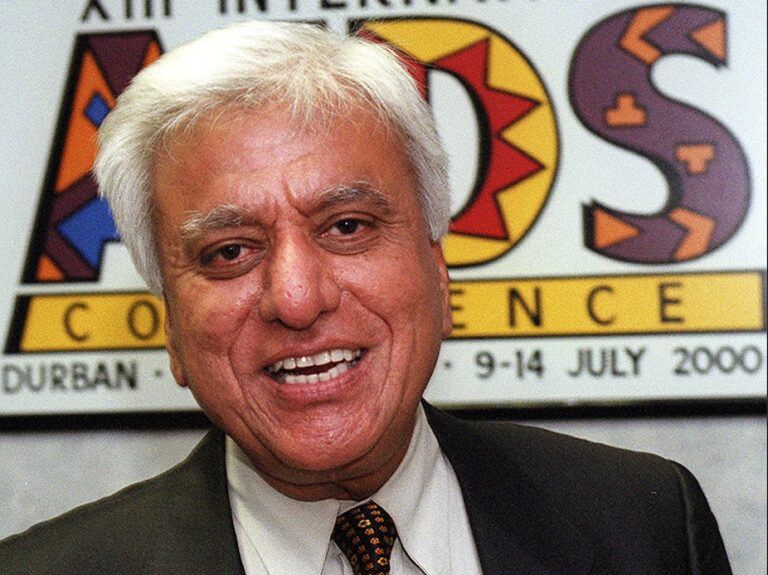
    “It is with great sadness that we received the news of the passing of Professor Hoosen (Jerry) Coovadia,” said Professor Nana Poku, Vice-Chancellor and Principal of the University of KwaZulu-Natal. 

    The internationally acclaimed South African doctor who led the fight against HIV in children passed away on 4 October. 

    “An intellectual giant, he has left an indelible mark on this institution and the many medical students who passed through his tutelage. In fact, the impact of his contribution has been felt for generations.”

    Poku described Professor Coovadia as an exceptional academic, researcher and activist. “He will be remembered for his contributions to global health policies and ground-breaking research in HIV/AIDS transmission from mother to child.

    Not one to balk at speaking truth to power, he is well-known for insisting on scientific integrity and campaigning for the rollout of antiretroviral therapy.”

    He added that the University is grateful for his contribution to academia and mourns the loss of a legend and scientist. “We extend our heartfelt condolences to his family and friends. May his legacy live on through the many lives he has touched.”

    Exotic pollen attacks are on the rise, causing serious allergies

    Inside Education Reporter

    As winter ended and spring entered with sunny pleasantness, thousands of “attackers” sprang into action to plague the part of the population that suffers from allergies and hay fever.

    According to Prof Frank Neumann, subject chair for geology and soil sciences at the North-West University’s (NWU’s) School for Geo- and Spatial Sciences, these assailants have one thing in common: they are mostly alien pollen that should not have been in South Africa in the first place. 

    They come from plants that are often under climatic stress because they are unsuited to this climate, and constantly release high amounts of pollen at short intervals. 

    “These culprits are exotic trees and plants found in South African gardens originating from Europe, Asia and North America in the Northern Hemisphere. They pollinate from August onwards, with fungi joining soon after the first spring rains.”

    These pollen producers are like a who’s who list of popular trees and garden plants, and include the London plane tree, mulberry, birch, cypress and oak. Add grass pollen and spores of fungi to the mix and you have a potent cocktail for allergic discomfort.

    Ragweed, a North American weed also known as Ambrosia, is adding its highly allergenic pollen to the mix, especially in the area in Potchefstroom where Prof Neumann and his students are measuring pollen counts for research purposes, as well as contributing data to the Real Pollen Count website*.

    He says the ragweed counts reach moderate levels in Potchefstroom and are much higher than in the rest of South Africa so far. “Ragweed pollen is highly allergenic and there seem to be high occurrences of the pollen close to our sampling site. This was supported by a local general practitioner and allergologist, Dr Jurgen Staats, who found indications of allergenicity here in the local population during skin prick tests.”

    Prof Neumann is a palynologist** who works in aerobiology and says their work is all about measuring allergy-causing pollen spores in the atmosphere.


    Identifying and measuring airborne pollen and fungal spores (aerospora) is a pioneering aerobiological project in the North West province. It was initiated on 15 November 2022. Dr Dorra Gharbi, an aerobiologist, started measuring the atmosphere’s aerospora (pollen and fungal spores) as part of the project.

    A state-of-the-art seven-day volumetric spore trap has been installed on the roof of one of the NWU’s buildings to determine exactly which kinds of allergenic pollen are prevalent on certain days and in what quantities. 

    The project is still in its infancy and part of the nationwide South African Pollen Network (SAPNET). Its principal investigators are Prof Jonny Peter and Dr Dilys Berman from the Lung Institute Allergy and Immunology Clinic at the University of Cape Town. Prof Neumann says once they have a dataset for a full year, they will be able to identify allergenic weeds, trees and trends more accurately.

    The team members include Nikiwe Ndlovu, the technician responsible for the weekly collection of the samples from the spore trap at the NWU.

    “The drum of the spore trap rotates two millimetres every hour of the day so that the trap can continuously collect pollen, fungal material and dust spores from the air,” she says. “We collect these samples every Monday and process the data daily. We then examine the microscopic slides through a light microscope and count how much pollen we find in each day’s sample from specific trees and herbs.”

    TEACHER’S CORNER: Teaching crisis looms as the threat of AI increases

    Inside Education Reporter

    As South Africa grapples with a growing teacher shortage and the ever-increasing threat of artificial intelligence (AI) in education, the STADIO School of Education reiterates the enduring significance of teaching as more than just a career but a vital element in a child’s educational journey. 

    Even before the advent of AI, South Africa’s teaching deficit made for sorry reading. Only about 15,000 new teachers graduate in the country each year, far below the 25,000 needed to fill essential positions. 

    This looming crisis already threatens the quality of education, but it is further exacerbated by the fact that more than half of current teachers will retire by 2030. If we don’t attract and nurture the next generation of educators now, South Africa risks having teacherless classrooms in the next few years. 

    In an era where automation and AI are rendering many professions obsolete, the role of teachers remains irreplaceable. Head of STADIO School of Education, Dr. Leanne Browning emphasises, 

    “Teaching is not just a career; it’s a calling. Teachers are the architects of our future, imparting knowledge, nurturing creativity, and providing the emotional support that technology can never replicate. The shortage of teachers in South Africa is a constant challenge, but it also presents an opportunity for those students who are beckoned to this noble profession to make a profound impact.”

    Keen to dispel this misconstrued belief, Browning adds that, whilst AI can revolutionise education, it will never completely eradicate the need for human educators. 

    “Just as we turn to doctors despite accessing medical information online, students require the physical guidance and personal touch that only teachers can provide.”

    Browning says AI does have its benefits, offering the potential to enhance education by making it more efficient and reducing teachers’ workloads. This frees teachers to focus on what truly matters – inspiring and nurturing young minds.

    “In the South African landscape, AI can be used to help students with different learning styles and disabilities to access the curriculum and participate in the classroom. It has also been found that AI has the potential to decrease the time it takes to prepare lessons by 80%, giving teachers more of an opportunity to assist students with learning barriers and to deliver better lessons.” 

    STADIO School of Education is at the forefront of preparing future educators to meet these growing challenges head-on. Florance Vermeulen, a STADIO alumni, showcased the high standard of educators produced by their programs. His innovative teaching approach has gained recognition, making him an ideal representation of the teaching profession.

    Vermeulen’s journey began with STADIO, where he pursued an Advance Diploma in Professional Acting for Camera, followed by a BCom Degree in Management Marketing and a Postgraduate Certificate in Education (PGCE) through STADIO’s innovative distance learning model. 

    What sets him apart is his innovative approach to teaching. He has gained a substantial social media following by incorporating engaging dance routines into his lessons, a method he calls “business studies with a beat.” His commitment to bridging the gap between content-rich subjects and barriers to learning has made him a shining inspiration to his students and is a great reminder that there is no substitute for the dedication, creativity, and heart of a great teacher. 

    Reflecting on his achievement, Vermeulen said, “I am honoured that my passion for teaching and learning, and my role in my students’ lives, has been recognised. I absolutely love my job. Teachers can inspire and instill values, dreams, and aspirations in their learners, fostering holistic and responsible individuals who contribute positively to their communities.”

    Addressing the high prevalence of violence and suicides in South African schools

    Bathabile Masilela

    The high suicide rate and violence among schoolchildren raises the question of how children are raised in households, but it is also a reflection of the violent behaviour in our society. 

    It’s no secret that South Africa has one of the highest crime rates in the world. The latest crime statistics for South Africa show that in the first quarter of this year, 6,228 murders were recorded. This is an alarmingly high number, considering that an average of 68 people are killed daily in the country.

    The Gauteng Department of Education (DOE) intends to deploy counsellors and social workers to approximately 1,200 schools to combat the province’s high prevalence of violence and pupil suicide. 

    The DOE said it reached out to the Gauteng Department of Health to undertake a mortality analysis on cases of suicide to understand the causes and drivers of these incidents. The Health Department has accepted the task and is currently conducting the assessments.

    Here we unpack some of the factors influencing school-based violence that can lead to pupils committing suicide:

    Drugs

    The use of tobacco, cannabis, and drugs is one of the biggest concerns in our schools. Cannabis is the most widely used drug among teenagers today, with about 4.7% of 15–16- year-olds using it at least once in 2018, according to a study by the World Health Organisation (WHO). 

    This is also a risk for the many schools in townships and rural areas where the majority of children are from impoverished families and there are also no resources, entertainment, or sports facilities.

    Social ills in family

    The second aspect to consider is family dynamics. About 60% of South African children are raised by single mothers. The research conducted by the Human Sciences Research Council (HSRC) and the South African Race Relations Institute (SARRI) in 2019 found that 60% of the children in the country have absent fathers, while more than 40% of the mothers are raising their children as single parents. Unfortunately, the high divorce rate exacerbates this social ill in our society.

    Childhood Abuse

    The third factor is the traumatic experience as a result of violent upbringings. Shockingly, the recent crime statistics further revealed that 293 children were killed, an increase from 243 during the same period last year. 

    This means there was a staggering increase of more than 50 children killed in the three months between April and June 2023 compared to the same period last year. A substantial number of children are subject to abuse at the hands of family members. When trauma is untreated, children grow up with bitterness and emotional problems that can spiral out of control if left untreated.

     Mental illness

    The fourth untreated problem is mental illness. According to the World Health Organisation (WHO), one in seven teenagers experiences a mental disorder during the adolescence stage, while suicide is the fourth leading cause of death among 15–29-year-olds. 

    The study also shows that physical, emotional, and social changes, including exposure to poverty, abuse, or violence, can make adolescents vulnerable to mental health problems. 

    If untreated, this can also lead to anger issues. Recently, one of our teenage students was suspended from his school for fighting. When asked why he was fighting, he stated that the other learner had provoked him. 

    Tragically, children, particularly teenage boys, do not know how to resolve conflicts amicably. Because violence is not dealt with adequately across the country, they are prone to violence.

    Every South African school must have at least two psychologists and two social workers. Victims of abuse, sexual assault, harassment, and mental illness must be treated effectively and properly by professionals. 

    When something is wrong with a learner, immediate action must be taken. Teachers are critical in monitoring learners’ behaviour and taking appropriate actions to assist them.

    Bathabile Masilela is Founder and CEO at Learn English with Bathabile, an English language school in Pretoria. LEWB specialises in English, business, and communication. 

    Good wishes from Inside Education for the class of 2023 

    Inside Education Reporter

    Inside Education, which, in association with the Department of Basic Education, has published a compilation of study notes to assist matric learners, wishes the class of 2023 well in the matric examinations. 

    “Matric is the stepping stone to success, and we hope that our special supplement will help learners give their studies a final boost,” says Matuma Letsoalo, Managing Director of Inside Education. 

    Credibility of matric exams paramount.

    Letsoalo adds that the publication is pleased to partner with the DBE to help improve learners’ outcomes. 

    “Year-on-year, the national results have shown improvement, and we want to contribute to this upward trajectory,” adds Letsoalo. 

    INSIDE EDUCATION

    Opinion: Unisa management was correct to interdict the Minister

    Mametlwe Sebei

    Last night, UNISA management approached Gauteng division of the high court for an interdict to stop the Minister of Higher Education and Training Blade Nzimande from placing it under the administration pursuant to the notice he issued to that effect.

    The court correctly find that the Minister’s actions amount to breach of the court which effectively sanction the Minister to act until such time that the appointment of Prof Themba Mosia, as an independent administrator, and the findings of his assessment report have been determined in the two judicial review applications of the University Council and the VC, respectively.

    The appointment of Mosia remains irregular at many levels, and his findings highly flawed. They cannot be the last word on the state of the university. 

    His conflict of interests and the dishonest manner in which he abused his status clearly to advance an agenda of the faction aligned with the corrupt interests in the university compromised what otherwise would have been a very constructive process to take the university forward.

    If the Minister is sincerely interested in dealing with the real problems at UNISA he needs to assist the process of convening the university stakeholders- workers, academics, and students-amongst others to reflect on the state of the university, including some of the problems the reports correctly point out to, and how the turn-around strategy can be developed and implemented.

    The fact that university was awarded the top performing company in the University Sector by the publication Top 500 again indicates the direction of the university. Although these awards do not embrace every facet of the university and in many ways conceals other serious problems

    including major issues around university administrative and ICT systems, student support, and governance issues, they are reliable in so far as they look into financial performance.

    The finances are no secondary matter. Universities are in crises not due to lack of commitment to the academic and research project on the part of its key stakeholders, academics, workers and students. 

    They crises emanate from their subversion by profiteering interests and their enablers who turns universities into sites of capital accumulation through tenders, outsourcing and commercialisation of university at all levels. 

    Financial managements are therefore significant indicators of the management’s commitments to enables these interests or to reign on them in defence of the teaching and learning mission.

    On the other hand, it is vital again to reiterate that it is problematic that the Minister endorses Mosia’s findings in favour of tendering model of procurement of basic equipment like laptops. 

    The decision of the UNISA management to terminate this tender and to procure laptops in open market has saved UNISA over R400 million. 

    On the hand, Bojanala District Municipality under Blade and Mnisi’s party has spend R2 million on two laptops. This should put the matters into perspective.

    Workers and student movements should step forward.

    This court decision calls for the movements of workers, academics and students to step forward with a clear programme to defend UNISA from this brazen attempt at hijack of the university. 

    They should fight to eliminate every form of outsourcing including canteens and others which were remained after the heroic #OutsourcingMustFall movement that led to insourcing of security, cleaning and other services at the university. 

    They should step forward to fight mediocrity and mismanagement of the university, and for a genuine transformation of the university into a public institution capable of offering quality, accessible public higher education for all, for socially engaged scholarship and research that meaningfully contribute to the upliftment of working-class communities and humanity in general.

    Mametlwe Sebei, lecturer: Dept of Jurisprudence at Unisa College of Law.

    Two more children die from food poisoning 

    Lerato Mbhiza

    Two children from the West Rand have passed away after allegedly eating poisonous food they bought from a taxi rank on Wednesday night.

    The incident comes days after two four-year-old-children in Naledi in Soweto died allegedly after eating biscuits from a foreign-owned spaza shop. 

    Provincial police commissioner Elias Mawela said that police investigations were underway to determine the cause of death.

    “Two children bought some food. Unfortunately, we’ve lost those two children. The other three who were treated and discharged, they’re going to help us to look for the people who sold the food to them.” 

    The latest incident of children being killed after allegedly consuming food bought from spaza shops is unfortunately not the first .

    In 2021 two siblings from Mpumalanga died after sharing a packet of noodles bought from a spaza shop. Thato Makofane (9) and her brother, Keamoketswe (13), died within a short period of each other. Their death certificates stated that the cause of death was still under investigation.

    The Gauteng Health Department’s outbreak response team took to the streets of Soweto trying to increase health awareness following the recent food poisoning incident in Naledi township.

    The Department’s Motalatale Modiba stated they also sensitised the community on what to do when they are present with food poisoning symptoms, such as cramping, nausea, vomiting or diarrhea. 

    “When people present these symptoms, it’s important that they go to the nearest health facility for further management.”

    Modiba said the team spent Wednesday in Naledi and surrounding areas engaging locals and conducting health education about food. 

    “The health education also covers spaza shops in the area and includes checking compliance in terms of the Foodstuffs, Cosmetics And Disinfectants Act and food labeling regulations.”

    Health MEC Nomantu Nkomo-Ralehoko has called on all spheres of government to work together to enforce compliance with the relevant laws.

    “The department is urging the public to visit their nearest health facilities when they present with symptoms such as: vomiting, sudden chest pains, body ache/weakness, fever or foam in the mouth. 

    “The outbreak response team comprising of, Environmental Health Practitioners (health inspectors) from the municipality and the province, Ward-Based Outreach Teams, Communicable Disease Control specialists, Surveillance Officer, Infection Control and Health Promoters will continue to conduct awareness campaigns in Naledi and surrounding areas on Thursday and Friday,” she said.

    Johannesburg Council Speaker Colleen Makhubele has called for calm following threats against foreign spaza shop owners by the Naledi community.

    INSIDE POLITICS

    Gauteng Education MEC Devastated by the tragic death of two Gr 1 learners

    Johnathan Paoli

    Gauteng Education MEC Matome Chiloane devastated by the tragic death of two Grade 1 learners from Naledi, Soweto.

    MEC Chiloane expressed his condolences on Tuesday, saying he was devastated by the recent death of two Grade 1 learners from Kgauhelo Primary and Karabo Primary schools in Naledi, Soweto after allegedly eating biscuits and juice purchased from a spaza shop.

    Two other Grade 1 learners from Ikemeleng Primary school are currently in a critical condition and are receiving medical care at Chris Hani Baragwanath Academic Hospital after allegedly eating snacks from the same spaza shop as well.

    “This incident serves as a grave reminder to parents and guardians to exercise utmost caution when it comes to the safety and well-being of our learners,” Chiloane said.

    Gauteng Police spokesperson Dimakatso Nevhuhulwi said the community members had issued threats to loot and burn the spaza shop. However, the police stopped the angry community members and warned that such actions could jeopardise evidence.

    Nevhuhulwi said an investigation into the cause of death is currently ongoing.

    The shop has since been shut down by the police and members of the community with other spaza shops operated by foreigners also being closed in parts of the township.

    Operation Dudula leader Ntonto Kente said the shutdown of foreign-owned spaza shops which started on Tuesday would continue in an effort to prevent the poisoning and killing of South African children.

    “The whole of this week will be dedicated to shutting down these businesses. We can’t let our children die and do nothing,” Kente said.

    The Gauteng Department of Education called for the community’s support and understanding during the investigation, saying that parents need to remain vigilant when it comes to safeguarding the well-being of their children.

    INSIDE EDUCATION

    Matric pupils at North West school gear up for examinations

    Kenneth Mokgatlhe

    Matric pupils at Phakedi High School in Mokgola Village near Zeerust are confident about their readiness for their final examinations due in October. 

    Despite the lack of learning resources such as a library or computer laboratory, learners in this school say they are using everything at their disposal to pass their examinations.

    Phakedi High School is a rural school in the North West Province where pupils have to walk more than 2 kilometres from their different homes to get to the place of learning. 

    Omphile Mothoagae is no exception. The 17-year-old majoring in Geography, Life Sciences, and Agriculture stays with her unemployed mother, a single parent who is confident about her readiness for matric exams.

    “I believe the year was so short, but I am ready. We have been holding study camps at the school, and we will have the last one before the commencement of examinations,” said Mothoagae.

    According to Mothoagae, the Foondamate helped prepare her for the upcoming final examinations because she could download all previous question papers using the tool,  which enabled her to study effectively. 

    “I do not know what I would have done without this app; it is useful for children like us from the rural schools which do not have libraries or computers.”

    Foondamate is an artificial intelligence robot study tool on WhatsApp that supports matric learners with their studying materials and emotional and psychological support.

    Mothoagae’s school, Phakedi High, had 104 learners in its class of 2022, and 86 managed to pass. The rural school produced 33 Bachelors, 23 Diplomas and 31 Higher Certificates. 

    Umalusi, the quality assurance body, appeared before the portfolio committee on education in parliament this week to present a preliminary report on the state of preparedness.

    Umalusi’s Mary-Louise Madalane told the lawmakers that 855,607 matric candidates registered as of August 31, 723 877 were full-time learners.

    And 18-year-old Tshepang Moremongwe is one of those full-time learners studying mathematics and physical science at a rural school in the North West.

    Moremongwe said the revision papers were helping him where he needed help understanding what he was taught in class.

    “Teachers are currently assisting us through revision, which does help me. We are using old question papers to revise, and we can ask questions where we do not understand,” Moremongwe said.

    Moremongwe, who wants to be a teacher, stays with his grandmother and says he struggles to obtain other study material as he always needs money to buy data.

    “Data is expensive, and I cannot do much with R5 data. We depend on my grandmother’s social grant, which is not enough to buy enough data or visit the library in Zeerust,” he added.

    INSIDE EDUCATION