Home Blog Page 19

IEC to host annual tertiary student democracy campaign in North West

By Charmaine Ndlela

The Electoral Commission of South Africa (IEC) will host its annual tertiary institutions campaign on Wednesday, aimed at encouraging students to be active, engaged, and responsible citizens in the country’s democracy.

The campaign will take place at Taletso TVET College in Zeerust, North West.

The initiative will be led by Electoral Commission chairperson Mosotho Moepya, accompanied by the Deputy Director-General at the Department of Higher Education and Training, Sam Zungu, the college principal, MZ Nkomo, and other stakeholders.

Launched in March 2022 during Human Rights Month in partnership with Wits University, the IEC campaign has encouraged students across the country to become active and engaged participants in South Africa’s democratic processes.

Between 2022 and 2024, more than 94,000 university students were reached, with 6,292 registering to vote. At TVET colleges, over 104,000 students were engaged through direct contact, resulting in 13,659 registrations during campus activations.

In 2025 alone, a total of 197 tertiary institutions were visited, reaching more than 77,000 students and registering over 60,000.

According to the IEC, during the 2021 municipal elections, 71% of registered youth aged 18–19 voted, compared with only 35% of registered voters aged 20–29. However, less than 10% of eligible voters aged 18–29 were registered to vote in those elections.

IEC spokesperson Khanyi Nkosi said this year’s campaign will expose more than 3,000 students enrolled at the college to electoral processes.

“This year’s campaign, now in its fifth year, aims to improve voter participation among students at tertiary institutions and encourage broader participation in the country’s democratic processes,” Nkosi said.

INSIDE EDUCATION

Fort Hare VC: Political forces orchestrated campus violence to remove me

By Thapelo Molefe

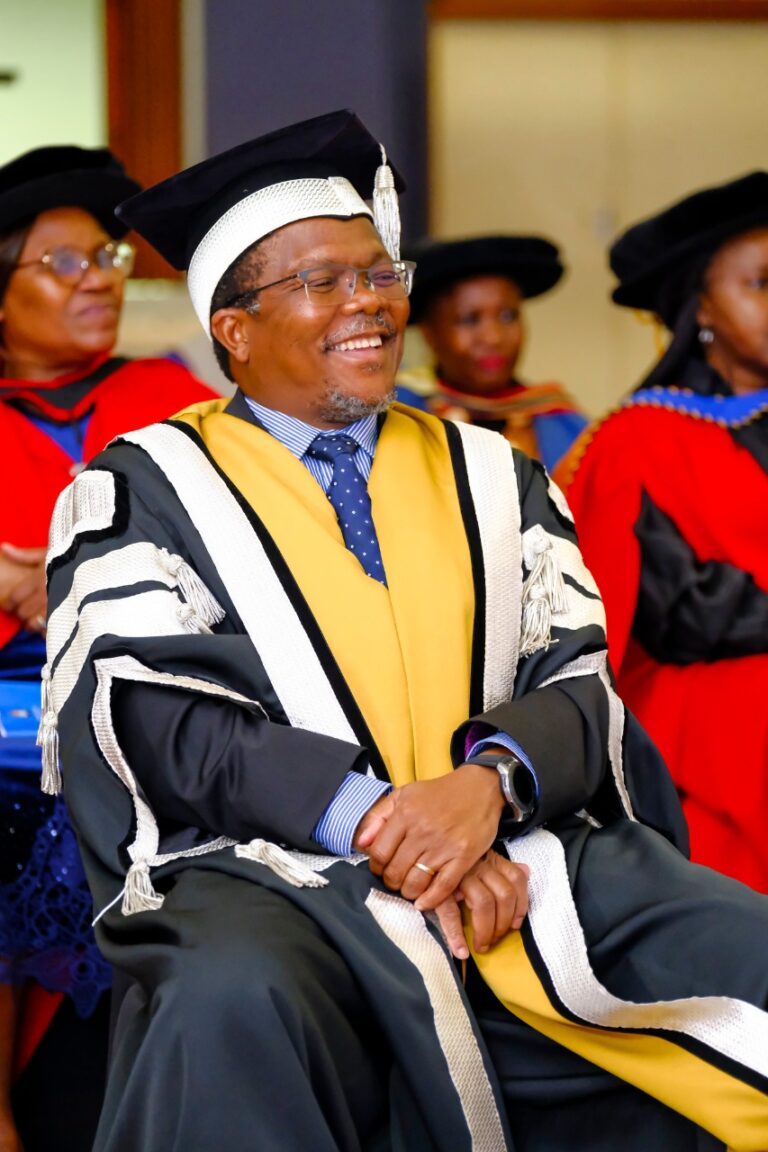
The vice-chancellor of the University of Fort Hare has alleged that powerful political interests orchestrated violence, arson and intimidation at the institution in an attempt to remove him and collapse ongoing corruption investigations.

Speaking to Ann Bernstein, the founding director of advocacy group the Centre for Development and Enterprise (CDE), during a CDE-broadcast event, Professor Sakhela Buhlungu claimed that the torching of seven university buildings in October 2025 was not spontaneous student unrest.

Instead, he said, it was a calculated campaign funded by shadowy figures who want him gone before the Special Investigating Unit (SIU) releases findings against 33 politically-connected individuals allegedly implicated in academic fraud.

“It was supposed to be a tsunami to push the vice-chancellor out,” Buhlungu alleged. 

“Taxi owners were there, the councillor was there, and a whole lot of other people were sitting in the shadows, pulling strings.”

His comments come amid sustained pressure from multiple quarters calling for his removal. Students, the university’s convocation, and some alumni have accused Buhlungu of corruption, poor governance and undermining student democracy. 

The October 2025 protests were triggered by the university’s decision to appoint an interim Student Representative Council while amending the institution’s student governance constitution, a move students rejected as undemocratic.

Higher Education Minister Buti Manamela labelled the protests “criminality” and instructed the university council to reflect on several issues, including “concerns about the Vice-Chancellor’s contract”.  

The University of Fort Hare Convocation has called for Buhlungu’s immediate departure, with its president Ayabulela Pezisa declaring: “He must leave. He must not go, he must leave.”

But Buhlungu offered a starkly different interpretation. He portrayed the violence as a politically motivated attempt to derail SIU investigations that threaten powerful figures.

“If you want to abort the SIU processes, what do you do? You get rid of the VC, you get somebody else who’s just going to throw their hands and forget about it,” he said.

Buhlungu dismissed suggestions that the October violence was an ordinary student protest. Seven buildings were destroyed in coordinated attacks, with structures selected for their strategic importance to the university, he claimed.

“Everyone has been to university. Everyone has seen unrest and protests,” he said. “But you don’t get seven buildings torched just because people are angry. It has never happened.”

The day after the first building burned, Buhlungu said he met with senior law enforcement officials including the provincial MEC for safety, the provincial police commissioner and crime intelligence officers. In that meeting, he alleged, authorities confirmed that significant funding was behind the destruction.

“We ended up agreeing with the law enforcement authorities that money was changing hands, that there was serious, serious money changing hands, and that it was sponsorship of the unrest,” Buhlungu claimed.

Despite this alleged acknowledgement, not a single person has been arrested for the arson.

Student leaders have maintained that the protests were a legitimate response to governance failures. Student leader Asonele Magwaxaza said during the October unrest: “An interim SRC is not student-centred. Those people are not democratically elected, they are installed by management.”

According to Buhlungu, the violence continued even after authorities promised intervention. He alleged that six buildings were torched the day after police undertook to deploy and restore order, with officers and a police water truck parked outside the university as flames consumed one structure after another.

Buhlungu said police explained their inaction by citing fears of another Marikana.

“The excuse was, we don’t want to use live ammunition. We’re scared because if we use live ammunition, there will be Marikana and we’ll be blamed,” he recounted. 

“They say, listen, we’ve run out of rubber bullets. Rather we stand outside and watch the buildings burn.”

During the protests, student leader Uzusiphe Vuzane alleged that “they shot students using real bullets here in Alice Campus. One student was shot on the left knee, and another just above the heart near the shoulder.”

Unlike previous crises when President Ramaphosa dispatched a 19-member unit of the Political Killings Task Team (PKTT) to investigate crimes at Fort Hare, no such intervention has occurred following the October attacks, according to Buhlungu.

“This time around, there’s nothing. There is absolutely nothing,” he said.

Buhlungu’s account stands in sharp contrast to allegations made against him by critics.

University of Fort Hare alumnus Mbali Silimela wrote a letter during the protest to National Police Commissioner Fannie Masemola accusing Buhlungu of being “at the centre of a criminal syndicate within the university’s management”.

Convocation president Pezisa has accused Buhlungu of “neglecting alumni structures and perpetuating a culture of exclusion”.

“We don’t believe in the allegations alone, but we believe in what we see. Under his leadership, corruption and maladministration have taken place,” Pezisa said. 

“A young vice-chancellor is needed to take Fort Hare forward.”

Buhlungu, however, framed his tenure as a battle against entrenched corruption and political entitlement.

“There is a general sense in which people feel entitled to Fort Hare,” Buhlungu said.

Student memoranda during the October protests demanded that 60% of university jobs and 60% of tenders go to residents of Alice, he noted. The local councillor had inserted himself into university affairs despite having no legitimate role, Buhlungu claimed.

“The councillor is completely rogue. Gone completely, absolutely rogue,” he alleged.

INSIDE EDUCATION

Junior Boks ready for bruising Georgia tour ahead of international season

By Johnathan Paoli

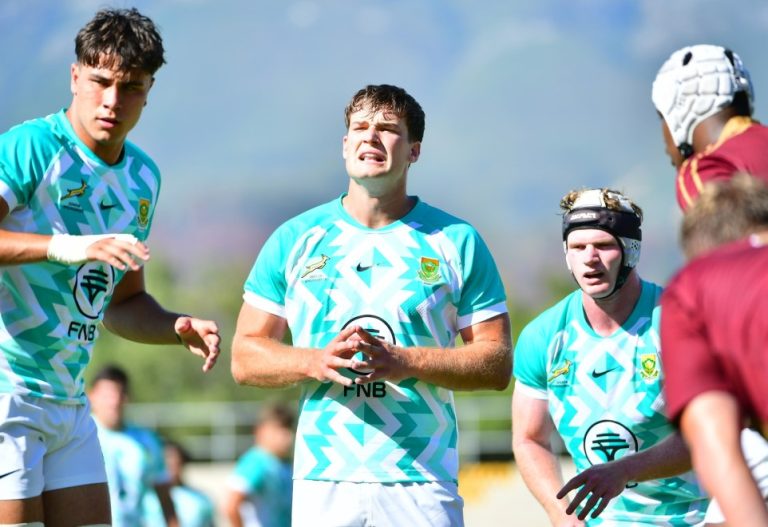
The Junior Springboks will step into one of their steepest preparatory challenges of the year when they embark on a three-match tour of Georgia, where freezing winter conditions and a notoriously physical style of play are expected to push the young South Africans well beyond their comfort zone.

The SA U20 side departs for Tbilisi this week, where they will face local club side Lelo Saracens before contesting two internationals against Georgia U20.

The tour forms a key part of the Junior Boks’ build-up to the international season and is designed to sharpen cohesion, decision-making and adaptability under pressure.

Captain Riley Norton is one of four players in the squad who featured in last year’s title-winning campaign at the World Rugby U20 Championship in Italy.

He is joined by a strong contingent of players from last season’s unbeaten SA U18 side, underlining the selectors’ emphasis on continuity and long-term succession.

For SA U20 attack coach Melusi Mthethwa, the Georgia trip represents far more than a series of warm-up fixtures.

Instead, it is a critical test of the squad’s mental resilience and tactical flexibility in hostile conditions.

“This tour is about much more than results. It’s about how quickly these players can adapt to what’s in front of them. Georgia in winter is tough, it can be wet, icy and extremely physical, and that’s exactly the type of environment we need to expose this group to early in the season,” Mthethwa said.

The Junior Boks completed an intensive three-week preparation camp in Stellenbosch, which included high-tempo training matches against Varsity Cup sides FNB Maties and FNB Ikeys.

Mthethwa said the coaching staff deliberately adjusted their approach this year, prioritising match play alongside traditional training drills.

Having toured Georgia with the Junior Boks last year, Mthethwa is acutely aware of the specific challenges the hosts present.

Georgian teams are renowned for their forward-dominated, confrontational style, with heavy emphasis on set pieces and gain-line battles.

“One of the biggest lessons from last year was understanding when you have to go through a defence rather than trying to go around it. That kind of confrontation is something we welcome as South Africans. It forces our players to be accurate, disciplined and brave in contact,” he explained.

He added that uncontrollable factors such as weather conditions should be embraced rather than feared and that while the could not control the conditions, it can control its emotions and response.

“If it’s snowing or raining, we have to adjust our game management, when to run, when to kick, and how to control territory. That’s priceless preparation for the international season,” Mthethwa said.

Junior Boks head coach Kevin Foote echoed those sentiments, describing the squad selection as a careful balance between experience and future potential.

“It was incredibly difficult to narrow the group down. But we’re confident this squad gives us the depth we need while keeping an eye firmly on the pathway ahead,” Foote said.

The pack is anchored by experienced props Oliver Reid, Phiwayinkosi Kubheka, Kai Pratt, Sibabalwe Booi and Danie Kruger, with hookers Siphosethu Mnebelele, Liam van Wyk and Mahle Sithole providing depth at the heart of the scrum.

Captain Riley Norton is joined by Heinrich Theron, James Schnetler and JD Hattingh, forming a locking group with a balance of leadership and athleticism.

The loose forward unit features Kebotile Maake, Risima Khosa, Mumbere Vyambwera, Luke Canon, Gert Kemp and Reuben Kruger, a combination expected to be tested heavily against Georgia’s confrontational breakdown style.

At halfback, Bulls duo Matthew Fick and Hendre Schoeman will share scrumhalf duties, while Yaqeen Ahmed and Luan Giliomee provide playmaking options at flyhalf.

In midfield, Markus Muller, Ethan Adams, Christian Vorster and Samuel Badenhorst offer a mix of physicality and distribution, while the outside backs include Dylan Miller, Zekhethelo Siyaya, Khuthadzo Rasivhaga, Jordan Steenkamp and Lindsey Jansen, giving the Junior Boks pace, aerial ability and counter-attacking threat from deep.

The Junior Boks’ Georgian tour will be staged entirely in Tbilisi and consists of three matches over a ten-day period.

The South Africans will open their campaign on Wednesday, with a warm-up encounter against Lelo Saracens, a fixture designed to acclimatise the squad to the conditions and physical demands they are likely to face.

That match will be followed by two internationals against the Georgia U20 side, scheduled for Sunday, 22 February and Friday, 27 February respectively.

INSIDE EDUCATION

Ramaphosa hails school assistants scheme after 1.3 million ‘work opportunities’ created

0

By Charmaine Ndlela

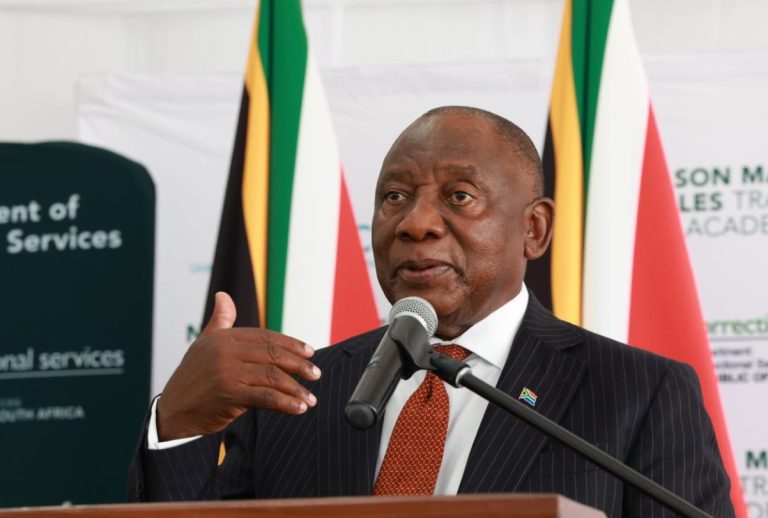
To date, South Africa’s school assistants programme has created more than 1.3 million work opportunities, President Cyril Ramaphosa said in his weekly newsletter on Monday.

“This is the largest youth employment programme in our country’s history, giving young people their first foothold in the world of work while strengthening the foundations of learning in the schools that need it most,” Ramaphosa said.

ALSO READ: UKZN researcher wins prestigious award for cancer therapy

The statement follows Ramaphosa’s State of the Nation Address on Thursday, where he said Grade R will be made compulsory as part of efforts to strengthen early childhood development (ECD).

He said the Department of Trade, Industry and Competition, working with an implementation partner, is helping more than 1,000 previously disadvantaged and underfunded ECD centres meet the qualifying criteria for an ECD subsidy.

General school assistants are required to have at least a Grade 9 qualification, while education assistants must hold a matric certificate, he said.

Ramaphosa acknowledged that while access to schooling has expanded and matric outcomes have improved, major challenges persist.

“Access to resources and quality teaching is uneven. Schools in townships and rural areas often struggle with overcrowding, and educators have limited access to professional development and support,” he said.

ALSO READ: Roedean principal quits after antisemitism claims

In the most recent phase of the programme, 32% of education assistants had some form of tertiary qualification, and 14% held teaching qualifications, he said. Assistants receive training in school safety, online safety, financial literacy, word processing, AI fluency, and coding.

“The initiative provides work experience and livelihood support while at the same time advancing the public good,” Ramaphosa said.

“It forms part of the Public Employment Stimulus to deliver employment and livelihood programmes on a large scale while providing social value in the process.”

He said the work of assistants enables teachers to focus on core responsibilities.

“The work of the education assistants allows teachers to spend more time on teaching and lesson preparation, thereby contributing directly to improved educational outcomes,” he said.

Education assistants have been placed in 19,000 no-fee primary schools to support numeracy and literacy, including acting as Reading Champions who promote bilingual reading, he said.

“The effect of this intervention is being seen in rapid improvements in foundational literacy skills in many schools,” Ramaphosa said.

He added that assistants also support digital learning, help care for at-risk learners, and serve as laboratory and workshop assistants.

ALSO READ: GDE appoints law firm to probe death of Grade R pupil in Coronationville

“For many of the school assistants, this experience is transformative. They are gaining skills and real work experience that will serve them well in finding employment and succeeding in their careers.”

Ramaphosa also highlighted government efforts to expand ECD, including through the Bana Pele mass registration of ECD facilities and increased subsidies for learners.

“As we work to expand access to early childhood development through the Bana Pele mass registration of ECD facilities and increased subsidies for learners, the Presidential Employment Stimulus has stepped up support to the sector through the Social Employment Fund,” he said. Over 50,000 children are benefiting from nutritional support and learning materials, he said.

“Meeting the constitutional imperative to provide quality education to our nation’s young is an all-of-society effort,” Ramaphosa said. “These initiatives illustrate the benefits of cooperation between government, the private sector, and civil society.”

Government wants to expand the programme further, he said.

“It is our aspiration that this successful programme should continue to grow as we strive to create more work opportunities for young South Africans while delivering quality education for all.

“We are intensifying efforts to fix the basic education system, with a focus on early learning, literacy and numeracy, and mother-tongue-based bilingual education.”

INSIDE EDUCATION

UKZN researcher wins prestigious award for cancer therapy

0

By Lebone Rodah Mosima 

Losing her father to chemotherapy-related complications three years ago spurred Dr Bawinile Hadebe to explore improved approaches to cancer treatment, a pursuit that has earned her the Saul Hertz Young Investigator Award.  

Hadebe, a senior UKZN lecturer and head of the Nuclear Medicine Clinical Unit at Inkosi Albert Luthuli Central Hospital (IALCH) in Durban, received the award at the eighth Theranostic World Conference in Cape Town in February in recognition of her PhD work in theranostics.  

ALSO READ: Weekend round up | Roedean principal quits after antisemitism claims, Joburg ramps up youth role, GDE appoints law firm to probe death of Grade R pupil

Theranostics is a personalised approach to treatment that integrates diagnostic techniques and targeted therapies to detect and treat various cancers.

The award honours her PhD work in CXCR4-targeted imaging and her contribution to targeted radionuclide therapies for prostate and neuroendocrine tumours.

The work was done under the guidance of her supervisor and head of the Nuclear Medicine Discipline, Professor Mariza Vorster, UKZN said.

“Cancer is a growing challenge worldwide, and we urgently need new ways to fight it. Theranostics is an exciting approach that lets us ‘see what we treat and treat what we see’,” said Hadebe.

“We use a special ‘search-and-destroy’ approach that involves injecting the patient with a specific radiotracer, which finds and highlights cancer cells on a scan (allowing us to see the cancer). We then inject a radiotracer with a more potent radiation, which delivers a targeted dose of radiation to kill those cancer cells while leaving the healthy parts of the body unharmed.

“Since this treatment targets the cancer directly, unlike other treatments such as chemotherapy, which target the whole body, we can avoid many of the harsh side effects often seen with chemotherapy,” she said.

Hadebe, who hails from eHlokozi in iXopo on the south coast of KwaZulu-Natal, said she knows the harsh effects of chemotherapy after watching her father endure the physical and emotional toll of treatment, a journey that ended with his death in 2022.

ALSO READ: Roedean principal quits after antisemitism claims

Targeted radionuclide therapy, she said, remains a distant dream for many patients and more effort is needed to make it more accessible.

Watching what happened to her father deepened her conviction that patients deserve treatments that are more precise and less debilitating, she said.

“My father is the quiet strength behind my work. I see his face in every patient I treat, fuelling my drive to redefine what is possible in cancer care.”

The award is named after Dr Saul Hertz, described as the father of theranostics, and is marking its 85th anniversary this year, recognising Hertz’s pioneering work with radioactive iodine, which began in 1941 and laid the foundation for radiotheranostics.  

INSIDE EDUCATION

Weekend round up | Roedean principal quits after antisemitism claims, Joburg ramps up youth role, GDE appoints law firm to probe death of Grade R pupil

0
  • Roedean principal quits after antisemitism claims

The resignation of Roedean School’s principal has intensified a row that Jewish groups allege amounts to antisemitism, after the Johannesburg private girls’ school cancelled a tennis fixture against King David High School earlier this month.

Roedean principal Phuti Mogale resigned with immediate effect, the school board said on Thursday, after the school issued an apology to King David for cancelling the 3 February match.

  • GDE appoints law firm to probe death of Grade R pupil in Coronationville

The Gauteng Department of Education (GDE) said it is finalising the appointment of a law firm to probe the circumstances surrounding the death of a Grade R boy learner from Bernard Isaacs Primary School in Coronationville, Johannesburg.

It said the firm will be formally introduced to the bereaved family and the school community by Gauteng Education MEC Matome Chiloane on Tuesday.

Read the full story below.

  • – GDE appoints law firm to probe death of Grade R pupil in Coronationville

The Gauteng Department of Education (GDE) said it is finalising the appointment of a law firm to probe the circumstances surrounding the death of a Grade R boy learner from Bernard Isaacs Primary School in Coronationville, Johannesburg.

It said the firm will be formally introduced to the bereaved family and the school community by Gauteng Education MEC Matome Chiloane on Tuesday.

INSIDE EDUCATION

Roedean principal quits after antisemitism claims

0

By Thapelo Molefe 

The resignation of Roedean School’s principal has intensified a row that Jewish groups allege amounts to antisemitism, after the Johannesburg private girls’ school cancelled a tennis fixture against King David High School earlier this month.

Roedean principal Phuti Mogale resigned with immediate effect, the school board said on Thursday, after the school issued an apology to King David for cancelling the 3 February match.

ALSO READ: WATCH: State of the Nation Address 2026

The apology followed public outrage and claims from King David that the match was cancelled because some parents objected to playing against a Jewish school.

Roedean had initially told parents it could not field a team due to prior school commitments, including compulsory academic workshops, but King David said Mogale phoned its head, Lorraine Srage, the day before the fixture and raised parental objections linked to the school’s Jewish identity.

In a letter to the general director of the South African Board of Jewish Education, Rabbi Ricky Seeff, Roedean board chair Dale Quaker said the school “recognises that it is our obligation to ensure that religious and any other form of discrimination do not come into school sport”.

“We acknowledge that our actions which led to the cancellation of the match with King David were deeply hurtful to the Jewish community and sincerely apologise,” Quaker said.

He added that while “communication challenges… compounded this incident, these were not the cause of the cancellation of the match as Roedean originally understood and communicated, as has become clear from our ongoing independent investigations”.

ALSO READ: Ramaphosa unveils R2 trillion investment drive, pledges billions for small businesses

King David chair Alan Joffe said the school’s requests were “simple; that we receive an unequivocal apology for the antisemitic actions which resulted in the cancellation of the match, and a commitment to playing each other in the future”.

Mogale reportedly told Srage: “Parents are basically saying because of the stance that the government took [on Israel and Gaza], we are supposed to support that. I just needed to pick your brain about fixtures… because we are facing a bit of pressure from our community and our constituents regarding just not playing against King David.”

The South African Jewish Board of Deputies (SAJBD) publicly condemned Roedean’s refusal to honour the fixture, describing it as “blatant prejudice” and a “discriminatory refusal to play” a Jewish school.

Roedean, meanwhile, has said it “unequivocally rejects antisemitism and all forms of discrimination or prejudice” and that both schools are committed to rescheduling the fixture.

“In the spirit that sport should unite rather than divide, we look forward to rescheduling the match for our girls,” Quaker said.

INSIDE EDUCATION

GDE appoints law firm to probe death of Grade R pupil in Coronationville

0

By Levy Masiteng 

The Gauteng Department of Education (GDE) said it is finalising the appointment of a law firm to probe the circumstances surrounding the death of a Grade R boy learner from Bernard Isaacs Primary School in Coronationville, Johannesburg.

It said the firm will be formally introduced to the bereaved family and the school community by Gauteng Education MEC Matome Chiloane on Tuesday.

ALSO READ: WATCH: State of the Nation Address 2026

The boy died on Monday, the department said. He reportedly sustained injuries while on the school premises and was later hospitalised. The parents were notified later the same day that their child had died.

The department said the law firm would establish the full facts and circumstances surrounding the incident, and would ensure transparency in the process.

Chiloane visited the family on Friday to offer condolences and support during their “unimaginably painful period”.

“We stand with the family in their time of sorrow and will continue to provide the necessary support as investigations proceed,” he said.

He said the department was committed to ensuring a thorough and impartial investigation.

“It is important that we allow an independent process to unfold so that the family and the broader school community can have clarity on what transpired,” he said.

INSIDE EDUCATION

SETAs to be reduced to improve governance – Ramaphosa

0

By Charmaine Ndlela

President Cyril Ramaphosa has announced plans to reform and reduce the number of Sector Education and Training Authorities (SETAs) to improve governance and strengthen South Africa’s skills development system.

Delivering his 2026 State of the Nation Address (SONA) on Thursday, Ramaphosa said the reforms are aimed at strengthening industry participation, improving training quality and better aligning skills development with the needs of the economy.

ALSO READ: Cape Peninsula University students hold protest outside SONA

He said government will enhance the role of Technical and Vocational Education and Training (TVET) colleges as primary sites for occupational training and artisan development.

“To support effective workplace-based learning, we will increase the proportion of the skills development levy returned to employers, restoring it to its original level of 40%,” he said.

Ramaphosa also announced that the National Skills Fund will be transformed into a more agile, outcomes-driven instrument focused on helping unemployed youth gain workplace experience and access employment opportunities. He said this would build on initiatives such as Jobs Boost.

“These reforms will ensure that the various training programmes we have in government are a door to opportunity, not a dead end,” he said.

Addressing the growing number of matriculants entering the post-school system, Ramaphosa said government will expand access to higher education.

“To absorb the increasing number of young people passing matric, we will expand opportunities for young people to enter institutions of higher learning,” he said.

He has directed the ministers of Finance and Higher Education to develop proposals for building more universities and TVET colleges focused on specialised areas of study.

ALSO READ: Limpopo launches state-of-the-art DZJ Mtebule school upgrade

Ramaphosa also identified the shortage of student accommodation as an urgent challenge.

“An immediate problem is the great shortage of student accommodation at our institutions of learning. I have directed the minister of higher education to address this challenge, working together with financial institutions on innovative methods through which government can provide student accommodation,” he said.

Reaffirming the broader reform agenda, Ramaphosa said reducing the number of SETAs would strengthen the overall system.

“We will reform and reduce the number of sector education and training authorities to improve governance, strengthen industry participation, raise the quality of training and better align skills development with the needs of the economy,” he said.

He concluded by emphasising that national development depends on strong communities that care for their children.

INSIDE EDUCATION

SONA| Ramaphosa says Grade R to be made compulsory

By Charmaine Ndlela

President Cyril Ramaphosa announced during the State of the Nation Address (SONA) on Thursday that Grade R will be made compulsory as part of efforts to strengthen early childhood development.

He said the Department of Basic Education is expanding access to early childhood development (ECD) through the Bana Pele mass registration of ECD facilities and increased subsidies for ECD learners.

“By making Grade R compulsory, we are getting all children off to a good start. We are intensifying efforts to fix the basic education system, with a focus on early learning, literacy and numeracy, and mother-tongue-based bilingual education,” Ramaphosa said.

The President also congratulated the Class of 2025 for achieving an 88% matric pass rate — the highest in the country’s history.

He said the result reflects both the commitment of learners and government interventions aimed at improving learning and teaching.

“Last year we saw the highest matric pass rate, with more than two-thirds of all bachelor passes coming from schools in the most disadvantaged communities,” he said.

Ramaphosa applauded the Class of 2025 for the sacrifices that contributed to their achievement.

However, he raised concern about the high dropout rate in the final years of schooling, saying more learners must be supported to write matric and take gateway subjects such as mathematics and science.

Nationally, the percentage of matric learners taking mathematics has declined from 46% in 2011 to 34% in 2023. In 2024, the number of learners registered for mathematics dropped to 255,762 — down by more than 12,000 from the previous year.

“To absorb the increasing number of young people passing matric, we will expand opportunities for young people to enter institutions of higher learning,” he said.

INSIDE EDUCATION