Home Blog Page 195

Young minds shaping future of education – Minister

Staff Reporter

Schools throughout the country face a variety of challenges when it comes to ensuring the efficient functioning of the Representative Council of Learners (RCLs).

But these young minds, who have a critical governance role under the South African Schools Act (SASA), a Representative Council of Learners (RCL) promotes quality learning and teaching in schools as the elected representative structure.

In terms of the Act, they can allow learners to voice their concerns and formulate strategies that respond to various challenges faced at schools.

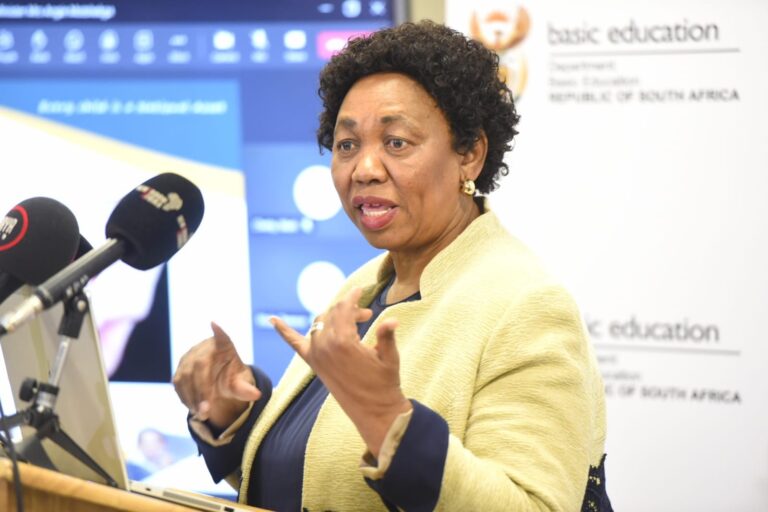
Minister of Basic Education, Mrs Angie Motshekga, together with Deputy Minister Dr Reginah Mhaule, last month addressed the 2023 National RCL Conference under the theme, “Advancing learner participation and Functionality of Learner Leaders in South African Schools.”

The Conference was hosted to strengthen the functioning of RCLs in provinces while seeking to create a platform where the Department and stakeholders can engage in progressive ways to improve RCLs to highlight the challenges schools face in ensuring the efficient function of RCLs.

Minister Motshekga said it made her proud to witness the enthusiasm and dedication of young minds shaping the future of the educational landscape.

“Your mission as the youth of 2023 is to use the words of wise African statesman Thomas Sankara: “We must dare to invent the future”.

The Minister further stated that the youth have the potential to drive positive change, overcome societal challenges and build a more inclusive and prosperous South Africa.
Minister Motshekga concluded her ad- dress by highlighting the importance of learner leadership towards positive discipline in schools and the power of reading.

She said this platform acknowledges the potential of learner leadership in schools, nurtures the passion for reading, and explores the significant role that learner leadership plays in maintaining discipline within our educational institutions.

Deputy Minister Mhaule also touched on the importance of being a true leader. “Being a leader begins at this very moment; I urge you to go out there and make it a mission to make a difference in our country and to transform society for the better. Positive action will make you a true and selfless leader who puts the needs of others first.”

The Conference drew inputs from various representatives, including the Agape Youth Movement (AYM), Ubuntu Youth Leadership (UYL), the National Education Collaboration Trust (NECT), the Ngangezwe Foundation and the University of South Africa (UNISA).

The selected RCLs engaged in robust discussions whilst applauding the DBE for their inclusion in the mission towards shaping a brighter future for the next generations.

INSIDE EDUCATION

Google Bard launches in Swahili- first African language

Staff Reporter

Google has announced the expansion of Bard, its conversational AI service, to 40 new languages including Swahili- the first African language to be included and 59 new countries and territories.

The expansion includes new features that allow users to better customize their experience, boost their creativity, and get more done.

With the expansion, Bard is now available in most of the world, including countries in the European Union (EU), and in the most widely spoken languages, including Swahili, Chinese, German, Spanish, Arabic, and Hindi, and Spanish. Users can now access Bard in their preferred language with text-to-speech also enabled in 8 languages.

 “We’re excited that this is Bard’s largest expansion to date – we see its global availability as a great democratizer of knowledge,” said Dorothy Ooko, Head of Communications and Public Affairs, SSA, Google.

 “That’s why we created Bard: to help you explore that curiosity, augment your imagination and ultimately get your ideas off the ground — not just by answering your questions, but by helping you build on them.”According to UNESCO, Swahili is among the 10 most widely spoken languages in the world, with more than 200 million speakers.

The inclusion of more languages and territories will also help to make Bard more inclusive and safe, through feedback from a wider range of users.

“The launch of Bard in Swahili is a major milestone as it allows Bard to reach even more people in Africa, where approximately 150 million people speak Swahili. This makes Bard more accessible to everyone in the region, and we believe that it has the potential to be a powerful tool for creativity and learning. We are excited to see how people in the region use Bard to explore their ideas and discover New things,” said Rachael Ndichu, Language Manager at Google.

Bard seeks to combine the breadth of the world’s knowledge with the power, intelligence and creativity of Google’s large language models.

It draws on information from the web to provide responses. As an experimental technology, Bard may occasionally make inaccurate statements in response to user prompts.

 So if a response from Bard is inaccurate or unsafe, if one experiences an issue, or just wants to provide feedback, there’s an easy way to do that.

INSIDE EDUCATION

PRINCIPAL’S CORNER: COVID-19 hangover needs urgent help to address learning deficits – principal

Staff Reporter

The impact of the COVID-19 pandemic on education is far from over, according to St Martin’s School principal Warren Venter, who warned that liquidating the deficit as soon as possible to protect an entire generation from “dangerous regression”.

He said the learning deficits were worse in mathematics and literacy.

Recently, South Africans were shocked to learn that Grade 4 learners struggled to read with meaning. The 2021 results of the Progress in International Reading and Literacy Study (PIRLS) were recently published and indicated that 81% of South Africa’s grade 4 learners are unable to read for meaning.

But Venter said that the problem stretches through to matriculants, too, and that a direct line can be drawn between much of the country’s reading with meaning challenges and the pandemic.

Venter, who is the principal of St Martin’s School, one of the country’s reputable private schools, said that as a remedy to the challenges brought about by the pandemic, the school developed personalised ‘catch-up’ curricula for learner sets that were identified as somewhere on the spectrum of an education deficit.

Venter said that the school has developed compulsory intra and extra-mural sessions across all grades to address gaps in education, including addressing learners’ ability to focus and function effectively within a scholastic environment.

“It’s a programme that I feel all schools must adopt to avoid a problem that could recur as each learner progresses to successive grades. It has to be nipped in the bud, because South Africa cannot afford to graduate students with unsuitably developed skills. The knock-on effect on future growth could be dire,” Venter warned.

Venter noted three primary reasons for the lag. “While there was no alternative, online learning became the go-to for families. It played a crucial role, but anecdotal evidence suggested that students were struggling to focus. Online learning is usually paired with multi-tasking and attention and focus on the subject matter being taught often lacked the intensity required.”

He also listed social media as a thorn in learning’s side. “It proved to be a massive distraction during the pandemic, and it continues to be an attention segue for students today,” he said. It then translated to the classroom as lockdown restrictions waned, creating challenges in concentration, reading and digestion of learning materials.

It’s been just over a year since South Africa lifted all lockdown restrictions, and Venter said that understanding the enormous impact of the pandemic has only recently started to surface.

“Intervention is the only way to assess, understand and remedy a situation. Notwithstanding other challenges, the deficit hangover could become one of the biggest crises in education in the country’s history. Addressing it through individualization and group remedy is the only path ahead,” he said.

INSIDE EDUCATION

Western Province wraps up impressive double at SASHOC U-16 Nationals

Staff Reporter

Western Province delivered standout performances and closed the annual SA Schools Hockey (SASHOC) Nationals in style by lifting both A-section trophies at the U-16 inter-provincial tournament in Bloemfontein.

Shining on the Kovsies Astroturf, the Western Province girls’ team had to dig deep in a hard-fought final against Southern Gauteng.

With the scores level at 1-1 at the end of regulation time, the WP squad grabbed the title with a 3-1 victory in a shootout. In the third-place playoff, Boland beat the host province Southern Free State 2-1 to secure the bronze medals.

Though her team narrowly missed out on the trophy, Amber Fairon managed to finish the six-day tournament as the top goal scorer, hitting the back of the net 11 times for Southern Gauteng.

In the boys’ A-section, Western Province left nothing on the line, delivering a spectacular performance to beat KZN Inland 6-2 in the final.

Southern Gauteng secured the third position after earning a 3-1 win against Boland in the playoffs. Playing a key role for the national U-16 champions, Litha Kraai netted ten goals for Western Province to finish as the competition’s top scorer.

There were also titles on offer in the B-section tournaments, with KZN Inland and Eastern Province emerging triumphant. The KZN Inland side defeated Western Province 3-2 in the girls’ final, and Eastern Province beat Northern Gauteng 4-2 in the boys’ final.

INSIDE EDUCATION

Go for Gold, Proteas! Let’s rally behind the Proteas in the first global netball showpiece to be held in Africa

Edwin Naidu

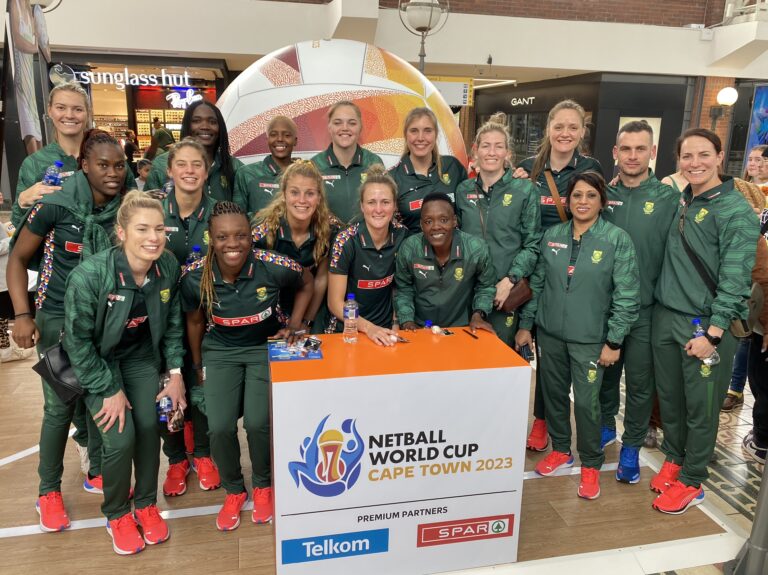
THE South African Cabinet has urged all fellow South Africans to rally behind our team Proteas – as they battle it out in the 2023 Netball World Cup, the first of its kind to be hosted in the African Continent.

The Netball World Cup 2023 (NWC2023) in Cape Town, South Africa, will run from 28 July to 6 August and will be the first to take place on the continent with 16 teams battling it out across the ten days, in the hope they will be crowned champions in netball’s most prestigious event. The Road To Cape Town began in March 2019, when Netball South Africa was announced as the host for the staging of the 16th Netball World Cup.

Since then, many key milestones have been achieved in the build-up to the World Class Event, including all five Netball World Cup 2023 Qualifiers. As the tournament nears, the Vitality Netball World Cup (VNWC2023), the official Trophy Tour, ended last month.

Having travelled across the country over June, the famed trophy crossed from the Eastern to Western Cape provinces of South Africa – the Western Cape being its final destination before being handed to the VNWC2023 champions when they were crowned on 6 August.

Even more significant was that the handover took place at the Tsitsikamma Khoisan Village – so honouring the indigenous inhabitants of South Africa.

The Khoikhoi and San are believed to be among the oldest cultures in the world. Apart from its pristine beaches, the Tsitsikamma is well-known for its enticing tourist attractions, including one of the highest bungee, jumps in the world at the majestic Bloukrans Bridge
and the Tsitsikamma Canopy Tours through Outeniqua Yellowwood trees that are up to 700 years old.

After a special celebration in Kareedouw with dignitaries, cultural groups and performances by local entertainers, the NWC trophy was taken to the Tsitsikamma Khoisan Village, where Eastern Cape MEC for Sport, Recreation, Arts and Culture Nonceba Kontsiwe officially completed the handover to Anroux Marais, the Western Cape Minister of Cultural Affairs and Sport.

Pictures: Eddie Mtsweni

“The Western Cape Government is pleased and honoured to receive this trophy and to embark on a tour across our province to get all communities excited for the Netball World Cup,” said Marais. “Cape Town is ready and looking forward to hosting the
Netball World Cup for the very first time on African soil.

“Although all the matches are being played in Cape Town itself, we want to include the whole province in the build-up and actual tournament, and so we are delighted that various municipalities have partnered with us to host fan zones and viewing centres.

“These will ensure that people across the province can watch the live matches for free at a venue close to their homes. “During this trophy tour, we will also encourage people to watch the matches at these venues so that we can make sure that no one is left out in supporting our home team,” added Marais.

In a statement, members of the Cabinet headed by President Cyril Ramaphosa called on ‘everyone in the country to support our girls as they strive to make history by winning gold on the African Continent’.

“In the next few days, the eyes of the sporting world will turn to Cape Town, in South Africa, for the start of the 2023 Netball World Cup from 28 July to 6 August. This is the first time this prestigious global showpiece is being held on the African continent.”

Earlier, the Cabinet urged South Africans to get into the spirit of the 2023 Netball World Cup tournament, where 16 nations will be participating, including our own Proteas. South Africans are urged to fly the flag and the Protea colours on Fridays each week, and
communities in Cape Town and elsewhere are encouraged to prepare to host international players and guests who are likely to visit all parts of the country.

“South Africa works diligently and innovatively to attract such global events which place a spotlight on the country and create economic opportunities and support jobs in a range of sectors,” Cabinet said in a statement.

Defending champions New Zealand may come to Cape Town as favourites, but their coach Noeline Taurua reckons the trophy currently belongs to every team.

“We don’t believe that we have ownership of that cup,” said Taurua. “The cup now belongs to everybody so that every game will be tough. That mentality to win every game is paramount, so it’s not a guarantee at all.”

New Zealand claimed the trophy for a fifth time when they beat Australia by just one goal in the final four years ago in Liverpool. Six of the players from that squad will compete in this year’s tournament. Having since had to settle for bronze at the Birmingham 2022
Commonwealth Games after being beaten by Jamaica in the semi-final, the Silver Ferns are aware that repeating their heroics of four years ago will come with its challenges.

“I think there is pressure that goes along with whether you’re defending or not. Our messaging that we’d like to put across is that we are out there to win like everybody else,” explained Taurua, who has coached the Silver Ferns since 2018. “I think Australia are number one

because they are the best, and you can’t deny the consistency of their ability to perform under intense pressure. “I think another thing that we have to be mindful of is that everybody has the opportunity to put out a good performance every time [they are] out on
court; you can’t negate anybody. Home support for the Proteas would also put them in with a shout! Let’s rally behind the Netball South Africa team.

INSIDE EDUCATION

Nelson Mandela University launches Global Giving Campaign

Staff Reporter

Nelson Mandela University has launched a multi-year global Giving Campaign, to raise R30 million to support four projects, based on empowerment and social redress.

University Vice-Chancellor Professor Sibongile Muthwa is leading the campaign with the endorsement of the Nelson Mandela Foundation, whose Mandela Month theme for 2023 is “Climate change and food security”.

Prof Muthwa explained that funds raised would go towards projects that address student hunger, bursaries, support a greenhouse project and empower sustainable community food kitchens.

“We are launching this fundraising drive in the build-up to international Mandela Day on 18 July. It is an opportunity to pay tribute to Nelson Mandela, South Africa’s most beloved statesman and global icon, someone who became the world’s moral compass.”

Prof Muthwa said the story of how Mandela, a young man born in a remote rural village, became one of the greatest statesmen of the 20th century was one of overcoming hardship and never losing sight of hope.

“It is a story that inspires generations of young people the world over.

“We are seeking your help to provide opportunities for thousands of young people who, because of their social circumstances, are faced with hardship and adversity.

“Who knows? With your assistance we could be nurturing the next generation of Nelson Mandelas.”

The new campaign is over and above the University’s day-to-day fundraising initiatives, which range from raising funds for postgraduate bursaries, to capital projects such as new buildings and laboratory equipment.

Globally, student numbers at universities have significantly increased. This has also been the case in South Africa.

However, government subsidies to universities in South Africa have been declining in real terms, made worse by, among other factors, rising inflation and the effects of COVID-19.

“This is why all universities need to raise third stream income. It helps to maintain high quality education, as well as broaden the net to accommodate academically deserving students who cannot fund their studies,” said Prof Muthwa.

She appealed to all stakeholders to donate any amount to the campaign, “as every cent counts”.

The campaign will benefit four projects aimed at helping students and the broader community: deal with financial exclusion challenges, student hunger, provision of community kitchens and a greenhouse project tackling unemployment by supporting a group of technical and vocational education and training college graduates with a greenhouse and community food systems project, using environmentally sustainable technologies.

INSIDE EDUCATION

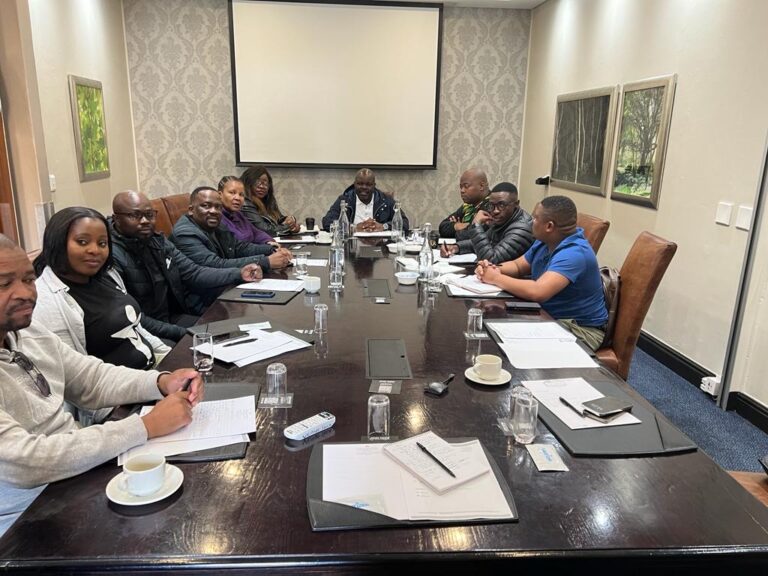
NSFAS meets Sasco to resolve the impasse around direct payments

LERATO MBHIZA

THE National Student Financial Aid Scheme (NSFAS) met with the South African Students Congress (SASCO) to iron out problems surrounding defunded students and direct payments, NSFAS spokesperson said in a statement on Wednesday after a meeting in Irene Pretoria.

Nsfas teams were dispatched to engage Student Representative Councils and University Management on direct payments and related matters. This comes after weeks long student protests.  

The meeting also dealt with student complaints, such excessive charges, inaccessibility of the service providers, lack of clarity on how to access funds and  allegations of funds not reaching their intended beneficiaries.

Nsfas said that it will not allow a system that was established in good faith, to be muddled with activities that defeat the purpose of direct payment and its spokesperson Slumezi Skosana said investigations will be conducted and where the allegations are proven true, appropriate action will be taken.

“Service providers will be instructed to increase their physical presence at institutions of higher learning so that they can respond directly to student queries on direct payment.

“There should be an immediate enhancement of explanations on how students can access their funds to avoid delays in the distribution of allowances” .

Skosana added that there will be a three-way meeting between student leaders, Nsfas management and the service providers on 11 July to iron out all relevant matters.

However he stressed that it should be kept in mind that the transactional costs are standard across all partners.

In addition, Nsfas urged students to complete their onboarding process to speedily access their Nsfas  bank accounts by going to the Nsfas  website, under the heading “For Students and Learners’ ‘ click on Nsfas  Bank account (under student support). There they will find the name of their institution and can click on the register here button and then follow the prompts.

The EFF said “the inability of Nsfas to streamline its processes and ensure timely assistance has caused immense frustration and despair among those who rely on its support. 

“Year in, year out, these failures have had far-reaching consequences, affecting the lives and aspirations of countless students”.

Furthermore, the EFF claimed that the new direct payment service provider which came with high recommendation from Nsfas management and the ministry of Higher Education, as an alternative for distributing funds for unfunded students. 

However, up to date only a few students received allowances, and those who have, received less than what they deserved and with high transitions.

INSIDE EDUCATION

African Girls Can Code Initiative helps young women thrive

Staff Reporter

With disruptive technologies resulting in increasing automation, young women must be prepared for the careers of the future.  Government, business and international organisations are partnering to ensure that girls are able to participate in the 4th industrial revolution.

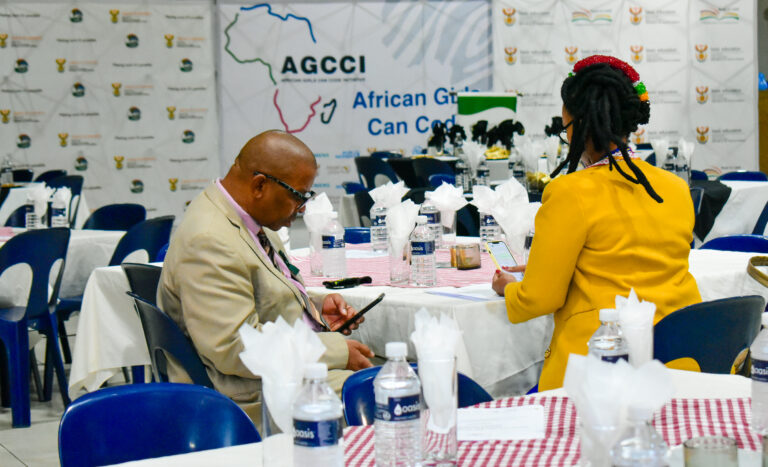
Dozens of girls got a taste of this at the African Girls Can Code Initiative (AGCCI) bootcamp held in Polokwane from 24 June to 3 July.  Learners from the North West, Gauteng, Mpumalanga and Limpopo receiving training in coding and robotics, among other things.

The Youth Month initiative took place under the theme “Re-imagining and re-thinking STEM education in the 4th industrial revolution”.  STEM stands for science, technology, engineering and mathematics.

The AGCCI is being implemented in South Africa by the UN Women Multi-Country Office for Southern Africa in partnership with the Department of Basic Education and Department of Science and Innovation (DSI).  It is also supported by Siemens and the Belgian government.

The AGCCI camps target girls in a bid to address gender imbalances. Gender gaps continue to keep women employed in junior roles, with minor responsibilities, little decision-making power and few opportunities in STEM leadership.

Despite the significant progress made to enhance women’s participation in STEM-related subjects, gender disparity remains a concern at all levels, with only 13% of STEM graduates in South Africa being female.

Ms Mmampei Chaba, Chief Director: Multilateral Cooperation and Africa at the DSI, spoke to learners at the boot camp, saying that young women needed to learn new skills and empower themselves for the new jobs of the future.

Chaba said that the camp was an example of what the new White Paper on Science, Technology and Innovation (STI) aimed to do.  The long-term policy and the 2022-32 STI Decadal Plan both focus on new approaches to foster creativity, learning and entrepreneurship that can flourish as primary drivers of economic growth, job creation and socio-economic reform.

“The Decadal Plan covers the skills of the future and how young people can be employable in the future,” said Ms Chaba, adding that “Girls must choose careers that will empower them for the future.”

The learners were urged to look beyond the current work environment, which is changing rapidly, with jobs in the service, radiology, pharmacy and public transport sectors, among many others, increasingly impacted by 4th industrial revolution technologies such as robotics, artificial intelligence and the Internet of Things.

Chaba said that, while mechanisation and machine learning would become more widespread, human beings would still be needed as engineers, designers and programmers, as well as for intervention and decision-making.  People would also be needed for their emotional intelligence, which AI and robots lacked.

The Limpopo MEC for Education, Ms Mavhungu Lerule-Ramakhanya, told the learners that the world was competitive, and education curricula should be competitive too.

“Education should empower you, as young people, to be in the coding, robotics and technology space, so that you can represent our country and compete in the world,” said Lerule-Ramakhanya.

To address gaps, the government has introduced coding and robotics to the school curriculum to provide learners with the most needed digital and ICT skills.  The curriculum also aims to prepare learners to think critically, work collaboratively and solve everyday problems.

Inspiring the young women with information about the advantages of coding capabilities, Ms Rita Nkuhlu, Siemens Executive Director for Sub-Saharan Africa, said rapidly changing technology could not be ignored, as much of our environment was already based on the use of apps and cyber-business.

She said that, as an engineering company, Siemens had developed their own industrial Internet of Things service solution called MindSphere, which collects, stores and learns from complex operational data, enabling improved processes and speeding up management decision-making.

Nkuhlu explained that coding for cybersecurity was also required to safeguard individuals’ intellectual property rights, and that, while some jobs would become obsolete, new jobs would be created for people with the necessary skills.

Grade 11 learner Malebogo Bojang from Madibogo High School in the North West said that Youth Month reminded her of the sacrifices made by the youth of 1976, which had made it possible for her and other learners to take school subjects such as science and technology.  She said that she considered herself privileged to have participated in the coding and robotics camp.

The second boot camp will be held in the Eastern Cape during the school holidays, from 29 September to 10 October 2023.

INSIDE EDUCATION

Addressing unemployment through a plan lifting youth out of hopelessness


EDWIN NAIDU

South Africa looks back on another concluded Youth Month with a rallying call urging the youth to beat the deepening unemployment crisis by adopting a Mandela-like entrepreneurial spirit the iconic leader often spoke about.

However, with Mandela Month and Mandela Day upon us, South Africa is staring down the barrel of an unemployment headache, with the outlook considerably worsening for the youth.

For the first quarter of 2023, young people experienced underemployment at far higher rates than older persons.
Underemployment is described as the total number of people in an economy who are unwillingly working in low-skill and low-paying jobs or only part-time.


This underscores the youth crisis, corroborated by StatsSA, which recorded South Africa’s unemployment rate in the first quarter of 2023 at 32,9 % and among the highest in the world.
One of the success stories of a national campaign to address the job challenge has been establishing a government programme to support youth to build their own enterprises.


To date, 45 988 financial and non-financial enterprise opportunities have been provided by the Department of Small Business Development and the National Youth Development Agency.
But this success story has been buried under shocking unemployment statistics. In the first quarter of 2023, the underemployment rate was 6,3% for those aged 15-24 and 5,2% for those aged 24-34, which is higher than the national rate of 4,9%. The lowest underemployment rate is recorded in the age groups 35-44 years and 55-64 years, at 4,6%.


In the first Quarter of 2023, the Quarterly Labour Force survey found 32.9% of South Africans jobless. Many more have given up looking for opportunities. In the first quarter of 2023, 44.7% of young people between 15 and 34 years were outside of employment, education or training.
Signs of improvement are not evident when one considers that in 2021, South Africa’s youth unemployment rate was 64.18%, a 4.56% increase from 2020.


“Unemployment among young South Africans is a national crisis that demands urgent, innovative and coordinated solutions. It is, therefore, essential that we implement a comprehensive plan to create no fewer than 2 million jobs for young people within the next decade,” said President Cyril Ramaphosa in 2020, announcing a national strategic plan to address this growing challenge.
Emerging from the global Covid-19 pandemic, South Africa has unprecedented levels of unemployment, prompting Ramaphosa to decide that the persistent and structural nature of youth unemployment means that the issue can no longer be addressed through isolated initiatives.
The situation requires an extensive, coordinated and sustained effort to respond to both the changing needs of the economy and those of young people in South Africa.


The persistent and structural nature of youth unemployment means that the issue can no longer be addressed through isolated initiatives; hence the presidential priority is to create the country’s most comprehensive effort to address youth unemployment to date.


In his 2020 State of the Nation Address, the President launched the ambitious multi-sector action programme, the Presidential Youth Employment Intervention (PYEI), expanding the range of opportunities for young people in South Africa.


Driven by a Project Management Office (PMO) in the Presidency, this initiative targeted youth, whether in further education or training, work experience, youth service, employment, or entrepreneurship. It recognises the great potential of South Africa’s young people and works towards a society where every young person has a path to progress.


Another success story has been the private sector-led Youth Employment Service, a core partner of the PYEI, which placed 30 535 young people in work experience opportunities in various sectors of the economy. YES has placed over 100,000 South Africans between the ages of 18 and 29 in local businesses for a year of work experience.


Through YES, R6 billion has been injected into the economy, enabling participants to support their families – making a real dent in youth unemployment in the country.


Against this backdrop, the PYEI Presidential Youth Employment Intervention (PYEI) was launched to accelerate the transition of young people from learning to earning.


Through a strong commitment to partnering and mobilising stakeholders in the ecosystem, the PYEI has made significant progress towards achieving this objective in the past financial year.
This involved driving systems change to address the barriers that young people face, aggregating existing opportunities and creating new opportunities for young people, and linking young people to opportunities and available support in a single network.


YES Chief Executive Officer Ravi Naidoo told Inside Education that in the past 12 months, 32 578 new jobs had been created, the total for the full period standing at 113 911, with 5 298 new jobs created in June.


“This is good, considering the economy is flat. YES, is the biggest programme with social impact that is 100% paid for by the private sector, without taxpayers’ money. A growing number of corporates, currently 1 517, corporates have paid to support the programme,” Naidoo said.


He said that after their training, a large number of YES candidates (43%) get work in the companies they trained at or in the same sector, 15% open their own business, while the remainder return to training, and some still cannot find jobs.


But through ensuring that the candidates placed in YES programmes are given relevant skills for the future, Naidoo said they hope to create marketable skills, such as drone pilot training, coding, barista making and creative career options.


One of the success stories is Chulumanco Lonwabo Nomtyala, a trailblazing developer and creator of Soft 4IR Apps, an app streamlining housing subsidy applications. Lonwabo aims to partner with municipalities, empowering individuals to access housing grants conveniently. His vision is to bring convenience and knowledge to those in need.


Another success story, Thobani May has had a transformative journey from struggle to success, fuelled by his participation in the YES programme. Now the owner of Eco Char, a charcoal production company focused on environmental restoration, Eco Char employs five people and contributes to uplifting its community.


As part of a revitalised National Youth Service (NYS), interventions focus on priority growth areas with employment potential for young people in digital, technology and global business services; agriculture; installation repairs and maintenance; social services; and the automotive sector.


This initiative sought to link young people to opportunities through a national network, the National Pathway Management Network, linking a growing number of young people to learning and earning opportunities.


Currently, more than 4 million young people are in the SA Youth platform network and the Employment Services South Africa (ESSA) platform.


During the financial year 2022/23, 330 181 earning opportunities were secured by young people on SA Youth, and a further 50 375 earning opportunities were secured.


The Department of Basic Education’s School Assistants programme, a flagship programme of the Presidential Employment Stimulus, created most of the opportunities secured by young people in the network. SA Youth facilitated all recruitments for this programme.


SA Youth is reaching young people who are most in need of support. The PYEI’s Revitalised National Youth Service created 47 234 opportunities for young people to engage in paid community service in 2022/23. For many, the opportunity was the first time in their lives they earned their own money and could enhance their contribution to their communities.


SA Youth reaches many of the poorest young people, with 73% reporting that they attended poorer-resourced schools (quintile 1-3). Moreover, 65% of the young people registered on the SA Youth network, who responded to a question about social grants, reported that they live in households where at least one member receives a grant.


In a recent report discussing the project’s impact, 47 234 young people secured earning opportunities, while 10 431 have moved into other opportunities.


The Department of Higher Education and Training placed 14 504 TVET learners and graduates into workplace experience opportunities, enabling many to complete their qualifications.


Additionally, the private sector-led Youth Employment Service, a core partner of the PYEI, placed 30 535 young people in work experience opportunities in various sectors of the economy in the last financial year.


YES has placed over 100,000 South Africans between the ages of 18 and 29 in local businesses for a year of work experience. Through YES, a total of R6 billion has been injected into the economy, enabling participants to support their families. Nearly two-thirds of participants come from households reliant on social grants, and 40% are employed upon programme completion.


In the next quarter, the PYEI is launching a pilot of a pay-for-performance mechanism to test whether a different financing model for skilling can improve employment outcomes for young people.


Instead of receiving payment for training activities and outputs, appointed contractors receive the bulk of their income only when they demonstrate that they have placed young people in earning opportunities.


Led by the Department of Higher Education and Training through the National Skills Fund, the pay-for-performance mechanism will see the NSF play the role of an Outcomes Funder.


The outcome of interest is the placement of young people into sustainable earning opportunities. The pilot will train and place a targeted 4 500 young people into earning opportunities in 2023/24. This proof of concept will inform a scale-up phase that will crowd private investment to reach more young people.


Basic Education Minister Angie Motshekga also said last month that the Department of Basic Education is implementing the Presidential Youth Employment Initiative to tackle unemployment among youth in South Africa.


“We also have a responsibility to create employment opportunities, particularly for the youth who are neither in employment, education, nor training,” said Motshekga.


In a rallying call for the Black Business Council and the private sector to join South Africa’s skills revolution, Minister of Higher Education, Science and Innovation, Dr Blade Nzimande, has reiterated the government’s commitment to creating opportunities for the country’s youth.


A sum of R1,7 billion was disbursed by the National Skills Fund towards its bursaries programme in 2021/22, benefiting students enrolled in undergraduate and postgraduate programmes in scarce and critical skills.


“The central mandate of the Department of Higher Education and Training (DHET) is to develop a skilled and capable workforce whilst broadening the skills base of our country to support an inclusive growth path,” he said at the Black Business Council summit.


Capacitating today’s youth to be job creators instead of job seekers is admirable and a sign of a maturing and progressive state. However, entrepreneurship goes beyond simply training the youth to start businesses – we must invest in helping the youth sustain new enterprises and therein lies the challenge, or is it an opportunity?

INSIDE EDUCATION

Unlock South Africa’s future by mediating the impact of trauma on learning

Oprah Winfrey to speak live in South Africa during day-long conference focused on shifting the question in education from “What’s wrong with you?” to “What happened to you?”

Research indicates that traumatic exposure affects the development of the brain, especially in early childhood. This influences an individual’s day-to-day functioning, coping capacity and learning as well as their self-perception and relationships with others – effectively changing the trajectory of a person’s life.

With more than half of South African adults having been exposed to adverse experiences in their childhood, the effect on education and future success cannot be overlooked.

“Through the lens of a trauma-informed understanding, we can build a renewed sense of personal self-worth and ultimately recalibrate our responses to circumstances, situations, and relationships. It is, in other words, the key to reshaping our very lives,” says Ms Winfrey.

“I have seen first-hand the long-lasting impact that trauma can have on a person, and my intention is to share this approach with every educator, counsellor, physician and parent so they have the opportunity to implement this in their daily lives.”

That is why trauma-informed learning is necessary now more than ever, as it involves the awareness of both developmental adversities, and any other traumatic experience that touches the lives of learners.

Against this backdrop, the Oprah Winfrey Leadership Academy for Girls (OWLAG) is unlocking the foundation for empathetic, supportive, and effective educational practices in South Africa through the adoption of a trauma-informed curriculum based on the Neurosequential Model in Education (NME).

Developed by Child Psychiatrist, Dr Bruce Perry, the NME is a framework that helps support educators and learners in learning more about brain development and the impact of childhood trauma on a child’s ability to function in a classroom.

It emphasises the importance of recognising the sequential organisation of brain development and the influence of traumatic experiences on this process.

When applied to learning environments, the NME offers several valuable contributions in creating informed responses to trauma.

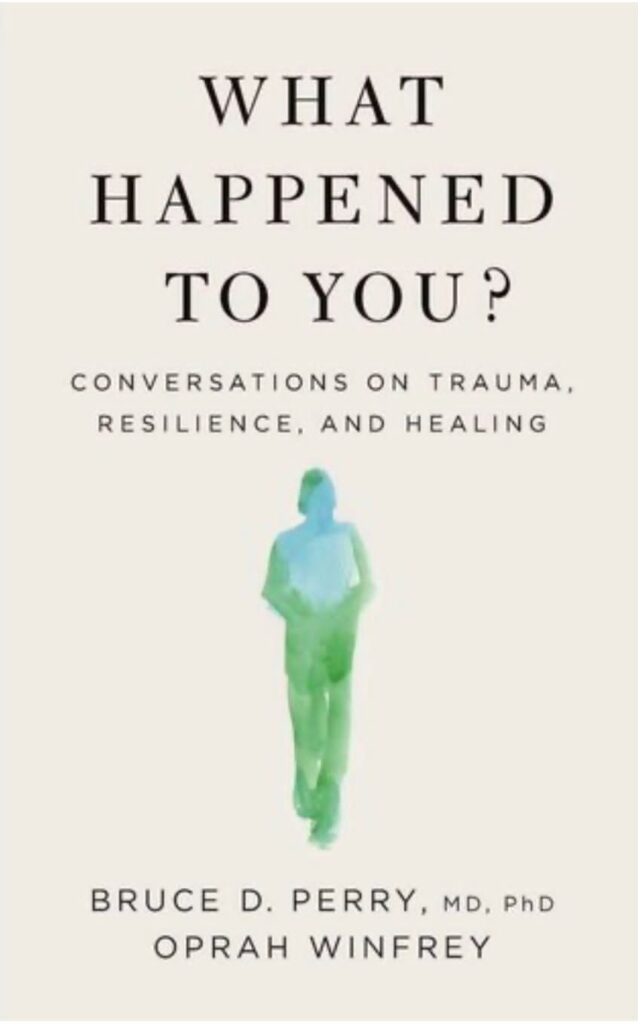
A special conference, on 21 July 2023 in Johannesburg, will unearth the key concepts from the best-selling book co-written by Ms Winfrey and Dr Bruce Perry, “What Happened To You,” relating to the Neurosequential Model and creating informed responses to trauma.

During the day-long conference, the Academy’s Founder, Ms Winfrey, will participate in a thought provoking and engaging conversation with Dr Katherine Windsor, Chairperson of the OWLAG Board of Directors, and experts in the field will provide insights and hands-on learning opportunities.

To learn more about the importance of NME, join other educators and counsellors to explore impactful strategies to mediate the impact of trauma on learning and teaching during the What Happened to You Conference taking place at Gallagher Convention Centre on 21 July from 8am to 4 pm.

*INSIDE EDUCATION ADVERTORIAL