Home Blog Page 197

Grade 12 learners compete in the Monetary Policy Committee School Challenge 2023

Staff Reporter

In collaboration with the Department of Basic Education, the South African Reserve Bank (SARB) has once again tested learners’ competence in Mathematics and Economics.

Grade 12 learners participated in the 11th South African Reserve Bank Monetary Policy Committee (MPC) Challenge, and the top ten winners were announced at the Sandton Convention Centre in Johannesburg on 16 August.

The overall winners were Paarl Girls’ High School in the Western Cape Province, who took top honours. The four winners of the winning team each received a SARB bursary, a prize of R18,000 and an iPad, whilst their school received a prize of R36,000 and their teacher received a laptop. The challenge offered learners an opportunity to expand their understanding of monetary policy. It also provided them with an insight into how the economy works.

Basic Education Minister Angie Motshekga appreciated the opportunity given to the learners to apply classroom theoretical knowledge:

In its national scope, she said the Monetary Policy Committee Schools Challenge offers Grade 12 Economics learners a unique and transformative journey into the core of the South African Reserve Bank’s operations.

Participants emulate the real-world task of drafting SARB MPC statements and immerse themselves in a rich tapestry of resources, from traditional media to digital platforms, deepening their understanding of monetary policy.

“Beyond the accolades, the victors of this challenge emerge as esteemed ambassadors for the Reserve Bank, tasked with enlightening their communities about the nuances of our economy. The MPC Schools Challenge, whilst being more than just a competition, plays an indispensable role in basic education,” Motshekga said.

Motshekga added that, firstly, they transcend traditional classroom learning by providing a platform where theoretical knowledge meets practical application.

“Students gain hands-on experience and a deeper understanding of complex concepts by simulating real-world scenarios. This immersive learning approach enhances retention and develops a keen analytical mindset, allowing students to view problems from multiple angles and craft innovative solutions. Additionally, such competitions instil a spirit of teamwork, resilience, and perseverance.”

South African Reserve Bank Governor, Lesetja Kganyago, mentioned that the challenge participation has increased by 70% since 2022, with nine public schools and one independent school in the top ten winners. He further encouraged learners to consider pursuing careers in the field of economics.

Kganyago thanked the teachers for their dedication and support and for encouraging learners to participate in the challenge.

INSIDE EDUCATION
ACDP Fights Back Against the contentious Bela Bill

Johnathan Paoli

IN addition to the growing voices against the Basic Education Laws Amendment Bill (Bela Bill), the ACDP on Thursday opposed a motion of desirability in its final day of deliberations before the Portfolio Committee on Basic Education, concerning the introduction of the contentious bill.

Three main clauses were of particular significance to resistance against the bill, namely clause 27 which deals with the merger and closure of small schools; clause 37 which deals with homeschooling; and clause 41 which grants the Minister more authority over the policy regarding learner pregnancy.

In terms of clause 37, due to the apparent lack of knowledge concerning homeschoolers, calls were made to the Department of Basic Education (DBE) for a comprehensive Social Environmental Impact Assessment to be undertaken, that is specifically focused on homeschooling.

“What is however clear is that the number of consultations cited did little to improve the Department’s own understanding of homeschoolers – if consultations were effective, a proposal that would satisfy both stakeholders could have been developed and included in this Bill,” African Christian Democratic Party  MP Marie Suker said.

In addition, Suker said that the explicit mention of countries in which homeschooling has been outlawed by the Parliamentary Legal Services, during deliberations had the effect of shaming the alternative form of education and instilled fears that the state is clearly attempting to curb the amount of homeschoolers through stricter controls and making it financially unsustainable.

In terms of clause 27, the ACDP held that in order to effectively combat the poverty and inequality of South Africa, the government should be strengthening the funding of rural education programmes in order to keep small schools open.

The granting of Ministerial authority to intervene in terms of learner pregnancy (clause 41) clearly goes against the ACDP grain in light of their ardent support of the right of parents as well as school governing bodies (SGBs) to determine how their children should be educated, in other words, keeping the door open for a conservative control over pubescent bodily autonomy and reproductive health.

“The implementation of clause 27 would escalate the closure of hundreds of schools in rural communities across the country leading to emotional alienation, and anxiety in children who, at a very young age, must go to hostels far from their communities,” Suker said.

In conclusion, the ACDP said that the bill would overload the state with even more financial and bureaucratic responsibilities, effectively creating a bloated system and called for the introduction of stipends to SGBs in order to more adequately support and maintain what is trying to be achieved at a grassroots level.

INSIDE EDUCATION

A Grade 12 pupil dies after a fight at a Matric school camp in Limpopo

Lerato Mbhiza

THE Limpopo Education MEC Mavhungu Lerule-Ramakhanya has dispatched social workers to the Mpirwabirwa Secondary School in Mokopane following the death of a Grade 12 learner.

Spokesperson Mike Maringa said the team will offer psycho-social support to the pupils and staff at the school after a fight during a school camp resulted in the death of Willem Ngoepe.

Lerule-Ramakhanya has since sent a message of condolences to the Ngoepe family following the sudden death of their son.

Maringa said Ngoepe died on Friday after he was allegedly hit on the head with an object by another learner at the matric school camp in the school premises.

“The incident happened at Mpirwabirwa Secondary School on Thursday evening and the learner succumbed to injuries the following day,” he said.

The matter has been reported to police.

INSIDE EDUCATION

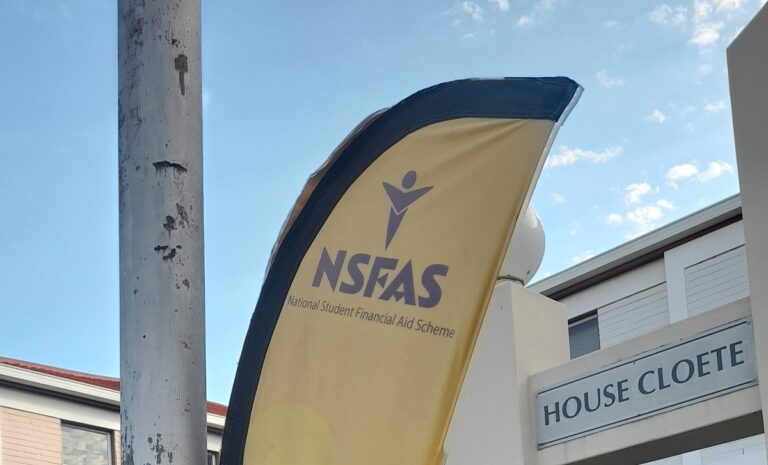
NSFAS Board to probe allegations following OUTA revelations against CEO

Phuti Mosomane

IN the past few weeks, several allegations were levelled against Andile Nongogo, the Chief Executive Officer of the National Student Financial Aid Scheme (NSFAS), while he was the head of the Services Sector Education and Training Authority.

Nongogo has been placed on special leaving pending an investigation by NSFAS. He will be replaced by Masile Ramorwesi, who will act as Chief Executive Officer.

But damning new claims over Nongogo’s stewardship, including interference in awarding of tenders, have emerged at the weekend have emerged following a probe launched in 2022 by the civil society movement, Organisation Undoing Tax Abuse (OUTA). OUTA had investigated and found Nongogo had presided over shenanigans while he headed the Services Seta and this practices may have followed him in his role at NSFAS.

His conduct was said to be “unacceptable in awarding bids at NSFAS”.

In a statement, NSFAS said that while the Board recognises that, in the main, the allegations stem from activities in another organisation, it views them in a very serious light.

The statement added that NSFAS runs close to a R50-billion budget, which services young people from poor and working-class backgrounds. This is no small task, as it impacts skill development and, consequently, the economic development of our nation. The Board believes that public trust is paramount in executing this responsibility.

“In the interest of the image of NSFAS, the Board has resolved to investigate the allegations with a particular focus on the Direct Payment project. During the course of the investigation, the Chief Executive Officer will be on leave of absence. The Chief Financial Officer, Mr Masile Ramorwesi, will act as Chief Executive Officer until further notice.”

The Board wishes to reiterate that this investigation in no pronouncement of guilt against the CEO, but an objective effort to determine the veracity of the allegations.

Ernest Khosa, Board Chair said: “The Board commits itself to transformation and clean governance at NSFAS and will ensure that any activities that defeat the purpose of serving students from poor and working-class backgrounds are addressed decisively”.

It all began to unravel in February 2023, when OUTA reported on the findings of its investigation into NSFAS: claiming that NSFAS hired service providers without them having the required banking licences to pay out student allowances at excessive rates relative to the market.

NSFAS also hired a business which provided cloth masks to National Treasury in 2020 to work on an ICT contract and has rented an expensive head office space while slashing the subsidies for student accommodation.

In June 2023, OUTA laid a criminal complaint of corruption against Nongogo, one of his former colleagues at the Services SETA and two Services SETA service providers.
The criminal complaints relate to the over-inflation of a specific tender awarded to Five Star on 22 August 2016. It is alleged that Five Star over-inflated their bid for the branding of a tender box by a whopping 8 000%, or at least R292 000.

On 4 August 2023, OUTA reported that Nongogo had signed off on an overpriced branding campaign that cost taxpayers R37 million while he was Services SETA CEO. This included a branded T-shirt at R4 600, R44 000 for a branded umbrella, R980 for a coaster, and R668 200 to print 100 copies of the SSETA Annual Performance Plan.

On 8 August 2023, OUTA published an updated report on its NSFAS investigation. Despite NSFAS’s refusal to provide OUTA with tender information requested through PAIA during 2022, this information was gathered.

This report details the differences between the current tender that was awarded to Coinvest Africa, Tenet Technology, Ezaga Holdings and Norraco Corporation and the two tenders for a similar service (direct payment of student allowances) which was cancelled.

One of OUTAs findings is that the cancelled tenders had 20 mandatory requirements that had to be met by service providers, while the current tender has only five mandatory requirements. The requirement for a banking licence was changed to having a banking licence OR a sponsor bank OR an affiliation with a bank, opening the backdoor for bidders not registered as financial service providers (FSPs) to submit bids. As such, the appointed service providers were awarded a tender without being FSPs.

INSIDE EDUCATION

BELA Bill proposes amendments to address sexual misconduct by educators

Staff Reporter

THE Basic Education Laws Amendment (BELA) Bill wants to amend the South African Schools Act (SASA), 84 of 1996 and the Educators Employment Act (EEA), 76 of 1998 to address sexual misconduct by educators.

It was recommended that section 17(1)(c) be amended to read that an educator must be dismissed if he or she is found guilty of sexual harassment, sexual assault, rape or statutory rape of a learner.

Such an explicit identification of the different forms of serious misconduct will provide clarity and provide necessary guidance in these cases.

It was also necessary to clarify the definitions of misconduct and serious misconduct in a manner that aligns with the Constitution, the Children’s Act, and existing sexual offences laws.

Recommends were that the law should be amended not to allow teachers who are appealing a decision of educator sexual misconduct against them to continue teaching.

Instead, educators whose matters are on appeal must be placed on paid suspension and only be allowed to work with children once the appeal is finalised.

Where an educator resigns whilst under investigation for sexual misconduct or while suspended and before the disciplinary process is completed, they must be deemed dismissed. The legislative framework should be amended to provide that, where an educator who is under investigation for educator sexual misconduct seeks employment at a different school, information on the allegations should be provided to the school.

Schools must share the outcome of disciplinary proceedings with the Provincial Education Departments (PEDs) and the South African Council for Educators (SACE), regardless of the perceived seriousness of the allegation of educator sexual misconduct.

INSIDE EDUCATION

From Margins to Mainstream: EWSETA’s Women Usher Gender Equity in Energy

Staff Reporter

In a world where the call for gender equality remains resounding, the Energy and Water Sector Education and Training Authority (EWSETA), leads the way in how to do it.

With a profound commitment to women’s leadership, EWSETA not only champions gender parity but also ignites a spirit of innovation and excellence within the energy and water sector.

Glowing with inspiration, EWSETA boasts a lineup of visionary women leaders who embody empowerment in every sense.

Dr. Limakatso Moorosi, Chairperson, Mpho Mookapele, an enterprising Chief Executive Officer, Robyn Vilakazi, the entity’s Chief Financial Officer; and Candice Moodley, a strategic Corporate Services Executive – these exceptional leaders contribute their expertise and compassion to drive transformative change.

Their collective journey radiates integrity, empathy, and an acute awareness of the challenges faced by women, particularly in remote corners where access to clean water, sanitation, and energy remains a fundamental concern.

From villages to boardrooms, these women leaders manifest EWSETA’s resolute commitment to shatter stereotypes and forge pathways for women professionals. They serve as living proof that women possess not only the skills and knowledge but also the vision to lead with unmatched distinction.

Candice Moodley – Corporate Services Executive at the Energy and Water Sector Education and Training Authority (EWSETA)
Mpho Mookapele – Chief Executive Officer
Robyn Vilakazi – Chief Financial Officer at the Energy and Water Sector Education and Training Authority.

In fields traditionally skewed towards male dominance, such as energy and water, EWSETA pioneers education programs that inspire empowerment for women.

Foremost among these initiatives is EWSETA’s unwavering dedication to elevating women in Science, Technology, Engineering, and Mathematics (STEM) fields. This investment transcends mere education; it signifies a conscious effort to rectify gender imbalances, empowering women to flourish in sectors once deemed inaccessible.

The impact of this upskilling endeavour is profound. Beyond cultivating gender parity, it kindles the fires of innovation, supercharges productivity and fuels economic growth. By embracing the rich diversity of women’s talents, EWSETA breathes new life into the energy and water sector, infusing it with fresh perspectives and novel ideas, thereby sparking unprecedented creativity and ingenious problem-solving. By propelling women into STEM fields, a world of lucrative opportunities develops, granting them access to positions that previously existed beyond their reach.

Acknowledging the obstacles that persist for women climbing the ladder of senior management, EWSETA steps up to ensure that these women ascend with unwavering support. The pursuit of executive leadership development is paramount. Through partnerships with institutions like Wits Business School and DUKE Corporate Education, EWSETA ensures programs are curated and tailored to women in the energy, water, nuclear, and wind sectors. These initiatives, crafted with precision, offer cutting-edge training, mentorship, and exposure to industry dynamics, bestowing women with the tools needed not just to survive, but to thrive.

As EWSETA invests in the education and professional growth of women, it moulds them into forces that can overcome challenges and grasp opportunities, positioning them as architects of transformation. This commitment transcends the confines of education and training. As a celebrated authority in the energy and water sector, EWSETA fosters a culture of boundless innovation and continuous improvement.

Through anticipation and adaptation to industry shifts, EWSETA ensures that businesses across the sector flourish, adding momentum to a greener, more sustainable future. This dedication shines even brighter as over 60% of EWSETA’s workforce is female – a testament to their unyielding devotion to fostering inclusivity.

Beyond the areas of innovation, economic growth, and societal harmony, EWSETA, which is relentless in its pursuit of gender equality, initiatives create flows of positivity with far-reaching impact. As an authoritative voice in the sector, EWSETA redefines empowerment standards, lighting the path toward a future that’s brighter, more inclusive, and economically uplifting for all.

INSIDE EDUCATION

UCT to support unity walk by Uyinene Mrwetyana Foundation

Staff Reporter

In continuing to remember Uyinene Mrwetyana and many others who lost their lives due to sexual and gender-based violence (SGBV), the University of Cape Town (UCT) will gather in support of a unity walk organised by the Uyinene Mrwetyana Foundation on Saturday, 26 August 2023.

One of UCT’s bleakest moments was when first-year student Uyinene Mrwetyana went to the post office in Claremont to pick up a parcel and was brutally raped and murdered by a male post office worker on 24 August 2019.

UCT will join the unity walk to commemorate and celebrate the life of Uyinene, a beacon of hope and inspiration whose tragic passing shook campus and forever changed lives of family and friends.

Deputy Vice-Chancellor: Transformation, Student Affairs and Social Responsiveness, Professor Elelwani Ramugondo, said: “The month of August is not only for the country to celebrate women. During this month, we are also reminded of – and we intensify our efforts in – confronting sexual and gender-based violence.

“As a university, we put every effort toward creating an environment on and around campus where students and colleagues can feel safe, against the background of SGBV as a broader societal scourge.”

The walk theme is “United Against GBVF (gender-based violence and femicide)”.

Ramugondo added: “Beyond commemorating Uyinene’s life, the walk will show support for everyone affected by SGBV as we stand as a unified community with students and staff from the Western Cape in the commitment to eradicate SGBV.”

The walk will start at Roscommon Residence at 09:00 and proceed to Clareinch Post Office.

Ramugondo remembered Uyinene as a young student whose life was characterised by determination, intelligence and a passion for positive change.

“As a student at UCT, she demonstrated exceptional academic prowess, an unwavering commitment to her studies, and an infectious enthusiasm for life. Her vibrant spirit, warm heart and compassionate nature made her a beloved member of our campus family. To honour her legacy, UCT created the Uyinene Mrwetyana Scholarship in the Faculty of Humanities.

“Let us remember Uyinene as not just a victim of violence but as a champion for humanity, equality and justice. Let her life inspire us to strive for a society where everyone feels safe, valued and heard,” said Ramugondo.

INSIDE EDUCATION

Ga-Rankuwa gets a school of specialisation focusing on research

Phuti Mosomane

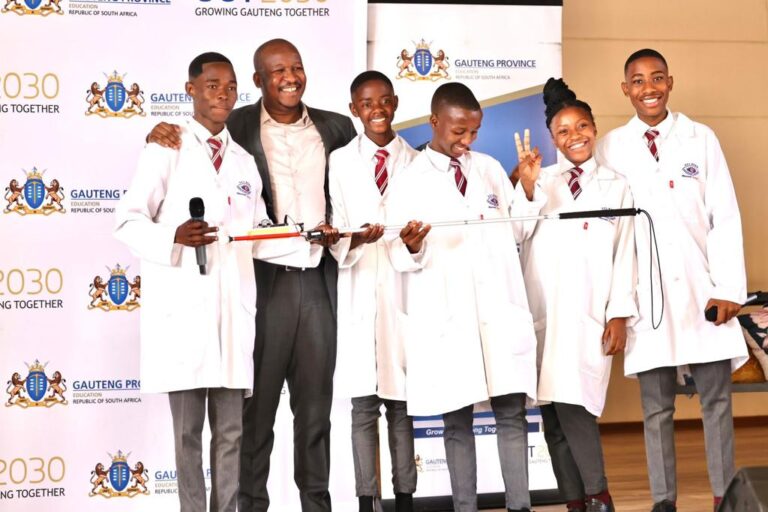
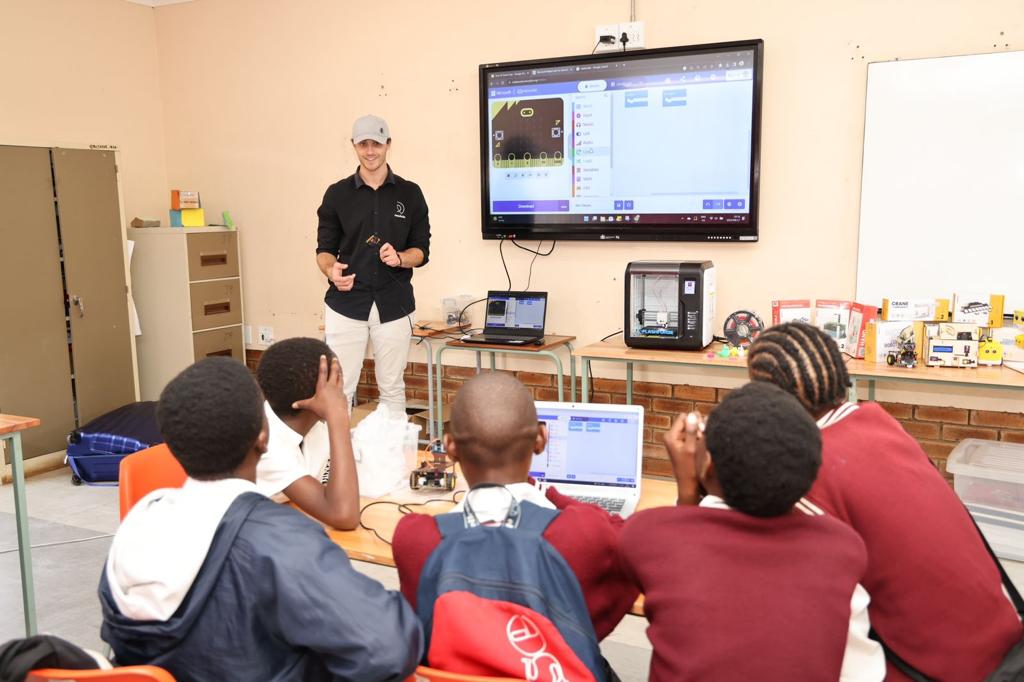
Gauteng MEC for education Matome Chiloane launched the Mapenane Maths, Science & ICT School of Specialisation in Ga-Rankuwa, about 37km northwest of Pretoria.

The school, which was launched on Thursday, will mainly focus on research and innovation.

“As the Gauteng province, we are getting this right. This is the 25th school of specialisation that has been launched,” said Chiloane.

“Our focus is to make sure that every school has a specialisation. We plan on doing this in primary schools as well, so that we take the learners to the high schools that have their desired skills.”

The MEC expressed the significance of a school that specialises in research and innovation, and the aspiration to ensure that all schools in Gauteng specialise in key skills.

Learners at the school researched the amount of blind people in the community and developed a GPS-enabled walking cane with sensors to assist them.

The MEC also unveiled a life-sized microscope which the learners had built themselves and which will be usable on the school premises.

Early in August, Chiloane launched the Oosrand Commerce and Entrepreneurship School of Chiloane launched the Oosrand Commerce and Entrepreneurship School of Specialisation in Reiger Park, Boksburg.

The school was Gauteng’s 24th school of specialisation and the second commerce and entrepreneurship school in Ekurhuleni, east of Johannesburg.

The school aims to cultivate talent across diverse fields and shape a future generation of leaders in South Africa.

INSIDE EDUCATION

Sibanye Stillwater Sanitation Project restores dignity of learners in the Eastern Cape

Staff Reporter

THE Department of Basic Education (DBE) and the private sector are pushing hard to restore the dignity of education by delivering sanitation facilities to schools in rural communities.

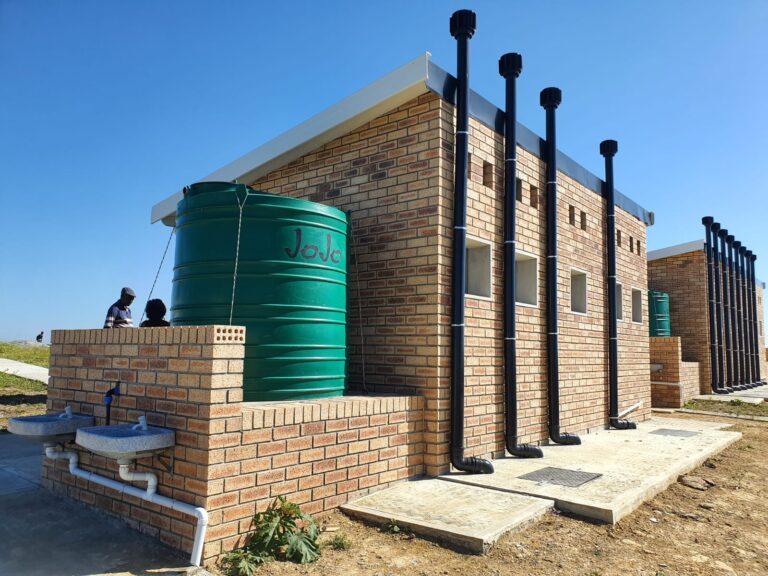
The Eastern Cape MEC for Education, Fundile Gade, joined by provincial and national senior education officials, has received a donation of newly built sanitation facilities from the Sibanye Stillwater Mining Company, one of the DBE’s partners in the SAFE initiative.

MEC Gade officially handed over the sanitation facilities to seven identified primary schools at Marubeni Primary School in Libode on 10 August 2023. The additional six schools that have received sanitation facilities are Dininkosi, Dlukulwana, Candulwandle, Mqanduli, Vulincobo, and Ndintanka Primary Schools.

Sibanye Stillwater initiated the project as part of its social responsibility programme in response to the call from President Ramaphosa for support for the Sanitation Appropriate For Education (SAFE) initiative. Sibanye Stillwater is an international mining and metal processing player and has made tremendous contributions to education in South Africa. Given the scale of the budget and the prevailing economic climate, the Government invited the private sector to consider participating in the SAFE initiative as part of their corporate citizenship agenda.

During the handover ceremony, Deputy Director-General for Infrastructure at the DBE, David van der Westhuijzen, indicated that the Basic Education Sector had made strides in addressing infrastructure challenges in the country.

The SAFE Initiative has delivered 1,794 projects since its inception, with 1,034 in the Eastern Cape alone. Van der Westhuijzen pointed out that initially, provinces such as the Eastern Cape, KwaZulu-Natal, Limpopo, Mpumalanga and North West had the bulk of pit latrines.

“Some of the backlogs of inappropriate sanitation structures have been addressed as part of the DBE’s Accelerated Schools Infrastructure Development Initiative (ASIDI), and some as part of the provincial infrastructure programme. Donor partners have contributed to 124 projects. The SAFE initiative demonstrates that the government responds to national crises and can summon the combined effort of its corporate citizens in addressing issues of national importance and dignity.”

Gade indicated that the private sector’s contribution to improving school infrastructure facilities will go a long way in transforming the education landscape in South Africa.

INSIDE EDUCATION

UWC are the 2023 Women’s Varsity Football champions

Staff Reporter

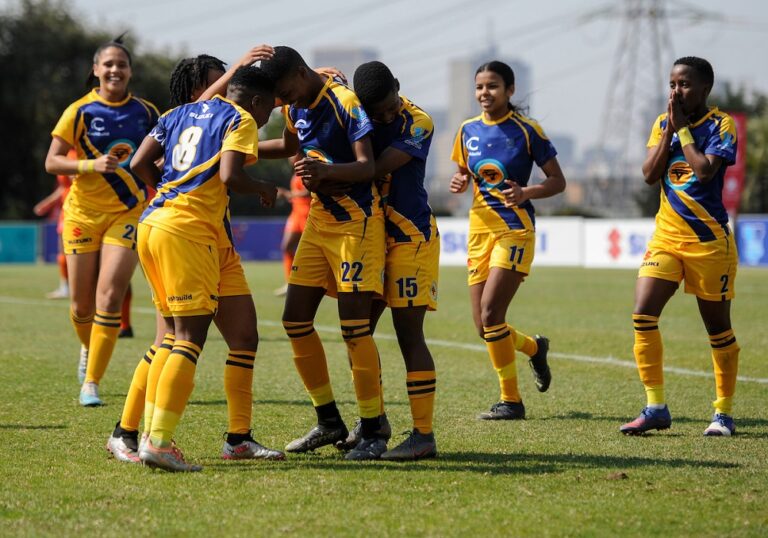
UWC are the 2023 Women’s Varsity Football champions after a comfortable 2-0 win over defending champions UJ in the final at the TUT Stadium in Pretoria.

The match repeated last year’s final, but the roles were reversed. This was UWC’s second title in five years.

The Orange Army lost concentration early in the game, and UWC drew the first blood inside the opening 10 minutes courtesy of a Lonathemba Mhlongo goal.

UJ were limited in chances and failed to get back into the game. A star-studded UWC team remained in control throughout most of the game, with the combination of Banyana Banyana’s Bongeka Gamede and Snegugu Zondi keeping things solid in the middle of the park. This gave the Western Cape side a slender 1-0 advantage at the break.

Lonathemba Mhlongo of UWC scores the first goal in the final VARSITY LADIES FOOTBALL FINAL 2023 Saturday 19 August 2023. TUT STADIUM PRETORIA FINAL UJ vs UWC Photo by: CATHERINE KOTZE/C&C PHOTO AGENCY

Thinasonke Mbuli’s charges picked up where they left off as they walked from the tunnel rejuvenated. UWC doubled their lead 13 minutes after the break when Katlego Mabuza was fed a cheeky through ball and easily beat the UJ keeper.

UWC’s Chelsea Daniels, a nominee for player of the tournament, was stretchered off due to injury in the 67th minute. UJ’s Lusanda Mavundla earned top honours, while UWC goalkeeper Siphesihle Dlamini shared the Golden Glove award with UJ’s Matshidiso Masebe.

INSIDE EDUCATION