Home Blog Page 198

Man involved in the Crowthorne Christian Academy assault incident released on R2 000 bail

Lerato Mbhiza

A man seen pulling a 13-year-old pupil’s dreadlocks at Crowthorne Christian Academy in Midrand in a widely shared video was released on R2 000 bail on Thursday.

The 51-year-old Andries Booysen appeared in the Midrand Magistrate’s Court on a charge of assault after a widely circulated video showed the learner being forcefully removed from the classroom due to a new policy that prohibits dreadlocks. 

According to the school’s new hair policy the 13-year-old broke the school rules by having dreadlocks. The learner missed classes on Monday and Tuesday this week after she was forcefully removed from her classroom. 

A video capturing the moment, including the assault of the mother by a school official, alleged to be Booysen surfaced on social media yesterday.

The school, which the Gauteng Education Department has said had been operating illegally, has since closed its doors following the incident.

Booysen was seen in the video pushing the pupil during an argument between the school’s principal and the girl’s mother on the school premises on Monday.

The NPA’s spokesperson Phindi Mjonondwana said the case was postponed for further investigations.

“The husband of the school’s principal, who is the accused in this matter, Mr Booysen, allegedly, violently pushed the learner and her mother. He was released on R2000 bail on condition that he must refrain from communicating or interfering with state witnesses. He will be back in court on the 2nd of October.”

INSIDE EDUCATION

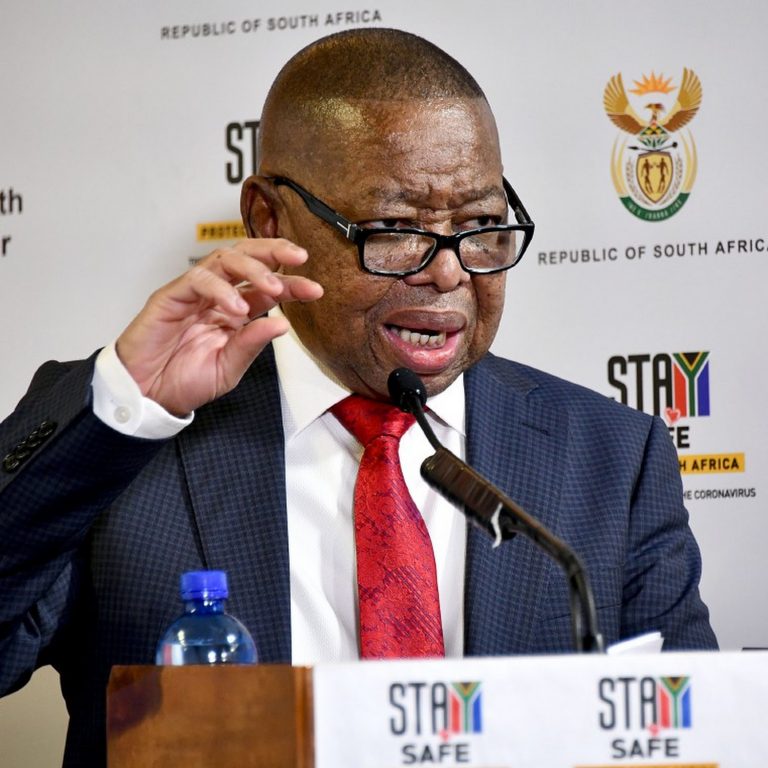
Higher Education Minister Responds To Calls for his Resignation

Johnathan Paoli

THE Minister of Higher Education and Training, Blade Nzimande, has responded to the growing problems surrounding the National Student Financial Aid Scheme (Nsfas) direct payment system, by giving the Nsfas Board until the end of August to inform him of their proposed plan in rectifying the challenges.

This follows on the growing protest action of students, as well as several scandals that have rocked the scheme and specifically its CEO Andile Nongogo, who was placed on a special leave following corruption allegations surrounding his tenure at the Services Sector Education and Training Authority (Sseta).

Students are still battling to access Nsfas funds and accusations of corruption and maladministration in the awarding of funds are flying thick and fast, but the Minister has remained steadfast in his defence of the payment system.

“Notwithstanding the current challenges, the Minister is of the view that the direct payment solution is a necessary measure to reduce instances of unauthorized access to beneficiaries’ allowances, payment of ghost students, inconsistencies and delayed payments of allowances,” the Ministry said in a statement on Thursday.

The Ministry said the direct payment solution is in line with the Student Centered Model which the scheme adopted, and in the interests of transparency and claims of students being defunded, further called on Nsfas to make public the information and details of all individuals found to be defrauding the scheme.

It was further stressed that the scheme funding has increased more than five fold in the last nine years, from R5.9 billion in 2014 to R47.6 billion in 2023 for the funding of roughly 11 million students of which 49% are also SASSA beneficiaries.

There have been growing calls for Nzimande to resign over his department’s handling of the Nsfas direct payment system.

In a statement on Wednesday, the UDM called for his immediate resignation.

Earlier this year, both the EFFSC of North West as well as members of the Wits University SRC called for Nzimande’s head.

INSIDE EDUCATION

UDM Calls For Blade Nzimande’s Immediate Resignation over NSFAS

Johnathan Paoli

THE United Democratic Movement (UDM) has officially called for the resignation of the Minister of Higher Education and Training, Blade Ndzimande, following the crisis surrounding the National Student Financial Aid Scheme (NSFAS) in recent months.

UDM President, Bantu Holomisa commended the work done by the Organisation Undoing Tax Abuse (Outa) in investigating both Nsfas, as well as allegations of corruption and maladministration in the Services Sector Education and Training Authorities (SSETA) since 2018.

Further, the OUTA report revealed that the four companies awarded the tender to handle the direct payment system for NSFAS were not registered as financial services providers.

Ezaga Holdings – held an affiliated banking licence with Access Bank. A banking licence or affiliation with a bank with a banking licence was a compulsory bid requirement. Two of the successful bidders, Norraco Corporation and Tenet Technology, were also not registered as VAT vendors when they submitted their tenders.

Holomisa further criticised the Hawks and Special Investigating Unit’s failure to respond to a report the UDM made to them in February this year concerning the R2 million NSFAS rental scandal.

Recently NSFAS CEO, Andile Nongogo was placed on special leave following the student payment controversies surrounding investigations of the four fintech companies, as well as other forms of corruption and maladministration within the scheme.

In addition, the Portfolio Committee on Higher Education, Science and Innovation came under scrutiny for their failure to properly investigate the problems within the NSFAS, the SSETA and the Department.

Holomisa compared the NSFAS issue to the Bosasa as a source of looted money for the government and expressed concern over the recent violence at the Walter Sisulu University calling onPresident Cyril Ramaphosa to dispatch a task team immediately.

Earlier this year, the EFF Student Command (EFFSC) North West similarly called for the resignation of Nzimande, following the SIU’s report that approximately R5.1 billion in NSFAS funds were improperly spent on funding students who did not qualify for financial assistance, which was revealed during a briefing to Parliament’s Standing Committee on Public Accounts.

It was found that more than 40 000 students in 76 institutions of higher learning were funded regardless of their home income being more than R350 000 per annum.

“It is proof to our long-standing argument that there is deeply rooted maladministration and corruption in NSFAS, which prohibits the deserving students from poor backgrounds from accessing financial assistance from the scheme. This report further proves that we don’t have a competent minister in the Department of Higher Education and Training. 

“We, therefore, call upon the President to release Minister Blade Nzimande from his duties and not keep him because of the unstable relationship between ANC, Cosatu and SACP,” EFFSC provincial secretary Senzo Hlazo said.

In March this year Wits University SRC president Aphiwe Mnyamana and National Education, Health and Allied Workers’ Union (Nehawu) branch secretary Thabo Modise, called for the Education Minister’s resignation, for the failure to tackle the years-long issue of historic debt affecting tertiary students.

“Historic debt is a concern. Every year, we see institutions protesting. Hence as the SRC we say Blade Nzimande and Buti Manamela must resign because there is something wrong which they are doing,” Mnyamana said.

Despite the scandal and allegations, and multiple calls for his resignation, the Education Minister has come out to both chastise the violent protests as well as defend the NSFAS payment system.

“Violence will never justify or cannot be associated with any legitimate forms of protest and should be condemned by all, including student leaders,” Nzimande said.

INSIDE EDUCATION  

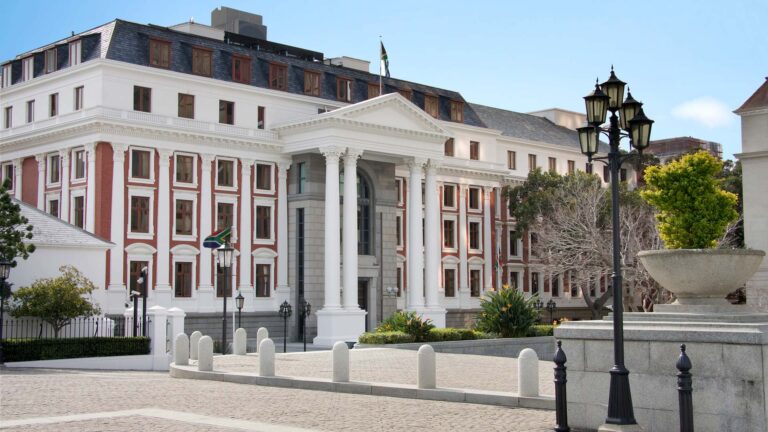
Parliament set to debate the BELA Bill

Staff Reporter

The Department of Basic Education and the Portfolio Committee on Basic Education is set to deliberate the consolidated National Basic Education Laws Amendment (BELA) Bill report post public engagements and the submission of comments by 8 August 2023.

A clause-by-clause engagement will take place today 15 August, until 18 August, analysing the public hearings and the oral and written submissions to rephrase, reject or take forward all 56 clauses contained in the Bill.

This is an opportunity for the DBE to respond to comments and concerns raised during the hearings, whether in support of the Bill or not. Parliament will then decide whether further amendments are required to the current version of the BELA Bill. Following this process, the Bill will be presented to Parliament before it is signed into law by the President.

The Committee, accompanied by DBE officials, concluded Public Hearings across all nine provinces earlier this year. Public hearings commenced in the Limpopo Province on 24 February and finished in the Eastern Cape Province on 11 June 2023. This week, the Committee finalised and approved the provincial reports, ending with the Eastern and the Northern Cape public hearings.

The public hearings were necessary to enhance public involvement to impact positively the mandate of participatory democracy to inform, consult, involve and provide feedback to South Africans on the way forward in respect of the Bill. During the hearings, we provided information in Braille, and sign language interpreters assisted in an inclusive engagement to leave no one behind during the consultative process.

The Committee remains cognisant of the importance of public consultation in law-making, and we wanted to secure the integrity of this process. In addition, there has been a significant interest in the amendments as stakeholders and individuals are interested in ensuring a functional educational system for the children of this country; thus, all plans had to be in place to cater for this interest. The Committee is now satisfied that Parliament’s internal units have addressed all the operational risks.

The Committee received oral submissions from 31 organisations from 8 – 29 November 2022. Some organisations support the Bill; some contest the Bill, and those feel that specific clauses need to be amended or removed.

The BELA Bill proposes to amend the South African Schools Act (SASA) of 1996 and the Employment of Educators Act (EEA) of 1998 to align them with developments in the education landscape and to ensure that systems of learning are put in place in a manner that gives effect to the right to primary education enshrined in section 29(1) of the Constitution of the Republic of South Africa, 1996.

INSIDE EDUCATION

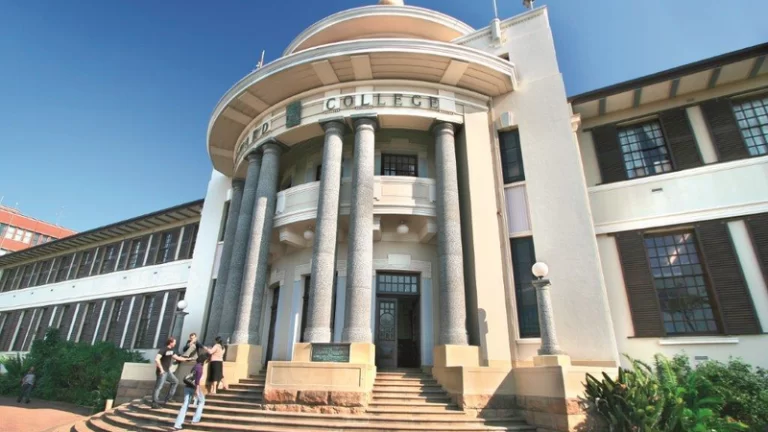
Countrywide varsity tension forces UKZN to return to online learning

Staff Reporter

The higher education sector in the country is currently experiencing challenges, with protests erupting at some universities. These demonstrations, which have been characterised by violence in some instances, have raised concern about the safety of staff, students and property. As a precautionary measure and to allay these fears, the University of KwaZulu-Natal switched to online learning on Monday, 14 August.

“We understand that the root cause of these protests is discontentment regarding the NSFAS allowances. Nationwide various universities have been affected, and there are indications that these protests will continue. This has necessitated the decision to switch to online leaming,” said Professor Sandile Phinda Songca, Deputy Vice-Chancellor: Teaching.

This means that besides academic activities that necessitate in-person engagement, such as practicals and clinics, all other teaching and leaming endeavours will transition to an emergency remote mode.

Songca said that to facilitate this transition, UKZN has already commenced the provision of data to both staff and students. “While this move might be seen as regrettable, it will attest to our agility and rapid response to disruptions to keep people safe while assuring the continuity and quality of the academic project,” Songca said.

INSIDE EDUCATION

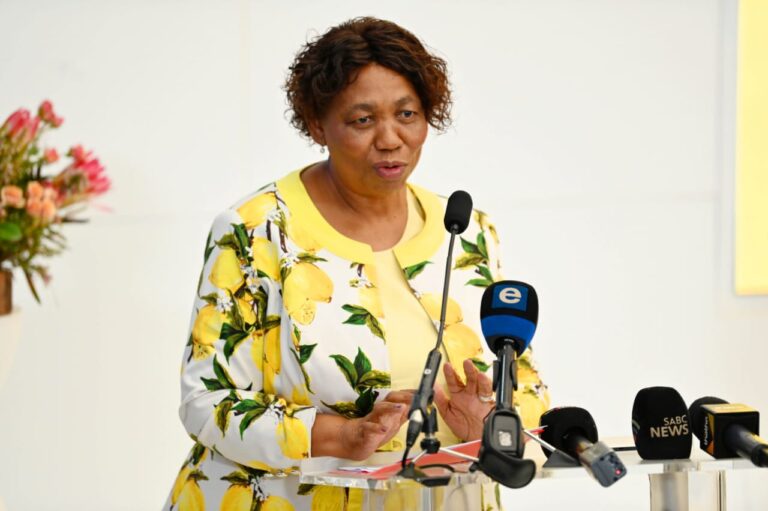
Motshekga praises educators during Women’s Month

Staff Reporter

Basic Education Minister, Angie Motshekga, praised women educators during the 2023 Women’s Month under the theme: “Empowering Minds: Celebrating Women and the Joy of Reading”.

“May I take this opportunity to wish a Happy Women’s Month to all women in the Education Sector, both in our mainstream schools and Early Childhood Development (ECD) centres,” she said.

Motshekga added that the Department of Basic Education (DBE) wishes to elevate the celebration of the remarkable achievements of women in education, and the power and authority they possess to inculcate in our children, the joy of reading.

“The Basic Education Sector sees this National Commemoration of Women’s Month as a perfect opportunity to acknowledge the incredible female teachers who dedicate their lives to shaping and empowering young minds and instilling a love for learning, sometimes under historically extremely challenging circumstances,” the Minister said.

“In classrooms across our nation, these exceptional women educators are catalysts for fostering a love for reading at an early age, as well as cultivating a healthy reading environment for learners. It is through the power of literature that our young learners discover empathy, resilience, and the strength to overcome obstacles.”

The Minister urged educators to take a leaf from our past teacher heroines, the likes of Frances Goitsemang Baard, Nosipho Dastile and the revered Albertina Sisulu, who, whilst qualified as a nurse by profession but with a strong desire for quality education, used her home in Orlando West Soweto as a makeshift classroom in the 1950s.

“On behalf of the Department and the Sector, I salute and give thanks to all of you remarkable Women educators, right through to our ECD centres and wish you a Happy Women’s Month,” she said.

INSIDE EDUCATION

PARENT’S CORNER: Free webinar with advice from experts for matriculants and parents

Staff Reporter

Parents tread a delicate line during the high-pressure Matric study and exam time. On the one hand, you want to be motivated for optimal performance every step of the way, but it’s easy to tip over into applying too much pressure on an already stressed-out teen.

Parents need to have an accurate take on their child’s unique coping mechanisms, as it’s not uncommon for teens to be adept at masking anxiety and stress. In other words, the teen presenting a carefree, even careless front may be doing this to hide strong, fear-based emotions they haven’t yet learnt to process.

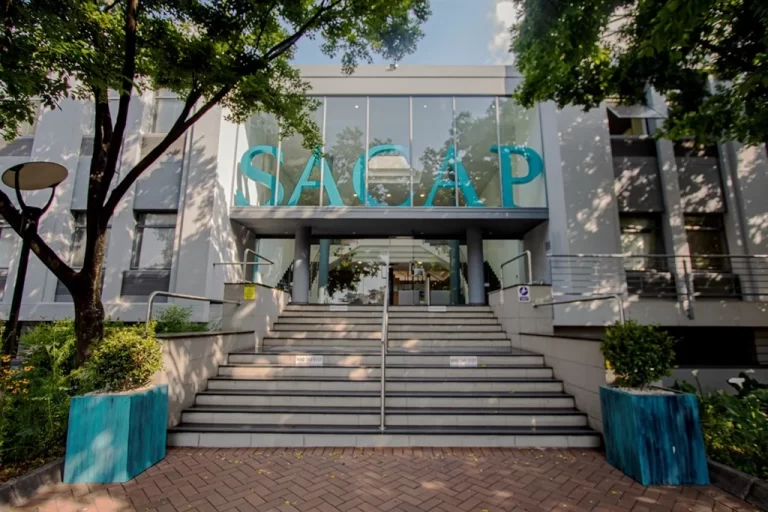
Ziyanda Khumalo, a SACAP (South African College of Applied Psychology) Student Support and Development Advisor, emphasises the importance of distinguishing between pressuring and motivating children.

“If you notice your child is frequently anxious, stressed, or even exhibiting signs of fear, it might indicate that they feel pressured. Your child may be overly focused on avoiding failure rather than striving for success. Perfectionism and frequent self-criticism may also be signs of too much pressure. There can be physical symptoms such as headaches, stomach aches, trouble sleeping or changes in appetite. Procrastinating and losing interest in enjoyable activities can also be signs of reduced well-being,” she said.

Ziyanda is on the SACAP panel of experts presenting the free SACAP Parents’ Guide to Matric support webinar from 10:00 to 11:30 on Saturday, 19 August 2023.

South African Matric parents are invited to join the conversation by registering for the free one-and-a-half-hour webinar here. The panellists’ focus is on practical ways to navigate exam stress during the upcoming months.

SACAP Educator and Educational Psychologist Jacques Viljoen said parents must be able to identify and understand stress in children. “Children often do not express their feelings and emotions as transparently as adults. This can make it challenging for parents to discern when their child is experiencing stress, anxiety, or other negative emotions related to exams. This means that active engagement and informed observation by parents are essential in understanding and supporting their child’s emotional well-being.”

Jacques will unpack tools such as active listening, observation and using open-ended questions during the webinar.

Another key aspect of parental support during Matric exams is providing adequate support and resources. Jacques said. “Academic pressure and competition can be overwhelming for children. Parents need to ensure that they’re not just focusing on grades but also the holistic well-being of their children. It helps when parents continually remind their children that their worth is not solely based on exam results. Parents can focus on celebrating their efforts, resilience, and progress, not just the outcome,” he said.

Counsellor Salma Kathrada will be joining the SACAP panel. She works with the well-being of families and will focus on practical ways to build healthy relationships and maintain family balance during exam time.

Ziyanda said Open and non-judgemental conversations are the fuel for traversing the Matric landscape as smoothly as possible.

“To promote motivation rather than pressure, parents can set realistic expectations and help their teens set achievable academic and study goals aligned to their abilities. Focus on encouraging and supporting appropriate time off for exercise, social interaction and relaxation. Offer emotional support, reassurance and a safe space for your child to express their feelings. Celebrating small wins creates frequent positive reinforcement and builds confidence.

“Some parents may need to focus on letting go of the reins a bit and providing more autonomy so that their teen has some control over their study schedule and can make decisions that increase their responsibility. In the same vein, aim to encourage intrinsic motivation so your child can discover their reasons for studying, which can lead to more sustainable self-motivation. Remember that every child is unique, and it’s important to maintain open communication so that you understand their needs and feelings during the exam season. While Matric is, without doubt, a challenging time, it is potentially also a time of learning, growing and deepening relationships,” Ziyanda added.

Parents are invited to join the conversation, SACAP Parents’ Guide to Matric support webinar from 10:00 to 11:30 on Saturday, 19 August 2023. Registration is free, and you can RSVP on Zoom here.

INSIDE EDUCATION

Fort Hare VC Professor Buhlungu to deliver the TB Davie Lecture at UCT

Staff Reporter

The University of Cape Town (UCT) will host the Vice-Chancellor of the University of Fort Hare (UFH), Professor Sakhela Buhlungu, who will present the 57th annual TB Davie Memorial Lecture.

Professor Buhlungu, a former Dean of Humanities at UCT, will deliver the lecture organised by the UCT Academic Freedom Committee on Wednesday, 23 August 2023 in the New Lecture Theatre, Upper Campus at 18:00. It is titled “Academic Freedom and Institutional Autonomy: A View from the Thyume Valley”.

The late 1950s marked a negative turning point for higher education in South Africa. The Extension of University Act 45 of 1959 set the country on a path of ethnic segregation of university education whose effects remain more than 60 years later and after almost 30 years of democracy.

From 1959 eminent academics and activists were invited to present the TB Davie Memorial Lecture. Significantly for Buhlungu, Professor ZK Matthews – who graduated at UFH in 1924 and was an academic and political activist – gave the third lecture in 1961. Titled “African Awakening and the Universities”, Professor Matthews’ lecture made a link between academic freedom and the quest for liberation in South Africa and the continent.

UCT Vice-Chancellor (interim) Emeritus Professor Daya Reddy explained: “Professor Buhlungu, in this lecture, will identify four moments that marked the introduction of ethnic education and assault on academic freedom at UFH – the Extension of University Act of 1959, the appointment of Broederbonder Professor JM De Wet in 1968, the closure and subsequent annexation of the Federal Theological Seminary to UFH in 1974/5, and the handing over of the university to the Ciskei Bantustan in 1981.

“These developments had a debilitating effect on the university, which the current administration still has to contend with today.”

Buhlungu will present four propositions about academic freedom and institutional autonomy in the current conjuncture in South Africa. He will, among others, argue that academic freedom and institutional autonomy is contextual in that it means different things to different institutions because of our different histories, and that in the current period striving for academic freedom and institutional autonomy in one university is a futile exercise.

“Through the lecture, Professor Buhlungu will challenge people in the sector – staff, academics and administrators – to rethink the notions of academic freedom and institutional autonomy in the modern age,” said Reddy.

INSIDE EDUCATION

SPORTS CORNER: National Archives and Records Service of South Africa to host International Council on Archives biennial conference

Staff Reporter

National Archives and Records Service of South Africa to host the xxvii Eastern and Southern Africa regional branch of the International Council on Archives (ESARBICA) biennial conference

The National Archives and Records Service of South Africa (NARSSA), in partnership with the Gauteng Department of Sport, Arts, Culture and Recreation (GDSACR) and the University of South Africa (UNISA) is hosting the XXVII Eastern and Southern Africa Regional Branch of the International Council on Archives (ESARBICA) Biennial Conference in Boksburg, Gauteng, South Africa which began on Monday and continues until 18 August 2023 at the Birchwood Hotel.

The conference was preceded by a pre-conference training workshop for junior archivists from 14-15 August, led by knowledgeable experts from the sector.

“We expect 40 Junior Archivists from the region to attend this important training. The main conference programme will be convened on 16 and 17 August. It will be attended by practitioners and academics in the archives and records management sector from the region, which includes Sudan, Uganda, Kenya, Tanzania, Malawi, Zambia, Zimbabwe, Botswana, Mozambique, South Africa, Lesotho, Eswatini, Namibia, Angola, and Seychelles. Under the theme “Archives, Records and Memory in Digital Spaces and Global Chaos”, the conference will seek to address current issues and look at solutions to deal with disruption and chaos caused by 4IR and AI within the records and archive management environment,” said the Department in a statement.

There will also be a handover event of the digitised records of the constitutional development process of South Africa’s Road to Democracy.

The project was successfully implemented through a partnership between NARSSA and the Constitution Hill Trust. Honouring this event will be Justice Albie Sachs, renowned struggle icon and one of the founding members of the Constitutional Court of South Africa, who will also be the guest speaker at the event.

Chairperson of the Constitution Hill Trust, Mr Valli Moosa (former Minister of Constitutional Development in the Cabinet of Nelson Mandela), will also be in attendance.

The digitised collections include the Convention for a Democratic South Africa (CODESA), Constitutional Assembly (CA), Multiparty Negotiations (NEG). The digitised records will be made available to the public through the NARSSA website (www.nationalarchives.gov.za), and the Constitution Hill Trust website at (www.wethepeoplesa.org).

The Ministry of Sport, Arts and Culture will receive the digitised records on 16 August 2023.

Heads of national archives from the region will also have their business meetings during this period. This conference promises to be a melting pot of archive and records management experts, administrators and practitioners, and the media is invited to the opening ceremony on the 16th of August, 2023.

For more information about the XXVII Eastern and Southern Africa Regional Branch of the International Council on Archives (ESARBICA) Biennial Conference, including registration details and the conference programme, please visit the official conference website at: https://nssc.dsac.gov.za/esarbica/about_us.php

INSIDE EDUCATION

A Gauteng education specialists shot 8 times and killed in his driveway

Ronewa Makhesha

MEC Chiloane is saddened by the fatal shooting of Siza Mbhalati, one of the Deputy Chief Education Specialists who was gunned down in his driveway at his home in Protea Glen, Soweto on Thursday.

The 52-year-old Mbhalati worked for the Labour Relations Unit in Joburg South District and was responsible for facilitating labour-related disputes at schools in the District.

“Information at our disposal suggests that Mr Mbhalati was allegedly followed home from work on Thursday afternoon by unknown suspects, who then shot him about 8 times in his driveway while he was still in his car,” Chiloane said.

“We are saddened by the unfortunate death of one of our dedicated public servants who served the department with honour and dignity. On behalf of the department, we wish to extend our sincerest condolences to his family and loved ones.”

“In the same breath, we condemn this level of lawlessness and call for the speedy apprehension of these brazen criminals,” said MEC Chiloane.

INSIDE EDUCATION