Home Blog Page 201

Gauteng Education MEC’s maiden R63,4 billion budget seeks to consolidate strategic plan, focus on Premier’s priorities

ZINGISA MKHUMA

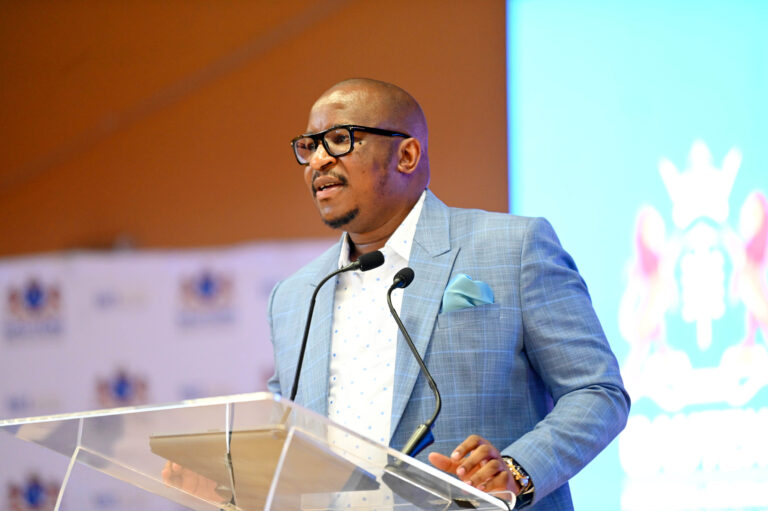
DELIVERING his first budget speech as Gauteng MEC for Education, Matome Chiloane said he wanted to highlight efforts made in closing the gap in education quality between the fee-paying and no-fee paying schools as well as the achievement of universal access to schooling.

Chiloane was presenting the Department’s 2023/24 Budget of R 63,4 billion on Friday 6 May which shows an increase of 6.2% from a main appropriation of R59.7 billion in 2022/23 to  the current R63,4 billion allocation – a Rand value increase of R3,6 billion.

He said over R46 billion or 72.6% of the 2023/24 budget is spent on the compensation of employees, over R7,89 billion accounts for transfers and subsidies, infrastructure development is allocated R2,46 billion, leaving more than R7 billion for programmes, nutrition, transport and other goods and services.

“I am proud to present a budget plan that aims to focus on the consolidation of our Five-Year Strategic Plan with special emphasis on the Premier’s Elevated Priorities to build on the successes achieved to date and to adjust our focus to achieve and make an even greater impact for the citizens in Gauteng.

“As such, our approach to education transformation in Gauteng is multi-faceted and is directed to address the quality of learning through quality improvement strategies that will improve the classroom performance of teachers and the active learning of children in classrooms across all schools in the province.

“Simultaneously we are introducing interventions that compensate for poor family literacy level and the impact of poverty affecting a large percentage of our communities in Gauteng. It is for this reason that we wholly support the focus on Townships, Informal Settlements and Hostels,” Chiloane said.

Chiloane spoke about the Elevated Priorities that are in line with Gauteng’s vision that the Premier
Panyaza Lesufi delivered at the State of the Province Address as priorities elevated for accelerated
implementation for the remainder of the Sixth Administration.

In education the elevated priorities are:

  • Improving Grade 12 results, measuring progress and educational outcomes must be a priority.
  • Expanding access of ECD sites across poor and marginalised communities including residential
    hostels
  • ICT schools’ role in the Townships must continue investing in skills of the future by Continuing to
    open Schools of Specialisation to reach 35 schools by the end of the term, introduce a system of
    multi-certification
  • Modernisation, investing in school infrastructure and online admissions by investing in school
    infrastructure in townships, ensuring accelerated delivery of smart public infrastructure to meet the
    demand identified through the online admissions remains a critical priority
  • Integration and incorporation of wellness programmes, and rehabilitation of children in conflict
    with the law into the education system by assessing those in care centres and rehabilitation centres
    ready for schooling and ensure they are reintegrated into the schooling system.
  • School Safety must be a priority to ensure learner and teachers safety.
  • Youth Development must be redefined to increase youth employability and employment.

Chiloane emphasised the Department’s priority in improving the Grade 12 performance in what he
called Reclaiming the ‘crown’ – continuing the improvement of quality learning in the FET Band.

He said the Matric Class for 2022 did a sterling job by achieving a pass rate of 84.4% which represents an improvement of 1.6% as compared to the 82.8% pass rate that was obtained in 2021.

In 2022 there were a total of 43 298 distinctions, which saw over 20 769 distinctions from township schools – a monumental achievement!’, adding that the GDE pass rate has consistently been higher than the National pass rate and this trend continues.

“A great achievement to note is the progress made by Gauteng in closing the gap between former model C and township schools’ pass rate from 12% to 9%. In the 2022 NCS examination, 24 learners from township schools received total marks in Mathematics, Business Economics and Economics.

“In 2023, the Department endeavour to improve the matric pass rate for Gauteng to 90% and the Bachelor Pass Rate to 50%, with specific emphasis in reducing the difference in NSC Pass rate between township and ex-Model C schools to 7%. Further emphasis will be placed on increasing learner participation in Mathematics and Science and ensuring that 21.5% of learners are achieving 60% and above in Physical Sciences and 17.5% of learners are achieving 60% and above in Mathematics”.

Furthermore, The Department will again offer additional support for Matric candidates that failed the exams and who have registered to write Supplementary Examinations. The enhanced SSIP Broadcast Project will continue as a means of support to all learners.

Additional intervention programmes will be given in respect of All other Grades, which includes District support for all schools, monitoring the Curriculum and Assessment standards, access to e- content and Early Grade Reading Assessments (Grades 1-3). 

The Introduction to African Languages and Maths, Science and Technology intervention programmes across all grades will be ongoing.

Responding to the challenges of scarce skills development, Chiloane said as outlined in GGT 2030, the province is implementing a strategy to reorganise and turnaround our schools, particularly schools in the township. 

“We are investing millions of rands to improve the quality of education in the townships and to turn around what were historically labour reservoirs for unskilled labour, into zones of hope, development, and transformation”.

INSIDE EDUCATION

Learning outcomes at the heart of development in Basic Education – Motshekga

STAFF REPORTER

EDUCATION Minister Angie Motshekga presented the Department of Basic Education’s (DBE’s)
Budget Vote 16, for the 2023/24 Financial Year in the National Assembly, Parliament, Cape Town, last week.

The overall 2023/24 MTEF budget allocation for the DBE is R31.8 billion, an increase of 7.0% from
last year’s overall allocation. 

The Minister highlighted that the heart of any development within the Basic Education Sector, must be what learners learn – learning outcomes, adding that these were severely impacted by COVID-19, exasperating teaching and learning losses and setting students back by one year of learning.

“Prior to the pandemic, we had seen progress in the reading abilities of children. The Minister referred to the Progress in International Reading Literacy Study (PIRLS 2021) report that was shared with South Africans. PIRLS 2021 summarised the state of global learning poverty, as “the share of children who cannot read with meaning a simple text by the age of 10, as follows: “Firstly, in 2019, learning poverty was estimated at 57% in low and middle-income countries; secondly, post-COVID-19, a surge of up to 70% learning poverty in low and middle-income countries was noticeable; and thirdly, learning poverty was found to be as high as 86% for Sub-Saharan Africa”.

“During the 2018 State of the Nation Address (SONA), President Ramaphosa decreed that learners must be able to read for meaning by the age of 10 years.  The DBE and the National Education Collaboration Trust (NECT) responded with the National Reading Strategy (NRS) in 2019 with its 10 pillars.

There is an emerging view that these must be changed to four key interdependent strands: an explicit reading literacy policy; skilled and agile teachers; age-appropriate and culturally relevant LTSMs; and involved parents and communities. An Integrated National Reading Literacy Strategy must be well resourced –  we are engaging the National Treasury in this regard”.

“Since the Early Childhood Development (ECD) function shift from the Department of Social Development to the DBE, we have been crafting and implementing innovative strategies to strengthen the foundations of learning, looking at the continuum from birth to early Grades in the Foundation and Intermediate Phases. The Department subsequently conducted the National Census of Early Learning Programmes in 42,420 ECD programmes and the Thrive by Five Index Baseline Study revealed that only 45% of children, who are currently attending ECD programmes, are
developmentally on track. It is therefore important that a new holistic and inclusive model includes all communities of trust in the ECD space”.

In respect of skills and competencies for a changing world, the Three-Stream Curriculum Model is a responsive curriculum to meet the demands of the 21 st  Century. The Minister cited the introduction of the vocational and the occupational streams as additional learning pathways towards the attainment of the National Senior Certificate (NSC) in the schooling system.

“Other milestones include the finalisation of 35 Occupational and Vocational subjects for implementation in 74 Schools of Skill.  In 2021, we began piloting the specialised subjects in Grades 8 and 9 in 104 Public Ordinary Schools and Focus Schools selected across all nine provinces. The General Education Certificate (GEC) was piloted for assessment in 277 schools in 2022. This year, we have decided to step-up the pilot in 1,000 schools, including 126 Schools of Skill”. 

The Sanitation Appropriate for Education (SAFE) Initiative, launched in 2018, focused on providing appropriate sanitation to schools, which were dependent on basic pit toilets. In 2018, there were initially 3,898 schools on the SAFE initiative. Further assessments and rationalisation decreased this number to 3,395 schools.

At the end of the 2022/23 financial year, the construction of age-appropriate sanitation projects were completed in 2,722 schools. The remaining 673 sanitation projects are scheduled for completion before the end of this year. The Department has crafted an Infrastructure Ten-Point Strategy to accelerate the roll-out of school infrastructure, adopted by the Council for Education Ministers (CEM).

In conclusion, Minister Motshekga expressed her appreciation to partners, singling SACE, Umalusi, NECT, unions, SGB associations, principals’ associations, national organisations responsible for learners with special needs and independent schools’ associations for their counsel and impeccable resilience.

“As we continue to confront our ongoing challenges in the Sector: learner performance; schools and
district offices; infrastructure; resource constraints; school safety; learners and teachers’ well-being; and parental involvement, we must remember this quote from Dr Mokhubung Magubane: the future is embedded in the present, as the present bears imprints of the past.”

INSIDE EDUCATION

UKZN secures R17.5 million in funding for students on Sexual and Gender-Based Violence

STAFF REPORTER

The University of KwaZulu-Natal (UKZN) has secured substantial funding amounting to R17.5 million for students on Sexual and Gender-Based Violence.

UKZN Vice-Chancellor and Principal, Professor Nana Poku, announced the plans for the funding to the University community last week.

“This funding will be used to provide support to postgraduate students, especially those from historically disadvantaged backgrounds, and to establish a dedicated secretariat for addressing Sexual and Gender-Based Violence (SGBV),” he said.
 
The bulk of the funds, R15 million will be earmarked for providing financial support to deserving postgraduate students. The primary beneficiaries of this fund will be those students from disadvantaged backgrounds who need support to graduate in this 2023 academic year. 

The process of finalising the precise selection criteria for eligible postgraduate students is currently underway. Each qualifying student will receive financial assistance towards their studies, up to a maximum amount to be determined by each College in line with the University’s ethos of fairness, transparency and inclusion and alongside the structures of the funder’s requirements. 
 
The College of Law and Management Studies will receive R2 million, the College of Agriculture, Engineering and Science is set to receive R4 million, the College of Health Sciences is allocated R3.66 million, and the College of Humanities will receive a generous R5 million.
 
In addition to that, R2.5 million of the total funding will be dedicated to a crucial cause – the creation and operation of the GBV secretariat as mandated by the recently adopted UKZN SGBV Strategy. In line with that strategy and as announced in March this year, a specialised hub for addressing issues of Sexual and Gender-Based Violence (SGBV) will be established within the Office of the Vice-Chancellor. 
 
This hub will be responsible for steering the implementation of UKZN’s zero-tolerance policy towards SGBV and maintaining an accurate report of progress in this critical area. The funding will also support initiatives and activities to increase awareness about SGBV. 
 
Professor Poku said the contribution not only helps students from disadvantaged backgrounds in their academic journey but also aligns perfectly with the university’s commitment to eradicate the menace of sexual and gender-based violence from its campuses.

“It is a significant step towards a more inclusive, equitable, and safe academic environment at our institution.”

INSIDE EDUCATION

Nzimande outlines Skills plan for South Africa during breakfast

STAFF REPORTER

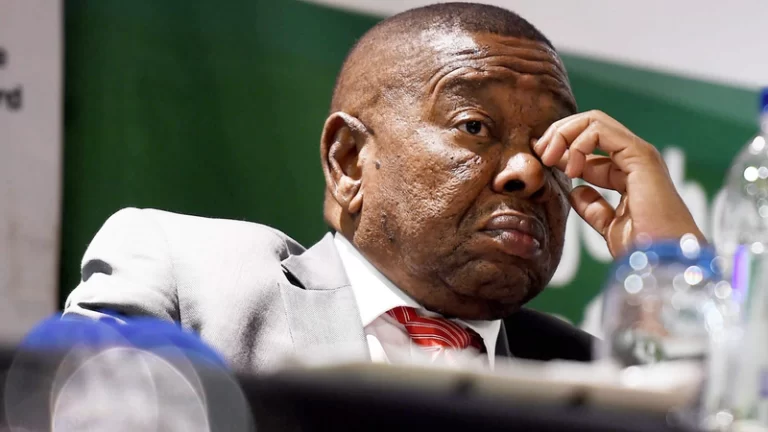
MINISTER of Higher Education, Science and Innovation, Dr Blade Nzimande, says skills development and training remains crucial in redressing the skewed trajectory of the past characterised through racist policies.

Addressing delegates during a breakfasting hosting the National Skills Fund (NSF) bursary beneficiaries during breakfast in Cape Town, the Minister said education and skills development is important because it promotes economic growth and social inclusion by creating a more skilled and diverse workforce.

“In our South African context, by providing training and education opportunities to Black South Africans, these skills development initiatives will help to level the playing field and reduce inequality in the economy. As President Nelson Mandela said: “The power of education extends beyond the development of skills we need for economic success. It can contribute to nation-building and reconciliation.”

Nzimande pledged to intensify efforts towards addressing the imbalances of skills supply and demand in South Africa through the process of developing a country wide Master Skills Plan under the theme ‘One Country One Skills Development Plan’.

This ground-breaking initiative will provide strategic direction to the country’s skills system, bring about coherence in skills provisioning and clarify institutional arrangements and ensure that skills development in South Africa is relevant and responsive to the needs of the economy and society.

He said the Department of Higher Education and Training, together with the 21 sector education and training authorities (SETAs) and entities under the department, has been mandated a leadership role in the skills development of the country, in rebuilding the economy and in leading the reconstruction efforts of the government post-Covid-19.

Half a billion rand will also be allocated to the SETAs for scarce skills development in the current financial year.

The Minister said that the NSF is in the process of finalising the issuing of skills development funding Request for Proposals (RFPs) which include:

a) Postgraduate studies in natural sciences at Masters, Medical Doctors, PHD and Post PHD
level;
b) Artisan Recognition of Prior Learning (ARPL); Studies in Wellness and Sports, Rural Development; Information and Communication Technology (Skills in 4IR); TVET College Placement programmes; and
c) Expansion of Centres of Specialisation

He urged South Africans to look for these opportunities, while urging greater collaboration of all PSET institutions with industry, mostly importantly, TVET and Community Colleges.

“This will ensure that we create more job and training opportunities for our students in these sectors. I have said it several times to our colleges principals, that our TVET college will not be called colleges if they do not have well established relations with industry and workplaces within their areas,” he said.

INSIDE EDUCATION

Hard-hitting address by Prof Jonathan Jansen at UCT highlights extent of corruption at universities

STAFF REPORTER

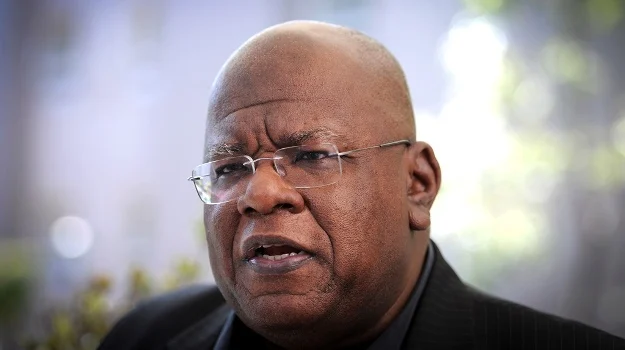
THE politicisation of top governance in South African universities is an entrée to corruption, and if left unchecked, the “growing swamp” will destroy higher education and snuff out the lamp of learning for generations to come, said Professor Jonathan Jansen.

Jansen is Distinguished Professor of Education at Stellenbosch University and the president of the Academy of Science of South Africa. His research is concerned with the politics of knowledge in schools and universities.

He was speaking at a University of Cape Town (UCT) Summer School Extension Series event earlier this month, in conversation with UCT’s Anwar Mall.

Mall is a medical biochemist and an Emeritus Professor of Surgical Research in the Faculty of Health Sciences.

The discussion, “Why universities are not exempt from corruption”, explored themes from Jansen’s recent hard-hitting book, Corrupted: A study of chronic dysfunction in South African universities.

An alarmingly high number of the country’s 26 higher education institutions are already at risk, Jansen said.

The example of politically motivated assassinations and attempts on the lives of vice-chancellors and senior staff at institutions such as the University of Fort Hare had illuminated the reality of criminal syndicates operating with impunity.

Governance bodies had been infiltrated by individuals’ intent only on bleeding these institutions dry, Jansen said.

The conversation was part of the Summer School Extension Series.

Jansen said that while the threats to higher education were considerable, he doesn’t believe “the game is over with respect to a love of learning”.

“UCT [for example] is lucky to have those values in place and has some of the world’s leading scholars, some of the most productive laboratories for science and medicine with great thinkers in philosophy, literature and so on. But there’s a worldwide problem of reducing teaching and learning to ‘best outcomes’.”

Universities across the world are in constant struggle with what social scientists call the neoliberal university, he said.

“Get as many students across the line as possible, turn research into production units and ensure we
optimise the publication subsidy of the university.”

“We must train the next generation of professors so that they can step into a classroom and engage students to come to love the intellectual property. Because if you don’t, the swamp is going to grow.”

In this endeavour, universities need strong academic leaders at the helm, with a clear vision of their task, Jansen said.

“Take Fort Hare, where vice-chancellor Professor Sakhela Buhlungu understands the value of learning. We forgot what universities are called for … It’s a particular kind of institution set up for an enduring purpose.”

“As I said to a group of vice-chancellors I met with recently, ‘How many of you have stood up at orientation or graduation and told the students what a university is for?’ South Africans equate a degree with getting a job.”

Therein lies a problem, Jansen noted. The goal of higher education is to provide students with a skill set, not prepare them for a specific job, except for the narrowest of professions.

But when it comes to good leadership, the cupboard is bare, Jansen noted. The crisis has impacted on councils, senates and other university governance bodies. And if avoided, problems “at the top” create havoc within the institution.

“A vice-chancellor is only as good as their second tier,” Jansen said. “And we’re dealing with a set of very serious issues about where the next generation of leaders will come from.”

Jansen said that while universities train emerging professors, introducing new, young blood to the academic corps for continuity, similar advancement programmes should be in place for university leadership roles.

INSIDE EDUCATION

Lack of reading culture and COVID-19 blamed for SA’s poor showing in literacy study

STAFF REPORTER

THE Portfolio Committee on Basic Education has received a comprehensive briefing from the Department of Basic Education (DBE) on the recently released Progress in International Reading Literacy Study (PIRLS) for 2021.
 
Committee Chairperson Bongiwe Mbinqo-Gigaba indicated that the committee noted media reports on the outcome of the study and requested a detailed, official briefing from the DBE on its implications. 

The PIRLS 2021 study reveals very low performance levels for learners’ ability to read for meaning as they turn 10 years old. Reading comprehension is the ability to read text, process it and understand its meaning.

It relies on two interconnected abilities: word reading (being able to decode the symbols on the page) and language comprehension (being able to understand the meaning of the words and sentences). Readers who have a strong understanding can draw conclusions after reading a text.
 
The committee heard that the DBE uses three different national assessments to generate data: Early and emergent literacy skills (ELNA); Foundational reading comprehension (Systemic evaluation) and international reading comprehension benchmarks. The results of the ELNA and the Systematic evaluation assessments are better than the International reading comprehension assessment results, the DBE said.
 
The committee heard that South Africa has participated in PIRLS since 2006, with subsequent cycles in 2011, 2016, and most recently in 2021. 12 426 Grade 4 learners in 321 schools and 9 317 Grade 6 learners in 253 schools were assessed. Grade 4 learners were representative of the 11 official languages and nine provinces, while the Grade 6 learners only represented Afrikaans and English.

South Africa’s Grade 4 and 6 participation rate was 97% and 98% respectively (after replacements).
 
South Africa’s trend score from 2016 dropped significantly from 320 to 288 (difference of 32 points).

81% of Grade 4s and 56% of Grade 6 learners did not reach the low benchmark of 400 points. Grade 6 learners scored 384 points, with Afrikaans learners scoring an average of 456. The best performing language was Afrikaans (387) and lowest Setswana (211).

The Western Cape had the highest scores:

  • Grade 4 at 363 and Grade 6 at 460, almost 131 points above North West in Grade 4, which achieved
    232.
  1. – At 317 score points nationally, Grade 4 girls achieved 57 score points higher than Grade 4 boys (260).
     
    Some of the challenges with reading for comprehension highlighted by the DBE are the lack of a
    culture of reading in many households in South Africa, along with poorly resourced schools and a
    lack of emphasis on reading during the early childhood development phase.  The DBE indicated that
    it will now study and analyse the results in order to improve in these areas.
     
    Ms Mbinqo-Gigaba said the committee is concerned about the results, but noted the societal issues that impact on South Africa’s results, including the days of learning lost during Covid-19. Furthermore, the committee noted that the PIRLS assessments are done in English and some learners do not have English as a language of learning in the developmental phase. “We took to heart some of the suggestions and strategies mentioned, like placing more emphasis on access to books and reading corners in classrooms, thereby inculcating a love for reading and being able to
    read with meaning and understanding.”

INSIDE EDUCATION

South Africa’s 10 year-olds are struggling to read – it can be fixed

KAREN ROUX

MORE than 80% of South Africa’s grade 4 pupils – who are on average nine or 10 years old – cannot read for meaning. That means they can’t answer basic questions about or draw inferences from a text they’re reading. This worrying statistic emerged from the 2021 Progress in International Reading Literacy Study (PIRLS), which were released by the country’s basic education minister, Angie Motshekga, on 16 May.

The Conversation Africa asked Karen Roux, a specialist in reading literacy and development of equivalent assessments, to unpack the results.

What is the purpose of the study?

It’s an international large-scale assessment which provides participating countries with comparisons across education systems. Perhaps more importantly, it also allows countries to monitor trends over time and indicators of growth in the early years of children’s education. The assessments are conducted in five-year intervals; more than 50 countries participate. Only three African countries participated in the latest cycle: South Africa, Egypt and Morocco.

One of the main objectives for South African education authorities and researchers was to compare how well grade 4 learners read, across the country’s 11 official languages and its nine provinces. This information is vital to government bodies, policy-makers, non-government organisations, and scholars – it can be used to identify strengths and weaknesses and to address curriculum or policy shortcomings.

How did South Africa fare?

The PIRLS 2021 study showed that 81% of South African grade 4 pupils, across all 11 official languages, cannot read for meaning. Five years earlier, in the 2016 study, the figure stood at 78%.

The latest results indicate that eight out of 10 grade 4 children did not reach the Low International Benchmark, where they are expected to read a piece of text and locate and retrieve explicitly stated information. For example, the text would say “octopuses sometimes even make rock ‘doors’ for their dens that can be pulled closed to keep them safe” and the question would ask “what do octopuses use to make doors for their dens?”

The texts used in these tests came from all over the world, submitted by the participating countries. Twelve were trend texts; they were used in previous PIRLS cycles. Six new tests were developed. All countries got the same tests.

What explains South Africa’s performance?

The study happened in the middle of the COVID-19 pandemic, when schools all over the world had to close for a period of time. It was to be expected that school closures would cause learning losses – that is, what pupils ought to have gained over a normal year of schooling, versus what they actually learned.

In low- and middle-income countries, including South Africa, the pandemic exacerbated existing learning losses. Some scholars suggest that learning losses also include the “deterioration” of accumulated knowledge that is lost over time.

COVID disruptions weren’t unique to South Africa, so what explains its poor outcomes?

It is a (less than) perfect storm of problems. COVID was just part of it. There are also issues with how teachers are being trained to teach languages; parents not instilling a love of reading in their children from a young age, or being involved as they are taught to read at school; and inadequate school and classroom resources, especially in poorer schools.

The country’s school language policy also likely plays a role. In South Africa, the language of learning and teaching in the early grades is meant to be the language that the pupils speak at home. However, this is not always the case; classrooms, especially in urban areas, are full of pupils speaking diverse languages – not just isiXhosa or isiZulu, for instance, but these and other African languages.

Then, just as the pupils are getting the hang of the language used in the early grades, they switch to English in grade 4. The foundation is not yet laid for one language before this shift happens, so the pupils struggle with the new language (English).

Language acquisition theories suggest that before mastering a second language, the child must first have a solid foundation in their first, or home, language.

Can this crisis be turned around?

It’s been done elsewhere. Brazil, which like South Africa is classified as an upper-middle class income country, has been working hard on improving education. One of its poorest states, Ceará, has made huge strides in boosting literacy and numeracy. In a report about the process, the World Bank writes: It began with political leadership. Ceará’s government placed learning at the center of the education policy with a series of reforms under three categories.

These three categories were: (1) incentives for municipalities to better their education outcomes; (2) extensive support from the state’s literacy programme for municipally run schools and (3) regular results monitoring.

As this approach shows, there’s no one solution to solve any country’s reading crisis.

But political will is key. So, too, is ensuring the equitable provision of reading resources to South African schools – developed in African languages and grade appropriate. African language experts and storytellers should be the key source here.

Another thing that should be considered is a revision of the current curriculum policy for the early grades, introduced in 2012. The amount of time available for the skill of reading is extremely limited.

Only six hours per week are allocated for home language, but this is divided into the different skills that learners must be competent in: listening and speaking, reading and viewing, writing and presenting, as well as language structures and conventions.

That leaves pupils with about five hours in a two-week period to work on reading.

This time should be extended.

THE CONVERSATION

12 UCT finalists in South Africa’s “Science Oscars”

STAFF REPORTER

THE University of Cape Town (UCT) has done it again. Twelve of its academics and one university partnership have been selected as finalists in multiple categories for the 2022/2023 NSTF-South32 Awards – testament to their ground-breaking work in the fields of science, engineering and technology (SET) both nationally and abroad. 

The National Science and Technology Forum (NSTF) Awards are the largest and most prestigious SET research awards in South Africa and are held annually in partnership with mining and metals company South32.

The awards celebrate the work of esteemed scientists advancing the sustainable socio-economic growth of the nation and improving the quality of life for all South Africans.

Being selected as a finalist for South Africa’s “Science Oscars” is no mean feat considering the pool of extraordinarily talented scientists and the number of nominations the NSTF receives every year.

This year’s winners will be announced at an awards ceremony taking place on 13 July, under the banner: “Ocean sciences for sustainable development” in response to the United Nations’ decade-long theme, Ocean Science for Sustainable Development.

The UCT finalists are:  
Lifetime Award:
 Emeritus Professor Clive Gray – Professor of Immunology in the Faculty of Health Sciences (FHS)
 Professor Juliet Hermes – Department of Oceanography in the Faculty of Science TW Kambule-NSTF Award: Emerging Researcher:

 Dr Rachael Dangarembizi – senior lecturer in the Department of Human Biology and Neuroscience Institute in the FHS
 Dr Mubeen Goolam – lecturer in human biology in the Department of Human Biology in the FHS
 Dr Daniel Ramotsoela – senior lecturer in the Department of Electrical Engineering in the Faculty of Engineering & the Built Environment (EBE) Management Award:
 Professor Isabelle Ansorge – head of the Department of Oceanography in the Faculty of Science Engineering Research Capacity Development Award:
 Associate Professor Denis Kalumba – director of the Geotechnical Research Laboratory and of postgraduate studies in the Department of Civil Engineering in EBE NSTF Water Research Commission Award:
 Associate Professor Kirsty Carden – interim director of the Future Water Research Institute NSTF-SAMRC Clinician-Scientist Award:
 Professor Salome Maswime – head of Global Surgery in the FHS Green Economy Award:
 Professor Rachel Wynberg – Department of Environmental and Geographical Science in the Faculty of Science
Data for Research Award:
 Professor Karen Barnes – Division of Clinical Pharmacology in the Department of Medicine in the FHS
 Inter-University Institute for Data Intensive Astronomy – a partnership between UCT, the University of the Western Cape and the University of Pretoria Communication Award:
 South African Child Gauge: Lori Lake – communication and education specialist, Children’s Institute
Special Annual Theme Award:
 Professor Isabelle Ansorge – head of the Department of Oceanography in the Faculty of Science.

INSIDE EDUCATION

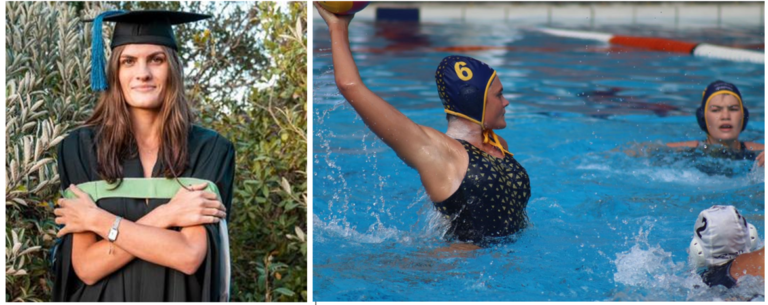
Diligent work ethic leading to success in academics and sport #Grad23

“Trying to keep up with such a hectic degree and a demanding sport was exhausting, but I wouldn’t change it for the world”, Madibaz Sport water polo star and Tokyo Olympian, Ashleigh Vaughan, said after graduating with her BPharm degree this autumn.

Driven by a dual passion and boosted by a massive support system, Ashleigh Vaughan has reaped the rewards of a diligent work ethic in academics and sport.

A burning desire to succeed helped her navigate a four-year journey riddled with challenges and obstacles.

“I am very passionate about both areas and also very competitive, so I wanted to do my best in all aspects,” Ashleigh explained.

“My dad was a doctor and my elder sister is a qualified pharmacist, so I always knew I wanted to do something in the medical field.”

She followed in her big sister’s footsteps to start a juggling act that would imminently lead to success on both counts. Fortunately, she could count on a “massive support system”.

Ashleigh (24), who is currently interning at Berea Pharmacy in East London, confessed that there were hectic times as she tried to balance the demands of her degree with sports trips.

“I will never forget when I returned from the Czech Republic after participating in the European Union Nations tournament and I had a test to complete at the same time I had to go through passport control.”

She ended up doing the test on her laptop while queuing and trying to get through security.

“The airport was so busy and we were checking into our flight so it was very stressful, to say the least. I passed the test and was stoked that I managed to do so in such a difficult situation.”

Vaughan acknowledged the roles of both the University’s Pharmacy department and Madibaz Sport in her success.

“The department was very understanding of my situation and accommodated me as much as they could.”

Her water polo manager, Melinda Goosen, helped set meetings with her lecturers and head of department to discuss ways to complete assignments, tests and exams without having to sacrifice tournaments.

“For example, last year I had an exam scheduled on the day that I was flying to Hungary for the world championships. My lecturers were made aware of this and allowed me to do the exam the day before so that I could complete that module in time.”

That was just one of the many things Mandela University did to help her excel at both disciplines.

“I appreciate that support and how understanding they were,” Ashley said.

Despite the difficulties, she will do it all over again.

“I had many challenges; the obvious one being not having enough time in the day to do everything I needed to do.

NMU

New funding model, skills development and infrastructure development among priorities in R133.8 billion DHET budget – Nzimande

EDWIN NAIDU

SOUTH Africa is expected to get a new comprehensive student funding model, based on the considerations of a report which will be submit to Cabinet before the end of the year, said Minister of Higher Education, Science and Technology, Dr Blade Nzimande, in the 2023 Budget Vote in Parliament on Tuesday.

“In relation to student funding, we now are working towards the finalisation of a new Comprehensive Student Funding Model, based on the considerations of this report which we aim to submit to Cabinet before the end of this year,” he said.

“We aim through this also to introduce measures to support all the categories of students including those who are not supported by the current National Student Financial Aid Scheme (NSFAS) funding policy,” the Minister added.

He told Parliament that NSFAS is currently funding 1.1 million students with a budget allocation of R47,6 billion in the 2023 academic year. Of this amount, universities have been allocated R38.6 billion and TVET Colleges R8,9 billion for the first time we have passed the 1million mark.

At its inception in 1991, the scheme had a budget of R21.4 million allocated to the first cohort of about 7000 students. In 2023, SASSA beneficiaries account for 49% of the funded students in 2023.

To date, the scheme had improved its student application portal and it has introduced a WhatsApp and USSD functionality to assist students with the tracking of applications for 2023 and to receive responses directly to reduce the reliance on the call center.

The Minister said NSFAS pays for the full cost of study which includes full tuition, accommodation limited to R45 000 per annum, a measure to ensure overreaching by student accommodation service providers was curbed.

It stands to reason, that NSFAS should be involved in the student accommodation space and introduce controls as it spends approximately R14 billion a year on student accommodation. 

In this regard, NSFAS has opened its accreditation portal to accommodation providers to apply for accreditation. Already, 8196 beds have been accredited covering the Eastern Cape, Gauteng, and KwaZulu Natal Provinces.

NSFAS also pays living allowances in the sum of R 1750 per month and personal care for distance students to the value of R 3 045 per academic year. Students not living in residences and private accommodation qualify for transport allowances of R 7 875.

On average, a student is funded to the tune of R 95 552, excluding Unisa students who only receive books as allowances because they offer distance learning.

Last year NSFAS also introduced direct payments through the NSFAS bank card for TVET Colleges.

Groundwork is being done to onboard universities in a phased in approach from the 1st of June this year.

Outlining the goals for the National Plan for Post School Education and Training, Nzimande said there were six goals and associated objectives and four ideas as the new drivers for the system.

First, Nzimande said was the massification of the college system with 1 million enrolled in the Community Colleges and 2.5 million in public and private TVET colleges by 2030.

Secondly, he referred to the diversification of the public universities based on their strengths and the needs of the communities in which they are located supported by a 1.6million enrolment target.

This is the reason that the immediate task for the department is to change the size and shape of the post school education and training system particularly to expand the college sector.

“The time has arrived for us to drastically increase intake in TVET and Community Colleges,” said Nzimande, adding that through HIGHER HEALTH, the department has reached over 2 million students in all public universities, TVET and CET campuses by leading the COVID-19 response for the sector.

Last year, over 700 000 students were beneficiaries of Higher Health’s health and psychosocial support programmes.
In August, Nzimande will host a summit to mobilising men based on the UNESCO programme in fighting toxic masculinities Skills development is a key priority in the current financial year. Nzimande said the department would be updating the National List of Occupations in High Demand and piloting the provincial lists of Occupations in High Demand in collaboration with Mpumalanga and Western Cape.

In addition, the department is working on the skills for the hydrogen economy project, in collaboration with Department of Science and Innovation (DSI).

Through the Sector Education and Training Authorities (SETAs) combined, 52 701 learnership opportunities to the value of R1.6 billion were made available in the last financial year.

In addition, there were 14 475 internships opportunities to the value of R758 million.

Taking it further, another 14 954 TVET placement opportunities to the value of R726 million was achieved and the department remains committed to its target of 20 000 placements of TVET graduates work placements.

The SETAs combined opened 7095 university students work placements to the value of R311 million and 13 169 bursaries were awarded in various fields on skills in high demand to the value of R970 million.

Another 34 514 skills programs opportunities for the unemployed to the value of   R278 million was opened.

“We also reskilled and upskilled  36 502 individuals in various sectors of the economy to the value of R494 Million,” the Minister said.

The National Skills Fund disbursed R1.7 billion towards its bursaries programme in 2021/22, benefitting students enrolled in undergraduate and postgraduate programmes in scarce and critical skills.

In the current financial year, at least 5 000 students will receive NSF funding for undergraduate and postgraduate studies.

For the 2023/24 financial year, Nzimande said the following targets have been set as part of expanding training opportunities:
•110 500 workplace-based learning (WBL) opportunities;
•149 000 learners to be registered in skills development programs;
•23 000 learners to enter artisanal programs;
•21 000 learners to pass artisanal trades;
•32 550 learners to complete learnerships; and
•6 450 learners to complete internships.

Currently 26 of the country’s colleges are engaged in entrepreneurial training through Entrepreneurship Hubs. “We are working to ensure that all our colleges are involved in some form of entrepreneurship training in the next three years,” he said.

Centres of Specialisation have expanded from 26 to 34 Centres at 20 TVET Colleges with a further investment of R68 million and 16 Colleges now have 35 Trade Test Centres.  

These trade test centres have trade tested over 600 artisans of which over 500 have qualified as artisans.

Last year, Nzimande hosted the first-ever centralised national artisan graduation ceremony for artisans qualifying on the top thirteen (13) of the trades in high demand.

The department we will also be hosting a TVET Curriculum Review and Transformation seminar from
the 28th -30th August 2023.

“We are standardizing our registration and admission processes in our TVET colleges to do away with different processes which have been applied by our colleges. This will include standardization in the processes of issuing of certificates,” Nzimande said.

This standardization process will also help us in the migration from manual to online registration processes at TVET colleges. “We have also witnessed student growth in several colleges that have now begun to embrace the use of technology in their enrolment processes and reducing the number of walk-ins at TVET colleges,” he said.

Through Community Colleges, the department has made the youth an important focus and a priority particularly for the youth that is “Not in Education, employment, or training (NEET).

“We have also created opportunities for our older generation who wish to enter our educational institutions.”

Nzimande told Parliament that a R200 million allocation from the National Skills Fund would ensure that the objective of increasing offerings of skills programmes in TVET Colleges are met.

“Through the National Skills Fund, we have allocated funds for capacity building of Community College lecturers, introduced skills programmes, learnerships and non-formal programmes. This includes the introduction of Civic Education,” he added.

Relating to tertiary education, Nzimande added that the University Capacity Development Programme (UCDP) would be intensified.

Over a period of seven (7) years, 758 lecturer posts have been allocated to universities and in the current financial year additional 85 posts will be allocated to universities as part of the New Generation of Academics Programme (nGAP).

This brings the total allocated posts to universities to 843 by end of the current financial year.

Of the total of 583 lecturers participating (nGAP), 338 (58%) are Female and 245 (42%) are Males; 569 are Black (African, Coloured and Indian) and 14 are White.

“We are also continuing to rollout development programmes through the Professor Sibusiso Bhengu Development programme to strengthen our historically disadvantaged universities. I have also commissioned the Council on Higher Education to conduct a study on blended learning,” he added.

Concerning infrastructure development, the Minister said that to date, the department has invested more than R3.701 billion for the maintenance and repairs of TVET Colleges’ infrastructure through the Capital Infrastructure and Efficiency Grant (CIEG) since the grant inception during the 2018/19 financial year. In addition to maintenance and repairs, CIEG is also used for upgrading the Information Technology (IT) infrastructure.

In relation to TVET Capital Projects, a total of nine (9) TVET College Campuses have been completed at a cost of R2.6 billion. The total amount currently available for investment in infrastructure projects across all the 26 existing universities during the 2023/24-2025/26 MTEF period is R8.662 billion.

Feasibility studies for the establishment of the University of Science and Innovation in Ekurhuleni and the Crime Detection University in Hammanskraal have been completed with construction expected to start in two years. In addition, a feasibility study for the establishment of the Giyani Education Precinct through the establishment of a University Campus with the Tshwane University of Technology has also begun.

The construction design phase for the Ulundi Campus of the University of Zululand will commence in this current financial year and that the actual construction should commence in the 2024/25 financial year.

The budget for the 2023/24 financial year is R133.8 billion, with an annual average increase of 5.3%.

DG of Higher Education & Training, Dr Nkosinathi Sishi, Deputy Minister Buti Manamela and Minister Nzimande. Picture: Supplied.

INSIDE EDUCATION