Home Blog Page 202

Minister Motshekga and DG share South African experience at Education World Forum

STAFF REPORTER

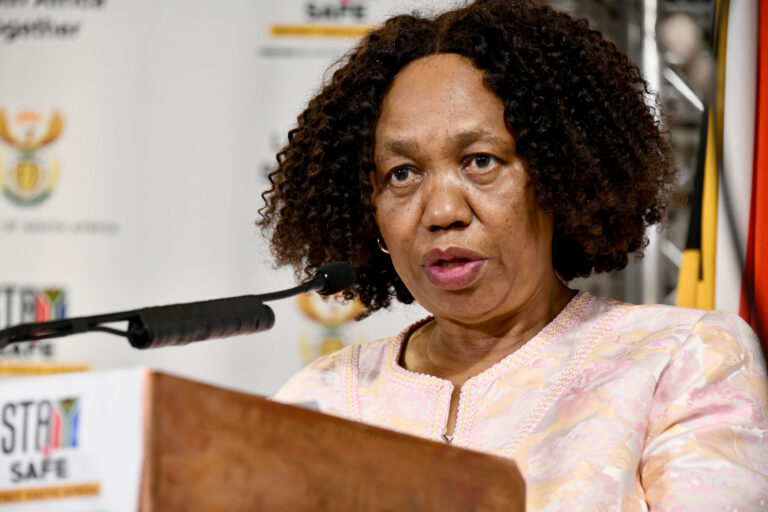
BASIC Education Minister, Angie Motshekga, shared South Africa’s experience on the curriculum recovery plan for rebooting and rebuilding the schooling system during the Education World Forum (EWF) in London during the plenary session.

Such platforms create an opportunity to share lessons from South Africa, learn from what others are doing, and benchmark one’s country with the rest of the world.

Minister Motshekga, supported by Director-General, Mr Matanzima Mweli, attended the EWF in London in the United Kingdom from 7 – 10 May 2023. The theme for 2023 is, “Nurturing learning culture, building resilience and promoting sustainability for stronger, bolder, better education by design” to build on the work done around the COVID-19
recovery.

The Forum included key areas such as foundations for early learning; skills development; digital skills and technology; and Coding and Robotics. The Minister addressed delegates during the official opening ceremony under the sub-theme: “What must we change in order to develop stronger, bolder and better education and learning opportunities, and how can working together help?”

“It is an honour for us to come to share our experiences and learn from other nations about innovative and effective ways to improve education outcomes for all. We must build a brighter future for the next generation and create a world where education is equitable, accessible and inclusive to all.

“We believe that collaboration amongst stakeholders is crucial in achieving these goals and we must prioritise working together to ensure that all children have access to high quality education that prepares them for the future. We have made significant progress in transforming our basic education sector in respect of the six social justice principles of
access, redress, equity, quality, efficiency and inclusivity and we are proud that we haveachieved near-universal access to schooling, with attendance rates above 98% for children aged 7 to 15 years. Access to early learning opportunities has also increased significantly, with almost 90% of 5-year-olds attending educational institutions, compared to only 40% two decades ago. Despite these advancements, we still face challenges, especially unacceptably low and unequal early learning outcomes,” said Minister Motshekga in her address.

Minister Motshekga praised the resilience demonstrated by the South African basic education system: “Rather than observing an increase in the number of children dropping out of school during and after the COVID-19 pandemic, we have seen more learners staying in the system and successfully completing their secondary school-leaving examination, the National Senior Certificate. We have streamlined our annual teaching plans during 2020 and
2021, leading to an ongoing process of strengthening of the curriculum. We are leveraging new technologies to provide children with access to 21st Century skills, whilst prioritising literacy and numeracy.

“We have developed a Coding and Robotics curriculum for nationwide roll-out during the next few years, whilst remaining committed to harnessing the power of Information and Communication Technology (ICT), enhancing the use of technology for curriculum delivery, adapting education in response to global changes and cultivating partnerships to promote sustainable development”.

Minister Motshekga attended a side line meeting with the Global CEO of the British Council, Mr Scott McDonald, and the Country Director for the British Council in South Africa, Ms George Barrett, on 9 May.

The Minister also attended a bilateral meeting with the Minister of State for Schools, Mr Nick Gibb on 10 May. EWF is supported by the Foreign, Commonwealth and Development Office (FCDO), the Department for Education (DfE), the Department for Business and Trade (DBT), the British Council and industry partners. EWF is a gathering of ministers responsible for education in their respective states.

INSIDE EDUCATION

Encourage culture of household reading for improved pupils’ reading skills: DBE

PHUTI MOSOMANE

THE Department of Basic Education (DBE) highlighted several challenges affecting students’ reading comprehension in schools during a parliamentary session on Tuesday. These challenges include a lack of reading culture in many households, under-resourced schools, and inadequate emphasis on reading during early childhood development.

The Portfolio Committee on Basic Education received a detailed briefing from the DBE regarding the recently published Progress in International Reading Literacy Study (PIRLS) for 2021.

According to the PIRLS 2021 study, learners’ ability to read for comprehension significantly lags behind as they reach the age of 10, indicating low performance levels.

Reading comprehension involves the capacity to read text, process it, and grasp its meaning. It relies on two interconnected skills: word reading (the ability to decode symbols on the page) and language comprehension (the ability to understand the meaning of words and sentences).

Proficient readers who possess a strong understanding can draw conclusions and make inferences from the text they read.

The DBE utilizes three distinct national assessments to gather data: Early and Emergent Literacy Skills (ELNA), Foundational Reading Comprehension (Systemic Evaluation), and International Reading Comprehension Benchmarks. The DBE states that the results from ELNA and the Systemic Evaluation assessments are more favourable compared to the outcomes of the International Reading Comprehension assessment.

South Africa has been participating in the Progress in International Reading Literacy Study (PIRLS) since 2006, with subsequent cycles in 2011, 2016, and most recently in 2021.

The assessment covered 12,426 Grade 4 learners from 321 schools and 9,317 Grade 6 learners from 253 schools. Grade 4 learners represented all 11 official languages and nine provinces, while Grade 6 learners only represented Afrikaans and English.

South Africa achieved a participation rate of 97% for Grade 4 and 98% for Grade 6 after accounting for replacements.

In comparison to 2016, South Africa’s trend score dropped significantly from 320 to 288, reflecting a difference of 32 points. The data revealed that 81% of Grade 4 learners and 56% of Grade 6 learners did not reach the low benchmark of 400 points.

For Grade 6 learners, the average score was 384 points, with Afrikaans learners scoring an average of 456. Afrikaans emerged as the best-performing language with a score of 387, while Setswana had the lowest score of 211.

Among the provinces, the Western Cape achieved the highest scores with Grade 4 learners scoring 363 and Grade 6 learners scoring 460. This was nearly 131 points above the Grade 4 score of North West, which achieved 232. Nationally, Grade 4 girls scored 317 points, surpassing Grade 4 boys by 57 points (260).

Committee Chairperson Bongiwe Mbinqo-Gigaba said the committee is concerned about the results, but noted the societal issues that impact on South Africa’s results, including the days of learning lost during Covid-19. 

“We took to heart some of the suggestions and strategies mentioned, like placing more emphasis on access to books and reading corners in classrooms, thereby inculcating a love for reading and being able to read with meaning and understanding,” Mbinqo-Gigaba said. 

Concerns have been raised by committee members regarding the PIRLS assessments being conducted in English, which poses a challenge for learners who do not have English as their language of instruction during the early developmental phase.

Equal Education, an advocacy group, has expressed deep disappointment in the outcomes of the literacy study, seeing it as another distressing indication that the education system in South Africa is in a state of crisis that has persisted for a significant period.

The group criticized the government, particularly the national and provincial education departments, for their failure to effectively address the fundamental flaws in the education system, which continue to negatively impact learners.

“It is unfair to expect learners to master a foundational skill like reading when most of them lack important infrastructure relevant to reading, such as libraries. DBE statistics show that over 17 000 (70%) of our public schools do not even have libraries, and of those that do, over a third (2 133) are not stocked. It is clear that education departments are likely to miss the 2023 Norms and Standards for Public School Infrastructure deadline, requiring that all schools be provided with libraries,” both Equal Education (EE) and the Equal Education Law Centre (EELC) said in a joint statement.

INSIDE EDUCATION

UCT Chairperson quits as governance crisis deepens

Edwin Naidu


University of Cape Town Council Chairperson Babalwa Ngonyama has resigned immediately after finding herself in conflict with the very panel which forced out former vice-chancellor Professor Mamokgethi Phakeng.

“After thoughtful consideration and deep and thorough reflection, I have decided to step down as Chair and member of Council of the University of Cape Town (UCT),” said the chartered accountant and business woman in a communication to staff.

“This decision, which was not a light one, will come into effect immediately,” Ngonyama added in the statement which has not yet been distributed to the university community.

Currently in Paris on business, Ngonyama said that her decision was taken considering her unreserved commitment expressed when taking up this role and during her tenure – to put the interests of the institution first at all times.

With experience spanning more than two decades, Sinayo Securities founder and CEO Babalwa Ngonyama has enjoyed an illustrious career in the financial services sector.

Under Sinayo Securities Ngonyama leads several passion projects – notably the company graduate training programme dubbed ‘Project Funda’, which assists young graduates by equipping them with the necessary knowledge and skills required for future employment. To date, more than 60 graduates have secure direct industry exposure, either with Sinayo Securities and its clients.

“I have also taken this decision having considered the impact of the current circumstances on my wellness and health,” she added.

Phakeng reached an exit settlement with UCT in February 2023.

This intensified since Council announced an independent investigation panel late last year to look into governance-related issues at the university.

“I wish to also state, as I always have, that I remain committed to the work of the panel and I have always been unwavering in my willingness to appear before and cooperate fully with the panel.”

As part of the panel’s ongoing work, Ngonyama was invited and also informed that there were allegations made against her by some individuals who had appeared before the panel.

“It is one thing to focus on improving governance at UCT, it is a completely different matter to use the process in an attempt to lay blame.”

“As part of the process and in the interest of procedural fairness but also to ensure efficiency in how the claims made against me are addressed, I requested that I be furnished with the statements of the individuals beforehand.”

“The request was made so that I could thoroughly respond to them and be afforded an adequate opportunity to address them. I also requested that I be allowed to cross examine the witnesses as part of testing the allegations against me. I was not afforded that courtesy.”

She said that it was important for any person appearing before the panel who needs to respond to claims against them to be given access to any statements or evidence presented by those making the claims against them.

“Unfortunately, the panel has been unwilling to grant me this opportunity, which conflicts with a basic tenet of procedural fairness.”

Ngonyama asked the Western Cape High Court to decide on the fairness of the process and the nature and extent of the panel’s powers under the revised terms of reference, the Institutional Statute and the Higher Education Act.

But this prompted the panel to release a pre-emptive interim report to Council, recommending that steps be taken to remove her.

“It would be a disservice to see a situation where the university returns to the days of instability or sections within the university once again becoming polarised by this matter. It is for this reason that I have concluded that it was best for me to resign and deal with this matter outside Council through the available legal mechanisms,” she said.

Pending the resolution of the contested issues, Ngonyama said she is willing to cooperate with the work of the panel as it presents UCT with an opportunity to address the challenges that beset the university.

“What is important is that fairness, transparency, justice and due process prevails,” she said.

INSIDE EDUCATION

UNISA vice-chancellor Professor Puleng Lenkabula stands firm amid growing calls for her to go

EDWIN NAIDU

UNIVERSITY of South Africa Vice-Chancellor Professor Puleng LenkaBula is standing firm amid growing calls for her and the councils sacking over claims in a damning report about the state of governance at the institution.

A 309-page report by Independent Assessor, Professor Themba Mosia, was critical of Professor LenkaBula, the performance of both management and the council, financial management, upgrades to the vice-chancellor’s home, claims of intimidation and bullying, relations with the labour movement, and the leaking of confidential reports.

On Sunday, Prof LenkaBula had not bowed to pressure and told Inside Education: The Independent Assessor process is not yet complete. Council needs to respond to the Minister. I will only address the media afterwards.”

The vice-chancellor said she did not want to be at odds with statutory processes as legislated by speaking about goings-on.

On 22 September 2022, the Minister of Higher Education Dr Blade Nzimande appointed University of Pretoria Principal and former Council on Higher Education Chairperson Professor Themba Mosia as Independent Assessor to probe UNISA.

The investigation was concluded within the period stipulated; however, at the request of Prof Mosia, the Minister agreed that the report be submitted by 31 March 2023.

Within 90 days of receiving the report, Nzimande must provide a copy of the report to the council concerned, table the report before the National Assembly and publish it in the Government Gazette.

Amid reports that two members of the council have quit over the saga, it has emerged that a copy has been distributed to council members last week. They have reportedly asked for an extension before responding to Nzimande.

The Sunday Times, reported that Belinda Mapongwana- chair of council’s social and ethics committee, and Sedzani Mudau, both resigned at the weekend.

Nzimande is preparing to publish the report it in the Government Gazette. He will then submit the report to the Speaker, Hon Nosiviwe Mapisa-Nqakula for tabling before the National Assembly.

“I am currently studying the report and will contemplate the way forward regarding the implementation of the recommendations, after due process as guided by the prescripts of the Act,” Nzimande said, thanking Professor Mosia for the hard work in conducting the assessment.

Among the proposals on the table for Nzimande in the report is the dismissal of the vice-chancellor and the entire council – which would result in an administrator being put in place.

In March, Mosia recommended that Nzimande should consider placing Unisa under full administration, in line with section 49F(1) of the Higher Education Act.

Another recommendation was that Nzimande should consider changing legislation for institutions of higher learning to be subject to the provisions of the Public Finance Management Act.

This, Mosia said, was because of financial irregularities and supply chain management problems which include fruitless and wasteful expenditure.

Asked to comment on Sunday, Prof Mosia said he was not permitted by law to engage on UNISA matters.

“My job ended when I submitted the report to the Minister’s office,” he said.

INSIDE EDUCATION

South Africa’s reading crisis: 5 steps to address children’s literacy struggles

Catherine Kell, Carolyn McKinney, Robyn Tyler and Xolisa Guzula

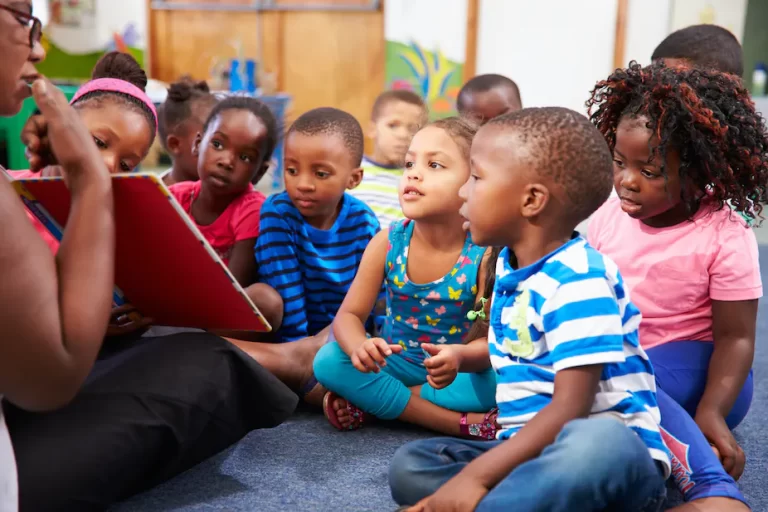
KUNYASHE is a Grade 1 pupil in Cape Town, South Africa. She’s very focused on her schoolwork. She shares a tiny one-roomed shack, hardly bigger than a double bed, with her mother and four siblings. Kunyashe receives a meal at school – her teacher once saw the little girl spooning some of this meal into another container to take home for her baby brother.

This is the context in which many South African children learn to read. But it’s a context that received no mention when the country’s Department of Basic Education, on 16 May, released the alarming preliminary findings of the Progress in Reading Literacy Study (PIRLS 2021).

The international standardised test measures the reading achievement of Grade 4 children (10 years old). It is designed to measure children’s “reading literacy” and to provide a baseline for future studies of trends in achievement. The headline finding was grim: “81% of South African children in Grade 4 cannot read for meaning”.

There is no denying that there is a literacy crisis in South African schools. The problem is that official discourses present it as something that occurs in a social vacuum and can be solved by technicist approaches.

It isn’t. The political and economic dimensions of the problem are deeply entangled with the glaring inequalities in South Africa.

We are literacy and language education experts, and members of the bua-lit collective advocating for quality education for children who speak African languages. Based on our research and ongoing work in classrooms across South Africa, we’ve identified five practices we believe will promote “rich literacies”. This approach involves a wider understanding of literacy in which children are engaged with reading and writing texts that come from their worlds and that have meaning for them.

A poverty of literacy

The daily lives of most children in South Africa are fraught with poverty, hunger and uncertainty.

Two-thirds of these children from poorer backgrounds attend no fee schools. Sadly, they also receive a poverty of literacy teaching and materials.

The current dominant process is based on the contested “Science of Reading” method. In this approach children are largely given access to basic atomised skills: sounding out letters (phonics), followed by lockstep reading of words with the emphasis on fluency, accuracy and speed.

Reading authentic books with plots and illustrations is seen as harmful or needing to be delayed until children are able to efficiently decode words.

Teachers are trained to teach using “graded readers” – simplified texts repeating the same vocabulary – together with alphabet charts, friezes and flashcards and are discouraged from telling stories, using real books to read for enjoyment or writing with children.

This approach lends itself well to highly technicist interventions that are easy to implement. But it misses the crucial point that children need to be highly motivated to learn to read and write. In order to read for meaning they must be motivated to make meaning. It also misses the point that reading and writing are not just cognitive skills – they are socially shared and shaped practices.

In contrast to the poverty of literacy imposed on poor children, middle-class children in well and over-resourced schools are given plenty of opportunities at school and at home to engage in pleasurable, motivating and meaningful ways with high quality books as well as to express themselves through writing. This is in addition to school-based phonics programmes and graded readers.

A further problem in enabling children to become successful readers and writers lies in South Africa’s language in education policies and the way they have been implemented in schools.

The majority of African language speaking children in South Africa learn in their home language for the first three years and then switch to learning in English in Grade 4. Children have hardly had the opportunity to establish literacy skills in their home language when they are forced to learn in and through English.

Five practices

We believe that there are no quick fixes to the impoverishment of literacy learning for poor children in South Africa resulting from the legacies of colonialism and apartheid and now compounded by beliefs in technicist solutions.

Rather we outline five practices that could make an immediate start in providing literacy teaching that enriches children’s literacy lives.

  • Every foundation phase classroom should have living libraries that include enjoyable, quality, illustrated published stories and non-fiction books in children’s most familiar languages as well as English; and that include books made by children with each other and the teacher in the classroom. Children must take at least one book home every day.
  • There should be dedicated time every day for teachers to read aloud and talk to pupils about interesting fiction and non-fiction books.
  • Teachers should dedicate time each day to engage in shared writing with children of texts about topics that they are interested in that draw on wide background knowledge and that have a purpose.
  • In addition to the dedicated time every day to teach explicit literacy skills and knowledge like phonics (letter sound-relationships) the basic skills also need to develop understandings of text structure/genre for different kinds of text: how stories start; develop and end; the parts of a recipe: ingredients and methods; and the mechanics of writing (use of punctuation, spelling, handwriting).

These four activities need to be supported by both pre-service and ongoing teacher training. Literacy coaches can also become a resource to support teachers.

  • The wider community has a role to play, too.
  • This could be in the form of after-school and/or holiday literacy clubs. Here children engage with rich literacies in a range of fun activities such as sharing stories through oral storytelling and story-reading; hearing from published authors, singing and playing games. In school, retired teachers, grandparents and unemployed parents and youth, after some training, can assist teachers in classrooms and work in small groups with children.

Rich literacies require a multi-pronged approach which views literacy in its wider context and which engages a diversity of practices, programmes and opportunities.

THECONVERSATION

Dignity denied as more than 3,000 schools in South Africa still use pit toilets

MOGOMOTSI MAGOME

AT a high school in rural northern South Africa, more than 300 students and their teachers share three toilets, and that woefully lopsided figure isn’t the worst problem.

The three toilets are pit latrines, effectively 10-feet-deep holes in the ground that students line up during a lunch break to use.

The pit toilets at Seipone Secondary School in the village of Ga-Mashashane at least are covered by white toilet seats and enclosed by brick structures. Some of the pit toilets still used at more than 3,300 schools in poor, mostly rural areas across South Africa aren’t.

It’s a shameful situation for a country referred to as the most developed in Africa, and an indicator of its profound problems with poverty and inequality, say human rights groups pushing the South African government to do away with the sub-standard facilities in schools forever.

Unhygienic, the latrines also present a much more direct danger. The sight that greeted James Komape one day in January 2014 at the nearby Chebeng village is horrific by every measure.

He’d received a phone call asking him to rush to his 5-year-old son’s pre-school.

The little boy, Michael, was found dead, drowned at the bottom of a pit latrine. Michael’s body hadn’t even been removed from the pool of water mixed with feces and urine at the bottom of the pit he fell into when his father got there.

“What hurt me a lot about Michael’s incident is that the people who were there saw that he had fallen in the toilet, but they did not remove him,” said James Komape.

“They said they were waiting for the responsible authorities to come and remove him. I told them that if they had removed him quickly maybe he could have survived.”

It was Michael Komape’s first week at a new school and his dreadful death incensed many South Africans. His family took the Limpopo province’s education department to court and won their case seeking damages. Later, court orders compelled the South African government to urgently address the issue of pit toilets in schools.

But the tragedy of Michael Komape has not been unique. Other small children have also drowned in pit latrines in the near-decade since, one girl as recently as last month, another boy in March. There are no reliable figures to say how many children have lost their lives in pit toilets.

The latrines, which have an outlet that is used to drain them periodically, are cheaper and more practical for poorer schools because they don’t rely on a constant supply of running water.

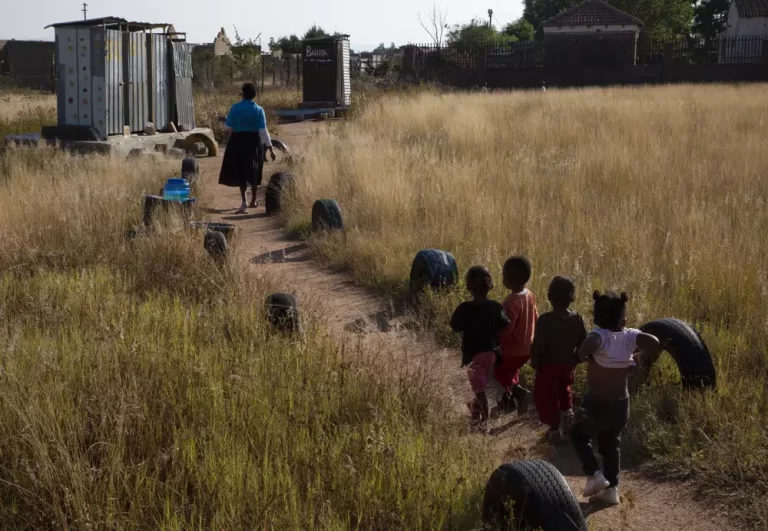
At the Jupiter Pre-School and Creche in the same Limpopo province where Michael died, children as young as 3 are still using pit toilets that have no proper seat but rather a hole carved out of a concrete slab that opens to the pit below.

“These are not good because of possible accidents of children falling in the toilet,” the school’s manager, Florina Ledwaba, said. “We have to follow them (the children) every time. What if they go without you seeing them? They are not safe at all.”

The Equal Education human rights group has been inspecting pit toilets in South African schools.

Tiny Lebelo, an organizer with the group, expresses frustration over an issue that should be a top priority for government — the safety of children at their schools — and still hasn’t been resolved.

The South African government promised to replace all pit toilets at schools nationwide by March 31 this year.

It hasn’t happened. Basic Education Minister Angie Motshekga said there are still 3,398 schools using pit latrines and the deadline to eradicate them has been shifted to 2025.

Lebelo said “it speaks about how we perceive people in rural areas.”

“What we are saying about them is that they don’t deserve dignity, that’s why we’re not going to provide you with a basic toilet. We’re not going to give that to you because already you’ve been using it (pit toilets),” she said.

“So, what’s another year, or two years, or 10, or decades? We’re saying to them you’re not worthy of dignity.”

Section27 is another human rights group pushing for the pit toilets to be eradicated for “safe and decent sanitation facilities.”

Section27 supported Michael Komape’s family in their legal action against the local and national education departments and they succeeded in getting a court ruling that authorities must provide updated information every six months on schools in the Limpopo province using pit toilets and the plans to replace them.

Section27 called its system to track the government’s work The Michael Komape Sanitation Progress Monitor and it is able to use the information to hold the education department accountable.

The department has made some progress by reducing schools using pit toilets in Limpopo from 363 in 2021 to 210 schools now. But James Komape said the government hasn’t kept its side of an agreement to remove pit toilets and “many children are still in real danger.”

At the Seipone Secondary School, the pit toilets are officially called ventilation improved toilets, and known as “VIP toilets.” They are anything but. There is anger and now pushback from students, too.

“Our health also matters, (we) cannot use toilets like these,” said Tebogo Makgoka, a 17-year-old student representative.

AP

Google celebrates Africa Day in quest for unity with six-new pocket galleries

STAFF REPORTER

AS Africa gears up for Africa Day, an event that marks the founding of the African Union and celebrates the continent’s quest for unity, Google is unveiling a range of programs and activities to celebrate Africa’s diverse cultural heritage and provide opportunities for people all over the world to experience and engage with the creativity and richness of Africa.

Among the programs is the addition of six new pocket galleries on Google Arts & Culture, curated by esteemed partners from Kenya, Nigeria and South Africa, these pocket galleries offer an immersive experience of virtual exhibitions, providing a 360-degree view of artworks and artefacts, effectively allowing people to step into the heart of Africa’s cultural scene from wherever they are.

Partners include the Yemisi Shyllon Museum and Terra Kulture from Nigeria, the Mohamed Amin Foundation and National Museums of Kenya, and the University of Pretoria from South Africa. Each partner will present unique exhibitions that celebrate their respective regions, providing a diverse exploration of Africa’s rich cultural heritage.

In previous years, YouTube Music has held the Africa Day Concert, showcasing present and next-generation African music talents. This year, YouTube Music will unveil an Africa Day playlist, featuring popular and trending songs from various African artists. This initiative will also involve the public, who will have the opportunity to submit their favourite African songs via YouTube Shorts for a chance for it to potentially feature on the playlist.

The celebrations will also highlight African storytelling traditions through the “Stories and Storytellers of Africa” initiative on YouTube which will spotlight an extensive collection of African movies and series, celebrating the creators who bring these narratives to life. Alongside this, the “Showcase Your Africa” initiative will see YouTube partnering with content creators to share their perspectives on Africa, providing a glimpse into the continent’s diversity.

Google Country Director for South Africa, Alistair Mokoena said: “Africa Day is a celebration of progress, unity, and the vibrant cultures that define the continent. We are excited that we can amplify these stories and experiences on our platforms. From exploring our rich artistic heritage through Google Arts & Culture, to dancing along to the #CelebrateAfrica playlist on YouTube Music, and engaging with compelling narratives on YouTube, we are happy to share and celebrate Africa’s culture with the world.”

INSIDE EDUCATION

He once rummaged through dustbins, today Lordwick Kgatle, is climbing the corporate ladder

STAFF REPORTER

IT pays to study but never forget one’s roots – that’s the advice from Lordwick Kgatle, who has not forgotten the days he rummaged through dustbins looking for any waste that he could exchange for money.

Kgatle, the Operations Manager at Jubilee Crossing in Hammanskraal, appreciates how education has transformed his life.

Born in Limpopo, reared in Hammanskraal, just outside Tshwane in Gauteng, Kgatle used the money he earned from selling waste products, working as a gardener, barber and car wash assistant to finance his studies towards a Business Administration Diploma specialising in Economics from Richfield Graduate Institute of Technology in 2020.
 
Following an internship at Atterbury Properties, Kgatle was given an opportunity to take on the position of Marketing Manager at Acornhoek Mall owned by New Africa Developments (NAD) in Mpumalanga where he spent 18 months.
 
During his time at Acornhoek Mall Kgatle’s hard work and dedication was evident to the mall owners, and it was decided to promote the 25-year-old to a more senior role of Operations Manager at the brand-new Jubilee Crossing shopping centre in Hammanskraal.  

“NAD has helped my career by providing me with the opportunity to develop new skills. I am thankful for the guidance from the company’s senior executives. My work has benefited my life by increasing my standard of living, upgrading my soft and technical skills, bringing a sense of stability and creating other opportunities,” he said.
 
Kgatle’s typical day is to supervise and manage the shopping centre operations, CSI campaigns, property management, tenant management, customer service and events.  

What he finds most gratifying about his job is that there is room for growth, and he is continually able to learn something new about the real estate management industry.
 
“My greatest strengths are motivation, perseverance and hard work. The lessons learned in my life and career are to never give up when one is tired and to keep pushing oneself to succeed,” Kgatle said. 
 
His long-term goal is to grow within his position and become a national operations manager and ultimately study towards a doctorate in operations management.
 
Kgatle maintains that education is the key to success and that learning does not stop.

He believes it is important to empower people with leadership skills, as this will help achieve local economic growth.
 
In his leisure time, he enjoys reading, worshipping and watching rugby.

INSIDE EDUCATION

Select Committee on Education and Technology, Sport, Arts and Culture listens to annual performance plans

STAFF REPORTER

THE Select Committee on Education and Technology, Sport, Arts and Culture has been engaging with the nine Provincial Education Departments (PEDs) on their 2023/24 Annual Performance Plans (APPs) and Budgets in the National Council of Provinces (NCOP) over the past three weeks, commencing on 19 April 2023.

The final virtual briefing session wrapped up on 10 May 2023 with a report delivered by Mr Albert Chanee, DDG for Strategic Planning Management, from the Gauteng Province.

The Gauteng Department of Education (GDE) made special reference to matters relating to underperforming schools; dropout rates; infrastructure and sanitation; school safety; psychosocial support; school sport and culture; and youth development.

Acting Director-General, Dr Granville Whittle, led the Departmental delegation during the presentation on the DBE’s Annual Performance Plan (APP) 2023/24 and the 2023 Budget Allocation.

Ms Nosipho Mbonambi from the DBE’s Strategic Planning Directorate, discussed the DBE’s five 5-year Sector Outcomes in the 2019 – 2024 Medium Term Strategic Framework (MTSF) and the sector priorities for the 6th Administration.

“Oversight findings on the draft APP from the Department of Planning, Monitoring and Evaluation (DPME) and the Auditor-General South Africa (AGSA) were implemented to provide more reflection on Budget Prioritisation Frameworks; strengthen information provided over the planning period and strengthen Technical Indicator Descriptions (TIDs),” she said.

MTSF areas to be strengthened in provincial and national APPs include, amongst others, a better accountability system for principals; a comprehensive package for teacher development; strengthened Numeracy and Reading; ECD indicators linked to classroom outcomes; and sector monitoring with Standardised Output Indicators (SOI) across PEDs to ensure uniformity and to align with Government priorities.

The Heads of Education Committee (HEDCOM) Sub-committee provides a forum for strategic interaction on information sharing, capacity building and best practices in relation to improve sector performance.

The APP is divided into four parts: the Mandate; Strategic Focus; Measuring of Performance; and Technical Indicator Descriptions (TIDs).

Mr Pat Khunou, DBE CFO, presented the Departmental Budget, indicating that the 2023 MTEF allocation totals R31,782,713 billion, a 7% increase from the 2022 budget of R29, 693,160 billion, including conditional grants.

Continued coordination, support and monitoring will ensure that national and provincial strategies and programmes are closely aligned to the overall vision of the Basic Education Sector to improve learning and teaching challenges and outcomes.

The various Budget Vote Debates of national government departments will commence on 9 May, with Minister
Motshekga delivered the annual Budget Vote Speech for the Department of Basic Education, Budget Vote 16, to the National Assembly in Parliament, Cape Town, on 18 May 2023.

INSIDE EDUCATION

Ohio Senate passes massive higher education overhaul bill, House version hears opponent testimon

0

MEGAN HENRY

THE Ohio Senate passed a massive higher education bill that would significantly alter college campuses. Wednesday’s 21-10 vote comes a week after changes and clarification were made to Senate Bill 83, which was introduced by state Sen. Jerry Cirino, R-Kirtland in March. SB 83 now moves to the House for committee consideration.

Republican state Sen. Louis W. Blessing, III, Sen. Nathan Manning and Sen. Michele Reynolds joined the seven Senate democrats in voting against the bill, also known as the Ohio Higher Education Enhancement Act. Reynolds flipped her vote after voting in support of SB 83 Wednesday morning during the Senate Workforce and Higher Education Committee meeting.

“This legislation is an urgently needed course correction,” Cirino said. “If you desire an education that involves learning analytic skills, evaluating many ideas and many sides of issues and how to think better, not what to think, this bill is for you.”

If SB 83 is passed by the GOP-supermajority House, university staff and employees would be banned from striking, college students would be required to take certain American history courses, professor tenure would be based around “bias,” and Board of Trustees terms would be reduced from nine years down to four. 

The Senate Workforce and Higher Education Committee passed SB 83 Wednesday morning by a 4-1 party vote, with the lone dissenting vote coming from state Sen. Catherine D. Ingram, D-Cincinnati. Opponents clad in red, some with black masking tape over their mouths, packed the committee meeting. More than 100 people submitted written opponent testimony.

What is in SB 83? 

The original version of SB 83 would have mainly impacted public schools and, among other things, ban programs with Chinese schools, ban mandatory diversity training, prohibit university staff and employees from striking, require American history courses, and mandate tenure evaluations based on if the educator showed bias or taught with bias. 

Some of the bill’s revisions, among others, include clarifying the segregation of faculty and staff based on someone’s race, ethnicity, religion, sex, sexual orientation, gender identity, or gender expression is only prohibited in classroom settings, orientations and graduations; allowing mandatory diversity, equity, and inclusion training for certain exemptions; and existing college programs with Chinese institutions can remain as long as there are specific requirements in place.

Other changes would require Boards of Trustees to create policies on tenure and update those policies every five years, and shorten a trustee’s tenure — something Ohio Senate President Matt Huffman likes. 

“When someone is appointed to a 9 year-term there is almost no accountability,” he said. “A governor could get elected two times and never replace that appointment.” 

Florida’s governor Ron DeSantis signed a law earlier this week that defunded diversity, equity and inclusion programs at publicly-funded colleges and limits how race can be discussed in many courses. 

More than 30 anti-DEI bills have been introduced across numerous states, according to the Chronicle of Higher Education. 

What senators said about SB 83

Several senators shared their thoughts on SB 83 for a little over an hour before taking a vote. Those in favor of the bill said it would encourage diversity of thought, but those opposed to the bill said it would cause students and professors to leave Ohio. 

But Cirino said he isn’t concerned about potential brain drain. 

“When all is said and done here, our universities are going to be better,” he said. “We are going to attract more people who have been turned away because of the liberal bias that is incontrovertible in our institutions in Ohio.”

Ohio’s 14 public universities generated $68.9 billion to the state’s economy in the last fiscal year — representing 8.8% of Ohio’s total gross state product, according to a study that was released last week by Lightcast, an independent consulting firm, on behalf of the Inter-University Council of Ohio.

State Sen. Niraj Antani, R-Miamisburg, said conservative students deserve to speak freely.

“For some reason when they want to speak, they are silenced,” he said. “They are made to feel not welcome.”

State Sen. Kent Smith, D-Euclid, said there’s no evidence Ohio’s universities are ineffectively educating students and doesn’t see how this bill would improve higher education. 

“This would be the worst assault on academic freedom that Ohio has ever seen,” he said. 

Senate Minority Leader Nickie J. Antonio, D-Lakewood, said pay might have something to do with not having enough conservative faculty at Ohio’s universities. 

“If you raise the pay, you probably raise how many faculty would be there,” she said. “To take away the bargaining rights seems counterintuitive if you are really trying to get more conservative folks at universities.” 

SB 83 backlash 

More than 100 people testified against SB 83 for more than seven hours about a month ago during a marathon Senate Workforce and Higher Education committee meeting. 

Ohio State University Board of Trustees oppose SB 83, saying it diminishes “Ohio State’s ability to fulfill its educational and research missions and negatively impact the state’s economic future.”

“We acknowledge the issues raised by this proposal but believe there are alternative solutions that will not undermine the shared governance model of universities, risk weakened academic rigor, or impose extensive and expensive new reporting mandates,” the trustees said in a statement Tuesday. 

Companion Bill 

House Bill 151 was introduced as a companion bill in April by state Rep. Steve Demetriou, R-Bainbridge Twp., and Rep. Josh Williams, R-Oregon. Opponents testified against HB 151 for two and a half hours during the House Higher Education committee meeting Wednesday morning. 

Ohio Federation of Teacher President Melissa Cropper said the bill is unneeded, unproductive, threatens academic freedom and puts Ohio colleges at a competitive disadvantage.

“We are at a real crisis point and we are addressing the wrong problems in education and this bill is an example of that,” she said. 

Just the introduction of these bills is scaring faculty and students away, said Stephen Mockabee, an political science professor at the University of Cincinnati and a member of UC’s American Association of University Professors.

“This is a very important concern that we will have a brain drain in Ohio,” he said.

Higher Education Committee ranking member Rep. Joe Miller echoed these sentiments in a statement. 

“HB 151/SB 83 will make it extremely difficult to attract students and faculty to Ohio, which will be extraordinarily damaging to our economy, financially impacting cities from Akron, to Athens, Kent and Columbus,” Miller said. 

OhioCapitalJournal