Home Blog Page 205

SA gunning for Netball World Cup glory in Cape Town

EDWIN NAIDU

THE Netball World Cup 2023 will be held in Cape Town, South Africa , from 28th July – 6th August 2023 at the Cape Town International Convention Centre (CTICC), with 16 of the world’s top netball nations, including the hosts South Africa, competing. Renowned sports administrator, Sumayya Khan, the Director- General of Sport and Recreation, says it’s an honour for the country to play host to the tournament.

“It is the first time the Netball World Cup will be staged in Africa. This massive gain for Women’s Sports is destined to leave a major legacy of infrastructure and skills development and hopefully exponentially grow the sport in the country and the continent.

This legacy won us the bid to host the event,” she adds. Khan, a former physical education teacher for 17 years in Phoenix, a township north of Durban, is passionate about empowering women in sports.

She says the Ministry is committed to contributing meaningfully to the sector.

“As a teacher, my involvement in the school’s sports and other structures provided a great opportunity for me to develop my capacity in Sport Management and Administration.” As DDG, Khan’s department, supports the provision of mass participation opportunities, the development of elite athletes, and the regulation and maintenance of facilities. Khan says one of her most gratifying experiences has been witnessing the transformation of women’s cricket.

“I qualified as a Bakers Mini Cricket Coach in 1989 and went on to complete the Level 1 and 2 Coaching courses. At the time, there was no automatic transition for girls to move from Mini Cricket to hard ball as young boys could. Hence my quest and engagement with the Cricket Union to ensure that young girls continue to play cricket.
Thankfully, I wasn’t a lone voice; the then UCB started a cricket development programme for girls and women.”

She says it was an honour being a founding member of the provincial Women’s Cricket Association.

“It was not easy challenging the stereotypes and getting resources for young girls and women. Many of us would use our resources and work tirelessly to get sponsors to take players to tournaments. But we soldiered on. To see where women’s cricket now makes me very proud that the commitment and dedication of so many women paved the way for women cricketers to play at a professional level.”

But Khan’s eye is on the big prize – the Netball World Cup.

INSIDE EDUCATION

Western Cape learners getting savvy with blended digital learning

EDWIN NAIDU

ONLINE blended digital learning (E-learning) is one of the priorities of the Western Cape Education Department. It is not only about providing digital infrastructure and equipment to schools but a strategy of ensuring that the learners in the province are equipped with the necessary skills that will allow them to fit in and be able to compete in the technologically driven world.

Progress towards the provision of SMART classrooms and multimedia resources over time was described in a presentation before the National Council of Provinces last week.

Between the financial year 2014/15 and 2020/21, a total of 9 992 classrooms were enabled with technology (smart classrooms). Between the financial year 2014/15 and 2020/21, 912 schools were provided with multi-media resources.

According to the WCED Annual Performance Plan (APP), funding for education is divided according to seven programmes. National sub-programmes define each programme. In Programmes 2 and 4 the WCED deviates from the sector budget structure because school sport resides under the Department of Cultural Affairs and Sport.

“The Western Cape Education Department’s Annual Performance Plan for 2023/24 highlights our commitment to providing quality education for every child, in every classroom, in every school in the Western Cape,” said David Maynier, Provincial Minister of Education Western Cape Government.

He said every decision taken about education in the Western Cape would continue to be informed by the need to improve learner outcomes and to provide greater and more equitable access to quality education across the province.

Brent Walters, the Accounting Officer for the Department, said their vision for education in the Western Cape is to achieve quality education for every child, in every classroom, in every school in the province.

The Five-Year Strategy of the Western Cape Education Department (WCED), published in 2020, supports this vision.
However, the ability of the department to deliver against this vision has been placed under strain over the last five-year period, with unprecedented growth in learner numbers, the advent of COVID-19 and the subsequent learning losses.

These factors, according to Walters, have heightened some of the other challenges faced due to socio-economic and psychosocial constraints, such as poverty, high levels of unemployment, gangsterism, violence, drug abuse, inadequate infrastructure and general population in-migration.

“Despite these constraints, our focus remains on our vision of quality education. This entails stabilising our schools, recovering the learning losses experienced over the past few years and creating conducive environments for teaching and learning,” Walters said.

INSIDE EDUCATION

8 fatally shot in Serbia town a day after 9 killed at school

0

A shooter killed at least eight people and wounded 13 in a drive-by attack near a town close to Belgrade late Thursday, the second such mass killing in Serbia in two days, state television reported.

The attacker shot randomly at people near the town of Mladenovac, some 50 kilometers (30 miles) south of the capital, the RTS report said early Friday. Police were looking for a 21-year-old suspect who fled after the attack, the report said.

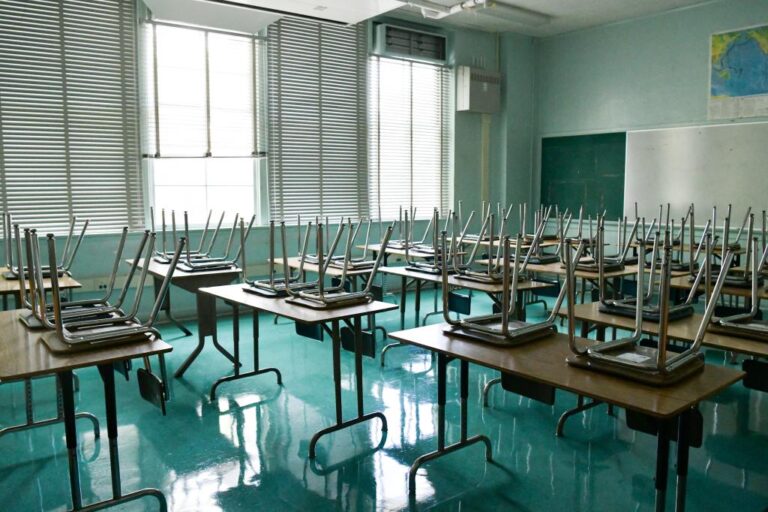
The shooting came a day after a 13-year-old boy used his father’s guns in a rampage at a school in Belgrade that killed eight of his fellow students and a school guard.

The bloodshed sent shockwaves through a Balkan nation unused to mass murders.

Though Serbia is awash with weapons left over from the wars of the 1990s, mass shootings are extremely rare. Wednesday’s school shooting was the first in the country’s modern history. The last mass shooting before this week was in 2013, when a war veteran killed 13 people in a central Serbian village.

Serbian Interior Minister Bratislav Gasic called Thursday’s shooting “a terrorist act,” state media reported.

Special police and helicopter units have been sent to the region as well as ambulances, it added.

No other details were immediately available, and police had not issued any statements.

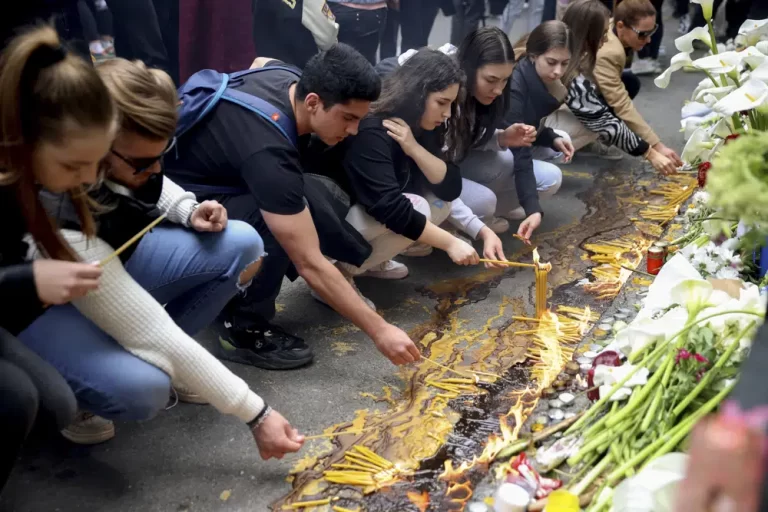
Earlier Thursday, Serbian students, many wearing black and carrying flowers, filled streets around the school in central Belgrade as they paid silent homage to peers killed a day earlier. Thousands lined up to lay flowers, light candles and leave toys to commemorate the nine people who were killed on Wednesday morning.

The tragedy also sparked a debate about the general state of the nation following decades of crises and conflicts whose aftermath have created a state of permanent insecurity and instability, along with deep political divisions.

Authorities on Thursday moved to boost gun control, as police urged citizens to lock up their guns and keep them away from children.

Police have said that the teen used his father’s guns to carry out the attack. He had planned it for a month, drawing sketches of classrooms and making lists of the children he planned to kill, police said on Wednesday.

Police say a 13-year-old who opened fire at his school drew sketches of classrooms and made a list of people he intended to target. He killed eight fellow students and a school guard before being arrested Wednesday.

The boy, who had visited shooting ranges with his father and apparently had the code to his father’s safe, took two guns from the safe where they were stored together with bullets, police said on Wednesday.

The shooting on Wednesday morning in Vladislav Ribnikar primary school also left seven people hospitalized — six children and a teacher. One girl who was shot in the head remains in a life-threatening condition, and a boy is in serious condition with spinal injuries, doctors said on Thursday morning.

To help people deal with the tragedy, authorities announced they were setting up a helpline. Hundreds answered a call to donate blood for the wounded victims. A three-day mourning period will begin Friday morning.

Serbian teachers’ unions announced protests and strikes to warn about a crisis in the school system and demand changes. Authorities shrugged off responsibility, with some officials blaming Western influence.

The shooter, whom the police identified as Kosta Kecmanovic, has not given any motive for his actions.

Upon entering his school, Kecmanovic first killed the guard and three students in the hallway. He then went to the history classroom where he shot a teacher before turning his gun on the students.

Kecmanovic then unloaded the gun in the school yard and called the police himself, although they had already received an alert from a school official. When he called, Kecmanovic told duty officers he was a “psychopath who needs to calm down,” police said.

The children killed Wednesday were seven girls and one boy. One of the girls was a French citizen, France’s foreign ministry said.

Authorities have said that Kecmanovic is too young to be charged and tried. He has been placed in a mental institution, while his father has been detained on suspicion of endangering public security because his son got hold of the guns.

“I think we are all guilty. I think each one of us has some responsibility, that we allowed some things we should not allow,” said Zoran Sefik, a Belgrade resident, during Wednesday evening’s vigil near the school.

Jovan Lazovic, another Belgrade resident, said he was not surprised: “It was a matter of days when something like this could happen, having in mind what is happening in the world and here,” he said.

Gun culture is widespread in Serbia and elsewhere in the Balkans: The region has among the highest numbers of guns per capita in Europe. Guns are often fired into the air at celebrations and the cult of the warrior is part of national identities.

Experts have repeatedly warned of the danger posed by the number of weapons in a highly divided country like Serbia, where convicted war criminals are glorified and violence against minority groups often goes unpunished. They also note that decades of instability stemming from the conflicts of the 1990s, as well as ongoing economic hardship, could trigger such outbursts.

“We have had too much violence for too long,” psychologist Zarko Trebjesanin told N1 television.

“Children copy models. We need to eliminate negative models … and create a different system of values.”

AP

Industry leaders urge ‘Digital Skills for Life” for Girls to dismantle male domination

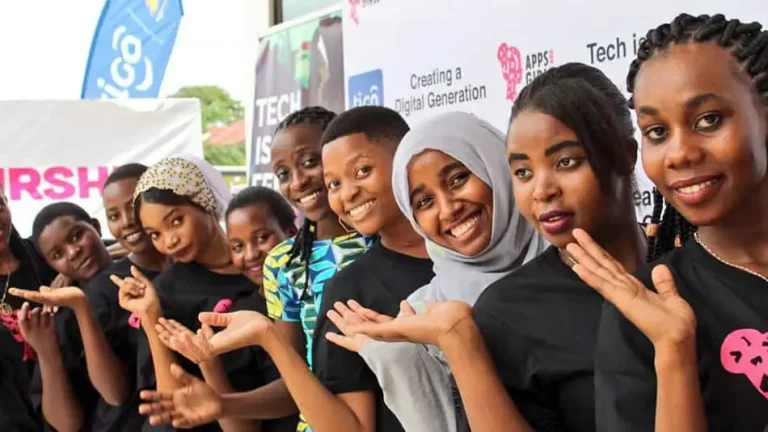
ON International Girls in ICT Day, on 27 April, several industry experts held conversations around diversity and inclusion in a sector largely still dominated by men under the theme ‘Digital Skills for Life’.

Asked to share their hopes for the future of girls in ICT, four female leaders in ICT, were frank yet inspiring leaving one in no doubt on the task at hand.

Ursula Fear, Senior Talent Program Manager at Salesforce, said the greatest challenge to advancing gender equality in the workplace, particularly in the technology industry, is addressing women’s under-representation in emerging roles, such as cloud computing, engineering and Data and AI.

“A successful outcome would be the day that we no longer need to talk about girls or women in ICT as a specific focus area. In the meantime we need to keep nurturing potential, interrogating how to make ICT more appealing to girls and women, and actively debunk any remaining stigmas, myths and stereotypes around ICT being a male field,” she adds.

Rashi Gupta, Managing Director, MFS Africa Hub at MFS Africa, believes that the presence of women in STEM fields is crucial for driving innovation and promoting a sustainable economy.

“Women bring unique perspectives and problem-solving approaches that can lead to new innovations in technology and science. Additionally, having a diverse workforce in STEM industries can lead to more inclusive and equitable decision-making, which is essential for creating a sustainable future for all. Encouraging and supporting women in STEM education and career paths is not just a matter of fairness and equality, it is also a business and economic imperative. Investing in women in STEM is investing in the future,” she adds.

Vanashree Govender, Media Relations and Communications Manager at Huawei South Africa, says Innovation and ICTs are key drivers of economic growth, especially for emerging markets like South Africa.

“The country’s social and economic growth challenges call for solutionist thinking driven by innovation and ICT skills that contribute to demolishing the triple threat challenge of poverty, unemployment and inequality. It is the type of solutionist thinking that requires the inclusion of girls in ICTs.”

This context, is however often missed when the participation of girls in STEM and their role in ICTs is defined. It is a well-known factor that women approach problem-solving with a brain that places emphasis on specific pieces of the problem-solving process.

“A future for girls in ICT, is one that takes girls beyond seeing STEM as a subject, but more as an enabler of a future they desire for themselves, where they have the digital skills and are fully aware and conscious of how these can empower them to change their worlds,” she adds.

Head of MiWay Blink, Keletso Mpisane, says one of the biggest barriers in ICT has always been access to market and competition but for women it is also gender bias.

“The ICT space has historically been male dominated and though there have been strides made – over the years, there is still room for a higher presence of women in the field. These women would act as role models for the next generation, who would be in the position to take this field even further forward into a more equally representative space,” adds Mpisane.

INSIDE EDUCATION

Parliament pays tribute to the late Professor Dan Kgwadi

PHUTI MOSOMANE

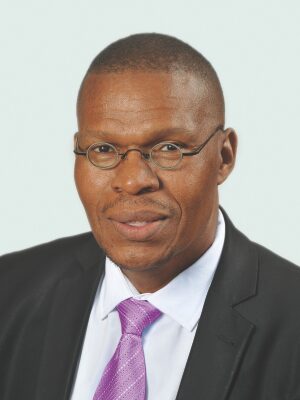
THE Chairperson of the Portfolio Committee on Higher Education, Science and Innovation, Nompendulo Mkhatshwa, has expressed her heartfelt condolences to the Kgwadi family on the passing of Professor Daniel Kgwadi, who served as the Vice Chancellor of the Vaal University of Technology (VUT).

Prof Kgwadi passed away on Sunday, leaving a profound impact on the entire higher education sector, which Mkhatshwa acknowledges and appreciates.

Prior to his tenure at VUT, he also served as the Vice Chancellor of the North West University, and contributed significantly to various professional bodies including Umalusi Council, leaving behind a shining legacy.

The committee had previously engaged directly with Prof Kgwadi in Parliament, where he emphasized the importance of stabilizing management and governance at VUT to ensure that the university could perform effectively on its core mission of providing students with a sound education, knowledge, and skills that are responsive to the needs of the South African industry and beyond.

“The committee is behind the Kgwadi family during this very difficult time of grief and mourning and extends its heartfelt condolences to the family, friends, colleagues of Prof Kgwadi and the entire VUT community. May his soul rest in eternal peace,” said Mkhatshwa.

North-West University’s Professor Dan Metsileng from the subject group Economics said even though it was never an easy ride for Prof Kgwadi, he has achieved a lot and leaves behind a lasting legacy.

“You guided the campus as rector and later the NWU as vice-chancellor on a sometimes bumpy and difficult road, but you never faltered in your resolve. You tackled issues head on, always having the university and its staff and students in mind.”

“The NWU family has entrusted the leadership of this family in your capable hands. As Patrick Lumumba once said – ’Time limits are good things. No matter how good a dancer you are, you must leave the stage’. Farewell Prof Kgwadi – the Mahikeng Campus wishes you good health and all of the best in your future endeavours. You will always be the trusted ambassador of this family,” concluded Professor Metsileng.

INSIDE EDUCATION 

Eastern Cape Education Department battles against financial constraints

EDWIN NAIDU

THE Eastern Cape DoE had faced severe budgetary pressures that had impacted its ability to carry out some of its planned activities, coupled with the service delivery challenges experienced in different facets of its operational spectrum.

Despite this, the notable improvements in 2022, particularly the examination outcomes, should be seen in the context of the system-wide education transformation plan of the Department.

Its strategic thrust was to maximise opportunities for learners to achieve a good pass in the National Senior Certificate (NSC) examinations whilst improving performance in the whole system.

The Department’s expenditure had increased from R37.507 billion in 2019/20 to a revised estimate of R39.796 billion in 2022/23.

The 2023/24 budget allocation had increased slightly by 3.3% to R41.128 billion, mainly due to additional funds allocated for personnel and norms and standards in the baseline.

Further reprioritisation of the baseline budget had been undertaken to increase funding provision for learner-teacher support material (LTSM), school furniture, coding and robotics, vocational and technical equipment, agricultural schools, maintenance of ECD centres, and information communication technology (ICT) in schools.

During the discussion, the NCOP heard that the Department would continue to prioritise the rationalisation and realignment of unviable schools for optimum resource distribution, through the densification of schools for enhanced and effective school management that would result in improved learning outcomes.

The Department had also said that they would continue to ensure the provision of an appropriate package of support to viable secondary schools in quintiles 1 to 3.

It had also been resolved that the provision of quality education was the main factor behind the rationalisation of small and unviable schools. The second objective was improved financial efficiency and the re-distribution of resources to where they were most needed.

The process of rationalisation of schools was complex, so it would be informed by a provincial education plan, based on a needs assessments and merger trends.

Infrastructure revitalisation and development would be aligned with the rationalisation process.

The Department had also resolved to continue teaching robotics and coding in the primary phase and to increase the number of schools that offered coding and robotics classes.

INSIDE EDUCATION

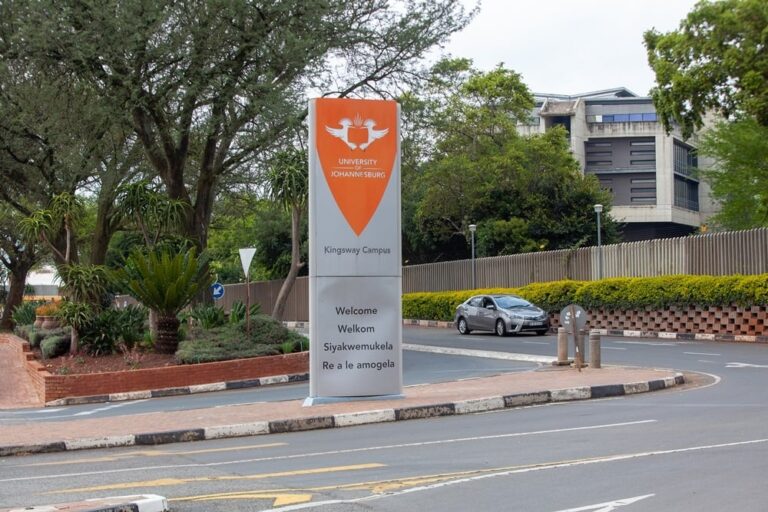
University of Johannesburg has paid back R311 million to the National Student Financial Aid Scheme

PHUTI MOSOMANE

THE University of Johannesburg has refunded R311 million of unallocated funds from 2016 to 2021, which were meant for students who qualified for funding but either changed institutions or deregistered.

The payment made by UJ brings the total amount received from institutions of higher learning to around R349.3 million since the beginning of the NSFAS investigation in September 2022.

The Special Investigating Unit (SIU) has welcomed this payment and encouraged all institutions of higher learning to repay unallocated funds that are owed to NSFAS.

NSFAS was supposed to collect unallocated funds at the end of each year through reconciliation with the institutions of higher learning. However, the SIU’s investigation found that NSFAS had failed to design and implement controls that would ensure an annual reconciliation between the funds disbursed to the institutions and the funded list of registered students.

To address this, NSFAS has recently hired a service provider to assist with the reconciliation process, known as “close out reporting.”

The SIU is authorised to investigate allegations of corruption and maladministration in the affairs of NSFAS and to recover any financial losses caused by corruption and negligence.

The SIU can take civil action in the High Court or a Special Tribunal in its name to correct any wrongdoing caused by corruption, fraud, or maladministration. Any evidence of criminal conduct uncovered during the investigation will be referred to the National Prosecuting Authority (NPA) for further action.

The SIU has found that more than R5 billion of NSFAS funds may have been allocated to students who did not qualify for funding. The investigations have so far revealed that more than 40,000 students in 76 institutions of higher education have been funded incorrectly.

These are students whose household income is above R350,000 and therefore would not qualify for NSFAS funding based on the funding rules. These students did not submit their parents’ details upon application, and therefore the means test was not properly conducted.

Moreover, the SIU has facilitated a refund or managed to ring-fence about R38.3 million owed to NSFAS from three TVET colleges. Two of these colleges are in the Western Cape, and one is from Mpumalanga.

The SIU is engaging other institutions to determine if they are holding any overpayments that need to be ring-fenced pending the completion of the investigation.

INSIDE EDUCATION

Motshekga says over 99% of learners in KwaZulu-Natal have now received school nutrition

PHUTI MOSOMANE

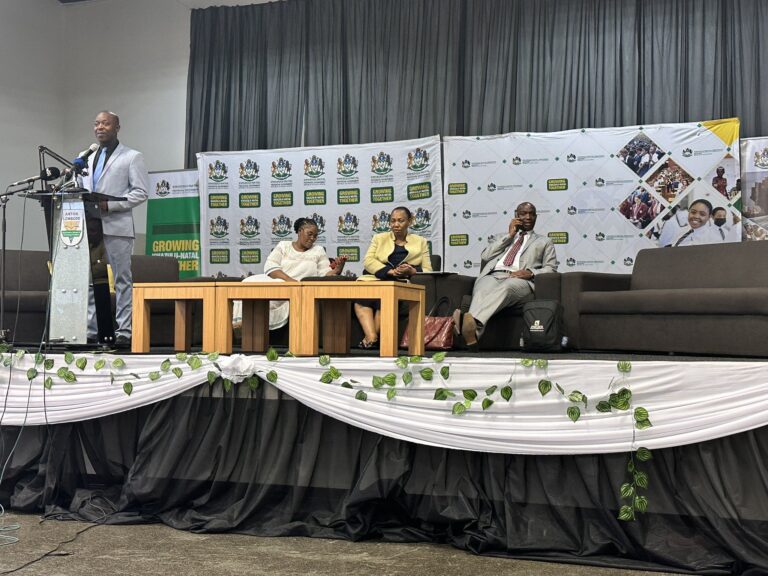
BASIC Education Minister Angie Motshekga has announced that over 99% of learners in KwaZulu-Natal have now received school nutrition since the end of the Easter holidays. 

She provided this update during a media briefing addressing the recent school nutrition crisis in the province. 

The crisis arose due to logistical challenges faced by the main service provider, Pacina, which resulted in learners at more than 5,400 schools not receiving food deliveries since the end of the Easter holidays.

Motshekga said that she and her team have been collaborating with the MEC of Education, Mbali Frazer, to address the challenges facing the school nutrition program in KwaZulu-Natal. 

“The situation has stabilized greatly. I can confirm that children have been fed, although there were delays in deliveries of food stuff. National Treasury is interested in the matter to ensure that there is no fruitless expenditure,” she said.

“The reason we have come to the province is to ensure that we work together to resolve the challenges, and make sure that by today, 02 May 2023, all the children get their meals. The second priority is to make sure that we sustain the programme.”

The briefing comes on the back of the back of monitoring visits conducted to assess the state of readiness in the implementation of the feeding programme as thousands of learners returned to school after the extended weekend.

During the media briefing, Motshekga explained that the Department of Basic Education has been working to address the school nutrition program issues in KwaZulu-Natal without incurring any fruitless and wasteful expenditure.

“The reports we have gathered during today’s oversight visits indicate that the situation has stabilised in the province. We are also receiving reports indicating that children were indeed fed. There were reports of delays in deliveries, but children were fed,” said Motshekga.

The previous service provider, Pacina, initially opted out of their contract to provide food to schools in the province but later indicated that they would continue to do so until July.

The Minister stated that the legal team is currently handling the issues surrounding Pacina’s contract.

Motshekga said that the central procurement system that was tested by the KwaZulu-Natal province was a step in the right direction, even though the process had some issues. 

She said that the department aims to procure food directly from manufacturers to negotiate prices and achieve economies of scale.

The Minister expressed her confidence in the complete delivery of the school nutrition program in KwaZulu-Natal and thanked various teacher unions and SGBs for their collaboration with the provincial department. 

She also commended the Premier and MEC for swiftly intervening in the matter, adding that “our main concern has been that children are fed.” 

She expressed her satisfaction with the province’s efforts in resolving the issues, stating that over 90% of the children have been fed.

KZN Premier Nomusa Dube-Ncube established an online tool to monitor the progress of the R2 billion school nutrition program, which Motshekga acknowledged during the briefing.

Frazer confirmed that food delivery to learners in the affected schools had resumed after resolving the issues.

She thanked workers, parents, educators, the Minister, and the entire KwaZulu-Natal community for their support in ensuring that learners have access to food.

Last week, Pacina Retail Pty Limited, the company contracted to feed learners in over 5,400 schools in the province, announced that it was opting out. A legal battle is expected since the company is demanding payment for the time that it delivered food to schools. 

INSIDE EDUCATION

Gauteng Department of Education to spend R6 billion on new schools

EDWIN NAIDU

THE Gauteng provincial government had budgeted R6 billion to build new schools in high pressure communities. It indicated that the education system would collapse if nothing was done to alleviate overcrowding, which was exacerbated by high levels of in-migration.

Matome Chiloane, Member of the Executive Committee (MEC): Education, and his senior officials briefed the Committee. Allocated funds would focus on building more schools to avoid the issues of unplaced learners in Grades 1 and 8.

The Select Committee on Education and Technology, Sport, Arts and Culture of the National Council of Provinces was briefed on this development during a virtual meeting by the Eastern Cape, Free State and Gauteng provincial education departments on their 2022/23 annual performance plans and budgets.

Kwazulu Natal, Mpumalanga an d Limpopo Provincial Education Departments have also presented their Annual Performance Plans in the National Council of Provinces.

Gauteng had received a major boost of R1.5 billion from the National Treasury to demolish mobile and asbestos schools, and 18 new schools would be built. Resources would be accessed from private sector financial institutions to fund infrastructure projects upfront, after which they would be built, maintained and transferred to them.

To provide Gauteng learners with a competitive edge and prepare them for the post-matric world, the province would continue to roll out schools of specialisation (SOS). To date, it had 21 SOS, and 35 of these schools should have been built by the end of the current administration.

The Department was pleased with the increasing number of children registered at the Early Childhood Development (ECD) facilities. As part of the process to bolster its education system, Gauteng was now ready to build an ECD of the future, starting with Tshwane, in Soshanguve.

They were committed to rolling out ECDs of the future across the five corridors.

In the Free State, more than R128.8 billion had been allocated to the Department of Education to deal with projects in the province over the medium term expenditure (MTEF) period.

The province had claimed top position in the 2022 matric results and for this, National Treasury had allocated R109 million for infrastructure investment in the province.

This allocation was part of the performance-based incentive programme aimed at improving effective planning and driving efficiencies within the infrastructure delivery chain.

In the Eastern Cape, the Department had faced severe budgetary pressures which had impacted its ability to carry out some of its planned activities, coupled with the service delivery challenges experienced in different facets of its operational spectrum.

Despite this, the notable improvements in 2022, particularly in examination outcomes, should be seen in the context of the Department’s system-wide education system transformation plan. Its strategic thrust was to maximise the opportunities for learners to achieve a good pass in the National Senior Certificate (NSC) examinations whilst improving performance in the whole system.

Reprioritisation of the baseline budget had been undertaken to increase the funding provision for learner-teacher support material (LTSM), school furniture, coding and robotics, vocational and technical equipment, agricultural schools, maintenance of early childhood development (ECD) centres, and information communication technology (ICT) in schools.

Members asked about the rationalisation and realignment of unviable schools for optimum resource distribution; the continued provision of an appropriate package of support to viable secondary schools in quintiles 1 to 3; improved financial efficiency and re-distribution of resources to where they were most needed; and infrastructure revitalisation and development that was aligned to the rationalisation process.

They also called for accelerated eradication of pit toilets, and for the beautification and fencing of various schools.

INSIDE EDUCATION

Free State education to get R109 million for infrastructure development

STAFF REPORTER

THE Free Stater Department of Education has been given R128.778 billion to deal with projects in the province over the current financial period. The province had claimed top position in the 2022 matric results, and for this, National Treasury had allocated R109 million for infrastructure investment in the province.

This allocation was part of the performance-based incentive S programme aimed at improving effective planning and deriving efficiencies within the infrastructure delivery chain.

To build a capable, developmental and ethical state, for generations to come, the Free State was of the opinion that it should sustain investment in quality education.

The Department described its seven programmes, and the amounts allocated to each of them for:
 Programme 1 for the overall management of the education system in accordance with the
relevant prescripts
 Programme 2 provided for ordinary public education from grades 1 to 12
 Programmes 3 and 4 provided support to independent schools as well as compulsory public
education in special schools
 Programme 5 deals with early childhood education at grade R and Pre-Grade R levels
 Programme 6 referred to its investments in infrastructure, and,
 Programme 7 provided support for examination and other related education services.

Saturday classes were encouraged and implemented in large numbers in the Free State.

This programme assisted the learners immensely. Schools would also begin to benchmark themselves and had started their own extra classes programme.

Learners could be observed walking to school on Saturdays with their textbooks in their hands across the province.

Mzamo Jacobs, senior manager in the Free State Education Department, shared some statistics on the “Second Chance Matric Programme”. In one region, 524 people had written, and 466 had passed. This gave a pass rate of 88.9 %.

In Letshobela, 2 459 people had written, of whom 1 756 had passed. In Mangaung, 2 580 people wrote, of whom 2 095 had passed, and in Gariep, 908 wrote and 646 passed. In another region, 3 276 people wrote and 2 785 had passed. This gave the “Second Chance Matric Programme” a 78.9% pass rate. The performance was quite considerable.

According to Jacobs added, the ECD migration had been successful, and that Grade R practitioners had received training on CAPS, and pre-Grade R practitioners on the national curriculum framework.

There had also been up-skilling for advanced practitioners from Level 5 to NQF Level 6. This qualified practitioners as full teachers, and 450 had been absorbed into the Personnel Salary System (PERSAL).

Jacobs added that South Africans needed a paradigm shift where career prospects were concerned as there had been an over-emphasis on academia, yet vocational training was a valid alternative.

Non-performing schools were those schools which recorded a pass rate of 65% and less. The Department had now set the target at 75%, to encourage schools to maintain higher pass rates.

INSIDE EDUCATION