Home Blog Page 206

Hearings on BELA Bill in eight provinces completed

STAFF REPORTER

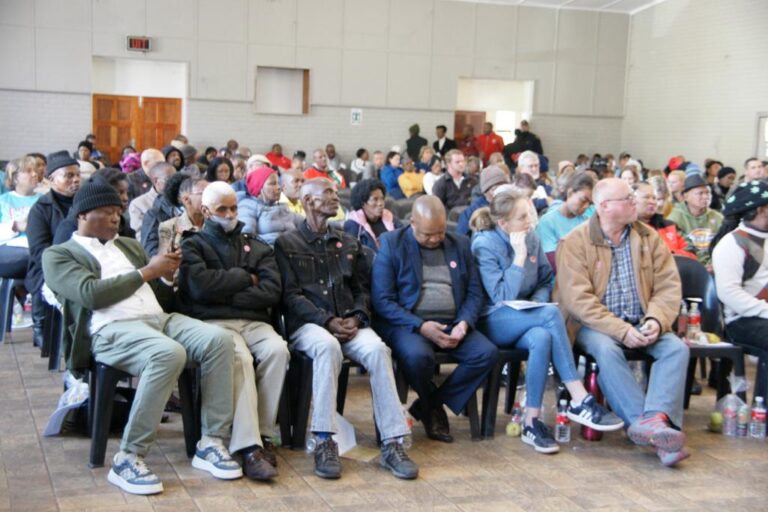
THE Portfolio Committee on Basic Education has concluded successful public hearings on the Basic Education Laws Amendment (BELA) Bill in eight provinces.

Public hearings took place in the Northern Cape Province last weekend.

The DBE said it was satisfied with the process thus far, as public hearings have been conducted in an organised and peaceful manner.

Those who supported the Bill said that it would improve the quality of the education system, particularly for those from disadvantaged households, through the proposal for the inclusion of Heads of Departments in determining language and admission policies at schools. They added that Clause 37 of the Bill, requiring home-schooled children to be registered, is necessary as it allows the Department to account for every child in the system whilst ensuring uniformity and access.

Those opposing the Bill said that it would undermine the constitutional right of parents to make decisions on behalf of their children. They further argued that the Bill primarily intends to take power away from School Governing Bodies (SBGs) to determine language and admission policies, undermining mother-tongue education.

They added that home-schooling is currently available to low-income families, but the new proposals that require independent accessors and continuous assessments will have profound cost implications. There was, however, a general agreement that alcohol sales be banned from schools as it could encourage further substance abuse within communities.

Other changes to the Bill include: making grade R compulsory as opposed to Grade 1, which is currently the case, and criminalising parents who do not ensure that their children attend school, with fines or jail time for up to 12 months.

In addition, it would also compel parents to supply specified documentation when applying; hold SGBs accountable for disclosures of financial interests, including those related to their spouses and family members; prohibit educators from conducting business with the state; and abolish corporal punishment.
INSIDE EDUCATION
Fight against corruption takes shape at Fort Hare

STAFF REPORTER

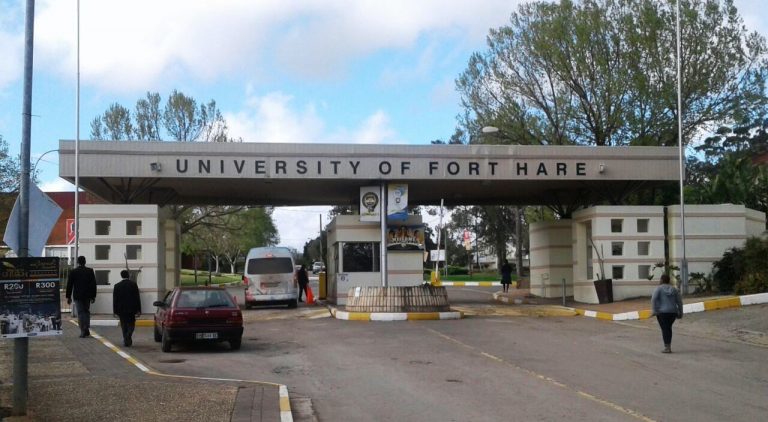
THE University of Fort Hare (UFH) has welcomed a breakthrough in the fight against corruption spearheaded by the institution and South African law enforcement agencies to uproot deep-seated corruption and criminal networks that have bled the institution dry for several decades.

The National Prosecuting Authority’s Asset Forfeiture Unit announced it obtained a provisional restraint order against the property of Walter Qusheka, as well as five other defendants, including Qusheka’s wife. Qusheka is the Director of Garden to Floors, a company that traded under the name of Qush with the University.

The current value of the assets under restraint is R14.3 million, and Judge N Jali granted the restraint order against the property. Qush had a contract with the University, which expired at the end of its determined period in 2015.

But a former UFH Contracts Manager, Thobile George, had no lawful authority to contract on behalf of the University and renewed the contract on a month-to-month basis, resulting in a loss of R19.2 million for the University.

Evidence in possession of the University and provided to law enforcement agencies showed that George received kick-back payments of R4 million. Qush paid funds into an account where George sat as a company director after he illegally extended the contract. The original contract with Qush was signed in 2011. The NPA’s Asset Forfeiture Unit has indicated in a statement that George, Walter and Vuyokazi Qusheka, Yolisa Songca, Lungelwa Finwana, and Yandiswa Sonamzi face criminal charges of fraud and corruption, and their matter was postponed until 4 August for a trial date.

However, at the weekend, in a matter related to academic fraud, it emerged that the University of Fort Hare convocation believes the Special Investigation Unit (SIU) does not have the necessary skills, knowledge, and expertise to investigate allegations at the institution.

The convocation instead wants the Department of Higher Education, Science and Innovation to appoint a ministerial team to probe the alleged degree scam at the 107-year-old institution.

It is currently scrutinising four tenders involving cleaning and gardening services, the leasing of student accommodation tender, the appointment of a service provider for the maintenance and repair of air conditioning systems, and collusion between officials of UFH and service providers, in which such officials held direct or indirect interests.

Convocation president advocate Andile Mini, at a press briefing in East London on Friday, said he has written to Higher Education Science and Innovation Blade Nzimande, requesting him to launch an independent investigation into the academic scam.

INSIDE EDUCATION

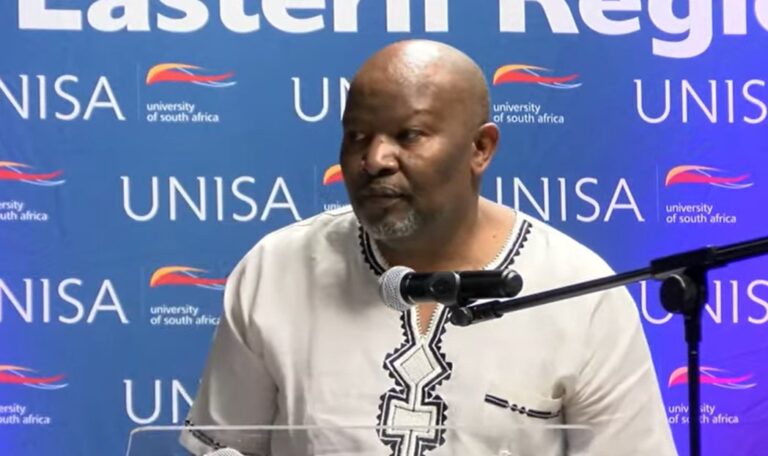
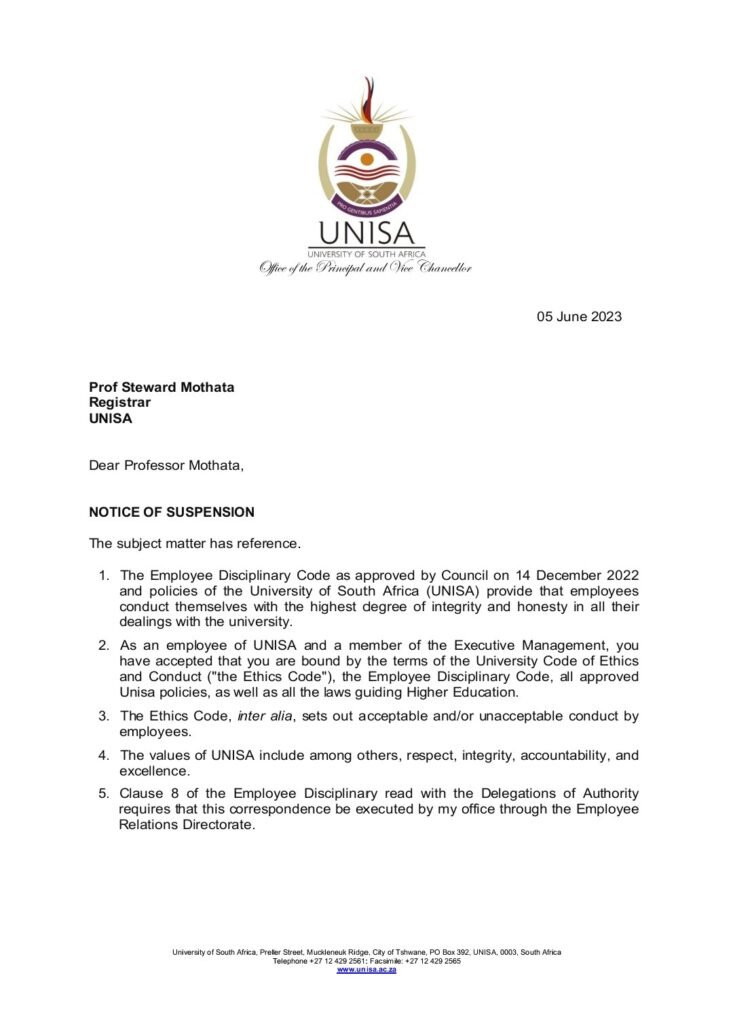
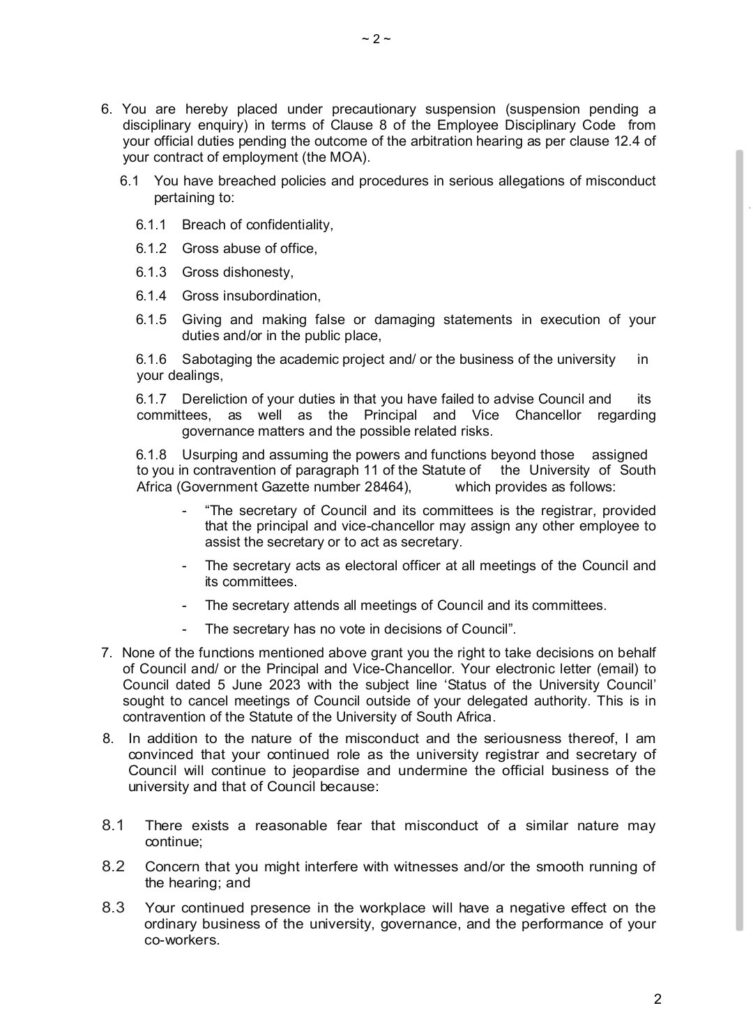
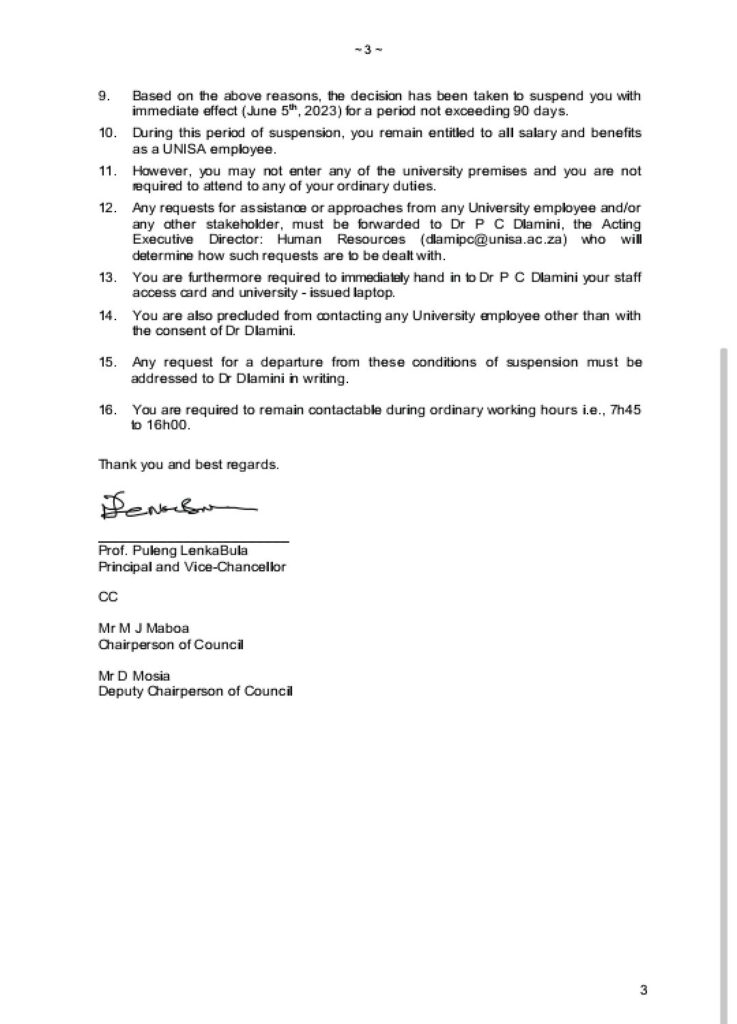
Suspended Unisa Registrar hits back over “spurious claims.”

PHUTI MOSOMANE

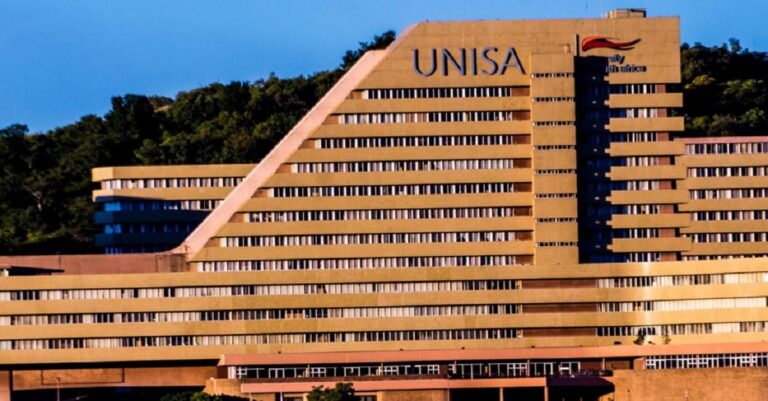
SUSPENDED University of South Africa (Unisa), Registrar Professor Steward Mothata has hit back over the “unlawful” reasons behind his suspension.

Mothata was placed on a precautionary suspension a week ago for the reasons outlined in a confidential letter to him.

However, his lawyer, Modidima Mannya, Mothata, described the actions by Unisa as an:” abuse of power”, adding that Vice-Chancellor Professor Lenka Bula does not have any powers whatsoever to suspend him.

The Registrar claims he is being victimised over acts of alleged sexual misconduct levelled against him by a staff member 13 months ago. The details of these were lodged with Unisa Council, but no action has been taken.

“The power to suspend and take any disciplinary action vests in the Council of the university. For this reason alone, the suspension is unlawful as a matter of law.”

In the legal response, Mothata said Council appointed an external advisory firm PWC to investigate allegations of sexual misconduct against him. However, the preliminary report of the investigation confirms that the complaint is void of any truth and points to gross misconduct on the part of Prof Lenka Bula.

“The report specifically indicates the non-cooperation of Prof Lenka Bula. It is clear that the suspension is retaliation for the fact that the purported sexual misconduct complaint has been found to lack merit and exposes the participation of Prof Lenka Bula in the abuse of sexual misconduct.”

In another twist, in February 2021, Prof Mothata said in the lawyer's letter that he had reported to Council the misconduct of Prof Lenka Bula concerning the renovations at the Vice Chancellor’s house. These allegations were not investigated and subsequently were investigated by the Independent Assessor, who made damning findings against Prof Lenka Bula.

On 28th May 2023, Prof Mothata reported to Council what is unlawful conduct on the part of Prof Lenka Bula in making a payment of R500 000 (five hundred thousand rands) to Ms More, the claimed complainant in a sexual harassment complaint against Prof Mothata.

Prof Mothata accepted the findings of the Independent Assessor.

But Unisa has noted with concern the spurious allegations attributed to Prof Mothata, in which he is said to have told some media that he is being targeted for telling “the truth” and that the suspension letter is “vague.”

“We want to put it on record that the university needed to put Prof Mothata on precautionary suspension owing to his conduct which is in breach of the Unisa’s University Code of Ethics and Conduct and the Employee Disciplinary Code.”

“It is the university’s view that the suspension is necessary for the continued functioning and

governance of the University. The university believes that due processes were followed, which informed the decision to place the Registrar on suspension.”

Meanwhile, according to City Press at the weekend, the Unisa council has asked Higher Education Minister Blade Nzimande not to disband them but to appoint an additional three members to assist them in performing their duties.

The newspaper said that the council pleaded with Nzimande, following an explosive 309-page report by Themba Mosia, after investigating allegations that the council was ineffective and maladministration claims against principal and vice-chancellor Professor Puleng LenkaBula. 

Mosia recommended to Nzimande that the council be disbanded, LenkaBula sacked, and an administrator appointed for Unisa.

Nzimande is studying the report.

INSIDE EDUCATION

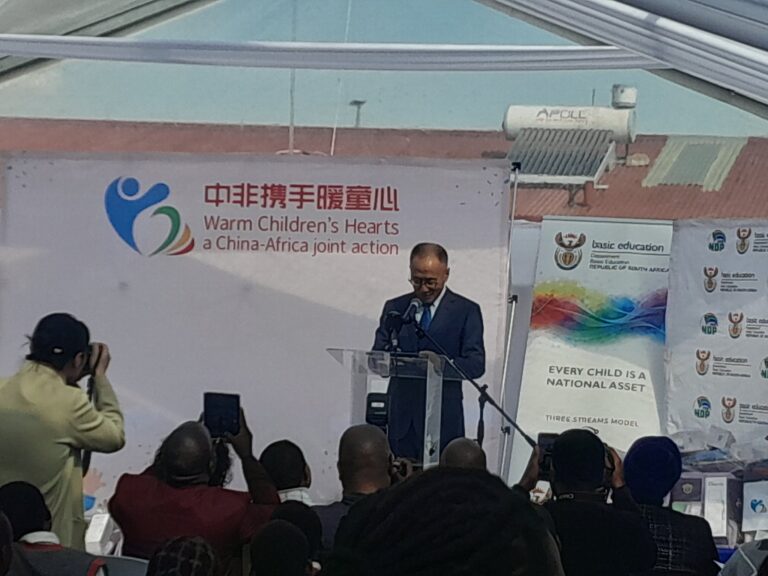
Chinese Ambassador and Motshekga in an initiative to “Warm Children’s Hearts.”

STAFF REPORTER

THE Ambassador of the People’s Republic of China to South Africa, Chen Xiaodong and the Minister of Basic Education, Angie Motshekga, have launched the “Warm Children’s Heart” Initiative to enhance quality learning and teaching in randomly selected schools in various provinces.

The schools included Bonwelong and Tshepisong Primary Schools in the Gauteng Province, Mokwasele Primary School in the Limpopo Province and Pefferville Primary School in the Eastern Cape Province. The programme was launched by the Department of Basic Education (DBE), in partnership with the Embassy of the People’s Republic of China in South Africa, at Bonwelong Primary School on 29 May 2023. Gauteng MEC for Education, Matome Chiloane, attended the launch ceremony.

The “Warm Children’s Heart” Initiative was established by Professor Peng Liyaun, the wife of Chinese President Xi Jinping, in partnership with the Organisation of African First Ladies (OAFLAD) to show care and support to children globally. It was specifically initiated to provide care for African children, embodying the deep compassion and dedication that China and South Africa share for the well-being
of the youth.

According to Professor Peng Liyaun, the programme underscores China’s commitment to supporting education and nurturing the potential of children on the African Continent. Through the programme, the Embassy intends to provide school bags, soccer balls, basketballs, water bottles, stationery, and other items valued at R200,000 to learners in the four identified schools.

“This year marks the 25th anniversary of the establishment of diplomatic relations between South Africa and China. Under the joint leadership of successive leaders of our two countries, especially President Xi Jinping and President Ramaphosa, our cooperation in various areas of education reached fruitful results, which brought tangible benefits to the two countries. In recent years, under the guidance of Professor Peng Liyuan, the Chinese side donated many batches of school and COVID-19 response supplies to South African children. We will continue to promote our exchanges and cooperation in basic education, enhance friendship, promote people-to-people contact, and join hands to build a high-level China-South Africa community with a shared future.”

Motshekga said that the partnership between South Africa and China in primary education has significantly contributed to improving the quality of education in South Africa.

Motshekga said that during the COVID-19 pandemic, China contributed essential supplies such as water tanks, masks, and thermometers to support the reopening of schools. Additionally, China has supported the National Teaching Awards, providing study visits for outstanding teachers and principals.

“In the spirit of solidarity, the Chinese Government donated funds to assist in the recovery from the devastating floods in KwaZulu-Natal. These acts of kindness and support have exemplified the depth of our partnership. The “Warm Children’s Heart” Initiative represents another milestone in our shared journey to provide a brighter future for our children. Let us continue to work hand in hand,
building bridges of knowledge and understanding between our two nations,” said Motshekga.

INSIDE EDUCATION

World-class Hospitality And Organisation Offered At 2023 Sashoc Nationals

STAFF REPORTER

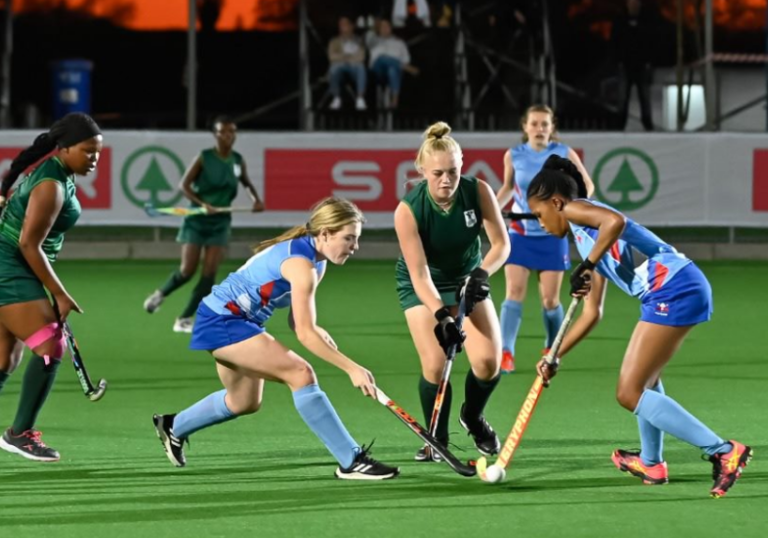
WITH world-class facilities and quality organisation awaiting them later this year, the country’s rising young stars can expect a memorable experience when they compete for top honours in various age groups at the SA Schools Hockey Association (SASHOC) National tournaments to be hosted by Southern Free State Hockey between 25 June and 12 July 2023.

Once again, the SASHOC Nationals 18-day hockey festival is expected to deliver superb performances from the best schools players across the nation, who will turn out for their provincial teams.

By building a solid platform over the years – through district and provincial events – SASHOC has ensured the top-flight inter-provincial tournaments will not only offer a strength versus strength format, but will also give young hockey players valuable experience both on and off the field with the host province and sponsors ensuring the best awaits them in terms of organisation and hospitality.

An affiliate member of the South African Hockey Association (SAHA), the South African Schools Hockey Association (SASHOC) is a regulatory board which promotes, upholds, supports, controls and maintains rules for all schoolgirls and schoolboys playing hockey in South Africa. Laying the foundation in hockey development at schools level in South Africa and ensuring that there is opportunity to maintain the growth of the game, will ensure that Hockey will continue to grow from strength to strength. SASHOC also firmly believes that transformation plays an important role in our organization achieving its goals.

Along with the hard-working local organising committee, SASHOC started the planning and logistical process for this year’s Nationals in December 2022, ensuring organisers were given sufficient time to put quality events together across the board.

The hosts are also providing superb facilities, boosting the experience offered to the participating players and teams.

The main field to be used will be the Kovsies Astro university ground, where the A-section games will be played. The B-section matches will be played at Grey College and Eunice High School for Girls. 

“We are looking forward to welcoming team officials, players, parents and all other hockey lovers to Bloemfontein,” said Louise van der Merwe, the head of the LOC.

“We invite everyone to come and experience and appreciate schools hockey at the highest level and true Free State hospitality.”

The SASHOC Nationals will be backed by multiple valuable partners – including sponsors Sportsmans Warehouse (retail partner), Grays Hockey (ball and umpire shirt supplier), Trompie Sport (sports facilities partner), and renowned brands SPAR and iKhokha – ensuring the players receive the support they need throughout the tournaments in all age groups.

“We truly appreciate the tremendous backing we have received from all our partners and sponsors, who all make a huge difference in ensuring this event is as successful as has come to be expected from our premier schools hockey event of the season,” said SASHOC chairman Wendell Domingo.

“With more than 118,000 players registering to compete in schools hockey last year it is clear that the sport is growing in popularity in terms of participation and youth development and we are eager to see the latest generation of young stars in action.

“The SASHOC team and the LOC are doing an incredible job in the build-up to ensure this is a world-class event in terms of organisation and hospitality, and we are grateful for their continued efforts.”

With organisers having extended their agreement with SuperSport Schools, the SASHOC Nationals will also have significant reach.

Family members and friends of players, as well as hockey fans around South Africa, will again be able to watch live, with matches in all age groups being broadcast on television and on the SuperSport Schools app.

INSIDE EDUCATION

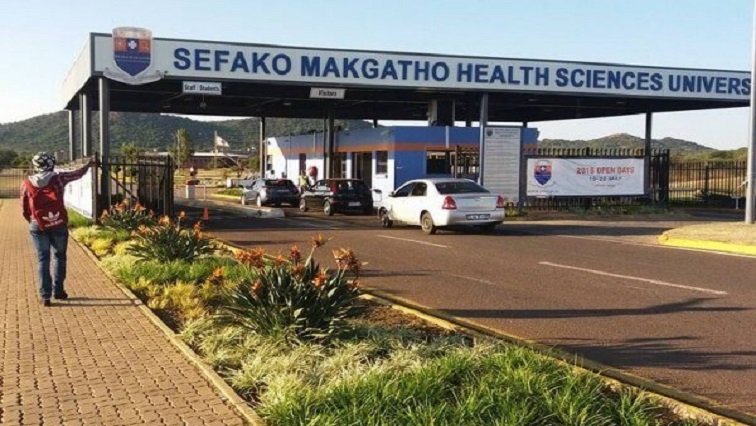
Sefako Makgatho University workers to strike for salary increment

PHUTI MOSOMANE

THE Academic and Professional Staff Association (APSA) general secretary professor Boitumelo Senokoane says the union is preparing its members at Sefako Makgatho Health Sciences University to embark on a strike action on Thursday.

The union decided to embark on a strike action for wage increases after they were granted a certificate of non-resolution following a declaration of dispute that came after 3 months of wage negotiations and mediation by the CCMA failed to resolve the wage dispute.

“The employer is intransigent, unwilling to move from their initial offer of 5.7%. Our members mandated us to demand 7%, based on the assessment of the rising cost of living. Inflation remains elevated above 7% in the past few months, and the South African Reserve Bank has forecasted an average 6,2% inflation rate for 2023. Given the elevated risks of inflation, the annualised average forecast by SARB may be an under-forecast,” Senokoane said.

Senokoane said based on the average inflation forecast of 7,2%, a 5,7% offered by Sefako Makgatho University management will amount to a wage decline of 1,5% in real terms.

“APSA opposes this real decline, hence we insist on a 7% increase. The offer by the University will diminish the buying power of our workers in the context of inflation,” he said, adding that as per SMU strike policy, the employer has been given 48 hours’ notice and the protest action will be on Thursday.

INSIDE POLITICS

Unisa confirms suspension of Registrar

STAFF REPORTER

THE University of South Africa (Unisa) has confirmed that the Registrar, Professor Steward Mothata, has been placed on precautionary suspension without providing reasons for the decision.

“The issues leading to the suspension have been outlined to him in a confidential letter shared directly with him and only him. Please note that this is a matter between Professor Mothata and the university, and the standing practice in the university is not to discuss such matters in the public domain, including through the media. There are existing internal platforms for addressing such matters, which all employees are fully conversant with,” said Unisa spokesperson Tommy Huma.

He added that Unisa has noted with concern the spurious allegations attributed to Prof Mothata, in which he is said to have told some media that he is being targeted for telling “the truth” and that the suspension letter is “vague.”

“We want to put it on record that it was necessary for the university to put Prof Mothata on precautionary suspension owing to his conduct which is in breach of the Unisa’s University Code of Ethics and Conduct and the Employee Disciplinary Code.”

Huma said it is the university’s view that the suspension is necessary for the continued functioning and governance of the University. “The university is of the view that due processes were followed, which informed the decision to place the Registrar on suspension.”

The university also noted rumours in the public domain that Council is no longer quorate and cannot hold meetings. The university has obtained a legal opinion stating that Council does quorate and should continue with its business.

The university also reassures its community and other stakeholders that the business of the University is continuing as usual, i.e., teaching and learning, research and innovation and engaged scholarship.

Staff are encouraged to continue going the extra mile in promoting the academic project and providing support services to students.

INSIDE EDUCATION

Debate on South Africa’s reading literacy crisis continues

STAFF REPORTER

BASIC Education Minister Angie Motshekga, supported by DBE senior managers, provided a comprehensive briefing to the Portfolio Committee on Basic Education on the recently released Progress in International Reading Literacy Study (PIRLS) for 2021, in which 57 countries participated.

“Through PIRLS, the Department heeds the National Development Plan (NDP) call for South Africa to participate in international benchmarking against the best systems in the world to improve education outcomes, and not to compete, as reading comprehension and performance are interlinked.

These findings were complemented by initial insights on reading literacy from the Early Learning National Assessment (ELNA) in Grade 1 for emerging literary skills and the national Systemic Evaluation study in Grade 3, which have demonstrated the severity of learning losses suffered globally due to COVID-19”, the Minister said.

During the virtual briefing, Mbinqo-Gigaba, Committee Chairperson, said that South Africans were concerned about the PIRLS findings as learners cannot read for meaning.

“A reading culture should be nurtured in the early years, with classrooms providing learners with adequate reading resources in their various home languages to develop language and comprehension skills for all indigenous languages.”

A total of 12,426 Grade 4 learners in 321 schools and 9,317 Grade 6 learners in 253 schools were assessed. Grade 4 learners were representative of the 11 official languages and nine provinces, whilst the Grade 6 learners only represented Afrikaans and English.

South Africa’s trend score from 2016 dropped significantly from 320 to 288 (a difference of 32 points). 81% of Grade 4 and 56% of Grade 6 learners did not reach the benchmark of 400 points. Grade 6 learners scored 384 points, with Afrikaans scoring an average of 456. The best-performing language was Afrikaans (387), and the lowest was Setswana (211). The Western Cape had the highest scores. The findings also indicated that girls achieved higher reading literacy scores than boys.

Dr Mark Chetty, Director for National Assessment at the DBE, delivered the presentation to the Committee, saying reading culture and literacy are interrelated; both context and complexity must be highlighted for decoding and language comprehension to organise thoughts, evaluate information and conclude to analyse text to improve reading for meaning across all academic subjects.

Chetty indicated that, in the future, the PIRLS findings will be analysed, and a detailed diagnostic report will be published. In addition, the DBE will be reviewing the National Integrated Reading Plan and reading literacy progress will be tracked through the Thrive by Five Index, measuring early learning, ELNA, tracking school readiness, a reading survey to track foundational reading skills in Grades 1 – 3; and systemic evaluation to calculate the outcome of reading comprehension”.

INSIDE EDUCATION

UP ranked 69th on the 2023 Times Higher Education Impact Rankings measuring UN Sustainable Development Goals

STAFF REPORTER

The University of Pretoria (UP) has improved its position in the 2023 Times Higher Education (THE) Impact Rankings, rising to position 69 (up from the 101-200 band in 2022) out of 1 705 universities in 115 countries.

This climb up the rankings comes despite increased competition – the number of participating universities grew from 1 410 in 2022 to 1 705 in 2023. In 2023, UP maintained its 2nd position in South Africa.

At the continental level, UP is now ranked 2nd (3rd in 2022). Each university’s overall score and rank are determined by its combined performance in its top three SDGs (each counting 26%) and SDG 17 (“Partnerships for the goals”, 22%).

The Impact Rankings measure actions taken by higher education institutions worldwide toward achieving the United Nations’ 17 Sustainable Development Goals (UN SDGs).

According to the UN Development Programme, “The SDGs, also known as the Global Goals, were adopted by the United Nations in 2015 as a universal call to action to end poverty, protect the planet, and ensure that by 2030 all people enjoy peace and prosperity.”

UP submitted more than 100 pieces of evidence highlighting institutional operations, policies, research and strategy involving collaborative work by dozens of departments and units across the university.

This year’s THE Impact Rankings, released on 1 June 2023, are the fifth annual ranking.

Carefully calibrated indicators for each participating university are measured to provide comprehensive and balanced comparisons across four broad areas: research, stewardship, outreach, and teaching.

In charge: Vice-Chancellor and Principal Professor Tawana Kupe

Vice-Chancellor and Principal Professor Tawana Kupe congratulated the UP community on achieving remarkable milestones. “Once again, UP has proved to be one of the leading universities not only in Africa but also in the world for impact towards the SDGs,” he said.

“This is a collective achievement for our academic and professional staff, students, and partners at all levels – thank you, and well done to everyone involved. UP is leading in tackling the SDGs in four ways: research impact, learning and students, public engagement activity, and responsible campus operations. This most recent result is a testament to the consistent way we have embedded social responsibility across all university levels,” Kupe added.

INSIDE EDUCATION

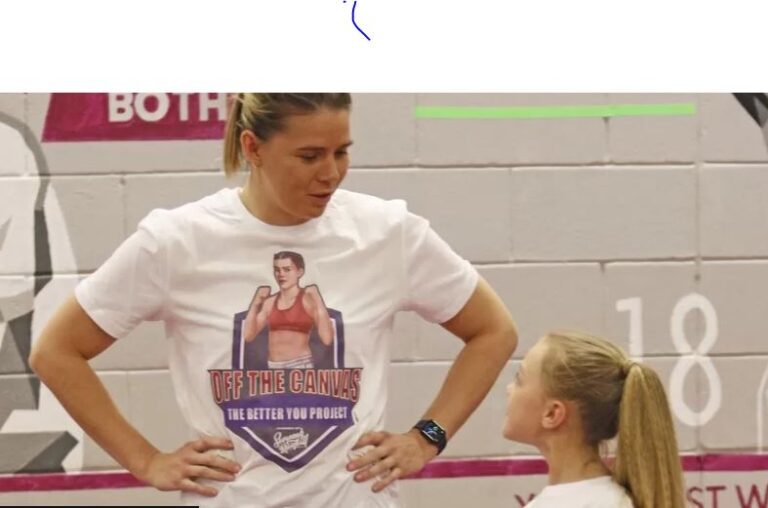
Boxer admits school struggles before sport

Former world champion boxer Savannah Marshall has recalled how she “really struggled” in school before discovering sport.

Ahead of a world-title fight in July, she returned to Teesside to launch a PE programme for school children.

The 32-year-old from Hartlepool said sport had brought her “self-belief, confidence and friendship”.

She added being physically active was important for young people to help with their mental and physical health.

“I really struggled in school, I struggled socially and academically as I’m dyslexic and my only outlet was during PE and during sport,” she said.

“I look at how far I’ve come and how sport has changed my life.”

Last year, Marshall was the first British female fighter to headline a world title fight when she faced Claressa Shields in front of a sell-out crowd of 20,000.

She lost her WBO middleweight belt in the clash, but hopes to become a two-weight world champion when she meets American super-middleweight champion Franchon Crews-Dezurn in London on 1 July.

Marshall said: “I’m living proof that if you enjoy something and you’re happy the possibilities are endless. I’m a two-time Olympian, a former world champion, I’ve travelled the world and it’s all through sport.

“But I was that child who was socially awkward, who couldn’t interact and hated performing in front of other people and I’ve come on leaps and bounds.”

Her programme, called Off the Canvas, also addresses social skills, friendship and self-belief before youngsters move onto secondary schools.

She hopes by passing on the lessons she learned through boxing it will inspire young people to achieve their dreams.

The initiative will offer PE teaching to children aged four to 11 at schools across north-east England on a subscription basis.

BBC